Relsed
Poland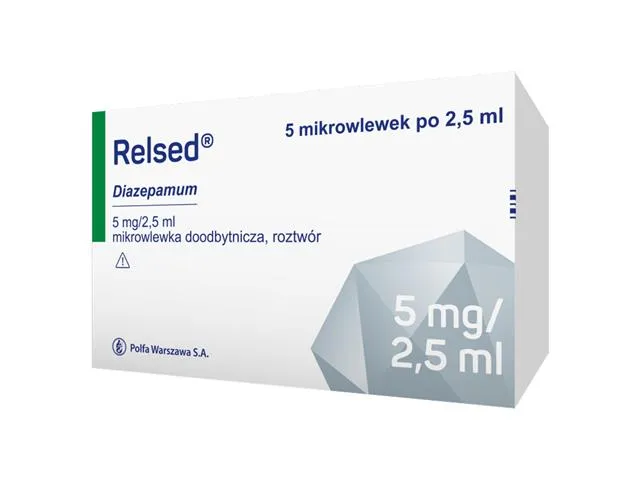
Instructions for Use
Package leaflet: information for the patient
RELSED, 5 mg/2.5 ml rectal microenema, solution
RELSED, 10 mg/2.5 ml rectal microenema, solution
Diazepamum
Please read the entire leaflet carefully before using the medicine, as it contains important information for the patient.
- Keep this leaflet for future reference.
- If you have any questions, please consult your doctor or pharmacist.
- This medicine has been prescribed for a specific individual. Do not pass it on to others. This medicine may harm other people, even if their symptoms are the same.
- If the patient experiences any adverse reactions, including any possible adverse reactions not listed in this leaflet, inform your doctor or pharmacist. See section 4.
Table of contents
- What RELSED is and what it is used for
- Important information before using RELSED
- How to use RELSED
- Possible side effects
- How to store RELSED
- Contents of the pack and other information
1. What RELSED is and what it is used for
RELSED contains diazepam as the active substance. Diazepam belongs to a group of medicines called benzodiazepines. It works as an anxiolytic, sedative, hypnotic, anticonvulsant, and reduces skeletal muscle tension.
RELSED is administered rectally:
- in convulsions occurring during high fever (febrile convulsions);
- in prolonged or frequently recurring epileptic seizures (epileptic status);
- in convulsive attacks associated with pregnancy poisoning (known as eclampsia);
- in anxiety attacks;
- in conditions characterized by increased muscular tension, including tetanus;
- in patient preparation (premedication) before various procedures, e.g. surgery, endoscopy;
- in the postoperative period to calm the patient.
2. Important information before using Relsed
When not to use Relsed
- if the patient is allergic to diazepam or other benzodiazepines, or to any of the other ingredients of this medicine (listed in section 6);
- if the patient has been diagnosed with:
- myasthenia gravis (a chronic disease characterized by muscle weakness);
- severe respiratory insufficiency (serious breathing difficulties);
- sleep apnoea syndrome (characterized by brief interruptions in breathing during sleep);
- severe hepatic insufficiency (serious liver function disorders);
- presence of phobias (fear of specific objects or situations) or obsessions (obsessive, recurring thoughts or behaviours).
- Relsed must not be used as the sole treatment for depression or depression-related anxiety.
Warnings and precautions
Before starting treatment with Relsed, discuss this with your doctor.
Consult your doctor if the patient:
- is elderly or weakened;
- has liver or kidney insufficiency;
- has brain damage due to, for example, trauma, atherosclerosis of blood vessels, or stroke;
- has impaired motor control (called motor incoordination);
- has personality disorders;
- has chronic respiratory insufficiency (even of moderate severity);
- has benign prostatic hyperplasia (with urinary retention);
- is dependent on drugs or alcohol;
- suffers from glaucoma (increased pressure in the eyes). Patients with any of the above conditions should inform their doctor.
The duration of treatment with Relsed should strictly follow the doctor's instructions. Treatment with Relsed should be as short as possible.
Long-term use of the medicine should be avoided, as it may increase the risk of dependence and development of tolerance to the medicine. Tolerance development means progressively reduced effectiveness of the medicine with prolonged use, requiring dose escalation.
Children
- The medicine should not be used in newborns, particularly in premature infants, due to the presence of benzyl alcohol – see section 2. "Relsed contains benzyl alcohol, ethanol, sodium benzoate, propylene glycol, and sodium".
- In infants up to 6 months of age, the medicine may be used only in life-threatening conditions – in such cases, the medicine is administered by medical personnel.
- The medicine may be used in children from 7 months of age (see section 3. "How to use Relsed").
- When using Relsed in children, paradoxical reactions may occur (symptoms listed in section 4. "Possible side effects"). If such symptoms occur, treatment with the medicine should be discontinued.
Relsed and other medicines
Tell your doctor about all medicines currently or recently taken, as well as any medicines the patient plans to use.
Relsed and other concomitantly used medicines may interact and affect each other's actions. This is particularly relevant for the following medicines:
- strong analgesics (called opioid analgesics, e.g. morphine, buprenorphine); if diazepam must be administered together with opioid analgesics, diazepam should be given last;
- medicines used in psychiatric disorders (e.g. haloperidol);
- medicines used to treat depression (fluoxetine, fluvoxamine);
- sedatives, anxiolytics, and hypnotics;
- anticonvulsants (e.g. phenobarbital);
- anaesthetics and certain antiallergic medicines (with sedative effects);
- cimetidine and omeprazole (medicines used in peptic ulcer disease);
- disulfiram (a medicine used in alcohol dependence);
- isoniazid (a medicine used in tuberculosis treatment);
- oral contraceptives;
- theophylline (a medicine used in asthma treatment);
- levodopa (a medicine used in Parkinson's disease);
- skeletal muscle relaxants (e.g. baclofen);
- phenytoin (a medicine used in epilepsy treatment).
Concomitant use of Relsed and opioids (strong analgesics, medicines used in opioid substitution therapy, and some cough medicines) increases the risk of drowsiness, breathing difficulties (respiratory depression), coma, and may be life-threatening. Therefore, concomitant use of these medicines should only be considered when other treatment options are not feasible.
If your doctor prescribes Relsed together with opioid medicines, the prescribing doctor should reduce the dose and recommend the shortest possible treatment duration.
Inform your doctor about all opioid medicines being taken and strictly follow dosing instructions. It may be helpful to inform friends or family members about the risks so they are aware of the symptoms listed above. If such symptoms occur, contact your doctor immediately.
Relsed and alcohol (ethanol)
Alcohol (ethanol) enhances the sedative effect of diazepam. Alcohol must not be consumed during treatment with Relsed.
Pregnancy and breastfeeding
If the patient is pregnant, breastfeeding, suspects she may be pregnant, or plans to become pregnant, she should consult a doctor or pharmacist before using this medicine.
Relsed should not be used in pregnant women, particularly during the first and third trimesters, or during breastfeeding, unless the doctor determines that its use is necessary.
Driving and operating machinery
After administration of the medicine, sedation, concentration disturbances, and other side effects may occur, which may adversely affect performance of tasks requiring heightened attention. Do not drive or operate machinery for at least 24 hours after administration of Relsed.
Relsed contains benzyl alcohol, ethanol, sodium benzoate, propylene glycol, and sodium
The medicine contains 15 mg of benzyl alcohol in 1 ml of solution. Benzyl alcohol may cause allergic reactions.
Administration of benzyl alcohol to newborns is associated with the risk of severe adverse reactions, including breathing disorders (so-called "gasping syndrome").
Do not administer the medicine to newborns without medical advice.
Do not administer the medicine to young children (under 3 years of age) for longer than one week without medical or pharmacist advice.
Patients with kidney or liver dysfunction, and pregnant or breastfeeding women, should consult a doctor before using the medicine, as large amounts of benzyl alcohol may accumulate in their bodies and cause adverse effects (metabolic acidosis).
The medicine contains 12.4% v/v ethanol (alcohol), i.e. up to 250 mg per microinfusion, equivalent to 5.94 ml of beer or 2.48 ml of wine per microinfusion.
Harmful for individuals with alcohol-related disorders.
This should be taken into account when administering the medicine to pregnant or breastfeeding women, children, and individuals at high risk, such as patients with liver disease or epilepsy.
The medicine contains 48.8 mg of sodium benzoate in 1 ml of solution. Sodium benzoate may increase the risk of jaundice (yellowing of the skin and whites of the eyes) in newborns (up to 4 weeks of age).
The medicine contains 19.5 mg of sodium (main component of table salt) per microinfusion (7.8 mg sodium per 1 ml). This corresponds to 0.96% of the maximum recommended daily dietary sodium intake for adults.
The medicine contains 400 mg of propylene glycol in each 1 ml (1000 mg per microinfusion).
Before administering the medicine to a child under 5 years of age, consult a doctor or pharmacist, especially if the child is taking other medicines containing propylene glycol or alcohol.
Pregnant or breastfeeding women, and patients with kidney or liver dysfunction, should not take this medicine without medical advice. The doctor may decide to perform additional tests in such patients.
3. How to use Relsed
This medicine should always be used exactly as directed by the doctor. In case of doubt, consult
your doctor.
- This medicine is intended for rectal use only.
- Relsed comes in a specially designed rectal administration system called a microenema. The microenema is a polyethylene tube ending in a rectal cannula, which enables administration of the medicine.
- The doctor will determine the dosage and duration of treatment individually for each patient. You must strictly follow the doctor's instructions.
- If the medicine is used at home, it should be administered by a responsible adult caregiver. The patient should be supervised until symptoms have subsided.
- The effect of the medicine becomes apparent within 5–10 minutes after administration.
A 2.5 ml rectal microenema of Relsed (2 mg/ml) contains 5 mg of diazepam.
A 2.5 ml rectal microenema of Relsed (4 mg/ml) contains 10 mg of diazepam.
Adults
Initial dose: 1 microenema containing 5 mg diazepam or 1 microenema containing 10 mg diazepam.
If symptoms do not subside, the dose may be repeated after approximately 10–15 minutes. If the patient's condition does not improve, consult a doctor immediately.
Before procedures and in the postoperative period:
- the day before the procedure: 2 to 4 microenemas of 5 mg or 1 to 2 microenemas of 10 mg diazepam;
- 30–60 minutes before surgery: 1 to 2 microenemas of 5 mg or 1 microenema of 10 mg diazepam;
- after surgery: 1 to 2 microenemas of 5 mg or 1 microenema of 10 mg diazepam.
Children
The doctor will inform the child's caregiver under which circumstances the medicine should be administered (type of seizures, duration) and will determine the appropriate dose for the child.
Typical doses:
- infants from 7 months of age: up to 0.5 mg/kg body weight;
- children weighing 10–15 kg: 1 microenema containing 5 mg diazepam;
- children weighing over 15 kg: 2 microenemas of 5 mg or 1 microenema of 10 mg diazepam. If seizures do not stop, the dose may be repeated after 10–15 minutes. If the child's condition does not improve, consult a doctor immediately.
In cases of febrile seizures, for children at high risk of seizure recurrence, the doctor may recommend administering the medicine in microenemas every 8 hours if fever persists above 38.5°C.
Always strictly follow the doctor's instructions.
Method of administration
During administration and for 15 minutes afterwards, the patient should lie flat on their stomach. A small child may be placed across the caregiver's lap.
- Tear open the foil and remove the microenema.
- Lubricate the cannula with a water-based lubricating gel (available at pharmacies) to ease insertion into the rectum.
- Open the microenema by twisting off the tip of the cannula.
- Insert the cannula into the rectum (in small children, insert only halfway; in older children and adults, insert the full length of the cannula).
- Empty the container by firmly squeezing with thumb and index finger.
- Remove the cannula from the rectum without releasing pressure on the container.
- Press the buttocks together for several minutes to prevent leakage of the medicine.
Use of a higher than recommended dose of Relsed
After an overdose of diazepam, symptoms such as drowsiness and confusion (disturbances of consciousness, disorientation, anxiety) may occur. In more severe cases, impaired coordination, low blood pressure, muscle weakness, breathing difficulties, and coma may also occur. In case of administration of a higher than recommended dose, seek immediate medical advice. The doctor will provide appropriate treatment.
If a dose of Relsed is missed
Do not use a double dose to make up for a missed dose.
Discontinuation of Relsed
After stopping Relsed, symptoms of so-called withdrawal syndrome may occur, although this is unlikely because the medicine is used on an as-needed basis. Symptoms of withdrawal syndrome include: headache and muscle pain, anxiety, tension, restlessness, confusion, and in severe cases – loss of consciousness, depersonalization (feelings of unreality or detachment from self), increased auditory sensitivity, numbness and tingling in the limbs, increased sensitivity to light and noise, hallucinations, and epileptic seizures.
After stopping treatment, a so-called "rebound phenomenon" may occur (symptoms of the disease may return after discontinuation of the medicine). Symptoms include: mood changes, anxiety, difficulty sleeping, restlessness.
Therefore, the medicine should be discontinued gradually by reducing the dose. The doctor will advise the patient on how to stop using Relsed to minimize the risk of these symptoms.
If you have any further questions about the use of this medicine, consult your doctor or pharmacist.
4. Possible adverse reactions
Like any medicine, this medicine can cause adverse reactions, although they do not occur in everyone.
After administration, adverse reactions are usually mild and occur infrequently.
Possible reactions include: sedation, drowsiness, lack of motor coordination, muscle weakness.
Rarely observed:
- headache and dizziness, visual disturbances, disorientation states, anterograde amnesia (the patient does not remember events that occurred shortly after administration of the medicine), speech disturbances;
- respiratory disorders, laryngospasm, apnoea, chest pain;
- drop in blood pressure, slowing of heart function (bradycardia), changes in blood picture (visible in so-called morphology test);
- gastrointestinal disorders (dry mouth, increased appetite, jaundice);
- changes in libido, menstrual disorders;
- urinary retention;
- allergic skin reactions;
- fatigue, tremors.
After administration of diazepam (especially in children and elderly patients), the following may occur:
anxiety, excitement, hallucinations, behavioural changes, aggression, nightmares,
psychoses (so-called paradoxical reactions).
In elderly and debilitated patients, adverse reactions may be more pronounced.
After administration of diazepam, latent depression may become apparent.
Reporting of adverse reactions
If any adverse symptoms occur, including any adverse symptoms not listed
in this leaflet, inform your doctor or pharmacist. Adverse reactions can be reported
directly to the Department of Monitoring Adverse Drug Reactions of the Office for Registration of Medicinal Products, Medical Devices and Biocidal Products
Al. Jerozolimskie 181C
02-222 Warsaw
Tel.: + 48 22 49 21 301
Fax: + 48 22 49 21 309
Website: https://smz.ezdrowie.gov.pl
Adverse reactions can also be reported to the responsible entity.
Reporting adverse reactions enables the collection of further information on the safety of using the medicine.
5. How to store Relsed
Store below 25 °C.
Keep the medicine out of the sight and reach of children.
Do not use this medicine after the expiry date stated on the carton and the prefilled syringe.
The expiry date refers to the last day of the stated month.
The marking on the packaging following EXP indicates the expiry date, and following Lot/LOT indicates the batch number.
Medicines must not be disposed of via wastewater or household waste. Ask your pharmacist how to dispose of medicines no longer required. This will help protect the environment.
6. Contents of the pack and other information
What Relsed 5 mg/2.5 ml contains, rectal micro-enema
- The active substance is diazepam. Each ml of solution contains 2 mg diazepam.
- The other ingredients are: ethanol 96%, benzyl alcohol (15 mg/ml), propylene glycol, sodium benzoate, glacial acetic acid, purified water. The 2.5 ml rectal micro-enema contains 5 mg diazepam.
What Relsed 10 mg/2.5 ml contains, rect 2.5 ml rectal micro-enema
- The active substance is diazepam. Each ml of solution contains 4 mg diazepam.
- The other ingredients are: ethanol 96%, benzyl alcohol (15 mg/ml), propylene glycol, sodium benzoate, glacial acetic acid, purified water. The 2.5 ml rectal micro-enema contains 10 mg diazepam.
What Relsed looks like and contents of the pack
Relsed is a clear, colourless to yellowish-green liquid.
Each carton contains 5 micro-enemas (polyethylene tube with cannula), each containing 2.5 ml.
Marketing Authorisation Holder
Zakłady Farmaceutyczne POLPHARMA S.A.
ul. Pelplińska 19, 83-200 Starogard Gdański
tel. + 48 22 364 61 01
Manufacturer
Zakłady Farmaceutyczne POLPHARMA S.A.
Medana Plant in Sieradz
ul. Władysława Łokietka 10, 98-200 Sieradz
Similar Medications
-
Relsed
Form: solution, rectal
Active substance Dosage diazepam 4 mg Manufacturer: Pharmaceutical Works POLPHARMA S.A. Medana Branch in Sieradz
This page has been machine-translated and may contain inaccuracies. The original data is available in the manufacturing country's language.
Last data check: June 04, 2026 · Data source: Rejestr Produktów Leczniczych (URPL)