Propranolol accord
Poland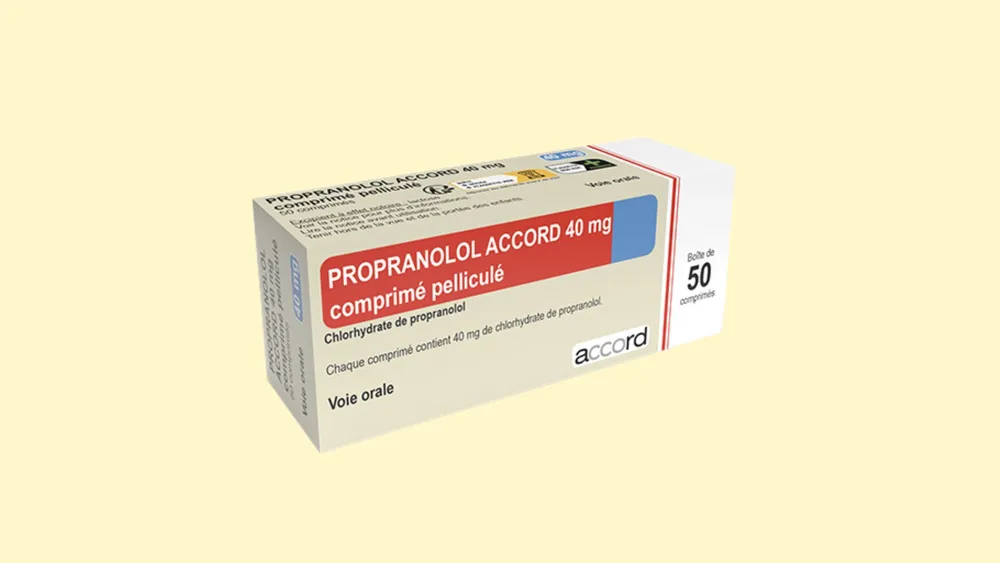
Table of Contents
Package leaflet: Information for the patient
Propranolol Accord, 10 mg, film-coated tablets
Propranolol Accord, 40 mg, film-coated tablets
Propranololi hydrochloridum
Read the entire leaflet before taking this medicine, as it contains important information for the patient.
- Keep this leaflet, so that you can reread it if necessary.
- If you have any doubts, please consult your doctor, pharmacist, or nurse.
- This medicine has been prescribed for a specific individual. Do not pass it on to others. The medicine may harm someone else, even if their symptoms are the same.
- If you experience any adverse effects, including any not listed in this leaflet, inform your doctor, pharmacist, or nurse. See section 4.
Table of contents
- What Propranolol Accord is and what it is used for
- Important information before taking Propranolol Accord
- How to take Propranolol Accord
- Possible side effects
- How to store Propranolol Accord
- Contents of the pack and other information
1. What Propranolol Accord is and what it is used for
Propranolol Accord contains propranolol hydrochloride, which belongs to a group of medicines called beta-blockers. It acts on the cardiovascular system and other parts of the body. Propranolol Accord may be used:
- in the treatment of hypertension (high blood pressure)
- in the treatment of angina pectoris (chest pain)
- in the treatment of certain arrhythmias (heart rhythm disorders)
- to protect the heart after myocardial infarction (heart attack)
- in the treatment of migraine
- in the treatment of essential tremor (involuntary and rhythmic trembling)
- in the treatment of certain thyroid disorders, such as thyrotoxicosis and hyperthyroidism (caused by excess thyroid hormones in the blood)
- in the treatment of hypertrophic cardiomyopathy (thickening of the heart muscle)
- in the treatment of phaeochromocytoma (high blood pressure caused by a tumour, usually located near the kidney)
- to prevent bleeding into the oesophagus due to high blood pressure in the liver.
2. Important information before taking Propranolol Accord
When not to take Propranolol Accord
- if you are allergic to propranolol hydrochloride or any of the other ingredients of this medicine (listed in section 6),
- if you have untreated/uncontrolled heart failure,
- if you have cardiogenic shock,
- if you have severe heart disease (second- or third-degree heart block), which may require treatment with a cardiac pacemaker,
- if you have conduction disorders or heart rhythm disturbances,
- if you have a very slow or very irregular heartbeat,
- if you have increased blood acidity (metabolic acidosis),
- if you are on a strict diet,
- if you have asthma, wheezing, or other breathing disorders,
- if you have untreated phaeochromocytoma (high blood pressure caused by a tumour, usually located near the kidney),
- if you have severe circulatory disorders (which may cause tingling, paleness, or bluish discoloration of fingers and toes),
- if you have constricting chest pain at rest (Prinzmetal's angina),
- if you have very low blood pressure.
If any of the above warnings apply to you or you have any doubts, consult your doctor before taking this medicine.
Warnings and precautions
Before starting treatment with Propranolol Accord, discuss with your doctor or pharmacist if:
- you experience allergic reactions, e.g., to insect stings.
- you have diabetes, as Propranolol Accord may alter the normal response to low blood sugar levels, which usually includes an increased heart rate. Propranolol may even lower blood sugar levels in patients without diabetes.
- you have thyrotoxicosis (a condition occurring in people with excess thyroid hormones). Propranolol may mask the symptoms of thyrotoxicosis.
- you have kidney or liver disease (including liver cirrhosis). In such cases, consult your doctor, as certain monitoring tests may be required during treatment.
- you have heart disease.
- you have muscle weakness (myasthenia gravis).
- you suffer from conditions such as chronic obstructive pulmonary disease or bronchospasm, as propranolol may worsen these conditions.
- you are taking calcium antagonists with negative inotropic effects, e.g., verapamil and diltiazem (see Propranolol Accord and other medicines).
- you or a family member has psoriasis (or has had it).
If you are scheduled for surgery, inform the anaesthesiologist that you are taking propranolol.
If you wear contact lenses, reduced tear production caused by propranolol may cause discomfort.
If you smoke tobacco, the effect of propranolol may be reduced.
Propranolol Accord and other medicines
Tell your doctor or pharmacist about all medicines you are currently taking, have recently taken, or plan to take. Propranolol Accord may affect the action of certain other medicines, and some medicines may affect the action of Propranolol Accord.
Do not take Propranolol Accord in combination with calcium antagonists having negative inotropic effects (e.g., verapamil, diltiazem), as this may enhance their effects. This may lead to severe hypotension and bradycardia.
Other medicines that should be used with caution in combination with Propranolol Accord include:
- nifedipine, nilvadipine, nicardipine, isradipine, lacidipine (used in the treatment of hypertension or angina pectoris)
- lidocaine (a local anaesthetic)
- disopyramide, quinidine, amiodarone, propafenone, and glycosides (used in the treatment of heart diseases)
- adrenaline (a medicine that stimulates heart function)
- ibuprofen and indomethacin (used for pain and inflammation)
- ergotamine, dihydroergotamine, or rizatriptan (used in the treatment of migraine)
- chlorpromazine and thioridazine (used in the treatment of certain psychiatric disorders)
- cimetidine (used in the treatment of gastric disorders)
- rifampicin (used in the treatment of tuberculosis)
- theophylline (used in the treatment of asthma)
- warfarin (used to thin the blood) and hydralazine (used in the treatment of hypertension)
- fingolimod (used in the treatment of multiple sclerosis)
- fluvoxamine and barbiturates (used in the treatment of anxiety and insomnia)
- MAO inhibitors (used in the treatment of depression).
If you are taking clonidine (used in the treatment of hypertension or migraine) and propranolol simultaneously, do not stop taking clonidine without medical advice. If discontinuation of clonidine becomes necessary, your doctor will advise you on how to do so.
Propranolol Accord with food, drink, and alcohol
Alcohol may affect the action of this medicine.
Surgical procedures
If you are scheduled for surgery, inform the anaesthesiologist or medical staff that you are taking Propranolol Accord.
Driving and operating machinery
It is unlikely that this medicine will affect your ability to drive or operate machinery. However, some people may occasionally experience dizziness or fatigue while taking propranolol. If such symptoms occur, consult your doctor for advice.
Pregnancy, breastfeeding, and fertility
If you are pregnant or breastfeeding, think you may be pregnant, or are planning to have a baby, consult your doctor or pharmacist before taking this medicine.
Pregnancy
Use of this medicine during pregnancy is not recommended unless your doctor considers it necessary.
Breastfeeding
Breastfeeding is not recommended while taking this medicine.
Propranolol Accord contains:
Propranolol contains lactose. If you have been diagnosed with an intolerance to certain sugars, consult your doctor before taking this medicine.
3. How to take Propranolol Accord
Always take this medicine exactly as prescribed by your doctor or pharmacist.
If in doubt, consult your doctor or pharmacist.
Take the tablet before meals with a small amount of water.
Swallow the tablet whole. Do not chew it.
Do not stop taking this medicine without your doctor's advice.
Adults
The recommended dosage for adults is given below:
| Recommended dose | Total daily dose (maximum) | |
| Arterial hypertension (high blood pressure) | Initially 40 mg twice or three times daily; dose | 160 mg to 320 mg |
| may be increased to 80 mg daily in weekly intervals. | ||
| Angina pectoris (chest pain) and atrial fibrillation | Initially 40 mg twice or three times daily; dose may be increased by 40 mg daily in weekly intervals. | 120 mg to 240 mg |
| Cardioprotection after myocardial infarction | Initially 40 mg four times daily; dose may be increased after a few days to 80 mg twice daily. | 160 mg |
| Prevention of migraine | Initially 40 mg two to three times daily; dose may be increased by 40 mg daily in weekly intervals. | 80 mg to 160 mg |
| Arrhythmias (heart rhythm disorders), hyperthyroidism and thyrotoxicosis (certain thyroid gland disorders), and hypertrophic cardiomyopathy (thickening of the heart muscle) | Initially 10 to 40 mg three or four times daily | 120 mg to 160 mg |
| Phaeochromocytoma | Before surgical procedure: 60 mg daily Treatment in inoperable tumour: 30 mg daily | 30 mg to 60 mg |
| Liver disease caused by high blood pressure | Initially 40 mg twice daily; dosage may then be increased to 80 mg twice daily. | 160 mg to 320 mg |
Children and adolescents
Propranolol may also be used to treat children with migraine and cardiac arrhythmias.
For the treatment of migraine, the dose in children under 12 years of age is 20 mg, two or three times daily; in children over 12 years of age, the dose is the same as in adults.
For the treatment of cardiac arrhythmias, the dose will be adjusted by the physician according to the child's age or body weight.
Elderly patients
In elderly patients, treatment may be initiated with a lower dose. The optimal dose will be determined individually by the physician.
Hepatic or renal impairment
The optimal dose will be determined individually by the physician.
Taking more Propranolol Accord than prescribed
If an overdose is taken by accident, contact a physician immediately or go to the nearest hospital emergency department.
Symptoms of overdose include very slow heart rate, marked decrease in blood pressure, heart failure, breathing difficulties, and associated symptoms such as fatigue, hallucinations, tremor, confusion, nausea, vomiting, muscle cramps, fainting, or coma, as well as low blood sugar levels. Always bring the remaining tablets and the packaging to facilitate identification of the drug.
If you forget to take Propranolol Accord
If the patient forgets to take the medicine at the usual time, it should be taken as soon as remembered.
However, if it is almost time for the next dose, the missed dose should be skipped. Do not take a double dose to make up for a missed dose.
Stopping Propranolol Accord
Do not stop taking this medicine without consulting your doctor. In some cases, gradual discontinuation of the medicine may be necessary.
If you have any further questions about the use of this medicine, consult your doctor or pharmacist.
4. Possible adverse reactions
Like all medicines, this medicine can cause adverse reactions, although not everyone will experience them.
The following adverse reactions may occur during treatment with this medicine.
Common (may occur in less than 1 in 10 patients):
- cold fingers and toes
- slowed heart rate, low blood pressure upon standing, collapse, palpitations, heart rhythm disorders, worsening of heart failure
- numbness and cramps in fingers, followed by sensation of warmth and pain (Raynaud's syndrome)
- sleep disturbances/nightmares, especially at the beginning of treatment, dizziness, disorientation
- fatigue and (or) exhaustion (often transient)
- skin allergic reactions (redness, itching, rash, hair loss)
Uncommon (may occur in less than 1 in 100 patients):
- nausea, vomiting and diarrhoea or constipation
- muscle weakness
Rare (may occur in less than 1 in 1,000 patients):
- paroxysmal narrowing of the airways or worsening of breathing difficulties, sometimes fatal in patients with bronchial asthma or asthmatic conditions
- heart failure, worsening of heart failure
- skin swelling which may affect the face, tongue, larynx, abdomen, arms or legs (angioedema)
- dizziness, especially upon standing
- worsening of blood circulation in the limbs in patients with existing circulatory disorders
- mood changes
- confusion
- psychosis or hallucinations (after abrupt discontinuation)
- paraesthesia (abnormal sensations, usually tingling or pricking)
- visual disturbances
- dry eyes
- the medicine may alter the number and type of blood cells, for example reduce the number of platelets (thrombocytopenia), which may lead to easier bruising and bleeding
- purpuric skin spots (purpura), large areas of hair loss, skin reactions resembling psoriasis (even after years), exacerbation of psoriasis
- dryness of the oral mucosa
Very rare (may occur in less than 1 in 10,000 patients):
- deficiency or very marked reduction in the number of white blood cells
- transient increase in certain white blood cells (transient eosinophilia)
- exacerbation of pathological muscle weakness (myasthenia), headache, depressive mood
- low blood sugar levels, which may occur in both diabetic and non-diabetic patients, elderly patients, patients undergoing dialysis or patients taking antidiabetic medicines; it may also occur in patients currently or recently fasting, and in patients with chronic liver disease
- worsening of diabetes, changes in certain blood lipid values (decreased HDL cholesterol, increased triglycerides)
- excessive sweating
- conjunctivitis
- muscle pain, muscle cramps
- arthropathy with long-term treatment
- worsening of kidney function in cases of severe renal failure
- disturbances in libido and erection
- increased levels of certain blood parameters (AspAT, AlAT, ANA)
Frequency not known (frequency cannot be estimated from available data):
- shortness of breath or dyspnoea
- depression
Discontinuation of the medicine (including due to the above reactions) should only be done after consultation with a doctor and should be carried out gradually.
Additional adverse reactions in children and adolescents
Very rare (may occur in less than 1 in 10,000 patients):
- Low blood sugar levels in newborns, infants and children
Frequency not known (frequency cannot be estimated from available data):
- Seizures caused by low blood sugar in newborns, infants and children
Reporting of adverse reactions
If any adverse symptoms occur, including any adverse symptoms not listed in this leaflet, inform your doctor or pharmacist. Adverse reactions can be reported directly to the Department of Monitoring Adverse Drug Reactions of the Office for Registration of Medicinal Products, Medical Devices and Biocidal Products
Al. Jerozolimskie 181C
02-222 Warsaw
Tel: +48 22 49 21 301
Fax: +48 22 49 21 309
Website: https://smz.ezdrowie.gov.pl
Adverse reactions may also be reported to the marketing authorisation holder.
Reporting adverse reactions helps provide more information on the safety of the medicine.
5. How to store Propranolol Accord
- Keep the medicine out of sight and reach of children.
- No special storage instructions required.
- Do not use this medicine after the expiry date stated on the blister and carton after EXP. The expiry date refers to the last day of the stated month.
- Medicines should not be disposed of via the sewage system or household waste.
- Ask your pharmacist how to dispose of medicines no longer in use. This will help protect the environment.
6. Contents of the pack and other information
What Propranolol Accord contains:
The active substance is propranolol hydrochloride.
Each coated tablet contains 10 mg or 40 mg of propranolol hydrochloride.
The other ingredients are:
Tablet core: maize starch, monohydrate lactose, microcrystalline cellulose, magnesium stearate
Coating: hypromellose, microcrystalline cellulose, mono- and diacetylated monoglycerides, titanium dioxide (E 171)
What Propranolol Accord looks like and contents of the pack:
10 mg: White or almost white, round, biconvex coated tablets, printed with the code "AI" on one side and a division line on the other.
40 mg: White or almost white, round, biconvex coated tablets, printed with the code "AL" on one side and a division line on the other.
The division line on the tablet is intended only to facilitate breaking the tablet for easier swallowing and does not ensure equal dose division.
The medicine is packed in PVC/PVDC/Aluminium blisters.
Pack sizes contain 25, 28, 30, 50, 56, 60, 100 and 250 coated tablets.
Not all pack sizes may be marketed.
Marketing Authorisation Holder:
Accord Healthcare Polska Sp. z o.o.
Taśmowa Street 7
02-677 Warsaw
Tel: +48 22 577 28 00
Manufacturer/Importer:
Accord Healthcare Polska Sp. z o.o.
Lutomierska Street 50
95-200 Pabianice
Accord Healthcare B.V.
Winthontlaan 200
3526 KV Utrecht
The Netherlands
This medicinal product is authorised in the Member States of the European Economic Area and the United Kingdom (Northern Ireland) under the following names:
| Member State | Trade name |
| Belgium | Propranolol Accord Healthcare 10mg/40 mg film-coated tablets/film-coated tablets/tablets with film coating |
| Bulgaria | Propranolol Accord 40mg/80mg film-coated tablets |
| Cyprus | Propranolol Accord 10mg/40mg film-coated tablets |
| Denmark | Propranolol Accord |
| Estonia | Propranolol Accord 40mg coated tablets with thin polymer film |
| Finland | Propranolol Accord 10mg/40mg/80mg film-coated tablets |
| France | Propranolol Accord 40mg film-coated tablet (scored) |
| Spain | Propranolol Accord 10mg/40mg film-coated tablets |
| Netherlands | Propranolol HCl Accord 10mg/40mg/80mg film-coated tablets |
| Malta | Propranolol Accord 10mg/40mg film-coated tablets |
| Germany | Propranolol Accord 10mg/40mg film-coated tablets |
| Poland | Propranolol Accord |
| Portugal | Propranolol Accord |
| Sweden | Propranolol Accord 10mg/40mg/80mg film-coated tablets |
| United Kingdom (Northern Ireland) | Propranolol Accord 10mg/40mg film-coated tablets |
| Italy | Propranolol Accord |