Polpril plus
Poland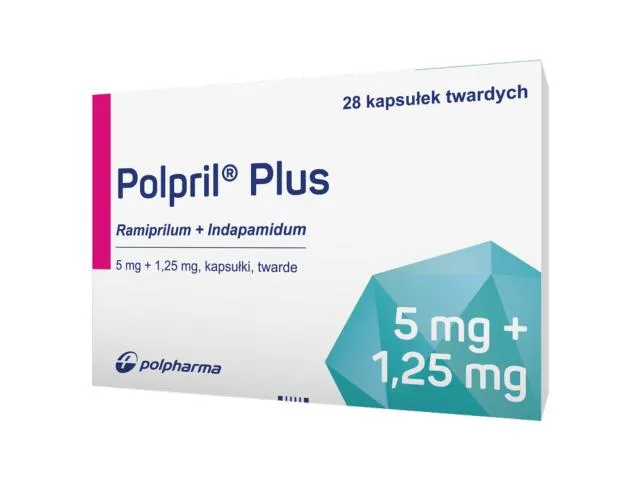
Table of Contents
Patient Information Leaflet
Polpril Plus, 5 mg + 1.25 mg, hard capsules
Polpril Plus, 5 mg + 2.5 mg, hard capsules
Polpril Plus, 10 mg + 1.25 mg, hard capsules
Polpril Plus, 10 mg + 2.5 mg, hard capsules
Ramiprilum + Indapamidum
Please read this leaflet carefully before taking this medicine, as it contains important information for you.
- Keep this leaflet so that you can read it again if necessary.
- If you have any questions, please consult your doctor or pharmacist.
- This medicine has been prescribed for a specific individual only. Do not share it with others. This medicine may harm other people, even if their symptoms are the same.
- If you experience any adverse reactions, including any not listed in this leaflet, tell your doctor, pharmacist, or nurse. See section 4.
Leaflet Contents
- What Polpril Plus is and what it is used for
- What you need to know before taking Polpril Plus
- How to take Polpril Plus
- Possible side effects
- How to store Polpril Plus
- Contents of the pack and other information
1. What Polpril Plus is and what it is used for
Polpril Plus contains two active substances called ramipril and indapamide. Ramipril belongs to a group of medicines known as ACE inhibitors (angiotensin-converting enzyme inhibitors). These work by reducing the production of a substance which may raise blood pressure in the body and by widening blood vessels, making it easier for the heart to pump blood through them.
Indapamide belongs to a class of medicines called "diuretics". Diuretics increase the amount of urine produced by the kidneys. However, indapamide differs from other diuretics because it causes only a small increase in urine production.
Each of these active substances lowers blood pressure, and together they work to control blood pressure.
This medicine is used for the treatment of essential hypertension (high blood pressure) as a replacement therapy in adult patients whose blood pressure is adequately controlled with ramipril and indapamide at the same dose as used in combination therapy but administered as separate medicines.
2. Important information before using Polpril Plus
When not to use Polpril Plus
- if the patient is allergic to ramipril or indapamide, other ACE inhibitors, or other sulfonamides, or any of the other ingredients of this medicine (listed in section 6). Signs of an allergic reaction may include: rash, difficulty swallowing or breathing, swelling of lips, face, throat or tongue.
- if the patient has ever had a serious allergic reaction called "angioedema". Symptoms include: itching, hives, red spots on the palms, soles and throat, swelling of the throat and tongue, swelling around eyes and lips, difficulty breathing and swallowing.
- if the patient has undergone dialysis or another type of blood filtration. Depending on the type of equipment used, Polpril Plus may not be suitable.
- if the patient has kidney diseases associated with reduced blood flow to the kidneys (renal artery stenosis);
- during the last 6 months of pregnancy (see subsection "Pregnancy and breastfeeding" below);
- if the patient is breastfeeding;
- if the patient's blood pressure is very low or unstable. The doctor should assess blood pressure.
- if the patient has diabetes or kidney dysfunction and is being treated with a blood pressure-lowering medicine containing aliskiren;
- if the patient has taken or is taking sacubitril + valsartan, a medicine used to treat chronic heart failure in adults, because the risk of angioedema (rapid swelling under the skin, e.g. in the throat) increases;
- if the patient has severe liver dysfunction or a condition called hepatic encephalopathy (neurological dysfunction due to liver damage);
- if the patient has severe renal failure;
- if the patient has low potassium levels in the blood (hypokalemia);
- if the patient has uncontrolled heart failure (especially untreated).
If any of the above situations apply to the patient (or there is uncertainty), contact a doctor before starting treatment with Polpril Plus.
Warnings and precautions
Before starting treatment with Polpril Plus, discuss this with your doctor or pharmacist.
Exercise particular caution when using Polpril Plus:
- if the patient has lost a significant amount of salt or fluids (due to vomiting, diarrhoea, excessive sweating, a low-salt diet, long-term use of diuretics, or dialysis);
- if the patient is to receive anaesthesia. This may be given in connection with surgery or dental procedures. Treatment with Polpril Plus may need to be interrupted one day before the procedure; if in doubt, contact your doctor;
- if desensitisation treatment for bee or wasp venom (allergy desensitisation) is planned;
- if blood tests have shown high potassium or low sodium levels;
- if the patient has a connective tissue vascular disease (when immune system problems affect collagen in the body), such as scleroderma (a chronic disease mainly affecting the skin) or systemic lupus erythematosus (a chronic inflammatory disease in which the immune system attacks healthy tissues);
- if the patient is of Black African origin. There is a higher risk of sudden, usually painful, severe angioedema, mainly affecting the face, and reduced effectiveness of ramipril;
- if the patient has a cough. Contact the doctor if it worsens;
- if the patient is taking any of the following medicines for high blood pressure:
- an angiotensin II receptor antagonist (AIIRA), also known as a sartan – for example, valsartan, telmisartan, irbesartan, especially if the patient has kidney disorders related to diabetes;
- aliskiren;
- if the patient is taking any of the following medicines, the risk of angioedema may increase:
- racecadotril, a medicine used to treat diarrhoea;
- medicines used to prevent organ transplant rejection and in cancer treatment (e.g. temsirolimus, sirolimus, everolimus);
- vildagliptin, a medicine used to treat diabetes;
- if the patient has heart, liver or kidney disease;
- if the patient has diabetes (blood sugar levels should be checked regularly);
- if the patient has gout;
- if the patient is photosensitive (immune system reactions to sunlight);
- if the patient experiences blurred vision or eye pain. These may be symptoms of fluid accumulation in the vascular layer surrounding the eye (excessive fluid accumulation between choroid and sclera) or increased intraocular pressure – they may occur from several hours to weeks after taking Polpril Plus. Without treatment, these symptoms may lead to permanent vision loss. If the patient previously had an allergy to penicillin or sulfonamides, they may be at increased risk of developing these symptoms;
- if the patient has electrolyte imbalances or dehydration;
- if the patient is scheduled for a test assessing parathyroid function.
The patient must inform the doctor if she suspects she is (or might be) pregnant. Use of Polpril Plus is not recommended during the first 3 months of pregnancy and must not be used after 3 months of pregnancy, as it may seriously harm the unborn child (see subsection "Pregnancy and breastfeeding").
If any of the above situations apply to the patient (or there is uncertainty), contact a doctor before starting treatment with Polpril Plus.
The doctor may recommend monitoring white blood cell count. More frequent monitoring is recommended:
- at the beginning of treatment;
- in patients with kidney dysfunction or connective tissue vascular diseases;
- when medicines affecting blood cell counts are used.
The doctor may recommend regular monitoring of kidney function, blood pressure, and blood electrolyte levels (such as sodium and potassium).
Athletes should be informed that Polpril Plus contains an active substance (indapamide) that may lead to a positive anti-doping test result.
See also information in the subsection "When not to use Polpril Plus".
Children and adolescents
Polpril Plus is not recommended for use in children and adolescents.
Polpril Plus and other medicines
Inform your doctor or pharmacist about all medicines currently used, recently used, or planned for use.
Polpril Plus must not be used:
- with lithium (used to treat depression).
The effect of Polpril Plus may be altered by other medicines. Inform your doctor if you are taking any of the following medicines, as special precautions may be necessary:
- sacubitril in combination with valsartan – used to treat chronic heart failure in adults (see section 2, subsection "When not to use Polpril Plus");
- medicines used to relieve pain and inflammation (e.g. non-steroidal anti-inflammatory drugs (NSAIDs) such as ibuprofen, indomethacin or acetylsalicylic acid);
- potassium supplements (including salt substitutes), potassium-sparing diuretics (e.g. spironolactone, triamterene, amiloride), and other medicines that may increase potassium levels in blood (e.g. trimethoprim and co-trimoxazole for bacterial infections; cyclosporine, an immunosuppressant used to prevent organ transplant rejection; and heparin, a medicine used to thin the blood to prevent clots);
- diuretics (water tablets), such as furosemide;
- blood pressure-lowering medicines;
- medicines used to treat low blood pressure, shock, heart failure, asthma or allergies, such as ephedrine, noradrenaline or adrenaline, as well as dopamine, dobutamine, epinephrine, isoprenaline;
- corticosteroids for inflammatory conditions, such as prednisolone;
- allopurinol (used to lower uric acid levels in blood);
- procainamide (used for heart rhythm disorders);
- temsirolimus (used to treat cancer);
- sirolimus, everolimus and other mTOR inhibitors (used to prevent organ transplant rejection);
- vildagliptin (used to treat type 2 diabetes);
- racecadotril (used to treat diarrhoea);
- medicines that may affect blood cell counts;
- intravenous erythromycin (an antibiotic used to treat infections);
- medicines used for heart rhythm disorders (quinidine, hydroquinidine, disopyramide, amiodarone, sotalol, dofetilide, ibutilide, digitalis preparations);
- medicines used to treat psychiatric disorders such as depression, anxiety, schizophrenia (e.g. tricyclic antidepressants, antipsychotics, neuroleptics);
- bepridil (used to treat angina pectoris, a condition causing chest pain);
- cisapride (used to treat oesophageal and gastric motility disorders);
- difemanil (used to treat gastrointestinal problems such as ulcers, excess acid, hyperactive gastrointestinal tract);
- sparfloxacin, moxifloxacin (antibiotics used to treat infections);
- vinpocetine injections (used to treat symptomatic cognitive disorders in the elderly, including memory loss);
- halofantrine (an antiparasitic medicine used to treat certain types of malaria);
- pentamidine (used to treat certain types of pneumonia);
- mizolastine (used to treat allergic reactions such as high fever);
- intravenous amphotericin B (an antifungal medicine);
- oral corticosteroids used to treat various conditions, including severe asthma and rheumatoid arthritis;
- stimulant laxatives;
- baclofen (used to treat muscle stiffness in conditions such as multiple sclerosis);
- diabetes medicines (e.g. metformin) and insulin;
- iodine-containing contrast agents (used in diagnostic X-ray procedures);
- calcium-containing medicines or other calcium supplements;
- tetracosactide (used in the treatment of Crohn's disease).
The doctor may recommend dose adjustment and/or additional precautions:
- if the patient is taking an angiotensin II receptor antagonist (AIIRA) or aliskiren (see also subsections "When not to use Polpril Plus" and "Warnings and precautions").
Polpril Plus with food and alcohol
Drinking alcohol while taking Polpril Plus may cause dizziness and drowsiness. If in doubt about the amount of alcohol permissible during treatment with Polpril Plus, consult your doctor, as the effects of alcohol and blood pressure-lowering medicines may be additive.
Pregnancy and breastfeeding
If the patient is pregnant or breastfeeding, suspects she may be pregnant, or plans to become pregnant, she should consult a doctor or pharmacist before using this medicine.
Pregnancy
The patient must inform the doctor if she suspects she is (or might be) pregnant. The doctor will advise stopping Polpril Plus before conception or immediately after pregnancy is confirmed and recommend an alternative medicine. Use of Polpril Plus is not recommended during the first trimester of pregnancy and must not be used after the third month of pregnancy, as it may seriously harm the unborn child.
Breastfeeding
Polpril Plus must not be taken during breastfeeding. Inform the doctor if the patient is breastfeeding or intends to breastfeed.
Driving and operating machinery
Polpril Plus has a minor or moderate effect on the ability to drive and operate machinery. While taking Polpril Plus, dizziness, headache, fatigue, weakness or nausea may occur. This is more likely at the beginning of treatment. If this occurs, do not drive, use tools, or operate machinery.
3. How to use Polpril Plus
This medicine should always be used exactly as recommended by your doctor or pharmacist. If in doubt,
please consult your doctor or pharmacist.
Use in adults
The recommended dose is one capsule once daily, preferably taken in the morning with an adequate amount
of fluid (e.g. a glass of water).
Use in children and adolescents
Polpril Plus is not recommended for use in children and adolescents due to lack of data
on safety and efficacy.
Taking more Polpril Plus than recommended
Seek immediate medical advice from a doctor or go to the nearest hospital emergency department.
Do not drive yourself—ask someone to take you to the hospital or call emergency services.
Take the medicine packaging with you so the doctor knows which medicine has been taken.
If you forget to take Polpril Plus
If you miss a dose, take the next dose at your usual time. Do not take a double dose to make up for
a missed capsule.
Stopping Polpril Plus
Do not stop taking this medicine or change the prescribed dose suddenly without consulting
your doctor, as your condition may worsen.
If you have any further questions about the use of this medicine, consult your doctor or pharmacist.
4. Possible adverse reactions
Like any medicine, this medicine can cause adverse reactions, although not everyone will experience them.
If any of the following serious adverse reactions occur, stop treatment with Polpril Plus immediately and contact a doctor immediately – urgent medical assistance may be required:
- swelling of the face, lips or throat causing difficulty swallowing or breathing, together with itching and rash. These may be symptoms of a severe allergic reaction to Polpril Plus.
- severe skin reactions, including rash, ulceration of the mucous membranes of the mouth, worsening of pre-existing skin disorders, redness, blistering or peeling of the skin (Stevens-Johnson syndrome, toxic epidermal necrolysis or erythema multiforme).
Contact a doctor immediately if the patient experiences:
- increased heart rate, irregular or stronger heartbeat (palpitations), chest pain, chest tightness or more serious conditions, including myocardial infarction or stroke;
- shortness of breath or cough, which may be symptoms of lung disorders;
- easy bruising, longer than usual bleeding time, any signs of bleeding (e.g. bleeding gums), purplish spots on the skin, or more frequent infections, sore throat and fever, fatigue, weakness, dizziness or paleness of the skin, which may be symptoms of blood or bone marrow disorders;
- severe abdominal pain radiating to the back, which may indicate pancreatitis;
- fever, chills, fatigue, loss of appetite, stomach pain, nausea, yellowing of the skin or eyes (jaundice) or liver damage;
- concentrated (dark-coloured) urine, nausea, muscle cramps, confusion and seizures, which may be caused by abnormal secretion of ADH (antidiuretic hormone).
Other adverse reactions
Inform the doctor if any of the following symptoms worsen or persist for more than a few days.
Common (occur in less than 1 in 10 patients)
- increased potassium levels in the blood, low potassium levels detected in blood tests;
- headache and dizziness;
- fainting, hypotension (abnormally low blood pressure), especially when standing or sitting up quickly;
- dry, irritating cough, sinusitis or bronchitis, shortness of breath;
- gastritis and/or enteritis, stomach or intestinal pain, diarrhoea, indigestion, nausea or vomiting;
- allergic reaction (particularly in people prone to allergic or asthmatic reactions) leading to skin rashes with spots and bumps;
- muscle cramps or pain;
- chest pain or feeling of fatigue.
Uncommon (occur in less than 1 in 100 patients)
- increased number of certain white blood cells (eosinophilia) detected during blood tests;
- loss or decrease of appetite (anorexia), low sodium levels in the blood, which may lead to dehydration and low blood pressure;
- depression, anxiety, increased nervousness or restlessness, sleep disturbances, including drowsiness;
- problems with balance (dizziness), itching and unusual skin sensations such as numbness, tingling, pricking, burning or stinging of the skin (paresthesia), loss or change of taste;
- visual disturbances (including blurred vision);
- myocardial ischaemia, including angina pectoris or myocardial infarction, rapid or irregular heartbeat, palpitations, swelling of ankles, feet or fingers;
- flushing;
- nasal congestion, difficulty breathing or worsening of asthma;
- pancreatitis, intestinal swelling called "intestinal angioedema" presenting with abdominal pain, vomiting and diarrhoea;
- heartburn, constipation or dry mouth;
- blood tests showing changes in liver, pancreas or kidney function;
- swelling of the face, lips or throat. See first bullet point at the beginning of section 4.
- sweating more than usual;
- rash, purplish spots on the skin (purpura), skin discoloration;
- joint pain;
- kidney function disorders, including acute kidney failure, increased need to pass urine;
- decreased libido in men or women, impotence (inability to achieve or maintain an erection);
- fever.
Rare (occur in less than 1 in 1,000 patients)
- decreased number of red blood cells, white blood cells or platelets or hemoglobin concentration detected in blood tests;
- low chloride levels in the blood, low magnesium levels in the blood;
- feeling of shakiness or disorientation;
- tremor, balance disorders;
- fatigue (weakness);
- inflammation of the conjunctiva ("pink eye");
- hearing impairment, tinnitus (perception of sounds in the ears);
- vasoconstriction, hypoperfusion (reduced blood flow), vasculitis (inflammation of blood vessels);
- inflammation of the tongue (swelling of the tongue);
- jaundice (yellowing of the skin and whites of the eyes), damaged liver cells;
- severe flaking or peeling of the skin, urticaria, nail problems (e.g. loosening or separation of the nail from the nail bed);
- weakness (asthenia).
Very rare (occur in less than 1 in 10,000 patients)
- increased calcium levels in the blood;
- decreased number of certain blood cells, which may cause weakness, bruising or increased risk of infections (hemolytic anemia); aplastic anemia (suppression of bone marrow function);
- irregular heartbeat;
- pancreatitis;
- abnormal liver function;
- photosensitivity reactions (skin changes) after exposure to sunlight or artificial UV light;
- severe skin reactions. See second bullet point at the beginning of section 4.
Frequency not known (frequency cannot be estimated from the available data)
- bone marrow failure, pancytopenia (low number of red and white blood cells and platelets), hemolytic anemia;
- severe allergic reactions;
- syndrome of inappropriate antidiuretic hormone secretion;
- difficulty concentrating;
- disorders of cerebral circulation, including stroke, burning sensation, change in smell;
- worsening of vision or eye pain due to high pressure [possible symptoms of fluid accumulation in the choroidal layer of the eye (choroidal effusion) or acute angle-closure glaucoma];
- life-threatening irregular heartbeat ( torsade de pointes );
- change in colour of fingers and toes when cold, followed by tingling or pain upon warming (Raynaud's phenomenon);
- inflammation of the oral mucosa (mucous membrane lining the inside of the mouth) with small ulcers;
- acute liver failure, hepatitis. If the patient has liver problems, taking Polpril Plus may cause a condition called hepatic encephalopathy (brain and nerve damage that may occur as a complication of liver disease);
- hair loss;
- breast enlargement in men (gynecomastia);
- abnormal ECG recording;
- blood test changes may occur and the doctor may order blood tests to monitor the patient's condition. The following changes in blood test results may occur:
- increased glucose levels in the blood in patients with diabetes;
- increased uric acid levels, a substance which may cause or worsen gout (joint pain, especially in the feet);
- increased liver enzyme activity.
Reporting of adverse reactions
If any adverse reactions occur, including any not listed in this leaflet, inform a doctor, pharmacist or nurse. Adverse reactions can be reported directly to the Department of Monitoring Adverse Drug Reactions of the Office for Registration of Medicinal Products, Medical Devices and Biocidal Products
Al. Jerozolimskie 181C
02-222 Warsaw
Tel.: + 48 22 49 21 301
Fax: + 48 22 49 21 309
Website: https://smz.ezdrowie.gov.pl
Adverse reactions can also be reported to the marketing authorization holder.
Reporting adverse reactions helps provide more information on the safety of the medicine.
5. How to store Polpril Plus
Keep this medicine out of sight and reach of children.
Do not store above 25°C.
Do not use this medicine after the expiry date stated on the packaging. The expiry date refers to the last day of the stated month.
The label on the pack shows EXP followed by the expiry date, and Lot followed by the batch number.
Medicines must not be disposed of via wastewater or household waste. Ask your pharmacist how to dispose of medicines no longer required. This will help protect the environment.
6. Contents of the pack and other information
What Polpril Plus contains
- The active substances are ramipril and indapamide. Each 5 mg + 1.25 mg capsule contains 5 mg of ramipril and 1.25 mg of indapamide. Each 5 mg + 2.5 mg capsule contains 5 mg of ramipril and 2.5 mg of indapamide. Each 10 mg + 1.25 mg capsule contains 10 mg of ramipril and 1.25 mg of indapamide. Each 10 mg + 2.5 mg capsule contains 10 mg of ramipril and 2.5 mg of indapamide.
- The other ingredients are: capsule contents: microcrystalline cellulose, mannitol, magnesium stearate; capsule shell: gelatin (bovine); capsules 5 mg + 2.5 mg, 10 mg + 1.25 mg, 10 mg + 2.5 mg contain: iron oxide red (E 172); capsules 5 mg + 1.25 mg, 5 mg + 2.5 mg, 10 mg + 1.25 mg contain: iron oxide yellow (E 172).
What Polpril Plus looks like and contents of the pack
Polpril Plus, 5 mg + 1.25 mg: Hard gelatin capsules, yellow, printed on the body with "5+1.25";
capsule size - No. 3 (approximately 16 mm in length), containing a filling of white or almost white powder or lightly compressed larger agglomerates.
Polpril Plus, 5 mg + 2.5 mg: Hard gelatin capsules, yellow body, orange cap, printed on the body with "5 mg+2.5 mg"; capsule size - No. 1 (approximately 19.5 mm in length), containing a filling of white or almost white powder or lightly compressed larger agglomerates.
Polpril Plus, 10 mg + 1.25 mg: Hard gelatin capsules, orange body, red cap, printed on the body with "10 mg+1.25 mg"; capsule size - No. 1 (approximately 19.5 mm in length), containing a filling of white or almost white powder or lightly compressed larger agglomerates.
Polpril Plus, 10 mg + 2.5 mg: Hard red gelatin capsules, printed on the body with "10 mg+2.5 mg"; capsule size - No. 1 (approximately 19.5 mm in length), containing a filling of white or almost white powder or lightly compressed larger agglomerates.
The medicine is packaged in aluminium/OPA/aluminium/PVC blisters in cardboard boxes containing 28 or 84 capsules.
Not all pack sizes may be marketed.
Marketing Authorisation Holder
Zakłady Farmaceutyczne POLPHARMA S.A.
ul. Pelplińska 19, 83-200 Starogard Gdański
tel. + 48 22 364 61 01
Manufacturer
Zakłady Farmaceutyczne POLPHARMA S.A.
ul. Metalowca 2, 39-460 Nowa Dęba
This medicine is authorised in the European Economic Area countries under the following names:
Bulgaria: ПОЛПРИЛ ПЛЮС 5 mg/1.25 mg твърди капсули, ПОЛПРИЛ ПЛЮС 5 mg/2.5 mg твърди капсули, ПОЛПРИЛ ПЛЮС 10 mg/1.25 mg твърди капсули, ПОЛПРИЛ ПЛЮС 10 mg/2.5 mg твърди капсули