Pirfenidone sandoz
Poland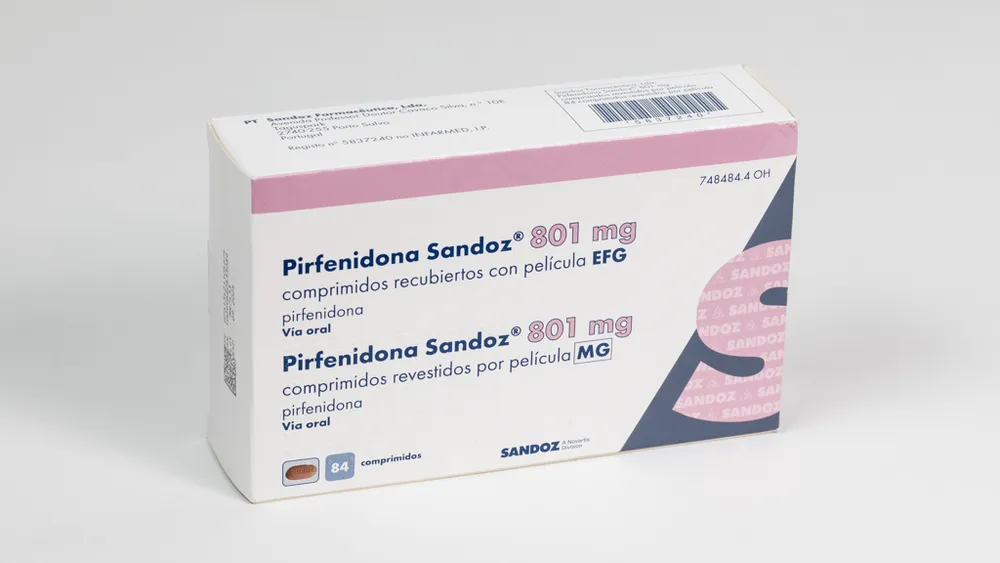
Table of Contents
Package leaflet: Information for the patient
Pirfenidone Sandoz, 267 mg, film-coated tablets
Pirfenidone Sandoz, 801 mg, film-coated tablets
Pirfenidone
Please read all of this leaflet carefully before taking this medicine, because it contains
important information for you.
Keep this leaflet as you may need to read it again.
If you have any further questions, please ask your doctor or pharmacist.
This medicine has been prescribed for a specific individual. Do not pass it on to others.
It may harm other people, even if their symptoms are the same as yours.
If you experience any side effects, including any possible side effects not listed in this leaflet,
inform your doctor or pharmacist. See section 4.
Contents of the leaflet:
- What Pirfenidone Sandoz is and what it is used for
- Important information before taking Pirfenidone Sandoz
- How to take Pirfenidone Sandoz
- Possible side effects
- How to store Pirfenidone Sandoz
- Contents of the pack and other information
1. What Pirfenidone Sandoz is and what it is used for
Pirfenidone Sandoz contains the active substance pirfenidone and is used to treat
idiopathic pulmonary fibrosis in adults.
Idiopathic pulmonary fibrosis is a disease in which lung tissue becomes inflamed and, over time,
scars, making deep breathing difficult. This impairs the proper function of the lungs.
Pirfenidone Sandoz helps reduce scarring and inflammation in the lungs and helps improve breathing.
2. Important information before using Pirfenidone Sandoz
When not to use Pirfenidone Sandoz
if the patient is allergic to pirfenidone or to any of the other ingredients of this medicine
(listed in section 6);
if the patient has previously experienced angioedema during treatment with pirfenidone,
including symptoms such as swelling of the face, lips and (or) tongue, which may have been associated
with difficulty breathing or wheezing;
if the patient is taking a medicine called fluvoxamine (used to treat depression and obsessive-compulsive disorder);
in cases of severe or end-stage liver failure;
in cases of severe or end-stage renal failure requiring dialysis.
If any of the above situations apply to the patient, Pirfenidone Sandoz must not be used. If in doubt, consult a doctor or pharmacist.
Warnings and precautions
Before starting treatment with Pirfenidone Sandoz, discuss this with your doctor or pharmacist.
During treatment with Pirfenidone Sandoz, increased sensitivity to sunlight (photosensitivity reaction) may develop. While taking Pirfenidone Sandoz, avoid exposure to sunlight (including use of sunbeds). Use sunscreen and cover arms, legs and head to minimize sun exposure (see section 4: Possible side effects).
Do not take other medicines such as tetracycline antibiotics (e.g. doxycycline) that may increase sensitivity to sunlight.
Inform your doctor if you have kidney function impairment.
Inform your doctor if you have mild or moderate liver function impairment.
Before starting and during treatment with Pirfenidone Sandoz, stop smoking. Smoking may reduce the effectiveness of Pirfenidone Sandoz.
Pirfenidone Sandoz may cause dizziness and fatigue. Exercise caution when performing tasks requiring alertness and coordination.
Pirfenidone Sandoz may cause weight loss. Your doctor will monitor your body weight during treatment.
Serious skin reactions such as Stevens-Johnson syndrome, toxic epidermal necrolysis, and drug reaction with eosinophilia and systemic symptoms (DRESS syndrome) have been reported with Pirfenidone Sandoz treatment. Discontinue Pirfenidone Sandoz and seek immediate medical advice if any symptoms related to these severe skin reactions occur, as described in section 4.
Pirfenidone Sandoz may cause severe liver function disorders, and some cases have been fatal. Before starting treatment with Pirfenidone Sandoz, blood tests must be performed and repeated monthly for the first 6 months of treatment, then every 3 months throughout treatment to monitor liver function. It is essential to have regular blood tests throughout the entire duration of treatment with Pirfenidone Sandoz.
Children and adolescents
Pirfenidone Sandoz must not be given to children and adolescents under 18 years of age.
Pirfenidone Sandoz and other medicines
Inform your doctor or pharmacist about all medicines currently used, recently taken, or planned for use. This is particularly important when taking the following medicines, as they may alter the effect of Pirfenidone Sandoz.
Medicines that may increase side effects of Pirfenidone Sandoz:
enoxacin (a type of antibiotic)
ciprofloxacin (a type of antibiotic)
amiodarone (a medicine used to treat certain heart conditions)
propafenone (a medicine used to treat certain heart conditions)
fluvoxamine (a medicine used to treat depression and obsessive-compulsive disorder).
Medicines that may reduce the effect of Pirfenidone Sandoz:
omeprazole (a medicine used to treat conditions such as indigestion, gastroesophageal reflux disease)
rifampicin (a type of antibiotic).
Pirfenidone Sandoz with food and drink
Do not drink grapefruit juice during treatment. Grapefruit may interfere with the proper action of Pirfenidone Sandoz.
Pregnancy and breastfeeding
If the patient is pregnant, planning pregnancy, or suspects she may be pregnant, it is recommended as a precautionary measure to avoid using Pirfenidone Sandoz, as the risk to the unborn child is unknown.
If the patient is breastfeeding or planning to breastfeed, consult a doctor or pharmacist before using Pirfenidone Sandoz. It is not known whether Pirfenidone Sandoz passes into human breast milk. Therefore, the doctor will discuss with the patient the risks and benefits of using this medicine during breastfeeding if the patient decides to do so.
Driving and operating machinery
Do not drive or operate any machinery if dizziness or fatigue occurs after taking Pirfenidone Sandoz.
Pirfenidone Sandoz contains sodium
This medicine contains less than 1 mmol sodium (23 mg) per tablet, i.e. this medicine is considered "sodium-free".
3. How to use Pirfenidone Sandoz
Treatment with Pirfenidone Sandoz should be initiated and supervised by a specialist physician experienced in the diagnosis and treatment of idiopathic pulmonary fibrosis. This medicine should always be used exactly as directed by your doctor or pharmacist. If you have any doubts, consult your doctor or pharmacist.
The medicine is usually administered in gradually increasing doses as follows:
- For the first 7 days, take 267 mg (1 yellow tablet) three times daily with food (total daily dose: 801 mg);
- From day 8 to day 14, take 534 mg (2 yellow tablets) three times daily with food (total daily dose: 1602 mg);
- From day 15 onwards (maintenance treatment), take 801 mg (3 yellow tablets or 1 dark pink tablet) three times daily with food (total daily dose: 2403 mg).
The recommended maintenance dose of Pirfenidone Sandoz is 801 mg (3 yellow tablets or 1 dark pink tablet) three times daily with food, for a total daily dose of 2403 mg.
Tablets should be swallowed whole with water, during or after a meal, to reduce the risk of adverse effects such as nausea and dizziness. If symptoms persist, consult your doctor.
Dose reduction due to adverse reactions
Your doctor may reduce the dose if you experience adverse reactions such as gastrointestinal disturbances, any skin reactions to sunlight or solarium exposure, or significant changes in liver enzyme activity.
Accidentally taking more Pirfenidone Sandoz than recommended
If you take more tablets than recommended, contact your doctor, pharmacist, or the emergency department of your nearest hospital immediately and bring the medicine with you.
Missing a dose of Pirfenidone Sandoz
If you miss a dose, take it as soon as possible. Do not take a double dose to make up for a missed dose. Maintain at least a 3-hour interval between doses. Do not take more tablets in one day than the recommended daily dose.
Stopping treatment with Pirfenidone Sandoz
In certain situations, your treating physician may advise stopping treatment with Pirfenidone Sandoz. If treatment with Pirfenidone Sandoz is interrupted for more than 14 consecutive days for any reason, your doctor will restart treatment at a dose of 267 mg three times daily, gradually increasing the dose to 801 mg three times daily.
If you have any further questions about the use of this medicine, consult your doctor or pharmacist.
4. Possible adverse reactions
Like all medicines, this medicine can cause adverse reactions, although not everyone will experience them.
Treatment with Pirfenidone Sandoz should be stopped immediately and medical help sought
if the patient experiences any of the following objective or subjective symptoms:
Swelling of the face, lips and (or) tongue, itching, urticaria, difficulty breathing or
wheezing, or feeling faint. These are symptoms of a severe allergic reaction known as
angioedema or anaphylaxis.
Yellowing of the eyes or skin, or dark urine, which may be accompanied by itching of the skin,
pain in the upper right part of the abdomen, loss of appetite, bleeding or bruising more easily than usual,
or feeling tired. These may be symptoms of liver dysfunction and may indicate liver damage,
which is an uncommon adverse reaction of Pirfenidone Sandoz.
Red, non-elevated or roundish spots on the trunk, often with centrally located blisters, peeling skin,
ulceration of the mouth, throat, nose, genital organs and eyes. These severe skin rashes may be
preceded by fever and flu-like symptoms (Stevens-Johnson syndrome or toxic epidermal necrolysis).
Widespread rash, high body temperature and swollen lymph nodes (DRESS syndrome or drug hypersensitivity syndrome).
Other adverse reactions that may occur
Talk to your doctor if you experience any adverse reactions.
Very common adverse reactions (may affect more than 1 in 10 people):
infections of the throat or respiratory tract leading to the lungs and (or) sinusitis
nausea
gastrointestinal disorders such as regurgitation of stomach contents into the oesophagus, vomiting, constipation
diarrhoea
dyspepsia or stomach upset
weight loss
decreased appetite
sleep disturbances
fatigue
dizziness
headache
dyspnoea
cough
joint pain
Common adverse reactions (may affect up to 1 in 10 people):
urinary bladder infections
feeling sleepy
taste disturbances
hot flushes
gastrointestinal disorders such as bloating, abdominal pain and discomfort, heartburn and flatulence
blood tests may show increased liver enzyme activity
skin reactions after exposure to sunlight or solarium
skin disorders such as itching, redness, dryness of the skin, skin rash
muscle pain
feeling weak or lack of energy
chest pain
sunburn
Uncommon adverse reactions (may affect up to 1 in 100 people):
low blood sodium levels. This may cause headache, dizziness, confusion, weakness, muscle cramps or nausea and vomiting.
blood tests may show decreased white blood cell count.
Reporting of adverse reactions
If any adverse reactions occur, including any not listed in this leaflet, inform your doctor, pharmacist or nurse. Adverse reactions can be reported directly to the Department of Monitoring of Adverse Drug Reactions at the Office for Registration of Medicinal Products, Medical Devices and Biocidal Products: Al. Jerozolimskie 181C, 02-222 Warsaw
tel.: + 48 22 49 21 301, fax: + 48 22 49 21 309, website: https://smz.ezdrowie.gov.pl
Adverse reactions can also be reported to the marketing authorization holder.
Reporting adverse reactions helps provide more information on the safety of this medicine.
5. How to store Pirfenidone Sandoz
Keep this medicine out of the sight and reach of children.
Do not use this medicine after the expiry date stated on the cardboard pack and
blister after EXP. The expiry date refers to the last day of the stated month.
Do not store this medicine above 30°C.
Medicines should not be disposed of via wastewater or household waste. Ask your
pharmacist how to dispose of medicines no longer required. This will help
protect the environment.
6. Contents of the pack and other information
What Pirfenidone Sandoz contains
Pirfenidone Sandoz, 267 mg, film-coated tablets
The active substance is pirfenidone. Each film-coated tablet contains 267 mg of pirfenidone.
Other ingredients are:
Tablet core: pregelatinized starch, corn; sodium croscarmellose;
hydroxypropylcellulose; silicon dioxide; magnesium stearate.
Tablet coating (Opadry yellow 85F220100): polyvinyl alcohol – partially hydrolysed;
titanium dioxide (E171); macrogol 3350; talc; iron oxide yellow (E172).
Pirfenidone Sandoz, 801 mg, film-coated tablets
The active substance is pirfenidone. Each film-coated tablet contains 801 mg of pirfenidone.
Other ingredients are:
Tablet core: pregelatinized starch, corn; sodium croscarmellose;
hydroxypropylcellulose; silicon dioxide; magnesium stearate.
Tablet coating (Opadry pink 85F240048): polyvinyl alcohol – partially hydrolysed;
titanium dioxide (E171); macrogol 3350; talc; iron oxide yellow (E172); iron oxide red (E172); iron oxide black (E172).
What Pirfenidone Sandoz looks like and contents of the pack
Pirfenidone Sandoz, 267 mg, film-coated tablets
The film-coated tablets are yellow, oval, biconvex, approximately 1.2 x 0.7 cm in size, with the imprint ‘SD267’ on one side.
Pirfenidone Sandoz, 801 mg, film-coated tablets
The film-coated tablets are dark pink, oval, biconvex, approximately 1.8 x 0.9 cm in size, with the imprint ‘SD801’ on one side.
Pirfenidone Sandoz, 267 mg, film-coated tablets
The medicine is available in PVC/PE/PVDC/Aluminium foil blisters in a cardboard carton:
Blisters containing 63 or 252 film-coated tablets.
Single-dose blisters containing 63 x 1 or 252 x 1 film-coated tablet.
Pirfenidone Sandoz, 801 mg, film-coated tablets
The medicine is available in PVC/PE/PVDC-Aluminium foil blisters in a cardboard carton:
Blisters containing 84 film-coated tablets.
Single-dose blisters containing 84 x 1 film-coated tablet.
Each blister is marked with the following symbols to remind you to take the dose three times a day:


(sunrise, morning dose) (sun; daytime dose) (moon, evening dose)
Mon. Tue. Wed. Thu. Fri. Sat. Sun.
Marketing Authorisation Holder and Manufacturer
Marketing Authorisation Holder
Sandoz GmbH
Biochemiestrasse 10
A-6250 Kundl
Austria
Manufacturer
Lek Pharmaceuticals d.d.
Verovškova 57
1526 Ljubljana
Slovenia
Lek Pharmaceuticals d.d.
Trimlini 2d
9220 Lendava
Slovenia
This medicinal product is authorised in the Member States of the European Economic Area under the following names:
Denmark Pirfenidone Sandoz
Belgium Pirfenidon Sandoz 267 mg filmomhulde tabletten
Pirfenidon Sandoz 801 mg filmomhulde tabletten
Greece Pirfenidone/Sandoz 267 mg επικαλυμμένα με λεπτό υμένιο δισκία
Spain Pirfenidona Sandoz 267 mg comprimidos recubiertos con película EFG
Pirfenidona Sandoz 801 mg comprimidos recubiertos con película EFG
Finland Pirfenidone Sandoz 267 mg tabletti, kalvopäällysteinen
Pirfenidone Sandoz 801 mg tabletti, kalvopäällysteinen
France PIRFENIDONE SANDOZ 267 mg, comprimé pelliculé
PIRFENIDONE SANDOZ 801 mg, comprimé pelliculé
Hungary Pirfenidon Sandoz 267 mg filmom obložene tablete
Pirfenidon Sandoz 801 mg filmom obložene tablete
Italy Pirfenidone Sandoz
Northern Ireland Pirfenidone Sandoz 267 mg, Filmcoated Tablet
Pirfenidone Sandoz 801 mg, Filmcoated Tablet
Netherlands Pirfenidon Sandoz 267 mg, filmomhulde tabletten
Pirfenidon Sandoz 801 mg, filmomhulde tabletten
Norway Pirfenidone Sandoz
Poland Pirfenidone Sandoz
Portugal Pirfenidona Sandoz
Sweden Pirfenidone Sandoz
For more detailed information about this medicine, please contact the local representative of the Marketing Authorisation Holder:
Sandoz Polska Sp. z o.o.
ul. Domaniewska 50 C
02-672 Warszawa
tel. 22 209 70 00