Palifren long
Poland
Table of Contents
- Patient Information Leaflet
- 1. What Palifren Long is and what it is used for
- 2. Important information before using Palifren Long
- 3. How to use Palifren Long
- 4. Possible adverse effects
- 5. How to store Palifren Long
- 6. Contents of the package and other information
- Information intended solely for healthcare professionals or healthcare workers and must be read together with the full product information (Summary of Product Characteristics).
Patient Information Leaflet
Palifren Long, 25 mg, prolonged-release injectable suspension
in pre-filled syringe
Palifren Long, 50 mg, prolonged-release injectable suspension
in pre-filled syringe
Palifren Long, 75 mg, prolonged-release injectable suspension
in pre-filled syringe
Palifren Long, 100 mg, prolonged-release injectable suspension
in pre-filled syringe
Palifren Long, 150 mg, prolonged-release injectable suspension
in pre-filled syringe
Palifren Long, 100 mg / 150 mg, prolonged-release injectable suspension
in pre-filled syringe: initiation pack
Paliperidone
Please read this leaflet carefully before using this medicine, as it contains
important information for you.
- Keep this leaflet, as you may need to read it again.
- If you have any questions, please consult your doctor, pharmacist, or nurse.
- If you experience any side effects, including any not listed in this leaflet, tell your doctor, pharmacist, or nurse. See section 4.
Table of contents
- What Palifren Long is and what it is used for
- What you need to know before using Palifren Long
- How to use Palifren Long
- Possible side effects
- How to store Palifren Long
- Contents of the pack and other information
1. What Palifren Long is and what it is used for
Palifren Long contains the active substance paliperidone, which belongs to a group of medicines called antipsychotics. It is used for the maintenance treatment of symptoms of schizophrenia in stable adult patients who have been previously treated with paliperidone or risperidone.
In patients who have previously responded to oral paliperidone or risperidone and whose psychotic symptoms are mild to moderate, your doctor may initiate treatment with Palifren Long without prior stabilisation with paliperidone or risperidone.
Schizophrenia is a disorder with both "positive" and "negative" symptoms. Positive symptoms refer to the presence of abnormal experiences that are usually not present. For example, a person with schizophrenia may hear voices or see things that are not there (hallucinations), believe things that are not true (delusions), or be excessively suspicious of others. Negative symptoms refer to the absence or reduction of normal behaviours or emotions. For example, a person with schizophrenia may appear withdrawn, emotionally unresponsive, socially isolated, or may have difficulty speaking clearly and logically. People with this condition may also experience depression, anxiety, guilt, or tension.
Palifren Long helps to reduce the symptoms of the illness and helps prevent their recurrence.
2. Important information before using Palifren Long
When not to use Palifren Long
- If the patient is allergic to paliperidone or any of the other ingredients of this medicine (listed in section 6).
- If the patient is allergic to another antipsychotic medicine, including the substance risperidone.
Warnings and precautions
Before starting treatment with Palifren Long, discuss this with your doctor, pharmacist, or
nurse.
The use of this medicine in elderly patients with dementia has not been studied. However, in such
patients treated with other similar medicines, there may be an increased risk of stroke or death (see section 4, "Possible side effects").
All medicines have side effects. Some of the side effects of this medicine may worsen symptoms of other medical conditions. Therefore, during treatment with this medicine, discuss each of the following conditions with your doctor:
- if the patient has Parkinson's disease
- if the patient has ever been diagnosed with a condition characterised by symptoms such as high fever and muscle stiffness (also known as neuroleptic malignant syndrome)
- if the patient has ever experienced abnormal movements of the tongue or facial muscles (tardive dyskinesia)
- if the patient has previously had a low white blood cell count (which may or may not have been caused by other medicines)
- if the patient has diabetes or is predisposed to developing diabetes
- if the patient has breast cancer or a pituitary gland tumour
- if the patient has heart disease or is being treated for heart conditions that may predispose to hypotension
- if the patient has low blood pressure upon sudden change to a standing or sitting position
- if the patient has epilepsy
- if the patient has been diagnosed with kidney function disorders
- if the patient has been diagnosed with liver function disorders
- if the patient experiences prolonged and/or painful erection
- if the patient has problems with body temperature regulation or overheating
- if the patient has abnormally increased levels of the hormone prolactin in the blood or suspected prolactin-dependent tumour
- if the patient or a family member has a history of blood clots in blood vessels, as antipsychotic medicines are associated with their development.
If the patient meets any of the above criteria, they should consult their doctor, who may adjust the dose or monitor the patient periodically.
The treating doctor may order a white blood cell count test, as very rarely, dangerously low levels of certain types of white blood cells essential for fighting infections have been observed in patients taking this medicine.
Even if the patient previously tolerated oral paliperidone or risperidone well, allergic reactions may rarely occur after Palifren Long injections. Immediate medical help should be sought if the patient develops rash, throat swelling, itching, or difficulty breathing, as these may be symptoms of a severe allergic reaction.
This medicine may cause weight gain. Significant weight gain may adversely affect the patient's health. The treating doctor will regularly monitor the patient's body weight.
The treating doctor will check for symptoms of elevated blood sugar levels, as new-onset diabetes or worsening of pre-existing diabetes has been observed in patients taking this medicine. Patients with pre-existing diabetes should have their blood glucose levels monitored regularly.
Because this medicine may suppress vomiting, it may mask the body's normal response to ingesting toxic substances or other medical conditions.
During cataract surgery, the pupil may not dilate sufficiently.
Also, the iris of the eye may be flaccid during the procedure, which may result in eye damage.
If the patient is scheduled for eye surgery, they should inform the ophthalmologist that they are taking this medicine.
Children and adolescents
This medicine is not intended for use in individuals under 18 years of age.
Palifren Long and other medicines
Tell your doctor about all medicines the patient is currently taking or has recently taken, as well as any medicines they plan to use.
Taking this medicine together with carbamazepine (an anticonvulsant and mood-stabilising agent) may require adjustment of the dose of this medicine.
Because this medicine acts primarily in the brain, combining it with other medicines acting on the brain—such as other psychotropic medicines, opioids, antihistamines, and sedatives—may increase side effects such as drowsiness or other central nervous system effects.
This medicine may lower blood pressure; therefore, caution is advised when using it together with other medicines that lower blood pressure.
This medicine may reduce the effectiveness of medicines used in Parkinson's disease and restless legs syndrome (e.g. levodopa).
This medicine may cause abnormalities in the electrocardiogram (ECG), manifesting as prolongation of the electrical impulse through a specific part of the heart (known as "QT interval prolongation"). Other medicines with this effect include certain medicines used to regulate heart rhythm or treat infections, as well as other antipsychotic medicines.
If the patient is prone to seizures, this medicine may increase the risk of their occurrence. Other medicines with this effect include certain antidepressants or medicines used to treat infections, as well as other antipsychotics.
Caution is advised when using Palifren Long together with medicines that increase central nervous system activity (psychostimulants such as methylphenidate).
Palifren Long and alcohol
Alcohol consumption should be avoided.
Pregnancy and breastfeeding
If the patient is pregnant or breastfeeding, suspects she may be pregnant, or is planning to have a child, she should consult her doctor or pharmacist before using this medicine.
This medicine should not be used during pregnancy unless discussed with a doctor.
Newborns whose mothers used paliperidone during the third trimester (last 3 months of pregnancy) may experience the following symptoms: tremors, muscle stiffness and/or weakness, drowsiness, agitation, breathing difficulties, and feeding problems. If such symptoms are observed in the child, contact a doctor immediately.
This medicine may pass from the mother's body into breast milk and harm the child.
Therefore, breastfeeding must not be undertaken while using this medicine.
Driving and operating machinery
During treatment with this medicine, dizziness, extreme tiredness, and vision disturbances may occur (see section 4). This should be taken into account in situations requiring full alertness, such as driving a vehicle or operating machinery.
Palifren Long contains sodium
This medicine contains less than 1 mmol of sodium (23 mg) per dose, meaning the medicine is considered "sodium-free".
3. How to use Palifren Long
The medicine is administered by a doctor or other healthcare professional. Your doctor will inform you when the next injection is due. It is important not to miss a scheduled dose. If you are unable to keep the scheduled appointment, you should immediately inform your doctor so that a new appointment can be arranged as soon as possible.
The first (150 mg) and second (100 mg) injections of this medicine will be given into the upper arm, approximately one week apart. Afterwards, monthly injections (in doses ranging from 25 mg to 150 mg) will be administered into the upper arm or buttock.
If your doctor decides to switch you from long-acting risperidone injections to this medicine, the first injection (in a dose ranging from 25 mg to 150 mg) will be given into the upper arm or buttock on the day the next scheduled injection is due. Subsequently, monthly injections (in doses ranging from 25 mg to 150 mg) will be administered into the upper arm or buttock.
Depending on the patient's symptoms, the doctor may increase or decrease the dose by one level during the scheduled monthly injection.
Patients with kidney function disorders
The doctor will adjust the dose based on kidney function. If the patient has mild kidney function impairment, the doctor may reduce the dose. This medicine should not be used in patients with moderate or severe kidney function impairment.
Elderly patients
The doctor may reduce the dose if the patient has impaired kidney function.
Use of a higher than recommended dose of Palifren Long
This medicine will be administered under medical supervision, so overdose is unlikely.
In patients who have received an excessive dose of paliperidone, the following symptoms may occur:
drowsiness and sedation, increased heart rate, low blood pressure, abnormal ECG (electrocardiogram), or slowed or abnormal movements of the face, body, arms, or legs.
Discontinuation of Palifren Long
If the patient stops receiving injections, the medicine will stop working. Do not discontinue treatment unless instructed by the doctor, as symptoms of the illness may return.
If you have any further questions about the use of this medicine, consult your doctor or pharmacist.
4. Possible adverse effects
Like all medicines, this medicine can cause adverse effects, although not everyone will experience them.
You should immediately inform your doctor if:
- the patient develops blood clots in the veins, especially in the legs (symptoms include swelling, pain and redness of the leg), which may travel through blood vessels to the lungs, causing chest pain and difficulty breathing. If such symptoms occur, immediate medical help should be sought.
- the patient with dementia experiences a sudden change in mental state or sudden weakness or numbness of the face, arms or legs, particularly on one side, or speech disturbances, even if brief. These symptoms may indicate a stroke.
- fever, muscle stiffness, sweating or decreased level of consciousness occur (a condition known as neuroleptic malignant syndrome). Immediate treatment may be necessary.
- a man experiences prolonged or painful erection. This condition is known as "priapism". Immediate treatment may be necessary.
- involuntary rhythmic movements of the tongue, lips or face occur. Discontinuation of paliperidone treatment may be necessary.
- a severe allergic reaction occurs, characterised by: fever, swelling of the lips, face, mouth or tongue, shortness of breath, itching, skin rash, and sometimes low blood pressure (known as "anaphylactic reaction"). Even if the patient previously tolerated risperidone or paliperidone taken orally, allergic reactions may rarely occur after paliperidone injections.
- the patient has planned eye surgery, the ophthalmologist should be informed about taking this medicine. During cataract removal, floppy iris syndrome may occur, which may lead to eye damage.
- the patient develops a dangerously low number of certain white blood cells essential for fighting infections. The following adverse effects may occur:
Very common adverse effects (may occur in more than 1 in 10 patients)
- difficulty falling asleep or waking up
Common adverse effects (may occur in less than 1 in 10 patients)
- cold-like symptoms, urinary tract infection, flu-like symptoms
- Palifren Long may increase the level of the hormone prolactin in the blood (this may, but does not necessarily, cause symptoms). If symptoms of increased prolactin occur, they may include in men: breast swelling, difficulty achieving or maintaining erection, or other sexual disturbances. In women, they may include breast discomfort, milk leakage from the breasts, absence of menstrual bleeding or other menstrual cycle disturbances
- high blood sugar levels, weight gain, weight loss, decreased appetite
- irritability, depression, anxiety
- parkinsonism: this condition may include slow or abnormal movements, feelings of stiffness or muscle tension (causing the patient's movements to be uneven and abrupt), and sometimes even a feeling of "freezing" of movements followed by sudden release. Other symptoms of parkinsonism include: slow shuffling gait, resting tremor, increased salivation and/or drooling, and expressionless face
- psychomotor restlessness, feeling drowsy or lethargic
- dystonia: this condition involves slow or sustained involuntary muscle contractions. Although it may affect any part of the body (which may result in abnormal body posture), dystonia most commonly affects facial muscles, including abnormal eye, mouth, tongue or jaw movements
- dizziness
- dyskinesia: this condition involves involuntary muscle movements and may present as repetitive, spasmodic or twisting movements or jerks
- tremor
- headache
- rapid heartbeat
- high blood pressure
- cough, stuffy nose
- abdominal pain, vomiting, nausea, constipation, diarrhoea, indigestion, toothache
- increased liver enzyme activity in blood
- bone or muscle pain, back pain, joint pain
- absence of menstruation
- galactorrhoea
- fever, weakness, fatigue
- injection site reaction, including itching, pain or swelling
Uncommon adverse effects (may occur in less than 1 in 100 patients)
- pneumonia, bronchitis, respiratory tract infections, sinus infection, bladder infection, ear infection, fungal nail infection, tonsillitis, skin infection
- decreased number of white blood cells, decreased number of certain white blood cells protecting against infections, decreased number of platelets (blood cells responsible for stopping bleeding), anaemia
- allergic reaction
- development of diabetes and worsening of pre-existing diabetes, increased blood insulin levels (hormone regulating blood sugar levels)
- increased appetite
- loss of appetite leading to malnutrition and low body weight
- high levels of triglycerides (fats) in blood, increased cholesterol levels in blood
- sleep disturbances, elevated mood (mania), decreased libido, nervousness, nightmares
- tardive dyskinesia (twitching or jerking uncontrolled movements of the face, tongue or other body parts). You should immediately inform your doctor if involuntary rhythmic movements of the tongue, lips or face occur. Discontinuation of this medicine may be necessary
- fainting, need to move body parts, dizziness upon standing, difficulty concentrating, speech difficulties, loss or altered sense of taste, reduced sensitivity to pain and touch on the skin, tingling, pricking or numbness of the skin
- blurred vision, eye infection or conjunctivitis, dry eyes
- feeling of dizziness, ringing in the ears, ear pain
- conduction block between heart chambers, abnormal electrical conduction in the heart, QT interval prolongation in the heart, rapid heartbeat upon standing, slow heart rate, abnormal electrocardiogram (ECG), palpitations
- low blood pressure, low blood pressure upon standing
- (as a result, some patients taking this medicine may faint, feel dizzy or lose consciousness when standing up suddenly or rising)
- shallow breathing, congestion of the airways, wheezing, sore throat, nosebleed
- abdominal discomfort, stomach or intestinal infection, difficulty swallowing, dry mouth
- excessive passing of gas
- increased GGTP enzyme activity (liver enzyme - gamma-glutamyl transferase) in blood, increased liver enzyme activity in blood
- hives, itching, rash, hair loss, skin eruption, dry skin, redness of the skin, acne
- increased CPK (creatine phosphokinase) activity in blood – an enzyme sometimes released from damaged muscles
- muscle cramps, joint stiffness, muscle weakness, neck pain
- urinary incontinence, frequent urination, painful urination
- erectile dysfunction, ejaculation disorders, absence of menstruation and other menstrual cycle disturbances (in women), breast enlargement in men, sexual disturbances, breast pain
- swelling of the face, lips, eyes or eyelids, swelling of the body, upper or lower limbs
- increased body temperature
- change in gait
- chest pain, chest discomfort, malaise
- skin hardening
- fall
Rare adverse effects (may occur in less than 1 in 1,000 patients)
- eye infection
- skin inflammation caused by mites, subcutaneous abscess
- increased number of eosinophils (a type of white blood cell) in blood
- abnormal secretion of the hormone regulating urine volume
- glucose in urine
- life-threatening complications of untreated diabetes
- low blood sugar levels
- excessive water drinking
- lack of movement and response to stimuli in a patient who is not asleep (catatonia)
- disorientation
- sleepwalking
- lack of emotions
- inability to achieve orgasm
- neuroleptic malignant syndrome (disorientation, decreased or lost consciousness, high fever and severe muscle rigidity), cerebral vascular disorders including sudden interruption of blood flow to the brain (stroke or "mini" stroke), lack of response to stimuli, loss of consciousness, low level of consciousness, seizures, balance disturbances
- abnormal motor coordination
- glaucoma (increased pressure in the eyeball)
- eye movement disorders, rotary eye movements, light sensitivity, increased tearing, red eyes
- atrial fibrillation (irregular heartbeat), irregular heart rhythm
- blood clots in veins, especially in the lower limbs (symptoms include swelling, pain and redness of the lower limbs). If such symptoms occur, immediate medical help should be sought
- flushing attacks
- breathing disturbances during sleep (sleep apnoea)
- blood congestion in the lungs
- crackling sounds in the lungs
- pancreatitis, tongue swelling, faecal incontinence, very hard stool
- chapped lips
- drug-related skin rash, skin thickening, dandruff
- muscle fibre breakdown and muscle pain (rhabdomyolysis)
- joint swelling
- inability to urinate
- breast discomfort, enlargement of mammary glands, breast enlargement
- vaginal discharge
- very low body temperature, chills, feeling of thirst
- withdrawal symptoms
- abscess due to infection at the injection site, deep skin infection, cyst at the injection site, bruising at the injection site
Adverse effects of unknown frequency (frequency cannot be estimated from available data)
- dangerously low number of certain white blood cells responsible for fighting infections;
- severe allergic reaction characterised by fever, swelling of lips, face, mouth or tongue, shallow breathing, itching, skin rash, and sometimes low blood pressure
- dangerously excessive water drinking – water intoxication
- sleep-related eating disorders
- coma due to uncontrolled diabetes
- head tremors
- pulmonary embolism causing chest pain and breathing difficulties. If such symptoms occur, immediate medical help should be sought
- reduced oxygenation of various body parts (due to reduced blood flow)
- rapid, shallow breathing, aspiration pneumonia, voice disturbances
- intestinal obstruction, lack of intestinal peristalsis leading to obstruction
- yellowing of the skin and eyes (jaundice)
- severe or life-threatening blistering rash with skin peeling, which may appear in the mouth, nose, eyes and genital organs and around these areas and may also spread to other parts of the body (Stevens-Johnson syndrome or toxic epidermal necrolysis)
- severe allergic reaction with swelling which may involve the throat and lead to breathing difficulties
- skin discoloration, peeling and itching of the scalp or body
- abnormal body posture
- newborns whose mothers used Palifren Long during pregnancy may experience adverse effects of the medicine and/or withdrawal symptoms such as: irritability, slow or sustained muscle contractions, tremor, drowsiness, breathing difficulties and feeding difficulties
- priapism (prolonged erection which may require surgical intervention)
- decreased body temperature
- necrosis at the injection site and ulcer at the injection site
Reporting of adverse effects
If any adverse effects occur, including any not listed in this leaflet, you should inform your doctor, pharmacist or nurse. Adverse effects can be reported directly to the Department of Monitoring Adverse Drug Reactions of the Office for Registration of Medicinal Products, Medical Devices and Biocidal Products, Al. Jerozolimskie 181C, 02-222 Warsaw, Tel.: +48 22 49 21 301, Fax: +48 22 49 21 309, Website: https://smz.ezdrowie.gov.pl
Adverse effects can also be reported to the marketing authorisation holder. Reporting adverse effects helps to gather more information on the safety of the medicine.
5. How to store Palifren Long
Keep this medicine out of sight and reach of children.
Do not use this medicine after the expiry date stated on the carton. The expiry date refers to the last day of the stated month.
Do not store above 30°C.
Medicines must not be disposed of via wastewater or household waste. Ask your pharmacist how to dispose of medicines no longer required. Such practices help protect the environment.
6. Contents of the package and other information
What Palifren Long contains
The active substance is paliperidone.
Each pre-filled syringe of Palifren Long 25 mg contains 39 mg of paliperidone palmitate, equivalent to
25 mg of paliperidone.
Each pre-filled syringe of Palifren Long 50 mg contains 78 mg of paliperidone palmitate, equivalent to
50 mg of paliperidone.
Each pre-filled syringe of Palifren Long 75 mg contains 117 mg of paliperidone palmitate, equivalent to
75 mg of paliperidone.
Each pre-filled syringe of Palifren Long 100 mg contains 156 mg of paliperidone palmitate, equivalent to
100 mg of paliperidone.
Each pre-filled syringe of Palifren Long 150 mg contains 234 mg of paliperidone palmitate, equivalent to
150 mg of paliperidone.
The other ingredients are: polysorbate 20, macrogol 4000, monohydrate citric acid, disodium phosphate,
monohydrate sodium dihydrogen phosphate, sodium hydroxide (for pH adjustment), water for injections.
What Palifren Long looks like and contents of the pack
Palifren Long is a white or off-white (ivory-coloured) prolonged-release injectable suspension in a pre-filled syringe.
Each pack contains: 1 pre-filled syringe and 2 needles.
Initiation pack:
Each initiation pack contains 1 pre-filled syringe containing 150 mg of paliperidone and 2 needles, and
1 pre-filled syringe containing 100 mg of paliperidone and 2 needles.
Not all pack sizes may be marketed.
Marketing Authorisation Holder
Adamed Pharma S.A.
Pieńków, ul. M. Adamkiewicza 6A
05-152 Czosnów
tel.: +48 22 732 77 00
Manufacturer
Adamed Pharma S.A.
ul. Marszałka Józefa Piłsudskiego 5
95-200 Pabianice
Pharmathen International S.A.
Industrial Park Sapes
Rodopi Prefecture, Block No 5
69300 Rodopi
Greece
Pharmathen S.A.
Dervenakion 6
15351 Pallini Attiki
Greece
This medicinal product is authorised in the European Economic Area countries under the following names:
Austria: Palibon
Croatia: Arion
Cyprus: Psokardon
Denmark: Psokardon
Greece: Psokardon
Luxembourg: Psokardon
Portugal: Psokardon
Information intended solely for healthcare professionals or healthcare workers and must be read together with the full product information (Summary of Product Characteristics).
The injectable suspension is intended for single use only. Prior to administration, inspect visually for the presence of foreign particles. If foreign particles are observed in the pre-filled syringe, do not use the medicinal product.
The package contains a pre-filled syringe and two safety needles [22G 1.5 inch (38.1 mm x 0.72 mm) and 23G 1 inch (25.4 mm x 0.64 mm)] for intramuscular administration. The medicinal product Palifren Long is also available in a starter pack containing two pre-filled syringes (150 mg + 100 mg) and two additional safety needles.
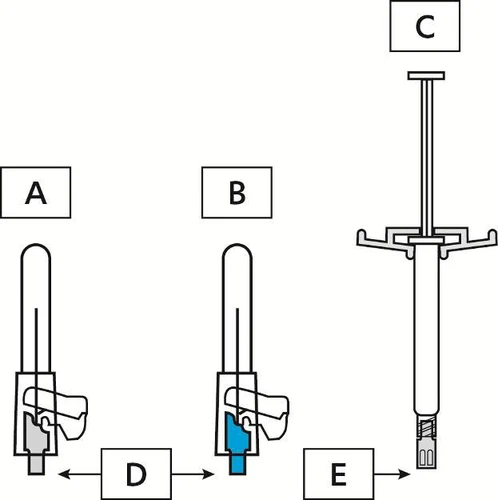
(A) 22 G x 1.5 inch (gray hub)
(B) 23 G x 1 inch (blue hub)
(C) Pre-filled syringe
(D) Hub
(E) Tip cap
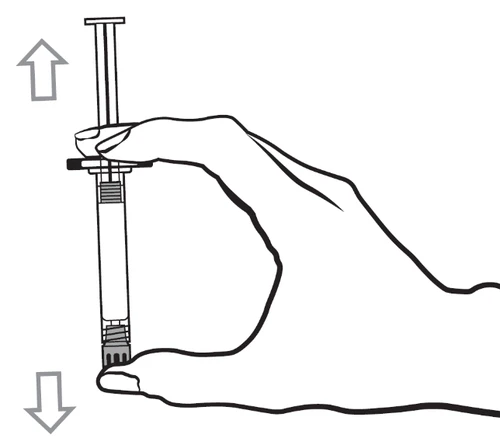
- Shake the pre-filled syringe vigorously for at least 10 seconds to ensure homogeneity of the suspension.
- Select the appropriate needle.
The first initiating dose of the medicinal product Palifren Long (150 mg) should be administered on day 1 of treatment into the DELTOID MUSCLE using the needle intended for the DELTOID MUSCLE. The second initiating dose of the medicinal product Palifren Long (100 mg) should be administered one week later (day 8), also into the DELTOID MUSCLE, using the needle intended for the DELTOID MUSCLE.
When switching from long-acting risperidone injections to the medicinal product Palifren Long, the first injection of Palifren Long (at a dose ranging from 25 mg to 150 mg) may be administered on the day of the next scheduled injection into either the DELTOID MUSCLE or the GLUTEAL MUSCLE, using the appropriate needle. Subsequently, monthly maintenance doses may be administered into either the DELTOID MUSCLE or the GLUTEAL MUSCLE, using the appropriate needle.
For intramuscular injections into the DELTOID MUSCLE in patients with body weight <90 kg, use a 1-inch, 23G needle (25.4 mm x 0.64 mm) (blue-hubbed needle). If the patient's body weight is ≥90 kg, use a 1.5-inch, 22G needle (38.1 mm x 0.72 mm) (gray-hubbed needle).
For intramuscular injections into the GLUTEAL MUSCLE, use a 1.5-inch, 22G needle (38.1 mm x 0.72 mm) (gray-hubbed needle).
- Holding the pre-filled syringe vertically upright, remove the rubber tip cap by twisting it off.
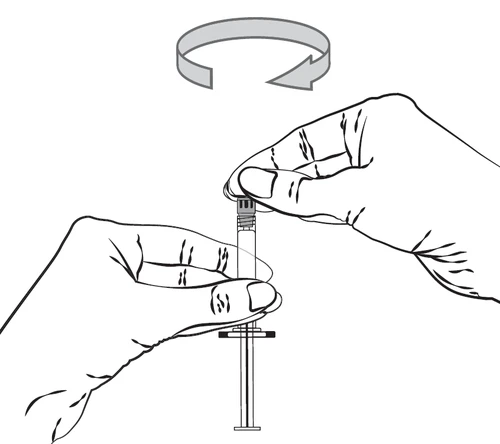
- Partially peel open the outer part of the blister packaging of the safety needle. Hold the needle shield through the plastic packaging. Attach the Luer tip of the safety needle to the pre-filled syringe by gently screwing it in a clockwise direction.
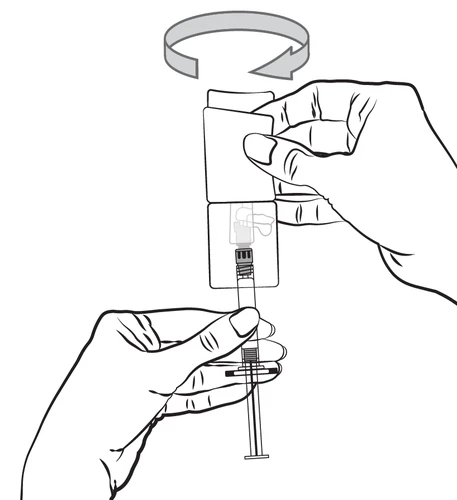
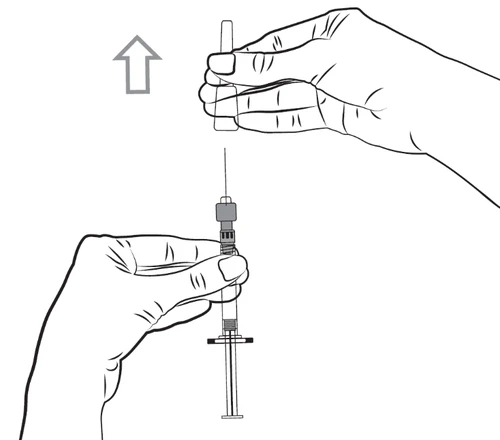
- Remove the needle shield by pulling it straight off. Do not twist the shield, as this may loosen the needle from the pre-filled syringe.
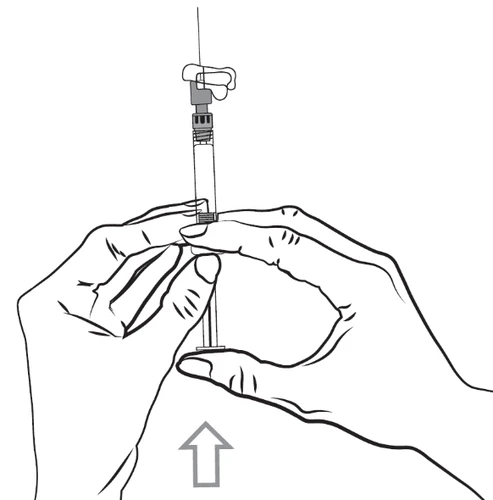
- Expel air from the pre-filled syringe by gently pressing the plunger while holding the syringe in an upright vertical position.
-
Administer the entire content of the pre-filled syringe intramuscularly, slowly and deeply, into the selected patient muscle—either deltoid or gluteal. Do not administer the medicinal product intravenously or subcutaneously.
-
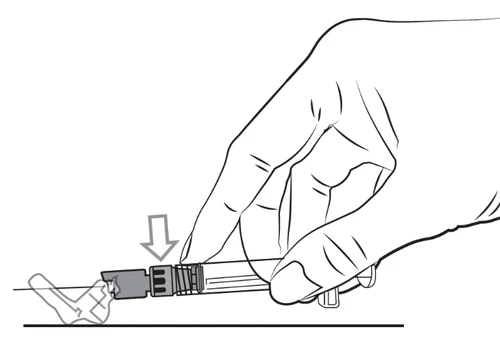
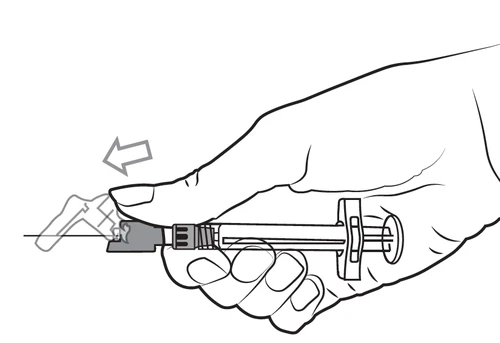
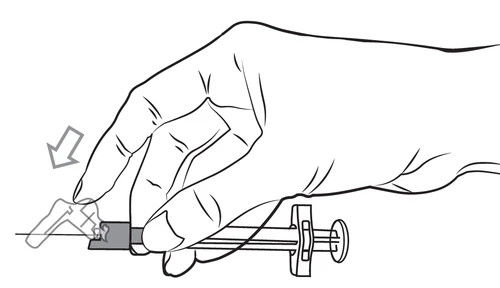
After completing the injection, activate the needle safety mechanism by pressing the thumb or finger of one hand against the shield (8a, 8b) or against a flat surface (8c). A clicking sound indicates successful activation of the needle safety. Dispose of the pre-filled syringe with the attached needle appropriately.
8a
8b
8c