Ospen 1000
Poland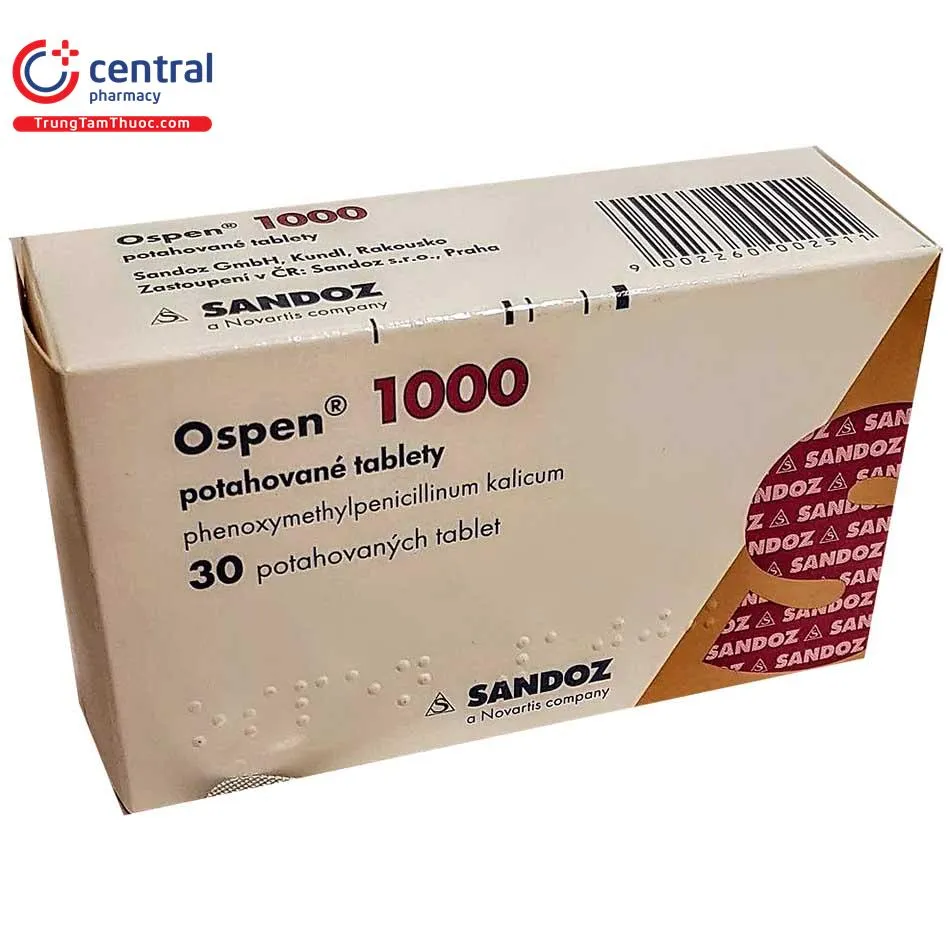
Table of Contents
Package leaflet: Information for the patient
OSPEN 1000, 1,000,000 IU, film-coated tablets
OSPEN 1500, 1,500,000 IU, film-coated tablets
Phenoxymethylpenicillinum potassium
Please read all of this leaflet carefully before taking this medicine, as it contains
important information for you.
- Keep this leaflet, as you may need to read it again.
- If you have any questions, ask your doctor or pharmacist.
- This medicine has been prescribed for a specific individual. Do not pass it on to others. This medicine may harm other people, even if their symptoms are the same.
- If you experience any adverse effects, including any not listed in this leaflet, tell your doctor or pharmacist. See section 4.
Leaflet contents
- What Ospen is and what it is used for
- Important information before taking Ospen
- How to take Ospen
- Possible side effects
- How to store Ospen
- Contents of the pack and other information
1. What Ospen is and what it is used for
Ospen is an antibiotic belonging to the penicillin group for oral use, with strong antibacterial activity. It acts bactericidally against susceptible, actively multiplying microorganisms by inhibiting the synthesis of the bacterial cell wall.
Ospen is indicated:
for the treatment of the following mild to moderate infections caused by penicillin-sensitive microorganisms:
- infections of the ear, nose and throat, including streptococcal infections (erysipelas, pharyngitis, tonsillitis, nasopharyngitis, sinusitis, acute otitis media, Vincent's angina);
- respiratory tract infections: bacterial bronchitis, bacterial pneumonia, bronchopneumonia (as continuation of treatment with injectable agents);
- skin and soft tissue infections: erysipelas, cellulitis, purulent skin infections (e.g. impetigo, folliculitis), abscesses, phlegmon;
for the prevention of rheumatic fever.
In the treatment of severe pneumonia, empyema, sepsis, pericarditis, endocarditis, meningitis, arthritis, and osteomyelitis, penicillin should be administered parenterally during the acute phase of infection.
2. Important information before using Ospen
When not to use Ospen:
- if the patient is allergic to penicillin or to any of the other components of this medicine (listed in section 6);
- if the patient is allergic to cephalosporins (allergy means that in the past, when taking these medicines, the patient experienced skin rash, swelling of the face, neck or trunk, or breathing difficulties);
- if the patient has gastrointestinal disorders with persistent diarrhoea or vomiting, as this may lead to reduced absorption of the medicine;
- if the patient has ever had severe skin rash, skin peeling, blisters and/or oral ulcers after treatment with Ospen or other beta-lactam antibiotics.
Warnings and precautions
Before starting to take Ospen, consult a doctor or pharmacist if:
the patient is allergic to penicillins, cephalosporins or other substances, as they may also be
allergic to Ospen;
the patient currently has or has previously had bronchial asthma or severe allergic reactions;
the patient is taking Ospen to prevent recurrence of rheumatic fever, as prior to planned
surgical procedures (such as tonsillectomy or tooth extraction) it may be necessary to adjust
the dose appropriately;
the patient has impaired kidney function, especially severe impairment, as appropriate dose
adjustment or prolonged dosing intervals may be required, along with regular monitoring of
kidney function;
the patient has infectious mononucleosis, as a skin rash may occur;
in the past, an antibacterial medicine caused the patient severe diarrhoea;
the patient has nausea, vomiting, diarrhoea, or has been diagnosed with gastric dilatation,
impaired passage of food from the oesophagus to the stomach (achalasia of the oesophagus),
or excessive intestinal motility, as these may reduce absorption of the medicine;
the patient is scheduled for typhoid vaccination (see below "Ospen with other medicines").
Special caution is required during treatment with Ospen
Severe skin reactions have been reported during treatment with Ospen, such as:
Stevens-Johnson syndrome (SJS), toxic epidermal necrolysis (TEN), drug reaction with
eosinophilia and systemic symptoms (DRESS), and acute generalized exanthematous pustulosis
(AGEP). If any of the symptoms associated with severe skin reactions described in section 4
occur, Ospen should be discontinued immediately and the patient should contact a doctor
without delay.
If the patient develops severe and persistent diarrhoea during or after treatment, medical
advice should be sought. Medicines for diarrhoea that inhibit intestinal peristalsis should not
be used.
During prolonged treatment, the doctor may recommend regular blood count tests as well as
liver and kidney function monitoring.
In case of any doubts, consult a doctor or pharmacist.
Ospen with other medicines
Inform the doctor about all medicines currently or recently taken, as well as any medicines the
patient plans to take. Particular attention should be paid to the following medicines:
all antibacterial medicines;
medicines with anti-inflammatory, anti-rheumatic, antipyretic effects (especially indomethacin,
phenylbutazone and high-dose salicylates);
probenecid and sulfinpyrazone (medicines used in the treatment of gout);
anticoagulants;
methotrexate (a medicine used in the treatment of rheumatic and neoplastic diseases).
Ospen may reduce the effectiveness of the oral typhoid vaccine. If the patient is scheduled for
vaccination, they should inform the doctor or nurse about taking Ospen.
Effect on laboratory tests
Before undergoing laboratory tests, inform the laboratory staff that Ospen is being taken, as it may
affect the results of certain blood and urine tests, for example, it may cause false-positive results in
urine glucose tests or certain blood tests.
Ospen with food and drink
The medicine should be taken 1 hour before meals.
Guar gum (a food additive present in many food products) may reduce the absorption of
phenoxymethylpenicillin.
Pregnancy and breastfeeding
If the patient is pregnant or breastfeeding, suspects she may be pregnant, or is planning to have a
child, she should consult a doctor before using this medicine.
Ospen should not be used during pregnancy.
Phenoxymethylpenicillin and its metabolites pass into breast milk and may affect the breastfed
child.
Driving and operating machinery
The effect of Ospen on the ability to drive vehicles and operate machinery has not been established.
Ospen contains sodium
The medicine contains less than 1 mmol (23 mg) of sodium per coated tablet, meaning the medicine
is considered "sodium-free".
3. How to use Ospen
This medicine should always be used as directed by the physician. In case of doubt, consult your
doctor or pharmacist.
The exact dosage and duration of treatment will be determined by the doctor.
Adults, including obese patients, elderly individuals, and pregnant women
4.5 million IU per day, i.e. 1 tablet of Ospen 1500 three times daily (every 8 hours).
If necessary, the doctor may recommend increasing the daily dose.
Children and adolescents with body weight above 40 kg, and adults with body weight below 60 kg
3 million IU per day, i.e. 1 tablet of Ospen 1000 three times daily (every 8 hours).
Children over 6 years of age
1 to 1.5 million IU per day. The detailed dosage will be determined by the doctor.
Prevention of rheumatic fever
Adults should receive at least 1 million IU per day; in children, Ospen should be administered in the
form of a suspension.
Dosage in patients with renal and/or hepatic impairment
Dosage reduction in patients with liver and/or kidney dysfunction is usually not necessary. However,
the doctor will determine the appropriate dose individually in each case.
Duration of treatment
The doctor will decide how long the medicine should be taken.
As a general rule, treatment should continue for 3 days after symptoms have resolved.
To prevent complications (i.e. rheumatic fever, glomerulonephritis), patients with streptococcal
infections should take this medicine for at least 10 days.
Method of administration
Ospen should be taken 1 hour before meals. Tablets should be swallowed whole, with a glass of water.
It is recommended to divide the daily dose into 2 or 3 separate doses.
Taking more Ospen than recommended
If more Ospen has been taken than recommended, seek immediate medical advice.
Symptoms of overdose
Gastrointestinal disturbances (nausea, vomiting, abdominal pain, diarrhoea) and disturbances of
water-electrolyte balance (e.g. increased blood potassium concentration) may occur. Significant
overdose may rarely cause seizures.
If other symptoms occur, they may indicate an allergic reaction.
Missed dose of Ospen
If the patient is unsure whether a dose of Ospen was taken, they should consult their doctor.
Do not take a double dose to make up for a missed dose.
Stopping Ospen treatment
The medicine should be taken for as long as prescribed by the doctor, even if the patient feels better.
Stopping treatment too early may cause the infection to recur.
If you have any further questions about the use of this medicine, consult your doctor or pharmacist.
4. Possible adverse reactions
Like all medicines, this medicine can cause adverse reactions, although not everybody will experience them.
Serious adverse reactions: If any of the symptoms listed below occur, discontinue use of Ospen immediately and seek medical advice or go directly to hospital:
- swelling of the face, lips, throat or other parts of the body, which may cause difficulty in swallowing or breathing (rare – may occur in less than 1 in 1,000 people);
- skin rash with itching (urticaria) (common – may occur in less than 1 in 10 people);
- red, flat, target-like or circular skin lesions on the trunk, often with centrally located blisters, skin peeling, and ulcers in the mouth, throat, nose, genital organs, and eyes. These severe skin reactions may be preceded by fever and flu-like symptoms (Stevens-Johnson syndrome, toxic epidermal necrolysis) (frequency unknown – cannot be estimated from available data);
- widespread rash, high fever, and swollen lymph nodes (DRESS syndrome or drug hypersensitivity syndrome) (frequency unknown – cannot be estimated from available data);
- red, peeling, widespread rash with subcutaneous nodules and blisters, accompanied by fever. Symptoms usually occur at the beginning of treatment (acute generalized exanthematous pustulosis) (frequency unknown – cannot be estimated from available data).
In such cases, immediate medical assistance or hospitalization is required.
Adverse reactions observed during use of Ospen
Common adverse reactions (may occur in less than 1 in 10 people): allergic reactions (usually skin-related), erythematous or measles-like rash, itching, nausea, diarrhoea, vomiting, abdominal pain, bloating, oral mucositis, glossitis.
Uncommon adverse reactions (may occur in less than 1 in 100 people): neuropathy (nerve-related disorders and symptoms), seizures (especially after high doses or in patients with impaired renal function), paresthesia (sensory disturbances, may occur during prolonged use), nephropathy (kidney-related disorders and symptoms) in patients receiving high intravenous doses.
Rare adverse reactions (may occur in less than 1 in 1,000 people): pseudomembranous colitis, serum sickness-like reactions (with fever, chills, joint pain, swelling, and feeling of exhaustion), oral pain, black hairy tongue (superficial, transient brownish discoloration of the dorsal surface of the tongue), exfoliative dermatitis.
Very rare adverse reactions (may occur in less than 1 in 10,000 people): blood abnormalities, including thrombocytopenia (reduced platelet count), neutropenia (reduced number of certain white blood cells), leukopenia (reduced white blood cell count), eosinophilia (increased eosinophils visible in blood smear), hemolytic anemia (anemia caused by accelerated destruction of red blood cells), agranulocytosis (a severe, life-threatening condition caused by a marked decrease in granulocytes), coagulation disorders (including prolonged bleeding time and platelet function disorders), hepatitis and cholestatic jaundice, interstitial nephritis, positive direct Coombs test.
Adverse reactions with unknown frequency (frequency cannot be estimated from available data): anaphylactic shock (acute, life-threatening allergic reaction) with collapse, pseudoanaphylactic reactions (bronchial asthma, purpura, gastrointestinal symptoms), erythema multiforme (red-blue erythematous lesions, sometimes with blistering around natural body orifices and on the oral mucosa).
Reporting of adverse reactions
If any adverse reactions occur, including any not listed in this leaflet, inform your doctor or pharmacist. Adverse reactions can be reported directly to the Department of Monitoring Adverse Drug Reactions at the Office for Registration of Medicinal Products, Medical Devices and Biocidal Products:
Al. Jerozolimskie 181C, 02-222 Warsaw
Tel.: +48 22 49 21 301
Fax: +48 22 49 21 309
Website: https://smz.ezdrowie.gov.pl
Adverse reactions may also be reported to the responsible marketing authorization holder.
Reporting adverse reactions helps to provide more information on the safety of this medicine.
5. How to store Ospen
Keep the medicine out of the sight and reach of children.
Do not store above 25°C. Store in the original packaging.
Do not use this medicine after the expiry date stated on the packaging after EXP.
The expiry date refers to the last day of the stated month.
Medicines must not be disposed of via wastewater or household waste. Ask your pharmacist
how to dispose of medicines no longer required. This will help protect the environment.
6. Contents of the pack and other information
What Ospen contains
The active substance is potassium phenoxymethylpenicillin.
1 coated tablet contains 1,000,000 IU (654 mg) or 1,500,000 IU (981 mg) of potassium phenoxymethylpenicillin.
Other ingredients: magnesium stearate, macrogol 6000, maltodextrin, povidone, talc.
Coating: sodium saccharin, peppermint oil, titanium dioxide, talc, hypromellose.
What Ospen looks like and contents of the pack
Ospen 1000: white or slightly cream-coloured, elongated, biconvex coated tablets with a division line on both sides.
Ospen 1500: white or slightly cream-coloured, oval, biconvex coated tablets with a division line on both sides.
The tablets are packed in blisters placed in cardboard boxes.
Pack sizes: 12 or 30 coated tablets.
Hospital packs contain 500 coated tablets.
Marketing Authorisation Holder and Manufacturer:
Sandoz GmbH
Biochemiestrasse 10
A-6250 Kundl, Austria
For further information regarding this medicinal product, please contact the local representative of the Marketing Authorisation Holder:
Sandoz Polska Sp. z o.o.
ul. Domaniewska 50 C
02-672 Warsaw
tel. 22 209 70 00
(logo of the Marketing Authorisation Holder)