Neurontin 400
Poland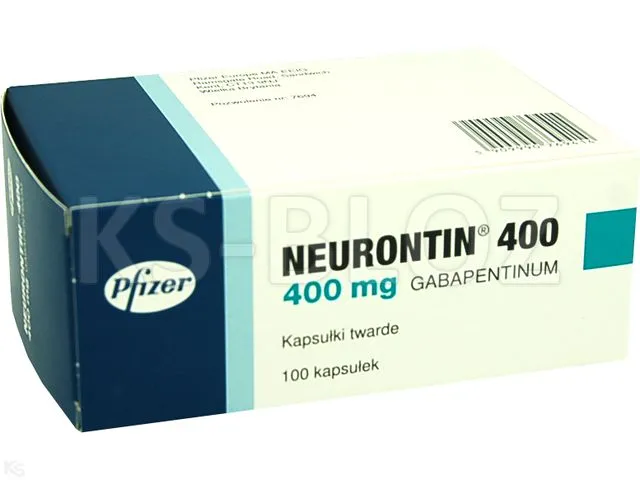
Table of Contents
Package leaflet: Information for the user
NEURONTIN 100, 100 mg, hard capsules
NEURONTIN 300, 300 mg, hard capsules
NEURONTIN 400, 400 mg, hard capsules
Gabapentinum
Please read the entire leaflet carefully before taking this medicine, as it contains important information for you.
- Keep this leaflet, as you may need to read it again.
- If you have any further questions, please consult your doctor or pharmacist.
- This medicine has been prescribed for a specific individual. Do not pass it on to others. This medicine may harm others, even if their symptoms are identical.
- If you experience any adverse reactions, including any not listed in this leaflet, inform your doctor or pharmacist. See section 4.
Table of contents of the leaflet
- What Neurontin is and what it is used for
- Important information before taking Neurontin
- How to take Neurontin
- Possible side effects
- How to store Neurontin
- Contents of the pack and other information
1. What Neurontin is and what it is used for
Neurontin belongs to a group of medicines used in the treatment of epilepsy and peripheral neuropathic pain (long-lasting pain caused by nerve damage).
The active substance of Neurontin is gabapentin.
Neurontin is indicated for the treatment of
- various forms of epilepsy (seizures which initially start in specific areas of the brain and which may spread to the rest of the brain or not). Neurontin is prescribed to adults and children aged 6 years and older as an add-on therapy for epilepsy when previous treatment has not fully prevented seizures. Neurontin should be taken as an additional medicine in the treatment of epilepsy in adults or children aged 6 years and older, unless otherwise directed by a doctor. Neurontin may also be used as monotherapy in adults and children over 12 years of age;
- peripheral neuropathic pain (long-lasting pain caused by nerve damage). Peripheral pain (occurring mainly in the lower and/or upper limbs) is caused by a variety of different diseases such as diabetes or shingles. Patients describe the pain they feel as burning, stinging, pulsating, shooting, stabbing, sharp, cramp-like, aching, tingling, numbness, etc.
2. Information before using Neurontin
When not to use Neurontin
- if the patient is allergic (hypersensitive) to the active substance or to any of the other ingredients of this medicine (listed in section 6).
Warnings and precautions
Before starting to take Neurontin, discuss this with your doctor or pharmacist
- in case of kidney disease, your doctor may recommend a different dosing schedule,
- if undergoing haemodialysis (to remove metabolic waste products due to kidney failure), inform your doctor of any muscle pain and (or) weakness,
- if symptoms such as persistent abdominal pain, nausea, or vomiting occur, contact your doctor immediately, as these may be signs of acute pancreatitis,
- if the patient has neurological or respiratory disorders or is over 65 years of age; the doctor may recommend a different dosage,
- before starting treatment with this medicine, inform your doctor if the patient has ever misused or been dependent on alcohol, prescription medicines, or illegal drugs; this may mean there is a higher risk of becoming dependent on Neurontin.
Dependence
Some people may become dependent on Neurontin (a need to keep taking the medicine). After stopping Neurontin, withdrawal effects may occur (see section 3, “How to take Neurontin” and “Stopping Neurontin”). If the patient is concerned about possibly becoming dependent on Neurontin, it is important to consult the doctor.
If, while taking Neurontin, the patient notices any of the following symptoms, this may be a sign of dependence:
- Feeling the need to take the medicine longer than prescribed by the doctor
- Feeling the need to take a higher dose than prescribed
- Using the medicine for purposes other than prescribed
- The patient has made repeated unsuccessful attempts to stop or control use of the medicine
- The patient feels unwell after stopping the medicine and feels better after taking it again
If any of these are noticed, the patient should talk to the doctor to discuss the best treatment approach, including when it is appropriate to stop taking the medicine and how to do so safely.
A small number of patients taking antiepileptic medicines such as gabapentin have had thoughts of self-harm or suicide. If such thoughts occur in the patient, contact the doctor immediately.
Important information about potentially serious reactions
Serious skin rashes, including Stevens-Johnson syndrome, toxic epidermal necrolysis, and drug reaction with eosinophilia and systemic symptoms (DRESS), have been reported with gabapentin use. Gabapentin should be discontinued and medical advice sought immediately if any symptoms related to serious skin reactions described in section 4 occur.
Please read the description of serious symptoms in section 4 “Due to possible serious health consequences, contact your doctor immediately if any of the following symptoms occur after taking the medicine.”
Muscle weakness, tenderness or pain, especially when accompanied by feeling unwell and high fever, may be due to abnormal breakdown of muscle fibres, which can be life-threatening and lead to kidney problems. Changes in urine colour and blood test results (markedly increased blood creatine kinase levels) may occur. If such symptoms occur, contact your doctor immediately.
Neurontin and other medicines
Inform your doctor or pharmacist about all medicines currently or recently taken, or those planned for use. In particular, inform your doctor (or pharmacist) about any medicines recently or currently used to treat seizures, sleep disorders, depression, anxiety, or any other neurological or psychiatric disorders.
Medicines containing opioids, such as morphine
If the patient is taking medicines containing opioids (such as morphine), inform the doctor or pharmacist, as opioids may enhance the effect of Neurontin.
Additionally, taking Neurontin together with opioids may cause drowsiness, sedation, shallow breathing, or death.
Medicines that neutralise gastric acid for indigestion
If Neurontin is taken together with antacids containing aluminium and magnesium, absorption of Neurontin from the stomach may be reduced. It is therefore recommended to take Neurontin at least two hours after taking an antacid.
Neurontin
- does not interact with other antiepileptic medicines or with oral contraceptives.
- may affect the results of certain laboratory tests; if undergoing urine testing, inform the doctor or hospital about any medicines currently being taken.
Neurontin and food
Neurontin can be taken with or without food.
Pregnancy, breastfeeding and fertility
- If the patient is pregnant or suspects she may be pregnant, contact the doctor immediately to discuss the potential risk to the unborn child associated with taking this medicine.
- Do not stop treatment without discussing it with the doctor.
- If the patient plans to become pregnant, treatment should be discussed with the doctor or pharmacist as early as possible before conception.
- If the patient is breastfeeding or planning to breastfeed, consult the doctor or pharmacist before starting this medicine.
Pregnancy
Neurontin may be used during the first trimester of pregnancy if necessary.
If the patient is planning to become pregnant, is pregnant, or suspects she may be pregnant, contact the doctor immediately.
If the patient becomes pregnant and has epilepsy, it is important not to stop taking the medicine without first consulting the doctor, as this could worsen the condition. Worsening of epilepsy may pose a risk to both the patient and her unborn child.
In a study involving data from women in Scandinavian countries who took gabapentin during the first three months of pregnancy, no increased risk of congenital malformations or problems with brain development (neurodevelopmental disorders) was observed. However, in children of women who took gabapentin during pregnancy, there was an increased risk of low birth weight and premature birth.
When used during pregnancy, gabapentin may cause withdrawal symptoms in newborns. This risk may be increased when gabapentin is taken together with opioid pain medicines (medicines used to treat severe pain).
If pregnancy occurs, is suspected, or is planned while taking Neurontin, contact the doctor immediately. Do not suddenly stop taking Neurontin, as this may lead to withdrawal seizures, which could have serious consequences for both the pregnant woman and her child.
Breastfeeding
Gabapentin, the active substance in Neurontin, passes into human milk. Because it is not known what effect it may have on the breastfed infant, breastfeeding is not recommended during treatment with Neurontin.
Fertility
In animal studies, no effect of the medicine on fertility was observed.
Driving and operating machinery
Neurontin may cause dizziness, drowsiness, and fatigue. Until the patient knows how this medicine affects their ability to drive, operate complex machinery, or perform other potentially hazardous activities, such activities should be avoided.
Neurontin contains lactose
Neurontin hard capsules contain lactose (a type of sugar). If the patient has previously been diagnosed with intolerance to certain sugars, the patient should consult the doctor before taking this medicine.
Neurontin contains sodium
The medicine contains less than 1 mmol (23 mg) of sodium per 100 mg, 300 mg, and 400 mg hard capsule, meaning the medicine is considered “sodium-free”.
3. How to use Neurontin
This medicine should always be taken exactly as directed by your doctor or pharmacist. If you have any doubts,
you should consult your doctor or pharmacist. Do not take more medicine than prescribed.
Your doctor will determine the dose.
Epilepsy – recommended dose
Adults and adolescents
Take the number of capsules as prescribed by your doctor. Doses are usually increased gradually. The most common starting dose is 300 mg to 900 mg per day.
This may then be gradually increased, as directed by your doctor, up to a maximum dose of 3600 mg per day, divided into 3 separate doses (one in the morning, one in the afternoon, and one in the evening).
Children aged 6 years and older
The dose to be given to a child will be determined by the doctor based on the child's body weight. Treatment starts with a low initial dose, which is gradually increased over a period of approximately 3 days. The usual dose used to control epilepsy is typically 25 to 35 mg/kg body weight/day. This dose is usually given in three separate doses, meaning the child takes one capsule (or capsules) daily, usually once in the morning, once in the afternoon, and once in the evening.
The use of Neurontin is not recommended in children under 6 years of age.
Peripheral neuropathic pain — recommended dose
Adults
Take the number of capsules as prescribed by your doctor. Doses are usually increased gradually. The most common starting dose is 300 mg to 900 mg per day.
This may then be gradually increased up to a maximum dose of 3600 mg per day, divided into 3 smaller doses (one in the morning, one in the afternoon, and one in the evening).
Use in patients with renal impairment or patients undergoing haemodialysis
Your doctor may recommend a different dosing schedule and/or a different dose of Neurontin for patients with renal impairment or for patients undergoing haemodialysis.
Elderly patients (over 65 years of age)
Elderly patients (over 65 years of age) should take the normally recommended dose of Neurontin unless they suffer from kidney disease. In patients with kidney disease, your doctor may recommend a different dosing schedule and/or a different dose.
If you feel that the effect of Neurontin is too strong or too weak, you should consult your doctor or pharmacist as soon as possible.
Method of administration
Neurontin is taken orally. The capsules should be swallowed with a large amount of water.
Do not stop taking Neurontin unless instructed to do so by your doctor.
Taking more Neurontin than recommended
Taking more than the recommended dose may increase the number of adverse effects, including loss of consciousness, dizziness, double vision, slurred speech, drowsiness, and diarrhoea. If you take more Neurontin than prescribed, you should immediately contact a doctor or go to the nearest hospital emergency department. In such a case, you should also bring any remaining capsules, the packaging, and the leaflet with you so that hospital staff can immediately identify which medicine has been taken.
Missing a dose of Neurontin
If you miss a dose, take it as soon as you remember, unless it is almost time for your next dose. Do not take a double dose to make up for a missed dose.
Stopping Neurontin
Do not suddenly stop taking Neurontin. If you wish to stop taking Neurontin, you should first discuss this with your doctor. Your doctor will advise you on how to do this.
The medicine should be discontinued gradually over a period of at least 1 week. After stopping short-term or long-term treatment with Neurontin, be aware that certain adverse effects, known as withdrawal effects, may occur. These effects may include seizures, anxiety, difficulty sleeping, nausea, pain, sweating, tremor, headache, depression, feeling unwell, dizziness, and general malaise. These effects usually occur within 48 hours of stopping Neurontin. If withdrawal effects occur, you should contact your doctor.
If you have any further questions about the use of this medicine, consult your doctor or pharmacist.
4. Possible adverse reactions
Like all medicines, this medicine can cause adverse reactions, although not everybody will experience them.
You must stop taking Neurontin and contact your doctor immediately if any of the following symptoms occur after taking the medicine:
- Red, non-blanching, flat or round spots on the trunk, often with blisters in the center, peeling skin, and ulcers in the mouth, throat, nose, genital organs, or eyes. These severe skin rashes may be preceded by fever and flu-like symptoms (Stevens-Johnson syndrome, toxic epidermal necrolysis).
- Widespread rash, high fever, and swollen lymph nodes (DRESS syndrome or drug hypersensitivity syndrome).
Due to possible serious health consequences, you should contact your doctor immediately if any of the following symptoms occur after taking the medicine:
- Persistent abdominal pain, nausea, and vomiting, as these may be symptoms of acute pancreatitis
- Breathing difficulties, which may, especially if severe, require immediate and intensive medical care to restore normal breathing
- Neurontin may cause serious or life-threatening allergic reactions affecting the skin or other parts of the body, such as the liver or blood cells. Such a reaction may include a rash. This reaction may require hospitalization or discontinuation of Neurontin. Contact your doctor immediately if any of the following symptoms occur:
- Skin rash and redness, and/or hair loss
- Urticaria (hives)
- Fever
- Persistent swelling of lymph nodes
- Swelling of lips, face, and tongue
- Yellowing of the skin or whites of the eyes
- Unusual bruising or bleeding
- Severe fatigue or weakness
- Unexpected muscle pain
- Frequent infections
These symptoms may be the first signs of a serious reaction. Your doctor should examine you and decide whether Neurontin should be continued.
- If undergoing hemodialysis, inform your doctor about any muscle pain and/or weakness.
Other adverse reactions include:
Very common: (may affect more than 1 in 10 people)
- Viral infections
- Drowsiness, dizziness, lack of coordination
- Feeling of fatigue, fever
Common: (may affect up to 1 in 10 people)
- Pneumonia, respiratory tract infections, urinary tract infections, ear infection, or other infections
- Decreased white blood cell count
- Loss of appetite, increased appetite
- Irritability towards others, disorientation, mood changes, depression, anxiety, nervousness, thinking disturbances
- Seizures, sudden muscle movements, speech problems, memory loss, tremor, sleep disturbances, headache, increased skin sensitivity, reduced sensation (numbness), coordination disturbances, unusual eye movements, exaggerated, reduced, or absent reflexes
- Blurred vision, double vision
- Dizziness
- Hypertension, redness or dilation of blood vessels
- Shortness of breath, bronchitis, sore throat, cough, dry nose sensation
- Vomiting, nausea, dental problems, gingivitis, diarrhea, abdominal pain, indigestion, constipation, dry mouth or throat, bloating
- Facial swelling, bruising, rash, itching, acne
- Joint pain, muscle pain, back pain, muscle twitching
- Erectile dysfunction (impotence)
- Swelling of hands and feet, difficulty walking, weakness, pain, malaise, flu-like symptoms
- Decreased white blood cell count, weight gain
- Accidental injuries, bone fractures, skin abrasions
Additionally, in clinical trials, aggressive behavior and sudden limb flexion were commonly reported in children.
Uncommon: (may affect up to 1 in 100 people)
- Restlessness (state of constant agitation and involuntary, purposeless movements)
- Allergic reactions, e.g., urticaria
- Restricted movement
- Palpitations
- Difficulty swallowing
- Swelling affecting face, trunk, limbs
- Abnormal blood test results indicating liver function disorders
- Psychiatric disorders
- Falls
- Increased blood glucose levels (most commonly observed in patients with diabetes)
Rare: (may affect up to 1 in 1000 people)
- Low blood glucose levels (most commonly observed in patients with diabetes)
- Loss of consciousness
- Breathing difficulties, shallow breathing (respiratory depression)
After Neurontin was introduced to the market, the following adverse reactions have been observed:
- Decreased platelet count (blood cells responsible for blood clotting)
- Hallucinations
- Abnormal movements, such as limb twisting or sudden flexion, muscle stiffness
- Tinnitus (ringing in the ears)
- Yellowing of the skin and whites of the eyes (jaundice), hepatitis
- Acute kidney failure, urinary incontinence
- Tissue overgrowth in the breast area, breast enlargement
- Adverse reactions after abrupt discontinuation of gabapentin (anxiety, sleep difficulties, nausea, pain, excessive sweating), chest pain
- Muscle fiber breakdown (rhabdomyolysis)
- Changes in blood test results (elevated creatine phosphokinase levels)
- Sexual dysfunction, including inability to achieve orgasm, delayed ejaculation
- Low sodium levels in the blood
- Anaphylactic reactions (severe, potentially life-threatening allergic reactions involving breathing difficulties, swelling of lips, throat, and tongue, and hypotension requiring immediate treatment)
- Risk of developing dependence on Neurontin ("drug dependence")
After stopping short-term or long-term treatment with Neurontin, it should be recognized that certain adverse reactions, known as withdrawal effects, may occur (see "Stopping Neurontin").
Reporting of adverse reactions
If any adverse symptoms occur, including any adverse symptoms not listed in this leaflet, inform your doctor or pharmacist. Adverse reactions can be reported directly to the Department of Monitoring Adverse Drug Reactions, Office for Registration of Medicinal Products, Medical Devices and Biocidal Products, Al. Jerozolimskie 181C
02-222 Warsaw
Phone: +48 22 49 21 301
Fax: +48 22 49 21 309
Website: https://smz.ezdrowie.gov.pl
Adverse reactions can also be reported to the marketing authorization holder or its representative.
Reporting adverse reactions helps to gather more information on the safety of the medicine.
5. How to store Neurontin 300
Keep this medicine out of the sight and reach of children.
Do not use this medicine after the expiry date stated on the carton. The expiry date refers to the last day of the stated month.
Do not store Neurontin capsules above 30°C.
Medicines should not be disposed of via wastewater or household waste. Ask your pharmacist how to properly dispose of medicines no longer in use. Following this advice helps protect the environment.
6. Contents of the pack and other information
What Neurontin contains
The active substance is gabapentin. Each hard gelatin capsule contains 100 mg,
300 mg or 400 mg of gabapentin.
The other ingredients in Neurontin capsules are:
Capsule contents: monohydrate lactose, corn starch and talc.
Capsule shell: gelatin, purified water and sodium lauryl sulfate.
The 100 mg hard capsules contain colouring agent E 171 (titanium dioxide), the 300 mg hard capsules
contain colouring agent E 171 (titanium dioxide) and colouring agent E 172 (yellow iron oxide), while the
400 mg hard capsules contain colouring agent E 171 (titanium dioxide) and colouring agents E 172 (red and yellow iron oxides). The printing ink used on all strengths of hard capsules contains shellac, E 171 (titanium dioxide) and E 132 (indigo carmine aluminium lake).
What Neurontin looks like and contents of the pack
The 100 mg capsules are white, hard capsules imprinted with "Neurontin 100 mg" and "VLE".
The 300 mg capsules are yellow, hard capsules imprinted with "Neurontin 300 mg" and "VLE".
The 400 mg capsules are orange, hard capsules imprinted with "Neurontin 400 mg" and "VLE".
Packaged in aluminium/PVC/PVDC blisters containing: 20, 30, 50, 60, 84, 90, 98, 100, 200, 500, 1000
capsules.
Not all pack sizes may be marketed.
Marketing Authorisation Holder and Manufacturer
Marketing Authorisation Holder:
Viatris Healthcare Limited
Damastown Industrial Park
Mulhuddart
Dublin 15
DUBLIN
Ireland
Manufacturer:
Pfizer Manufacturing Deutschland GmbH
Mooswaldallee 1
79108 Freiburg Im Breisgau
Germany
MEDIS INTERNATIONAL a.s., výrobní závod Bolatice
Průmyslová 961/16
747 23 Bolatice
Czech Republic
This medicinal product is authorised for marketing in the Member States of the European Economic Area and in the United Kingdom (Northern Ireland) under the following names:
| Member State | Name of the medicinal product | |--------------|-------------------------------| | Austria | Neurontin 300 mg – Hartkapseln, Neurontin 400 mg – Hartkapseln | | Belgium/Luxembourg | Neurontin 100 mg gélules/harde capsules/Hartkapseln, Neurontin 300 mg gélules/harde capsules/Hartkapseln, Neurontin 400 mg gélules/harde capsules/Hartkapseln | | Cyprus | Neurontin 300 mg hard capsule, Neurontin 400 mg hard capsule | | Czech Republic | Neurontin 100 mg, Neurontin 300 mg, Neurontin 400 mg | | Denmark | Neurontin | | Estonia | Neurontin | | Finland | Neurontin 300 mg kapseli, kova, Neurontin 400 mg kapseli, kova | | France | Neurontin 100 mg gélule, Neurontin 300 mg gélule, Neurontin 400 mg gélule | | Germany | Neurontin 100 mg Hartkapseln, Neurontin 300 mg Hartkapseln, Neurontin 400 mg Hartkapseln | | Greece | Neurontin 300 mg hard capsule, Neurontin 400 mg hard capsule | | Hungary | Neurontin 100 mg kemény kapszula, Neurontin 300 mg kemény kapszula, Neurontin 400 mg kemény kapszula | | Iceland | Neurontin | | Ireland | Neurontin 100 mg hard capsules, Neurontin 300 mg hard capsules, Neurontin 400 mg hard capsules | | Italy | Neurontin 100 mg Capsule Rigide, Neurontin 300 mg Capsule Rigide, Neurontin 400 mg Capsule Rigide | | Latvia | Neurontin 100 mg cietās kapsulas, Neurontin 300 mg cietās kapsulas, Neurontin 400 mg cietās kapsulas | | Netherlands | Neurontin 100, harde Capsules 100 mg, Neurontin 300, harde Capsules 300 mg, Neurontin 400, harde Capsules 400 mg | | Norway | Neurontin 100 mg kapsler, harde, Neurontin 300 mg kapsler, harde, Neurontin 400 mg kapsler, harde | | Poland | Neurontin 100, Neurontin 300, Neurontin 400 | | Portugal | Neurontin | | Slovenia | Neurontin 100 mg trde kapsule, Neurontin 300 mg trde kapsule, Neurontin 400 mg trde kapsule | | Spain | Neurontin 300 mg capsulas duras, Neurontin 400 mg Capsulas Duras | | Sweden | Neurontin | | United Kingdom (Northern Ireland) | Neurontin 100 mg Hard Capsules, Neurontin 300 mg Hard Capsules, Neurontin 400 mg Hard Capsules |
For further information about this medicine, please contact the representative of the Marketing Authorisation Holder:
Viatris Healthcare Sp. z o.o.
tel. 22 546 64 00