Neomycin tzf
Poland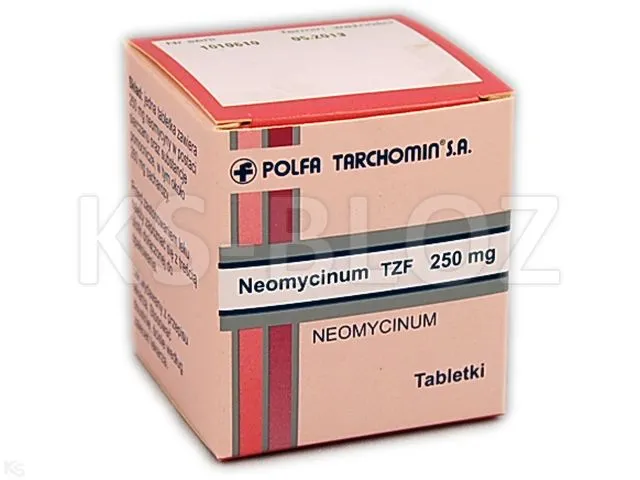
Table of Contents
Package leaflet: Information for the patient
Neomycinum TZF, 250 mg, tablets
Please read the entire leaflet carefully before using the medicine, as it contains
important information for the patient.
- Keep this leaflet, as you may need to read it again.
- Consult your doctor or pharmacist if you have any doubts.
- This medicine has been prescribed for a specific individual. Do not pass it on to others. The medicine may harm another person, even if their symptoms are the same.
- If any adverse reactions occur, including any possible adverse reactions not listed in this leaflet, inform your doctor or pharmacist. See section 4.
Table of contents of the leaflet:
What Neomycinum TZF is and what it is used for
Important information before taking Neomycinum TZF
How to take Neomycinum TZF
Possible side effects
How to store Neomycinum TZF
Contents of the pack and other information
1. What Neomycinum TZF is and what it is used for
Neomycin is an aminoglycoside antibiotic. The antibiotic exhibits bactericidal activity against
many species of Gram-negative and Gram-positive bacteria.
Indications for use
Neomycinum TZF is used:
- for bowel decontamination prior to intestinal surgery
- in hepatic encephalopathy.
2. Important information before using Neomycinum TZF
When not to use Neomycinum TZF
- if the patient is allergic (hypersensitive) to neomycin or other aminoglycoside antibiotics, or to any of the other ingredients of this medicine (listed in section 6)
- if the patient has inflammatory conditions, intestinal ulceration or intestinal obstruction
- if the patient has hearing disorders
- if the patient suffers from myasthenia gravis (a disease causing muscle weakness and excessive fatigue).
Warnings and precautions
Before starting treatment with this medicine, inform the doctor if:
- the patient has impaired liver or kidney function
- the patient has neuromuscular disorders, including parkinsonism
- the patient is dehydrated.
During treatment with Neomycinum TZF, inform the doctor if:
- symptoms of a new infection with bacteria or fungi resistant to neomycin occur, especially during prolonged use of the antibiotic.
In patients who require long-term treatment, the doctor may recommend periodic urine and blood tests, as well as hearing tests.
Use of other medicines
Inform the doctor about all medicines currently used, recently taken, or planned to be used.
This is particularly important if the patient is taking any of the following medicines:
- methotrexate (a medicine used in cancer diseases)
- beta-lactam antibiotics (e.g. penicillins)
- vitamins A and B
- diuretics (e.g. furosemide, ethacrynic acid)
- cyclosporine (a medicine used after organ transplants)
- capreomycin (an antibiotic used in the treatment of tuberculosis)
- other aminoglycoside antibiotics (e.g. neostigmine, pyridostigmine)
- vancomycin, teicoplanin (glycopeptide antibiotics)
- polymyxins (peptide antibiotics; e.g. colistin)
- platinum-containing drugs (e.g. cisplatin, carboplatin used in cancer treatment)
- muscle relaxants (e.g. Baclofen)
- neuromuscular blocking agents (e.g. drugs used in anesthesia, opioid analgesics)
- acarbose (used in diabetes)
- bisphosphonates (used in the treatment of osteoporosis)
- oral typhoid vaccines
- oral contraceptives – neomycin may reduce their effectiveness; therefore, when used concomitantly, additional non-hormonal contraceptive methods should be used.
Pregnancy and breastfeeding
If the patient is pregnant or breastfeeding, suspects she may be pregnant, or is planning to become pregnant, she should consult a doctor or pharmacist before using this medicine.
Neomycinum TZF may be used during pregnancy only if, in the opinion of the doctor, the benefit to the mother outweighs the potential risk to the fetus.
Neomycin passes into breast milk. If treatment is necessary in a breastfeeding woman, the doctor will advise discontinuation of breastfeeding.
Driving and operating machinery
There are no data on adverse effects on the ability to drive vehicles or operate machinery.
Important information about some ingredients of Neomycinum TZF
The medicine contains sucrose. If the patient has previously been diagnosed with intolerance to certain sugars, the patient should contact the doctor before taking this medicine.
3. How to use Neomycinum TZF
Neomycinum TZF should always be used as directed by the physician. If in doubt, contact your doctor or pharmacist.
Adults
- Before surgical procedure Usually 1 g every hour for 4 hours, then 1 g every 4 hours for the next 24 hours, or 1 g at 19, 18, and 9 hours before surgery
- In hepatic encephalopathy 4 to 12 g per day in divided doses (1 g to 3 g every 6 hours), for 5 to 7 days
Children
- Before surgical procedure
Children over 12 years: usually 1 g every 4 hours for 2 or 3 days before surgery
Children from 6 to 12 years: usually 250 mg to 500 mg every 4 hours for 2 or 3 days before surgery
Neomycinum TZF is not recommended for children under 6 years of age.
Method of administration
The tablet should be swallowed whole with water.
The medicine can be taken regardless of meals.
Accidental overdose of Neomycinum TZF
Taking a higher dose of Neomycinum TZF than recommended may cause intensified adverse reactions, such as vomiting, diarrhoea, hearing disturbances, or kidney function disorders.
In case of overdose, seek immediate medical attention by contacting your doctor or going to the nearest hospital emergency department. Bring the medicine in its original packaging so that healthcare personnel can identify exactly which medicine was taken.
Missed dose of Neomycinum TZF
If a patient forgets to take a dose, they should take the next dose as soon as they remember. However, if it is almost time for the next scheduled dose, the missed dose should be skipped and the next dose taken according to the regular schedule. If a patient misses two or more doses, they should contact their doctor.
Do not take a double dose to make up for a missed dose.
Stopping treatment with Neomycinum TZF
It is important to use the medicine exactly as prescribed throughout the recommended treatment course. Do not discontinue treatment without consulting your doctor.
If the patient feels worse during treatment or does not feel better after completing the recommended treatment course, they should consult their doctor.
4. Possible adverse reactions
Like all medicines, this medicine can cause adverse reactions, although not everybody will experience them.
- Fungal infections of the skin and mucous membranes, superinfections with resistant bacteria
- Blood disorders, abnormal breakdown of red blood cells
- Hypersensitivity reactions – drug fever, anaphylactic shock (sudden breathing, speaking and swallowing difficulties, swelling of lips, face and neck, severe dizziness or collapse)
- Neuromuscular blockade, disorientation, tingling, numbness, nystagmus
- Hearing disturbances (hearing loss, ringing, buzzing or sensation of blocked ears), dizziness, nausea, vomiting, balance disorders
- Nausea, vomiting, diarrhoea, increased salivation, oral mucosal inflammation, malabsorption syndrome characterised by fatty stools, reduced xylose absorption, weight loss, decreased serum carotene concentration, especially in patients treated long-term or with high doses of neomycin
- Skin reactions such as rash, itching, irritation or pain in the facial area
- Significantly reduced frequency or volume of urination, excessive thirst may occur during treatment with high doses of the drug and may consequently lead to renal tubular necrosis
Reporting of adverse reactions
If any adverse reactions occur, including any adverse reactions not listed in
this leaflet, inform your doctor, pharmacist or nurse. Adverse reactions can
be reported directly to the Department of Monitoring Adverse Drug Reactions of the Office for Registration of Medicinal Products, Medical Devices and Biocidal Products {current address, telephone and fax number of the Department}
e-mail: [email protected].
Reporting adverse reactions helps provide more information on the safety of the medicine.
5. How to store Neomycinum TZF
Keep out of sight and reach of children.
Store below 25°C. Keep in the original packaging to protect from light and moisture.
Do not use after the expiry date (EXP) stated on the packaging. The expiry date refers to the last day of the specified month.
Medicines must not be disposed of via wastewater or household waste. Ask your pharmacist how to dispose of medicines no longer in use. This will help protect the environment.
6. Contents of the pack and other information
What Neomycinum TZF contains
The active substance is neomycin in the form of neomycin sulfate.
One tablet contains 250 mg of neomycin.
The excipients are: macrogol 4000, sodium carboxymethyl starch (type A), talc, magnesium stearate, sucrose.
What Neomycinum TZF looks like and contents of the pack
White or cream-colored, round, biconvex tablets with a scored line and engraved "NEOMYCINUM" on one side.
Pack size: 16 tablets
Marketing Authorisation Holder and Manufacturer
Tarchomińskie Zakłady Farmaceutyczne „Polfa” Spółka Akcyjna
ul. A. Fleminga 2
03-176 Warsaw
Telephone number: (22) 811-18-14
For more detailed information, please contact the representative of the Marketing Authorisation Holder.