Medithyrox
Poland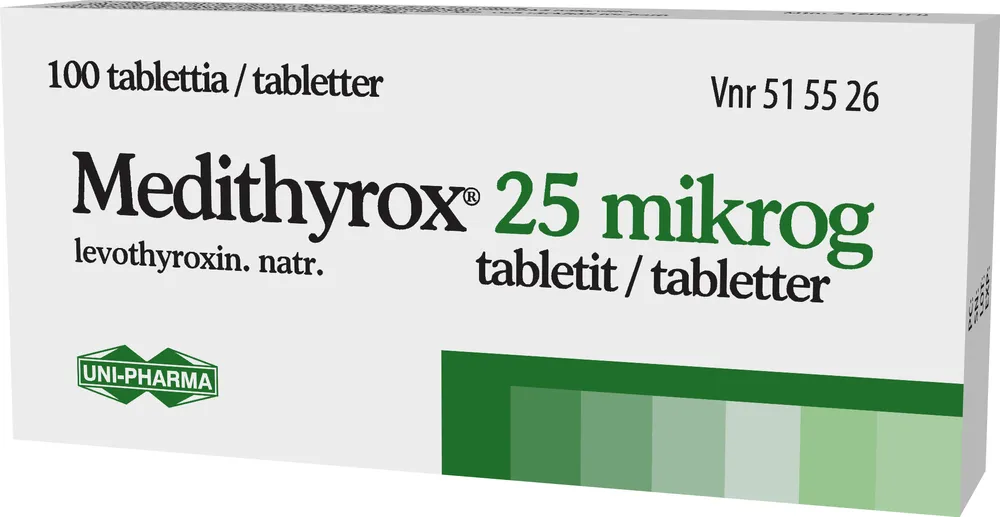
Table of Contents
Patient Information Leaflet
Medithyrox, 13 micrograms, tablets
Medithyrox, 25 micrograms, tablets
Medithyrox, 50 micrograms, tablets
Medithyrox, 62 micrograms, tablets
Medithyrox, 75 micrograms, tablets
Medithyrox, 88 micrograms, tablets
Medithyrox, 100 micrograms, tablets
Medithyrox, 112 micrograms, tablets
Medithyrox, 125 micrograms, tablets
Medithyrox, 137 micrograms, tablets
Medithyrox, 150 micrograms, tablets
Medithyrox, 175 micrograms, tablets
Medithyrox, 200 micrograms, tablets
Levothyroxine sodium
Please read this leaflet carefully before taking this medicine, as it contains important information for you.
- Keep this leaflet for future reference.
- If you have any further questions, please consult your doctor or pharmacist.
- This medicine has been prescribed for a specific person only. Do not share it with others. This medicine may harm other people, even if their symptoms are the same.
- If you experience any adverse reactions, including any not listed in this leaflet, inform your doctor or pharmacist. See section 4.
Table of Contents
- What Medithyrox is and what it is used for
- What you should know before taking Medithyrox
- How to take Medithyrox
- Possible side effects
- How to store Medithyrox
- Contents of the pack and other information
1. What Medithyrox is and what it is used for
Levothyroxine sodium, the active substance in Medithyrox, is a synthetic thyroid hormone used in the treatment of thyroid diseases and thyroid function disorders. It has the same action as the thyroid hormones naturally present in the body.
Medithyrox is used:
- for the treatment of euthyroid goitre (mainly in adults),
- to prevent recurrence of goitre after surgical removal,
- as replacement therapy for natural thyroid hormones when a patient's thyroid gland does not produce sufficient amounts of hormones,
- to suppress tumour growth in patients with thyroid cancer.
Medithyrox 13 micrograms, 25 micrograms, 50 micrograms, 62 micrograms, 75 micrograms, 88 micrograms, and 100 micrograms are also used to normalize thyroid hormone levels when excessive hormone secretion is being treated with antithyroid drugs.
Medithyrox 75 micrograms, 100 micrograms, 150 micrograms, and 200 micrograms may also be used for thyroid function testing.
2. Important information before taking Medithyrox
When not to take Medithyrox
- if the patient is allergic (hypersensitive) to the active substance or to any of the other ingredients of Medithyrox (listed in section 6),
- if the patient has untreated disorders of adrenal, pituitary or thyroid gland function with overproduction of thyroid hormones (hyperthyroidism),
- if the patient has recently suffered a myocardial infarction, myocarditis and/or acute inflammation of all layers of the heart (pancarditis),
Medithyrox should not be taken together with antithyroid drugs during pregnancy (see
section "Pregnancy and breastfeeding" below).
Warnings and precautions
Before starting treatment with Medithyrox, consult your doctor or pharmacist if the
patient has any of the following heart conditions:
- inadequate blood flow in the blood vessels of the heart (angina pectoris),
- heart failure,
- rapid or irregular heartbeat,
- high blood pressure,
- fatty deposits in the arteries (atherosclerosis).
These conditions must be under medical control before starting treatment with Medithyrox or before
performing a thyroid suppression test. While taking Medithyrox, regular monitoring of thyroid hormone levels is necessary. If there is any uncertainty whether any of these conditions apply to the patient or if they are untreated, contact a doctor.
The doctor will check whether the patient has disorders of the adrenal glands, pituitary gland or thyroid
function with uncontrolled overproduction of thyroid hormones (autonomous thyroid function),
because such disorders must be under medical supervision before starting Medithyrox
or before performing a thyroid suppression test.
Talk to your doctor
- if the patient is peri- or postmenopausal; regular monitoring of thyroid function by a doctor may be necessary due to the risk of osteoporosis.
- some heart disorders must be treated before starting Medithyrox; carefully read the information in the section "Warnings and precautions".
- in case of blood sugar disorders (diabetes) or treatment with certain blood-thinning drugs, carefully read the information provided in the section "Medithyrox with other medicines".
- when switching from one levothyroxine-containing medicine to another. The effect may differ slightly, and closer monitoring and dose adjustment may be required.
- if the patient has epilepsy (seizures), inform the doctor. Seizures have rarely been observed after starting levothyroxine treatment, especially with rapid dose escalation.
- do not use Medithyrox for weight reduction. If thyroid hormone levels in the blood are within normal limits, additional thyroid hormone intake does not lead to weight loss. Taking additional thyroid hormones may cause serious, even life-threatening adverse effects, particularly when used in combination with certain weight-reducing drugs.
- before starting, stopping or changing treatment with orlistat, closer monitoring and dose adjustment may be necessary.
- if symptoms of psychotic disorders occur (closer monitoring and dose adjustment may be required).
- if laboratory tests to measure thyroid hormone levels are to be performed, the patient should inform the doctor or laboratory staff about current or recent biotin intake (also known as vitamin H, vitamin B7 or
vitamin B8). Biotin may affect laboratory test results. Depending on the type of
test, results may be falsely elevated or falsely decreased due to biotin intake. The doctor may advise the patient to stop taking biotin before laboratory tests. It should also be remembered that other products taken by the patient, such as multivitamin preparations or supplements for hair, skin and nails, may also contain biotin. This may affect laboratory test results. If the patient takes such products, they should inform the doctor or laboratory staff (refer to information in section "Medithyrox with other medicines").
Children and adolescents
Partial hair loss may occur in children during the first few months of treatment,
but this effect is usually temporary and hair regrowth typically follows.
When initiating levothyroxine treatment in preterm infants with very low birth weight, blood pressure should be monitored regularly, as sudden hypotension (so-called circulatory collapse) may occur.
Elderly patients
In elderly patients, careful dosing and frequent monitoring are required.
Medithyrox with other medicines
Tell your doctor or pharmacist if you are currently or have recently taken any of the following medicines, or plan to take them,
because Medithyrox may affect their action:
- antidiabetic drugs (medicines that lower blood sugar): Medithyrox may weaken the effect of antidiabetic drugs, therefore additional blood glucose monitoring may be necessary, especially at the beginning of Medithyrox treatment. Dose adjustment of antidiabetic medication may be required during Medithyrox therapy.
- coumarin derivatives (medicines preventing blood clotting): Medithyrox may enhance the effect of these drugs, increasing the risk of bleeding, especially in elderly patients. Regular monitoring of blood coagulation parameters may be required at the beginning and during Medithyrox treatment. Dose adjustment of coumarin derivatives may be necessary during Medithyrox therapy.
- proton pump inhibitors: Proton pump inhibitors (such as omeprazole, esomeprazole, pantoprazole, rabeprazole and lansoprazole) are used to reduce gastric acid production, which may impair levothyroxine absorption from the intestine and reduce its effectiveness. If the patient is taking levothyroxine during treatment with proton pump inhibitors, the doctor should monitor thyroid function and adjust the Medithyrox dose if necessary.
Remember to maintain recommended time intervals between taking medications if
the patient needs to take any of the following drugs:
- bile acid sequestrants and cholesterol-lowering drugs (such as cholestyramine or colestipol). Medithyrox should be taken 4–5 hours before these drugs, as they may inhibit its intestinal absorption.
- antacids (medicines used to relieve indigestion), sucralfate (used in the treatment of gastric or intestinal ulcers), other aluminium-containing drugs, iron-containing drugs, calcium-containing drugs. Medithyrox should be taken at least 2 hours before these drugs, as they may reduce the effectiveness of Medithyrox.
Tell your doctor or pharmacist if you are currently or have recently taken any of the following drugs,
or plan to take them, because they may reduce the effect of Medithyrox:
- propylthiouracil (antithyroid drug),
- glucocorticosteroids (anti-allergic and anti-inflammatory drugs),
- beta-blockers (drugs lowering blood pressure used also in heart disease),
- sertraline (antidepressant),
- chloroquine or proguanil (drugs used in the treatment or prevention of malaria),
- drugs inducing certain liver enzymes, such as barbiturates (sedatives, hypnotics), carbamazepine (antiepileptic drug also used to relieve certain types of pain and control mood disorders), herbal medicines containing St. John's wort,
- estrogen-containing drugs used in hormone replacement therapy during or after menopause, or for contraception,
- sevelamer (phosphate binder used in treating patients with kidney failure),
- orlistat (drug used in obesity treatment),
- tyrosine kinase inhibitors (e.g. imatinib and sunitinib), used in cancer treatment,
- tricyclic antidepressants (e.g. amitriptyline, imipramine) used in depression treatment.
Tell your doctor or pharmacist if you are currently or have recently taken any of the following drugs,
or plan to take them, because they may enhance the effect of Medithyrox:
- salicylates (drugs used to relieve pain and reduce fever),
- dicumarol (drug used in prevention of blood clots),
- furosemide in high doses of 250 mg (drug used to increase urine production),
- clofibrate (drug reducing blood lipid levels).
Tell your doctor or pharmacist if you are currently or have recently taken any of the following drugs,
or plan to take them, because they may affect the action of Medithyrox:
- ritonavir, indinavir, lopinavir (protease inhibitors, drugs used in the treatment of HIV infection),
- phenytoin (antiepileptic drug). Regular monitoring of thyroid hormone levels may be required. Dose adjustment of Medithyrox may be necessary.
Inform your doctor if taking amiodarone (antiarrhythmic drug), as this drug may affect thyroid gland function and activity.
If a diagnostic test or imaging procedure using an iodine-containing contrast agent is required, inform the doctor about taking Medithyrox,
as the patient may receive an injection that could affect thyroid function.
If the patient is currently or recently took biotin, they must inform the doctor or laboratory staff if thyroid hormone laboratory tests are to be performed.
Biotin may affect laboratory test results (see "Warnings and precautions").
Tell your doctor or pharmacist about any other medicines currently or recently taken by the patient, including over-the-counter medicines.
Do not take thyroid hormones for weight reduction. Taking thyroid hormones will not reduce body weight if thyroid hormone levels are normal. Increasing the dose of the drug without specific medical advice may lead to serious or even life-threatening adverse effects. Do not take high doses of thyroid hormones together with certain weight-reducing drugs such as amfepramone, cathine or phenylpropanolamine, as the risk of serious or even life-threatening adverse effects may increase.
Medithyrox with food and drink
Tell your doctor if the patient consumes soy-containing products, especially if changing the amount of soy-containing products. Soy products may reduce the intestinal absorption of Medithyrox and therefore a dose adjustment may be necessary.
Pregnancy and breastfeeding
Medithyrox should be continued during pregnancy. Discuss with your doctor, as dose adjustment may be required.
If Medithyrox is taken together with an antithyroid drug to treat overproduction of thyroid hormones, the doctor will advise stopping Medithyrox after becoming pregnant.
During breastfeeding, continue taking Medithyrox as directed by the doctor. The amount of the drug passing into breast milk is so small that it will not affect the infant.
Driving and operating machinery
No studies have been conducted on the effect of the medicine on the ability to drive and operate machinery.
Since levothyroxine is identical to the naturally occurring thyroid hormone in the body, Medithyrox is not expected to have any effect on the ability to drive and operate machinery.
Medithyrox contains sodium
This medicine contains less than 1 mmol (23 mg) of sodium per tablet, meaning the medicine is considered "sodium-free".
3. How to take Medithyrox
Medithyrox should always be taken according to the instructions of the doctor or pharmacist. In case of
doubt, consult your doctor or pharmacist.
The doctor will determine the individual dose of the medicine for the patient based on examinations and laboratory test results. Treatment usually starts with a low dose, which is gradually increased every 2–4 weeks until the full individual dose is reached. During the first weeks of treatment, the patient will have laboratory tests to adjust the dose of the medicine.
If a child is born with hypothyroidism, the doctor may recommend starting treatment with a higher dose, because prompt replacement therapy is important. The recommended initial dose is 10 to 15 micrograms per kg of body weight for the first 3 months. The doctor will then adjust the dose individually.
The following table shows the usual dose ranges. A lower individual dose may be sufficient:
- if the patient is elderly,
- if the patient has heart disease,
- if the patient has severe or long-standing hypothyroidism,
- if the patient has low body weight or a large goitre.
| Use of Medithyrox medication | Recommended daily dose of Medithyrox |
| 75 - 200 micrograms |
| 75 - 200 micrograms |
-
to inhibit tumor growth of 150 - 300 micrograms in patients with thyroid cancer
-
to normalize thyroid hormone levels of 50 - 100 micrograms when excessive hormone secretion is treated with antithyroid drugs
-
for thyroid function testing
Medithyrox, 100 micrograms: 200 micrograms (2 tablets) – start taking 2 weeks before the test
Medithyrox, 150 micrograms:
Start 4 weeks before the test – 75 micrograms
(1 tablet of 75 micrograms) for two weeks, then 150 micrograms (1 tablet of 150 micrograms)
until the test
Medithyrox, 200 micrograms:
200 micrograms (1 tablet) – start taking
2 weeks before the test
- in replacement therapy of natural adults thyroid hormones when the patient's thyroid gland does not produce sufficient amounts of hormones
initial dose 25 - 50 micrograms
maintenance dose 100 - 200 micrograms
in replacement therapy of natural children
thyroid hormones when
the patient's thyroid gland does not produce
sufficient amounts of hormones
initial dose 12.5 - 50 micrograms
100 – 150 micrograms per m² of body surface area
maintenance dose
Newborns, infants, and children
initial dose in congenital 10 - 15 micrograms/kg body weight
hypothyroidism
initial dose in acquired 12.5 - 50 micrograms
hypothyroidism
maintenance dose 100 - 150 micrograms/m² of body surface area
Tablets Medithyrox 112 micrograms, 125 micrograms, 137 micrograms, 150 micrograms,
175 micrograms or 200 micrograms are not suitable for administering the smaller doses mentioned here,
but your doctor may prescribe Medithyrox tablets with a lower strength.
Administration
Medithyrox should be taken orally. The daily dose should be taken as a single dose in the morning on an empty stomach (at least half an hour before breakfast), preferably with a small amount of liquid (e.g. half a glass of water).
Infants may receive the entire daily dose of Medithyrox at least 30 minutes before the first meal of the day. Immediately before administration, the tablet should be crushed and mixed with a small amount of water; the resulting suspension should be administered to the child together with a small amount of liquid. The suspension should always be freshly prepared.
Duration of treatment
The duration of treatment may vary depending on the disease for which Medithyrox is prescribed. Therefore, your doctor will inform you how long you should continue taking the medication. Most patients take Medithyrox for life.
Taking more than the recommended dose of Medithyrox
If you take more than the recommended dose, symptoms such as rapid heartbeat, restlessness, agitation, or involuntary movements may occur. In patients with neurological disorders, e.g. epilepsy, seizures may occur in isolated cases. In patients at risk of psychotic disorders, symptoms of acute psychosis may appear. If any of these situations occur, contact your doctor immediately.
Missing a dose of Medithyrox
Do not take a double dose to make up for a missed tablet. Instead, take your normal dose the next day.
Stopping treatment with Medithyrox
For Medithyrox treatment to be effective, the medication must be taken regularly at the dose prescribed by your doctor. Do not change, interrupt, or stop treatment without consulting your doctor. Discontinuing or temporarily stopping the medication may cause symptoms to return.
If you have any further questions regarding the use of this medicine, consult your doctor or pharmacist.
4. Possible adverse reactions
Like all medicines, Medithyrox may cause adverse reactions, although not everyone experiences them.
You should not expect adverse reactions if the patient takes Medithyrox at the dose prescribed by the
physician and regularly attends laboratory tests.
This is because levothyroxine, the active substance in Medithyrox, is identical to the thyroid hormone naturally
occurring in the human body.
If a dose of Medithyrox higher than prescribed is taken, or in case of intolerance to the recommended dose
(e.g. due to rapid dose escalation), one or more of the following adverse reactions may occur:
weight loss, increased appetite, tremor, anxiety, irritability, excitation, insomnia, headache, increased
intracranial pressure with eye swelling (especially in children), heart failure, myocardial infarction,
palpitations, cardiac arrhythmias, particularly tachycardia, chest pain with a feeling of constriction (angina
pectoris), increased arterial pressure, vomiting, diarrhoea, nausea, cramps, dyspnoea, muscle weakness
and muscle cramps, irregular menstruation, excessive sweating, hair loss, sensation of heat (facial
flushing), fever.
If any of these adverse reactions occur, contact your doctor. The doctor will decide whether treatment
should be interrupted for several days or the dose reduced until the adverse reactions subside.
Allergic reactions to any of the excipients in Medithyrox are possible (see section 6, "What Medithyrox contains"). Allergic reactions may include swelling of the face or throat (angioedema). If such symptoms occur, contact your doctor immediately.
Reporting of adverse reactions
If any adverse symptoms occur, including any adverse effects not listed in this leaflet, inform your doctor or pharmacist. Adverse reactions can be reported directly to the Department of Monitoring of Adverse Drug Reactions at the Office for Registration of Medicinal Products, Medical Devices and Biocidal Products, Al. Jerozolimskie 181C, 02-222 Warsaw, Tel.: + 48 22 49 21 301, Fax: + 48 22 49 21 309,
website: https://smz.ezdrowie.gov.pl
Adverse reactions can also be reported to the marketing authorization holder.
Reporting adverse reactions helps to provide more information on the safety of the medicine.
5. How to store the medicine Medithyrox
The medicine should be stored in a place inaccessible and out of sight of children.
Do not use Medithyrox after the expiry date stated on the blister and carton after EXP. The expiry date refers to the last day of the stated month.
There are no special storage temperature requirements for this medicinal product. Store in the original packaging to protect from moisture.
Medicines must not be disposed of via wastewater or household waste. Ask your pharmacist how to dispose of medicines no longer required. This will help protect the environment.
6. Contents of the packaging and other information
What Medithyrox contains
- The active substance is levothyroxine. Each tablet contains 13 micrograms, 25 micrograms, 50 micrograms, 62 micrograms, 75 micrograms, 88 micrograms, 100 micrograms, 112 micrograms, 125 micrograms, 137 micrograms, 150 micrograms, 175 micrograms, or 200 micrograms of sodium levothyroxine.
- The other ingredients are: cellulose, powdered (E460), sodium croscarmellose (E468) (see section 2), colloidal anhydrous silica (E551), microcrystalline cellulose (E460), and magnesium stearate (E572).
What Medithyrox looks like and contents of the pack
Medithyrox 13 microgram tablets are white, round, biconvex, uncoated tablets
with a diameter of 6.5 mm and an average thickness of 3.5 mm, marked with the number "13" on one side.
Medithyrox 25 microgram tablets are white, round, biconvex, uncoated tablets
with a diameter of 6.5 mm and an average thickness of 3.5 mm, marked with the number "25" on one side.
Medithyrox 50 microgram tablets are white, round, biconvex, uncoated tablets
with a diameter of 6.5 mm and an average thickness of 3.5 mm, marked with the number "50" on one side.
Medithyrox 62 microgram tablets are white, round, biconvex, uncoated tablets
with a diameter of 6.5 mm and an average thickness of 3.5 mm, marked with the number "62" on one side.
Medithyrox 75 microgram tablets are white, round, biconvex, uncoated tablets
with a diameter of 6.5 mm and an average thickness of 3.5 mm, marked with the number "75" on one side.
Medithyrox 88 microgram tablets are white, round, biconvex, uncoated tablets
with a diameter of 6.5 mm and an average thickness of 3.5 mm, marked with the number "88" on one side.
Medithyrox 100 microgram tablets are white, round, biconvex, uncoated tablets
with a diameter of 6.5 mm and an average thickness of 3.5 mm, marked with the number "100" on one side.
Medithyrox 112 microgram tablets are white, round, biconvex, uncoated tablets
with a diameter of 6.5 mm and an average thickness of 3.5 mm, marked with the number "112" on one side.
Medithyrox 125 microgram tablets are white, round, biconvex, uncoated tablets
with a diameter of 6.5 mm and an average thickness of 3.5 mm, marked with the number "125" on one side.
Medithyrox 137 microgram tablets are white, round, biconvex, uncoated tablets
with a diameter of 6.5 mm and an average thickness of 3.5 mm, marked with the number "137" on one side.
Medithyrox 150 microgram tablets are white, round, biconvex, uncoated tablets
with a diameter of 6.5 mm and an average thickness of 3.5 mm, marked with the number "150" on one side.
Medithyrox 175 microgram tablets are white, round, biconvex, uncoated tablets
with a diameter of 6.5 mm and an average thickness of 3.5 mm, marked with the number "175" on one side.
Medithyrox 200 microgram tablets are white, round, biconvex, uncoated tablets
with a diameter of 6.5 mm and an average thickness of 3.5 mm, marked with the number "200" on one side.
Medithyrox is packed in blisters.
The pack contains 30, 50, 60, or 100 tablets in several blisters of 15 or 25 tablets,
in a cardboard box.
Not all pack sizes may be marketed.
Marketing Authorisation Holder and Manufacturer
Uni-Pharma Kleon Tsetis Pharmaceutical Laboratories S.A.
14th km National Road 1
GR-145 64 Kifissia
Greece
[email protected]
This medicinal product is authorised in the European Economic Area countries under the following names:
Netherlands: Thyrofix 13/25/50/62/75/88/100/112/125/137/150/175/200 microgram tablets
Denmark: Medithyrox 13/25/50/62/75/88/100/112/125/137/150/175/200 microgram tablets
France: Thyrofix 13/25/50/62/75/88/100/112/125/137/150/175/200 microgram tablets
Portugal: Thyrofix 13/25/50/62/75/88/100/112/125/137/150/175/200 microgram tablets
Spain: Thyrofix 13/25/50/62/75/88/100/112/125/137/150/175/200 microgram tablets
Cyprus: Thyrofix 13/25/50/62/75/88/100/112/125/137/150/175/200 microgram tablets
Poland: Medithyrox 13/25/50/62/75/88/100/112/125/137/150/175/200 microgram tablets
Finland: Medithyrox 13/25/50/62/75/88/100/112/125/137/150/175/200 microgram tablets
Sweden: Medithyrox 13/25/50/62/75/88/100/112/125/137/150/175/200 microgram tablets
23 February 2023