Hytrin
Poland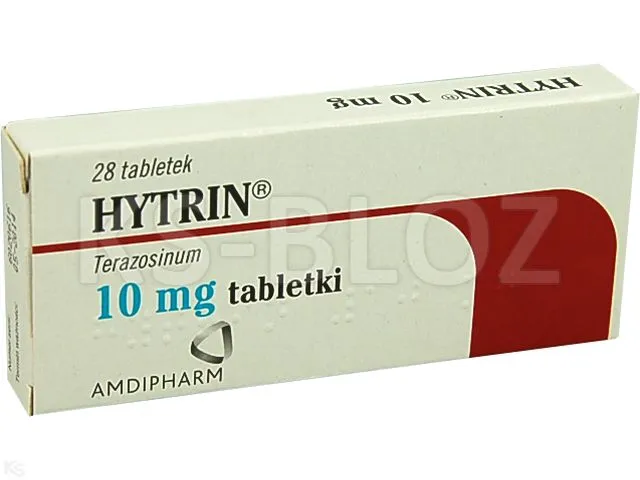
Table of Contents
Package leaflet: Information for the user
Hytrin, 2 mg, 5 mg, 10 mg, tablets
Terazosinum
Please read all of this leaflet carefully before taking this medicine, because it contains
important information for you.
- Keep this leaflet, as you may need to read it again.
- If you have any further questions, please ask your doctor or pharmacist.
- This medicine has been prescribed for a specific individual. Do not pass it on to others. It may harm someone else, even if their symptoms are the same.
- If you experience any adverse reactions, including any not listed in this leaflet, tell your doctor or pharmacist. See section 4.
Contents of the leaflet
- What Hytrin is and what it is used for
- Important information before taking Hytrin
- How to take Hytrin
- Possible side effects
- How to store Hytrin
- Contents of the pack and other information
1. What Hytrin is and what it is used for
Each 2 mg, 5 mg or 10 mg tablet of Hytrin contains 2 mg, 5 mg or 10 mg of the active substance –
terazosin, as terazosin hydrochloride dihydrate.
Hytrin belongs to a group of medicines called alpha-adrenolytic agents (medicines used in the
treatment of conditions such as high blood pressure and certain prostate disorders).
Hytrin relieves symptoms of benign prostatic hyperplasia. It may also be used in combination with
other antihypertensive medicines for the treatment of high blood pressure.
Benign prostatic hyperplasia: Hytrin relaxes the muscles of the prostate gland surrounding the
inner part of the urethra in men. This makes urination easier and reduces symptoms.
High blood pressure: Hytrin lowers blood pressure by dilating small blood vessels (those located
away from the heart), thereby reducing vascular resistance against which the heart must pump.
Hytrin does not act directly on blood vessel walls, but rather on the nerves that influence blood vessels.
Hytrin is intended for use in individuals aged 18 to 64 years.
2. Important information before using Hytrin
When not to use Hytrin
- if the patient is allergic to terazosin hydrochloride, its analogues, or any of the other ingredients of Hytrin (listed in section 6);
- if the patient is allergic to any other alpha-adrenergic receptor antagonist, for example alfuzosin, doxazosin;
- if fainting has occurred or occurs during urination or immediately thereafter.
Warnings and precautions
Before starting treatment with Hytrin, discuss this with your doctor or pharmacist.
- Fainting and the "first-dose effect" Hytrin may cause a significant drop in blood pressure, especially orthostatic hypotension (a sudden drop in blood pressure upon changing from lying to standing position) and fainting related to taking the first dose or first few doses. A similar effect may occur when treatment has been interrupted or several doses have been missed and therapy is then resumed.
To reduce the likelihood of fainting or severe hypotension, treatment should always be initiated with a 1 mg dose of terazosin, taken in the evening after going to bed. Tablets containing 2 mg, 5 mg, or 10 mg of terazosin are not recommended during the initial treatment period. The dose should be increased gradually, according to the recommendations given in section 3.
Patients should be warned to avoid situations that could lead to injury in case of fainting during the initial treatment period. If fainting occurs, the patient should be laid down and, if necessary, the doctor should initiate supportive treatment.
Hytrin should not be used in patients who report fainting during urination.
- Cataract surgery Before cataract surgery, discuss with your doctor the use of Hytrin so that the ophthalmologist can prepare to modify the surgical technique.
- Liver function disorders Hytrin should be used with caution in patients with liver function disorders.
If laboratory tests are to be performed, inform the doctor about taking Hytrin, as the drug may interfere with the results of certain tests.
If the patient is taking other medicines, read also the section "Hytrin and other medicines".
Elderly patients
The dose used in elderly patients should be as low as possible, and dose increases should occur under strict medical supervision.
Children and adolescents
The safety and efficacy of the drug have not been studied in children. Hytrin should not be used in children.
Hytrin and other medicines
Tell your doctor or pharmacist about all medicines the patient is currently taking or has recently taken, as well as any medicines the patient plans to take. It may be necessary to reduce and readjust the dose of terazosin.
If the patient is taking other medicines that lower blood pressure, for example captopril, lisinopril, thiazide diuretics, and calcium antagonists (amlodipine, diltiazem).
If the patient is taking medicines such as labetalol and carvedilol for the treatment of angina pectoris or cardiac arrhythmias.
If Hytrin is used together with phosphodiesterase type 5 inhibitors, such as sildenafil, tadalafil, and vardenafil [these medicines are used to treat erectile dysfunction (impotence) and chronic heart failure], a significant drop in blood pressure may occur. However, to reduce the likelihood of these symptoms, a stable daily dose of alpha-blocking agents should be taken first, and medicines used to treat erectile dysfunction should be taken four hours later.
To minimize the risk of orthostatic hypotension, before starting treatment with phosphodiesterase type 5 inhibitors, the patient should first have an established regular dose of Hytrin.
Pregnancy and breastfeeding
If the patient is pregnant or breastfeeding, suspects she may be pregnant, or is planning to have a child, she should consult her doctor before using this medicine.
Hytrin may be used in pregnant and breastfeeding women only if, in the doctor's opinion, the expected benefits to the mother outweigh the potential risks to the fetus.
Breastfeeding
It is not known whether terazosin hydrochloride passes into human milk. Since many drugs are excreted in milk, caution should be exercised when administering Hytrin to breastfeeding women.
Driving and operating machinery
Hytrin has a major influence on the ability to drive and operate machinery. Dizziness, a feeling of emptiness in the head, or drowsiness may occur, especially at the beginning of treatment, after a dose change, or when restarting treatment. Caution should be exercised when driving or operating mechanical equipment.
Driving, performing hazardous work, and operating machinery should be avoided unless it has been established that the drug does not affect the patient's physical and mental abilities.
Hytrin contains lactose
If the patient has previously been diagnosed with intolerance to certain sugars, the patient should consult a doctor before taking this medicine.
Important information about sodium
The medicine contains less than 1 mmol (23 mg) of sodium per dose, meaning the medicine is considered "sodium-free".
3. How to take Hytrin
This medicine should always be taken exactly as prescribed by your doctor. If in doubt, consult your doctor.
The dose is individually adjusted according to the patient's response to treatment. The following information provides general guidance on the use of Hytrin.
Recommended dose
Initial dose
The initial dose is 1 mg of terazosin hydrochloride once daily, taken in the evening after retiring to bed. A higher initial dose should not be used. Strict adherence to this dosing regimen during the initial treatment period is essential to minimize the risk of severe hypotension.
Subsequent doses
Benign prostatic hyperplasia
The dose should be gradually increased until the desired clinical response is achieved. The usual recommended dose range is 5 to 10 mg once daily. Urinary flow rate measured approximately 24 hours after the last dose has shown that beneficial effects are maintained throughout the dosing interval in mild benign prostatic hyperplasia. Symptom improvement may be observed as early as two weeks after starting treatment with terazosin hydrochloride. Improvement in urinary flow rate occurs somewhat later. If treatment with terazosin hydrochloride is interrupted for several days or longer, treatment should be resumed with the initial dose.
Hypertension
The dose should be gradually increased until the desired reduction in blood pressure is achieved. The usual recommended dose range is 1 to 5 mg once daily, although some patients may require up to 20 mg per day. Doses higher than 20 mg do not appear to provide additional blood pressure reduction. Doses above 40 mg have not been studied. Blood pressure should be regularly monitored before taking the next dose to ensure that blood pressure control is maintained throughout the dosing interval. It may also be helpful to measure blood pressure 2 to 3 hours after dosing to assess whether peak and trough responses are similar, and to record symptoms such as dizziness or palpitations, which may indicate excessive blood pressure lowering. If a significant reduction in therapeutic effect occurs after 24 hours, consideration should be given to increasing the dose or administering the medicine twice daily. If treatment with terazosin hydrochloride is interrupted for several days or longer, treatment should be resumed with the initial dose. In clinical studies, the medicine was administered in the morning, except for the initial dose.
Use in elderly patients (over 60 years of age)
Lower doses should be used in elderly patients compared to other adult patients. Elderly patients are at increased risk of adverse effects. Your doctor will provide detailed instructions regarding appropriate dosing and close monitoring.
Use in children and adolescents (under 18 years of age)
Due to lack of data on efficacy and safety, Hytrin is not recommended for use in children and adolescents.
Dosage and method of administration
Oral administration: Hytrin tablets should be swallowed whole with an adequate amount of fluid. Tablets should not be chewed. They may be taken with or without food.
Duration of treatment
Patients usually need to take Hytrin for several weeks before symptom relief is felt. Do not discontinue treatment without consulting your doctor. Your doctor will likely recommend gradually reducing the dose before completely stopping the medicine. This helps prevent worsening of symptoms and reduces the risk of withdrawal symptoms such as headache, nausea, vomiting, diarrhoea, insomnia, nervousness, and anxiety.
Taking more Hytrin than prescribed
If a patient takes more Hytrin than prescribed, or if someone else takes this medicine, lay the person down on their back with their feet elevated above the level of the body. Seek immediate medical help at the nearest hospital emergency department. Take any remaining tablets or the empty medicine container with you to show to the doctor.
Taking too many tablets may cause excessive lowering of blood pressure, leading to fainting, sudden loss of consciousness, rapid heartbeat, and other serious adverse effects described in section 4. Possible side effects.
Missed dose of Hytrin
If a dose of Hytrin is missed, it should be taken as soon as possible, unless it is almost time for the next dose. In that case, skip the missed dose and take the next dose at the scheduled time. Do not take a double dose to make up for a missed dose. Do not take more than one tablet per day.
If treatment is interrupted for several days or longer, it should be restarted only after consulting a doctor, beginning with the initial dose.
Stopping Hytrin
Do not stop taking Hytrin without your doctor's instruction.
If you have any further questions about the use of this medicine, consult your doctor or pharmacist.
4. Possible adverse reactions
Like all medicines, this medicine can cause adverse reactions, although not everyone experiences them.
Some adverse reactions may be serious:
- difficulty breathing;
- severe allergic reaction (itching or skin rash);
- excessive lowering of blood pressure;
- swelling of the face, lips.
If any of the above symptoms occur in a patient, medical advice must be sought immediately, as it may be necessary to adjust the dose of the medicine.
The following adverse reactions may occur during treatment with terazosin hydrochloride.
The following frequency categories were used to assess the occurrence of adverse reactions:
Common (may occur in less than 1 in 10 patients):
- Headache
- Dizziness
- Palpitations (awareness of heartbeat)
- Loss of or lack of muscle strength
- Weakness
- Painful erection
Uncommon (may occur in less than 1 in 100 patients):
- Feeling of low blood pressure when standing up from sitting or lying positions
- Fainting
- Tingling, pricking, or numbness sensations
- Somnolence (drowsiness)
- Blurred vision
- Increased heart rate
- Shortness of breath
- Nasal congestion
- Nausea
- Swelling of the feet and ankles
Rare (may occur in less than 1 in 1,000 patients):
- Weight gain
Not known (frequency cannot be estimated from available data):
- Respiratory tract infection, lung infection
- Sore throat
- Nasal inflammation
- Urinary tract infection
- Decreased platelet count
- Hypersensitivity
- Gout (a form of arthritis)
- Anxiety (unpleasant mental state)
- Insomnia
- Sensation of spinning
- Blurred vision
- Eye redness and inflammation
- Tinnitus (ringing in the ears)
- Irregular heartbeat
- Abnormally rapid heartbeat
- Low blood pressure
- Nosebleed
- Cough
- Pain during eating and speaking
- Abdominal pain
- Constipation
- Diarrhea
- Dry mouth
- Vomiting
- Abdominal discomfort
- Excessive flatulence
- Fever
- Rash
- Increased sweating
- Facial swelling
- Allergic reaction
- Joint pain
- Arthritis
- Muscle pain
- Neck pain
- Involuntary urination
- Frequent urination
- Painful, prolonged erection
- Chest pain
- Influenza-like illness
- Floppy iris syndrome (a complication that may occur during cataract surgery)
Reporting of adverse reactions
If any adverse reactions occur, including any not listed in this leaflet, inform your doctor or pharmacist. Adverse reactions can be reported directly to the Department of Monitoring Adverse Drug Reactions at the Office for Registration of Medicinal Products, Medical Devices and Biocidal Products, Al. Jerozolimskie 181C, 02-222 Warsaw,
tel.: +48 22 49-21-301,
fax: +48 22 49-21-309,
website: https://smz.ezdrowie.gov.pl
Adverse reactions can also be reported to the marketing authorization holder.
Reporting adverse reactions helps to provide more information on the safety of this medicine.
5. How to store Hytrin
Store below 25°C.
Keep the medicine out of the sight and reach of children.
Do not use Hytrin after the expiry date stated on the packaging.
Medicines must not be disposed of via wastewater or household waste. Ask your pharmacist
what to do with medicines no longer required. This will help protect the environment.
6. Other information
What Hytrin contains
- The active substance is terazosin. One tablet contains 2 mg, 5 mg, or 10 mg of terazosin ( Terazosinum ) as terazosin hydrochloride dihydrate.
- The other ingredients are: lactose, corn starch, pregelatinized starch, talc, magnesium stearate, quinoline yellow, lac (E 104) – Hytrin 2 mg tablets; red iron oxide, yellow iron oxide, black iron oxide (E 172) – Hytrin 5 mg tablets; indigo carmine, lac (E 132) – Hytrin 10 mg tablets.
What Hytrin looks like and contents of the pack
Hytrin tablet containing 2 mg of terazosin is yellow in colour.
Hytrin tablet containing 5 mg of terazosin is light brown in colour.
Hytrin tablet containing 10 mg of terazosin is blue in colour.
Available pack sizes:
Hytrin 2 mg tablets
(Maintenance treatment)
28 tablets – 2 blisters of 14 tablets each
Hytrin 5 mg tablets
(Maintenance treatment)
28 tablets – 2 blisters of 14 tablets each
Hytrin 10 mg tablets
(Maintenance treatment)
28 tablets – 2 blisters of 14 tablets each
Blisters made of PVC/PVDC/Aluminium in a cardboard box.
Marketing Authorisation Holder and Manufacturer
Marketing Authorisation Holder:
Amdipharm Limited
Unit 17
Northwood House
Northwood Crescent
Northwood
Dublin 9
D09 V504
Ireland
e-mail: [email protected]
Manufacturer:
Famar Italia S.p.A.
Via Zambeletti, 25
20021 Baranzate (Milano)
Italy
Aesica Pharmaceuticals S.r.L.
Via Praglia, 15
10044 Pianezza
Italy