Heviranil
Poland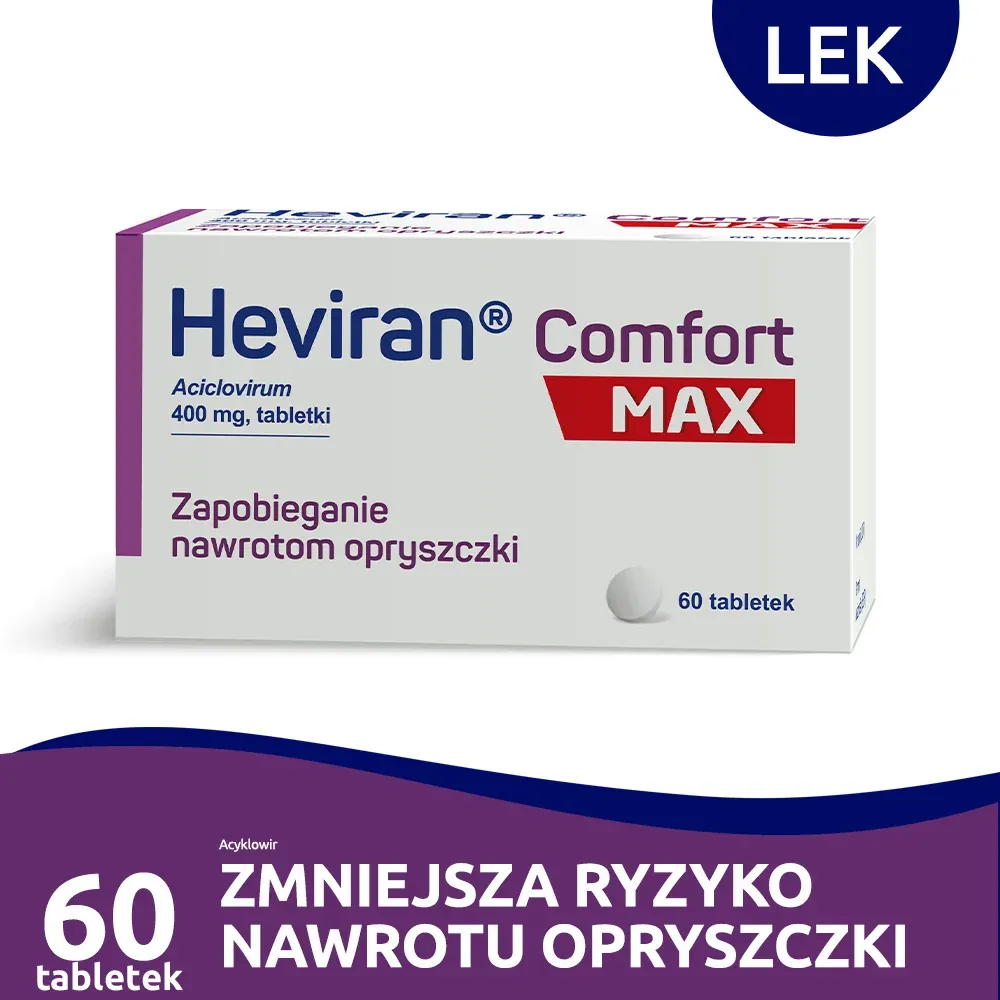
Table of Contents
Package leaflet: Information for the patient
Heviran, 200 mg, coated tablets
Heviran, 400 mg, coated tablets
Heviran, 800 mg, coated tablets
Aciclovirum
Please read this leaflet carefully before taking this medicine, because it contains
important information for you.
- Keep this leaflet, as you may need to read it again.
- If you have any further questions, please ask your doctor or pharmacist.
- This medicine has been prescribed for a specific individual. Do not pass it on to others. It may harm other people, even if their symptoms are the same.
- If you experience any adverse reactions, including any not listed in this leaflet, inform your doctor or pharmacist. See section 4.
Leaflet contents
- What Heviran is and what it is used for
- What you need to know before taking Heviran
- How to take Heviran
- Possible side effects
- How to store Heviran
- Contents of the pack and other information
1. What Heviran is and what it is used for
Heviran is an antiviral medicine.
It is used for:
- treatment of skin and mucous membrane infections caused by herpes simplex virus, including primary and recurrent genital herpes;
- prevention of recurrences of herpes simplex in patients with normal immunity;
- prevention of herpes virus infections in patients with impaired immunity;
- treatment of infections caused by varicella-zoster virus (chickenpox and shingles).
2. Important information before using Heviran
When not to use Heviran
- if the patient is allergic to aciclovir, valaciclovir, or any of the other ingredients of this medicine (listed in section 6).
Warnings and precautions
Before starting treatment with Heviran, consult your doctor if:
- the patient has a kidney disease;
- the patient is taking other medicines that may damage the kidneys;
- the patient is dehydrated;
- the patient is elderly.
If in doubt whether the above conditions apply, consult the attending physician before starting treatment with Heviran.
During treatment, the patient should drink plenty of fluids to avoid the risk of kidney damage and reduce the risk of adverse effects.
Heviran and other medicines
Inform your doctor or pharmacist about all medicines the patient is currently taking or has recently taken, as well as any medicines the patient plans to take, especially:
- probenecid – a medicine used in gout
- cimetidine – a medicine mainly used in peptic ulcer disease
- mycophenolate mofetil – a medicine used after organ transplantation
- theophylline – a medicine used in the treatment of asthma and other respiratory disorders.
Heviran with food and drink
This medicine can be taken independently of meals.
Pregnancy and breastfeeding
If the patient is pregnant or breastfeeding, suspects she may be pregnant, or is planning to have a child, she should consult a doctor or pharmacist before using this medicine.
This medicine may be used during pregnancy only if, in the opinion of the doctor, the expected benefit to the mother outweighs the potential risk to the fetus.
Aciclovir passes into breast milk. Due to the risk of adverse effects in the breastfed infant, a decision should be made in consultation with the doctor whether to discontinue the medicine or to stop breastfeeding during treatment.
Driving and operating machinery
This medicine may cause adverse effects that could impair the ability to drive. Do not drive or operate machinery unless the patient is certain that he or she feels well.
Heviran contains sodium
This medicine contains less than 1 mmol of sodium (23 mg) per tablet; therefore, it is considered "sodium-free".
3. How to use Heviran
This medicine should always be used exactly as directed by the doctor. If in doubt, consult the doctor or pharmacist.
Dosages may vary for different patients.
Treatment should be started immediately after diagnosis of infection.
During treatment, it is recommended to drink plenty of fluids to avoid the risk of kidney damage and to reduce the likelihood of adverse effects.
Tablets should be swallowed with water.
Use in adults
Treatment of infections caused by herpes simplex virus
The medicine should be taken at a dose of 200 mg five times daily (approximately every 4 hours), with a nighttime break. The treatment usually lasts for 5 days, but in cases of severe primary infections, the doctor may extend the duration of therapy.
For patients with significantly reduced immunity (e.g. after bone marrow transplantation), the doctor may double the dose to 400 mg.
| Prevention of recurrent herpes simplex in immunocompetent patients | |
| The recommended dose is 200 mg taken four times daily (approximately every 6 hours). | |
| However, for some patients the physician may choose an alternative dosing regimen: 400 mg twice | |
| daily (approximately every 12 hours) or even 800 mg once daily. | |
| The dose may be gradually reduced by the physician to 200 mg three times daily (approximately every 8 hours) or | |
| even twice daily (approximately every 12 hours), which may still provide therapeutic effect. | |
| The treating physician will decide whether to interrupt treatment every 6 to 12 months to monitor | |
| for any changes in the course of the disease. | |
Prevention of infections caused by the herpes simplex virus in patients with
reduced immunity
To prevent herpes simplex virus infection in patients with reduced immunity, administer 200 mg four times daily, approximately every 6 hours.
In patients with significantly reduced immunity (e.g. after bone marrow transplantation), the physician may decide to increase the dose to 400 mg.
Treatment of infections caused by varicella-zoster virus (chickenpox and shingles)
The drug should be taken at a dose of 800 mg five times daily (approximately every 4 hours), with a nighttime break. The drug is usually administered for 7 days.
Treatment should be initiated immediately after diagnosis. The best treatment outcomes for both chickenpox and shingles are achieved when the drug is started within 24 hours of the appearance of the first skin lesions—rash.
Use in children and adolescents
Treatment of herpes simplex virus infections and prevention of herpes simplex virus infections in patients with reduced immunity:
Children aged 2 years and older – adult dose.
Children under 2 years of age – half the adult dose.
Treatment of varicella-zoster virus infections:
Children aged 6 years and older – 800 mg four times daily.
Children aged 2 to 5 years – 400 mg four times daily.
Children under 2 years of age – 200 mg four times daily.
The drug is administered for 5 days.
The dose may also be calculated more precisely at 20 mg/kg body weight (up to a maximum dose of 800 mg) four times daily.
Use in elderly patients
In elderly patients, the physician should consider the possibility of impaired renal function and adjust the drug dosage accordingly (see: Use in patients with impaired renal function).
During treatment, patients should drink plenty of fluids.
Use in patients with impaired renal function
Caution is required when administering Heviran to patients with impaired renal function.
During treatment, patients should drink plenty of fluids.
During treatment of herpes simplex virus infections or prevention of such infections in patients with severe renal impairment (creatinine clearance less than 10 ml/min), the physician may recommend reducing the dose to 200 mg twice daily, approximately every 12 hours.
During treatment of varicella-zoster virus infections in patients with moderate renal impairment (creatinine clearance 10–25 ml/min), the physician may recommend reducing the dose to 800 mg three times daily, approximately every 8 hours, and in patients with severe renal impairment (creatinine clearance less than 10 ml/min), reducing the dose to 800 mg twice daily, approximately every 12 hours.
Use of a higher than recommended dose of Heviran
If an excessive dose is taken, inform a physician or pharmacist, or contact the nearest hospital emergency department for further advice.
Missed dose of Heviran
If a dose is missed, it should be taken as soon as possible. If it is almost time for the next dose, the missed dose should not be taken. Do not take a double dose to make up for a missed dose.
Discontinuation of Heviran
Do not stop taking the medication even if the patient feels well, unless advised by a physician.
If there are any further doubts regarding the use of this medication, consult a physician or pharmacist.
4. Possible adverse reactions
Like all medicines, this medicine can cause adverse reactions, although not everyone will experience them.
If any of the following rare (occurring in no more than 1 in 1,000 patients) symptoms occur, contact your doctor immediately:
- shortness of breath, angioedema (e.g. swelling of the face, tongue and airways causing breathing difficulties)
- allergic reaction (often manifesting as skin rashes, skin blisters and mouth and/or eye ulcers, sometimes with high fever).
During treatment, the following adverse symptoms may also occur:
Common (occurring in no more than 1 in 10 patients):
- headache, dizziness
- nausea, vomiting, diarrhoea, abdominal pain
- itching, rash (including photosensitivity)
- fatigue, fever.
Uncommon (occurring in no more than 1 in 100 patients):
- urticaria
- increased hair loss.
Very rare (occurring in no more than 1 in 10,000 patients):
- agitation, tremor
- movement coordination disorders (ataxia)
- speech disorders
- disorientation, hallucinations
- psychotic symptoms
- brain damage (encephalopathy)
- seizures, somnolence, coma
- hepatitis and jaundice
- acute kidney failure, kidney pain. Kidney pain may be associated with kidney (renal) failure. Patients should be given adequate fluid intake. Renal dysfunction usually resolves quickly after fluid replacement and/or dose reduction or discontinuation of the medicine.
Cases of acute kidney failure have been reported.
Heviran may cause changes in blood test results, therefore your doctor may recommend regular blood tests. During treatment, the following may occur:
Rare (occurring in no more than 1 in 1,000 patients):
- increased blood creatinine and urea levels (substances indicating kidney function)
- increased liver enzyme activity and serum bilirubin (substances indicating liver function).
Very rare (occurring in no more than 1 in 10,000 patients):
- decreased platelet count, which may affect blood clotting. If unexplained bruising or red or purple spots appear on the skin, inform your doctor.
- decreased white blood cell count or anaemia.
Reporting of adverse reactions
If any adverse reactions occur, including any not listed in this leaflet, inform your doctor or pharmacist. Adverse reactions can be reported directly to the Department of Monitoring Adverse Drug Reactions of the Office for Registration of Medicinal Products, Medical Devices and Biocidal Products
Al. Jerozolimskie 181C
02-222 Warsaw
Tel.: +48 22 49 21 301
Fax: +48 22 49 21 309
Website: https://smz.ezdrowie.gov.pl
Adverse reactions can also be reported to the marketing authorization holder.
Reporting adverse reactions helps provide more information on the safety of this medicine.
5. How to store Heviran
Keep this medicine out of sight and reach of children.
Do not store above 25°C.
Store in the original packaging to protect from light and moisture.
Do not use this medicine after the expiry date stated on the carton and blister pack. The expiry date refers to the last day of the stated month.
The marking on the packaging following "EXP" indicates the expiry date, and following "Lot/LOT" indicates the batch number.
Medicines must not be disposed of via wastewater or household waste. Ask your pharmacist how to dispose of medicines no longer required. This will help protect the environment.
6. Contents of the packaging and other information
What the medicine Heviran contains
- The active substance is aciclovir. Each tablet contains 200 mg, 400 mg or 800 mg of aciclovir, respectively.
- Other ingredients are: tablet core: microcrystalline cellulose, povidone, sodium carboxymethyl starch, magnesium stearate;
tablet coating: hypromellose, polyethylene glycol 6000, titanium dioxide, triethyl citrate, talc.
What Heviran looks like and contents of the pack
Film-coated tablets 200 mg and 400 mg are white, round, biconvex tablets.
Film-coated tablets 800 mg are white, oblong, biconvex tablets with a score line.
The tablet can be divided into equal doses.
Pack contains 30 tablets.
Marketing Authorisation Holder and Manufacturer
Zakłady Farmaceutyczne POLPHARMA S.A.
ul. Pelplińska 19, 83-200 Starogard Gdański
tel. + 48 22 364 61 01