Gasprid
Poland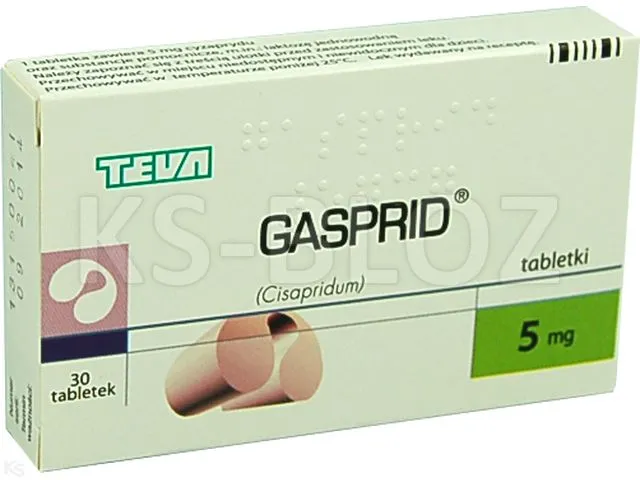
Table of Contents
Package leaflet: Information for the user
GASPRID, 5 mg, tablets
GASPRID, 10 mg, tablets
(Cisapridum)
Please read the entire leaflet carefully before using this medicine, as it contains
important information for the patient.
- Keep this leaflet, as you may need to read it again.
- If you have any questions, please consult your doctor or pharmacist.
- This medicine has been prescribed for a specific individual. Do not pass it on to others. This medicine may harm other people, even if their symptoms are the same.
- If the patient experiences any adverse reactions, including any not listed in this leaflet, inform the doctor or pharmacist. See section 4.
Table of contents of the leaflet:
- What Gasprid is and what it is used for
- Important information before taking Gasprid
- How to take Gasprid
- Possible side effects
- How to store Gasprid
- Contents of the pack and other information
1. What Gasprid is and what it is used for
Gasprid is an oral tablet containing 5 mg or 10 mg of cisapride.
The medicine is used exclusively in adults for the treatment of acute and severe symptomatic exacerbations of chronic idiopathic or diabetic gastroparesis, when other treatment methods are ineffective.
Gasprid enhances gastrointestinal motility, increases the tone of the lower oesophageal sphincter, accelerates gastric and duodenal emptying, and facilitates the passage of intestinal contents through the intestines.
2. Important information before using Gasprid
When not to use Gasprid
-
if the patient is allergic to cisapride or any of the other ingredients of this medicine (listed in section 6)
-
if the patient is concurrently taking any of the following medicines:
- antifungal agents (e.g. ketoconazole, fluconazole)
- macrolide antibiotics (e.g. azithromycin, erythromycin, clarithromycin)
- antiviral drugs for HIV (e.g. ritonavir and indinavir)
- nefazodone – an antidepressant
- antiarrhythmic drugs (e.g. quinidine, hydroquinidine, disopyramide, procainamide) or (e.g. amiodarone, sotalol)
- bepridil – an antianginal agent
- halofantrine – an antimalarial drug
- certain quinolone-derived antibiotics (especially: sparfloxacin, grepafloxacin, gatifloxacin, moxifloxacin)
- tricyclic and tetracyclic antidepressants (e.g. amitriptyline, maprotiline)
- vinpocetine – a vasodilator
- neuroleptics (such as: phenothiazines, pimozide, sertindole, haloperidol, droperidol, sulpiride)
- ziprasidone – an antipsychotic drug
- difemanil
- certain antihistamines (such as: astemizole and terfenadine)
-
if hypokalaemia or hypomagnesaemia is present
-
if significant bradycardia (slowing of the heart rate) is present
-
if significant cardiac arrhythmias are present
-
if uncompensated heart failure is present
-
in patients with diagnosed congenital QT prolongation or a family history of congenital QT prolongation
-
if fructose intolerance, glucose-galactose malabsorption syndrome or sucrase-isomaltase deficiency is present.
Gasprid should not be used when stimulation of gastrointestinal motility may be dangerous (e.g. organic obstruction).
Warnings and precautions
Before starting Gasprid, discuss with your doctor or pharmacist if:
- the patient currently has or has had in the past a heart condition (ventricular arrhythmias, second- or third-degree atrioventricular block, sinoatrial node dysfunction, ischaemic heart disease, heart failure). The doctor will weigh the potential benefits against the risks of using Gasprid,
- if sudden death has occurred in the patient's immediate family,
- if the patient has renal impairment,
- if the patient has hepatic impairment,
- if the patient has severe lung disease,
- if the patient has respiratory insufficiency,
- if the patient has risk factors predisposing to electrolyte imbalance [especially patients taking diuretics causing hypokalaemia (low blood potassium levels) and patients treated with insulin for acute conditions],
- if the patient has severe vomiting and/or chronic diarrhoea,
- if the patient is being treated with oral anticoagulants.
If any of the above situations apply to the patient (or in case of doubt), consult a doctor, pharmacist, or nurse before taking Gasprid.
Gasprid and other medicines
Inform your doctor about all medicines currently or recently taken, as well as any medicines the patient plans to take.
Concomitant use of oral anticoagulants (e.g. acenocoumarol) may enhance the anticoagulant effect and increase the risk of bleeding. The dose of the oral anticoagulant should be adjusted during treatment with cisapride and for 8 days after discontinuation of cisapride.
A transient increase in the sedative effect of diazepam may occur due to increased absorption rate.
Do not consume grapefruit juice or alcohol while taking Gasprid.
Gasprid with food and drink
The medicine should be taken at least 15 minutes before meals and before bedtime.
Repeated consumption of grapefruit juice is not recommended during treatment with cisapride.
The tablet should be swallowed whole and should not be divided or chewed.
Pregnancy and breastfeeding
If the patient is pregnant or breastfeeding, suspects she may be pregnant, or is planning to become pregnant, she should consult her doctor or pharmacist before using this medicine.
Pregnancy
Gasprid may be used during pregnancy only if, in the opinion of the physician, the benefit to the mother outweighs the potential risk to the foetus.
In studies involving a large human population, cisapride did not increase the incidence of foetal malformations. Nevertheless, when using Gasprid during pregnancy, especially in the first trimester, the expected benefits should be weighed against the potential risks.
Breastfeeding
Although the passage of cisapride into breast milk is minimal, breastfeeding is not recommended during treatment with Gasprid.
Elderly patients
No dose adjustment is required in elderly patients.
Patients with renal or hepatic impairment
In patients with hepatic or renal impairment, the daily dose should be reduced by half.
Driving and using machines
Gasprid does not affect the ability to drive or operate machinery. It does not cause sedation or drowsiness. However, Gasprid may accelerate the absorption of substances that depress the central nervous system, such as barbiturates and alcohol. Therefore, caution should be exercised if Gasprid is taken concomitantly with these substances.
Gasprid contains lactose.
If the patient has been previously diagnosed with intolerance to certain sugars, the patient should consult a doctor before taking this medicine.
Gasprid contains less than 1 mmol (23 mg) of sodium per tablet; therefore, this medicine is considered "sodium-free".
3. How to use Gasprid
This medicine should always be used as directed by a physician. If in doubt, consult a doctor or pharmacist.
Gasprid is intended for adults only.
Treatment with Gasprid should be initiated in a hospital setting and closely monitored by a specialist physician experienced in the treatment of acute and severe symptomatic exacerbations of chronic idiopathic or diabetic gastroparesis.
Method of administration
Gasprid should be taken 15 minutes before meals and preferably before going to rest (when administration of a fourth dose is necessary), with a liquid.
Recommended dose
The recommended dose of Gasprid is 10 mg three to four times daily. The dose should not exceed 40 mg per day.
Gasprid should not be taken with grapefruit juice.
Gasprid should be used only for short-term treatment.
Tablets must not be divided or chewed.
Overdose of Gasprid
Symptoms
Symptoms of overdose include abdominal cramps and frequent bowel movements.
Cardiac arrhythmias may also occur.
Treatment
In case of overdose, hospitalization is required. Administration of activated charcoal, clinical observation, and ECG monitoring are recommended. Particular attention should be paid to the ECG recording, especially for QT interval prolongation or bradycardia, as well as for electrolyte imbalances (particularly hypokalemia and hypomagnesemia).
Missed dose of Gasprid
Take the missed dose as soon as possible, unless it is almost time for the next dose.
Do not take a double dose to make up for a missed dose.
If in doubt regarding the use of this medicine, consult a doctor or pharmacist.
4. Possible adverse reactions
Like all medicines, this medicine can cause adverse reactions, although not everybody will experience them.
Cases of serious cardiac arrhythmias, even life-threatening, have been reported. In most cases, these events occurred in patients who were concurrently taking other medicinal products and/or had a history of heart disease or risk factors for developing cardiac arrhythmias.
Frequency categories of adverse reactions:
- Very common – affects more than 1 in 10 patients
- Common – affects more than 1 in 100 patients but less than 1 in 10 patients
- Uncommon – affects more than 1 in 1,000 patients but less than 1 in 100 patients
- Rare – affects more than 1 in 10,000 patients but less than 1 in 1,000 patients
- Very rare – affects less than 1 in 10,000 patients
The following adverse reactions have been observed:
Common
Gastrointestinal disorders:
Transient abdominal cramps, stomach rumbling and diarrhoea.
Uncommon
General disorders:
Cases of hypersensitivity, including rash, urticaria and itching, mild and transient headaches or dizziness. Increased frequency of urination, dependent on the dose of the medicine, has also been observed.
Very rare
Nervous system disorders:
Single cases of seizures and other symptoms such as muscle stiffness, reduced facial expression, bradykinesia, motor restlessness and involuntary muscle contractions have been observed.
Reproductive system and breast disorders:
Transient cases of gynaecomastia (enlargement of breast tissue) and galactorrhoea have been observed, sometimes accompanied by elevated levels of the hormone prolactin.
Hepatobiliary disorders:
Transient abnormalities in liver function, with or without cholestasis, have been reported.
Respiratory, thoracic and mediastinal disorders:
Bronchospasm.
Reporting of adverse reactions
If any adverse reactions occur, including any not listed in this leaflet, inform your doctor or pharmacist. Adverse reactions can be reported directly to the Department of Monitoring Adverse Drug Reactions at the Office for Registration of Medicinal Products, Medical Devices and Biocidal Products:
Al. Jerozolimskie 181C, 02-222 Warsaw
Tel.: +48 22 49 21 301
Fax: +48 22 49 21 309
Website: https://smz.ezdrowie.gov.pl
Adverse reactions may also be reported to the Marketing Authorisation Holder.
Reporting adverse reactions helps provide more information on the safety of the medicine.
5. How to store Gasprid
Store below 25°C.
Keep the medicine out of the sight and reach of children.
Do not use this medicine after the expiry date stated on the blister and carton:
Expiry date (EXP). The expiry date refers to the last day of the stated month.
Medicines must not be disposed of via wastewater or household waste. Ask your pharmacist how to dispose of medicines no longer required. Such measures help protect the environment.
6. Contents of the pack and other information
What Gasprid contains
- The active substance is cisapride. Each Gasprid tablet contains 5 mg or 10 mg of cisapride in the form of cisapride monohydrate.
- Other ingredients are: lactose monohydrate (see section 2, "Gasprid contains lactose"), microcrystalline cellulose, potato starch, povidone, sodium croscarmellose, magnesium stearate, polysorbate 80.
What Gasprid 5 mg tablets look like and contents of the pack
Tablets.
1 blister containing 30 tablets (30 tablets) in a cardboard box.
What Gasprid 10 mg tablets look like and contents of the pack
Tablets.
2 blisters containing 15 tablets each (30 tablets) in a cardboard box.
Marketing Authorisation Holder and Manufacturer
Marketing Authorisation Holder
Teva Pharmaceuticals Polska Sp. z o.o.
ul. Emilii Plater 53
00-113 Warsaw
tel.: (22) 345 93 00
Manufacturer
Teva Operations Poland Sp. z o.o.
ul. Mogilska 80
31-546 Kraków