Gabitril
Poland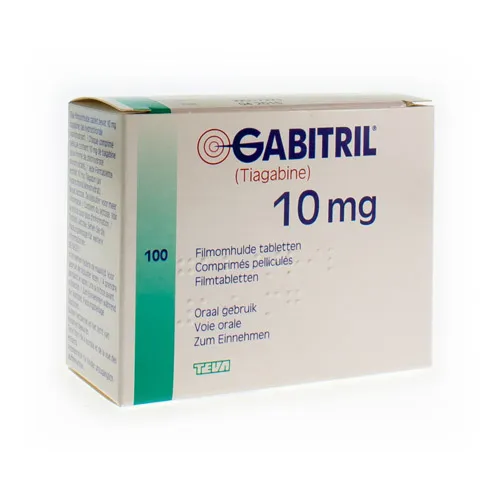
Table of Contents
Patient Information Leaflet
Gabitril, 5 mg, film-coated tablets
Gabitril, 10 mg, film-coated tablets
Gabitril, 15 mg, film-coated tablets
Tiagabinum
Please read all of this leaflet carefully before taking this medicine, as it contains important information for you.
- Keep this leaflet for future reference.
- If you have any questions, ask your doctor or pharmacist.
- This medicine has been prescribed for a specific individual. Do not pass it on to others. It may harm other people, even if their symptoms are the same.
- If you experience any adverse effects, including any not listed in this leaflet, tell your doctor or pharmacist. See section 4.
Leaflet Contents:
- What Gabitril is and what it is used for
- Important information before taking Gabitril
- How to take Gabitril
- Possible side effects
- How to store Gabitril
- Contents of the pack and other information
1. What Gabitril is and what it is used for
Gabitril is an antiepileptic medicine. Tiagabine, the active substance in Gabitril, increases the concentration of γ-aminobutyric acid (GABA) in the brain, which helps prevent seizures (epileptic events) or reduce their frequency.
Gabitril helps control epilepsy in adults, children and adolescents above 12 years of age with partial seizures.
It is used in combination with other medicines when single treatments are not sufficiently effective.
2. Information before using Gabitril
When not to use Gabitril
- if the patient is allergic to tiagabine or any of the other ingredients of this medicine (listed in section 6);
- if the patient has severe liver impairment;
- if the patient is taking St John's wort (Hypericum perforatum).
When to be cautious with Gabitril
- in patients with generalized seizures, among whom absence seizures (brief episodes of impaired consciousness) may occur;
- after stopping the medicine, because abrupt discontinuation may lead to recurrence of seizures. Do not stop taking Gabitril without consulting your doctor;
- in patients with a history of serious behavioural disorders, including depression and anxiety, as there is a risk of worsening or recurrence of such conditions during treatment with Gabitril. Inform your doctor about any disturbances in consciousness, depression or anxiety;
- a small number of patients taking antiepileptic medicines such as tiagabine have experienced thoughts about self-harm or suicide. If such thoughts occur, contact your doctor immediately;
- if seizure frequency increases or new types of seizures appear during treatment with Gabitril.
Inform your doctor about this. The doctor may recommend necessary changes in the treatment regimen.
- if a severe rash occurs, including blistering or fluid-filled blisters, or spontaneous bruising, inform your doctor immediately;
- if any visual disturbances occur, consult your doctor, as Gabitril may rarely cause disturbances in visual field;
- due to the presence of lactose in the medicine, patients with known intolerance to certain sugars should not take Gabitril;
- in patients with mild to moderate liver function impairment, the doctor will adjust the appropriate dose of Gabitril.
If any of the symptoms listed above occur, inform your doctor.
Gabitril and other medicines
If the patient is taking or has recently taken any of the following medicines, inform the doctor before starting Gabitril:
- Other antiepileptic medicines such as phenytoin, carbamazepine, phenobarbital and primidone, as they may reduce the effect of Gabitril and shorten its duration of action;
- Rifampicin (a medicine used in the treatment of tuberculosis), as it may reduce the effect of Gabitril and shorten its duration of action.
Inform your doctor or pharmacist about all medicines currently or recently taken, as well as any medicines the patient plans to take.
If Gabitril is taken together with one or more of the above-mentioned medicines, the doctor may adjust the dose of Gabitril.
Concomitant use of St John's wort (Hypericum perforatum) may increase the metabolism of tiagabine. Therefore, concomitant use of St John's wort and tiagabine is contraindicated.
Gabitril with food and drink
Take this medicine with food.
Pregnancy and breastfeeding
Do not use Gabitril during pregnancy or breastfeeding.
Women taking antiepileptic medicines should avoid unplanned pregnancy. Patients should use an effective method of contraception and consult their doctor before planning a pregnancy.
It is very important to inform your treating doctor as early as possible about any plans for pregnancy or if pregnancy occurs.
If pregnancy is confirmed while taking Gabitril, contact your doctor immediately.
If a woman is breastfeeding, consult a doctor before taking Gabitril.
Driving and using machines
Gabitril may cause dizziness and other central nervous system effects such as drowsiness or fatigue, especially during the initial phase of treatment, which may affect the ability to drive or operate machinery.
Important information about some of the ingredients of Gabitril
Gabitril contains lactose.
If a patient has previously been diagnosed with intolerance to certain sugars, the patient should consult a doctor before taking this medicine.
3. How to take Gabitril
This medicine should always be taken exactly as prescribed by your doctor. If in doubt, consult your
doctor or pharmacist.
Gabitril should be taken orally with a glass of water and together with food.
When starting Gabitril treatment, your doctor will determine the dose needed to control epilepsy.
Treatment will begin with Gabitril being taken once or twice daily. The dose will then be gradually
increased until the dose sufficient to control seizures is reached.
Once the appropriate dose is established, Gabitril will be taken two or three times daily.
The usual starting dose is 5 to 10 mg/day, increased weekly by 5 to 10 mg/day.
Depending on other medications the patient is taking, the maintenance dose of Gabitril typically ranges
from 15 to 50 mg/day, but your doctor may prescribe a higher dose.
Patients with hepatic impairment:
If the patient has mild or moderate liver function impairment, the doctor will adjust the dose of Gabitril.
Elderly patients:
Gabitril should be used with caution in elderly patients. The doctor will decide whether this treatment
is appropriate for the patient.
Taking more Gabitril than prescribed
The most common symptoms of Gabitril overdose include seizures, sedation and withdrawal, loss of
consciousness, memory loss, coma, impaired motor coordination, drowsiness, dizziness, confusion
(disorientation), speech disorder, agitation, tremor, involuntary abnormal movements (dyskinesia),
involuntary muscle contractions, vomiting, and hostility.
In case of overdose or accidental ingestion by a child, contact your doctor or the nearest hospital
immediately.
If you miss a dose of Gabitril
If you miss a dose, continue taking Gabitril as prescribed.
Do not take a double dose to make up for the missed dose.
Stopping Gabitril
Continue taking Gabitril for as long as your doctor has instructed.
Do not stop taking Gabitril without consulting your doctor, as there is a risk of seizure recurrence. Your
doctor will explain how to gradually reduce the dose (over 2–3 weeks).
If you have any further questions about the use of this medicine, consult your doctor or pharmacist.
4. Possible adverse reactions
Like all medicines, this medicine can cause adverse reactions, although not everybody experiences them.
Adverse reactions are usually mild to moderate. Most adverse reactions occur within the first few months of treatment and are usually transient.
The following adverse reactions have been reported with administration of Gabitril:
Very common (in more than 1 in 10 patients):
dizziness, tremor, somnolence, depressed mood, nervousness, concentration difficulties, feeling of fatigue, nausea
Common (in no more than 1 in 10 patients):
emotional lability, diarrhoea, abdominal pain, bruising
Rare (in no more than 1 in 1,000 patients):
non-convulsive epileptic state, slowed EEG (when the dose was rapidly increased), visual field defects, confusion (disorientation), paranoid reactions (hallucinations, agitation, delusions).
Frequency not known (frequency cannot be estimated from the available data):
encephalopathy (lethargy, confusion, with or without seizures), hostility, insomnia, motor restlessness, gait disturbances, speech disorders, blurred vision, transient memory loss, vomiting, muscle twitching, bullous dermatitis, exfoliative dermatitis, vesiculobullous rash.
If the patient develops a rash, medical advice should be sought immediately.
Reporting of adverse reactions
If any adverse reactions occur, including any adverse reactions not listed in this leaflet, inform a doctor or pharmacist. Adverse reactions can be reported directly to the Department of Monitoring of Adverse Drug Reactions, Office for Registration of Medicinal Products, Medical Devices and Biocidal Products, Al. Jerozolimskie 181C, 02-222 Warsaw, Tel.: +48 22 49 21 301, Fax +48 22 49 21 309;
Website: https://smz.ezdrowie.gov.pl
Adverse reactions can also be reported to the marketing authorization holder.
Reporting adverse reactions helps to provide more information on the safety of the medicine.
5. How to store Gabitril
Keep this medicine out of the sight and reach of children.
Do not store above 25 °C. Store in the original packaging.
Do not use this medicine after the expiry date stated on the carton and label after "EXP". The expiry date refers to the last day of the specified month.
Medicines must not be disposed of via sewage systems or household waste. Ask your pharmacist how to dispose of medicines no longer required. Such practices help protect the environment.
6. Contents of the pack and other information
What Gabitril contains:
- The active substance is tiagabine (as monohydrochloride monohydrate). Each 5 mg coated tablet contains 5 mg of tiagabine (as monohydrochloride monohydrate). Each 10 mg coated tablet contains 10 mg of tiagabine (as monohydrochloride monohydrate). Each 15 mg coated tablet contains 15 mg of tiagabine (as monohydrochloride monohydrate).
- Other components are: tablet core: microcrystalline cellulose, ascorbic acid, lactose, pregelatinized maize starch, crospovidone, colloidal anhydrous silica, hydrogenated vegetable oil (Type I), stearic acid, magnesium stearate; tablet coating: hypromellose, hydroxypropylcellulose, titanium dioxide (E171).
What Gabitril looks like and contents of the pack
Gabitril 5 mg: white, round, biconvex coated tablets with the number "251" embossed on one side; the tablet is indivisible.
Gabitril 10 mg: white, oval, biconvex coated tablets with the number "252" embossed on one side; the tablet is indivisible.
Gabitril 15 mg: white, oval, biconvex coated tablets with the number "253" embossed on one side; the tablet is indivisible.
Gabitril coated tablets are contained in an HDPE bottle closed with a child-resistant PP cap, including an integrated desiccant, packed in a cardboard box.
Gabitril 5 mg: Pack contains 50 coated tablets of 5 mg tiagabine.
Gabitril 10 mg: Pack contains 50 coated tablets of 10 mg tiagabine.
Gabitril 15 mg: Pack contains 50 coated tablets of 15 mg tiagabine.
Marketing Authorisation Holder:
Teva Pharmaceuticals Polska Sp. z o.o.
ul. Emilii Plater 53
00-113 Warsaw
tel.: (22) 345 93 00
Manufacturer/Importer:
Teva Operations Poland Sp. z o.o.
ul. Mogilska 80,
31-546 Kraków
Balkanpharma – Dupnitsa AD
3 Samokovsko Shosse Str.
Dupnitsa, 2600
Bulgaria