Fevarin
Poland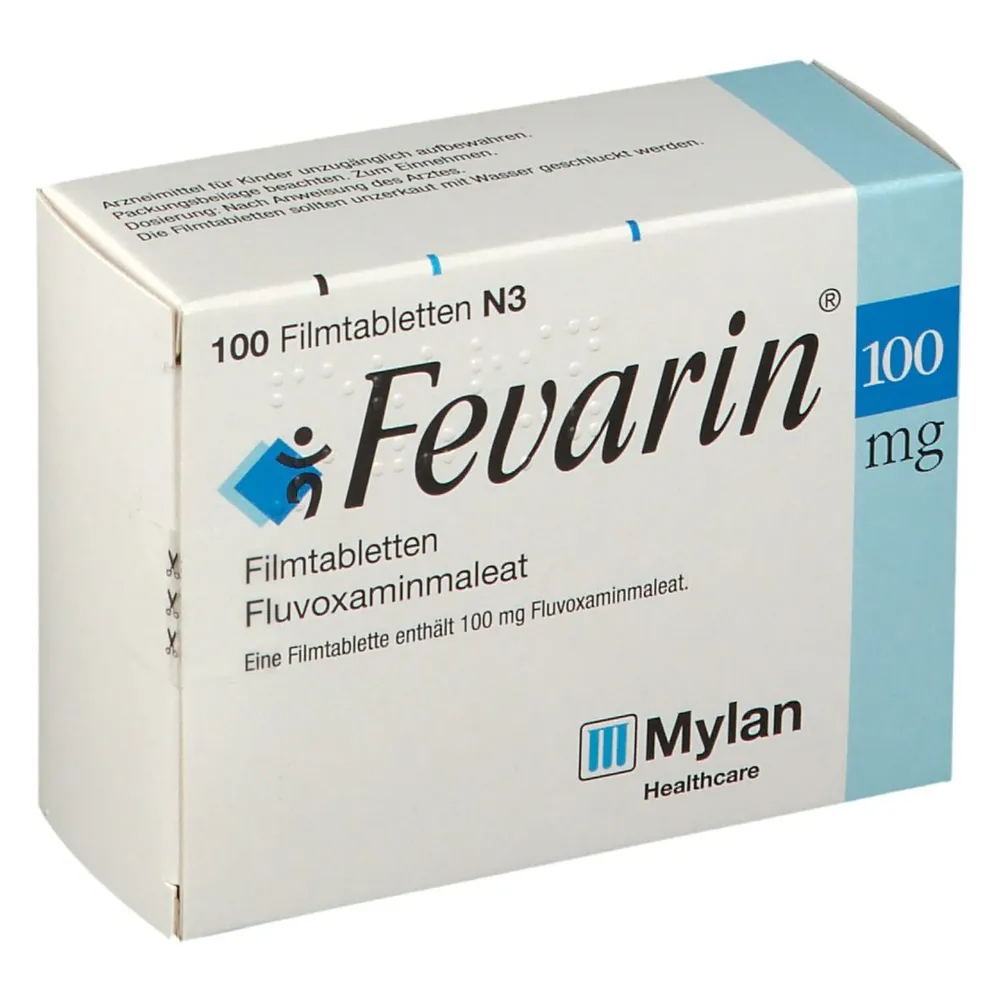
Table of Contents
Package leaflet: Information for the patient
Warning! Keep the leaflet. Information on the immediate packaging in a foreign language.
Fevarin (Fluvoxamine Maleate Mylan)
50 mg, film-coated tablets
Fluvoxamini maleas
Fevarin and Fluvoxamine Maleate Mylan are different brand names of the same medicine.
Please read this leaflet carefully before taking the medicine, as it contains
important information for the patient.
- Keep this leaflet, so that you can read it again if necessary.
- If you have any questions, please consult your doctor or pharmacist.
- This medicine has been prescribed for a specific individual. Do not pass it on to others. The medicine may harm another person, even if their symptoms are identical.
- If you experience any adverse effects, including any not listed in this leaflet, tell your doctor, pharmacist, or nurse. See section 4.
Table of contents of the leaflet
- What Fevarin is and what it is used for
- Important information before taking Fevarin
- How to take Fevarin
- Possible side effects
- How to store Fevarin
- Contents of the pack and other information
1. What Fevarin is and what it is used for
What Fevarin is
Fevarin belongs to a group of medicines known as selective serotonin reuptake inhibitors (SSRIs). Fevarin contains the active substance called fluvoxamine. It is an antidepressant medicine used in the treatment of depression (major depressive episodes).
Fevarin may also be used in the treatment of patients with obsessive-compulsive disorder (OCD), characterized by symptoms such as recurrent intrusive thoughts, images, or compulsive behaviors (rituals).
2. Important information before taking Fevarin
When not to take Fevarin
- if the patient is allergic to fluvoxamine or any of the other ingredients of this medicine (listed in section 6)
- if the patient is taking medicines containing tizanidine
- if the patient is taking or has taken within the last two weeks medicines called monoamine oxidase inhibitors (MAOIs). The doctor will advise when to start taking Fevarin after stopping MAOI treatment
- if the patient is taking pimozide (a neuroleptic medicine used in the treatment of schizophrenia and other psychiatric disorders)
- if the patient is taking medicines containing ramelteon
If any of the above conditions apply, do not take Fevarin,
but contact your doctor.
Warnings and precautions
Before starting to take Fevarin, consult your doctor or pharmacist if:
- the patient has heart disease (e.g. history of heart attack, heart rhythm disorders)
- the patient is pregnant or may be pregnant
- the patient has epilepsy or has previously experienced seizures
- the patient has previously had bleeding or is regularly taking medicines that increase the risk of bleeding, such as over-the-counter painkillers, or if the patient is pregnant (see "Pregnancy, breastfeeding and fertility")
- the patient has diabetes
- the patient has glaucoma
- the patient is undergoing electroconvulsive therapy (ECT)
- the patient has previously experienced mania (feelings of euphoria or excessive excitement)
- the patient has kidney or liver problems
- the patient is under 18 years of age (see also section 3 "How to take Fevarin")
- the patient is taking medicines containing buprenorphine or buprenorphine with naloxone, because taking these medicines together with Fevarin may lead to serotonin syndrome – a potentially life-threatening condition (symptoms see section 4 "Possible side effects"), see also "Fevarin and other medicines"
If any of the above statements apply to the patient, the doctor will advise whether it is safe
to start taking Fevarin.
Severe adverse reactions have been reported during treatment with Fevarin. If a rash or mucosal changes occur, stop taking Fevarin and contact your doctor immediately. These serious reactions may include: rash starting on the limbs' skin, usually on both sides of the body, developing into concentric rings resembling bullseyes (erythema multiforme); widespread rash with blisters and peeling skin, particularly affecting areas around the mouth, nose, eyes and genitals (Stevens-Johnson syndrome); extensive skin peeling (more than 30% of body surface – toxic epidermal necrolysis).
Medicines such as Fevarin (so-called SSRIs) may cause symptoms of sexual dysfunction (see section 4). In some cases, these symptoms persisted after discontinuation of treatment.
Suicidal thoughts, worsening of depression or anxiety disorders
People with depression or anxiety disorders may sometimes have thoughts of self-harm or suicide. Such symptoms or behaviors may worsen at the beginning of treatment with antidepressants, as these medicines usually take at least two weeks, and sometimes longer, to take effect.
The occurrence of suicidal thoughts or thoughts of self-harm is more likely if:
- the patient has previously experienced suicidal thoughts or self-harm
- the patient is a young adult. Clinical trial data indicate an increased risk of suicidal behavior in adults under 25 years of age with psychiatric disorders treated with antidepressant medicines.
If the patient experiences suicidal thoughts or thoughts of self-harm, contact your doctor immediately
or go to hospital.
It may be helpful to inform family members or friends about the depression or anxiety disorder and ask them to read this leaflet. The patient may ask family or friends for help and ask them to inform you if they notice worsening depression or anxiety or concerning changes in behavior.
Contact your doctor immediately if any disturbing thoughts or experiences occur.
Use of Fevarin in children and adolescents under 18 years of age
Fevarin should not be used in children and adolescents under 18 years of age except for patients with obsessive-compulsive disorder (OCD). Fevarin is not indicated for the treatment of depression in individuals under 18 years of age.
In patients under 18 years of age taking this type of medicine, there is an increased risk of adverse reactions such as suicide attempts, suicidal thoughts, and hostility (aggression, oppositional behaviors, and manifestations of anger).
Additionally, there are no long-term safety data on the use of Fevarin in children and adolescents regarding growth, maturation, and cognitive and behavioral development.
If Fevarin has been prescribed to a patient under 18 years of age and you have any doubts, please consult the prescribing doctor. Inform the doctor immediately if any of the above-mentioned symptoms occur or worsen in a person under 18 years of age taking Fevarin.
During the first few weeks of treatment with Fevarin, motor restlessness may occasionally occur or worsen until the antidepressant effect is achieved, e.g., the patient cannot sit or stand still (akathisia). If such symptoms occur, contact your doctor immediately.
After stopping treatment with Fevarin, withdrawal symptoms may occur, such as dizziness, sensory disturbances, visual disturbances, electric shock sensations, sleep disturbances, agitation, irritability, emotional instability, headache, nausea, vomiting, diarrhea, excessive sweating, palpitations, tremor, anxiety, and others. If such symptoms occur, contact your doctor immediately.
During treatment with Fevarin, alcohol consumption should be avoided.
Fevarin and other medicines
Tell your doctor or pharmacist about all medicines you are currently taking or have recently taken, as well as any medicines you plan to take.
Inform your doctor or pharmacist if the patient is taking any of the following medicines:
- warfarin, nicoumalone, clopidogrel, or any other medicine used to prevent blood clots
- acetylsalicylic acid or similar medicines used to treat pain and inflammation (non-steroidal anti-inflammatory drugs)
- medicines used to treat allergies (terfenadine, astemizole, cisapride)
- tacrine used in the treatment of Alzheimer's disease
- theophylline, used to treat asthma and bronchitis
- methadone, used to treat pain and withdrawal symptoms
- mexiletine, a medicine used to treat heart rhythm disorders
- phenytoin or carbamazepine, used to treat epilepsy
- cyclosporine, used to suppress the immune system
- ropinirole, used in Parkinson's disease
- propranolol, used to treat high blood pressure and heart conditions
- sildenafil, used to treat erectile dysfunction
- tramadol, a painkiller
- buprenorphine or buprenorphine with naloxone
- triptans, used to treat migraine
- pimozide
If the patient is taking or has recently taken any of the above medicines and has not informed the doctor, contact them and ask how to proceed.
Dose adjustment or change of medicine may be necessary.
If the patient has taken antidepressants or medicines for anxiety or schizophrenia within the last two weeks, contact your doctor or pharmacist.
The doctor or pharmacist will check whether the patient is taking other antidepressants or medicines for depression or related conditions, such as:
- benzodiazepines
- tricyclic antidepressants
- neuroleptics or antipsychotics
- lithium
- tryptophan
- monoamine oxidase inhibitors (MAO inhibitors), such as moclobemide
- selective serotonin reuptake inhibitors (SSRIs), such as citalopram
The doctor will advise whether it is safe to start taking Fevarin.
During treatment with Fevarin, do not start taking herbal remedies containing St. John's wort extract, as this may worsen adverse effects. If the patient is currently taking St. John's wort at the start of Fevarin treatment, stop taking St. John's wort and inform the doctor at the next visit.
Fevarin with food, drink and alcohol
- Do not consume alcohol while taking Fevarin.
- Patients who usually consume large amounts of tea, coffee, and caffeine-containing drinks may experience symptoms such as hand tremor, nausea, palpitations, anxiety, and insomnia. These symptoms may subside if the patient reduces caffeine intake.
Pregnancy, breastfeeding and fertility
Before taking any medicine, consult your doctor or pharmacist.
Pregnancy
Do not take fluvoxamine during pregnancy unless your doctor decides it is absolutely necessary. If the patient is currently taking fluvoxamine and plans pregnancy, or if the patient plans to become a father, consult your doctor, who will decide whether a change of medicine is necessary.
Taking Fevarin in late pregnancy may increase the risk of severe vaginal bleeding shortly after delivery, especially if the patient has a history of blood clotting disorders. If the patient is taking Fevarin, inform your doctor or midwife so they can provide appropriate advice.
Inform your doctor and/or midwife about taking Fevarin. Taking medicines such as Fevarin during pregnancy, especially during the last three months, may increase the risk of serious complications in the newborn, known as persistent pulmonary hypertension of the newborn (PPHN). This condition is characterized by rapid breathing and cyanosis and usually occurs within the first day after birth. If such symptoms occur in the newborn, contact your doctor and/or midwife immediately.
If the patient took fluvoxamine during the last three months of pregnancy, the newborn may experience, in addition to rapid breathing and cyanosis, other symptoms such as feeding difficulties and/or breathing problems, seizures, temperature instability, low blood sugar, tremor, convulsions, abnormal muscle tone, cyanosis, irritability, lethargy, drowsiness, vomiting, sleep problems, and constant crying. If any of these symptoms occur in the newborn, contact your doctor immediately.
Breastfeeding
Fluvoxamine is excreted in small amounts into breast milk; therefore, the medicine should not be used in breastfeeding women. Consult your doctor, who will decide whether to discontinue breastfeeding or stop taking fluvoxamine.
Fertility
Animal studies have shown that fluvoxamine reduces semen quality. This may theoretically affect fertility, although no effect on fertility has been observed in humans so far.
Driving and operating machinery
In studies in healthy volunteers, the medicine did not show a significant effect on psychomotor performance related to driving and operating machinery. However, since excessive drowsiness may occur during treatment with fluvoxamine, caution should be exercised until individual response to the medicine is known.
Fevarin contains sodium
The medicine contains less than 1 mmol (23 mg) of sodium per dose, i.e., the medicine is considered "sodium-free".
3. How to take Fevarin
Fevarin should always be taken exactly as directed by your doctor.
Fevarin is available in the following strengths: 50 mg, 100 mg.
If you have any doubts, consult your doctor or pharmacist.
Recommended dose
Adults (18 years and older)
- For the treatment of depression:
- Start with 50 or 100 mg once daily, taken in the evening.
- For the treatment of obsessive-compulsive disorder (OCD):
- Start with 50 mg once daily, preferably taken in the evening.
If there is no improvement after several weeks, consult your doctor.
Your doctor may decide to gradually increase the dose.
The maximum recommended daily dose is 300 mg.
If your doctor prescribes more than 150 mg per day, do not take it as a single dose.
Ask your doctor when to take the medication.
Children and adolescents (8 years and older)
- For the treatment of obsessive-compulsive disorder (OCD):
- Start with 25 mg (half a tablet of Fevarin 50 mg) once daily, preferably taken before bedtime. Your doctor may increase the dose by 25 mg every 4–7 days, depending on tolerance, until an effective dose is reached. The maximum daily dose is 200 mg. If your doctor prescribes more than 50 mg per day, the medication should be taken in two divided doses. Ask your doctor when to take the medication. If the dose is not divided equally, the larger part of the dose should be taken in the evening.
Fevarin must not be used for the treatment of depression in children and adolescents under 18 years of age.
This medication may be used in children and adolescents under 18 years of age only for the treatment of obsessive-compulsive disorder.
How to take Fevarin
Fevarin tablets should be swallowed whole with water, without chewing.
Tablets may be divided in half if instructed by your doctor.
How quickly does Fevarin start working?
Fevarin may take some time to work. Some patients may notice improvement after several weeks of treatment.
Continue taking the medication for as long as your doctor recommends. Even if symptoms improve, your doctor may advise continuing treatment for a certain period, at least 6 months after symptoms have resolved.
Taking more than the recommended dose of Fevarin
If a patient or someone else takes more than the recommended dose (overdose), seek immediate medical advice from a doctor or go to the nearest hospital. Take the medication packaging with you.
Overdose of Fevarin may cause gastrointestinal symptoms (nausea, vomiting, diarrhea), drowsiness, and dizziness. Cardiac events have also been reported (such as increased or decreased heart rate, drop in blood pressure), liver function disturbances, seizures, and coma.
If you miss a dose of Fevarin
If you miss a dose, wait until the next scheduled dose. Do not take a double dose to make up for the missed dose.
Stopping Fevarin
Do not stop taking Fevarin too quickly. Withdrawal symptoms may occur, such as:
- restlessness and agitation
- confusion
- diarrhea
- sleep disturbances
- dizziness
- emotional instability
- headache
- nausea or vomiting
- palpitations (rapid heartbeat)
- sensory disturbances (such as electric shock sensations or visual disturbances)
- sweating
- tremor
When discontinuing Fevarin, your doctor will advise you on how to gradually reduce the dose, which should help minimize the risk of withdrawal symptoms. In most people, symptoms after stopping Fevarin are mild and resolve on their own. However, in some individuals, symptoms may be more severe or last longer.
If any symptoms occur after stopping the medication, contact your doctor.
If withdrawal symptoms occur after stopping the tablets, your doctor may decide to taper the dose more slowly. If severe withdrawal symptoms occur, contact your doctor. Your doctor may recommend restarting the tablets and tapering them more gradually.
If you have any further questions about the use of this medication, contact your doctor or pharmacist.
4. Possible adverse reactions
Like any medicine, this medicine can cause adverse reactions, although not everyone experiences them.
The frequency of observed adverse reactions has been defined as follows:
| very common | affects more than 1 in 10 people |
| common | affects 1 to 10 in 100 people |
| uncommon | affects 1 to 10 in 1,000 people |
| rare | affects 1 to 10 in 10,000 people |
| very rare | affects less than 1 in 10,000 people |
| not known | frequency cannot be estimated from the available data |
Common adverse reactions
- Psychological anorexia (anorexia)
- Psychomotor agitation, nervousness, anxiety
- Insomnia
- Drowsiness
- Tremor
- Headache
- Dizziness
- Palpitations, increased heart rate
- Abdominal pain
- Constipation
- Diarrhea
- Dry mouth
- Indigestion
- Nausea
- Vomiting
- Excessive sweating
- Malaise, fatigue
Uncommon adverse reactions
- Hallucinations, disorientation
- Aggression
- Movement disorders, impaired motor coordination
- Orthostatic hypotension (drop in blood pressure upon assuming upright position)
- Skin hypersensitivity reactions (including angioedema, rash, or itching)
- Joint or muscle pain
- Delayed or impaired ejaculation
Rare adverse reactions
- Mania (feelings of euphoria or excessive excitement)
- Seizures
- Liver function disorders
- Photophobia (light sensitivity)
- Unexpected milk leakage from breasts (galactorrhea)
Adverse reactions of unknown frequency
- Gastrointestinal bleeding, gynecological bleeding, petechiae, purpura
- Increased levels of prolactin hormone (a hormone responsible for milk production in breastfeeding women)
- Inappropriate secretion of antidiuretic hormone (responsible for water reabsorption in the kidneys and regulation of urine volume)
- Decreased sodium concentration in plasma (hyponatremia)
- Increased or decreased body weight
- Suicidal thoughts
- Suicidal behavior
- Serotonin syndrome
- Symptoms resembling neuroleptic malignant syndrome
- Motor restlessness (akathisia)
- Sensory disturbances
- Taste disturbances
- Glaucoma (increased intraocular pressure)
- Pupil dilation
- Inability to achieve orgasm (anorgasmia)
- In women: menstrual disorders
- Severe vaginal bleeding occurring shortly after childbirth (postpartum hemorrhage); see additional information in subsection “Pregnancy, breastfeeding and fertility” in section 2
- Urinary disorders (such as need to urinate frequently during the day and/or night, daytime and/or nighttime incontinence, or inability to urinate)
- Severe skin reactions, such as severe rashes or redness, including rash starting on the skin of limbs, usually on both sides of the body, developing into concentric rings resembling bull's-eye targets (erythema multiforme), generalized blistering rash with skin peeling, particularly around the mouth, nose, eyes, and genital organs (Stevens-Johnson syndrome), extensive skin peeling (affecting more than 30% of body surface area – toxic epidermal necrolysis)
Patients taking medicines such as Fevarin have an increased risk of bone fractures.
Discontinuation of fluvoxamine treatment (especially abrupt discontinuation) often leads to withdrawal symptoms (see also section 3 – “How to take Fevarin”).
Suicidal thoughts or self-harming thoughts may occasionally occur or worsen during the first few weeks of treatment with Fevarin, until the antidepressant effect begins.
You should contact your doctor immediately if any such thoughts occur.
If several symptoms occur simultaneously, this may indicate one of the following rare conditions:
- Serotonin syndrome: if sweating, muscle rigidity or spasms, loss of coordination, confusion, irritability, or extreme agitation occur
- Neuroleptic malignant syndrome: if muscle rigidity, high fever, confusion, or other similar symptoms occur
- Syndrome of inappropriate antidiuretic hormone secretion (SIADH): if fatigue, weakness, confusion, and muscle pain, stiffness, or loss of muscle control occur
Stop taking Fevarin immediately and contact your doctor without delay.
In case of unusual bruising, petechiae on the skin, vomiting blood, or blood in stool, contact your doctor immediately.
Reporting of adverse reactions
If any adverse reactions occur, including any not listed in this leaflet, inform your doctor, pharmacist, or nurse. Adverse reactions can be reported directly to the Department of Monitoring Adverse Drug Reactions, Office for Registration of Medicinal Products, Medical Devices and Biocidal Products: Al. Jerozolimskie 181 C, 02-222 Warsaw, Tel: +48 22 49 21 301, Fax: +48 22 49 21 309, website: https://smz.ezdrowie.gov.pl
Reporting adverse reactions helps provide more information on the safety of the medicine.
5. How to store Fevarin
Keep the medicine out of sight and reach of children.
Do not use Fevarin after the expiry date stated on the packaging.
Store below 25°C. Keep in the original packaging.
If your doctor decides to discontinue treatment, any unused tablets should be returned to the
pharmacy.
Medicines must not be disposed of via wastewater or household waste. Ask your pharmacist how to dispose of medicines no longer required. Such measures will help protect the
environment.
6. Contents of the packaging and other information
What Fevarin contains
- The active substance in Fevarin is fluvoxamine maleate. Each coated tablet contains 50 mg of fluvoxamine maleate.
- The other ingredients are: mannitol, corn starch, pregelatinized starch, sodium stearyl fumarate, colloidal anhydrous silica; coating: hypromellose, polyethylene glycol 6000, talc, titanium dioxide (E 171).
What Fevarin looks like and contents of the pack
Fevarin 50 mg is a white or almost white, round, biconvex coated tablet that can be divided into two equal parts.
The pack contains 30 or 60 coated tablets.
For more detailed information, please contact the responsible party or the parallel importer.
Marketing Authorisation Holder in the Netherlands, the country of export:
Mylan B.V.
Krijgsman 20
1186 DM Amstelveen
The Netherlands
Manufacturer:
Mylan B.V.
Krijgsman 20
1186 DM Amstelveen
The Netherlands
Synthon BV
Microweg 22
6545 CM Nijmegen
The Netherlands
Parallel Importer:
Delfarma Sp. z o.o.
ul. Św. Teresy od Dzieciątka Jezus 111
91-222 Łódź
Poland
Repackaged in:
Delfarma Sp. z o.o.
ul. Św. Teresy od Dzieciątka Jezus 111
91-222 Łódź
Poland
Marketing Authorisation Number in the Netherlands, the country of export: RVG 29189
Parallel Import Licence Number: 142/20