Esogno
Poland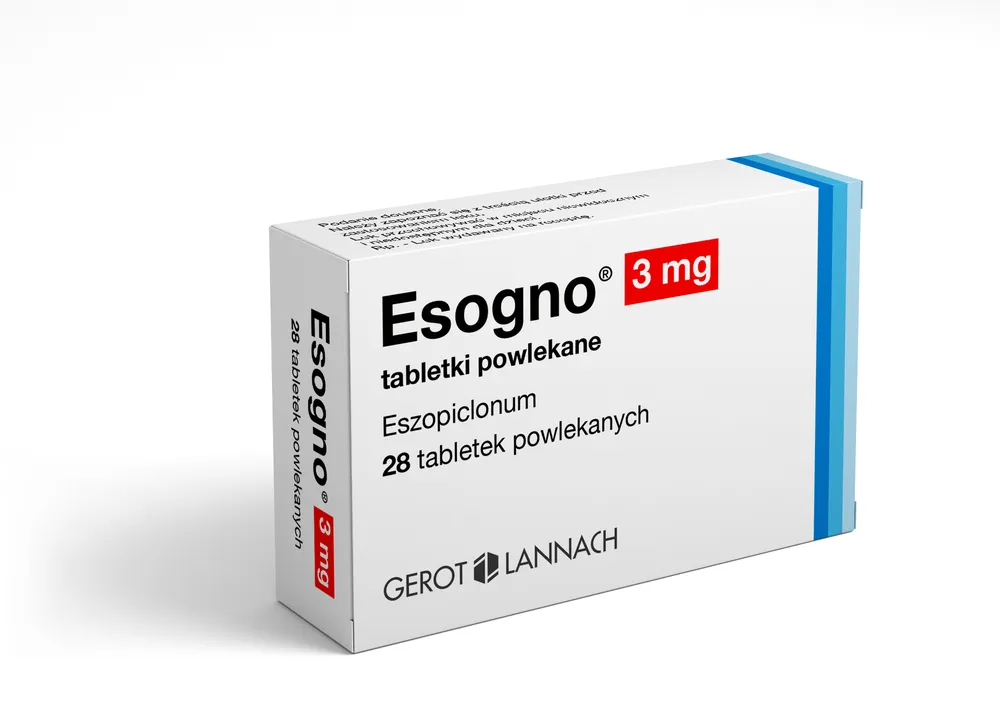
Table of Contents
Package leaflet: Information for the patient
Esogno, 1 mg, coated tablets
Esogno, 2 mg, coated tablets
Esogno, 3 mg, coated tablets
Eszopiclonum
For use in adults
Please read carefully all the information in this leaflet before taking the medicine, as it contains important information for the patient.
- Keep this leaflet, so that you can read it again if necessary.
- If you have any doubts, please consult your doctor or pharmacist.
- This medicine has been prescribed specifically for you. Do not pass it on to others. The medicine may harm another person, even if their symptoms are the same as yours.
- If you experience any adverse effects, including any not listed in this leaflet, inform your doctor or pharmacist. See section 4.
Contents of the leaflet
- What Esogno is and what it is used for
- Important information before taking Esogno
- How to take Esogno
- Possible side effects
- How to store Esogno
- Contents of the pack and other information
1. What Esogno is and what it is used for
Esogno belongs to a group of medicines called hypnotics, which are used to help you fall asleep.
Esogno is used in the treatment of insomnia, usually for a short period. Esogno is intended for use in adult patients only, and only in cases of severe sleep disturbance causing significant impairment in quality of life or extreme distress to the patient.
2. Important information before taking Esogno
When not to take Esogno:
- if the patient is allergic to eszopiclone, zopiclone, or any of the other ingredients of this medicine (listed in section 6);
- if the patient has myasthenia gravis (a condition in which muscles become easily fatigued and weak);
- if the patient has respiratory disorders;
- if the patient suffers from sleep apnoea (a condition in which the patient stops breathing for short periods during sleep);
- in case of severe hepatic impairment;
- in patients aged 65 years or older who are taking CYP3A4 inhibitors, such as certain antibiotics or antifungal medicines (e.g. ketoconazole). This should be discussed with a doctor or pharmacist;
- in patients under 18 years of age.
Warnings and precautions
Before starting treatment with Esogno, consult your doctor or pharmacist in the following cases:
- If the patient is 65 years of age or older (see section 3. "How to take Esogno").
- When taking sleep-inducing medicines such as Esogno, there is a risk of dependence. This is more likely in patients who have previously been dependent on medicines, illicit substances, or alcohol, or in whom personality disorders have been diagnosed. Inform your doctor if you have previously been dependent on illicit substances, medicines, or alcohol.
- If the patient has respiratory disorders (see section 2. "When not to take Esogno").
- Inform your doctor if the patient suffers from anxiety or depression. The doctor may adjust the treatment.
During treatment with Esogno:
- Do not take Esogno unless you can dedicate 8 hours to uninterrupted sleep.
- Esogno may cause memory loss. To minimize this risk, ensure at least 8 hours of uninterrupted sleep.
- If the patient cannot sleep for 8 hours after taking Esogno, they may feel unsteady on their feet. Falls and bodily injury are more likely in patients aged 65 years or older.
- Inform your doctor if, during treatment with Esogno, the patient begins behaving unusually, such as being more sociable or aggressive than usual, experiencing confusion, agitation, anxiety, nightmares, hallucinations (seeing or hearing things that are not real), worsening depression, or suicidal thoughts or behaviors.
- Somnambulism (sleepwalking) and other related behaviors may occur. After taking Esogno, the patient may get out of bed while not fully awake and perform activities of which they are unaware. The next morning, the patient may not remember having done anything during the night. These behaviors are more likely if alcohol is consumed or other sleep medicines are taken concurrently with Esogno. Reported behaviors include: driving a car (known as "sleep driving" – driving while asleep), preparing and eating food, making phone calls, engaging in sexual activity, and sleepwalking.
- Next-day motor impairment (see section 2. "Driving and operating machinery") – after taking Esogno, there may be an increased risk of psychomotor disturbances, including impaired ability to drive:
- if the patient takes the medicine less than 12 hours before engaging in activities requiring alertness;
- if the patient takes a higher than recommended dose;
- if the patient takes Esogno while already having taken another medicine that depresses the central nervous system, or other medicines that increase Esogno blood levels, or if the patient consumes alcohol or illicit substances.
- Take a single dose immediately before going to bed. Do not take a second dose the same night.
Esogno and other medicines
Tell your doctor or pharmacist about all medicines the patient is currently taking or has recently taken, as well as any medicines the patient plans to take.
Esogno may affect the action of other medicines, or other medicines may affect its action, for example:
- over-the-counter medicines, including herbal remedies;
- CYP3A4 inhibitors such as antibiotics (medicines used to treat bacterial infections), antifungal medicines (medicines used to treat fungal infections, e.g. ketoconazole), or grapefruit juice. Dose reduction or discontinuation of Esogno may be necessary (see section 3. "How to take Esogno");
- cytochrome P450 enzyme inducers such as carbamazepine, phenytoin, St. John's wort;
- medicines used to treat mood or behavioral disorders, e.g. medicines for depression and anxiety (antipsychotics, hypnotics, anxiolytics/sedatives, antidepressants);
- strong painkillers (opioid analgesics);
- medicines used to treat seizures or convulsions (antiepileptics);
- anaesthetics;
- medicines used to treat allergies (antihistamines, which may cause drowsiness).
Combining Esogno with the above medicines may increase the risk of adverse effects. Inform your doctor if the patient is taking any of the medicines listed above. The doctor may need to adjust the dose of Esogno.
Concomitant use of Esogno with opioids (strong painkillers, medicines used in substitution therapy, and some antitussive medicines) increases the risk of drowsiness, breathing difficulties (respiratory depression), coma, and may be life-threatening. Because of this, concomitant use of these medicines should only be considered if no other treatment options are feasible. If your doctor prescribes Esogno to be used together with an opioid medicine, they should limit the dose and duration of concomitant use.
Inform your doctor about all opioid medicines the patient is taking and strictly follow the doctor's dosing instructions. It may be helpful to inform family members or friends so they are aware of the symptoms listed above. If such symptoms occur, contact your doctor immediately.
Taking Esogno with food, drink, and alcohol
The onset of action of Esogno may be delayed if taken with or immediately after a high-fat or heavy meal.
Do not consume alcohol while taking Esogno, as it may worsen the medicine's adverse effects.
Avoid drinking grapefruit juice, as it affects the action of Esogno.
Pregnancy and breastfeeding
If the patient is pregnant, breastfeeding, suspects she may be pregnant, or is planning to have a child, she should consult her doctor before using this medicine.
Esogno is not recommended during pregnancy.
Esogno is not recommended if the patient is breastfeeding, as it may pass into breast milk. The doctor may advise discontinuation of Esogno.
Driving and operating machinery
Do not drive, operate machinery, or work at heights for 12 hours after taking Esogno.
Drowsiness, blurred vision, and disturbances in concentration, memory, and coordination may impair the ability to perform such activities.
If such disturbances occur the next morning after taking Esogno, do not drive, operate machinery, or work at heights.
Esogno contains sodium
This medicine contains less than 1 mmol of sodium (23 mg) per tablet and can therefore be considered "sodium-free".
3. How to take Esogno
This medicine should always be taken as directed by your doctor. If you have any doubts, you should
consult your doctor or pharmacist.
Adults
The recommended initial dose of eszopiclone is 1 mg once nightly. If necessary, the dose may be
increased to 2 or 3 mg.
Esogno should be taken as a single dose immediately before going to bed. Do not take more than one
dose during the same night.
Elderly patients aged 65 years and over
The recommended initial dose of eszopiclone is 1 mg once nightly. If necessary, the dose may be
increased to 2 mg.
Patients with severe renal impairment
The maximum recommended dose of eszopiclone is 2 mg once nightly.
Patients taking CYP3A4 inhibitors, such as certain antibiotics or antifungal medicines
The maximum recommended dose of eszopiclone is 2 mg once nightly. Concomitant use of Esogno with
CYP3A4 inhibitors is not recommended in patients aged 65 years and over.
Esogno is intended for oral use. Tablets should be swallowed whole. Tablets must not be crushed or
broken, as the active substance has a bitter taste.
Duration of treatment
The duration of treatment should be as short as possible and should not exceed four weeks, including
the period needed for gradual discontinuation (see section “Stopping Esogno”).
In certain cases, treatment with Esogno may be necessary for longer than four weeks. In such cases,
your doctor will determine how long the treatment should continue.
Taking more Esogno than prescribed
If you take too many Esogno tablets, seek medical help immediately. If possible, show the doctor the
packaging of the medicine.
If a patient has taken an excessive dose of Esogno, they may become very drowsy or fall into a coma.
Missing a dose of Esogno
Do not take a double dose to make up for a missed dose.
Take the next dose at your usual time.
Do not take more than one dose during the same night.
Stopping Esogno
Do not stop taking Esogno abruptly. Inform your doctor if you wish to discontinue treatment. Your
doctor will advise you on how and over what period of time the dose should be reduced.
After stopping Esogno, insomnia may recur for one or two nights.
Occasionally, after discontinuation of Esogno, adverse effects such as stomach pain, headache, and
increased appetite may occur. In rare cases, seizures may occur after stopping medicines such as
Esogno. Inform your doctor if such symptoms occur.
If you have any further doubts regarding the use of this medicine, consult your doctor or pharmacist.
4. Possible adverse effects
Like all medicines, this medicine can cause adverse effects, although not everyone experiences them.
Very common (affects more than 1 in 10 patients)
- Unpleasant taste
Common (affects 1 to 10 in 100 patients)
- Nervousness, depression, anxiety
- Headache, migraine, drowsiness, dizziness, abnormal dreams, loss or disturbances of memory, impaired thinking
- Blurred vision (mainly in patients aged 65 years and older)
- Sore throat
- Dry mouth, diarrhoea, nausea, vomiting, indigestion, stomach pain
- Rash
- Back pain, muscle pain
- Weakness, pain
Uncommon (affects 1 to 10 in 1,000 patients)
- Infections, viral infections
- Change in colour of red blood cells, anaemia, decreased number of white blood cells, increased number of white blood cells
- Allergic reactions
- Hyperthyroidism
- Ankle, foot or finger swelling, anorexia, thirst, increased appetite, low blood potassium levels
- Emotional instability, decreased libido, confusion, agitation, experiencing or hearing things that are not real (hallucinations), especially during sleep, insomnia, apathy, euphoria
- Dizziness, coordination and walking disturbances, impaired or limited body movements, tingling, numbness, tremor
- Dry eyes
- Tinnitus, ear pain
- High blood pressure, fainting
- Breathing difficulties, runny nose, hiccups
- Bad breath, mouth ulcers, colitis, gastroenteritis, tongue swelling
- Skin photosensitivity, sweating, acne, dry skin, rash
- Leg cramps, muscle twitching, muscle weakness, joint problems
- Frequent need to urinate, urinary tract infection, uncontrolled, involuntary urination, kidney pain, kidney stone, presence of albumin protein in urine
- Painful, irregular or infrequent menstruation, breast pain, impotence
- Fever, fatigue
- Weight gain, weight loss
Rare (affects 1 to 10 in 10,000 patients)
-
Angioedema (swelling of the face, lips, tongue or throat), anaphylactic reaction (rapid allergic reaction with rash, swelling and breathing difficulties)
-
Emotional disturbances, aggression, hostility, restlessness, thinking about things that are not true (delusions), abnormal behaviour, memory disturbances from the time of eszopiclone intake (amnesia), sleepwalking, driving while asleep and other unusual behaviours
-
Itching (frequent in patients aged 65 years and older)
-
Falls (mainly in patients aged 65 years and older)
Very rare (affects less than 1 in 10,000 patients)
- Mild to moderate increase in blood activity of aminotransferases and/or alkaline phosphatase
Adverse effects of unknown frequency (frequency cannot be estimated from available data)
- Dependence, withdrawal symptoms, emotional blunting
- Loss of appetite, attention disturbances, prolonged reaction time
- Double vision
- Slowed breathing (respiratory depression)
- Muscle weakness
Elderly patients
The following adverse effects were observed exclusively in patients aged 65 years and older:
Common (affects 1 to 10 in 100 patients)
- Blurred vision
Reporting of adverse effects
If any adverse effects occur, including any not listed in this leaflet, inform your doctor or pharmacist. Adverse effects can also be reported directly to the Department of Monitoring Adverse Drug Reactions of the Office for Registration of Medicinal Products, Medical Devices and Biocidal Products
Al. Jerozolimskie 181 C
02-222 Warsaw
Tel: +48 22 49 21 301
Fax: +48 22 49 21 309
Website: https://smz.ezdrowie.gov.pl
Adverse effects can also be reported to the marketing authorisation holder.
Reporting adverse effects helps to provide more information on the safety of the medicine.
5. How to store Esogno
Keep this medicine out of sight and reach of children.
Do not use this medicine after the expiry date stated on the carton and blister marked EXP.
The expiry date refers to the last day of the stated month.
For 1 mg packed in PVC/PCTFE/Aluminum and OPA/Aluminum/PVC/Aluminum blisters,
and
2 mg and 3 mg packed in PVC/PCTFE/Aluminum, OPA/Aluminum/PVC/Aluminum,
and PVC/PVdC/PVC/Aluminum blisters:
No special storage instructions apply.
For 1 mg packed in PVC/PVdC/PVC/Aluminum blister:
Do not store above 30°C.
Medicines must not be disposed of via the sewage system or household waste. Ask your pharmacist how to dispose of medicines no longer required. Such measures help protect the environment.
6. Contents of the packaging and other information
What Esogno contains
-
The active substance in this medicine is eszopiclone.
Esogno 1 mg, coated tablets: Each coated tablet contains 1 mg of eszopiclone.
Esogno 2 mg, coated tablets: Each coated tablet contains 2 mg of eszopiclone.
Esogno 3 mg, coated tablets: Each coated tablet contains 3 mg of eszopiclone. -
Other ingredients are:
Tablet core: microcrystalline cellulose, calcium hydrogen phosphate, sodium croscarmellose, colloidal anhydrous silica, magnesium stearate.
Coating: hypromellose, talc, titanium dioxide (E 171), macrogol 3350.
Tablets of 1 mg and 3 mg also contain indigo carmine (E 132), aluminium lake.
What Esogno looks like and contents of the pack
Esogno 1 mg, coated tablets are light blue, round, biconvex coated tablets with an embossed mark "1" on one side.
Esogno 2 mg, coated tablets are white, round, biconvex coated tablets with an embossed mark "2" on one side.
Esogno 3 mg, coated tablets are blue, round, biconvex coated tablets with an embossed mark "3" on one side.
Esogno is available in blisters containing 7, 10, 14, 20, 28, 30, 50, 56, 98 or 100 coated tablets.
Not all pack sizes may be marketed.
Marketing Authorisation Holder and Manufacturer
G.L. Pharma GmbH
Schloßplatz 1
8502 Lannach
Austria
For further information and information on the medicinal product names in other EEA countries, please contact the representative of the Marketing Authorisation Holder:
G.L. PHARMA POLAND Sp. z o.o.
Sienna 75 Street, 00-833 Warsaw, Poland
Tel: 022/636 52 23; 636 53 02
[email protected]