Erlotinib sun
Poland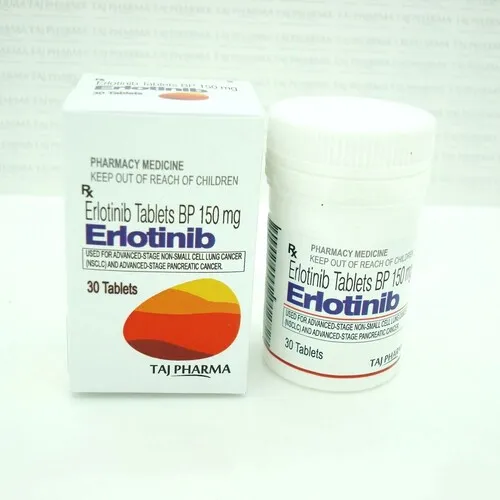
Table of Contents
NL/H/4092/001-003/IA/003
Package leaflet: Information for the user
Erlotinib SUN, 25 mg, film-coated tablets
Erlotinib SUN, 100 mg, film-coated tablets
Erlotinib SUN, 150 mg, film-coated tablets
Erlotinibum
Please read all of this leaflet carefully before taking this medicine, because it contains
important information for you.
- Keep this leaflet. You may need to read it again.
- If you have any further questions, ask your doctor or pharmacist.
- This medicine has been prescribed for you personally. Do not pass it on to others. It may harm them, even if their symptoms are the same as yours.
- If you experience any side effects, including any not listed in this leaflet, inform your doctor or pharmacist. See section 4.
Contents of the leaflet
- What Erlotinib SUN is and what it is used for
- What you need to know before you take Erlotinib SUN
- How to take Erlotinib SUN
- Possible side effects
- How to store Erlotinib SUN
- Contents of the pack and other information
1. What Erlotinib SUN is and what it is used for
Erlotinib SUN contains the active substance erlotinib. Erlotinib SUN is a medicine used in the
treatment of cancer by inhibiting the activity of a protein called epidermal growth factor receptor
(EGFR). This protein is involved in the growth and spread of cancer cells.
Erlotinib SUN is indicated for use in adult patients. It may be prescribed to adults with
advanced non-small cell lung cancer. It can be used as first-line treatment or when the disease has not significantly changed after first-line chemotherapy, provided that tumour cells show specific EGFR mutations.
Erlotinib SUN may also be used when previous chemotherapy has failed to stop disease progression.
This medicine may also be prescribed in combination with another medicine called gemcitabine to patients with metastatic pancreatic cancer.
2. Important information before using Erlotinib SUN
When not to use Erlotinib SUN
- if the patient is allergic to erlotinib or any of the other ingredients of this medicine (listed in section 6).
Warnings and precautions
Before taking Erlotinib SUN, speak with your doctor:
-
if the patient is taking other medicines that may increase or decrease the blood concentration of erlotinib, or affect its action (for example, antifungal medicines such as ketoconazole, protease inhibitors, erythromycin, clarithromycin, phenytoin, carbamazepine, barbiturates,
NL/H/4092/001-003/IA/003
rifampicin, ciprofloxacin, omeprazole, ranitidine, St John's wort or proteasome inhibitors).
In some cases, these medicines may reduce the effectiveness or increase the severity of adverse reactions of Erlotinib SUN, and then the doctor may modify the treatment. The doctor may advise
avoiding the use of these medicines during treatment with Erlotinib SUN. -
if the patient is taking anticoagulant medicines (medicines that help prevent blood clots, e.g. warfarin). Erlotinib SUN may increase the tendency to bleeding. In such cases, the patient should consult the doctor, who will need to perform regular blood tests.
-
if the patient is taking statins (medicines used to reduce cholesterol levels in the blood), Erlotinib SUN may increase the risk of statin-induced muscle disease, which in rare cases may lead to muscle breakdown (rhabdomyolysis), causing kidney damage.
-
if the patient uses contact lenses and/or has previously experienced eye problems, such as severe dry eye, inflammation of the front part of the eye (cornea), or corneal ulceration.
See also below “Erlotinib SUN and other medicines”.
The patient should inform the doctor:
- if sudden breathing difficulties occur, accompanied by cough or fever, as it may be necessary to use other medicines and to interrupt treatment with Erlotinib SUN;
- if diarrhoea occurs, as an antidiarrhoeal medicine (e.g. loperamide) may be needed;
- immediately, if severe or persistent diarrhoea, nausea, loss of appetite or vomiting occur, as it may be necessary to interrupt treatment with Erlotinib SUN and hospital treatment may be required;
- if the patient has ever had liver problems. Erlotinib may cause serious liver problems, and some cases may be fatal. The doctor may perform blood tests during treatment with this medicine to monitor whether the liver is functioning properly;
- if severe abdominal pain, increased blistering or peeling of the skin occurs. It may be necessary to temporarily interrupt or completely discontinue treatment;
- if acute or worsening redness and pain in the eye, increased tearing, blurred vision and/or light sensitivity occur, the patient should immediately inform the doctor or nurse, as urgent treatment may be required (see below: “Possible side effects”);
- if the patient is also taking statins and experiences unexplained muscle pain, tenderness, weakness or cramps. In such cases, the doctor may temporarily interrupt or completely discontinue treatment.
See also section 4 “Possible side effects”.
Liver or kidney disease
It is not known whether the effect of Erlotinib SUN may be altered in patients with impaired liver or kidney function. Use of this medicine is not recommended in patients with severe liver disease or severe kidney disease.
Disorders of glucuronidation reactions, such as Gilbert's syndrome
The doctor must exercise caution in patients with disorders of glucuronidation reactions, e.g. patients with Gilbert's syndrome.
Smokers
Patients receiving Erlotinib SUN are advised to stop smoking, as smoking may reduce the blood concentration of this medicine.
Children and adolescents
Erlotinib SUN has not been studied in patients under 18 years of age. Use of this medicine is not recommended in children and adolescents.
NL/H/4092/001-003/IA/003
Erlotinib SUN and other medicines
Tell your doctor or pharmacist about all medicines the patient is currently taking or has recently taken, as well as any medicines the patient plans to take.
Erlotinib SUN with food and drink
Do not take this medicine with food. See also section 3 “How to use Erlotinib SUN”.
Pregnancy and breastfeeding
If the patient is pregnant or breastfeeding, suspects she may be pregnant, or plans to become pregnant, she should consult her doctor or pharmacist before using this medicine.
Pregnancy
Pregnancy should be avoided during treatment with Erlotinib SUN. Female patients who could become pregnant should use appropriate contraceptive methods during treatment and for at least 2 weeks after taking the last tablet.
If a patient becomes pregnant while taking Erlotinib SUN, she should immediately inform her treating doctor, who will decide whether treatment may continue.
Breastfeeding
Breastfeeding must not be undertaken during treatment with Erlotinib SUN and for at least 2 weeks after taking the last tablet.
Driving and using machines
Erlotinib SUN has not been studied with regard to its potential effect on the ability to drive vehicles or operate machinery. It is very unlikely that this treatment would adversely affect the ability to drive vehicles or operate machinery.
Erlotinib SUN contains a sugar called lactose monohydrate.
If the patient has been diagnosed with intolerance to certain sugars, the patient should consult the doctor before taking Erlotinib SUN.
3. How to use Erlotinib SUN
This medicine should always be taken exactly as prescribed by the doctor. In case of doubts, please
consult the doctor or pharmacist again.
Erlotinib SUN should be taken orally.
The tablet should be taken at least one hour before a meal or at least two hours after a meal.
The usual dose of Erlotinib SUN is one 150 mg tablet per day in patients with non-small cell lung cancer.
In metastatic pancreatic cancer, the usual dose is one 100 mg tablet of Erlotinib SUN per day.
Erlotinib SUN is administered in combination with another medicine – gemcitabine.
The doctor may recommend gradually reducing the dose by 50 mg. To allow for different dosing regimens,
Erlotinib SUN is available in 25 mg, 100 mg, and 150 mg tablets.
Taking more Erlotinib SUN than prescribed
Contact the doctor or pharmacist immediately.
An increased risk of adverse effects may occur, and the doctor may discontinue the treatment.
Missing a dose of Erlotinib SUN
If one or more doses of Erlotinib SUN are missed, contact the doctor or pharmacist as soon as possible.
Do not take a double dose to make up for the missed tablets.
NL/H/4092/001-003/IA/003
Stopping Erlotinib SUN treatment
It is important to take Erlotinib SUN every day for as long as the doctor has prescribed.
In case of any doubts regarding the use of this medicine, consult the doctor or pharmacist.
4. Possible adverse reactions
Like all medicines, this medicine can cause adverse reactions, although not everyone will experience them.
If any of the adverse reactions listed below occur, contact your doctor as soon as possible. In some cases, your doctor may reduce the dose of Erlotinib SUN or discontinue treatment with this medicine:
- Diarrhoea and vomiting (very common: affects more than 1 patient in 10). Persistent and severe diarrhoea may lead to low blood potassium levels and kidney dysfunction, particularly if the patient is simultaneously receiving another type of chemotherapy. If diarrhoea becomes more severe or persistent, contact your treating doctor immediately, as hospital treatment may be necessary.
- Eye irritation due to conjunctivitis or keratoconjunctivitis, and keratitis (very common: affects more than 1 in 10 patients; keratitis is common: affects less than 1 in 10 patients).
- Lung tissue irritation, known as interstitial lung disease (not common in European populations; common in Japanese populations: affects less than 1 in 100 patients in European populations and 1 in 10 patients in Japanese populations). This condition may also be related to the natural progression of the underlying disease and, in some cases, may be fatal. If symptoms such as sudden breathing difficulties accompanied by cough or fever occur, contact your treating doctor immediately, as these may be signs of this disease. Your doctor may decide to permanently discontinue treatment with Erlotinib SUN.
- Gastrointestinal perforation (not common: affects less than 1 in 100 patients). Inform your doctor if you experience severe abdominal pain. Also inform your doctor if you have ever had peptic ulcers or diverticular disease, as having these conditions may increase the risk of gastrointestinal perforation.
- In rare cases, hepatitis has been observed (may affect up to 1 in 1000 people). Symptoms may include general malaise, with or without possible jaundice (yellowing of the skin and eyes), dark urine, nausea, vomiting, and abdominal pain. In rare cases, liver failure has been observed, which may lead to death. If blood tests indicate severe liver function abnormalities, your doctor may recommend discontinuing treatment.
Very common adverse reactions (affects more than 1 in 10 patients):
- Skin rash, which may appear or worsen on skin exposed to sunlight. Patients exposed to sunlight may be advised to wear protective clothing and/or use sunscreens (e.g. mineral-based).
- Infections;
- Loss of appetite, reduced body weight;
- Depression;
- Headache, skin sensory disturbances or limb numbness;
- Breathing difficulties, cough;
- Nausea;
- Mouth irritation;
- Abdominal pain, indigestion, bloating;
- Abnormal blood test results assessing liver function;
- Itching, dry skin, and hair loss;
- Fatigue, fever, chills.
Common adverse reactions (affects less than 1 in 10 patients):
NL/H/4092/001-003/IA/003
- Nosebleeds;
- Bleeding from the stomach or intestines;
- Inflammatory reactions around the nails;
- Folliculitis;
- Acne;
- Skin fissures;
- Kidney failure (if this medicine is used outside registered indications in combination with chemotherapy).
Uncommon adverse reactions (affects less than 1 in 100 patients):
- Changes in eyelashes;
- Excessive body and facial hair growth of male pattern;
- Changes in eyebrows;
- Brittle and soft nails.
Rare adverse reactions (affects less than 1 in 1,000 patients):
- Redness or pain in the palms of the hands or soles of the feet (hand-foot syndrome, also known as palmar-plantar erythrodysesthesia).
Very rare adverse reactions (affects less than 1 in 10,000 patients):
- Cases of corneal ulceration or perforation;
- Severe blistering or skin peeling (resembling Stevens-Johnson syndrome);
- Inflammation of the coloured part of the eye.
Reporting of adverse reactions
If any adverse reactions occur, including any adverse reactions not listed in this leaflet, inform your doctor or pharmacist. Adverse reactions can be reported directly to the Department of Monitoring Adverse Drug Reactions of the Office for Registration of Medicinal Products, Medical Devices and Biocidal Products: Al. Jerozolimskie 181C, 02-222 Warsaw, tel.: 22 49 21 301, fax: 22 49 21 309, e-mail: [email protected].
Adverse reactions can also be reported to the Marketing Authorisation Holder.
Reporting adverse reactions helps provide more information on the safety of this medicine.
5. How to store Erlotinib SUN
Keep this medicine out of the sight and reach of children.
Do not use this medicine after the expiry date (EXP) stated on the blister pack and the outer carton.
The expiry date refers to the last day of the stated month.
The batch number is indicated as Lot.
No special precautions for storage are required.
Medicines should not be disposed of via wastewater or household waste. Ask your pharmacist how to dispose of medicines no longer required. These measures will help protect the environment.
6. Contents of the package and other information
What Erlotinib SUN contains:
NL/H/4092/001-003/IA/003
- The active substance is erlotinib. One coated tablet contains 25 mg, 100 mg or 150 mg of erlotinib (as erlotinib hydrochloride), depending on the strength.
- The other ingredients are:
Tablet core: lactose monohydrate, microcrystalline cellulose, sodium carboxymethyl starch (type A), sodium lauryl sulphate, magnesium stearate.
Tablet coating: Opadry White (YS-1-7040) hypromellose, titanium dioxide (E171), polyethylene glycol 8000, talc.
What Erlotinib SUN looks like and contents of the pack:
Erlotinib SUN 25 mg are white or almost white, round, film-coated tablets, 6.18 mm in diameter, with "RL" engraved on one side and "11" on the other.
Erlotinib SUN 100 mg are white or almost white, round, film-coated tablets, 9.63 mm in diameter, with "RL" engraved on one side and "12" on the other.
Erlotinib SUN 150 mg are white or almost white, round, film-coated tablets, 11.2 mm in diameter, with "RL" engraved on one side and "13" on the other.
Pack sizes:
Blister packs
30 tablets (3 x 10) in OPA/Aluminium/HDPE/PE + desiccant/HDPE/PE/Aluminium blisters.
Bottle
30 tablets in an HDPE bottle with child-resistant closure, containing a desiccant (silica gel).
Marketing Authorisation Holder:
SUN Pharmaceutical Industries Europe B.V.
Polarisavenue 87
2132 JH Hoofddorp
The Netherlands
Manufacturer / Importer
SUN Pharmaceutical Industries Europe B.V.
Polarisavenue 87, 2132 JH Hoofddorp, The Netherlands
S.C. Terapia S.A.
Str. Fabricii nr.124, 400632, Cluj-Napoca, Jud. Cluj, Romania
For information on the names of the medicinal product in other European Economic Area countries, please contact the representative of the Marketing Authorisation Holder.