Elenium
Poland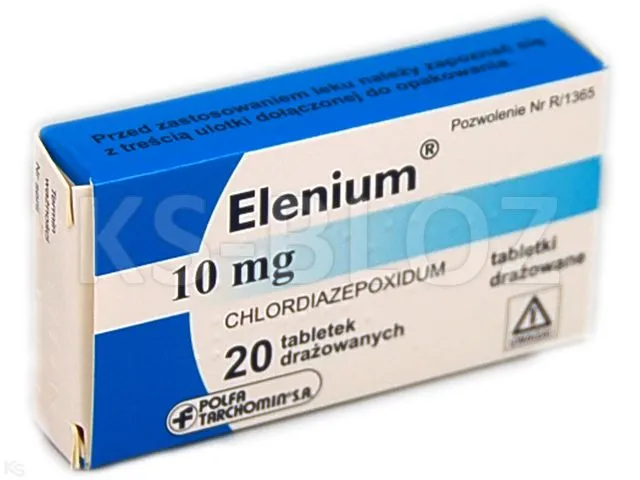
Instructions for Use
Package leaflet: Information for the patient
Elenium, 5 mg, coated tablets
Elenium, 10 mg, coated tablets
Elenium, 25 mg, coated tablets
Chlordiazepoxide
Please read carefully all the information in this leaflet before taking the medicine, as it contains
important information for the patient.
- Keep this leaflet, as you may need to read it again.
- If you have any doubts, please consult your doctor or nurse.
- This medicine has been prescribed for a specific individual. Do not pass it on to others. The medicine may harm another person, even if their symptoms are similar.
- If you experience any adverse reactions, including any not listed in this leaflet, inform your doctor or nurse immediately. See section 4.
Table of contents of the leaflet:
- What Elenium is and what it is used for
- Important information before taking Elenium
- How to take Elenium
- Possible side effects
- How to store Elenium
- Contents of the pack and other information
1. What Elenium is and what it is used for
Elenium contains chlordiazepoxide as the active substance, which belongs to a group of medicines called benzodiazepines. Chlordiazepoxide has anxiolytic, sedative, mild hypnotic properties and reduces skeletal muscle tension.
Elenium is used short-term (for 2 to 4 weeks) in the treatment of:
- anxiety states of various origins;
- anxiety states associated with insomnia;
- acute alcohol withdrawal syndrome;
- conditions with increased skeletal muscle tension.
2. Important information before taking Elenium
When not to take Elenium
Do not take Elenium if you have:
- hypersensitivity (allergy) to chlordiazepoxide or to any other benzodiazepine or to any of the ingredients of this medicine (listed in section 6);
- severe respiratory insufficiency, regardless of cause;
- sleep apnoea syndrome (frequent, brief breathing interruptions during sleep);
- severe hepatic insufficiency;
- phobias, obsessions (anxiety disorders due to irrational fears and thoughts [obsessive states]);
- chronic psychoses;
- myasthenia gravis (a disease causing muscle weakness and excessive fatigue).
Warnings and precautions
General information regarding effects observed during treatment with benzodiazepines and other medicines with benzodiazepine-like action, which should be considered when using Elenium.
Tolerance
After several weeks of treatment with Elenium, its effectiveness may decrease.
Dependence
Prolonged use of Elenium may lead to psychological and physical dependence.
The risk of developing dependence increases with higher doses and longer duration of treatment, and is greater in patients with a history of drug, alcohol, or narcotic dependence, or in patients with personality disorders.
Withdrawal symptoms
If Elenium is stopped abruptly, withdrawal symptoms may occur, such as: headache, muscle pain, increased anxiety, tension, agitation, motor restlessness, disorientation, sleep disturbances, irritability. In more severe cases, the following may occur: loss of reality perception, personality changes, hypersensitivity to sound, touch, light, noise, tingling sensations and numbness of limbs, hallucinations and delusions, epileptic seizures.
Rebound phenomenon and anxiety
During discontinuation of Elenium, a temporary recurrence of intensified symptoms that led to treatment (so-called "rebound" phenomenon) may occur. These symptoms are often accompanied by mood changes, anxiety, sleep disturbances, and insomnia. To minimize the risk of these symptoms, gradual dose reduction is recommended.
Anterograde amnesia (inability to remember events after taking the medicine)
Elenium may cause anterograde amnesia (difficulty in learning and remembering new information – new data are not permanently stored). This usually occurs within a few hours after taking the medicine, especially at high doses. If your doctor has prescribed Elenium to be taken once daily, to reduce the risk of amnesia, it is recommended to take the medicine half an hour before going to bed and to ensure appropriate conditions for uninterrupted sleep lasting 7–8 hours.
Psychiatric and paradoxical reactions
In children and elderly patients, the risk of psychiatric and paradoxical (opposite to expected) reactions is increased, such as: anxiety, excitement, irritability, aggression, anger outbursts, delusions, nightmares, hallucinations, psychoses, behavioural disturbances.
If such symptoms occur, contact your doctor immediately.
Use in depression
Before taking Elenium, inform your doctor about any psychiatric disorders or any previous suicide attempts. Administration of Elenium to such patients may worsen symptoms of depression, including suicidal thoughts.
Specific patient groups
Elderly patients should receive lower doses of Elenium (see section 3), due to the increased risk of adverse effects, mainly disturbances in orientation and motor coordination (falls, injuries).
Children and adolescents – safety and efficacy of Elenium have not been established in children and adolescents under 18 years of age; therefore, use in this age group is not recommended.
If any of the following conditions apply to you, inform your doctor before taking the medicine:
- chronic respiratory insufficiency;
- hepatic and/or renal insufficiency;
- dependence on alcohol, narcotics, or drugs. In these patients, there is a high probability of developing tolerance and psychological and physical dependence. Therefore, such patients should take Elenium only under strict medical supervision.
Elenium and other medicines
Inform your doctor about all medicines you are currently taking or have recently taken, as well as any medicines you plan to take.
This is particularly important if you are taking any of the following medicines:
- fluvoxamine, fluoxetine, and other medicines used in the treatment of psychiatric disorders;
- medicines used for insomnia;
- medicines used for allergic conditions that may cause drowsiness;
- medicines used for epilepsy (e.g. carbamazepine, phenytoin, hydantoin);
- medicines used for peptic ulcer disease (e.g. cimetidine, omeprazole, cisapride);
- rifampicin (a medicine used in the treatment of tuberculosis);
- erythromycin (an antibiotic);
- ketoconazole (an antifungal medicine);
- medicines used for general anaesthesia;
- narcotic analgesics (e.g. morphine, codeine);
- muscle relaxants (e.g. baclofen);
- medicines used in Parkinson's disease (e.g. levodopa);
- disulfiram (used in the treatment of alcoholism);
- alcohol: consuming alcohol during treatment with Elenium may enhance its effects and lead to paradoxical reactions such as psychomotor agitation and aggressive behaviour (see section 2; Warnings and precautions).
- opioids: concomitant use of Elenium and opioids (strong analgesics, medicines used in substitution therapy [addiction treatment], some cough medicines) increases the risk of drowsiness, breathing difficulties (respiratory depression), coma, and may even be life-threatening. Therefore, concomitant use of these medicines should only be considered when other treatment options are not feasible.
However, if your doctor prescribes Elenium together with opioids, the dose and duration of concurrent treatment should be limited.
You should inform your doctor about all opioid medicines you are taking and strictly follow the doctor’s dosing instructions. It may be helpful to inform friends or family members so they are aware of the possibility of these symptoms occurring.
If such symptoms occur, contact your doctor immediately.
Pregnancy and breastfeeding
If you are pregnant, breastfeeding, think you may be pregnant, or are planning to have a baby, consult your doctor before taking this medicine.
Elenium should not be taken during pregnancy.
Chlordiazepoxide passes into breast milk. If treatment is necessary, breastfeeding should be discontinued.
Driving and operating machinery
During treatment with Elenium, you should not drive or operate machinery.
Your ability to drive and operate machinery may be impaired due to drowsiness, concentration disturbances, or other adverse effects that reduce alertness (see section 4. Possible side effects).
Elenium contains monohydrate lactose and sucrose
Elenium 5 mg, 10 mg, and 25 mg tablets contain monohydrate lactose and sucrose. If you have been diagnosed with an intolerance to certain sugars, consult your doctor before taking this medicine.
Elenium contains sodium
Elenium 5 mg, 10 mg, and 25 mg tablets contain less than 1 mmol (23 mg) of sodium per coated tablet, meaning the medicine is considered "sodium-free".
Elenium 25 mg contains sunset yellow FCF (E110)
Elenium 25 mg contains sunset yellow FCF (E110), which may cause allergic reactions.
3. How to use Elenium
This medicine should always be taken as directed by the physician.
In case of doubts, consult a doctor or pharmacist.
Recommended dose
Adults
- Anxiety states – usually up to 30 mg daily in divided doses every 6 to 8 hours. In special circumstances, the doctor may increase the dose. The maximum daily dose of 100 mg should not be exceeded.
- Anxiety with accompanying insomnia – 10 mg to 30 mg as a single dose before bedtime.
- Agitation in acute alcohol withdrawal syndrome – 25 mg to 100 mg. If necessary, the dose may be repeated every 2 to 4 hours, not exceeding 200 mg per day. Subsequently, the dose should be reduced to the lowest maintenance level sufficient to control agitation symptoms.
- Increased muscle tension – 10 mg to 30 mg daily in divided doses.
Children
Chlordiazepoxide is not recommended for use in children.
Patients with impaired renal and/or hepatic function
The physician will determine the dosage individually for each patient, depending on the degree of organ dysfunction.
Elderly patients
Elderly patients are more sensitive to medicines acting on the central nervous system.
When using Elenium in this population, it is recommended to administer the smallest effective dose. The dose should not exceed half of the dose recommended for adults.
If during treatment the patient feels that the effect of the medicine is too strong or too weak, they should consult the physician.
Duration of treatment
The duration of treatment is determined by the physician.
Method of administration
Elenium tablets should be swallowed with a small amount of water.
The physician will initiate treatment with the smallest effective dose and, if necessary, gradually increase it.
Use of a higher than recommended dose of Elenium
Symptoms of overdose include disturbances of consciousness, drowsiness, confusion, and slurred speech. In severe cases of poisoning, the following may occur: motor incoordination, hypotension, muscle weakness, respiratory depression, coma, and even death.
In case of ingestion of a higher than recommended dose of Elenium, seek immediate medical attention or go to the nearest hospital emergency department. Bring the medicine in its original packaging so that medical personnel can clearly identify which medicine was taken.
Missed dose of Elenium
If the patient forgets to take a dose, they should take the next dose as soon as they remember. However, if it is almost time for the next scheduled dose, the missed dose should be skipped and the next dose taken as prescribed. If the patient misses two or more doses, they should contact their physician.
Do not take a double dose to make up for a missed dose.
Discontinuation of Elenium
Do not discontinue use of the medicine unless instructed by the physician. Symptoms of the illness may recur. If the physician decides to discontinue treatment, the dose should be gradually reduced over several days.
In case of any doubts regarding the use of the medicine, consult the physician.
4. Possible adverse effects
Like all medicines, this medicine can cause adverse effects, although not everybody will experience them.
Serious adverse effects
If any of the following adverse symptoms occur, you should immediately
contact your doctor or go to the nearest emergency department at a
hospital:
- disorientation, states of excitement and agitation, depression with suicidal tendencies, anxiety, irritability, hallucinations, nightmares, illusions (seeing or hearing things that do not exist), psychoses (loss of contact with reality), unusual behaviour. These disorders most commonly occur after alcohol consumption, in elderly patients, or in patients with psychiatric disorders. The frequency of these symptoms cannot be determined from available data.
Other adverse effects that may occur during treatment with Elenium
The following adverse effects occur commonly (less frequently than in 1 out of 10 patients):
- drowsiness, dizziness, slowed reactions – these may occur during the first few days of treatment in elderly patients and usually resolve during continued treatment.
The following adverse effects occur rarely (less frequently than in 1 out of 1,000 patients):
- nausea, gastrointestinal discomfort, dry mouth, constipation
- speech disturbances, changes in libido – mainly affecting patients receiving high doses of the medicine
- memory disturbances
The following adverse effects occur very rarely (less frequently than in 1 out of 10,000 patients):
- anaphylactic reactions
Frequency unknown (cannot be determined from available data):
- changes in the number of certain types of blood cells
- skin rashes, itching, urticaria (allergic reactions)
- loss of appetite
- paradoxical reactions – psychomotor agitation, insomnia, increased excitability and aggression, muscle tremor, seizures. Paradoxical reactions most commonly occur after alcohol consumption, in elderly patients, and in patients with psychiatric disorders.
- psychological and physical dependence (even at therapeutic doses of chlordiazepoxide) – patients who abuse alcohol or drugs are more susceptible. Abrupt discontinuation of treatment may lead to withdrawal syndrome.
- depression (pre-existing, undiagnosed depression may become apparent)
- visual disturbances (blurred or double vision)
- slowed heart rate, chest pain
- slight decrease in blood pressure
- slight increase in liver enzyme activity, disturbances in liver function with development of jaundice (yellowing of the skin and whites of the eyes)
- muscle tremor, muscle weakness, seizures
- urinary retention, urinary incontinence
- menstrual disorders
- general weakness, fainting, falls.
Reporting of adverse effects
If any adverse effects occur, including any adverse effects not listed in
this leaflet, you should inform your doctor, pharmacist, or nurse. Adverse effects can
be reported directly to the Department of Monitoring of Adverse Drug Reactions of the Office for Registration of Medicinal Products, Medical Devices and Biocidal Products
Al. Jerozolimskie 181C; 02-222 Warsaw
Tel.: + 48 22 49 21 301; fax: + 48 22 49 21 309
Website: https://smz.ezdrowie.gov.pl
Adverse effects can also be reported to the marketing authorization holder.
By reporting adverse effects, additional information on the safety of the medicine can be collected.
5. How to store Elenium
Keep out of the sight and reach of children.
Store below 25 °C. Protect from light and moisture.
Do not use the medicine after the expiry date (EXP) stated on the packaging. The expiry date refers to the last day of the specified month.
Medicines must not be disposed of via wastewater or household waste. Ask your pharmacist what to do with medicines no longer required. Proper disposal helps protect the environment.
6. Contents of the pack and other information
What Elenium contains
The active substance is chlordiazepoxide.
Elenium 5 mg
One tablet contains 5 mg of chlordiazepoxide.
Other ingredients: potato starch, sodium carboxymethyl starch (type A), gelatin,
polysorbate 80, talc, magnesium stearate, lactose monohydrate.
Coating ingredients: polyvinyl alcohol, talc, maltodextrin, quinoline yellow lake (E104), titanium dioxide, Opaglos 6000, sucrose.
Elenium 10 mg
One tablet contains 10 mg of chlordiazepoxide.
Other ingredients: potato starch, sodium carboxymethyl starch (type A), gelatin,
polysorbate 80, talc, magnesium stearate, lactose monohydrate.
Coating ingredients: polyvinyl alcohol, talc, maltodextrin, green lake (indigotine (E132) + quinoline yellow (E104)), titanium dioxide, Opaglos 6000, sucrose.
Elenium 25 mg
One tablet contains 25 mg of chlordiazepoxide.
Other ingredients: potato starch, sodium carboxymethyl starch (type A), gelatin,
polysorbate 80, talc, magnesium stearate, lactose monohydrate.
Coating ingredients: polyvinyl alcohol, talc, maltodextrin, orange yellow lake (E110), titanium dioxide, Opaglos 6000, sucrose.
What Elenium looks like and contents of the pack
Elenium 5 mg: yellow coated tablets, round, biconvex
Elenium 10 mg: green coated tablets, round, biconvex
Elenium 25 mg: orange coated tablets, round, biconvex
Pack size: 20 coated tablets
Marketing Authorisation Holder and Manufacturer
Tarchomin Pharmaceutical Works "Polfa" Joint Stock Company
A. Fleminga 2 Street
03-176 Warsaw, Poland
Telephone number: 22 811-18-14
For further information, please contact the representative of the Marketing Authorisation Holder.
Similar Medications
-
Elenium
Form: tablets, coated
Active substance Dosage chlordiazepoxide 10 mg Manufacturer: Tarchomin Pharmaceutical Works 'Polfa' S.A.
-
Elenium
Form: tablets, coated
Active substance Dosage chlordiazepoxide 25 mg Manufacturer: Tarchomin Pharmaceutical Works 'Polfa' S.A.
This page has been machine-translated and may contain inaccuracies. The original data is available in the manufacturing country's language.
Last data check: June 04, 2026 · Data source: Rejestr Produktów Leczniczych (URPL)