Edoxaban +pharma
Poland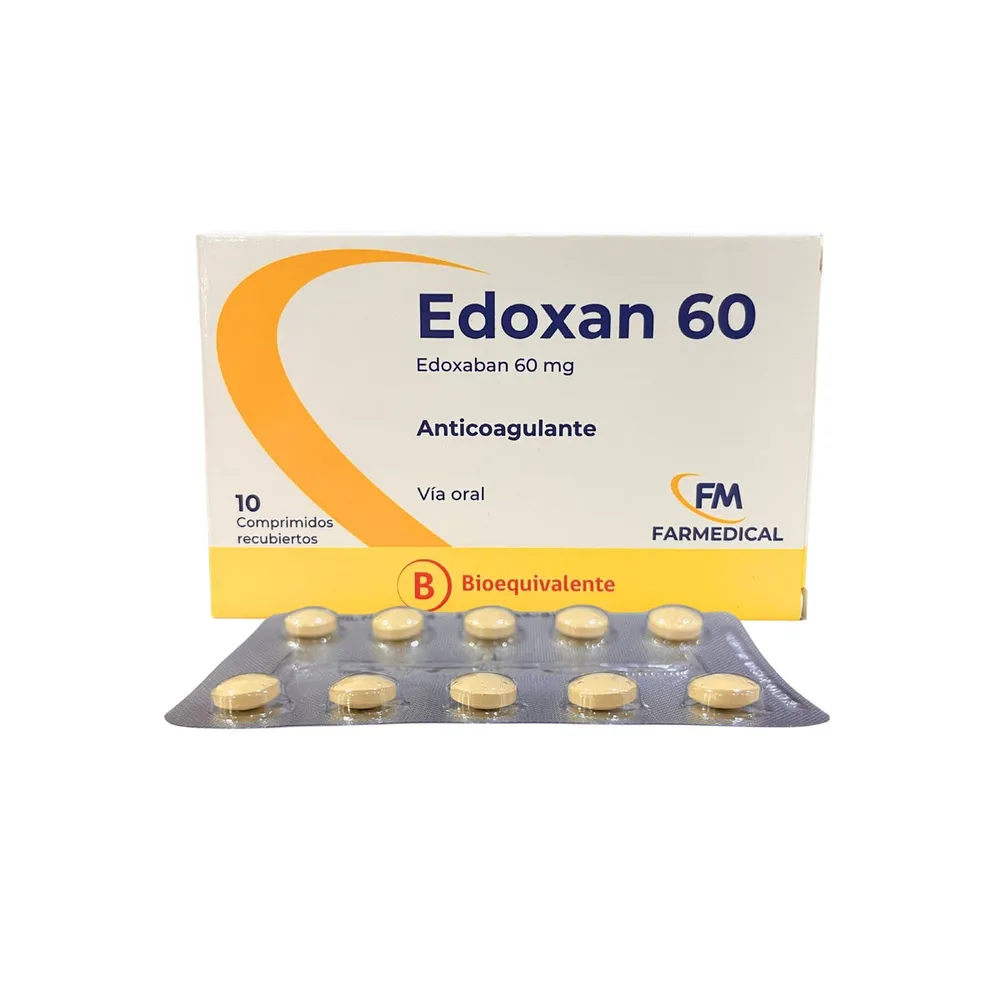
Table of Contents
Package leaflet: Information for the user
Edoxaban +pharma, 15 mg, film-coated tablets
Edoxaban +pharma, 30 mg, film-coated tablets
Edoxaban +pharma, 60 mg, film-coated tablets
Edoxabanum
Please read this leaflet carefully before taking this medicine because it contains
important information for you.
- Keep this leaflet. You may need to read it again.
- If you have any further questions, please ask your doctor or pharmacist.
- This medicine has been prescribed for you personally. Do not give it to others. It may harm them, even if their symptoms are the same as yours.
- If you experience any side effects, including any not listed in this leaflet, tell your doctor or pharmacist. See section 4.
Leaflet contents
- What Edoxaban +pharma is and what it is used for
- What you need to know before taking Edoxaban +pharma
- How to take Edoxaban +pharma
- Possible side effects
- How to store Edoxaban +pharma
- Contents of the pack and other information
1. What Edoxaban +pharma is and what it is used for
Edoxaban +pharma contains the active substance edoxaban and belongs to a group of medicines called anticoagulants. This medicine helps prevent the formation of blood clots. It works by blocking the activity of factor Xa, which is an important component in the blood clotting process.
Edoxaban +pharma is used in adults:
- to prevent blood clots in the brain (stroke) and in other blood vessels in the body, if the patient has been diagnosed with a heart rhythm disorder called non-valvular atrial fibrillation and has at least one additional risk factor, such as heart failure, previous stroke, or high blood pressure
- to treat blood clots in the deep veins of the legs (deep vein thrombosis) and in the blood vessels of the lungs (pulmonary embolism), as well as to prevent recurrence of blood clots in the blood vessels of the legs and (or) lungs
2. Information before using Edoxaban +pharma
When not to take Edoxaban +pharma
- if the patient is allergic to edoxaban or to any of the other ingredients of this medicine (listed in section 6)
- if the patient has active bleeding
- if the patient has a disease or condition leading to an increased risk of major bleeding (e.g. stomach ulcer, trauma or bleeding in the brain, or recent surgery on the brain or eyes)
- if the patient is taking other medicines that prevent blood clotting (e.g. warfarin, dabigatran, rivaroxaban, apixaban or heparin), except when switching anticoagulant therapy or if heparin is administered via intravenous catheter or arterial line to maintain patency
- if the patient has a liver disease that leads to an increased risk of bleeding
- if the patient has uncontrolled high blood pressure
- if the patient is pregnant or breastfeeding
Warnings and precautions
Before starting treatment with Edoxaban +pharma, discuss with your doctor or
pharmacist:
- if the patient has an increased risk of bleeding due to any of the conditions listed below:
- end-stage renal failure or if the patient is on dialysis
- severe liver disease
- coagulation disorders
- blood vessel disorders in the back of the eyes (retinopathy)
- recent intracranial or cerebral haemorrhage
- problems with blood vessels in the brain or spinal cord
- if the patient has a mechanical heart valve.
Edoxaban +pharma 15 mg is intended for use only when switching anticoagulant therapy from Edoxaban +pharma 30 mg to a vitamin K antagonist (e.g. warfarin) (see section 3 “How to take Edoxaban +pharma”).
Special caution is required when using Edoxaban +pharma
- if the patient has been diagnosed with antiphospholipid syndrome (an autoimmune disorder causing increased risk of blood clots), the patient should inform the doctor, who will decide whether treatment adjustment is necessary.
If the patient needs to undergo surgery
- the patient must strictly follow the doctor’s instructions regarding when to take Edoxaban +pharma before or after surgery. If possible, Edoxaban +pharma should be discontinued at least 24 hours before surgery. The doctor will decide when to restart Edoxaban +pharma. In emergency situations, the doctor will help determine the appropriate management regarding Edoxaban +pharma use.
Children and adolescents
Edoxaban +pharma is not recommended for use in children and adolescents under 18 years of age.
Edoxaban +pharma and other medicines
Tell your doctor or pharmacist about all medicines the patient is currently taking or has recently taken, as well as any medicines the patient plans to take.
If the patient is taking any of the following medicines:
- certain antifungal medicines (e.g. ketoconazole)
- medicines used to treat heart rhythm disorders (e.g. dronedarone, quinidine, verapamil)
- other medicines used to reduce blood clotting (e.g. heparin, clopidogrel or vitamin K antagonists, including warfarin, acenocoumarol, phenprocoumon, or dabigatran, rivaroxaban, apixaban)
- antibiotics (e.g. erythromycin, clarithromycin)
- medicines used to prevent transplant rejection (e.g. cyclosporine)
- anti-inflammatory and pain medicines (e.g. naproxen or acetylsalicylic acid)
- antidepressants known as selective serotonin reuptake inhibitors or serotonin-noradrenaline reuptake inhibitors
If the patient is taking any of the above medicines, inform the doctor
before starting Edoxaban +pharma, as these medicines may enhance the effect of Edoxaban +pharma and increase the risk of unexpected bleeding. The doctor will decide whether to use Edoxaban +pharma and whether the patient requires monitoring.
If the patient is taking any of the following medicines:
- certain medicines used to treat epilepsy (e.g. phenytoin, carbamazepine, phenobarbital)
- St John’s wort, a herbal medicine used to treat anxiety and mild depression
- rifampicin, an antibiotic
If the patient is taking any of the above medicines, inform the doctor before
starting Edoxaban +pharma, as the effect of Edoxaban +pharma may be reduced. The doctor will decide whether to use Edoxaban +pharma and whether the patient requires monitoring.
Pregnancy and breastfeeding
Do not use Edoxaban +pharma if the patient is pregnant or breastfeeding. If there is a risk that the patient may become pregnant, an effective method of contraception should be used during treatment with Edoxaban +pharma. If the patient becomes pregnant while taking Edoxaban +pharma, inform the doctor immediately, who will decide on further management.
Driving and operating machinery
Edoxaban +pharma may cause dizziness (a common side effect) (see section 4 “Possible side effects”). Do not drive, ride a bicycle, or operate tools or machinery if this side effect occurs.
Edoxaban +pharma contains sodium
This medicine contains less than 1 mmol (23 mg) of sodium per tablet, meaning it is considered “sodium-free”.
Edoxaban +pharma contains glucose
If the patient has previously been diagnosed with intolerance to certain sugars, the patient should consult a doctor before taking this medicine.
3. How to take Edoxaban +pharma
This medicine should always be taken as directed by your doctor. If you have any doubts, consult your doctor or pharmacist.
What dose should be taken
The recommended dose is one 60 mg tablet once daily:
- if the patient has renal impairment, the doctor may reduce the dose to one 30 mg tablet once daily
- if the patient's body weight is 60 kg or less, the recommended dose is one 30 mg tablet once daily
- if the patient is taking prescribed medicines known as P-gp inhibitors: cyclosporine, dronedarone, erythromycin or ketoconazole, the recommended dose is one 30 mg tablet once daily
How to take the tablet
The tablet should be swallowed whole, preferably with water.
Edoxaban +pharma may be taken with or without food.
If the patient has difficulty swallowing the whole tablet, they should discuss alternative methods of taking Edoxaban +pharma with their doctor. Immediately before administration, the tablet may be crushed and mixed with water or apple puree. If necessary, the doctor may also administer crushed Edoxaban +pharma tablets via a tube inserted through the nose (nasogastric tube) or directly into the stomach (gastric tube).
The doctor may change the patient's anticoagulant treatment as follows:
Switching from a vitamin K antagonist (e.g. warfarin) to Edoxaban +pharma
Stop taking the vitamin K antagonist (e.g. warfarin). The doctor will order a blood test and inform the patient when to start taking Edoxaban +pharma.
Switching from an oral anticoagulant other than a vitamin K antagonist (dabigatran, rivaroxaban or apixaban) to Edoxaban +pharma
Stop taking the previous anticoagulant (e.g. dabigatran, rivaroxaban or apixaban) and start taking Edoxaban +pharma at the time the next scheduled dose is due.
Switching from a parenterally administered anticoagulant (e.g. heparin) to Edoxaban +pharma
Stop taking the parenteral anticoagulant (e.g. heparin) and start taking Edoxaban +pharma at the time the next scheduled dose is due.
Switching from Edoxaban +pharma to a vitamin K antagonist (e.g. warfarin)
If the patient is currently taking Edoxaban +pharma at a dose of 60 mg:
The doctor will instruct the patient to reduce the dose of Edoxaban +pharma to one 30 mg tablet once daily and to start taking a vitamin K antagonist (e.g. warfarin) at the same time. The doctor will order a blood test and inform the patient when to stop taking Edoxaban +pharma.
If the patient is currently taking Edoxaban +pharma at a reduced dose of 30 mg:
The doctor will instruct the patient to reduce the dose of Edoxaban +pharma to one 15 mg tablet once daily and to start taking a vitamin K antagonist (e.g. warfarin) simultaneously. The doctor will order a blood test and inform the patient when to stop taking Edoxaban +pharma.
Switching from Edoxaban +pharma to an anticoagulant other than a vitamin K antagonist (dabigatran, rivaroxaban or apixaban)
Stop taking Edoxaban +pharma and start taking the other anticoagulant (e.g. dabigatran, rivaroxaban or apixaban) at the time the next scheduled dose of Edoxaban +pharma is due.
Switching from Edoxaban +pharma to a parenterally administered anticoagulant (e.g. heparin)
Stop taking Edoxaban +pharma and start taking the parenteral anticoagulant (e.g. heparin) at the time the next scheduled dose of Edoxaban +pharma is due.
Patients undergoing cardioversion
If the patient's irregular heartbeat needs to be restored to normal rhythm by a procedure called cardioversion, Edoxaban +pharma should be taken at the time recommended by the doctor to prevent blood clots in the brain and other blood vessels in the body.
Taking more Edoxaban +pharma than recommended
Inform your doctor immediately if you have taken more Edoxaban +pharma tablets than recommended. Taking more Edoxaban +pharma than prescribed may increase the risk of bleeding.
Missing a dose of Edoxaban +pharma
Take the missed tablet as soon as possible, then continue taking one tablet daily as directed the following day. Do not take a double dose on the same day to make up for a missed dose.
Stopping Edoxaban +pharma
Do not stop taking Edoxaban +pharma without first consulting your doctor, as Edoxaban +pharma treats and prevents serious medical conditions.
If you have any further questions about the use of this medicine, consult your doctor or pharmacist.
4. Possible adverse reactions
Like all medicines, Edoxaban +pharma may cause adverse reactions, although not everyone will experience them.
Like other medicines with a similar action (medicines used to reduce blood clotting), Edoxaban +pharma may cause bleeding, which could potentially be life-threatening. Signs of bleeding are not always obvious or visible.
If any bleeding occurs that does not stop spontaneously, or if symptoms of severe bleeding occur (unusual weakness, fatigue, paleness, dizziness, headache, or swelling of unknown cause), seek immediate medical advice.
The doctor may decide that close monitoring of the patient is necessary or that the treatment should be changed.
List of possible adverse reactions
Common (may occur in up to 1 in 10 patients)
- abdominal pain
- abnormal liver function tests
- bleeding from the skin or under the skin
- anaemia (low number of red blood cells)
- nosebleeds
- vaginal bleeding
- rash
- gastrointestinal bleeding
- bleeding from the mouth and/or throat
- blood in the urine
- bleeding after injury (e.g. following a puncture)
- gastric bleeding
- dizziness
- nausea
- headache
- itching
Uncommon (may occur in up to 1 in 100 patients)
- eye bleeding
- bleeding from surgical wound after surgery
- presence of blood in sputum when coughing
- intracranial bleeding
- other types of bleeding
- decreased platelet count (which may affect blood clotting)
- allergic reaction
- urticaria
Rare (may occur in up to 1 in 1000 patients)
- muscle bleeding
- joint bleeding
- intra-abdominal bleeding
- cardiac bleeding
- intracranial haemorrhage
- bleeding after surgery
- anaphylactic shock
- swelling of any part of the body due to allergic reaction
Frequency not known (frequency cannot be estimated from available data)
- kidney bleeding, sometimes with blood in the urine, leading to impaired kidney function (anticoagulant-related nephropathy)
Reporting of adverse reactions
If any adverse reactions occur, including any adverse reactions not listed in this leaflet, inform a doctor or pharmacist. Adverse reactions can be reported directly to the Department of Monitoring Adverse Drug Reactions at the Office for Registration of Medicinal Products, Medical Devices and Biocidal Products, Al. Jerozolimskie 181 C, 02-222 Warsaw, tel.: +48 22 49 21 301, fax: +48 22 49 21 309, website: https://smz.ezdrowie.gov.pl.
Adverse reactions can also be reported to the marketing authorisation holder or its representative in Poland.
Reporting adverse reactions helps to provide more information on the safety of the medicine.
5. How to store Edoxaban +pharmal
Keep this medicine out of sight and reach of children.
Do not use this medicine after the expiry date stated on the outer carton and blister pack following "EXP". The expiry date refers to the last day of the stated month.
No special storage conditions are required for this medicine.
Medicines must not be disposed of via wastewater or household waste. Ask your pharmacist how to dispose of medicines no longer required. Such measures will help protect the environment.
6. Contents of the pack and other information
What Edoxaban +pharma contains
The active substance is edoxaban (as monohydrate tosylate).
Edoxaban +pharma, 15 mg, film-coated tablets
Each tablet contains 15 mg of edoxaban (as monohydrate tosylate).
Edoxaban +pharma, 30 mg, film-coated tablets
Each tablet contains 30 mg of edoxaban (as monohydrate tosylate).
Edoxaban +pharma, 60 mg, film-coated tablets
Each tablet contains 60 mg of edoxaban (as monohydrate tosylate).
The other ingredients are:
tablet core: mannitol, hydroxypropyl cellulose, crospovidone, pregelatinized starch (maize),
colloidal anhydrous silica, magnesium stearate
tablet coating: sodium carboxymethylcellulose, maltodextrin, monohydrate glucose, lecithin (soy), calcium carbonate, yellow iron oxide (E 172) and red iron oxide (E 172) (only Edoxaban +pharma, 15 mg, film-coated tablets), red iron oxide (E 172) (only Edoxaban +pharma, 30 mg, film-coated tablets), yellow iron oxide (E 172) (only Edoxaban +pharma, 60 mg, film-coated tablets)
What Edoxaban +pharma looks like and contents of the pack
Edoxaban +pharma, 15 mg, film-coated tablets
Orange, round, film-coated tablets with the imprint "15" on one side and smooth on the other, with a diameter of 6.6 mm ± 5%.
Edoxaban +pharma, 30 mg, film-coated tablets
Pink, round, film-coated tablets with the imprint "30" on one side and smooth on the other, with a diameter of 8.4 mm ± 5%.
Edoxaban +pharma, 60 mg, film-coated tablets
Yellow, round, film-coated tablets with the imprint "60" on one side and smooth on the other, with a diameter of 10.4 mm ± 5%.
Blister packs:
Edoxaban +pharma, 15 mg, film-coated tablets
Each pack contains 10 film-coated tablets in transparent, colourless blisters made of aluminium foil or 10 x 1 film-coated tablet in transparent, colourless perforated blisters made of aluminium foil, divided into single doses.
Edoxaban +pharma, 30 mg, film-coated tablets
Edoxaban +pharma, 60 mg, film-coated tablets
Each pack contains 10, 14, 28, 30, 56, 60, 84, 90, 98 or 100 film-coated tablets in transparent, colourless blisters made of aluminium foil or 10 x 1, 50 x 1 or 100 x 1 film-coated tablet in transparent, colourless perforated blisters made of aluminium foil, divided into single doses.
Bottles:
Edoxaban +pharma, 15 mg, film-coated tablets
White high-density polyethylene (HDPE) bottles with a white polypropylene (PP) child-resistant cap containing 500 film-coated tablets.
Edoxaban +pharma, 30 mg, film-coated tablets
Edoxaban +pharma, 60 mg, film-coated tablets
White high-density polyethylene (HDPE) bottles with a white polypropylene (PP) child-resistant cap containing 90 or 500 film-coated tablets.
Not all pack sizes may be marketed.
Marketing Authorisation Holder
+pharma arzneimittel gmbh
Hafnerstrasse 211
8054 Graz
Austria
Manufacturer
PharOS MT Ltd.
HF62X, Hal Far Industrial Estate
BBG3000 Birzebbuga
Malta
Genericon Pharma Ges.m.b.H.
Hafnerstrasse 211
8054 Graz
Austria
PharOS Pharmaceutical Oriented Services Ltd.
Lesvou Street End
Thesi Loggos Industrial Zone
14452 Metamorfossi
Greece
This medicinal product is authorised in the Member States of the European Economic Area under the following names:
Austria Edoxaban +pharma 15 mg/30 mg/60 mg Filmtabletten
Czech Republic Edoxaban +pharma
Croatia Edoksaban Genericon 15 mg/30 mg/60 mg filmom obložene tablete
Poland Edoxaban +pharma
For further information about this medicinal product, please contact the local representative of the Marketing Authorisation Holder:
+pharma Polska sp. z o.o.
ul. Podgórska 34
31-536 Kraków, Poland
tel.: +48 12 262 32 36
e-mail: [email protected]