Dironorm
Poland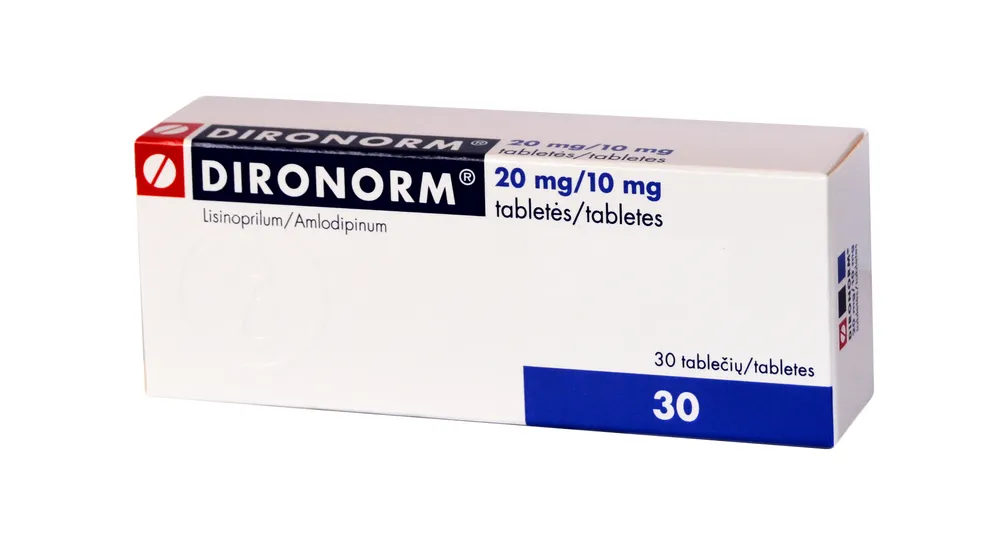
Table of Contents
Package leaflet: Information for the patient
Dironorm, 10 mg + 5 mg, tablets
Dironorm, 20 mg + 10 mg, tablets
Dironorm, 20 mg + 5 mg, tablets
Lisinopril + Amlodipine
Please read this leaflet carefully before taking this medicine, as it contains important
information for you.
- Keep this leaflet. You may need to read it again.
- If you have any further questions, ask your doctor or pharmacist.
- This medicine has been prescribed for you personally. Do not pass it on to others. It may harm them, even if their symptoms are the same as yours.
- If you experience any side effects, including any not listed in this leaflet, inform your doctor or pharmacist. See section 4.
Leaflet contents:
- What Dironorm is and what it is used for
- Important information before taking Dironorm
- How to take Dironorm
- Possible side effects
- How to store Dironorm
- Contents of the pack and other information
1. What Dironorm is and what it is used for
Dironorm is a combination medicine containing amlodipine – a calcium channel blocker – and
lisinopril – an angiotensin-converting enzyme (ACE) inhibitor.
Dironorm is used to treat high blood pressure (hypertension) in adults.
Dironorm 10 mg + 5 mg is indicated for adult patients whose blood pressure is adequately controlled with the combination of 10 mg lisinopril and 5 mg amlodipine taken separately.
Dironorm 20 mg + 10 mg is indicated for adult patients whose blood pressure is adequately controlled with the combination of 20 mg lisinopril and 10 mg amlodipine taken separately.
Dironorm 20 mg + 5 mg is indicated for adult patients whose blood pressure is adequately controlled with the combination of 20 mg lisinopril and 5 mg amlodipine taken separately.
In high blood pressure, amlodipine causes relaxation of blood vessels, allowing blood to flow more easily. It also increases blood flow to the heart muscle. Lisinopril reduces blood vessel resistance and lowers blood pressure.
High blood pressure often produces no symptoms, but if untreated or not properly controlled, it increases the risk of certain complications (such as stroke or heart attack). Therefore, antihypertensive treatment must be taken regularly.
2. Information before using Dironorm
When not to use Dironorm
Do not take this medicine:
- if the patient is allergic to lisinopril or amlodipine or any of the other ingredients of this medicine (listed in section 6),
- if the patient is allergic to other ACE inhibitors (such as enalapril, captopril, ramipril) or other calcium channel blockers (such as nifedipine, felodipine, nimodipine),
- if the patient has ever had angioedema (a serious allergic reaction with symptoms such as itching, urticaria, wheezing, swelling of hands, throat, mouth, or eyelids), whether or not related to the use of ACE inhibitors,
- if a family member has ever had a severe allergic reaction (hereditary angioedema) or if the patient previously experienced a severe allergic reaction of unknown cause (idiopathic angioedema),
- if the patient has very low blood pressure (severe hypotension),
- if the patient has aortic stenosis (narrowing of the aortic valve) or mitral valve stenosis, or increased thickness of the heart muscle (hypertrophic cardiomyopathy),
- if the patient has circulatory failure (including cardiogenic shock),
- if the patient has heart failure following a previous heart attack,
- after the 3rd month of pregnancy (Dironorm should also be avoided during early pregnancy – see section “Pregnancy and breastfeeding”),
- if the patient has diabetes or kidney problems and is being treated with a blood pressure-lowering medicine containing aliskiren,
- if the patient has taken or is currently using sacubitril with valsartan, a medicine used to treat certain types of chronic (long-term) heart failure in adults, because this increases the risk of angioedema (rapid swelling of tissues under the skin, such as in the throat).
Warnings and precautions
Inform your doctor if you suspect (or are planning) pregnancy. Use of Dironorm is not recommended during early pregnancy and must be avoided after the 3rd month of pregnancy, as it may seriously harm the unborn child if used during this period (see section “Pregnancy and breastfeeding”).
Before starting treatment with Dironorm, discuss with your doctor:
- if the patient has heart diseases,
- if the patient has blood vessel diseases (collagenosis),
- if the patient has kidney diseases,
- if the patient has liver diseases,
- if the patient is scheduled for surgery (including dental procedures) or anesthesia,
- if the patient is undergoing dialysis,
- if the patient is scheduled for a procedure called LDL apheresis to remove cholesterol from the blood,
- if the patient is over 65 years of age,
- if the patient is on a low-salt diet or using salt substitutes containing potassium or potassium supplements, or if the patient has high blood potassium levels (hyperkalemia),
- if the patient has diabetes,
- if the patient has diarrhea or vomiting,
- if the patient is undergoing desensitization therapy to reduce sensitivity to bee or wasp venom,
- if the patient is of Black race – ACE inhibitors may be less effective and may more frequently cause angioedema,
- if the patient is taking any of the following medicines used to treat high blood pressure:
- an angiotensin II receptor antagonist (AIIRA) (also known as a sartan – for example, valsartan, telmisartan, irbesartan), especially if the patient has kidney problems related to diabetes,
- aliskiren,
- if the patient is taking any of the following medicines, there is an increased risk of angioedema (rapid swelling of the skin in areas such as the throat):
- sirolimus, everolimus, temsirolimus, and other medicines belonging to the class of mTOR inhibitors (used to prevent organ transplant rejection and in cancer treatment),
- tissue plasminogen activator (a medicine used to dissolve blood clots), usually administered in hospital,
- vildagliptin, a medicine used to treat diabetes,
- racecadotril, a medicine used to treat diarrhea,
- if the patient is taking any of the medicines listed below (see section “Dironorm with other medicines”).
If the patient develops a dry cough that persists for a long time after starting treatment with
Dironorm, consult a doctor.
The doctor may recommend regular monitoring of kidney function, blood pressure, and blood levels of electrolytes (e.g. potassium).
See also the section “When not to use Dironorm.”
Children and adolescents
Dironorm must not be used in children and adolescents under 18 years of age.
Dironorm with other medicines
Tell your doctor or pharmacist about all medicines the patient is currently taking or has recently taken, as well as any medicines the patient plans to take.
Potassium-sparing diuretics (e.g. spironolactone, amiloride, triamterene, used to remove excess fluid from the body) and potassium supplements or salt substitutes containing potassium may be used together with Dironorm only under strict medical supervision.
Special precautions are necessary when using Dironorm in combination with the following medicines:
-
diuretics (used to remove excess fluid from the body),
-
other medicines used to lower blood pressure (antihypertensives),
-
medicines used to treat heart diseases (e.g. verapamil, diltiazem),
-
non-steroidal anti-inflammatory drugs (NSAIDs), such as acetylsalicylic acid (used to treat joint inflammation, muscle pain, headache, inflammation, fever),
-
lithium, tricyclic antidepressants, antipsychotics, used to treat psychiatric disorders,
-
insulin and oral antidiabetic medicines,
-
medicines stimulating the autonomic nervous system (sympathomimetics), such as ephedrine, phenylephrine, xylometazoline, and salbutamol, used to treat nasal congestion, cough, colds, and asthma,
-
immunosuppressive medicines (used to prevent organ transplant rejection, e.g. corticosteroids, cytotoxic agents, and antimetabolites),
-
allopurinol, used to treat gout,
-
procainamide (used to treat heart rhythm disorders),
-
medicines that may increase blood potassium levels, such as potassium supplements (including salt substitutes), potassium-sparing diuretics, and other medicines that may increase blood potassium (such as heparin, a medicine used to thin the blood to prevent blood clots, cotrimoxazole, a combination of trimethoprim and sulfamethoxazole, used to treat bacterial infections, and cyclosporine, an immunosuppressive medicine used to prevent organ transplant rejection),
-
simvastatin (used to reduce cholesterol and certain fatty substances in the blood),
-
narcotic medicines, morphine and its derivatives, used to treat severe pain,
-
medicines used to treat cancer,
-
anesthetics, used in surgery and during certain dental procedures – before general or local anesthesia, inform the doctor or dentist about taking Dironorm, as it may cause a temporary drop in blood pressure,
-
anticonvulsant medicines (such as carbamazepine, phenobarbital, phenytoin) used to treat epilepsy,
-
antibiotics (medicines used to treat bacterial infections), such as rifampicin, erythromycin or clarithromycin, medicines used to treat HIV/AIDS infection (so-called protease inhibitors, e.g. ritonavir, indinavir, nelfinavir) or fungal infections (e.g. ketoconazole, itraconazole),
-
herbal medicines containing St. John’s wort (Hypericum perforatum),
-
gold salts, especially when administered intravenously (used to treat symptoms of rheumatoid arthritis),
-
dantrolene (a skeletal muscle relaxant used to treat malignant hyperthermia),
-
tacrolimus (a medicine used to control the immune response, allowing the body to accept a transplanted organ).
The following medicines may increase the risk of angioedema (symptoms include swelling of the face, lips, tongue, and/or throat, with difficulty swallowing or breathing):
- medicines used to dissolve blood clots (tissue plasminogen activator), usually administered in hospital,
- medicines most commonly used to prevent organ transplant rejection and in cancer treatment (sirolimus, everolimus, temsirolimus, and other mTOR inhibitors) – see section “Warnings and precautions”,
- vildagliptin, a medicine used to treat diabetes,
- racecadotril, used to treat diarrhea.
The doctor may recommend adjusting the dose and/or taking other precautions:
- if the patient is taking an angiotensin II receptor antagonist (AIIRA) or aliskiren (see also sections “When not to use Dironorm” and “Warnings and precautions”).
Dironorm with food, drink, and alcohol
Dironorm can be taken independently of meals. During treatment, alcohol consumption should be avoided.
Patients taking Dironorm should not consume grapefruit juice or grapefruits.
Grapefruits and grapefruit juice may increase blood levels of the active substance – amlodipine – which could unpredictably intensify the blood pressure-lowering effect of Dironorm.
Pregnancy and breastfeeding
If the patient is pregnant or breastfeeding, suspects she may be pregnant, or is planning to have a child, she should consult a doctor or pharmacist before using this medicine.
Pregnancy
Inform your doctor if you suspect (or are planning) pregnancy. Usually, the doctor will advise discontinuing Dironorm before a planned pregnancy or immediately after confirming pregnancy and recommend an alternative medicine. Dironorm is not recommended during early pregnancy and must not be used after the 3rd month of pregnancy, as it may seriously harm the unborn child if used during this period.
Breastfeeding
It has been shown that small amounts of amlodipine pass into human milk. Inform your doctor if the patient is breastfeeding or intends to start breastfeeding. Dironorm is not recommended for breastfeeding mothers. The doctor may recommend alternative treatment if the patient wishes to breastfeed, especially if the baby is a newborn or premature.
Driving and using machines
Before driving, using tools, operating machinery, or performing other tasks requiring concentration, ensure how Dironorm affects the patient. Dironorm may affect the ability to drive and operate machinery (especially at the beginning of treatment). Do not drive or operate machinery if the patient notices that Dironorm adversely affects their ability to drive or operate machinery, for example, if nausea, dizziness, fatigue, or headache occur.
Dironorm contains sodium
This medicine contains less than 1 mmol of sodium (23 mg) per tablet, meaning it is considered “sodium-free”.
3. How to use Dironorm
This medicine should always be taken as directed by the physician. If in doubt, consult a doctor or pharmacist.
The recommended dose is one Dironorm tablet per day. Dironorm may be taken during meals or independently of meals. The tablet should be swallowed whole with water.
The tablet should be taken daily at the same time.
If the effect of Dironorm appears too strong or too weak, consult a doctor or pharmacist.
Use in children and adolescents
Dironorm should not be used in children and adolescents under 18 years of age due to lack of data on safety and efficacy.
Elderly patients
In patients over 65 years of age, dose adjustment is generally not required.
Hepatic impairment
Liver dysfunction may affect blood levels of amlodipine. In such cases, the doctor may recommend more frequent monitoring tests.
Renal impairment
During treatment with Dironorm, the doctor will recommend regular monitoring of kidney function and serum potassium and sodium levels.
If kidney function worsens, Dironorm will be discontinued and replaced with appropriately adjusted doses of the individual components.
Use of a higher than recommended dose of Dironorm
Seek immediate medical advice or go to the nearest hospital emergency department.
Overdose will most likely cause excessive lowering of blood pressure, which must be closely monitored.
Symptoms of overdose include electrolyte disturbances, renal failure, increased breathing rate (hyperventilation), rapid heartbeat, palpitations, slow heart rate, dizziness, restlessness, and cough.
A sensation of "emptiness" in the head, fainting, or weakness may occur. If blood pressure drop is significant, shock may develop. The patient's skin becomes cold and clammy, and loss of consciousness may occur. If characteristic symptoms such as dizziness or headache occur, the patient should be placed in a lying position. Further management will be undertaken by a physician.
Shortness of breath due to excess fluid accumulating in the lungs (pulmonary edema) may occur up to 24–48 hours after taking the medicine.
Missed dose of Dironorm
Do not take a double dose to make up for a missed tablet due to the risk of overdose. Take the next dose at the usual time.
Stopping Dironorm
Tablets should be taken for as long as directed by the physician. Do not stop treatment even if the patient feels better. Discontinuation of treatment may lead to worsening of the patient's condition.
If you have any further questions about the use of this medicine, consult your doctor or pharmacist.
4. Possible adverse effects
Like all medicines, this medicine can cause adverse effects, although not everybody will experience them.
Common adverse effects (may occur in less than 1 in 10 patients):
In a clinical trial using a combination of amlodipine and lisinopril, common adverse effects included: headache, cough, dizziness.
During treatment with Dironorm, an allergic reaction (hypersensitivity) may occur. If any of the following symptoms of angioedema appear, stop taking Dironorm and contact your doctor immediately:
- Difficulty breathing with or without swelling of the face, lips, tongue and (or) throat,
- Swelling of the face, lips, tongue and (or) throat, which may cause difficulty swallowing,
- Severe skin reactions, including severe rash, urticaria, redness of the skin over the entire body, intense itching, blisters, peeling or swelling of the skin, mucosal inflammation (Stevens-Johnson syndrome, toxic epidermal necrolysis), or other allergic reactions.
Other adverse effects reported after administration of amlodipine alone or lisinopril alone (the two active substances in Dironorm) which may also occur during treatment with Dironorm are as follows:
Amlodipine
Very common adverse effects (may occur in at least 1 in 10 patients):
Swelling (oedema).
Common adverse effects (may occur in less than 1 in 10 patients):
Headache, ankle swelling, muscle cramps, feeling tired, weakness, drowsiness, visual disturbances, nausea, indigestion, changes in bowel habits (diarrhoea and constipation), dizziness, abdominal pain, palpitations (fast or irregular heartbeat), sudden flushing (especially of the face), difficulty breathing.
If these symptoms are troublesome or persist for more than one week, inform your doctor.
Uncommon adverse effects (may occur in less than 1 in 100 patients):
Skin rash, itching, hair loss, red skin spots, skin discoloration, urticaria, vomiting, muscle or joint pain, back pain, chest pain, mood changes (including anxiety), depression, insomnia, tremor, tinnitus (ringing in the ears), irregular heartbeat (arrhythmia), hypotension (low blood pressure), cough, taste disturbances, paraesthesia (tingling or numbness sensation), nasal congestion, frequent urination at night, urinary disorders, dryness of the oral mucosa, loss of pain sensation, excessive sweating, fainting, pain, malaise, gynaecomastia (breast enlargement in males), erectile dysfunction, weight gain, weight loss.
Rare adverse effects (may occur in less than 1 in 1000 patients):
Disorientation.
Very rare adverse effects (may occur in less than 1 in 10,000 patients):
Allergic reactions, abnormal liver function test results, hepatitis, yellowing of the skin (jaundice), decreased number of white blood cells and platelets, increased blood glucose concentration, myocardial infarction (heart attack), severe skin reactions (urticaria, skin sloughing or desquamation), severe allergic reactions accompanied by fever, red spots, joint pain and (or) eye disorders (Stevens-Johnson syndrome), swelling of lips, eyelids and genital organs (Quincke's oedema), gum swelling or tenderness, pancreatitis, gastric mucosal inflammation, photosensitivity, hypertonia (increased muscle tone), peripheral neuropathy (nerve disorders causing weakness and tingling sensation), vasculitis.
Frequency not known (frequency cannot be estimated from the available data):
Tremor, postural rigidity, facial masking, slowed movements and shuffling gait, unsteady gait.
Lisinopril
Common adverse effects (may occur in less than 1 in 10 patients):
Headache, dizziness or a sensation of "emptiness" in the head, especially when standing up quickly, diarrhoea, cough, vomiting, kidney disorders.
Uncommon adverse effects (may occur in less than 1 in 100 patients):
Mood changes, skin colour changes (bluish and then reddish discoloration) and (or) numbness or tingling in fingers of hands or feet (Raynaud's phenomenon), taste disturbances, hallucinations (seeing or hearing things that are not real), fatigue, drowsiness or difficulty sleeping, sensation of spinning (vestibular dizziness), unusual skin sensations (such as tingling, tickling, itching or burning), sensation of rapid or irregular heartbeat (palpitations), heart attack, stroke, nasal congestion, nausea, stomach pain or indigestion, erectile dysfunction, fatigue, changes in results of certain laboratory tests (assessing kidney and liver function), skin rash, itching, rapid heartbeat (tachycardia).
Rare adverse effects (may occur in less than 1 in 1000 patients):
Angioedema (hypersensitivity reaction with sudden swelling of lips, face and neck, and sometimes feet and hands; angioedema occurs more frequently in black patients than in patients of other races). Confusion, inappropriate antidiuretic hormone secretion affecting urine output, acute kidney function impairment, kidney failure, dryness of the oral mucosa, hair loss, psoriasis, urticaria, breast gland enlargement in males. Smell disturbances.
Changes in blood laboratory test results: decreased haemoglobin concentration and haematocrit values. Increased bilirubin (bile pigment) concentration, decreased blood sodium concentration.
Very rare adverse effects (may occur in less than 1 in 10,000 patients):
Decreased blood glucose concentration (hypoglycaemia), sinus pain, wheezing, pneumonia, yellowing of the skin and (or) eyes (jaundice), hepatitis or pancreatitis, liver failure, severe skin disorders (symptoms include redness, blistering and skin peeling), sweating. Decreased urine volume or absence of urine. Intestinal angioedema.
Worsening of blood morphology: reduced number of red blood cells (anaemia), reduced number of platelets (thrombocytopenia), reduced number of white blood cells (neutropenia, leukopenia, agranulocytosis). These disorders may lead to: prolonged bleeding time, fatigue, weakness, lymph node disorders, autoimmune disorders (a condition in which the immune system produces antibodies against the body's own tissues), and increased susceptibility to infections.
Frequency not known (frequency cannot be estimated from the available data):
Fainting, depression, severe hypersensitivity allergic reactions (anaphylactic and (or) pseudoanaphylactic reactions).
Reporting of adverse effects
If any adverse effects occur, including any not listed in this leaflet, inform your doctor or pharmacist. Adverse effects can be reported directly to the Department of Monitoring Adverse Drug Reactions, Office for Registration of Medicinal Products, Medical Devices and Biocidal Products
Al. Jerozolimskie 181C
02-222 Warsaw
Phone: +48 22 49 21 301
Fax: +48 22 49 21 309
Website: https://smz.ezdrowie.gov.pl
Adverse effects can also be reported to the marketing authorisation holder.
Reporting adverse effects helps provide more information on the safety of this medicine.
5. How to store Dironorm
Store at a temperature below 25°C.
Keep in the original packaging to protect from light and moisture.
Keep the medicine out of sight and reach of children.
Do not use this medicine after the expiry date stated on the carton and blister after "EXP:". The expiry date refers to the last day of the stated month.
Medicines must not be disposed of via wastewater or household waste. Ask your pharmacist how to dispose of medicines no longer required. This will help protect the environment.
6. Contents of the pack and other information
What Dironorm contains
The active substances in this medicine are lisinopril and amlodipine.
Dironorm, 10 mg + 5 mg, tablets:
Each tablet contains 10 mg of lisinopril (as lisinopril dihydrate) and 5 mg of amlodipine (as amlodipine besilate).
Dironorm, 20 mg + 10 mg, tablets:
Each tablet contains 20 mg of lisinopril (as lisinopril dihydrate) and 10 mg of amlodipine (as amlodipine besilate).
Dironorm, 20 mg + 5 mg, tablets:
Each tablet contains 20 mg of lisinopril (as lisinopril dihydrate) and 5 mg of amlodipine (as amlodipine besilate).
The other ingredients are: microcrystalline cellulose, sodium carboxymethyl starch (type A), magnesium stearate.
What Dironorm looks like and contents of the pack
Dironorm, 10 mg + 5 mg, tablets:
White or almost white, round, flat, bevelled tablet with a score line on one side and engraved mark "A+L" on the other side. Diameter approximately 8 mm.
The score line is intended only to facilitate tablet breaking for easier swallowing and does not guarantee equal dose division.
The carton contains 30 tablets in white blisters made of PVC/PE/PVDC/Aluminium.
Dironorm, 20 mg + 10 mg, tablets:
White or almost white, biconvex tablets with engraved mark "CF3" on one side, the other side is smooth. Diameter approximately 11 mm.
The carton contains 30 or 90 tablets in white blisters made of PVC/PE/PVDC/Aluminium. Not all pack sizes may be marketed.
Dironorm, 20 mg + 5 mg, tablets:
White or almost white, round, biconvex tablet with engraved mark "CF2" on one side, the other side is smooth. Diameter approximately 11 mm.
The carton contains 30 or 90 tablets in white blisters made of PVC/PE/PVDC/Aluminium. Not all pack sizes may be marketed.
Marketing Authorisation Holder:
GEDEON RICHTER POLSKA Sp. z o.o.
ul. ks. J. Poniatowskiego 5
05-825 Grodzisk Mazowiecki
Poland
Manufacturer:
Gedeon Richter Plc.
Gyömrői út 19-21
1103 Budapest
Hungary
For further information about this medicine and its names in other European Economic Area countries, please contact:
GEDEON RICHTER POLSKA Sp. z o.o.
Medical Department
ul. ks. J. Poniatowskiego 5
05-825 Grodzisk Mazowiecki
Poland
Tel. +48 (22)755 96 48
[email protected]