Diclac lipogel
Poland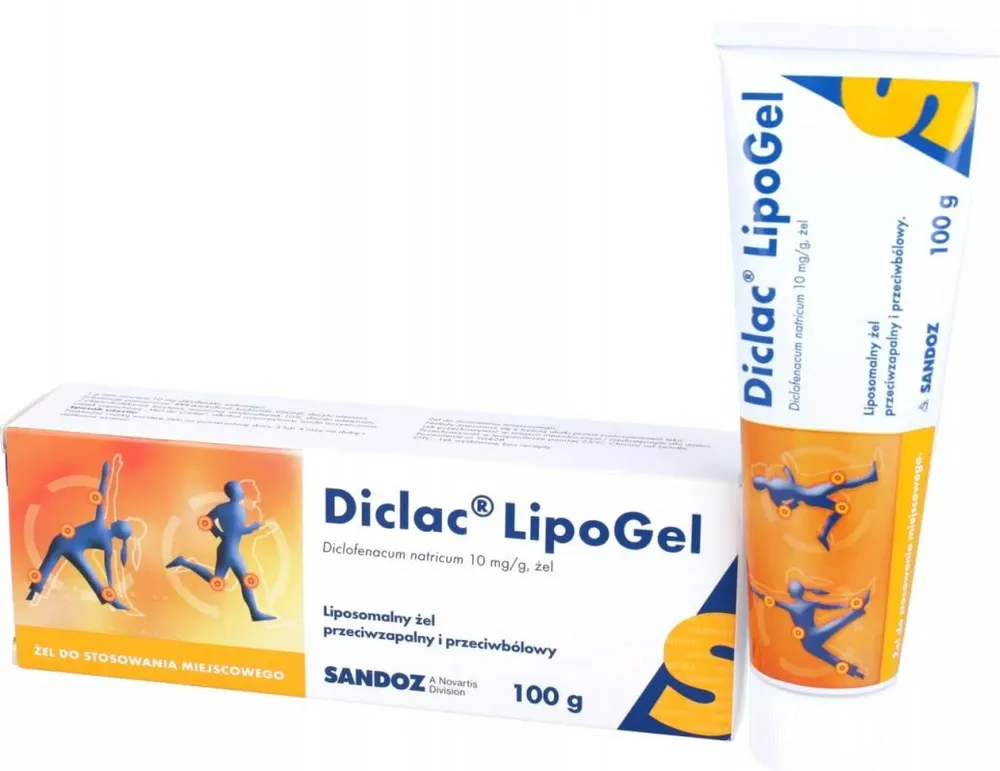
Table of Contents
Package leaflet: Information for the user
Warning! Keep this leaflet! Information on the immediate packaging is in a foreign language.
Diclac LipoGel (Diclofenac Sandoz 10 mg/g Gel)
10 mg/g, gel
Diclofenacum natricum
Diclac LipoGel and Diclofenac Sandoz 10 mg/g Gel are different trade names of the same medicine.
Please read this leaflet carefully before using the medicine, as it contains
important information for the patient.
This medicine should always be used exactly as described in this patient leaflet or as directed by
your doctor or pharmacist.
- Keep this leaflet so that you can read it again if necessary.
- If you need advice or further information, please consult your pharmacist.
- If you experience any adverse reactions, including any possible side effects not listed in this leaflet, inform your doctor or pharmacist. See section 4.
- If there is no improvement after 7 days, or if you feel worse, consult your doctor.
Table of contents of the leaflet
- What Diclac LipoGel is and what it is used for
- Important information before using Diclac LipoGel
- How to use Diclac LipoGel
- Possible side effects
- How to store Diclac LipoGel
- Contents of the pack and other information
1. What Diclac LipoGel is and what it is used for
Diclac LipoGel is a gel for rubbing into the skin. The active substance of the medicine,
diclofenac, belongs to a group of medicines known as non-steroidal anti-inflammatory drugs (NSAIDs). Diclac LipoGel has a liposomal structure that facilitates the absorption of the medicine through the skin. The aqueous-alcoholic gel base additionally provides a soothing and cooling effect.
The medicine acts as an analgesic, anti-inflammatory and anti-oedematous agent.
It is used locally to treat:
- in adults and adolescents over 14 years of age:
- traumatic inflammatory conditions of tendons, ligaments, muscles and joints (e.g. resulting from sprains, strains or bruises);
- back pain;
- localized inflammatory conditions of soft tissues such as: tendinitis, tennis elbow, bursitis, periarthritis.
- in adults (over 18 years of age)
- localized and mild forms of osteoarthritis.
2. Important information before using Diclac LipoGel
When not to use Diclac LipoGel
- if the patient is allergic to diclofenac or to any of the other ingredients of this medicine (listed in section 6).
- Symptoms of hypersensitivity to the drug may include: wheezing or shortness of breath (asthma), skin rash with blistering or hives, swelling of the face or tongue, inflammation of the nasal mucosa (rhinitis);
- if the patient has ever previously experienced an allergic reaction (e.g. rash, difficulty breathing or coughing attack) after taking medicines containing acetylsalicylic acid, ibuprofen or other drugs used to treat joint and muscle pain;
- in pregnant women during the last three months of pregnancy (see also "Pregnancy, breastfeeding and fertility");
- in children and adolescents under 14 years of age.
Warnings and precautions
Before using Diclac LipoGel, discuss it with your doctor or pharmacist.
The gel should only be applied to intact, healthy skin. It must not be applied to diseased skin, open wounds or rashes. Use of the medicine should be discontinued if a skin rash appears after application.
Avoid using the medicine over large areas of skin or for prolonged periods unless specifically recommended by a doctor.
Diclac LipoGel is intended for external use only. It must not be used in the mouth. After application, hands should be wiped with absorbent paper (not wet wipes) and then washed, unless the hands themselves are the treated area. The used absorbent paper should be disposed of in a waste bin. Avoid contact of the gel with the eyes. If the medicine gets into the eyes, rinse thoroughly with clean water and contact your doctor or pharmacist.
The treated area may be covered with a bandage, but occlusive dressings (i.e. airtight bandages) should not be used.
Exercise caution when sunbathing or using sunbeds, as the skin may become more sensitive to light during treatment with Diclac LipoGel.
Patients should be advised to exercise caution when smoking or being near open flames due to the risk of severe burns. Diclac LipoGel contains paraffin, which is potentially flammable when deposited on fabrics (clothing, bed linen, dressings, etc.).
Washing clothes and bed linen may reduce product deposition but will not completely remove it.
Use in children and adolescents
Children and adolescents under 14 years of age
As data on efficacy and safety in children and adolescents under 14 years of age are insufficient, Diclac LipoGel must not be used in this age group.
Adolescents over 14 years of age
If treatment of pain requires use of the medicine for longer than 7 days, or if symptoms worsen, consult a doctor.
Diclac LipoGel and other medicines
Inform your doctor or pharmacist about all medicines currently or recently used, or those planned for use.
Pregnancy, breastfeeding and fertility
If a woman is pregnant or breastfeeding, suspects she may be pregnant, or is planning to become pregnant, she should consult her doctor or pharmacist before using this medicine.
Diclac LipoGel must not be used during the last three months of pregnancy, as it may harm the unborn baby or cause complications during delivery.
During the first six months of pregnancy, Diclac LipoGel should not be used unless considered necessary and recommended by a doctor. If use is required, the lowest possible dose should be applied for the shortest possible duration.
Oral formulations of diclofenac (e.g. tablets) may cause adverse effects in the unborn child. It is unknown whether the same risk applies to Diclac LipoGel when applied to the skin.
Use of Diclac LipoGel during breastfeeding is not recommended. However, if a doctor prescribes it during this period, the medicine should not be applied to the breasts, nor used long-term or over large skin areas.
If you have any further doubts regarding the use of Diclac LipoGel in pregnant or breastfeeding women, consult your doctor or pharmacist.
Driving and operating machinery
Diclac LipoGel has no effect on the ability to drive or operate machinery.
3. How to use Diclac LipoGel
This medicine should always be used exactly as described in this patient information leaflet or as directed by a doctor or pharmacist. If in doubt, consult a doctor or pharmacist.
Diclac LipoGel should be applied topically to the skin, on the affected areas of the body, three or four times daily, gently rubbed in.
The amount of gel should be adjusted according to the size of the affected area: from 2 g to 4 g of gel (an amount corresponding to the size of a cherry to a walnut) is sufficient for treating a skin surface area of approximately 400 cm² to 800 cm². After applying the medicine, hands should be dried with a paper towel and then washed, unless the hands themselves are the area being treated. If too much gel has been accidentally applied, the excess should be wiped off with a paper towel. The used paper towel should be disposed of in a household waste container to prevent unused medicine from entering the aquatic environment.
The patient should wait until Diclac LipoGel has dried before taking a shower or bath.
Apply only to intact skin.
Avoid contact of the gel with eyes and mucous membranes.
The area where Diclac LipoGel has been applied may be covered with a bandage, but occlusive (airtight) dressings should not be used. Before applying the bandage, leave the gel on the skin for several minutes to dry.
Do not use the medicine for longer than:
- in adults and adolescents over 14 years of age: 14 days in cases of muscle and joint injuries (sprains, strains or contusions) and tendon inflammation;
- in adults (over 18 years of age): 21 days in cases of pain associated with degenerative joint disease, unless otherwise directed by a doctor.
If pain and swelling do not improve within 7 days, or if symptoms worsen, consult a doctor.
Use of more than the recommended dose of Diclac LipoGel
If an excessive amount of Diclac LipoGel is used or if the gel is accidentally swallowed, contact a doctor immediately.
Missed dose of Diclac LipoGel
If a dose is missed, do not apply a double dose to make up for the missed dose.
If you have any further questions about the use of this medicine, consult your doctor or pharmacist.
4. Possible adverse effects
Like all medicines, this medicine can cause adverse effects, although not everyone will experience them.
Some adverse effects occurring rarely or very rarely may be serious.
If any of the symptoms listed below, which may be signs of an allergic reaction, occur,
you should immediately stop using the medicine and contact a doctor or go to
the nearest hospital:
Rare (may affect less than 1 in 1,000 people using the medicine):
skin rash with blisters, urticaria (hives, i.e. blistering skin inflammation).
Very rare (may affect less than 1 in 10,000 people using the medicine):
swelling of the face, lips, tongue or throat, sudden breathing difficulties and a feeling of tightness in the chest
with wheezing or coughing (asthma).
Other adverse effects
Other adverse effects that may occur during the use of Diclac LipoGel
are usually mild, harmless and transient. If any of the listed symptoms occur, you should
inform your doctor or pharmacist as soon as possible.
Common (may affect less than 1 in 10 people using the medicine):
skin rash, itching, redness of the skin.
Very rare (may affect less than 1 in 10,000 people using the medicine):
hypersensitivity reactions, including urticaria-like rash, pustular rash, increased sensitivity of the skin to sunlight. Symptoms of hypersensitivity include sunburn with itching, swelling and blister formation.
If a rash occurs, use of the medicine should be discontinued.
Frequency not known (frequency cannot be estimated from the available data):
burning sensation at the site of application, dry skin.
Reporting of adverse effects
If any adverse effects occur, including any adverse effects not listed
in this leaflet, you should inform your doctor or pharmacist. Adverse effects can be reported
directly to the Department of Monitoring Adverse Drug Reactions of the Office for Registration of Medicinal Products, Medical Devices and Biocidal Products,
Al. Jerozolimskie 181C, 02-222 Warsaw, tel.: + 48 22 49 21 301, fax: + 48 22 49 21 309,
website: https://smz.ezdrowie.gov.pl.
By reporting adverse effects, additional information on the safety of the medicine can be collected.
5. How to store Diclac LipoGel
Keep this medicine out of sight and reach of children.
Store below 25°C. Protect from light.
Do not use this medicine after the expiry date stated on the packaging. The expiry date refers to the last day of the stated month.
Medicines must not be disposed of via sewage systems or household waste. Ask your pharmacist how to dispose of medicines no longer required. Such practices help protect the environment.
6. Contents of the packaging and other information
What Diclac LipoGel contains
The active substance is sodium diclofenac. 1 g of gel contains 10 mg of sodium diclofenac.
The other ingredients are: RRR-α-tocoferol, carbomer 980 NF, decyl oleate, 2-octyldodecanol,
lecithin, ammonium hydroxide 10%, disodium edetate, fragrance, isopropyl alcohol, purified water.
What Diclac LipoGel looks like and contents of the pack
Diclac LipoGel is available in an aluminium tube with a screw cap, packed in a cardboard box.
The pack contains 100 g of gel.
For further information, please contact the marketing authorisation holder or the parallel importer.
Marketing Authorisation Holder in Portugal, country of export:
Sandoz Farmacêutica, Lda
Avenida Professor Doutor Cavaco Silva, n 10E
Taguspark, 2740-255 Porto Salvo
Portugal
Manufacturer:
Salutas Pharma GmbH
Lange Göhren 3 Osterweddingen
39171 Osterweddingen
Germany
Salutas Pharma GmbH
Otto-von-Guericke-Allee 1
39179 Barleben
Germany
Parallel Importer:
InPharm Sp. z o.o.
ul. Strumykowa 28/11, 03-138 Warsaw
Poland
Repackaged in:
InPharm Sp. z o.o. Services sp. k.
ul. Chełmżyńska 249, 04-458 Warsaw
Poland
Marketing Authorisation Number in Portugal, country of export: 5519087
Parallel Import Licence Number: 147/20