Dasatinib viatris
Poland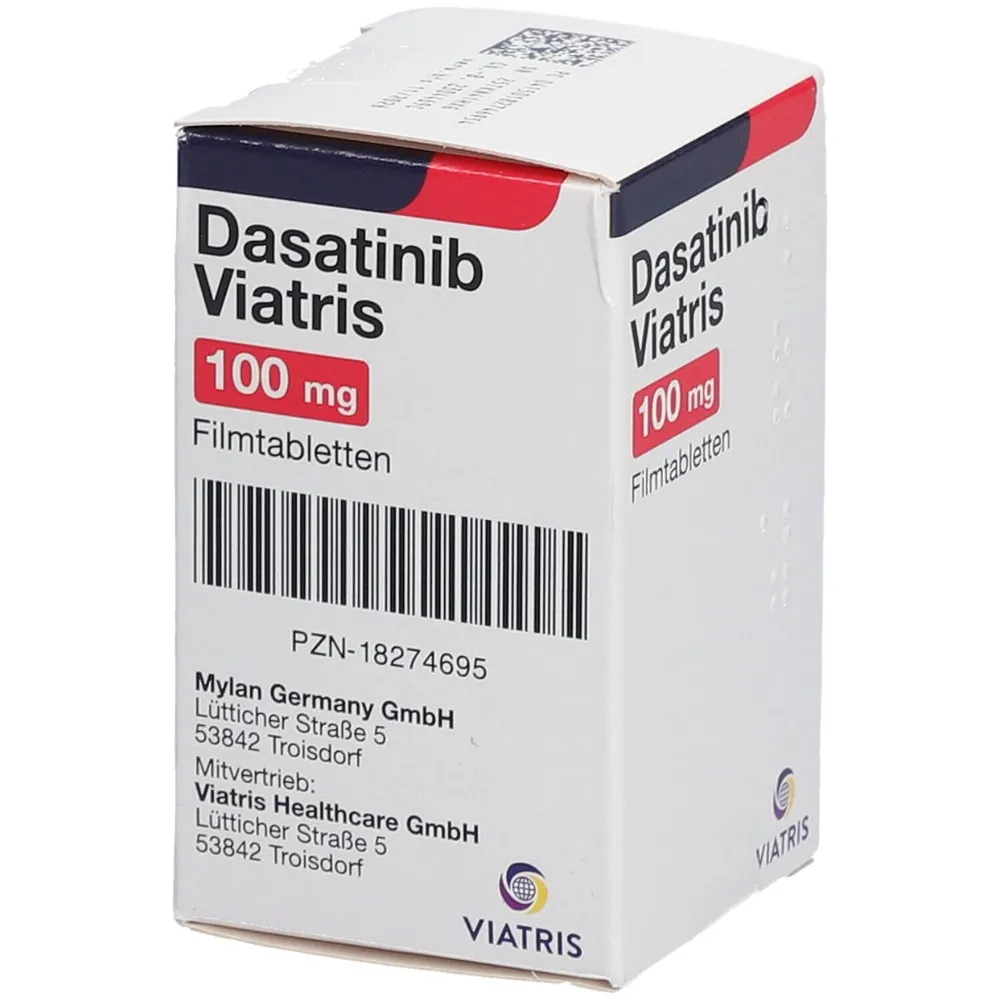
Table of Contents
Package leaflet: Information for the user
Dasatinib Viatris, 20 mg, film-coated tablets
Dasatinib Viatris, 50 mg, film-coated tablets
Dasatinib Viatris, 70 mg, film-coated tablets
Dasatinib Viatris, 80 mg, film-coated tablets
Dasatinib Viatris, 100 mg, film-coated tablets
Dasatinib Viatris, 140 mg, film-coated tablets
dazatinib
Please read this leaflet carefully before taking this medicine, as it contains important information for you.
- Keep this leaflet. You may need to read it again.
- If you have any further questions, please ask your doctor or pharmacist.
- This medicine has been prescribed for a specific individual. Do not pass it on to others. It may harm someone else, even if their symptoms are the same.
- If you experience any side effects, including any not listed in this leaflet, tell your doctor or pharmacist. See section 4.
Contents of the leaflet:
What Dasatinib Viatris is and what it is used for
What you need to know before taking Dasatinib Viatris
How to take Dasatinib Viatris
Possible side effects
How to store Dasatinib Viatris
Contents of the pack and other information
1. What Dasatinib Viatris is and what it is used for
Dasatinib Viatris contains the active substance dazatinib. This medicine is used to treat
Philadelphia chromosome-positive acute lymphoblastic leukemia (Ph+ ALL) in adults, adolescents,
and children aged at least 1 year. Leukemia is a cancer of the white blood cells. Normally, white blood cells help the body fight infections. In people with acute lymphoblastic leukemia, white blood cells called lymphocytes grow too quickly and live too long. Dasatinib Viatris inhibits the growth of these leukemic cells.
Dasatinib Viatris is also used to treat chronic myeloid leukemia (CML) in adults, adolescents, and children aged at least 1 year, as well as the lymphoid blast phase of CML in adults who have not responded adequately to prior therapy. In people with CML, white blood cells called granulocytes multiply uncontrollably.
Dasatinib Viatris inhibits the growth of these leukemic cells.
If you have any questions about how Dasatinib Viatris works or why it has been prescribed, please consult your doctor.
2. Important information before taking Dasatinib Viatris
When not to take Dasatinib Viatris
- if the patient is allergic to dasatinib or any of the other ingredients of this medicine (listed in section 6). Consult a doctor if an allergic reaction is suspected.
Warnings and precautions
Before starting treatment with Dasatinib Viatris, discuss this with your doctor or
pharmacist.
- if you are taking blood-thinning medicines or medicines that prevent blood clots (see section "Dasatinib Viatris and other medicines")
- if you have had or currently have liver or heart function disorders
- if you experience difficulty breathing, chest pain, or cough while taking Dasatinib Viatris: these may be symptoms of fluid accumulation in the lungs or chest cavity (which may occur more frequently in patients aged 65 years and older) or caused by changes in blood vessels supplying blood to the lungs
- if you have ever had or may currently have hepatitis B virus infection; this is because Dasatinib Viatris may cause reactivation of hepatitis B virus, which in some cases may be fatal; patients will be closely monitored by their doctor for signs of this infection before starting treatment
- if you develop bruising, bleeding, fever, fatigue, or confusion while taking Dasatinib Viatris, contact your doctor. These may indicate damage to blood vessels known as thrombotic microangiopathy (TMA).
Your doctor will carry out periodic check-ups during treatment to assess whether Dasatinib Viatris is producing the desired effect. Regular blood tests will also be performed while taking Dasatinib Viatris.
Children and adolescents
Dasatinib Viatris must not be used in children under one year of age. Data on the use of Dasatinib Viatris in this age group are limited. In children taking Dasatinib Viatris, bone growth and development should be closely monitored.
Dasatinib Viatris and other medicines
Tell your doctor about all medicines you are currently taking, have recently taken, or plan to take.
Dasatinib is mainly metabolized in the liver. Certain medicines may affect the action of Dasatinib Viatris when taken concomitantly.
Do not take the following medicines with Dasatinib Viatris:
- ketoconazole, itraconazole – antifungal medicines
- erythromycin, clarithromycin, telithromycin – antibiotics
- ritonavir – an antiviral medicine
- phenytoin, carbamazepine, phenobarbital – medicines used for epilepsy
- rifampicin – a medicine used for tuberculosis
- famotidine, omeprazole – medicines that reduce stomach acid secretion
- St. John's wort – herbal medicines available without prescription, used in the treatment of depression and other conditions (also known as Hypericum perforatum)
Do not take medicines that neutralize stomach acid (such as aluminium hydroxide or magnesium hydroxide) within 2 hours before or 2 hours after taking Dasatinib Viatris.
Inform your doctor if you are taking medicines that thin the blood or prevent blood clots.
Taking Dasatinib Viatris with food and drink
Do not take Dasatinib Viatris with grapefruit or grapefruit juice.
Pregnancy and breastfeeding
Women who are pregnant or suspect they may be pregnant should inform their doctor. Dasatinib Viatris should not be given to pregnant women unless absolutely necessary. Your doctor will explain the risks associated with taking Dasatinib Viatris during pregnancy. It is recommended that both men and women use effective contraception during treatment with Dasatinib Viatris.
Inform your doctor if you are breastfeeding. Breastfeeding must not be continued while taking Dasatinib Viatris.
Driving and operating machinery
Exercise particular caution when driving or operating machinery if you experience adverse effects such as dizziness or visual disturbances.
Dasatinib Viatris contains lactose and sodium
If the patient has previously been diagnosed with intolerance to certain sugars, they should inform their doctor before taking this medicine.
The medicine contains less than 1 mmol (23 mg) of sodium per tablet, meaning the medicine is considered "sodium-free".
3. How to take Dasatinib Viatris
Dasatinib Viatris will be prescribed only by a physician experienced in the treatment of leukemia. This medicine should always be taken exactly as directed by the physician. In case of doubt, consult your doctor or pharmacist. Dasatinib Viatris is intended for adults and children aged at least 1 year.
The recommended initial dose for adult patients in the chronic phase of CML is 100 mg taken orally once daily.
The recommended initial dose for adult patients in the accelerated phase or blast phase of CML, or with Philadelphia chromosome-positive acute lymphoblastic leukemia (Ph+ ALL), is 140 mg taken orally once daily.
Dosing in children with CML in the chronic phase and Ph+ ALL is based on body weight. Dasatinib is administered orally once daily in the form of either tablets or oral suspension powder. The use of dasatinib tablets is not recommended in patients with body weight below 10 kg. In patients with body weight below 10 kg and in patients unable to swallow tablets, the oral suspension powder should be used. When switching between formulations (i.e., tablets and oral suspension powder), a change in dose may occur; therefore, switching between formulations should not be done without medical advice. Based on the patient's body weight, adverse reactions, and response to treatment, the physician will determine the appropriate formulation and dose.
The initial dose of Dasatinib Viatris in children, adjusted for body weight, is as follows:
Body weight (kg) Daily dose (mg)
10 to less than 20 kg 40 mg
20 to less than 30 kg 60 mg
30 to less than 45 kg 70 mg
At least 45 kg 100 mg
The use of tablets is not recommended in patients with body weight below 10 kg; in such patients, the oral suspension powder should be used.
There are no dosage recommendations for Dasatinib Viatris in children under 1 year of age.
Depending on the response to treatment, the physician may decide to increase or reduce the dose, or even temporarily interrupt treatment. To achieve higher or lower doses, it may be necessary to use a combination of tablets of different strengths.
How to take Dasatinib Viatris
Tablets should be taken at the same time each day. Swallow the tablets whole. Do not crush, cut, or chew them. Do not take crushed tablets. If tablets are crushed, cut, chewed, or otherwise broken, there is no guarantee that the patient will receive the correct dose. Dasatinib Viatris tablets may be taken with or without food.
Special handling instructions for Dasatinib Viatris
It is unlikely that Dasatinib Viatris tablets will be damaged. However, in such a case, individuals handling Dasatinib Viatris should wear protective gloves.
How long to take Dasatinib Viatris
Dasatinib Viatris should be taken every day until the physician decides that treatment should be discontinued. Make sure to continue taking Dasatinib Viatris for as long as recommended by your doctor.
If you take more Dasatinib Viatris than recommended
If you accidentally take more tablets than recommended, contact your doctor immediately, as you may require medical attention.
If you miss a dose of Dasatinib Viatris
Do not take a double dose to make up for a missed tablet. Take the next dose at the usual time.
If you have any further questions about the use of this medicine, consult your doctor or pharmacist.
4. Possible adverse reactions
Like all medicines, this medicine can cause adverse reactions, although not everyone will experience them.
All the symptoms listed below may indicate serious adverse reactions.
- if chest pain, difficulty breathing, cough, or fainting occur
- if unexpected bleeding or bruising occurs without prior injury
- if blood is present in vomit, stool, or urine, or if stool appears black
- if signs of infection such as fever or severe chills occur
- if fever, mouth or throat pain, formation of blisters, or peeling of the skin and (or) mucous membranes occur
Contact your doctor immediately if any of the symptoms listed above occur.
Very common adverse reactions (may affect more than 1 in 10 people)
- Infections (including bacterial, viral, and fungal infections)
- Heart and lungs: shortness of breath
- Gastrointestinal disorders: diarrhoea, feeling sick or being sick (nausea or vomiting)
- Skin, hair, eyes, general symptoms: skin rash, fever, swelling of the face, hands, and feet, headache, feeling tired or weak, bleeding
- Pain: muscle pain (during treatment or after its interruption), abdominal pain
- Laboratory tests may show: low platelet count, low white blood cell count (neutropenia), anaemia, presence of fluid around the lungs
Common adverse reactions (may affect up to 1 in 10 people)
- Infections: pneumonia, herpes virus infection (including cytomegalovirus - CMV), upper respiratory tract infections, severe blood or tissue infection (including not uncommon cases resulting in death)
- Heart and lungs: palpitations, irregular heartbeat, congestive heart failure, weakening of the heart muscle, high blood pressure, increased blood pressure in the lungs, cough
- Gastrointestinal disorders: appetite disturbances, taste disturbances, bloated or enlarged abdomen, inflammation of the large intestine, constipation, heartburn, mouth ulcers, weight gain, weight loss, inflammation of the stomach
- Skin, hair, eyes, general symptoms: tingling, itching skin, dry skin, acne, skin inflammation, persistent ringing in the ears, hair loss, excessive sweating, vision disturbances (including blurred or disturbed vision), dry eyes, bruising, depression, insomnia, sudden flushing, dizziness, injuries (bruises), loss of appetite, drowsiness, generalized swelling
- Pain: joint pain, muscle weakness, chest pain, pain in hands and feet, chills, stiffness of muscles and joints, muscle cramps
- Laboratory tests may show: presence of fluid around the heart, presence of fluid in the lungs, heart rhythm disturbances, decreased white blood cell count (neutropia) with fever, gastrointestinal bleeding, high level of uric acid in the blood
Uncommon adverse reactions (may affect up to 1 in 100 people)
- Heart and lungs: heart attack (including fatal cases), inflammation of the lining (fibrous sac) around the heart, irregular heartbeat, chest pain due to lack of blood flow to the heart (angina pectoris), low blood pressure, narrowing of airways causing difficulty breathing, asthma, increased blood pressure in the pulmonary arteries (blood vessels) of the lungs
- Gastrointestinal disorders: pancreatitis, peptic ulcer disease, oesophagitis, abdominal swelling (abdomen), anal fissures, difficulty swallowing, gallbladder inflammation, biliary tract obstruction, gastro-oesophageal reflux (a condition in which acid and other stomach contents flow back into the throat)
- Skin, hair, eyes, general symptoms: allergic reactions, including tenderness to pressure, red nodules on the skin (erythema nodosum), anxiety, disorientation, mood changes, decreased libido, fainting, tremor, eye inflammation causing redness or pain, skin disease characterized by tenderness to pressure, redness, appearance of distinct erythematous skin lesions with sudden onset of fever and increased white blood cell count (neutrophilic dermatosis), hearing loss, light sensitivity, vision disturbances, increased eye tearing, skin color disturbances, inflammation of subcutaneous fat tissue, skin ulceration, blistering of the skin, nail disorders, hair disorders, disorders of the hands and feet, kidney failure, frequent urination, breast enlargement in men, menstrual disorders, general weakness and discomfort, reduced thyroid function, loss of balance while walking, bone necrosis (a disease characterized by reduced blood flow in bones, loss of bone mass, and bone death), arthritis, skin swelling anywhere on the body
- Pain: vein inflammation, which may cause redness, pain, and swelling, tendon inflammation
- Brain: memory loss
- Laboratory tests may show: abnormal blood test results and possible kidney function disorders caused by remnants of dying tumor (tumor lysis syndrome), low albumin levels in blood, low lymphocyte count (a type of white blood cell) in blood, high cholesterol levels in blood, swollen lymph nodes, brain hemorrhage, electrical heart function abnormalities, enlarged heart, liver inflammation, protein in urine, increased creatine kinase activity (an enzyme mainly present in the heart, brain, and skeletal muscles), increased troponin levels (an enzyme mainly present in the heart and skeletal muscles), increased gamma-glutamyl transferase levels (an enzyme mainly present in the liver), milky-appearing fluid around the lungs (chylous effusion)
Rare adverse reactions (may affect up to 1 in 1000 people)
- Heart and lungs: enlargement of the right ventricle of the heart, myocarditis (inflammation of the heart muscle), syndrome of symptoms due to blocked blood flow to the heart muscle (acute coronary syndrome), cardiac arrest (cessation of blood flow from the heart), coronary artery disease (of the heart), inflammation of the tissue covering the heart and lungs, blood clots, blood clots in the lungs
- Gastrointestinal disorders: loss of essential nutrients from the gastrointestinal tract such as proteins, intestinal obstruction, anal fistula (abnormal formation of a channel between the anus and the skin around the anus), kidney function disorder, diabetes
- Skin, hair, eyes, general symptoms: seizures, optic neuritis (which may cause complete or partial vision loss), blue-purple spots on the skin, abnormally high thyroid function, thyroid gland inflammation, ataxia (a condition related to lack of muscular coordination), difficulty walking, miscarriage, skin vasculitis, skin fibrosis
- Brain: stroke, transient occurrence of neurological disturbances caused by lack of blood flow, facial nerve paralysis, dementia
- Immune system: severe allergic reaction
- Musculoskeletal and connective tissue: delayed healing of rounded bone ends forming joints (epiphyses); slowed or delayed growth
Other observed adverse reactions with unknown frequency (cannot be estimated from available data)
- Pneumonitis
- Bleeding in the stomach or intestines, which may lead to death
- Reactivation of hepatitis B virus infection in patients who previously had this disease
- Reaction with fever, skin blisters, and mucosal ulceration
- Symptoms of kidney disease, including swelling and abnormal laboratory results such as protein in urine and low protein levels in blood
- Blood vessel damage known as thrombotic microangiopathy (TMA), including reduced number of red blood cells, reduced platelet count, and blood clot formation
During treatment, your doctor will monitor for the occurrence of the adverse reactions listed above.
Reporting of adverse reactions
If any adverse reactions occur, including any not listed in this leaflet, inform your doctor or pharmacist. Adverse reactions can be reported directly to the Department of Monitoring Adverse Reactions of Medicinal Products, Office for Registration of Medicinal Products, Medical Devices and Biocidal Products, Al. Jerozolimskie 181C, 02-222 Warsaw, tel.: +48 22 49 21 301; fax: +48 22 49 21 309; website: https://smz.ezdrowie.gov.pl
Adverse reactions can also be reported to the marketing authorization holder.
Reporting adverse reactions helps provide more information on the safety of this medicine.
5. How to store Dasatinib Viatris
Keep this medicine out of the sight and reach of children.
Do not use this medicine after the expiry date stated on the label of the bottle, blister pack,
and carton after: EXP. The expiry date refers to the last day of the stated month. The batch
number is indicated on the label of the bottle, blister pack, and carton after: Lot.
No special storage conditions are required for this medicine.
Medicines must not be disposed of via wastewater or household waste. Ask your pharmacist
how to dispose of medicines no longer required. These measures will help protect the environment.
6. Contents of the packaging and other information
What Dasatinib Viatris contains
- The active substance is dasatinib. Each coated tablet contains 20 mg, 50 mg, 70 mg, 80 mg, 100 mg, or 140 mg of dasatinib.
- The other ingredients are:
Tablet core: lactose monohydrate, microcrystalline cellulose (type 101), microcrystalline cellulose (type 102), sodium croscarmellose, hydroxypropylcellulose, magnesium stearate
Tablet coating: lactose monohydrate, hypromellose (15 mPas), titanium dioxide (E171), triacetin (see section 2 "Dasatinib Viatris contains lactose and sodium")
What Dasatinib Viatris looks like and contents of the pack
Dasatinib Viatris 20 mg: the coated tablet is white or almost white, biconvex, round, approximately 5.6 mm in diameter, with the imprint "D7SB" on one side and "20" on the other side.
Dasatinib Viatris 50 mg: the coated tablet is white or almost white, biconvex, oval-shaped, approximately 11.0 mm in length and 6.0 mm in width, with the imprint "D7SB" on one side and "50" on the other side.
Dasatinib Viatris 70 mg: the coated tablet is white or almost white, biconvex, round, approximately 9.1 mm in diameter, with the imprint "D7SB" on one side and "70" on the other side.
Dasatinib Viatris 80 mg: the coated tablet is white or almost white, biconvex, triangular-shaped, approximately 10.4 mm in length and 10.6 mm in width, with the imprint "D7SB" on one side and "80" on the other side.
Dasatinib Viatris 100 mg: the coated tablet is white or almost white, biconvex, oval-shaped, approximately 15.1 mm in length and 7.1 mm in width, with the imprint "D7SB" on one side and "100" on the other side.
Dasatinib Viatris 140 mg: the coated tablet is white or almost white, biconvex, round, approximately 11.7 mm in diameter, with the imprint "D7SB" on one side and "140" on the other side.
Dasatinib Viatris 20 mg, 50 mg, or 70 mg coated tablets are available in cardboard boxes containing 56 or 60 coated tablets in blisters, and in cardboard boxes containing 56 x 1 or 60 x 1 coated tablets in unit-dose blisters. They are also available in containers containing 60 coated tablets.
Dasatinib Viatris 80 mg, 100 mg, or 140 mg coated tablets are available in cardboard boxes containing 30 coated tablets in blisters and 30 x 1 coated tablets in unit-dose blisters. They are also available in containers containing 30 coated tablets.
Not all pack sizes may be marketed.
Marketing Authorisation Holder
Viatris Limited
Damastown Industrial Park
Mulhuddart, Dublin 15
DUBLIN
Ireland
Manufacturer
Synthon Hispania, S.L.
Calle Castelló 1
Polígono las Salinas
08830 Sant Boi de Llobregat
Barcelona
Spain
Synthon BV
Microweg 22
6545 CM Nijmegen
The Netherlands
For further information, please contact the local representative of the Marketing Authorisation Holder:
Mylan Healthcare Sp. z o.o.
tel. 22 546 64 00