Corhydron 25
Poland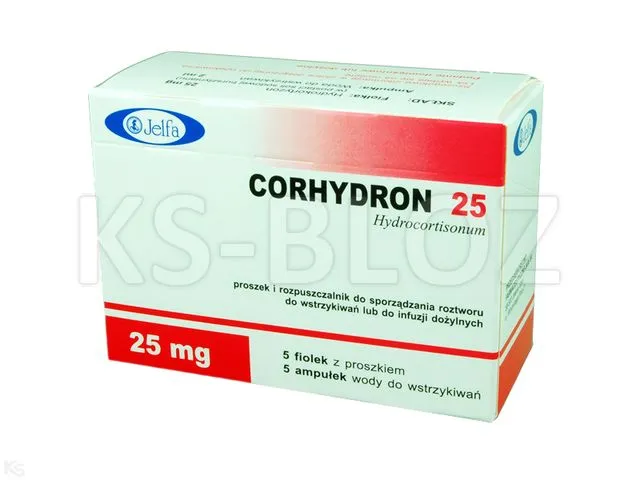
Table of Contents
Package leaflet: Information for the user
Corhydron 25
25 mg powder and solvent for solution for injection or infusion
Corhydron 100
100 mg powder and solvent for solution for injection or infusion
Hydrocortisone
Read the entire leaflet carefully before using this medicine, as it contains important information
for the patient.
- Keep this leaflet, as you may need to read it again.
- If you have any questions, please consult your doctor or pharmacist.
- This medicine has been prescribed for a specific individual. Do not share it with others. This medicine may harm another person, even if their symptoms are similar.
- If you experience any adverse reactions, including any not listed in this leaflet, inform your doctor or pharmacist. See section 4.
Table of contents
- What Corhydron is and what it is used for
- Important information before using Corhydron
- How to use Corhydron
- Possible side effects
- How to store Corhydron
- Contents of the pack and other information
1. What Corhydron is and what it is used for
Corhydron contains a synthetic derivative of hydrocortisone: hydrocortisone sodium succinate, in the form of a sodium salt.
Hydrocortisone is a glucocorticosteroid (hormone) naturally present in the human body. It exerts potent anti-inflammatory, anti-rheumatic, anti-allergic, anti-shock, and immunosuppressive effects.
Corhydron is used in the treatment of patients with severe conditions requiring rapid administration of a glucocorticosteroid, such as:
- Primary or secondary adrenal insufficiency,
- Shock states (traumatic, postoperative, cardiogenic, anaphylactic, post-transfusion, or burn shock),
- Sepsis and septic shock,
- Severe bronchospastic conditions (status asthmaticus),
- Acute allergic conditions (angioedema, Quincke's oedema),
- Severe forms of erythema multiforme (Stevens-Johnson syndrome),
- Acute autoimmune disease flares,
- Acute drug hypersensitivity reactions.
Prophylactic use:
- Endocrine disorders, to prevent the development of acute adrenal insufficiency, where additional glucocorticoid supply may be required due to increased cortisol demand (e.g. surgical procedures in patients with adrenal insufficiency or thyroiditis; impaired adrenal function due to chronic steroid therapy).
Use in chronic conditions:
may be considered by the physician based on clinical indications and may include conditions/diseases such as:
- Allergic conditions,
- Dermatological diseases responsive to corticosteroids,
- Endocrine disorders,
- Gastrointestinal diseases (in specific situations – treatment of inflammatory flare-ups),
- Haematological disorders,
- Neoplastic diseases,
- Respiratory diseases,
- Rheumatic diseases.
Pituitary insufficiency with secondary adrenal cortical insufficiency (Sheehan's syndrome).
Nelson's syndrome after adrenalectomy (removal of the adrenal glands).
Adrenogenital syndrome.
2. Important information before using Corhydron
When not to use Corhydron:
- if the patient is allergic to hydrocortisone, other corticosteroids, or any of the other ingredients of this medicine (listed in section 6),
- if the patient has systemic fungal infection.
There are no contraindications in acute, life-threatening conditions, especially when the treatment is expected to last only a short time (24–36 hours).
Warnings and precautions
The risk of adverse effects during glucocorticoid therapy increases with higher doses and prolonged duration of treatment; therefore, the benefits and risks of treatment will be carefully weighed against each other when determining the dose and duration of therapy.
Before starting treatment with Corhydron, consult a doctor or pharmacist if the patient has or has previously had:
- allergy to other medicines in the past,
- active or latent peptic ulcer,
- osteoporosis (especially in postmenopausal women),
- arterial hypertension, congestive heart failure,
- diabetes,
- current or past severe manic-depressive psychosis (especially steroid-induced psychosis),
- past tuberculosis,
- glaucoma (also if present in family members),
- liver damage or cirrhosis,
- renal failure,
- epilepsy,
- gastrointestinal mucosal ulceration,
- recent intestinal anastomosis (intestinal surgery),
- predisposition to thrombophlebitis,
- suppurative infections,
- ulcerative colitis, diverticulitis,
- myasthenia gravis,
- herpes simplex eye infection threatening corneal perforation,
- hypothyroidism,
- if the patient is taking digoxin (a medicine used for heart conditions),
- if the patient has hyperthyroidism (thyrotoxicosis).
Severe allergic reactions may occur after administration of Corhydron, especially in patients who have previously experienced allergic reactions.
Hydrocortisone may mask symptoms of fungal, viral, or bacterial infections. New infections may develop during hydrocortisone therapy.
During treatment with hydrocortisone, exposure to viral diseases (e.g. chickenpox, shingles) should be avoided, especially if these diseases have not been previously experienced. In case of contact with an infected person, the doctor should be informed immediately, who will initiate appropriate management.
If, during hydrocortisone treatment, the patient develops: muscle weakness, muscle pain, cramps, and stiffness, immediate medical advice should be sought. These may be symptoms of a disorder called periodic paralysis associated with thyrotoxicosis, which may occur in patients with hyperthyroidism (thyrotoxicosis) treated with hydrocortisone. Additional treatment may be necessary to alleviate symptoms of this condition.
Vaccinations should not be administered during glucocorticoid therapy due to suppressed immune system function.
Adverse effects can be minimized by using the lowest effective dose for the shortest possible duration. During prolonged hydrocortisone therapy, adrenal cortex insufficiency may develop, which may persist for several months after discontinuation of treatment.
After long-term treatment, the medicine should not be stopped abruptly due to the risk of acute adrenal insufficiency.
If the patient experiences blurred vision or other visual disturbances, medical advice should be sought.
Elderly patients
During treatment, the doctor will closely monitor the patient's condition.
Adverse effects may be more severe in elderly patients, particularly those with osteoporosis, hypertension, hypokalemia (low blood potassium levels), diabetes, increased susceptibility to infections, and skin thinning.
Children and adolescents
Hydrocortisone may delay growth. Treatment should be limited to the lowest possible dose for the shortest possible duration. If long-term treatment is necessary, the doctor may decide to administer the medicine every other day to reduce adverse effects. The doctor will closely monitor the growth and development of children.
If hydrocortisone is administered to premature infants, monitoring of cardiac function and myocardial imaging may be necessary.
Corhydron and other medicines
Inform the doctor about all medicines currently or recently taken by the patient, including those available without a prescription. Some medicines may enhance the effect of Corhydron, and the doctor may wish to closely monitor the patient taking such medicines (including certain HIV medicines: ritonavir, cobicistat).
In particular, inform the doctor if any of the following medicines are being taken, due to their potential effect on Corhydron or modification of their action by Corhydron:
- cyclosporine (an immunosuppressive medicine used, among others, after organ transplantation),
- medicines used in the treatment of myasthenia,
- digoxin (a medicine used in heart failure),
- estrogens (components of, among others, oral contraceptives),
- phenytoin, carbamazepine, primidone, barbiturates (medicines used in the treatment of epilepsy),
- rifampicin, rifabutin, isoniazid (medicines used in the treatment of tuberculosis),
- aminoglutethimide (an anticancer medicine),
- erythromycin (a medicine used to treat bacterial infections),
- ketoconazole (an antifungal medicine),
- oral anticoagulants, including coumarin derivatives,
- antihypertensive and diuretic medicines, such as furosemide, thiazides, ethacrynic acid,
- medicines used to treat diabetes, including insulin,
- muscle relaxants, e.g. pancuronium,
- non-steroidal anti-inflammatory drugs (NSAIDs), such as ibuprofen, acetylsalicylic acid (aspirin), diclofenac,
- vaccines, toxoids.
Pregnancy and breastfeeding
If the patient is pregnant or breastfeeding, suspects she may be pregnant, or plans to become pregnant, she should consult a doctor before using this medicine.
Pregnancy
The medicine may be used only if, in the doctor's opinion, the benefits to the mother outweigh the potential risks to the fetus. Hydrocortisone crosses the placental barrier. Newborns born to mothers who received significant doses of hydrocortisone during pregnancy should be monitored for the risk of adrenal cortex insufficiency.
Breastfeeding
Hydrocortisone passes into breast milk and may suppress glucocorticoid production in the breastfed infant, inhibit the infant's growth, and cause other adverse effects. In mothers who are breastfeeding and receiving high doses of hydrocortisone, discontinuation of breastfeeding during treatment is recommended.
Driving and operating machinery
The medicine has no influence on the ability to drive vehicles or operate machinery.
Corhydron contains sodium
The medicine contains less than 1 mmol (23 mg) of sodium per vial, meaning the medicine is considered "sodium-free".
3. How to use Corhydron
This medicine should always be used as directed by the physician. If in doubt, consult your doctor or pharmacist.
The medicine may be administered as an intravenous injection, infusion, or intramuscular injection.
If repeated intramuscular injections are necessary, the injection site should be changed.
When administered intravenously, the injection should be slow, lasting from 1 to 10 minutes.
Rapid intravenous injection may increase the risk of adverse effects.
Instructions for preparing the medicine:
To obtain a solution ready for intravenous or intramuscular injection, maintain aseptic technique and dissolve the contents of the vial in the solvent provided in the package (ampoule with water for injections).
To do this, draw 2 ml of solvent from the ampoule using a syringe and transfer it into the vial containing the powder (lyophilized substance). Gently dissolve the powder by slowly swirling in circular motions until a uniform solution is obtained.
Do not shake vigorously, as this may cause gas bubbles to form.
The prepared solution is ready for intravenous or intramuscular injection, or may be used to prepare an infusion solution. If, after reconstitution, the solution is frothy or contains visible particles, it must not be administered.
To prepare an infusion solution, first prepare the solution as described above, then, maintaining aseptic conditions, add it to 100–1000 ml of 5% glucose solution for injection. If sodium restriction is not required in the patient, the medicine may be dissolved in 0.9% sodium chloride solution for injection or in a mixture of 5% glucose solution for injection and 0.9% sodium chloride solution for injection.
The solution should be used immediately after preparation, and any unused portion should be discarded.
Any unused product or waste material should be disposed of in accordance with local regulations.
The Corhydron solution must not be mixed with other products except:
- water for injections,
- 0.9% sodium chloride solution,
- 5% glucose solution.
Corhydron should be administered as a separate injection or infusion, separate from other medicines.
Recommended dose:
The dose is determined individually depending on the indication, the patient's condition, and response to treatment.
Initial doses are usually higher, and after achieving the desired therapeutic effect, the lowest effective dose necessary to maintain the therapeutic effect is established.
Adults and adolescents over 14 years of age
The usual single dose is 100–250 mg; up to 1500 mg per day.
In severe conditions, 100–500 mg is administered by slow intravenous injection over 1 to 10 minutes. If indicated, the dose may be repeated after two, four, or six hours.
Septic shock in adult patients
200 mg per day intravenously as 50 mg every 6 hours or as a continuous infusion.
According to literature data on the treatment of pituitary insufficiency with secondary adrenal insufficiency (Sheehan's syndrome), the most commonly used intravenous dose of hydrocortisone is 300–600 mg per day, administered in 3–4 divided doses or by continuous infusion.
High-dose glucocorticoid therapy is usually not continued for longer than 48 to 72 hours.
If high-dose therapy must be continued, due to the risk of sodium retention, it is recommended to replace sodium succinate hydrocortisone with sodium succinate methylprednisolone, which causes little or no sodium retention in the body.
Whenever possible, it is recommended to reduce the dose and limit the duration of glucocorticoid therapy due to the risk of complications.
Use in children and adolescents under 14 years of age
The dose is individually adjusted according to clinical condition, age, and body weight.
The usual single doses are:
in children up to 12 months of age: 8–10 mg/kg body weight,
in children aged 2–14 years: 4–8 mg/kg body weight per day.
Higher doses may be used when clinically justified. Doses below 25 mg per day should not be used in children.
Whenever possible, prolonged use of hydrocortisone or other glucocorticoids in neonates and children should be avoided, as these medicines may impair growth. If continued glucocorticoid therapy is necessary, alternate-day dosing should be considered to reduce adverse effects. Growth and development should be monitored during glucocorticoid treatment.
Use of hydrocortisone for more than 72 hours may lead to increased serum sodium levels; therefore, in children, replacement of sodium succinate hydrocortisone with sodium succinate methylprednisolone, which does not cause sodium retention, should also be considered.
Use in elderly patients
No special dosage adjustment is required for use in elderly patients. However, elderly patients are more susceptible to adverse effects.
Note!
It is recommended that the daily dose be divided to reflect the natural biological rhythm of hormone secretion. The morning dose, administered between 6 and 8 a.m., should constitute 50% of the daily dose; the midday dose 20%; and the evening dose 30%.
Use of a higher than recommended dose of Corhydron
Acute overdose is rarely dangerous. Long-term use of high doses requires gradual dose reduction to prevent acute adrenal insufficiency. Hydrocortisone is removed during dialysis.
Anaphylactic and hypersensitivity reactions, depending on severity, may be treated with antihistamines and, if indicated, with adrenaline.
Missed dose of Corhydron
Do not administer a double dose to make up for a missed dose.
Discontinuation of Corhydron
The medicine should always be used according to the schedule prescribed by the physician. Do not discontinue Corhydron without consulting your doctor.
If you have any further doubts regarding the use of this medicine, consult your doctor or pharmacist.
4. Possible adverse effects
Like all medicines, this medicine can cause adverse effects, although not everyone will experience them.
In the case of long-term use of hydrocortisone, treatment should not be stopped suddenly, as this
may lead to acute adrenal insufficiency.
The following adverse effects may occur with the use of hydrocortisone:
Frequency unknown (cannot be estimated from available data):
Infections and parasitic infections: worsening or masking of infection symptoms, occurrence
of opportunistic infections, infection (induction of infection, reactivation of tuberculosis).
Benign, malignant and unspecified neoplasms (including cysts and polyps): Kaposi's sarcoma,
pheochromocytoma crisis.
Blood and lymphatic system disorders: leukocytosis, thrombocytopenia, lymphopenia.
Immune system disorders: anaphylactic reactions.
Endocrine disorders: menstrual irregularities, symptoms of Cushing's syndrome, growth suppression
in children, secondary suppression of the hypothalamic-pituitary-adrenal axis, manifestation of latent
diabetes mellitus, increased insulin requirement or oral antidiabetic drugs in diabetic patients,
steroid withdrawal syndrome.
Metabolism and nutrition disorders: negative nitrogen balance due to increased protein catabolism,
sodium retention, hypokalemic alkalosis, dyslipidemia, impaired glucose tolerance, increased appetite.
Psychiatric disorders: psychotic disorders (including mania, delusions, hallucinations, and
exacerbation of schizophrenia), affective disorders (including depression, euphoria, mood changes,
drug dependence, suicidal thoughts), psychiatric disturbances, personality changes, confusion, anxiety,
behavioural disorders, insomnia, irritability.
Nervous system disorders: dizziness and headache, seizures, upon withdrawal of glucocorticoids,
increased intracranial pressure with papilledema (pseudotumor cerebri), neuropathy, paresthesia,
epidural lipomatosis (excessive accumulation of fat within the epidural space of the spine, causing
compression of the dural sac), amnesia, cognitive disturbances.
Eye disorders: central serous chorioretinopathy (a disease impairing central vision), secondary
glaucoma, exophthalmos, optic nerve damage, posterior subcapsular cataract, blurred vision.
Cardiac disorders: arrhythmias or ECG changes related to potassium deficiency, syncope, worsening
of arterial hypertension, cardiac rupture as a consequence of recent myocardial infarction, there are
reports of sudden cardiac arrest, myocardial hypertrophy (hypertrophic cardiomyopathy) in preterm
infants, congestive heart failure (in susceptible patients).
Vascular disorders: thromboembolism, fat embolism, hypercholesterolemia, accelerated
atherosclerosis, necrotizing vasculitis, thrombophlebitis, hypotension, hypertension.
Respiratory, thoracic and mediastinal disorders: pulmonary embolism, acute respiratory distress
syndrome, hiccups.
Gastrointestinal disorders: nausea, vomiting, loss of appetite which may lead to weight loss,
diarrhea or constipation, abdominal distension, gastric irritation and esophagitis with ulceration,
peptic ulcer with possible perforation and bleeding, perforation of the small and large intestine,
particularly in inflammatory bowel diseases, gastrointestinal bleeding, pancreatitis, esophagitis,
abdominal pain, dyspepsia.
Skin and subcutaneous tissue disorders: impaired wound healing, skin thinning making it prone to
damage and sensitive, petechiae and hemorrhagic eruptions, facial flushing, striae, hirsutism, acneiform
eruptions, reduced reactivity in skin tests, hypersensitivity reactions such as allergic dermatitis,
urticaria, angioedema, excessive sweating, pruritus. Parenteral administration of glucocorticoids
causes hypo- or hyperpigmentation, scarring, skin induration, decreased pain sensation, atrophy of
skin or subcutaneous tissue, and sterile abscesses at the injection site.
Musculoskeletal and connective tissue disorders: aseptic necrosis of the femoral and humeral head,
muscle weakness, myalgia, steroid-induced myopathy, loss of muscle mass, osteoporosis, spontaneous
fractures including compression fractures of the spine and pathological fractures of long bones,
arthropathy, tendon rupture.
Reproductive system and breast disorders: irregular menstruation.
General disorders and administration site conditions: fluid retention, congestive heart failure,
potassium loss, hypocalcemia, burning and tingling sensations which may occur after intravenous
administration of glucocorticoids, impaired wound healing, peripheral edema, fatigue, malaise.
Investigations: increased body weight, increased intraocular pressure, increased urinary calcium
excretion, increased alanine aminotransferase activity, increased aspartate aminotransferase activity,
increased alkaline phosphatase activity in blood, increased blood urea concentration.
If any of the adverse effects worsen or if any adverse effects not listed in this leaflet occur, inform
your doctor or pharmacist.
Withdrawal syndrome
Occurs after rapid discontinuation of hydrocortisone following prolonged use. It is caused by
acute adrenal insufficiency and may be life-threatening.
Withdrawal syndrome may also include: fever, muscle pain, joint pain, rhinitis, conjunctivitis, painful
skin nodules, and weight loss.
Children and adolescents
Severe, even fatal, infections during concomitant use of glucocorticoids (e.g. chickenpox or measles)
occur more frequently in children than in adults. Long-term glucocorticoid therapy may suppress
growth.
Reporting of adverse effects
If any adverse effects occur, including those not listed in this leaflet, tell your doctor, pharmacist,
or nurse. Adverse effects can be reported directly to the Department of Monitoring Adverse Drug
Reactions of the Office for Registration of Medicinal Products, Medical Devices
and Biocidal Products
Al. Jerozolimskie 181 C
02-222 Warsaw
Tel.: + 48 22 49 21 301
Fax: + 48 22 49 21 309
Website: https://smz.ezdrowie.gov.pl
Adverse effects can also be reported to the marketing authorization holder.
By reporting adverse effects, additional information on the safety of the medicine can be collected.
5. How to store Corhydron
Store below 25 °C. Keep in the original packaging to protect from light. Do not freeze.
Keep this medicine out of sight and reach of children.
Do not use this medicine after the expiry date stated on the cardboard box and vial after: EXP. The expiry date refers to the last day of the stated month. The abbreviation "Lot" means batch number.
Medicines should not be disposed of via wastewater or household waste. Ask your pharmacist how to dispose of medicines no longer required. These measures will help protect the environment.
6. Contents of the packaging and other information
What Corhydron contains
Corhydron 25: The active substance is hydrocortisone in the form of buffered hydrocortisone sodium succinate 35.10 mg.
Each vial contains 25 mg of hydrocortisone.
Corhydron 100: The active substance is hydrocortisone in the form of buffered hydrocortisone sodium succinate 140.4 mg.
Each vial contains 100 mg of hydrocortisone.
Other components of the medicine are solvent: water for injections, phosphate buffer (calculated as disodium hydrogen phosphate).
What Corhydron looks like and contents of the pack
Corhydron is a white or almost white solid mass (lyophilizate) in a solid or partially fragmented form.
Corhydron 25
Colorless glass vials closed with a rubber stopper and a purple aluminium cap, and colorless glass ampoules in a cardboard box.
5 vials of powder + 5 ampoules of solvent
Corhydron 100
Colorless glass vials closed with a rubber stopper and a green aluminium cap, and colorless glass ampoules in a cardboard box.
5 vials of powder + 5 ampoules of solvent
Marketing Authorisation Holder and Manufacturer
Marketing Authorisation Holder:
Bausch Health Ireland Limited
3013 Lake Drive
Citywest Business Campus
Dublin 24, D24PPT3
Ireland
Tel: +48 17 865 51 00
Manufacturer:
Przedsiębiorstwo Farmaceutyczne Jelfa SA
ul. Wincentego Pola 21
58-500 Jelenia Góra
Poland