Clexane
Poland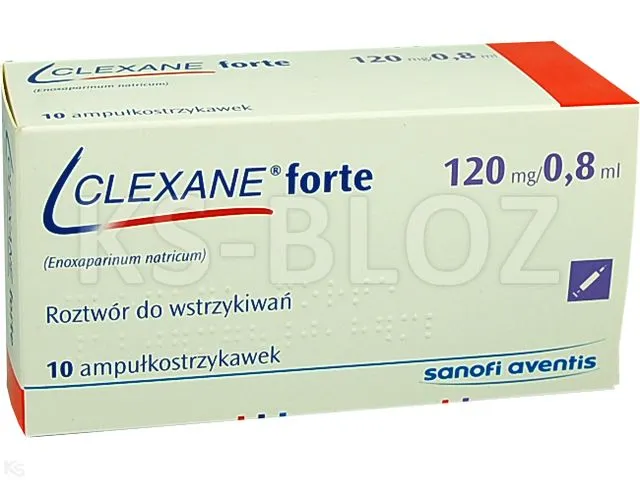
Table of Contents
Package leaflet: Information for the patient
Clexane, 2000 IU (20 mg)/0.2 ml, solution for injection in pre-filled syringes
Clexane, 4000 IU (40 mg)/0.4 ml, solution for injection in pre-filled syringes
Clexane, 6000 IU (60 mg)/0.6 ml, solution for injection in pre-filled syringes
Clexane, 8000 IU (80 mg)/0.8 ml, solution for injection in pre-filled syringes
Clexane, 10,000 IU (100 mg)/1 ml, solution for injection in pre-filled syringes
Enoxaparin sodium
Please read this leaflet carefully before using this medicine because it contains important information for you.
- Keep this leaflet. You may need to read it again.
- If you have any further questions, please ask your doctor, pharmacist, or nurse.
- This medicine has been prescribed for you personally. Do not pass it on to others. It may harm them, even if their symptoms are the same as yours.
- If you experience any side effects, including any not listed in this leaflet, tell your doctor or pharmacist. See section 4.
Contents of the leaflet
- What Clexane is and what it is used for
- What you need to know before you use Clexane
- How to use Clexane
- Possible side effects
- How to store Clexane
- Contents of the pack and other information
1. What Clexane is and what it is used for
Clexane contains the active substance called enoxaparin sodium. It belongs to a group of medicines known as low molecular weight heparins (LMWH).
How Clexane works
Clexane works in two ways:
- It prevents existing blood clots from getting larger. This helps the body to dissolve existing clots, so they are no longer harmful.
- It prevents the formation of new blood clots in the patient's blood.
What Clexane is used for
Clexane may be used:
- To treat existing blood clots in the patient's blood.
- To prevent the formation of blood clots in the patient's blood in the following situations:
- Before and after surgical procedures
- During a short-term illness when the patient is unable to move around for some time
- In patients who have developed blood clots due to cancer, to further prevent the formation of new clots
- To prevent clot formation in unstable angina (when insufficient blood is supplied to the heart muscle) or after a heart attack
- To prevent clotting in the dialysis machine tubing (used in patients with severe kidney problems)
2. Important information before using Clexane
Do not use Clexane if:
- the patient is allergic to: enoxaparin sodium or any of the other ingredients of this medicine (listed in section 6), heparin or other low molecular weight heparins such as nadroparin, tinzaparin or dalteparin. Symptoms of an allergic reaction may include: rash, difficulty breathing or swallowing, swelling of the face, lips, tongue, mouth, throat or eyes.
- the patient has had a reaction to heparin which caused a significant drop in the number of blood cells responsible for blood clotting (platelets) within the last 100 days.
- the patient has antibodies against enoxaparin in the blood.
- the patient has active bleeding or a medical condition associated with an increased risk of bleeding, for example: stomach ulcers, recent brain or eye surgery, or recent haemorrhagic stroke.
- the patient is being treated with Clexane for blood clots and a procedure is planned within 24 hours: lumbar puncture, or surgery under spinal or epidural anaesthesia. Clexane must not be used in the above-mentioned patients. If in doubt, discuss this with your doctor or pharmacist before starting Clexane.
Warnings and precautions
Clexane must not be interchanged with other low molecular weight heparins such as nadroparin, tinzaparin or dalteparin, because they are not exactly the same and differ in activity and instructions for use.
Before starting Clexane, discuss this with your doctor or pharmacist if:
- the patient has ever had a reaction to heparin which caused a major drop in blood cells responsible for blood clotting (platelets)
- the patient has had a heart valve replacement
- the patient has endocarditis (an infection of the inner lining of the heart)
- the patient has had or has stomach ulcers
- the patient has recently had a stroke
- the patient has high blood pressure
- the patient has diabetes or has eye blood vessel problems caused by diabetes (so-called diabetic retinopathy)
- the patient has recently undergone eye or brain surgery
- the patient is elderly (over 65 years of age), especially if over 75 years of age
- the patient has kidney disease
- the patient has liver disease
- the patient is underweight or overweight
- the patient has elevated potassium levels in the blood (this can be checked with a blood laboratory test)
- the patient is currently taking medicines that may cause bleeding (see section 2 "Clexane with other medicines")
- the patient has spinal problems or has undergone spinal surgery. If any of the above situations apply to the patient or if the patient has any doubts, discuss this with your doctor or pharmacist before starting Clexane.
For patients receiving doses higher than 210 mg/day, this medicine contains more than 24 mg of sodium (the main component of table salt) per dose. This corresponds to 1.2% of the maximum recommended daily sodium intake in the adult diet.
Tests and monitoring
Before starting this medicine and periodically during treatment, the patient may have blood tests to check the number of platelets (blood cells responsible for blood clotting) and potassium levels in the blood.
Use in children and adolescents
The safety and efficacy of Clexane in children and adolescents have not been established.
Clexane with other medicines
Tell your doctor or pharmacist about all medicines the patient is currently taking or has recently taken, as well as any medicines the patient plans to take.
- warfarin – a medicine used to thin the blood
- aspirin (also known as acetylsalicylic acid or ASA), clopidogrel or other medicines used to prevent blood clots (see section 3 "Changing anticoagulant therapy")
- dextran injections – used as a blood substitute
- ibuprofen, diclofenac, ketorolac or other medicines known as non-steroidal anti-inflammatory drugs (NSAIDs), used to treat pain and swelling in joint inflammation and other conditions
- prednisolone, dexamethasone or other medicines used to treat asthma, rheumatoid arthritis and other conditions
- medicines that increase potassium levels in the blood, such as potassium salts, diuretics, and certain medicines used for heart conditions.
Surgical procedures and anaesthetics
If the patient is scheduled for a lumbar puncture or surgery under epidural or spinal anaesthesia, inform the doctor that the patient is using Clexane.
Pregnancy and breastfeeding
If the patient is pregnant or breastfeeding, suspects she may be pregnant, or is planning to have a baby, she should consult her doctor or pharmacist before using this medicine.
Women who are pregnant and have a mechanical heart valve may have an increased risk of blood clots. The doctor should discuss this issue with the patient.
Women who are breastfeeding or intend to breastfeed should seek medical advice before starting this medicine.
Driving and using machines
Clexane has no effect on the ability to drive or operate machinery.
It is recommended that the doctor documents the brand name and batch number of the product used.
3. How to use Clexane
This medicine should always be used exactly as directed by your doctor or pharmacist. If in doubt,
consult your doctor or pharmacist.
Taking the medicine
- Clexane is usually administered to the patient by a doctor or nurse, as it requires injection.
- Clexane is typically given as subcutaneous injections.
- Clexane may be administered as an intravenous injection following certain types of heart attack or after surgery.
- Clexane may be introduced into the dialysis tubing that carries blood away from the body (into the so-called arterial line) at the beginning of a dialysis session.
- Clexane must not be administered by intramuscular injection.
Dosage
- Your doctor will decide the dose of Clexane appropriate for you. The dose depends on the reason for treatment.
- In patients with kidney disease, a lower dose of Clexane may be given.
1) Treatment of blood clots in the patient's blood
- The usual dose is 150 IU (1.5 mg) per kilogram of body weight once daily or 100 IU (1 mg) per kilogram of body weight twice daily.
- Your doctor will decide how long you should continue receiving Clexane.
2) Prevention of blood clots during surgery or in patients with limited mobility due to illness
- The dose depends on the individual patient's risk of clot formation. You will receive Clexane at a dose of 2000 IU (20 mg) or 4000 IU (40 mg) daily.
- If undergoing planned surgery, the first injection is usually given 2 hours or 12 hours before the procedure.
- If you have limited mobility due to illness, you will usually receive Clexane at a dose of 4000 IU (40 mg) daily.
- Your doctor will decide how long you should continue receiving Clexane.
3) Prevention of blood clots in patients with unstable angina or after myocardial infarction
- Clexane may be used in two different types of heart attack.
- The dose of Clexane will depend on the patient's age and the type of heart attack.
NSTEMI heart attack (non-ST-elevation myocardial infarction):
- The usual dose is 100 IU (1 mg) per kilogram of body weight every 12 hours.
- Your doctor will usually also recommend taking aspirin (acetylsalicylic acid).
- Your doctor will decide how long you should continue receiving Clexane.
STEMI heart attack (ST-elevation myocardial infarction) in patients under 75 years of age:
- An initial intravenous dose of 3000 IU (30 mg) of Clexane will be administered.
- Clexane will also be given subcutaneously. The usual dose is 100 IU (1 mg) per kilogram of body weight every 12 hours.
- Your doctor will usually also recommend taking aspirin (acetylsalicylic acid).
- Your doctor will decide how long you should continue receiving Clexane.
STEMI heart attack in patients aged 75 years or older:
- The usual dose is 75 IU (0.75 mg) per kilogram of body weight every 12 hours.
- The maximum dose of Clexane for the first two doses is 7500 IU (75 mg).
- Your doctor will decide how long you should continue receiving Clexane.
Patients undergoing percutaneous coronary intervention (PCI):
- Depending on when the last dose of Clexane was administered, your doctor may decide to give an additional dose of Clexane before the percutaneous coronary intervention. The medicine will then be given by intravenous injection.
4) Prevention of blood clots in dialysis tubing
- The usual dose is 100 IU (1 mg) per kilogram of body weight.
- Clexane is injected into the tubing carrying blood away from the body (into the so-called arterial line) at the start of the dialysis session. This dose is usually sufficient for a 4-hour dialysis session. However, if necessary, your doctor may administer an additional dose of 50 IU to 100 IU (0.5 to 1 mg) per kilogram of body weight.
Self-injection of Clexane
If you are able to self-inject Clexane, your doctor or nurse will demonstrate how to do it. Do not attempt to self-inject unless you have been properly trained. If you have any doubts about how to perform the injection, contact your doctor or nurse immediately. Correct subcutaneous injection technique (known as a "subcutaneous injection") may reduce pain and bruising at the injection site.
Before self-injecting Clexane
- Prepare all necessary items: the syringe, an alcohol swab or soap and water, and a sharps disposal container.
- Check the expiry date on the packaging. Do not use the medicine after this date.
- Check that the syringe is undamaged and that the liquid is clear. If not, use another syringe.
- Confirm the correct dose to be injected.
- Examine the abdominal area to check whether the previous injection caused redness, skin discoloration, swelling, oozing, or if it is still painful. If so, consult your doctor or nurse.
Instructions for self-injection of Clexane
(Instructions for pre-filled syringes without a safety system)
Preparing the injection site
- Choose an injection site on the right or left side of the abdomen. The injection site should be at least 5 cm away from the navel, towards the sides.
- Do not inject within 5 cm of the navel or near existing scars or bruises.
- Rotate injection sites between the left and right sides of the abdomen depending on the previous injection site.
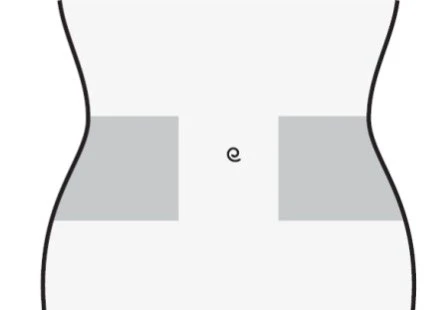
- Wash your hands. Clean the injection site with an alcohol swab or soap and water.
- Sit or lie down in a comfortable, relaxed position, ensuring the injection site is clearly visible. A chair, examination table, or bed with supportive pillows is suitable.
Selecting the dose - Carefully remove the needle cap from the syringe. Discard the cap.
- Do not press the plunger before injection to remove air bubbles. This may reduce the administered dose.
- After removing the cap, do not touch the needle. This ensures sterility.
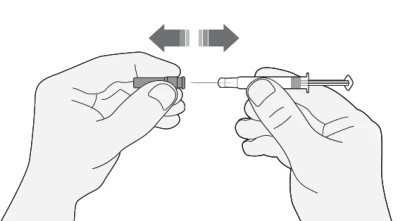
- If the amount of medicine in the syringe matches the prescribed dose, no dose adjustment is needed. You may now proceed with the injection.
- If the dose is based on body weight, dose adjustment in the syringe may be necessary. In this case, remove the excess medicine by holding the syringe downward (to retain air bubbles in the syringe) and expel the excess into a container.
- A drop may appear at the needle tip. In this case, remove the drop before injection by gently tapping the syringe held needle-down. You may now proceed with the injection.
Injection - Hold the syringe in the hand you write with (like a pencil). With the other hand, gently pinch the cleaned abdominal skin between your thumb and index finger to create a skin fold.
- Ensure the skin fold is maintained during injection.
- Hold the syringe with the needle pointing downward (vertically at a 90° angle). Insert the full length of the needle into the skin fold.
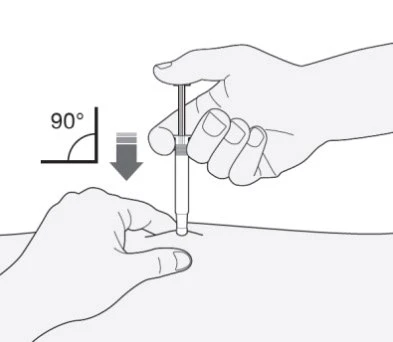
- Press the plunger with your thumb. This will deliver the medicine into the abdominal fatty tissue. Inject the entire contents of the syringe.
- Remove the needle straight out from the injection site. Keep the needle away from yourself and others. You may now release the skin fold.
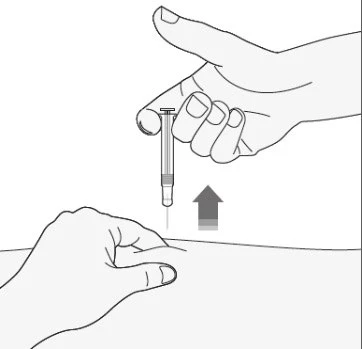
After the injection
- To avoid bruising, do not rub the injection site after injection.
- Dispose of the used syringe in a sharps disposal container. Close the container lid and store it out of sight and out of reach of children. If the container is full, dispose of it according to your doctor's or pharmacist's instructions.
Any unused medicine or waste must be disposed of in accordance with local regulations.
(Instructions for pre-filled syringes with the ERIS™ safety system)
Preparing the injection site - Choose an injection site on the right or left side of the abdomen. The injection site should be at least 5 cm away from the navel, towards the sides.
- Do not inject within 5 cm of the navel or near existing scars or bruises.
- Rotate injection sites between the left and right sides of the abdomen depending on the previous injection site.
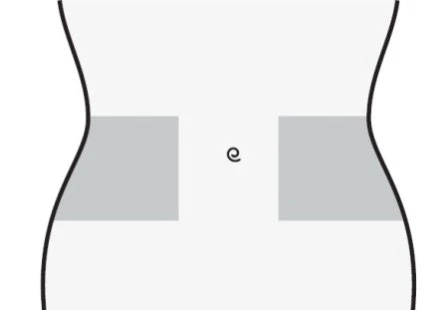
- Wash your hands. Clean the injection site with an alcohol swab or soap and water.
- Sit or lie down in a comfortable, relaxed position, ensuring the injection site is clearly visible. A chair, examination table, or bed with supportive pillows is suitable.
Selecting the dose - Carefully remove the needle cap from the syringe. Discard the cap.
- Do not press the plunger before injection to remove air bubbles. This may reduce the administered dose.
- After removing the cap, do not touch the needle. This ensures sterility.
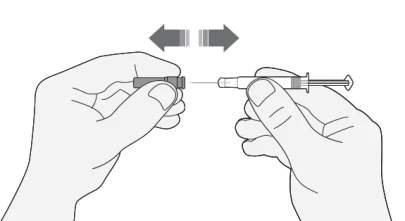
- If the amount of medicine in the syringe matches the prescribed dose, no dose adjustment is needed. You may now proceed with the injection.
- If the dose is based on body weight, dose adjustment in the syringe may be necessary. In this case, remove the excess medicine by holding the syringe downward (to retain air bubbles in the syringe) and expel the excess into a container.
- A drop may appear at the needle tip. In this case, remove the drop before injection by gently tapping the syringe held needle-down. You may now proceed with the injection.
Injection - Hold the syringe in the hand you write with (like a pencil). With the other hand, gently pinch the cleaned abdominal skin between your thumb and index finger to create a skin fold.
- Ensure the skin fold is maintained during injection.
- Hold the syringe with the needle pointing downward (vertically at a 90° angle). Insert the full length of the needle into the skin fold.
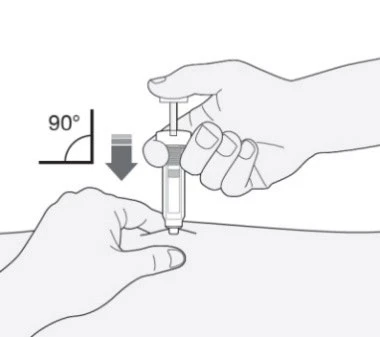
- Press the plunger with your thumb. This will deliver the medicine into the abdominal fatty tissue. Inject the entire contents of the syringe.
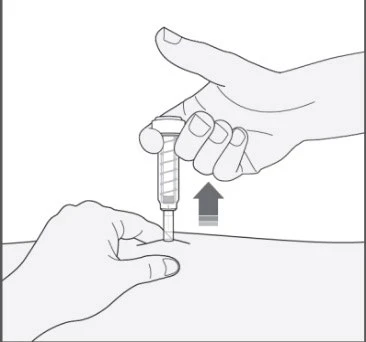
- Remove the needle straight out from the injection site. The protective needle cover will automatically engage. You may now release the skin fold. The safety mechanism will activate the protective cover only when the syringe is fully emptied by pressing the plunger completely to the end.
After the injection
- To avoid bruising, do not rub the injection site after injection.
- Dispose of the used syringe in a sharps disposal container. Close the container lid and store it out of sight and out of reach of children. If the container is full, dispose of it according to your doctor's or pharmacist's instructions.
Any unused medicine or waste must be disposed of in accordance with local regulations.
(Instructions for pre-filled syringes with the PREVENTIS™ safety system)
Preparing the injection site - Choose an injection site on the right or left side of the abdomen. The injection site should be at least 5 cm away from the navel, towards the sides.
- Do not inject within 5 cm of the navel or near existing scars or bruises.
- Rotate injection sites between the left and right sides of the abdomen depending on the previous injection site.
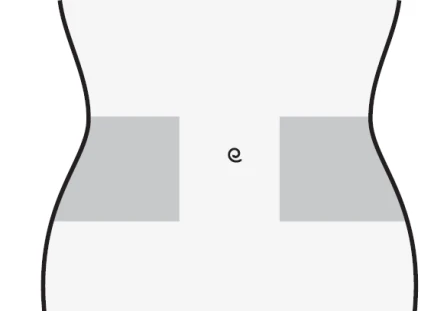
- Wash your hands. Clean the injection site with an alcohol swab or soap and water.
- Sit or lie down in a comfortable, relaxed position, ensuring the injection site is clearly visible. A chair, examination table, or bed with supportive pillows is suitable.
Selecting the dose - Carefully remove the needle cap from the syringe. Discard the cap.
- Do not press the plunger before injection to remove air bubbles. This may reduce the administered dose.
- After removing the cap, do not touch the needle. This ensures sterility.
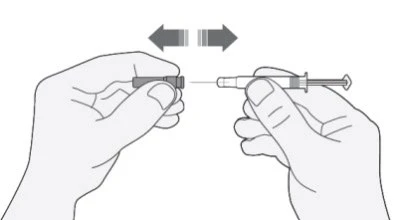
- If the amount of medicine in the syringe matches the prescribed dose, no dose adjustment is needed. You may now proceed with the injection.
- If the dose is based on body weight, dose adjustment in the syringe may be necessary. In this case, remove the excess medicine by holding the syringe downward (to retain air bubbles in the syringe) and expel the excess into a container.
- A drop may appear at the needle tip. In this case, remove the drop before injection by gently tapping the syringe held needle-down. You may now proceed with the injection.
Injection - Hold the syringe in the hand you write with (like a pencil). With the other hand, gently pinch the cleaned abdominal skin between your thumb and index finger to create a skin fold.
- Ensure the skin fold is maintained during injection.
- Hold the syringe with the needle pointing downward (vertically at a 90° angle). Insert the full length of the needle into the skin fold.
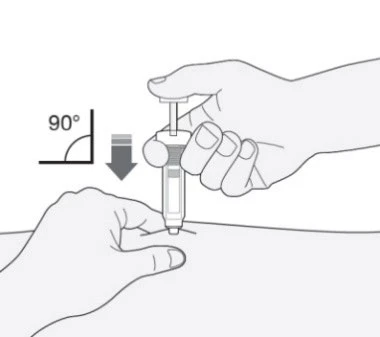
- Press the plunger with your thumb. This will deliver the medicine into the abdominal fatty tissue. Inject the entire contents of the syringe.
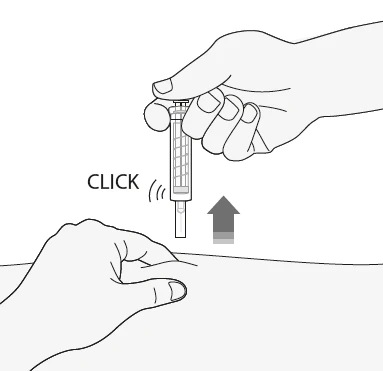
- Remove the needle straight out from the injection site, keeping fingers on the plunger. While holding the needle away from yourself and others, firmly press the plunger to activate the safety mechanism. The protective needle cover will automatically engage. A distinct "click" will be heard, confirming activation of the safety shield. You may now release the skin fold.
After the injection
- To avoid bruising, do not rub the injection site after injection.
- Dispose of the used syringe in a sharps disposal container. Close the container lid and store it out of sight and out of reach of children. If the container is full, dispose of it according to your doctor's or pharmacist's instructions.
Any unused medicine or waste must be disposed of in accordance with local regulations.
Switching anticoagulant medicines
- Switching from Clexane to vitamin K antagonists (such as warfarin) Your doctor will recommend blood tests to monitor your INR and will inform you when to stop taking Clexane.
- Switching from vitamin K antagonists (such as warfarin) to Clexane Discontinue the vitamin K antagonist medicine. Your doctor will recommend blood tests to monitor your INR and will inform you when to start taking Clexane.
- Switching from Clexane to direct oral anticoagulants (DOACs) Stop taking Clexane. Begin taking the direct oral anticoagulant 0 to 2 hours before the scheduled time of the next injection, then continue taking it as directed.
- Switching from a direct oral anticoagulant to Clexane Discontinue the direct oral anticoagulant. Clexane treatment may be started 12 hours after the last dose of the direct oral anticoagulant.
Use of a higher than recommended dose of Clexane
If you think you have used too much or too little Clexane, inform your doctor, pharmacist, or nurse immediately, even if no problems are apparent. In case of accidental injection or ingestion of Clexane by a child, go immediately to the hospital emergency department.
Missed dose of Clexane
If you miss a dose, take it as soon as possible. Do not use a double dose to make up for a missed dose. Keeping a diary can help ensure you do not miss doses.
Stopping Clexane treatment
It is important to continue Clexane injections until your doctor tells you to stop. Stopping treatment may lead to the formation of a blood clot, which could be very dangerous.
If you have any further questions about the use of this medicine, consult your doctor, pharmacist, or nurse.
4. Possible side effects
Like all medicines, this medicine can cause side effects, although not everybody will experience them.
Serious side effects
Stop using Clexane and seek immediate medical advice from a doctor or nurse if you experience signs of a severe allergic reaction (such as rash, difficulty breathing or swallowing, swelling of the face, lips, tongue, mouth, throat, or eyes).
If any of the following symptoms occur, stop using enoxaparin and seek immediate medical help:
- Red, scaly, widespread rash with lumps under the skin and blisters, accompanied by fever. Symptoms usually appear at the beginning of treatment (acute generalized exanthematous pustulosis).
Like other similar medicines (used to reduce blood clotting), Clexane may cause bleeding. This could potentially be life-threatening. In some cases, bleeding may not be immediately visible.
Seek immediate medical advice if:
- the patient experiences any bleeding that does not stop spontaneously
- the patient shows signs of excessive bleeding such as weakness, fatigue, paleness, dizziness with headaches, or unexplained swelling. The doctor may decide to carry out further monitoring or change the treatment.
Seek immediate medical advice:
- if the patient experiences any signs of a blood vessel blocked by a blood clot, such as: cramp-like pain, redness, increased warmth, or swelling in one of the lower limbs – these are symptoms of deep vein thrombosis; or breathlessness, chest pain, fainting, or coughing up blood – these are symptoms of pulmonary embolism
- if the patient develops painful rash or dark red spots under the skin that do not fade when pressed. The doctor may order blood tests to check platelet count.
Other side effects:
Very common (may affect more than 1 in 10 people): - bleeding
- increased liver enzyme activity
Common (may affect up to 1 in 10 people):
- increased tendency to bruising – this may be due to a reduced number of platelets
- pink spots on the skin – these skin changes are more likely at the injection sites of Clexane
- skin rash (urticaria)
- itchy, red skin
- bruising or pain at the injection site
- reduced number of red blood cells
- increased number of platelets
- headache
Uncommon (may affect up to 1 in 100 people):
- sudden severe headache – this may be a sign of bleeding into the brain
- sensation of tenderness and swelling in the stomach – this may indicate gastrointestinal bleeding
- large, red skin lesions of irregular shape, with or without blisters
- skin irritation (local irritation)
- the patient may notice yellowing of the skin or eyes and darker urine. This may indicate liver disease
Rare (may affect up to 1 in 1,000 people):
- severe allergic reaction – symptoms may include rash, difficulty swallowing or breathing, swelling of lips, face, throat, or tongue
- increased potassium levels in the blood – this is more likely in people with kidney disease or diabetes. The doctor may check this with a blood test
- increased number of eosinophils in the blood – the doctor may check this with a blood test
- hair loss
- osteoporosis (a condition in which bones are more prone to fractures) after long-term use of the medicine
- tingling, numbness, and muscle weakness (especially in the lower part of the body) after lumbar puncture or spinal/epidural anaesthesia
- loss of control over bladder or bowel (a condition in which the patient cannot control when to go to the toilet)
- hardening or lump at the injection site
Reporting of side effects
If any side effects occur, including any not listed in this leaflet, tell your doctor, pharmacist, or nurse. Side effects can be reported directly to the Department of Monitoring Adverse Drug Reactions of the Office for Registration of Medicinal Products, Medical Devices and Biocidal Products, Al. Jerozolimskie 181C, 02-222 Warsaw.
Tel.: +48 22 49 21 301, fax: +48 22 49 21 309, website: https://smz.ezdrowie.gov.pl
Side effects can also be reported to the marketing authorisation holder or its representative in Poland.
Reporting side effects helps to provide more information on the safety of this medicine.
5. How to store Clexane
Do not store above 25 °C. Do not freeze.
Keep the medicine out of the sight and reach of children.
Do not use this medicine after the expiry date stated on the packaging. The expiry date refers to the last day of the specified month.
Do not use this medicine if you notice a cracked syringe, solid particles in the solution, or an abnormal solution colour (see "What Clexane looks like and contents of the pack").
Medicines should not be disposed of via wastewater or household waste. Ask your pharmacist how to dispose of medicines you no longer use. This will help protect the environment.
6. Contents of the pack and other information
What Clexane contains
- The active substance is enoxaparin sodium.
- Each ml contains 100 mg of enoxaparin sodium, corresponding to 10,000 IU of anti-Xa activity. Each 0.2 ml pre-filled syringe contains 2000 IU (20 mg) of enoxaparin sodium. Each 0.4 ml pre-filled syringe contains 4000 IU (40 mg) of enoxaparin sodium. Each 0.6 ml pre-filled syringe contains 6000 IU (60 mg) of enoxaparin sodium. Each 0.8 ml pre-filled syringe contains 8000 IU (80 mg) of enoxaparin sodium. Each 1 ml pre-filled syringe contains 10,000 IU (100 mg) of enoxaparin sodium.
- The other ingredient is: water for injections.
What Clexane looks like and contents of the pack
Clexane is a clear, colourless or slightly yellowish solution for injection in a glass pre-filled
syringe (with or without automatic safety system).
Pack sizes: 2, 5, 6, 10, 12, 20, 24, 30, 50, 100 pre-filled syringes and in multipacks of 3 x 10, 9 x 10, 100 x 10 and 200 x 10 pre-filled syringes.
Not all pack sizes may be marketed.
Marketing Authorisation Holder
Sanofi Winthrop Industrie
82, Avenue Raspail
94250 Gentilly
France
Manufacturer
Sanofi Winthrop Industrie
Boulevard Industriel, zone industrielle
76580 Le Trait
France
Sanofi Winthrop Industrie
180, rue Jean Jaurès
94 700 Maisons-Alfort
France
CHINOIN Pharmaceutical and Chemical Works Private Co. Ltd.
Csanyikvölgy Site
Miszkolc, Csanyikvölgy
H-3510
Hungary
Sanofi-Aventis Private Co. Ltd
Budapest Logistics and Distribution Platform
Bdg. DC5, Campona utca 1.
Budapest, 1225
Hungary
Sanofi-Aventis GmbH
Turm A, 29. OG, Wienerbergstraße 11
1100 Vienna
Austria
Sanofi-Aventis Deutschland GmbH
Industriepark Höchst-Brüningstraße 50
65926 Frankfurt am Main
Germany
For more detailed information about the medicine and its names in the Member States of the
European Economic Area, please contact the local representative of the Marketing Authorisation
Holder in Poland:
Sanofi Sp. z o.o.
ul. Marcina Kasprzaka 6
01-211 Warszawa
tel.: +48 22 280 00 00
Other sources of information
Detailed information on this medicine is available on the website of the Office for Registration of Medicinal Products, Medical Devices and Biocidal Products (www.urpl.gov.pl)