Cinnarizinum wzf
Poland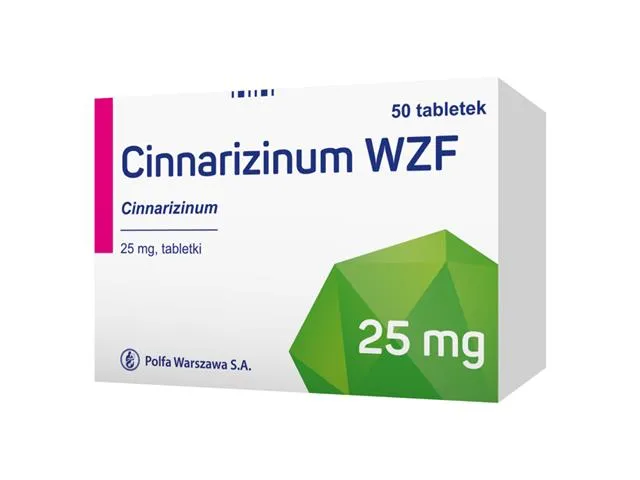
Table of Contents
Package leaflet: information for the patient
CINNARIZINUM WZF, 25 mg, tablets
Cinnarizinum
Please read carefully the entire leaflet before using the medicine, as it contains
important information for the patient.
- Keep this leaflet, as you may need to read it again.
- If you have any doubts, please consult your doctor, pharmacist, or nurse.
- This medicine has been prescribed for a specific individual. Do not pass it on to others. The medicine may harm another person, even if their symptoms are the same.
- If the patient experiences any adverse reactions, including any adverse reactions not listed in this leaflet, they should inform their doctor, pharmacist, or nurse. See section 4.
Table of contents of the leaflet
- What Cinnarizinum WZF is and what it is used for
- Important information before taking Cinnarizinum WZF
- How to take Cinnarizinum WZF
- Possible side effects
- How to store Cinnarizinum WZF
- Contents of the pack and other information
1. What Cinnarizinum WZF is and what it is used for
Cinnarizine – the active substance contained in the medicine – belongs to the group of so-called calcium antagonists.
Cinnarizinum WZF is used:
- in peripheral circulatory disorders (Raynaud's syndrome, intermittent claudication, muscle cramps);
- in vascular disorders of the central nervous system (e.g. circulatory disorders in the vertebrobasilar system);
- in ischemic conditions in ophthalmology;
- prophylactically in motion sickness (kinetosis);
- as an adjunctive treatment in vestibular disorders (dizziness, tinnitus, nausea, vomiting), e.g. in Meniere's disease.
2. Information before using Cinnarizinum WZF
When not to use Cinnarizinum WZF:
- if the patient is allergic to cinnarizine or to any of the other ingredients of this medicine (listed in section 6.).
Warnings and precautions
Before starting treatment with Cinnarizinum WZF, consult a doctor, pharmacist,
or nurse.
Before using Cinnarizinum WZF, the patient should consult a doctor if they have been diagnosed with:
- Parkinson's disease;
- serious blood disorder (porphyria);
- low blood pressure;
- impaired liver or kidney function. Cinnarizinum WZF should be discontinued 4 days before undergoing allergy tests.
Cinnarizinum WZF and other medicines
Inform your doctor or pharmacist about all medicines currently used, recently used,
or planned to be used.
Cinnarizinum WZF enhances the effects of medicines that depress the central nervous system—
sleeping pills, sedatives, strong painkillers, tricyclic antidepressants.
Cinnarizinum WZF with food, drink, or alcohol
Cinnarizinum WZF should be taken after meals, as this helps reduce or avoid gastrointestinal discomfort.
The medicine enhances the effects of alcohol.
Pregnancy and breastfeeding
During pregnancy, breastfeeding, if pregnancy is suspected, or when planning pregnancy,
consult a doctor or pharmacist before using this medicine.
Use of this medicine is not recommended during pregnancy or breastfeeding.
Driving and operating machinery
Cinnarizine may cause drowsiness, especially at the beginning of treatment. Patients experiencing such symptoms should not drive or operate machinery.
Cinnarizinum WZF contains monohydrate lactose and sucrose
This medicine contains lactose and sucrose; if the patient has previously been diagnosed with intolerance to certain sugars, they should consult a doctor before taking this medicine.
3. How to use Cinnarizinum WZF
This medicine should always be taken as directed by the physician. In case of doubt, consult a doctor or pharmacist.
The medicine should be taken orally, after a meal.
For dizziness and other ischemic-type disorders:
1 tablet (25 mg) three times daily (75 mg).
During the initial treatment period, twice the dose may be used.
Prophylaxis of motion sickness:
1 tablet (25 mg) 2 hours before travel, then, as needed, 1 tablet (25 mg) every 8 hours during travel.
Use of a higher than recommended dose of Cinnarizinum WZF
If a higher than recommended dose of Cinnarizinum WZF is taken, the following may occur: vomiting, drowsiness, coma, tremors, hypotension. Seek immediate medical attention.
If ingestion of a dose several times higher than the therapeutic dose occurred less than one hour ago, the physician may consider gastric lavage with activated charcoal.
If more than one hour has passed since the overdose, the physician will initiate symptomatic treatment.
There is no specific antidote.
Missed dose of Cinnarizinum WZF
Do not take a double dose to make up for a missed dose.
If you have any further questions about the use of this medicine, consult your doctor, pharmacist, or nurse.
4. Possible adverse effects
Like all medicines, this medicine can cause adverse effects, although not everyone experiences them.
The adverse effects listed below are categorized according to their frequency of occurrence.
Common (may occur in 1 to 10 out of 100 people):
- weight gain (in case of long-term treatment);
- drowsiness.
Uncommon (may occur in 1 to 10 out of 1,000 people):
- gastrointestinal disturbances, usually transient;
- excessive sweating.
Rare (may occur in 1 to 10 out of 10,000 people):
- dry mouth.
Very rare (may occur in fewer than 1 out of 10,000 people):
- skin reactions (lichen planus, lupus-like changes) – may occur during long-term treatment.
Frequency not known (cannot be estimated from available data):
- allergic reactions;
- headache;
- cholestatic jaundice (symptoms: yellowing of the skin, mucous membranes and whites of the eyes);
- extrapyramidal symptoms – occurrence or worsening of extrapyramidal symptoms (sometimes associated with depression), particularly in elderly patients during long-term treatment. Extrapyramidal symptoms include muscle stiffness, reduced facial expression, motor retardation, restlessness, involuntary muscle contractions and involuntary movements – if these occur, treatment should be discontinued.
Reporting of adverse effects
If any adverse effects occur, including any adverse effects not listed in this leaflet, tell your doctor, pharmacist or nurse. Adverse effects can be reported directly to the Department of Monitoring Adverse Drug Reactions, Office for Registration of Medicinal Products, Medical Devices and Biocidal Products
Al. Jerozolimskie 181C
02-222 Warsaw
Tel.: + 48 22 49 21 301
Fax: + 48 22 49 21 309
Website: https://smz.ezdrowie.gov.pl
Adverse effects can also be reported to the marketing authorization holder.
Reporting adverse effects helps to provide more information on the safety of the medicine.
5. How to store Cinnarizinum WZF
Store below 25°C.
Keep blister packs in the outer packaging to protect from moisture.
Keep the medicine out of the sight and reach of children.
Do not use Cinnarizinum WZF after the expiry date stated on the carton and blister pack. The expiry date refers to the last day of the stated month.
The label on the packaging shows the expiry date after the abbreviation EXP, and the batch number after the abbreviation Lot/LOT.
Medicines must not be disposed of via wastewater or household waste. Ask your pharmacist how to dispose of medicines no longer in use. This will help protect the environment.
6. Contents of the pack and other information
What Cinnarizinum WZF contains
- The active substance is cinnarizine. One tablet contains 25 mg of cinnarizine.
- The other ingredients are: monohydrate lactose, potato starch, sucrose, talc, povidone K-25, magnesium stearate.
What Cinnarizinum WZF looks like and contents of the pack
Cinnarizinum WZF is white, bevel-edged, biconvex tablets, with the imprint ‘25’ on one side.
The carton pack contains 50 tablets (2 blisters made of Aluminium/PVC foil with 25 tablets each).
Marketing Authorisation Holder and Manufacturer
Marketing Authorisation Holder
POLPHARMA Pharmaceutical Works S.A.
ul. Pelplińska 19, 83-200 Starogard Gdański
tel. +48 22 364 61 01
Manufacturers
Warsaw Pharmaceutical Works Polfa S.A.
Karolkowa 22/24; 01-207 Warsaw, Poland
POLPHARMA Pharmaceutical Works S.A.
Production Plant in Nowa Dęba
ul. Metalowca 2; 39-460 Nowa Dęba