Cinacalcet accord
Poland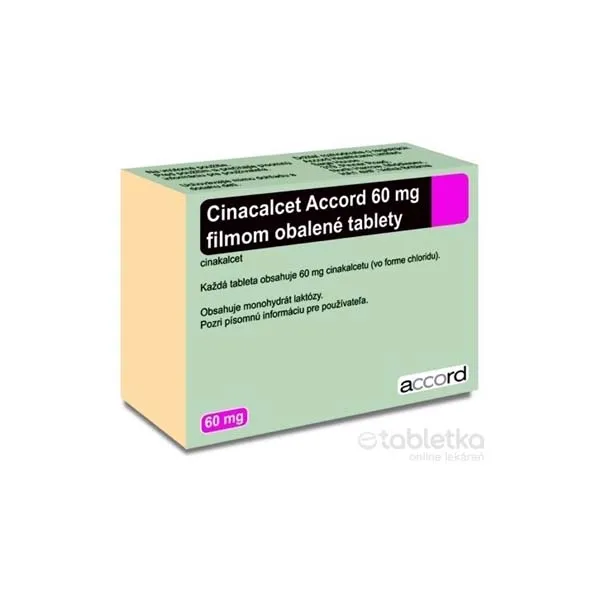
Table of Contents
Package leaflet: Information for the patient
Cinacalcet Accord, 30 mg, film-coated tablets
Cinacalcet Accord, 60 mg, film-coated tablets
Cinacalcet Accord, 90 mg, film-coated tablets
Cinacalcetum
Please read carefully the entire leaflet before taking this medicine, as it contains
important information for the patient.
- Keep this leaflet, as you may need to read it again.
- If you have any further questions, please consult your doctor, pharmacist, or nurse.
- This medicine has been prescribed for a specific individual. Do not pass it on to others. This medicine may harm others, even if their symptoms are the same.
- If you experience any adverse reactions, including any not listed in this leaflet, inform your doctor, pharmacist, or nurse. See section 4.
Table of contents of the leaflet
- What Cinacalcet Accord is and what it is used for
- Important information before taking Cinacalcet Accord
- How to take Cinacalcet Accord
- Possible side effects
- How to store Cinacalcet Accord
- Contents of the pack and other information
1. What Cinacalcet Accord is and what it is used for
Cinacalcet Accord works by regulating levels of parathyroid hormone (PTH), calcium, and phosphorus in the body. It is used to treat disorders caused by abnormalities of the parathyroid glands. The parathyroid glands are four small glands located in the neck near the thyroid gland. They produce a hormone called parathyroid hormone (PTH).
Cinacalcet Accord is used in adult patients:
- for the treatment of secondary hyperparathyroidism in adults with severe kidney disease who require dialysis to remove waste products from the blood.
- to reduce elevated blood calcium levels (hypercalcemia) in adults with parathyroid cancer.
- to reduce elevated blood calcium levels (hypercalcemia) in adults with primary hyperparathyroidism when surgery to remove the parathyroid glands is not possible.
Cinacalcet Accord is used in children and adolescents aged 3 to below 18 years:
- for the treatment of secondary hyperparathyroidism in patients with severe kidney disease who require dialysis to remove waste products from the blood, when the condition cannot be controlled with other treatments.
In both primary and secondary hyperparathyroidism, the parathyroid glands produce excessive amounts of PTH. "Primary" means the overactivity is not caused by any other underlying condition, whereas "secondary" means the overactivity is triggered by other factors, such as kidney disease. Both primary and secondary hyperparathyroidism may lead to calcium loss from bones, which can result in bone pain and fractures, vascular and cardiac complications, kidney stones, psychiatric disturbances, and coma.
2. Important information before using Cinacalcet Accord
When not to use Cinacalcet Accord:
- if the patient is allergic to cinacalcet or any of the other ingredients of this medicine (listed in section 6);
- if the patient has low calcium levels in the blood. The doctor will closely monitor blood calcium levels.
Warnings and precautions
Before starting treatment with Cinacalcet Accord, discuss this with your doctor, pharmacist,
or nurse.
Before using Cinacalcet Accord, inform your doctor about current and previously existing
medical conditions, including:
- seizures; the risk of seizures is higher in patients who have previously experienced them;
- liver function disorders;
- heart failure.
Cinacalcet Accord lowers calcium levels. Life-threatening and fatal events related to low calcium levels (hypocalcaemia) have been reported in adults and children treated with cinacalcet.
Tell your doctor if the patient experiences symptoms of low calcium levels: muscle twitching or cramps, numbness or tingling in the fingers, toes, or around the mouth, seizures, confusion, or loss of consciousness while taking Cinacalcet Accord.
Low calcium levels may affect heart rhythm. Contact your doctor if unusually rapid heartbeat or palpitations occur, if there are heart rhythm disturbances, or if the patient is taking other medications causing heart rhythm disturbances during treatment with cinacalcet.
Additional information, see section 4.
During treatment with Cinacalcet Accord, inform your doctor about:
- starting or stopping smoking, as this may affect the action of cinacalcet.
Children and adolescents
Cinacalcet Accord must not be used in children under 18 years of age with parathyroid cancer or primary hyperparathyroidism.
If the patient is being treated for secondary hyperparathyroidism, the doctor will closely monitor calcium levels before and during treatment with Cinacalcet Accord. Inform the doctor if symptoms of low calcium levels described above occur.
It is important that the patient takes the dose of Cinacalcet Accord prescribed by the doctor.
Cinacalcet Accord and other medicines
Tell your doctor or pharmacist about all medicines the patient is currently taking, has recently taken, or plans to take, especially etelcalcetide or other medicines that lower blood calcium levels.
Do not take Cinacalcet Accord together with etelcalcetide.
Inform your doctor if the patient is taking any of the following medicines.
The following medicines may affect the action of Cinacalcet Accord:
- medicines used to treat skin and fungal infections (ketoconazole, itraconazole, and voriconazole);
- medicines used to treat bacterial infections (telithromycin, rifampicin, and ciprofloxacin);
- a medicine used to treat HIV and AIDS (ritonavir);
- a medicine used to treat depression (fluvoxamine).
Cinacalcet Accord may affect the action of:
- medicines used to treat depression (amitriptyline, desipramine, nortriptyline, and clomipramine);
- a medicine used to treat cough (dextromethorphan);
- medicines used to treat heart rhythm disorders (flecainide and propafenone);
- a medicine used to treat high blood pressure (metoprolol).
Cinacalcet Accord with food and drink
Cinacalcet Accord should be taken during or shortly after a meal.
Pregnancy, breastfeeding, and fertility
If the patient is pregnant, breastfeeding, suspects she may be pregnant, or is planning to become pregnant, she should consult her doctor or pharmacist before using this medicine.
Cinacalcet has not been studied in pregnant women. During pregnancy, the doctor may decide to change treatment, as cinacalcet may pose a risk to the fetus.
It is not known whether cinacalcet passes into human breast milk. The treating doctor will discuss with the patient whether to discontinue breastfeeding or stop taking Cinacalcet Accord.
Driving and operating machinery
Dizziness and seizures have been reported in patients taking cinacalcet.
If the patient experiences these symptoms, he or she should not drive or operate machinery.
Cinacalcet Accord contains lactose
If the patient has an intolerance to certain sugars, consult a doctor before taking this medicine.
3. How to use Cinacalcet Accord
This medicine should always be used exactly as your doctor or pharmacist has told you. If you are not sure,
ask your doctor or pharmacist. Your doctor will decide the dose of cinacalcet you should take.
Cinacalcet Accord tablets should be taken orally, with food or shortly after a meal. The tablets should be
swallowed whole and must not be chewed, crushed, or divided.
Cinacalcet Accord is also available as granules in opening capsules. Children who require doses lower than 30 mg or who cannot swallow tablets should use Cinacalcet Accord granules.
Your doctor will regularly take blood samples during treatment to monitor how the treatment is progressing and will adjust the dose as necessary.
Treatment of secondary hyperparathyroidism
The usual starting dose of Cinacalcet Accord in adults is 30 mg (one tablet) once daily.
The usual starting dose of Cinacalcet Accord in children and adolescents aged from 3 to below 18 years is not more than 0.20 mg/kg body weight per day.
Treatment of parathyroid carcinoma and primary hyperparathyroidism
The usual starting dose of Cinacalcet Accord is 30 mg (one tablet) twice daily.
If you take more Cinacalcet Accord than you should
If you take more Cinacalcet Accord than recommended, contact your doctor immediately. Symptoms of overdose may include: numbness or tingling around the mouth, muscle pain or cramps, or seizures.
If you forget to take Cinacalcet Accord
Do not take a double dose to make up for a forgotten dose.
If you miss a dose of Cinacalcet Accord, take the next dose at your usual time.
If you are unsure about how to use this medicine, ask your doctor, pharmacist, or nurse.
4. Possible adverse reactions
Like all medicines, this medicine can cause adverse reactions, although not everybody gets them.
You must immediately inform the doctor if:
- the patient develops numbness or tingling around the mouth, muscle pain or cramps, or seizures. These may be symptoms of low calcium levels (hypocalcemia).
- the patient develops swelling of the face, lips, mouth, tongue or throat, which may cause difficulty swallowing or breathing (angioedema).
Very common: affects more than 1 in 10 people:
- nausea and vomiting; these are usually mild and do not last long.
Common: affects less than 1 in 10 people:
- dizziness
- sensation of numbness or tingling (paraesthesia)
- loss of appetite (anorexia) or reduced appetite
- muscle pain
- fatigue
- rash
- decreased testosterone levels
- high blood potassium levels (hyperkalemia)
- allergic reactions (hypersensitivity)
- headache
- seizures (seizure attacks)
- low blood pressure (hypotension)
- upper respiratory tract infection
- breathing difficulties (dyspnoea)
- cough
- indigestion
- diarrhoea
- abdominal pain, upper abdominal pain
- constipation
- muscle cramps
- back pain
- low blood calcium levels (hypocalcemia).
Frequency not known: frequency cannot be estimated from the available data:
- urticaria
- swelling of the face, lips, mouth, tongue and throat, which may cause difficulty in swallowing and breathing (angioedema)
- abnormally rapid heartbeat or palpitations related to low blood calcium levels (QT prolongation and ventricular arrhythmias resulting from hypocalcemia).
In very rare cases in patients with heart failure taking cinacalcet, worsening of heart failure and/or reduction in blood pressure (hypotension) has occurred.
Reporting of adverse reactions
If any adverse reactions occur, including any adverse reactions not listed in this leaflet, inform a doctor or pharmacist. Adverse reactions can be reported directly to the Department of Monitoring Adverse Drug Reactions, Office for Registration of Medicinal Products, Medical Devices and Biocidal Products
Al. Jerozolimskie 181C
02-222 Warsaw
Tel: +48 22 49 21 301
Fax: +48 22 49 21 309
E-mail: [email protected]
Reporting adverse reactions helps provide more information on the safety of the medicine.
5. How to store Cinacalcet Accord
Keep this medicine out of the sight and reach of children.
Do not use this medicine after the expiry date stated on the carton after: EXP and on the blister after: EXP. The expiry date refers to the last day of the stated month.
No special storage instructions apply to this medicinal product.
Medicines must not be disposed of via the sewage system or household waste. Ask your pharmacist how to dispose of medicines no longer required. Such measures help protect the environment.
6. Contents of the pack and other information
What Cinacalcet Accord contains
- The active substance is cinacalcet. Each coated tablet contains 30 mg, 60 mg or 90 mg of cinacalcet in the form of cinacalcet hydrochloride.
- Other ingredients are: lactose monohydrate, microcrystalline cellulose (type 102), pregelatinized starch (corn), crospovidone (type A), magnesium stearate, talc.
- Coating ingredients: (SheffCoat green L1171G23): hypromellose (3 cP, 6 cP), titanium dioxide (E171), lactose monohydrate, triacetin, iron oxide yellow (E172), indigo carmine (E132), lac.
What Cinacalcet Accord looks like and contents of the pack
Cinacalcet Accord is in the form of light green coated tablets. They are oval-shaped and marked with "30", "60" or "90" on one side and "C" on the other.
Pack sizes:
14 tablets (1 blister) in a cardboard box,
28 tablets (2 blisters) in a cardboard box,
84 tablets (6 blisters) in a cardboard box.
Not all pack sizes may be marketed.
Marketing Authorisation Holder:
Accord Healthcare Polska Sp. z o.o.
Taśmowa Street 7
02-677 Warsaw
Poland
Manufacturer/Importer:
S.C. Polisano Pharmaceuticals S.R.L.
Alba Iulia Street 156
550052 Sibiu, Sibiu County
Romania
Synoptis Industrial Sp. z o.o.
Rabowicka Street 15
62-020 Swarzędz
Poland
Meditrial Internationals Ltd.
Iztok Distr., 3 Charles Darwin Str.
Sofia 1113
Bulgaria