Cilan
Poland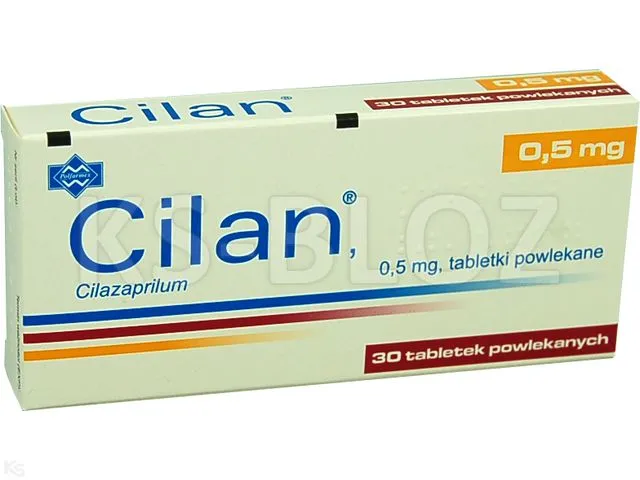
Table of Contents
Patient Information Leaflet
CILAN, 1 mg, film-coated tablets
CILAN, 2.5 mg, film-coated tablets
CILAN, 5 mg, film-coated tablets
Cilazaprilum
Please read this leaflet carefully before taking this medicine, as it contains
important information for you.
- Keep this leaflet as you may need to read it again.
- If you have any further questions, please consult your doctor or pharmacist.
- This medicine has been prescribed for a specific individual. Do not pass it on to others. It may harm them even if their symptoms are the same.
- If you experience any side effects, including any not listed in this leaflet, inform your doctor or pharmacist.
Table of Contents
- What Cilan is and what it is used for
- What you need to know before taking Cilan
- How to take Cilan
- Possible side effects
- How to store Cilan
- Contents of the pack and other information
1. What Cilan is and what it is used for
Cilan contains cilazapril, which inhibits the enzyme converting angiotensin I into angiotensin II (angiotensin-converting enzyme inhibitor – ACE inhibitor). Angiotensin II constricts blood vessels, thereby increasing arterial blood pressure.
Cilan is indicated for the treatment of:
- arterial hypertension;
- chronic heart failure.
2. Important information before using Cilan
When not to use Cilan:
- if the patient is allergic to the active substance or any of the other ingredients of this medicine (listed in section 6), or to other angiotensin-converting enzyme (ACE) inhibitors;
- if the patient has a history of angioedema associated with previous treatment with ACE inhibitors;
- if the patient has hereditary or idiopathic angioedema;
- if the patient is pregnant or breastfeeding;
- if the patient has diabetes or impaired kidney function and is being treated with a blood pressure-lowering medicine containing aliskiren;
- if the patient has taken or is currently using sacubitril with valsartan, a medicine used to treat certain types of chronic (long-term) heart failure in adults, because the risk of angioedema increases (rapid swelling of tissues under the skin, such as in the throat);
- if the patient is taking any of the following medicines, the risk of angioedema may increase:
- racecadotril, a medicine used to treat diarrhoea;
- medicines used to prevent organ transplant rejection and to treat cancer (e.g. temsirolimus, sirolimus, everolimus);
- vildagliptin, a medicine used to treat diabetes.
Warnings and precautions
Before starting treatment with Cilan, discuss this with your doctor or pharmacist. Exercise particular caution when using Cilan:
- because angiotensin-converting enzyme (ACE) inhibitors, including Cilan, may cause excessive lowering of blood pressure. Symptomatic hypotension occurs rarely in patients with uncomplicated hypertension. The likelihood of hypotension is higher in patients with disturbances in water and electrolyte balance due to diuretic therapy, low-salt diet, dialysis, diarrhoea or vomiting, and in patients with severe renin-dependent hypertension (dependent on renin – an enzyme produced by the kidneys). Symptomatic hypotension has been observed in patients with symptomatic heart failure, with or without kidney impairment. The risk of hypotension is greater in patients with more severe heart failure, particularly those treated with high doses of loop diuretics, patients with hyponatremia (low sodium levels in the blood), or impaired kidney function. Patients in these risk groups will be closely monitored at the beginning of treatment and during dose escalation. Your doctor may temporarily discontinue diuretic therapy. The above considerations also apply to patients with ischaemic heart disease or cerebrovascular disorders, in whom excessive lowering of blood pressure may lead to myocardial infarction or cerebrovascular incident. In some patients with congestive heart failure and normal or low blood pressure, there is a risk of further blood pressure reduction after taking Cilan. This effect is expected and usually does not preclude continuing treatment.
- in cases of mitral or aortic valve stenosis, or hypertrophic cardiomyopathy, causing obstruction of the left ventricular outflow tract;
- in cases of impaired kidney function (see also subsection “Patients with impaired kidney function”). In patients with symptomatic heart failure, hypotension following the initial dose of Cilan may lead to further deterioration of kidney function. Acute kidney failure, usually reversible, has been observed in such cases. In some patients with bilateral renal artery stenosis or stenosis of the artery to a single functioning kidney, treated with ACE inhibitors, increased serum urea and creatinine levels have been observed, usually reversible upon discontinuation of treatment. This particularly applies to patients with pre-existing kidney impairment. When renovascular hypertension is present, there is an increased risk of severe hypotension and kidney failure. In some patients without prior kidney vascular disease, increased serum urea and creatinine levels have been observed, particularly when Cilan is used concomitantly with a diuretic. This occurs more frequently in patients who previously had impaired kidney function.
- after kidney transplantation, due to lack of information on use in patients following recent kidney transplant;
- in patients undergoing dialysis with high-flux dialysis membranes while taking Cilan, as anaphylactoid reactions may occur;
- because angioedema of the face, extremities, lips, tongue, glottis and (or) larynx may occur at any time during treatment, which may cause airway obstruction, potentially leading to death in extreme cases. If any of these symptoms occur, discontinue Cilan immediately and contact your doctor. The frequency of angioedema during ACE inhibitor therapy is higher in Black patients compared to patients of other races.
In patients who previously experienced angioedema unrelated to ACE inhibitor use, there may be an increased risk of its occurrence during treatment with Cilan.
- in patients undergoing low-density lipoprotein (LDL) apheresis with dextran sulfate, as life-threatening anaphylactoid reactions have been observed;
- during desensitisation therapy (e.g. to hymenoptera venom – bee, wasp), as anaphylactoid reactions may occur;
- because during ACE inhibitor therapy, rare cases of a syndrome beginning with cholestatic jaundice leading to fulminant hepatic necrosis and (sometimes) death have been reported;
- because a dry, persistent cough may occur, which resolves without treatment after discontinuation of the medicine;
- because during treatment with angiotensin-converting enzyme inhibitors, including cilazapril, increased serum potassium levels have been observed in some patients, especially in the presence of concomitant kidney impairment, uncontrolled diabetes, concomitant use of potassium supplements, potassium-sparing diuretics or potassium-containing salt substitutes, or concomitant use of medicines that increase serum potassium levels (e.g. heparin);
- because neutropenia/agranulocytosis (deficiency of blood defence cells – neutrophils, or absence of granulocytes), thrombocytopenia (low platelet count), and anaemia (reduced red blood cell count and haemoglobin concentration) may occur in patients treated with angiotensin-converting enzyme inhibitors. Neutropenia is rare in patients with normal kidney function and no additional risk factors. Particular caution is advised when using Cilan in patients with connective tissue diseases (vasculitis collagenoses), receiving immunosuppressive medicines, allopurinol or procainamide, or when these factors coexist, especially if kidney impairment was previously present. In some cases, severe infections resistant to intensive antibiotic treatment have developed in these patients.
- in Black patients, because ACE inhibitors cause angioedema significantly more frequently and may be less effective in lowering blood pressure;
- in patients undergoing surgery or anaesthesia with agents causing hypotension, because Cilan may potentiate hypotension. The medicine should be discontinued one day before planned surgery.
- in diabetic patients treated with oral antidiabetic medicines or insulin;
- in patients taking lithium;
- in patients taking potassium-sparing diuretics, potassium supplements, or potassium-containing salt substitutes;
- if the patient is taking any of the following medicines used to treat high blood pressure:
- an angiotensin II receptor antagonist (ARB) (also known as sartans – e.g. valsartan, telmisartan, irbesartan), especially if the patient has kidney impairment related to diabetes.
- aliskiren.
Talk to your doctor, even if the above warnings relate to conditions that occurred in the past.
In particular, talk to your treating doctor or pharmacist if the patient is taking, has recently taken, or might take any of the following medicines:
- potassium supplements (including salt substitutes), potassium-sparing diuretics, and other medicines that increase blood potassium levels (e.g. trimethoprim and co-trimoxazole, used in bacterial infections; cyclosporine, an immunosuppressive medicine used to prevent organ transplant rejection, and heparin, a medicine used to thin the blood to prevent clots).
Your treating doctor may monitor kidney function, blood pressure, and blood electrolyte levels (e.g. potassium) at regular intervals.
See also “When not to use Cilan”.
Children
Use is not recommended due to lack of adequately conducted and controlled studies on efficacy and safety in children.
Patients with impaired kidney function
Your doctor will determine the dose based on creatinine clearance.
Elderly patients
See section 3.
Cilan with other medicines
Tell your doctor or pharmacist about all medicines you are currently taking, have recently taken, or plan to take.
| The treating physician may need to adjust the dose and/or take other precautionary measures | |
| precautions: | |
| If the patient is taking an angiotensin II receptor antagonist (ARB) or aliskiren (see also | |
| “When not to use Cilan” and “Warnings and precautions”). | |
Potassium-sparing diuretics, potassium supplements or potassium-containing salt substitutes
Although serum potassium levels usually remain normal in patients treated with cilazapril, hyperkalemia (increased serum potassium concentration) may occur in some individuals.
Potassium-sparing diuretics such as spironolactone, triamterene or amiloride, as well as potassium supplements and potassium-containing salt substitutes, may lead to a significant increase in serum potassium concentration.
Diuretics
In patients treated with diuretics, especially those with disturbances in water and electrolyte balance, excessive reduction in arterial blood pressure may occur at the beginning of therapy with an ACE inhibitor.
Lithium
Increased serum lithium concentrations and symptoms of lithium toxicity have been observed during concomitant use of ACE inhibitors and lithium. Concomitant use of thiazide diuretics may further increase the already elevated risk of lithium toxicity during treatment with ACE inhibitors.
Antidiabetic agents
Concomitant use of angiotensin-converting enzyme (ACE) inhibitors and antidiabetic agents (insulin, oral antidiabetic drugs) may enhance the glucose-lowering effect, increasing the risk of hypoglycemia (low blood glucose levels). This particularly applies during the first weeks of combination therapy and in patients with renal impairment.
Non-steroidal anti-inflammatory drugs (NSAIDs), including acetylsalicylic acid ≥ 3 g per day
Non-steroidal anti-inflammatory drugs may reduce the antihypertensive effect of angiotensin-converting enzyme inhibitors and, through additive effects, may increase serum potassium concentration, which may consequently lead to worsening of renal function.
This effect is usually reversible. Acute renal failure may rarely occur, especially in patients at risk of developing renal impairment (e.g. elderly or dehydrated patients).
Antihypertensive agents and vasodilating drugs
Concomitant use with other antihypertensive drugs may enhance the antihypertensive effect of cilazapril. Simultaneous use of nitroglycerin, other nitrates or vasodilating agents may lead to further reduction in arterial blood pressure.
Sympathomimetic agents
Sympathomimetic agents may reduce the antihypertensive effect of angiotensin-converting enzyme inhibitors.
Antipsychotics, tricyclic antidepressants, general anesthetics
Concomitant use of the above-mentioned drugs with cilazapril increases the risk of further reduction in arterial blood pressure.
Acetylsalicylic acid, thrombolytic agents, beta-blockers, nitrates
Cilazapril may be used concomitantly with acetylsalicylic acid (used as an antiplatelet agent), thrombolytic agents, beta-blockers and/or nitrates.
Pregnancy and breastfeeding
If a patient is pregnant or breastfeeding, suspects she may be pregnant, or is planning to become pregnant, she should consult her doctor or pharmacist before taking this medicine.
Cilan must not be used during pregnancy.
If pregnancy occurs or is planned, treatment should be changed as soon as possible.
Cilan must not be used during breastfeeding.
Driving and operating machinery
In some cases, the ability to drive and operate machinery may be impaired due to possible occurrence of dizziness or fatigue.
Cilan contains lactose and sodium
Cilan contains lactose. One coated tablet contains:
Cilan 1 mg: 0.063876 g lactose (0.031938 g glucose and 0.031938 g galactose),
Cilan 2.5 mg: 0.12721 g lactose (0.063605 g glucose and 0.063605 g galactose),
Cilan 5 mg: 0.12468 g lactose (0.06234 g glucose and 0.06234 g galactose).
This should be taken into account in patients with diabetes.
If a patient has previously been diagnosed with intolerance to certain sugars, the patient should consult a doctor before taking this medicine.
Cilan contains less than 1 mmol (23 mg) of sodium per coated tablet, meaning the medicine is considered "sodium-free".
3. How to use Cilan
This medicine should always be used as directed by your doctor. If in doubt, consult your doctor or pharmacist.
Cilan should be taken orally, once daily. Cilan can be taken with or without food, as food does not significantly affect its absorption. The medicine should always be taken at the same time of day.
Hypertension
The recommended starting dose is 1 mg once daily. The dose is determined by the doctor, depending on blood pressure values. For most patients, the maintenance dose ranges from 2.5 mg to 5 mg daily. If blood pressure does not normalize after administration of 5 mg, the doctor may additionally prescribe a low dose of a diuretic (from a different group than potassium-sparing diuretics) to enhance the antihypertensive effect.
Patients with hypertension treated with diuretics
Two to three days before starting treatment with Cilan, the doctor will discontinue the diuretic to reduce the risk of hypotension. The recommended starting dose of cilazapril for these patients is 0.5 mg once daily. If diuretic treatment is necessary, it may be resumed later.
Chronic heart failure
In patients with chronic heart failure, Cilan may be used concomitantly with digitalis glycosides and (or) diuretics. The doctor will initiate treatment with a starting dose of 0.5 mg once daily, under close medical supervision. Depending on the patient's clinical condition and tolerance to the medicine, the dose will be increased to the lowest maintenance dose of 1 mg daily. The decision to further increase the dose to 2.5 mg daily will be made by the doctor based on the patient's response.
The maximum dose is 5 mg once daily.
Elderly patients
Hypertension
Treatment should be initiated with a dose of 0.5 mg to 1 mg once daily. The maintenance dose will be determined by the doctor according to the patient's tolerance and clinical condition.
Chronic heart failure
Treatment should be initiated with a dose of 0.5 mg. The maintenance dose, ranging from 1 mg to 2.5 mg, will be adjusted by the doctor according to the patient's clinical condition.
In elderly patients with chronic heart failure who are taking high doses of diuretics, treatment must always be initiated with a dose of 0.5 mg daily.
Dosage in patients with renal impairment – see section 2.
Use in children – see section 2.
If you feel the medicine is too strong or too weak in effect, consult your doctor.
Use of a higher than recommended dose of Cilan
There is limited data on overdose with Cilan in humans.
The most likely symptoms of overdose include: severe hypotension, shock (feeling of weakness, anxiety, pale skin, cold sweats, rapid and shallow breathing, rapid and weak pulse, loss of consciousness), stupor, bradycardia (abnormally slow heart rate), electrolyte disturbances, and renal failure.
In case of overdose, seek immediate hospital treatment.
Missed dose of Cilan
Do not take a double dose to make up for a missed dose.
4. Possible adverse reactions
Like all medicines, this medicine can cause adverse reactions, although not everyone experiences them.
The following adverse reactions have been observed during treatment with cilazapril, with the frequency
listed below:
Adverse reactions that are common (occur in 1 to 10 people out of 100):
- headache, dizziness, paraesthesia (tingling and prickling sensations);
- visual disturbances;
- tinnitus;
- hypotension, including symptomatic hypotension;
- cough, dyspnea;
- nausea, vomiting, abdominal pain, taste disturbances, dyspepsia, diarrhea, constipation;
- muscle cramps;
- rash, pruritus;
- asthenia – a chronic condition characterized by a general decline in activity, with subjective symptoms most commonly involving persistent fatigue, apathy, and lack of motivation.
Adverse reactions that are uncommon (occur in 1 to 10 people out of 1,000):
- mood disturbances or sleep disorders;
- bronchospasm;
- dryness of the oral mucosa;
- facial, limb, lip, mucosal, tongue, larynx and (or) pharynx swelling, urticaria (see section 2);
- renal failure;
- impotence;
- excessive sweating.
Adverse reactions that are rare (occur in 1 to 10 people out of 10,000):
- increased activity of liver enzymes and increased serum bilirubin levels.
Adverse reactions that are very rare (occur in less than 1 person out of 10,000):
- confusion;
- cardiac arrhythmias, angina pectoris, myocardial infarction, and stroke, possibly secondary to worsening arterial hypotension in patients at high risk (see section 2);
- eosinophilic pneumonia (lung inflammation associated with accumulation of a type of white blood cells – eosinophils – in the lungs), rhinitis;
- pancreatitis;
- hepatitis (see section 2);
- erythema multiforme;
- acute renal failure;
- decreased hemoglobin concentration and decreased hematocrit (ratio of red blood cell volume to total blood volume), thrombocytopenia, leukopenia/neutropenia, and cases of agranulocytosis or pancytopenia;
- hemolytic anemia (red blood cell deficiency due to accelerated destruction) in patients with congenital glucose-6-phosphate dehydrogenase deficiency (enzyme).
An increase in plasma urea and creatinine concentration and (or) hyperkalemia may occur, which
resolves after discontinuation of the medicine, particularly in cases of renal failure, severe heart failure,
and renovascular hypertension.
Reporting of adverse reactions
If any adverse reactions occur, including any not listed in this leaflet, inform your doctor or pharmacist.
Adverse reactions can be reported directly to the Department of Monitoring of Adverse Drug Reactions
at the Office for Registration of Medicinal Products, Medical Devices and Biocidal Products
Al. Jerozolimskie 181C
02-222 Warsaw,
Phone: +48 22 49 21 301
Fax: +48 22 49 21 309
Website: https://smz.ezdrowie.gov.pl
Adverse reactions can also be reported to the marketing authorization holder.
Reporting adverse reactions helps to provide more information on the safety of the medicine.
5. How to store the medicine Cilan
Keep this medicine out of sight and reach of children.
Do not use this medicine after the expiry date stated on the carton and blister after:
"EXP". The expiry date refers to the last day of the specified month.
Store in the original packaging.
Do not store above 25°C.
Medicines should not be disposed of via wastewater or household waste. Ask your
pharmacist how to dispose of medicines no longer required. This will help protect
the environment.
6. Contents of the package and other information
What Cilan contains
- The active substance is cilazapril. One coated tablet of Cilan contains 1 mg, 2.5 mg, or 5 mg of cilazapril as cilazapril monohydrate in the amount of: 1.044 mg, 2.61 mg, or 5.22 mg, respectively.
- Other ingredients are: lactose monohydrate, maize starch, hypromellose, talc, sodium stearyl fumarate. Coating: Cilan 1 mg: hypromellose, lactose monohydrate, macrogol 6000, titanium dioxide (E 171), yellow iron oxide (E 172); Cilan 2.5 mg: hypromellose, lactose monohydrate, macrogol 6000, titanium dioxide (E 171), red iron oxide (E 172); Cilan 5 mg: hypromellose, lactose monohydrate, macrogol 6000, titanium dioxide (E 171).
What Cilan looks like and contents of the pack
Cilan 1 mg
Yellow, elongated coated tablets with a division line on one side.
The tablet can be divided into equal doses.
Cilan 2.5 mg
Red-brown, elongated coated tablets with a division line on one side.
Cilan 5 mg
White to light cream, elongated coated tablets with a division line on one side.
Cilan 1 mg – pack contains 30 tablets
Cilan 2.5 mg and 5 mg – pack contains 28 or 30 tablets
Marketing Authorisation Holder and Manufacturer
Polfarmex S.A.
ul. Józefów 9
99-300 Kutno
Tel.: +48 24 357 44 44
Fax: +48 24 357 45 45