Cerazette
Poland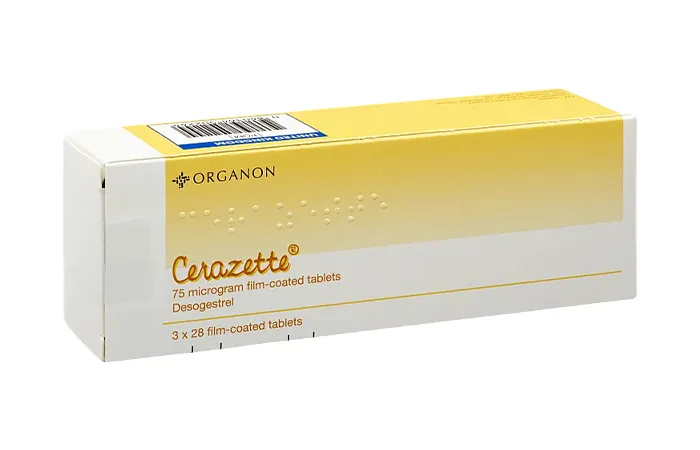
Table of Contents
Package leaflet: Information for the user
Warning! Keep this leaflet! Information on the immediate packaging in a foreign language.
Cerazette (Jubrele), 75 micrograms, coated tablets
Desogestrel
Cerazette and Jubrele are different trade names for the same medicine.
Please read the entire leaflet carefully before starting to take the medicine, as it contains
important information for the patient.
- Keep this leaflet to be able to read it again if necessary.
- If you have any questions, consult your doctor or pharmacist.
- This medicine has been prescribed for a specific individual. Do not pass it on to others. The medicine may harm someone else, even if their symptoms are the same.
- If you experience any adverse reactions, including any not listed in this leaflet, inform your doctor or pharmacist immediately. See section 4.
Leaflet contents:
- What Cerazette is and what it is used for
- What you need to know before taking Cerazette
- How to take Cerazette
- Possible side effects
- How to store Cerazette
- Contents of the pack and other information
1. What Cerazette is and what it is used for
How does Cerazette work?
Cerazette is used to prevent pregnancy. Cerazette tablets contain a small amount of a female sex hormone, a progestogen called desogestrel. For this reason, Cerazette is referred to as a progestogen-only pill. Unlike combined oral contraceptives, progestogen-only pills do not contain oestrogen, the second female sex hormone.
The main mechanism of action of most progestogen-only pills is primarily the inhibition of sperm penetration through the cervical canal. In contrast to combined oral contraceptives, they do not always suppress ovulation (maturation and release of the egg). Cerazette differs from other progestogen-only pills in that, like combined pills, it usually suppresses ovulation. As a result, Cerazette is a highly effective contraceptive.
Unlike combined contraceptives, it can be used in women who do not tolerate oestrogens and in breastfeeding women. The most common inconvenience during treatment with Cerazette may be irregular bleeding. Bleeding may also not occur at all.
The chance of becoming pregnant while correctly using Cerazette (provided no tablet has been missed) is very low.
2. Important information before using Cerazette
Cerazette, like other hormonal contraceptives, does not protect against HIV (AIDS)
or other sexually transmitted infections.
When not to use Cerazette
Do not use Cerazette if any of the conditions listed below apply. If any of these conditions apply, inform your doctor before starting Cerazette. Your doctor may recommend using a non-hormonal method of contraception.
- If you are allergic to desogestrel or any of the other ingredients of this medicine (listed in section 6).
- Current venous thromboembolic disease. Venous thromboembolic disease involves the formation of blood clots blocking veins [e.g. in the legs (deep vein thrombosis) or in the lungs (pulmonary embolism)].
- Current or past occurrence of jaundice (yellowing of the skin) or severe liver disease until liver function parameters have returned to normal.
- Current or past occurrence of hormone-dependent cancers (e.g. certain types of breast cancer).
- Vaginal bleeding of unknown cause.
If any of the symptoms listed above occur for the first time while taking Cerazette, consult your doctor immediately.
Warnings and precautions
When using Cerazette under any of the following circumstances, close medical supervision is required. Before starting Cerazette, inform your doctor if you:
- currently have or have had breast cancer;
- have or have had liver tumours; as the potentially harmful effect of Cerazette cannot be excluded;
- have had venous thromboembolic disease in the past;
- have diabetes;
- have epilepsy (see section "Cerazette with other medicines");
- have tuberculosis (see section "Cerazette with other medicines");
- have high blood pressure;
- currently have or have had chloasma (brownish pigmentation patches on the skin, especially on the face); in such cases, avoid exposure to sunlight or ultraviolet radiation.
Possible serious conditions
Reduced bone mass
Oestrogens play an important role in maintaining normal bone mass. When taking Cerazette, the concentration of the natural oestrogen, estradiol, in plasma is comparable to its concentration during the first half of the natural menstrual cycle, but reduced compared to its concentration in the second half of the natural cycle. It is not known whether this affects bone mass.
Breast cancer
All women are at risk of developing breast cancer regardless of whether they take contraceptive pills. Breast cancer occurs slightly more frequently in women taking contraceptive pills than in women of the same age who do not take them. After stopping contraceptive pills, this risk gradually decreases and after 10 years of stopping, the risk is the same for women who took the pills and those who never did. Breast cancer is rare in women under 40 years of age, but the risk increases with age. Therefore, more cases of breast cancer occur in older women taking contraceptive pills. The duration of taking contraceptive pills is not as significant.
For every 10,000 women taking contraceptive pills for no more than 5 years in the age group under 20 years, fewer than 1 additional case of breast cancer was diagnosed within 10 years after stopping the pills, compared to 4 cases usually diagnosed in this age group. Similarly, for every 10,000 women taking contraceptive pills for up to 5 years in the age group under 30 years, 5 additional cases of breast cancer were diagnosed compared to 44 cases usually diagnosed in this age group. For every 10,000 women taking contraceptive pills for up to 5 years in the age group over 40 years, 20 more cases of breast cancer were diagnosed compared to 160 cases usually diagnosed.
The occurrence of breast cancer in women taking progestogen-only pills, such as Cerazette, appears similar to the risk in women taking combined pills, although evidence is not conclusive.
Breast cancers diagnosed in women taking contraceptive pills seem to be less advanced than those diagnosed in women not taking them. It is not known whether this difference is related to taking contraceptive pills. It may be due to more frequent medical check-ups in women using contraception, leading to earlier detection of breast cancer.
Venous thromboembolic disease
Venous thromboembolic disease is the formation of a blood clot that may block a blood vessel. It may sometimes occur in the deep veins of the legs (deep vein thrombosis). If the clot detaches from its site of origin, it may travel to the lungs and block the pulmonary artery, causing a pulmonary embolism. This may lead to death. Deep vein thrombosis is very rare. It may also develop in women not taking contraceptive pills and may occur during pregnancy. The risk of venous thromboembolic disease is higher in women taking contraceptive pills than in those not taking them. It is believed that the risk of venous thromboembolic disease in women taking progestogen-only pills such as Cerazette is lower than in women taking combined oral contraceptives containing oestrogens. If symptoms of venous thromboembolic disease occur, contact your doctor immediately (see section "Regular check-ups").
Psychiatric disorders
Some women using hormonal contraceptives, including Cerazette, have reported depression or low mood. Depression can be severe and may sometimes lead to suicidal thoughts. If mood changes or symptoms of depression occur, contact your doctor as soon as possible for further medical advice.
Children and adolescents
There are no available clinical data on the efficacy and safety of use in adolescents under 18 years of age.
Cerazette with other medicines
Inform your doctor about any medicines or herbal products you are currently taking or have recently taken, as well as any medicines you plan to take. Also inform any other doctor, dentist, or pharmacist prescribing other medicines that you are taking Cerazette. They may advise you on the need for additional contraceptive methods (e.g. condoms) and the duration of their use, or whether adjustment of the prescribed medicine is necessary.
Some medicines:
- may affect the blood concentration of Cerazette,
- may reduce its contraceptive effectiveness,
- may cause unexpected bleeding.
This applies to medicines used to treat:
- epilepsy (e.g. primidone, phenytoin, carbamazepine, oxcarbazepine, felbamate, topiramate, and phenobarbital),
- tuberculosis (e.g. rifampicin, rifabutin),
- HIV infection (e.g. ritonavir, nelfinavir, nevirapine, efavirenz),
- hepatitis C virus (HCV) infection (e.g. boceprevir, telaprevir),
- other infections (e.g. griseofulvin),
- high blood pressure in the pulmonary blood vessels (bosentan),
- depressive mood (St. John's wort (Hypericum perforatum)),
- certain bacterial infections (e.g. clarithromycin, erythromycin),
- fungal infections (e.g. ketoconazole, itraconazole, fluconazole),
- high blood pressure (hypertension), angina, or certain heart rhythm disorders (e.g. diltiazem).
If you are taking medicines or herbal remedies that may reduce the effectiveness of Cerazette, you should also use a mechanical contraceptive method. Since the effect of another medicine on Cerazette may persist for up to 28 days after stopping the medicine, additional mechanical contraception is necessary during this time. Your doctor will inform you about the possible need for additional contraceptive methods and the duration of their use.
Cerazette may also affect the action of other medicines, increasing (e.g. medicines containing cyclosporine) or decreasing (e.g. lamotrigine) their effect.
Before taking any medicine, consult your doctor or pharmacist.
Vaginal bleeding
While taking Cerazette, vaginal bleeding may occur irregularly. This may be light spotting or heavy bleeding. Bleeding may also not occur at all. Irregular bleeding does not mean that the contraceptive effectiveness of Cerazette is reduced. Usually, no action is needed and you should continue taking Cerazette. Contact your doctor if bleeding is very heavy or prolonged.
Functional ovarian cysts
While taking all low-dose hormonal contraceptives, small fluid-filled sacs called functional ovarian cysts may develop in the ovaries. These usually disappear on their own. In some cases, they may cause mild abdominal pain. Rarely, surgical intervention may be required.
Pregnancy and breastfeeding
If you are pregnant or breastfeeding, suspect you may be pregnant, or plan to have a child, consult your doctor or pharmacist before using this medicine.
Pregnancy
Cerazette must not be used during pregnancy or if pregnancy is suspected.
Breastfeeding
Cerazette may be used during breastfeeding. It does not appear to affect the amount or quality of breast milk produced. However, a slight decrease in milk production has occasionally been reported with Cerazette. Small amounts of the active substance pass into breast milk.
There are observations on the health of children up to 2.5 years of age whose mothers used Cerazette for 7 months. No effect on the child's growth and development has been observed.
If you are breastfeeding and wish to use Cerazette, consult your doctor.
Driving and using machines
No effects of Cerazette on the ability to drive and use machines have been observed.
Cerazette contains monohydrate lactose
Cerazette contains monohydrate lactose. If you have been previously diagnosed with intolerance to certain sugars, consult your doctor before taking this medicine.
When to contact your doctor
Regular check-ups
Women using Cerazette should be informed by their doctor about the need for regular check-ups. The frequency and type of examinations usually depend on individual patient characteristics.
Contact your doctor immediately in the following cases:
- If symptoms suggestive of venous thromboembolic disease occur (e.g. severe pain or swelling in the legs, unusual chest pain, shortness of breath, unusual cough, coughing up blood);
- Sudden severe abdominal pain with yellowing of the skin (indicating possible liver disease);
- Detection of a breast lump;
- Sudden severe pain in the lower abdomen or stomach area (indicating possible ectopic pregnancy);
- Immobilisation (e.g. bed rest) or planned surgical procedure; consult your doctor at least 4 weeks in advance;
- If irregular, heavy vaginal bleeding occurs;
- If you are or may be pregnant.
3. How to use Cerazette
This medicine should always be taken exactly as directed by your doctor. If in doubt, consult your doctor or pharmacist.
When and how to take the tablets
The Cerazette blister pack contains 28 tablets. On one side of the blister, each tablet is marked with the symbol of the day of the week on which it should be taken, and on the other side arrows indicate the direction in which the tablets should be taken. Each time you start a new pack of Cerazette, begin with the top row of the blister, taking the tablets in the direction of the arrows, one tablet per day, until the pack is finished. For example, if you start taking the tablets on Wednesday, take the first tablet from the top row marked with "WE" (indicating Wednesday; see "Translation of the symbols for days of the week located next to each tablet on the immediate packaging" at the end of this leaflet). This allows you to easily check whether the tablet marked for a particular day of the week has been taken on that day. The tablets should be taken at the same time each day. Swallow the tablet whole with water.
During treatment with Cerazette tablets, light bleeding may occur. In such a case, continue taking the tablets as usual. After finishing a pack, start the next pack the following day without interruption and without waiting for bleeding to occur.
You may stop taking Cerazette tablets at any time. Contraceptive effectiveness ends on the day you stop taking the tablets.
Starting the first pack of Cerazette
- If you are currently not taking any contraceptive tablets:
Wait for your next menstrual period. Start taking Cerazette tablets on the first day of your period. There is no need to use additional contraceptive methods.
You may also start taking the tablets between day 2 and day 5 of your cycle. However, in this case, you must use an additional contraceptive method (barrier methods) for the first 7 days of tablet-taking in the first cycle.
- If you were previously taking a combined oral contraceptive (combined contraceptive tablets, vaginal contraceptive ring, contraceptive patch):
You may start taking Cerazette tablets the day after taking the last active tablet of your current contraceptive, or on the day of removal of the vaginal contraceptive ring or contraceptive patch (without taking a break from tablets, ring, or patch). If your current contraceptive also includes inactive (placebo) tablets, start taking Cerazette the day after taking the last hormone-containing tablet (if in doubt about which tablet this is, consult your doctor or pharmacist). There is no need to use additional contraceptive methods if you follow the instructions above.
Alternatively, you may start taking Cerazette no later than the first day after the tablet-free interval of your current contraceptive, on the day of insertion of the next vaginal ring or contraceptive patch, or the day after taking the last placebo tablet of your current contraceptive. In these cases, you must use an additional contraceptive method (barrier method) for the first 7 days of taking Cerazette tablets.
- If you were previously taking another progestogen-only medicine:
You may stop taking the tablets on any day and start taking Cerazette the next day. There is no need to use additional contraceptive methods.
- If you were previously using a progestogen-only injection, implant, or intrauterine system:
Start taking Cerazette tablets on the day you would have received your next injection, or on the day of removal of the implant or system. There is no need to use additional contraceptive methods.
- After childbirth:
Start taking Cerazette tablets between day 21 and day 28 after childbirth. If you start later than this, use an additional contraceptive method (barrier methods) for the first 7 days of tablet-taking. If you had sexual intercourse before starting the tablets, check that you are not pregnant, or wait until your first menstrual period. More information regarding breastfeeding is provided in the section "Breastfeeding". Your doctor can also provide advice.
- After miscarriage:
Start taking Cerazette as advised by your doctor.
Taking more Cerazette than you should
No serious harmful effects have been observed after taking more than one Cerazette tablet at the same time. Nausea, vomiting, and slight vaginal bleeding may occur in women and young girls. Consult your doctor.
If you forget to take Cerazette
If you are less than 12 hours late in taking a tablet, contraceptive protection remains effective. Take the missed tablet as soon as possible and continue taking the remaining tablets at your usual time.
If you are more than 12 hours late in taking a tablet, contraceptive effectiveness may be reduced. The more tablets you miss, the greater the risk of reduced contraceptive effectiveness. Take the missed tablet as soon as possible and continue taking the remaining tablets at your usual time. Use an additional contraceptive method (e.g. condom) for the next 7 days. There is a risk of pregnancy if you miss one or more tablets in the first week of starting the tablets, especially if you had sexual intercourse in the week before the missed dose. Consult your doctor.
Gastrointestinal disturbances (e.g. vomiting, severe diarrhoea)
In case of gastrointestinal disturbances, follow the instructions for a missed tablet as described above. If vomiting or severe diarrhoea occurs within 3 to 4 hours after taking a Cerazette tablet, absorption of the active substance may be reduced. If you experience severe diarrhoea, contact your doctor.
Stopping Cerazette
You may stop taking Cerazette at any time. If you do not plan to become pregnant, ask your doctor for advice on alternative contraceptive methods.
If you are planning a pregnancy, it is generally recommended to wait until your first natural menstrual period before trying to conceive. This will help determine the expected date of delivery more accurately.
4. Possible adverse effects
Like any medicine, this medicine can cause adverse effects, although not everyone will experience them.
You should inform your doctor about any adverse health changes,
especially if they are severe and persistent, as well as any health changes that seem to be
caused by taking Cerazette tablets.
Serious adverse effects associated with the use of Cerazette are described in the sections
"Breast cancer" and "Venous thromboembolic disease" in section 2 "Important information before
using Cerazette". Please read these sections for additional information and seek immediate medical advice if necessary.
If allergic reactions (hypersensitivity) occur, including swelling of the face, lips, tongue and (or) throat causing difficulty in breathing or swallowing (angioedema and (or) anaphylactic reaction), you should contact your doctor immediately.
Vaginal bleeding may occur irregularly during treatment with Cerazette. This may be slight spotting not requiring the use of sanitary pads, or heavier bleeding resembling a light menstrual period, when the use of sanitary pads is necessary.
Bleeding may also not occur at all. Irregular bleeding does not mean that the contraceptive efficacy of Cerazette is reduced. Usually, no action is required and you should continue taking Cerazette. However, if bleeding is very heavy or prolonged, you should contact your doctor.
The following adverse effects have been reported by women using Cerazette:
Common: may affect up to 1 in 10 women
- mood changes, depressive mood, decreased sex drive (libido)
- headache
- nausea
- acne
- breast pain; irregular menstrual bleeding or absence of periods
- increased body weight
Uncommon: may affect up to 1 in 100 women
- vaginal infection
- intolerance to contact lenses
- vomiting
- excessive hair loss
- painful menstruation, ovarian cysts
- feeling of fatigue
Rare: may affect up to 1 in 1000 women
- rash, urticaria, painful blue-red nodules (erythema nodosum) (these are skin disorders)
Frequency unknown (frequency cannot be estimated from available data)
- allergic reaction
In addition to the adverse effects listed above, breast discharge may occur.
Reporting of adverse effects
If any adverse effects occur, including any adverse effects not listed
in this leaflet, you should inform your doctor or pharmacist. Adverse effects can be reported
directly to the Department of Monitoring Adverse Drug Reactions of the Office for Registration of Medicinal Products, Medical Devices and Biocidal Products,
Al. Jerozolimskie 181C, 02-222 Warsaw, tel.: + 48 22 49 21 301, fax: + 48 22 49 21 309,
website: https://smz.ezdrowie.gov.pl.
Reporting adverse effects helps to provide more information on the safety of this medicine.
5. How to store Cerazette
Keep this medicine out of sight and reach of children.
Do not use this medicine after the expiry date stated on the packaging. The expiry date refers to the last day of the stated month.
No special temperature storage requirements.
Store the blister pack in the original packaging to protect it from light and moisture.
After opening the sachet, the medicine should be used within 1 month.
The active substance poses an environmental risk to fish.
Medicines must not be disposed of via wastewater or household waste. Ask your pharmacist how to dispose of medicines no longer in use. This will help protect the environment.
6. Contents of the pack and other information
What Cerazette contains
- The active substance is desogestrel. Each coated tablet contains 75 micrograms of desogestrel.
- Other ingredients are: colloidal anhydrous silica, all-rac-α-tocopherol, lactose monohydrate, maize starch, povidone K 30, stearic acid; coating: hypromellose, macrogol 400, talc, titanium dioxide (E 171). See also section 2 "Cerazette contains lactose monohydrate".
What Cerazette looks like and contents of the pack
The tablets are white, round, biconvex, 5 mm in diameter, marked with the code 2 below KV on one side and the word ORGANON and an asterisk on the other.
The blister (PVC/Aluminium) contains 28 tablets and is packed in an aluminium laminated foil pouch. 1 or 3 blisters in a cardboard box.
A cardboard sleeve is included with the pack, in which the blister should be placed after removal from the protective foil.
For more detailed information, please contact the Marketing Authorisation Holder or the parallel importer.
Marketing Authorisation Holder in Germany, the country of export:
Organon Healthcare GmbH
Neuturmstr. 5
80331 Munich
Germany
Manufacturer:
N.V. Organon
Kloosterstraat 6
5349 AB Oss
The Netherlands
Parallel Importer:
InPharm Sp. z o.o.
ul. Strumykowa 28/11
03-138 Warsaw
Repackaged by:
InPharm Sp. z o.o. Services sp. k.
ul. Chełmżyńska 249
04-458 Warsaw
Marketing Authorisation number in Germany, the country of export: 43300.00.00
Parallel Import Authorisation number: 210/24
Translation of the day-of-the-week symbols printed next to each tablet in the immediate packaging:
Mo – Monday,
Di – Tuesday,
Mi – Wednesday,
Do – Thursday,
Fr – Friday,
Sa – Saturday,
So – Sunday.