Berinert 3000
Poland
Table of Contents
Berinert 3000
3000 IU
powder and solvent for solution for injection
Human C1-esterase inhibitor
Read the entire leaflet before using this medicine.
- Keep this leaflet for future reference.
- If you have any questions, ask your doctor or pharmacist.
- This medicine has been prescribed for a specific individual. Do not give it to others. It may harm them even if their symptoms are the same.
- If the patient experiences any adverse reactions, including any possible adverse reactions not listed in this leaflet, inform the doctor or pharmacist.
Table of contents:
- What Berinert is and what it is used for
- Important information before using Berinert
- How to use Berinert
- Possible side effects
- How to store Berinert
- Contents of the package and other information
1. WHAT BERINERT IS AND WHAT IT IS USED FOR
What Berinert is
Berinert is a medicine available as a powder and solvent. The prepared solution is administered by subcutaneous injection.
Berinert is manufactured from human plasma (the liquid component of blood). Its active ingredient is a protein – human C1-esterase inhibitor.
What Berinert is used for
Berinert is used for the treatment of acute attacks of hereditary angioedema (HAE, edema = swelling) in adolescents and adults. Angioedema is an inherited disorder of blood vessels. It is not an allergic disease. It is caused by a deficiency, absence, or abnormal synthesis of an important protein called C1-esterase inhibitor. The disease is characterized by the following symptoms:
- sudden swelling of hands and feet,
- sudden facial swelling with a feeling of tightness,
- swelling of eyelids, lips, or larynx accompanied by breathing difficulties,
- tongue swelling,
- colicky abdominal pain.
Essentially, swelling may affect any part of the body.
2. IMPORTANT INFORMATION BEFORE USING BERINERT
This section of the leaflet contains information that should be considered before starting treatment with
the medicine Berinert.
When not to use Berinert:
- if the patient has experienced life-threatening, immediate allergic reactions, including anaphylactic shock, to C1-esterase inhibitor or to any of the other components of this medicine (listed in section 6). You should inform your doctor or pharmacist if you have hypersensitivity to any medication or food.
Warnings and precautions:
Before using Berinert, discuss this with your doctor or pharmacist,
- if severe allergic symptoms or an anaphylactic reaction occur (severe allergic symptoms may cause significant breathing difficulties or dizziness). Administration of Berinert must be immediately stopped (i.e. discontinuation of the infusion).
- if the patient has a history of blood clotting problems. Blood clots have occurred in patients receiving Berinert intravenously. Very high doses of Berinert used in the treatment of diseases other than HAE may increase the risk of blood clots. However, with subcutaneous administration of Berinert, no association with blood clot formation has been demonstrated at doses recommended by the physician. You should inform your doctor if the patient has previously had heart or vascular diseases, stroke, blood clots, thickened blood, a permanently implanted catheter/venous access device in one of the patient's veins, or if the patient has been immobilized for any period of time. These factors may increase the risk of blood clots after administration of Berinert. Inform your doctor about any medications the patient is taking, as certain drugs, such as oral contraceptives or some androgens, may increase the risk of blood clots.
The benefit-risk ratio of using Berinert should always be carefully considered.
Viral safety
When medicines are manufactured from human blood or plasma, various measures are taken to
protect patients from transmission of infectious agents. These measures include:
- careful selection of blood and plasma donors to exclude the risk of transmission of infectious agents
- testing of each donation and plasma pools for markers of infection.
Manufacturers of such medicines apply virus inactivation or removal methods during production.
Despite the use of the above-mentioned methods, it cannot be completely excluded that infectious agents
may be transmitted following administration of a medicine derived from human blood or plasma.
This risk also applies to unknown or newly emerging viruses and other infectious agents.
The protective measures taken are effective against enveloped viruses such as human immunodeficiency virus (HIV, causing AIDS), hepatitis B virus (HBV, causing hepatitis B), hepatitis C virus (HCV, causing hepatitis C), as well as non-enveloped viruses such as hepatitis A virus (HAV, causing hepatitis A) and parvovirus B19.
In patients repeatedly receiving products derived from human plasma, vaccination against hepatitis A and B should be considered.
Each time Berinert is administered, the date of administration, batch number, and volume infused should be recorded in the patient's documentation.
Berinert and other medicines
- Inform your doctor or pharmacist about all medicines the patient is currently taking or has recently taken, as well as any medicines the patient plans to take, including those available without a prescription.
- Berinert must not be mixed in the same syringe with other medicinal products or with other solvents.
Pregnancy and breastfeeding
- If the patient is pregnant or breastfeeding, suspects she may be pregnant, or is planning to have a baby, she should consult her doctor or pharmacist before using this medicine.
Driving and operating machinery
Berinert has no influence on the ability to drive and operate machinery.
Berinert contains sodium
This medicine contains less than 1 mmol of sodium (23 mg) per vial, which means it is considered "sodium-free".
3. HOW TO USE BERINERT
Berinert is intended for self-administration as a subcutaneous injection. The patient
or their caregiver should be trained in the proper method of administering Berinert.
Dosage
The recommended dose of Berinert is 60 IU/kg body weight.
Use in children
The recommended dose is the same as in adults.
Overdose
No cases of overdose have been reported.
Reconstitution and method of administration
If the physician decides that home therapy is appropriate, detailed instructions will be provided.
The patient must keep a treatment diary to document every injection administered at home. This diary must be brought by the patient to every medical visit. Regular assessment of the injection technique performed by the patient or their caregiver will be conducted to ensure continued proper administration.
General instructions
- The powder must be reconstituted and withdrawn from the vial under aseptic conditions. Use the syringe supplied with the product.
- The prepared solution should be colorless and clear to slightly opalescent. After filtration or withdrawal from the vial (see below) and before administration, carefully inspect the solution for particulate matter, turbidity, or discoloration.
- If the solution is cloudy or contains clumps or other particles, do not administer the reconstituted medicine.
- Any unused medicinal product and any unused components of the kit must be destroyed in accordance with applicable regulations. Disposal instructions should be provided by the treating physician.
Instructions for preparing the solution
Without opening the vials, warm the Berinert powder and solvent to room temperature.
This can be achieved by leaving the vials at room temperature for 1 hour or by holding them in the hands for several minutes.
DO NOT apply direct heat to the vials. The vials must not be heated above body temperature (37°C).
Carefully remove the caps from the vials containing the powder and solvent.
Clean the rubber stopper of each vial with an alcohol swab (use a separate swab for each vial) and allow to dry.
The solvent may be combined with the powder using the device supplied in the kit (Mix2Vial).
Follow the instructions provided below.
1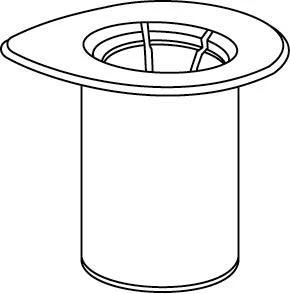 |
|
2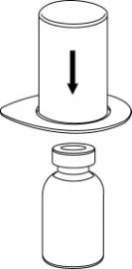 |
|
3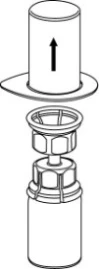 |
|
4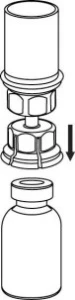 |
|
5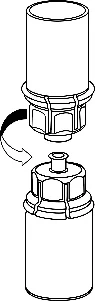 |
|
6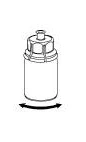 |
|
7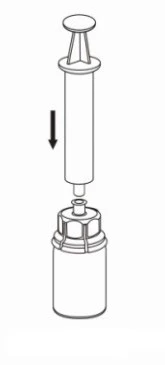 |
|
Dosage and method of administration
8 |
|
9 |
|
Method of administration
For self-administration by the patient (subcutaneous administration)
The physician will teach the patient how to safely administer Berinert. After becoming familiar with how to self-administer the medication, follow the instructions below.
Table 2. Instructions for self-administration of Berinert
Step 1: Gathering Supplies
Gather the syringe with Berinert medication and single-use accessories and other components (needles, additional containers, treatment diary or record book):
| |
Step 2: Cleaning the Surface
| |
| Step 3: Hand Washing | |
| |
Step 4: Preparing the Injection Site
| Figure 1 Figure 2 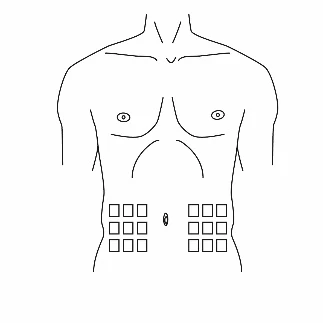 |
Step 5: Abdominal Subcutaneous Injection
According to healthcare professional instructions:
| Figure 3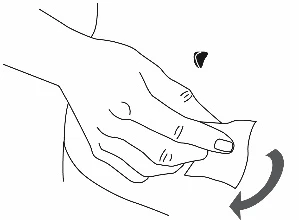 |
Figure 4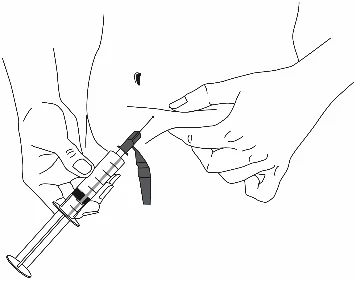 | |
Step 6: Cleaning Up
| 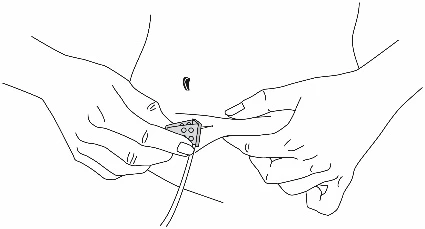 |
Step 7: Recording Treatment
|
4. POSSIBLE ADVERSE REACTIONS
Like all medicines, this medicine can cause adverse reactions, although not everyone experiences them.
You should contact your doctor immediately if:
- you experience any adverse reaction or
- you experience any symptom not listed in this leaflet.
In most patients, adverse reactions after administration of Berinert are rare.
The following adverse reactions have been observed very commonly (may affect more than 1 in 10 patients):
- Reactions at the injection site (bruising, cold sensation, leakage, redness, haematoma, haemorrhage, induration, swelling, pain, itching, rash, scar, puffiness, urticaria, warmth).
- Nasopharyngitis (runny or thick nasal discharge, rhinitis, watery eyes).
The following adverse reactions have been observed commonly (may affect up to 1 in 10 patients):
- Hypersensitivity or allergic symptoms, such as: hypersensitivity, redness, itching and urticaria.
- Dizziness.
Reporting of adverse reactions
If any adverse reactions occur, including any adverse reactions not listed in this leaflet, inform your doctor or pharmacist. Adverse reactions can be reported directly to the Department of Monitoring Adverse Drug Reactions of the Office for Registration of Medicinal Products, Medical Devices and Biocidal Products
Al. Jerozolimskie 181C
02-222 Warsaw
Phone: +48 22 49 21 301
Fax: +48 22 49 21 309
Website: https://smz.ezdrowie.gov.pl
Adverse reactions can also be reported to the marketing authorization holder.
Reporting adverse reactions helps to provide more information on the safety of this medicine.
5. HOW TO STORE BERINERT
- Keep the medicine out of sight and reach of children.
- Do not use this medicine after the expiry date stated on the label and outer packaging following the abbreviation EXP.
- Do not store above 30°C.
- Do not freeze.
- Store the vial in its closed outer packaging to protect from light.
- Berinert does not contain preservatives; therefore, after reconstitution it should be used immediately.
- If the solution is not administered immediately after preparation, it should be used within 8 hours of preparation and must be stored only in the vial.
- The batch number is indicated on the label and box following the abbreviation (Lot).
6. OTHER INFORMATION
What Berinert contains
Active substance:
Human C1-esterase inhibitor (3000 IU/vial; after reconstitution in 5.6 ml of water for injections: 500 IU/ml).
See section "Information intended exclusively for medical personnel or healthcare professionals" for more detailed information.
Inactive ingredients:
Glycine, sodium chloride, sodium citrate.
Solvent: Water for injections
What Berinert looks like and contents of the pack
Berinert is supplied as a white powder and a solvent, which is water for injections.
The reconstituted solution should be colourless and clear to slightly opalescent.
Pack sizes
Each pack contains:
1 vial of powder
1 vial containing 5.6 ml of water for injections
1 transfer system 20/20 with filter
Administration kit (inner packaging):
1 single-use 10 ml syringe
1 subcutaneous administration needle
1 subcutaneous infusion set
2 alcohol-impregnated swabs
1 plaster (adhesive bandage)
Pack containing 5 x 3000 IU, including 5 administration kits
Pack containing 20 x 3000 IU, including 4 packs of 5 administration kits each
Not all pack sizes may be marketed.
Marketing Authorisation Holder and Manufacturer
CSL Behring GmbH
Emil-von-Behring-Strasse 76
35041 Marburg
Germany
This medicinal product is authorised in the member countries of the European Economic Area under the following names:
Berinert 3000 I.E. Pulver und
Lösungsmittel zur Herstellung einer
Injektionslösung __________________________ Austria
Berinert 3000 IE, poeder en oplosmiddel
voor oplossing voor injectie _________________ Belgium, Netherlands
Berinert 3000 _____________________________ Cyprus, Germany, Greece, Poland, Portugal
Беринерт 3000, Прах и разтворител
за инжекционен разтвор
C1- естеразен инхибитор, човешки __________ Bulgaria
Berinert 3000 IU __________________________ Czech Republic, Slovakia
Berinert 3000 IU prašak i otapalo za otopinu
za injekciju ______________________________ Croatia
Berinert _________________________________ Denmark, Italy
Berinert SC ______________________________ Estonia
Berinert 3000 UI, poudre et solvant pour
solution injectable _________________________ France, Luxembourg
Berinert 3000 NE por és oldószer
oldatos injekcióhoz ________________________ Hungary
Berinert 3000 a.e. stungulyfsstofn
og leysir, lausn ____________________________ Iceland
Human C1-esterase inhibitor CSL Behring
3000 TV milteliai ir tirpiklis injekciniam
tirpalui __________________________________ Lithuania
Berinert 3000 IU pulver og væske til
injeksjonsvæske, oppløsning _________________ Norway
Berinert 3000 3000 UI, pulbere şi
solvent pentru soluţie injectabilă ______________ Romania
Berinert 3000 i.e. prašek in vehikel za
raztopino za injiciranje _____________________ Slovenia
Berinert 3000 UI polvo y disolvente
para solución inyectable subcutánea ___________ Spain
Berinert 3000 IE, pulver och vätska till
injektionsvätska, lösning ____________________ Sweden
Berinert 3000 IU Powder and solvent
for solution for injection ____________________ United Kingdom, Malta, Ireland
Information intended exclusively for medical personnel or healthcare professionals.
QUALITATIVE AND QUANTITATIVE COMPOSITION
The activity of human C1-esterase inhibitor is expressed in international units (IU), which refer to the current WHO standards for C1-esterase inhibitor products.