Azel-drop alergia
Poland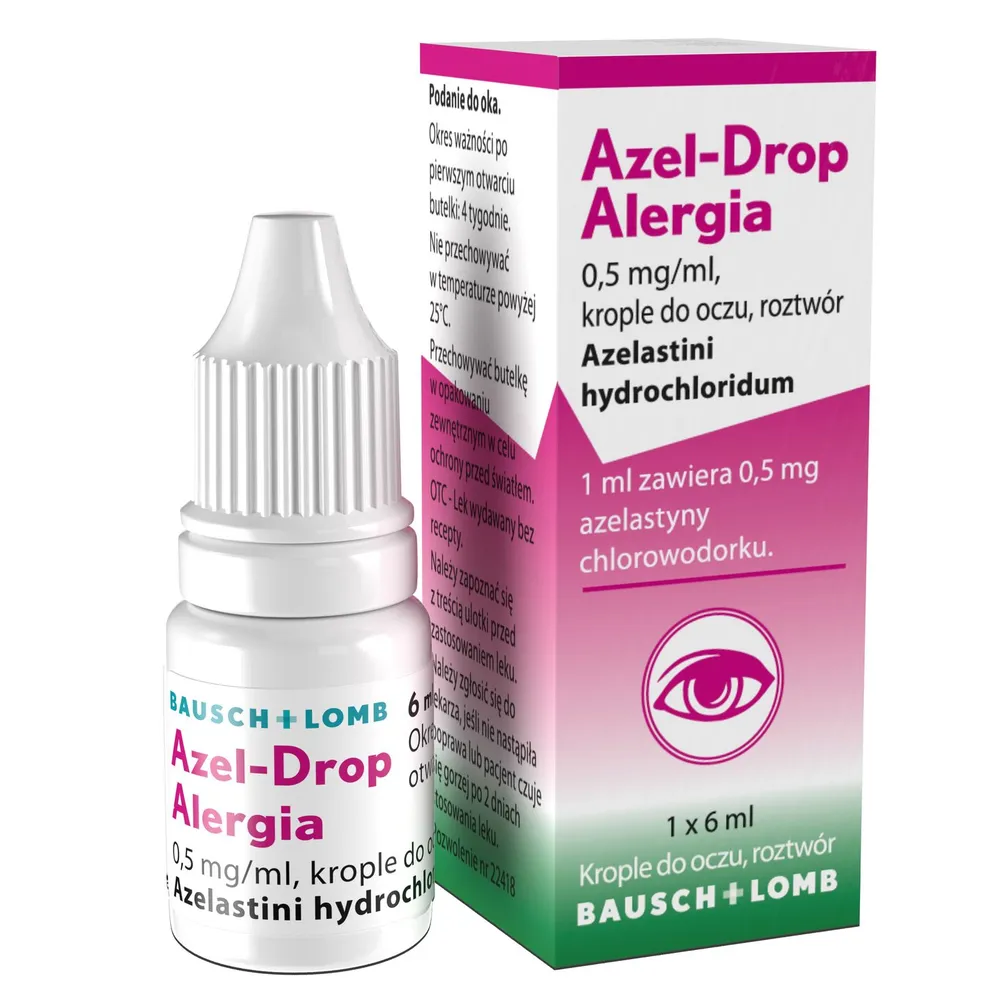
Table of Contents
Azel-Drop Alergia, 0.5 mg/ml, eye drops, solution
Azelastini hydrochloridum
Please read this leaflet carefully before using the medicine, as it contains
important information for the patient.
This medicine should always be used exactly as described in this patient leaflet or as directed by a
physician, pharmacist, or nurse.
- Keep this leaflet, as you may need to read it again.
- If you need advice or further information, please consult your pharmacist.
- If you experience any adverse reactions, including any not listed in this leaflet, inform your physician, pharmacist, or nurse. See section 4.
- If there is no improvement after 2 days, or if you feel worse, contact your physician.
Leaflet contents:
- What Azel-Drop Alergia is and what it is used for
- Important information before using Azel-Drop Alergia
- How to use Azel-Drop Alergia
- Possible side effects
- How to store Azel-Drop Alergia
- Contents of the pack and other information
1. What is Azel-Drop Alergia and what is it used for
Azel-Drop Alergia contains azelastine, which belongs to a group of medicines known as antiallergic and antihistamine agents.
Azel-Drop Alergia may be used to treat or prevent symptoms of seasonal allergic eye disorders (seasonal allergic conjunctivitis associated with hay fever) in adults and children aged over 4 years.
Azel-Drop Alergia may also be used to treat symptoms of perennial (year-round) allergic eye disorders (perennial allergic conjunctivitis) in adults and adolescents aged over 12 years.
Azel-Drop Alergia is not intended for the treatment of eye infections.
You should consult your physician if there is no improvement or if you feel worse after 2 days of using the medicine.
How Azel-Drop Alergia works
Azel-Drop Alergia rapidly relieves symptoms such as burning, itching, and tearing, without causing drowsiness.
Allergy results from an overreaction of the body's immune system to external substances. Allergies are triggered by exposure to pollen, house dust mites, mould, or animal fur.
Azel-Drop Alergia inhibits the action of histamine and other inflammatory substances released in larger amounts in allergic individuals. Thus, Azel-Drop Alergia counteracts the symptoms of conjunctivitis.
2. Important information before using Azel-Drop Alergia
When not to use Azel-Drop Alergia
Do not use Azel-Drop Alergia if you are allergic to azelastine hydrochloride, benzalkonium chloride, or any of the other ingredients of this medicine (listed in section 6.1).
Warnings and precautions
Before starting to use Azel-Drop Alergia, consult your physician or pharmacist:
- if you are unsure whether your eye condition is due to allergy. This is particularly important if the problem affects only one eye, if there is a worsening of vision, or eye pain, without any nasal symptoms. This may indicate an infection rather than an allergy.
- if symptoms worsen or persist for longer than 48 hours without significant improvement, despite using Azel-Drop Alergia.
Patients with conjunctivitis should not wear contact lenses.
Children and adolescents
Azel-Drop Alergia should be used to treat seasonal allergic disorders in children aged 4 years and older, and to treat perennial (year-round) allergic disorders in adolescents aged 12 years and older.
Azel-Drop Alergia and other medicines
Inform your physician or pharmacist about any medicines you are currently taking or have recently taken, as well as any medicines you plan to take.
The effect of other medicines, food, or drink on Azel-Drop Alergia is not known.
Pregnancy and breastfeeding
During pregnancy, breastfeeding, or if you suspect you may be pregnant, or if you are planning a pregnancy, consult your physician or pharmacist before using this medicine.
Azel-Drop Alergia passes into breast milk in small amounts. Therefore, the use of Azel-Drop Alergia during breastfeeding is not recommended.
Driving and operating machinery
Mild, transient eye irritation may occur after instillation of the drops. It is unlikely that Azel-Drop Alergia significantly impairs vision. However, if any transient visual disturbance occurs, do not drive or operate machinery until normal visual acuity returns.
Azel-Drop Alergia contains benzalkonium chloride
This medicine contains 0.0035 mg of benzalkonium chloride per drop, corresponding to a concentration of 0.125 mg/ml.
Benzalkonium chloride may be absorbed by soft contact lenses and may alter their colour. Remove contact lenses before instilling the drops and wait at least 15 minutes before reinserting them.
Benzalkonium chloride may also cause eye irritation, especially in patients with dry eye syndrome or corneal disorders (the transparent layer at the front of the eye). If you experience any abnormal sensations in the eye, stinging, or eye pain after using the medicine, contact your physician.
3. How to use Azel-Drop Alergia
This medicine should always be used exactly as described in this leaflet or as directed by your physician or pharmacist.
If you need advice or further information, consult your physician or pharmacist.
Seasonal allergic conjunctivitis
Unless otherwise directed by your physician, the usual dose for adults and children over 4 years of age is one drop in each eye twice daily (morning and evening). If necessary, the dose may be increased to one drop four times daily.
Azel-Drop Alergia may be used prophylactically before anticipated exposure to an allergen.
Perennial (year-round) allergic conjunctivitis
Unless otherwise directed by your physician, the usual dose for adults and adolescents aged 12 years and older is one drop in each eye twice daily (morning and evening). If necessary, the dose may be increased to one drop four times daily.
Instructions for use
Unscrew the cap. Tilt your head slightly backward and gently pull down the lower eyelid (Figure 1).
Carefully instill one drop into the inner part of the lower eyelid (Figure 2). Be careful not to touch the eye or skin with the dropper tip. Release the lower eyelid and gently press the inner corner of the eye toward the nose (Figure 3). Slowly blink several times to spread the drop over the surface of the eye. To administer the medicine to the other eye, repeat the above steps.

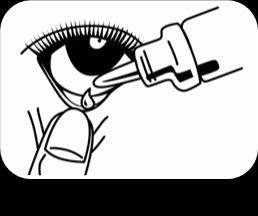

Figure 1 Figure 2 Figure 3
Duration of treatment
Continue using Azel-Drop Alergia after symptoms have subsided for as long as exposure to allergens persists (e.g. pollen, dust).
Do not use Azel-Drop Alergia for longer than 6 weeks.
If you feel that the effect of Azel-Drop Alergia is too strong or too weak, inform your physician or pharmacist.
Use of more than the recommended dose of Azel-Drop Alergia
No specific overdose reactions are known after instillation of the medicine into the eyes, and are not expected with this route of administration. In case of accidental ingestion of Azel-Drop Alergia, seek medical advice immediately from your physician or the nearest hospital emergency department.
Missing a dose of Azel-Drop Alergia
Do not take special action if you miss a dose of Azel-Drop Alergia. Take the next dose at the usual time. If necessary, the medicine may also be administered between two scheduled doses.
Stopping Azel-Drop Alergia treatment
Use Azel-Drop Alergia regularly, if possible, until symptoms subside. If treatment with Azel-Drop Alergia is discontinued, there is a possibility of recurrence of typical disease symptoms.
If you have any further questions about the use of this medicine, consult your physician or pharmacist.
4. Possible adverse reactions
Like all medicines, Azel-Drop Alergia may cause adverse reactions, although not everyone experiences them.
The possible adverse reactions listed below are categorized according to their frequency of occurrence.
Common: (may affect 1 in 10 people)
Mild, transient eye irritation (e.g. burning, itching, tearing) occurred after administration of Azel-Drop Alergia.
Uncommon: (may affect 1 in 100 people)
Bitter taste in the mouth.
Very rare: (may affect 1 in 10,000 people)
Allergic reactions (such as rash and itching).
Management in case of adverse reactions
Usually, the adverse reactions listed above resolve quickly. No special preventive measures are necessary.
A bitter taste in the mouth after using Azel-Drop Alergia can be counteracted by drinking non-alcoholic beverages (juices, water).
Reporting of adverse reactions
If any adverse effects occur, including any not listed in this leaflet, inform your doctor or pharmacist.
Adverse reactions can be reported directly to the Department of Monitoring Adverse Drug Reactions, Office for Registration of Medicinal Products, Medical Devices and Biocidal Products
Al. Jerozolimskie 181C
02-222 Warsaw
Phone: +48 22 49 21 301, Fax: +48 22 49 21 309
Website: https://smz.ezdrowie.gov.pl
Adverse reactions can also be reported directly to the marketing authorization holder.
Reporting adverse reactions helps to provide more information on the safety of the medicine.
5. How to store Azel-Drop Alergia
Keep out of the sight and reach of children.
Do not use Azel-Drop Alergia after the expiry date stated on the label of the bottle and outer
packaging after EXP. The expiry date refers to the last day of the specified month.
Do not store above 25°C. Keep the bottle in the original outer packaging to protect from light.
After first opening: do not use the medicine more than 4 weeks after first opening the bottle.
Medicines should not be disposed of via wastewater or household waste. Ask your pharmacist
how to dispose of medicines no longer in use. This will help protect the environment.
6. Contents of the package and other information
What Azel-Drop Alergia contains
- The active substance is azelastine hydrochloride. 1 ml contains 0.5 mg of azelastine hydrochloride. One drop contains 0.015 mg of azelastine hydrochloride.
- The other ingredients are: benzalkonium chloride; sorbitol 70% liquid (non-crystallizing); hypromellose; disodium edetate; sodium hydroxide (for pH adjustment); water for injections.
What Azel-Drop Alergia looks like and contents of the pack
Azel-Drop Alergia is a clear, colourless solution. Azel-Drop Alergia is supplied in an LDPE bottle with an LDPE dropper and HDPE cap. One bottle contains 6 ml of solution.
Marketing Authorisation Holder
Bausch+Lomb Ireland Limited
3013 Lake Drive
Citywest Business Campus
Dublin 24, D24PPT3
Ireland
Manufacturer
Dr. Gerhard Mann chem.-pharm. Fabrik GmbH
Brunsbütteler Damm 165/173
13581 Berlin
Germany
This medicinal product is authorised in the Member States of the European Economic Area under the following names:
| Member State | Name of the medicinal product | |------------------|-----------------------------------| | Austria | Vividrin Azelastin 0.5 mg/ml Augentropfen, Lösung | | Germany | Vividrin Azelastin 0.5 mg/ml Augentropfen, Lösung | | Poland | Azel-Drop Alergia | | Slovenia | Alezaxin | | Italy | Vividrin |