Auricid
Poland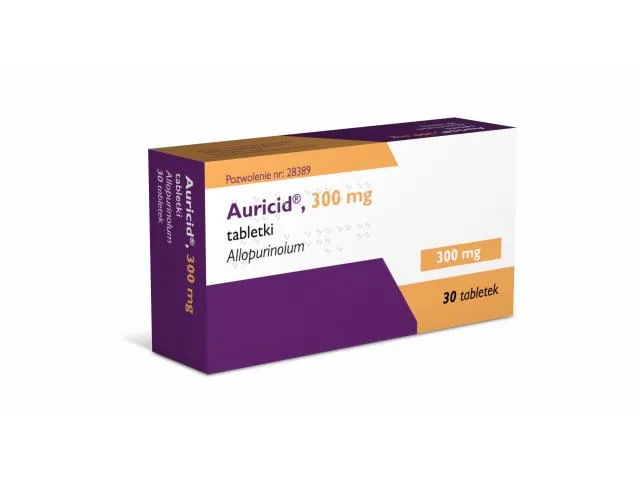
Table of Contents
Package leaflet: Information for the user
Auricid, 100 mg, tablets
Auricid, 300 mg, tablets
Allopurinolum
Please read all of this leaflet carefully before taking this medicine, because it contains
important information for the patient.
- Keep this leaflet, as you may need to read it again.
- If you have any further questions, please consult your doctor or pharmacist.
- This medicine has been prescribed for a specific individual. Do not pass it on to others. It may harm other people, even if their symptoms are the same.
- If you experience any adverse reactions, including any not listed in this leaflet, inform your doctor or pharmacist. See section 4.
Contents of the leaflet
- What Auricid is and what it is used for
- Important information before taking Auricid
- How to take Auricid
- Possible side effects
- How to store Auricid
- Contents of the package and other information
1. What Auricid is and what it is used for
Auricid contains the active substance allopurinol. It works by slowing down certain chemical reactions in the body in order to reduce the level of uric acid in the blood and urine.
High levels of uric acid may cause:
- Gout
- Formation of kidney stones or certain other types of kidney disorders.
Gout is characterized by the deposition of uric acid in the joints and tendons in the form of crystals. These crystals cause an inflammatory reaction. The skin around certain joints becomes swollen, tender, and painful even upon slight touch. The patient may also experience severe pain during joint movement.
This medicine is used in adults:
- to reduce uric acid levels when dietary measures alone are insufficient
- in the treatment and prevention of the complications mentioned above when the body produces excessive amounts of uric acid.
Additionally, Auricid 100 mg may be used in children and adolescents under 15 years of age:
- to prevent and treat complications associated with overproduction of uric acid, for example during cancer treatment (e.g. leukemia)
- in certain enzymatic disorders, such as Lesch-Nyhan syndrome.
2. Important information before using Auricid
When not to use Auricid
- if the patient is allergic to allopurinol or any of the other ingredients of this medicine (listed in section 6). If in doubt, consult a doctor or pharmacist before using this medicine.
Warnings and precautions
Before starting treatment with Auricid, discuss with your doctor or pharmacist:
- if the patient is of Chinese (Han ethnic group), African, or Indian origin.
- if the patient has impaired liver or kidney function. The doctor may prescribe a lower dose or recommend taking the medicine less frequently than daily. The patient's condition will also be closely monitored.
- if the patient has heart disease or high blood pressure and is taking diuretics and/or ACE inhibitors.
- if the patient is currently experiencing a gout attack.
- if the patient has thyroid disorders.
Special caution is required during treatment with Auricid:
- Severe skin rashes (including hypersensitivity syndrome, Stevens-Johnson syndrome, and toxic epidermal necrolysis) have been reported during allopurinol treatment. Rashes may often involve ulceration of the mouth, throat, nose, genital organs, and conjunctivitis (red, swollen eyes). These serious skin reactions are often preceded by flu-like symptoms such as fever, headache, and body aches. The rash may spread, leading to blistering and peeling of the skin. These severe skin reactions occur more frequently in patients of Chinese (Han ethnic group), Thai, or Korean origin. Chronic kidney disease may further increase the risk in these patients. If a rash or any of the above-mentioned skin symptoms occur, allopurinol must be discontinued immediately and medical advice must be sought without delay.
- In patients with cancer or Lesch-Nyhan syndrome, uric acid levels in urine may increase. To prevent this, it is important to drink sufficient fluids to dilute the urine.
- In patients with kidney stones, existing stones may shrink and potentially move into the urinary tract.
Children
Use in children is rarely indicated, except in certain cancerous conditions (particularly leukemia) and specific enzymatic disorders such as Lesch-Nyhan syndrome.
Auricid 300 mg tablets contain Ponceau 4R (E 110), an azo dye, and should not be administered to children.
Auricid with other medicines
Inform your doctor or pharmacist about all medicines currently used, recently taken, or planned for future use, including over-the-counter and herbal medicines. This is because Auricid may affect the action of certain medicines, and some other medicines may affect the action of Auricid.
Inform your doctor or pharmacist if the patient is taking any of the following medicines:
- aspirin (or related medicines called salicylates)
- theophylline, used for breathing problems
- anticonvulsants (used to treat epilepsy), such as phenytoin
- adenine arabinoside (vidarabine), used to treat herpes or chickenpox
- antibiotics (ampicillin or amoxicillin)
- didanosine, used to treat HIV infection
- medicines used to treat cancer
- medicines used to suppress the immune system (immunosuppressants), such as 6-mercaptopurine, azathioprine, and cyclosporine
- chlorpropamide, a medicine used to treat diabetes
- medicines used to treat heart conditions or high blood pressure, such as ACE inhibitors or diuretics
- medicines used to thin the blood (anticoagulants), such as warfarin
- other medicines used to treat gout, such as probenecid
Concomitant use of 6-mercaptopurine or azathioprine with allopurinol should be avoided. If co-administration is necessary, the dose of 6-mercaptopurine or azathioprine must be reduced, as allopurinol prolongs their action, increasing the risk of serious blood disorders. In such cases, the doctor should closely monitor the patient's blood cell counts.
Seek immediate medical help if the patient experiences unexplained bruising, bleeding, fever, or sore throat.
If aluminium hydroxide is taken at the same time as Auricid, allopurinol may be less effective. At least 3 hours should be left between taking the two medicines.
When allopurinol is used with cytostatic agents (such as cyclophosphamide, doxorubicin, bleomycin, procarbazine, alkylating agents), blood dyscrasias occur more frequently than when these medicines are used alone. Regular blood count monitoring is therefore required.
Pregnancy and breastfeeding
If the patient is pregnant, breastfeeding, suspects she may be pregnant, or is planning to have a child, she should consult her doctor or pharmacist before using this medicine.
Allopurinol passes into breast milk. Use of this medicine is not recommended in breastfeeding women.
Driving and operating machinery
The patient may experience drowsiness, dizziness, or impaired coordination. In such cases, the patient should not drive or operate tools or machinery.
Auricid contains lactose monohydrate
If the patient has been previously diagnosed with an intolerance to certain sugars, consult a doctor before taking this medicine.
Auricid 300 mg contains Ponceau 4R (E 110)
Ponceau 4R (E 110) may cause allergic reactions.
3. How to use Auricid
This medicine should always be used exactly as your doctor has instructed. If in doubt, consult your
doctor or pharmacist.
The dose of Auricid used by patients may vary widely. Your doctor will decide the appropriate dose for you.
The tablet should be taken after a meal and swallowed with a glass of water.
The break line on the tablet is intended only to facilitate breaking the tablet if the patient has difficulty
swallowing it whole.
Recommended dose ranges from 100 to 900 mg per day. Usually, treatment is started with a low
dose, which may be increased if necessary.
The initial dose is typically 100 to 300 mg per day, which may be taken as a single dose after a meal.
Depending on the severity of the disease, the dose may be increased up to 900 mg per day.
Doses exceeding 300 mg should be administered in divided doses, not exceeding 300 mg at any single
administration.
For elderly patients and patients with impaired liver or kidney function, the doctor may prescribe a lower
dose or recommend taking the medicine at longer intervals. If the patient undergoes dialysis two or
three times a week, the doctor may prescribe a dose of 300 mg or 400 mg to be taken immediately
after dialysis.
The doctor usually starts treatment with a low dose of allopurinol (e.g. 100 mg per day) to reduce the
risk of adverse effects. If necessary, the dose will be increased.
Use in children (under 15 years of age)
The usual dose ranges from 100 to 400 mg per day.
Taking more medicine than recommended
If you take more tablets than recommended, contact your doctor immediately or go to hospital
without delay. Bring the medicine package with you. Symptoms of overdose may include nausea,
vomiting, diarrhoea, and dizziness.
If you forget to take Auricid
If you miss a dose, take it as soon as you remember. However, if it is almost time for your next dose,
skip the missed dose.
Do not take a double dose to make up for a forgotten dose.
Stopping Auricid
Do not stop treatment without consulting your doctor.
If you have any further questions about the use of this medicine, consult your doctor or pharmacist.
4. Possible adverse reactions
Like all medicines, this medicine can cause adverse reactions, although not everybody gets them.
The following adverse reactions may occur during treatment with this medicine:
Allergic reactions (hypersensitivity)
The patient should inform the doctor immediately if any of the following occur:
Uncommon (may affect up to 1 in 100 people)
If the patient experiences an allergic reaction, treatment should be discontinued and medical
advice should be sought immediately. Symptoms may include:
- peeling of the skin, sores or pain in the lips and mouth;
- very rarely sudden wheezing, palpitations or chest tightness, and fainting.
Rare (may affect up to 1 in 1,000 people)
- fever and chills, headache, muscle pain (flu-like symptoms), and general malaise;
- severe allergic reactions with concurrent fever, skin rash, joint pain, and abnormal blood test results or liver function tests (these may be symptoms of multi-organ hypersensitivity);
- bleeding from the lips, eyes, mouth, nose, or genital organs;
- any skin changes, for example mouth, throat, nose, or genital ulcers, conjunctivitis (red and swollen eyes), widespread blisters or skin peeling.
Very rare (may affect up to 1 in 10,000 people)
- severe allergic reactions causing swelling of the face or throat;
- severe, potentially life-threatening allergic reactions.
Do not take more tablets unless otherwise advised by a doctor.
Other adverse reactions:
Common (may affect up to 1 in 10 people):
- skin rash;
- increased blood levels of thyroid-stimulating hormone.
Uncommon (may affect up to 1 in 100 people):
- nausea or vomiting;
- abnormal liver function tests;
- diarrhoea.
Rare (may affect up to 1 in 1,000 people):
- liver disorders, such as hepatitis.
Very rare (may affect up to 1 in 10,000 people):
- occasionally this medicine may affect the blood, which may present as bruising more easily than usual, or sore throat or other signs of infection. These symptoms usually occur in people who have liver or kidney problems. Inform your doctor as soon as possible;
- effects on lymph nodes;
- high temperature;
- blood in the urine (haematuria);
- high blood cholesterol levels (hyperlipidaemia);
- general malaise or weakness;
- weakness, numbness, unsteadiness, inability to move muscles (paralysis), or loss of consciousness;
- headache, dizziness, drowsiness, or visual disturbances;
- chest pain (angina), high blood pressure, or slow heart rate;
- infertility or erectile dysfunction in men;
- breast enlargement in both men and women;
- gastrointestinal disturbances;
- taste disturbances;
- cataract;
- hair loss or discolouration;
- depression;
- lack of muscle coordination (ataxia);
- tingling, itching, pricking, or burning sensations of the skin (paraesthesia);
- fluid retention leading to swelling (oedema), particularly in the ankles;
- impaired glucose metabolism (diabetes). Your doctor may recommend blood sugar testing to determine if this is occurring.
Frequency unknown (frequency cannot be estimated from the available data):
- aseptic meningitis (inflammation of the membranes surrounding the brain and spinal cord): symptoms include neck stiffness, headache, nausea, fever, or altered consciousness. If these symptoms occur, seek medical help immediately;
- lichenoid skin eruption (itchy reddish-purple rash and/or thread-like white lines on mucous membranes)
If any of the adverse effects worsen or if any adverse effects not listed in this leaflet occur,
inform a doctor or pharmacist.
Reporting of adverse reactions
If any adverse effects occur, including any adverse effects not listed in this leaflet, inform your doctor or pharmacist. Adverse reactions can be reported directly to the Department of Monitoring Adverse Drug Reactions of the Office for Registration of Medicinal Products, Medical Devices and Biocidal Products, Al. Jerozolimskie 181C, 02-222 Warsaw, tel.: +48 22 49 21 301, fax: +48 22 49 21 309, website: https://smz.ezdrowie.gov.pl.
Adverse reactions can also be reported to the marketing authorisation holder.
Reporting adverse reactions helps provide more information on the safety of this medicine.
5. How to store Auricid medicine
Keep the medicine out of sight and reach of children.
Do not use this medicine after the expiry date stated on the carton after "EXP". The expiry date refers to the last day of the stated month.
Store tablets in the original packaging.
No special storage conditions apply for this medicine.
Medicines must not be disposed of via wastewater or household waste.
Unused or no longer required tablets should be returned to a pharmacist for proper disposal. Tablets should be kept only on a doctor's recommendation. This will help protect the environment.
6. Contents of the pack and other information
What Auricid contains
- Auricid 100 mg tablets contain:
- The active substance is allopurinol.
- The other ingredients are monohydrate lactose, maize starch, povidone, sodium carboxymethyl starch (type A), maize starch (dried), stearic acid.
- Auricid 300 mg tablets contain:
- The active substance is allopurinol.
- The other ingredients are monohydrate lactose, maize starch, orange yellow FCF aluminium lake (E110), povidone, sodium carboxymethyl starch (type A), maize starch (dried), stearic acid.
What Auricid looks like and contents of the pack
Auricid 100 mg tablets: white or almost white, approximately 7.5 mm in diameter, round, biconvex, uncoated tablets with the markings “AL” and “100” separated by a division line on one side and smooth on the other side.
Auricid 300 mg tablets: peach-coloured, approximately 11 mm in diameter, round, biconvex, uncoated tablets with the markings “AL” and “300” separated by a division line on one side and smooth on the other side.
Auricid 100 mg and 300 mg tablets are available in blisters made of PVDC/PVC/Aluminium foil, in packages containing 20, 28, 30, 50, or 100 tablets, packed in a cardboard box.
Marketing Authorisation Holder
Bausch Health Ireland Limited
3013 Lake Drive
Citywest Business Campus
Dublin 24, D24PPT3
Ireland
tel. +48 17 865 51 00
Importer
Bausch Health Poland sp. z o.o.
Kosztowska Street 21
41-409 Mysłowice
Poland
| PharmaS d.o.o. | |
| Industrijska cesta 5, | |
| 44317 Potok, Popovača, | |
| Croatia | |
This medicinal product is authorized for sale in the Member States of the European Economic Area under the following names:
| Germany | Allopurinol Ipca |
| Poland | Auricid |
| Portugal | Allopurinol Ipca |