Atozet
Poland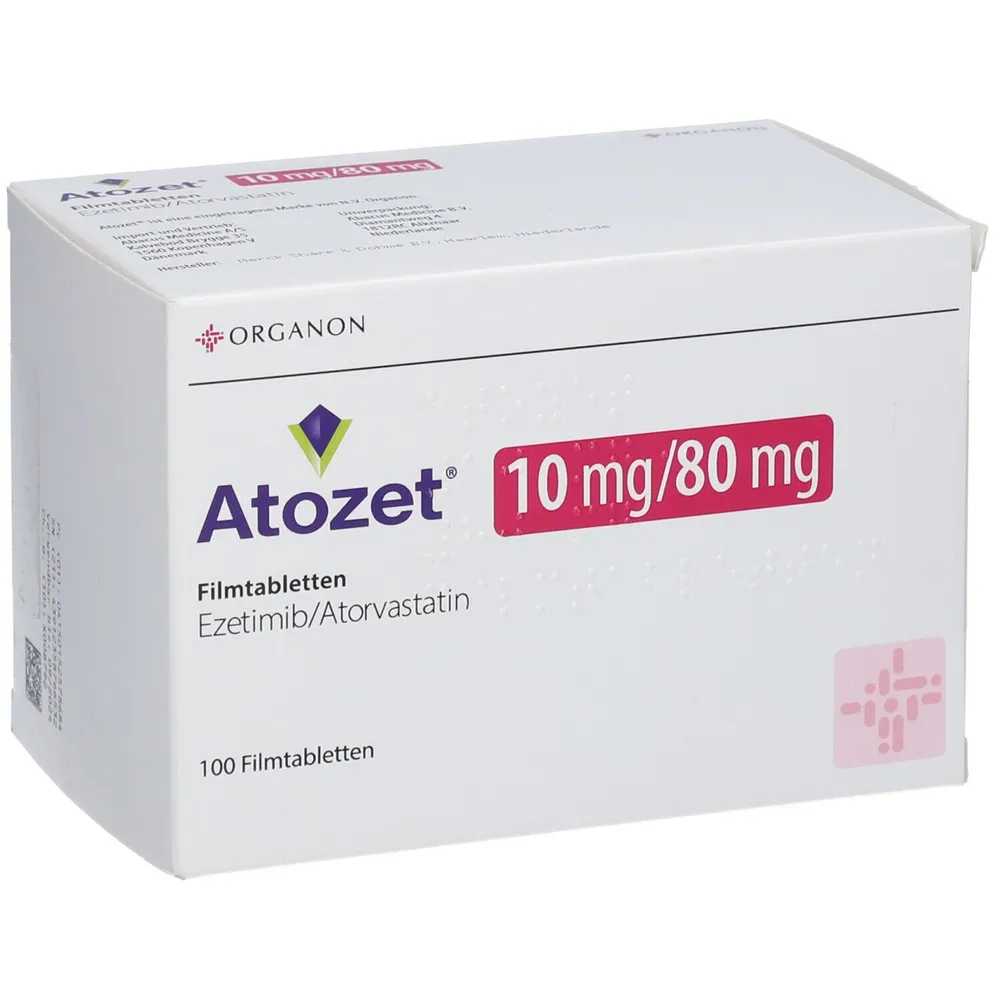
Table of Contents
Package leaflet: Information for the patient
Atozet, 10 mg + 10 mg, film-coated tablets
Atozet, 10 mg + 20 mg, film-coated tablets
Atozet, 10 mg + 40 mg, film-coated tablets
Atozet, 10 mg + 80 mg, film-coated tablets
ezetimibe + atorvastatin
Please read this leaflet carefully before taking this medicine, as it contains important information
for you.
- Keep this leaflet as you may need to read it again.
- If you have any further questions, please ask your doctor or pharmacist.
- This medicine has been prescribed for a specific individual. Do not pass it on to others. It may harm them even if their symptoms are the same.
- If you experience any adverse reactions, including any not listed in this leaflet, tell your doctor or pharmacist. See section 4.
Leaflet contents
- What Atozet is and what it is used for
- What you need to know before taking Atozet
- How to take Atozet
- Possible side effects
- How to store Atozet
- Contents of the pack and other information
1. What Atozet is and what it is used for
Atozet is a medicine that lowers high levels of cholesterol. Atozet contains ezetimibe and atorvastatin.
Atozet is used in adult patients to reduce levels of total cholesterol, “bad” cholesterol (LDL), and fat substances called triglycerides in the blood.
Additionally, Atozet increases the level of “good” cholesterol (HDL).
Atozet reduces cholesterol levels in two ways: by decreasing cholesterol absorption in the gastrointestinal tract and by reducing cholesterol production in the body.
Cholesterol is one of several fatty substances present in the blood. Total cholesterol consists mainly of “bad” (LDL) and “good” (HDL) cholesterol.
LDL cholesterol is often called “bad” cholesterol because it can deposit in the walls of arteries and form atherosclerotic plaque. Over time, this plaque buildup can lead to narrowing of the arteries. This narrowing may slow down or block blood flow to vital organs such as the heart and brain. Blocked blood flow may result in a heart attack or stroke.
HDL cholesterol is often called “good” cholesterol because it helps prevent the buildup of “bad” cholesterol in artery walls and protects against heart disease.
Triglycerides are other fats present in the blood that may increase the risk of heart disease.
Atozet is used in patients in whom cholesterol levels cannot be controlled by diet alone. While taking this medicine, you should follow a cholesterol-lowering diet.
Atozet is used as an addition to a cholesterol-lowering diet in cases of:
- elevated blood cholesterol levels (primary hypercholesterolemia [heterozygous familial or non-familial]) or elevated blood fat levels (mixed hyperlipidemia)
- inadequate control with statin monotherapy
- when statins and ezetimibe have been used as separate tablets
- a hereditary condition (homozygous familial hypercholesterolemia) causing high blood cholesterol levels. Other treatment methods may also be used
- heart disease. Atozet reduces the risk of heart attack, stroke, surgery to improve blood flow to the heart, or hospitalization due to chest pain.
Atozet does not affect body weight reduction.
2. Important information before taking Atozet
When not to take Atozet
- if the patient is allergic to ezetimibe, atorvastatin, or any of the other ingredients of this medicine (listed in section 6);
- if the patient currently has or has previously had liver disease;
- if the patient has unexplained abnormal results of liver function blood tests;
- if the patient is of childbearing age and is not using effective contraceptive methods;
- if the patient is pregnant, trying to become pregnant, or breastfeeding;
- if the patient is taking glecaprevir with pibrentasvir for the treatment of hepatitis C virus infection.
Warnings and precautions
Before starting Atozet, discuss with your doctor or pharmacist:
- if the patient has previously had a haemorrhagic stroke or has small fluid-filled cysts in the brain as a result of prior strokes;
- if the patient has kidney problems;
- if the patient has hypothyroidism (underactive thyroid);
- if the patient has recurrent or unexplained muscle pain, or a history of muscle disorders in the past or in the family;
- if the patient previously experienced muscle-related side effects during treatment with other lipid-lowering medicines (e.g. other "statins" or "fibrates");
- if the patient regularly consumes large amounts of alcohol;
- if the patient has previously had liver disease;
- if the patient is over 70 years of age;
- if the patient has previously been diagnosed with an intolerance to certain sugars, the patient should contact their doctor before taking this medicine;
- if the patient is currently taking or has taken within the last 7 days fusidic acid (a medicine used to treat bacterial infections) orally or by injection. The combination of
fusidic acid and Atozet may lead to serious muscle problems (rhabdomyolysis).
- if the patient has or has previously had myasthenia gravis (a disease causing generalised muscle weakness, including in some cases the muscles used for breathing) or ocular myasthenia (a disease causing weakness of the eye muscles), because statins may occasionally worsen the condition or trigger the onset of myasthenia (see section 4).
Contact your doctor immediately if you experience unexplained muscle pain, tenderness
or weakness while taking Atozet. Since in rare cases, muscle disorders may be severe, including
muscle breakdown which may lead to kidney damage.
It is known that atorvastatin may cause muscle disorders. Cases of muscle disorders have also been
reported with ezetimibe.
Inform your doctor or pharmacist also if muscle weakness persists. Additional tests and possibly
additional medicines may be necessary to diagnose and treat this condition.
Before taking Atozet, consult your doctor or pharmacist:
- if the patient has severe respiratory insufficiency.
If any of the above conditions (or suspicion of them) are present, consult your doctor or pharmacist, as the doctor may need to perform blood tests before starting treatment with Atozet and periodically during treatment to assess the risk of muscle-related adverse effects.
It is known that the risk of muscle-related adverse effects, such as rhabdomyolysis (muscle damage), may be increased by certain concomitant medicines (see section 2 "Atozet with other medicines").
During treatment with this medicine, your doctor will closely monitor you for diabetes or risk of developing diabetes. You are at risk of developing diabetes if you have high blood sugar and fat levels, are overweight, and have high blood pressure.
Inform your doctor about all medical conditions, including allergies.
Avoid concomitant use of Atozet and fibrates (cholesterol-lowering medicines), as this combination has not been studied.
Children
Atozet is not recommended for use in children and adolescents.
Atozet and other medicines
Tell your doctor or pharmacist about all medicines you are currently taking or have recently taken, including those available without a prescription, as well as any medicines you plan to take.
Some medicines may alter the effect of Atozet or may have their effect altered by Atozet (see section 3). This type of interaction may reduce the effectiveness of one or both medicines. It may also increase the risk of a serious condition causing muscle damage, known as "rhabdomyolysis", described in section 4, or worsen its course:
- cyclosporine (a medicine often used in organ transplant patients);
- erythromycin, clarithromycin, telithromycin, fusidic acid **, rifampicin (medicines used to treat bacterial infections);
- ketoconazole, itraconazole, voriconazole, fluconazole, posaconazole (medicines used to treat fungal infections);
- gemfibrozil, other fibrates, nicotinic acid, derivatives, colestyramine, colestipol (medicines used to regulate lipid levels);
- certain calcium channel blockers used for angina or high blood pressure, e.g. amlodipine, diltiazem;
- digoxin, verapamil, amiodarone (medicines regulating heart rhythm);
- medicines used to treat HIV infection, e.g. ritonavir, lopinavir, atazanavir, indinavir, darunavir, combination of tipranavir/ritonavir, etc. (medicines used in AIDS);
- certain medicines used to treat hepatitis C virus infection, e.g. telaprevir, boceprevir, and the fixed-dose combination of elbasvir with grazoprevir;
- daptomycin (a medicine used to treat complicated skin and soft tissue infections and bacteremia).
**If oral fusidic acid is required to treat a bacterial infection,
temporarily discontinue Atozet. Your doctor will advise when it is safe to restart Atozet.
Concomitant use of Atozet with fusidic acid may rarely lead to muscle weakness, tenderness or pain (rhabdomyolysis). More information on rhabdomyolysis is provided in section 4.
- Other medicines known to interact with Atozet:
- oral contraceptives (used for birth control);
- stiripentol (an anticonvulsant used to treat epilepsy);
- cimetidine (a medicine used for heartburn and peptic ulcer disease);
- phenazone (a pain-relieving medicine);
- antacids (medicines for indigestion containing aluminium or magnesium compounds);
- warfarin, phenprocoumon, acenocoumarol or fluindione (medicines given to prevent blood clots);
- colchicine (used to treat gout);
- St. John's wort (a herbal remedy used to treat depression).
Atozet with food and alcohol
Instructions for taking Atozet are provided in section 3. Please pay attention to the following:
Grapefruit juice
Do not consume more than one or two small glasses of grapefruit juice per day, as larger quantities may alter the effect of Atozet.
Alcohol
Avoid excessive alcohol consumption while taking this medicine. Further information can be found in section 2 "Warnings and precautions".
Pregnancy and breastfeeding
Women who are pregnant, trying to become pregnant, or who suspect they may be pregnant should not take Atozet. Do not take Atozet if there is a possibility of pregnancy and the patient is not using effective contraceptive methods. If pregnancy occurs while taking Atozet, stop taking the medicine immediately and inform your doctor.
Do not take Atozet while breastfeeding.
The safety of Atozet during pregnancy and breastfeeding has not been established.
Consult your doctor or pharmacist before taking this medicine.
Driving and using machines
Atozet is not expected to affect the ability to drive or operate machinery. However, bear in mind that dizziness may occur in some patients after taking Atozet.
Atozet contains lactose
Atozet tablets contain a sugar called lactose. If the patient has been previously diagnosed with an intolerance to certain sugars, they should contact their doctor before taking this medicine.
Atozet contains sodium
The medicine contains less than 1 mmol (23 mg) of sodium per tablet, i.e. the medicine is considered "sodium-free".
3. How to take Atozet
This medicine should always be taken exactly as prescribed by your doctor. Your doctor will decide the appropriate tablet strength based on your current treatment and risk status. If in doubt, consult your doctor or pharmacist.
- Before starting Atozet, you should begin a cholesterol-lowering diet.
- This diet should be continued during treatment with Atozet.
Recommended dose
The recommended dose is one Atozet tablet taken orally once daily.
When to take Atozet
Atozet can be taken at any time of day, with or without food.
If your doctor has prescribed Atozet together with colestyramine or another bile acid sequestrant (medicines intended to reduce cholesterol levels), Atozet should be taken at least 2 hours before or 4 hours after taking the bile acid-binding medicine.
Taking more Atozet than prescribed
Seek advice from your doctor or pharmacist.
If you forget to take Atozet
Do not take a double dose. Take your next dose at the usual time on the following day.
If you have any further questions about the use of this medicine, consult your doctor or pharmacist.
4. Possible side effects
Like all medicines, Atozet can cause side effects, although not everybody gets them.
If any of the following serious side effects or symptoms occur, stop taking the medicine immediately
and contact your doctor or go to the nearest hospital emergency department without delay.
- severe allergic reactions causing swelling of the face, tongue and throat, which may significantly impair breathing;
- severe illness with extensive skin peeling and swelling, formation of blisters on the skin, in the mouth, eyes and genital organs, and fever; skin rash with pink-red spots, particularly on the palms and soles, which may lead to blister formation;
- muscle weakness, tenderness to touch, pain or tearing of muscles, or red-brown discoloration of urine, especially if accompanied at the same time by malaise or fever, which may be due to abnormal muscle breakdown that can be life-threatening and lead to kidney disorders;
- lupus-like syndrome (including skin rash, joint disorders and effects on blood cells).
If unexpected or unusual bleeding or bruising occurs, contact your doctor immediately, as these may be symptoms of liver disorders.
The following common side effects have been reported (may affect up to 1 in 10 people):
- diarrhoea;
- muscle pain.
The following uncommon side effects have been reported (may affect up to 1 in 100 people):
- influenza-like illness;
- depression, difficulty falling asleep, sleep disturbances;
- dizziness, headache, tingling sensation;
- slow heart rate;
- hot flushes;
- shortness of breath;
- abdominal pain, bloating, constipation, indigestion, flatulence, frequent bowel movements, inflammation of the stomach, nausea, stomach discomfort, gastrointestinal discomfort;
- acne, urticaria;
- joint pain, back pain, leg cramps, fatigue, muscle cramps or weakness, pain in arms and legs;
- unusual weakness, feeling of tiredness or malaise, swelling, particularly of the ankles;
- increased values in certain blood laboratory tests related to liver or muscle function (CK);
- weight gain.
The following side effects have been reported with unknown frequency (frequency cannot be estimated from the available data):
- myasthenia gravis (a disease causing general muscle weakness, including in some cases the muscles used for breathing),
- ocular myasthenia (a disease causing weakness of the eye muscles).
Contact your doctor if the patient experiences weakness in arms or legs that worsens after periods of activity, double vision or drooping eyelids, difficulty swallowing or shortness of breath.
Additionally, in patients taking Atozet or tablets containing ezetimibe or atorvastatin, the following side effects have been reported:
- allergic reactions, including swelling of the face, lips, tongue and (or) throat causing difficulty in breathing or swallowing (requiring immediate treatment);
- raised, red rash, sometimes with plaque-like lesions;
- liver function disorders;
- cough;
- heartburn;
- decreased appetite, loss of appetite;
- hypertension;
- skin rash and itching, allergic reactions including rash and urticaria;
- tendon injury;
- gallstones or cholecystitis (which may cause abdominal pain, nausea, vomiting);
- pancreatitis, often with severe abdominal pain;
- reduced number of certain blood cells, which may lead to bruising/bleeding (thrombocytopenia);
- inflammation of nasal passages, nosebleeds;
- neck pain, pain, chest pain, sore throat;
- increased or decreased blood glucose levels (in patients with diabetes, careful monitoring of blood glucose levels should continue);
- nightmares;
- numbness or tingling in fingers of hands and feet;
- reduced sensation of pain or touch;
- altered taste sensation, dry mouth;
- memory loss;
- ringing in the ears and (or) head, hearing loss;
- vomiting;
- belching;
- hair loss;
- elevated body temperature;
- positive urine test for white blood cells;
- blurred vision; visual disturbances;
- gynaecomastia (enlargement of breast tissue in males).
Possible side effects reported with some statins:
- sexual dysfunction;
- depression;
- breathing difficulties, including persistent cough and (or) shortness of breath or fever;
- diabetes; its occurrence is more likely in patients with high blood levels of glucose and lipids, overweight and hypertension. Your doctor will monitor your condition during treatment with this medicine;
- muscle pain, tenderness or persistent muscle weakness, particularly if accompanied at the same time by malaise or fever, which may not resolve after discontinuation of Atozet (frequency unknown).
Reporting of side effects
If any side effects occur, including any not listed in this leaflet, inform your doctor or pharmacist. Side effects can be reported directly to the Department of Monitoring Adverse Drug Reactions of the Office for Registration of Medicinal Products, Medical Devices and Biocidal Products:
Al. Jerozolimskie 181C, 02-222 Warsaw, Tel.: + 48 22 49-21-301, Fax: + 48 22 49-21-309,
Website: https://smz.ezdrowie.gov.pl
Side effects can also be reported to the marketing authorisation holder.
Reporting side effects helps provide more information on the safety of this medicine.
5. How to store Atozet
- Keep this medicine out of sight and reach of children.
- Do not use Atozet after the expiry date stated on the carton or immediate packaging following "EXP". The expiry date refers to the last day of the stated month.
- Store in the original packaging to protect from moisture and oxygen.
Medicines must not be disposed of via wastewater or household waste. Ask your pharmacist how to dispose of medicines no longer required. These measures help protect the environment.
6. Contents of the pack and other information
What Atozet contains
- The active substances are ezetimibe and atorvastatin. Each coated tablet contains 10 mg of ezetimibe and either 10 mg, 20 mg, 40 mg, or 80 mg of atorvastatin (as the trihydrate calcium salt).
- Other ingredients are: calcium carbonate, colloidal anhydrous silica, sodium croscarmellose, hydroxypropylcellulose, lactose monohydrate, magnesium stearate, microcrystalline cellulose, polysorbate 80, povidone, sodium lauryl sulfate.
The tablet coating contains hypromellose, polyethylene glycol 8000, titanium dioxide (E 171), and talc.
What Atozet looks like and contents of the pack
White or almost white, biconvex, capsule-shaped coated tablets.
Atozet 10 mg + 10 mg tablets: engraved with the code "257" on one side.
Atozet 10 mg + 20 mg tablets: engraved with the code "333" on one side.
Atozet 10 mg + 40 mg tablets: engraved with the code "337" on one side.
Atozet 10 mg + 80 mg tablets: engraved with the code "357" on one side.
Pack sizes:
Blister packs (aluminium/aluminium type, chamber with oPA-Al-PVC and Al seal) containing 10, 30, 90 or 100 coated tablets, sealed under nitrogen.
Unit dose blister packs (aluminium/aluminium type, chamber with oPA-Al-PVC and Al seal) containing 30 x 1 or 45 x 1 coated tablets, sealed under nitrogen.
Not all pack sizes may be marketed.
Marketing Authorisation Holder and Manufacturer
Marketing Authorisation Holder
Organon Polska Sp. z o.o.
ul. Marszałkowska 126/134
00-008 Warszawa
Tel.: + 48 22 105 50 01
[email protected]
Manufacturer
Merck Sharp & Dohme B.V.,
Waarderweg 39,
2031 BN Haarlem,
The Netherlands
Organon Heist bv
Industriepark 30
2220 Heist-op-den-Berg
Belgium
Organon N.V.
Kloosterstraat 6, 5349 AB,
Oss, The Netherlands
This medicinal product is authorised in the European Economic Area countries under the following names:
DE/H/3895/001-004/DC
ATOZET: Austria, Belgium, Bulgaria, Croatia, Denmark, Germany, Iceland, Ireland, Italy, Luxembourg, Malta, The Netherlands, Norway, Poland, Portugal, Romania, Slovakia, Slovenia, Spain, Sweden
LIPTRUZET: Cyprus, France, Greece, Hungary
ZOLETORV: Czech Republic