Apremilast farmaprojects
Poland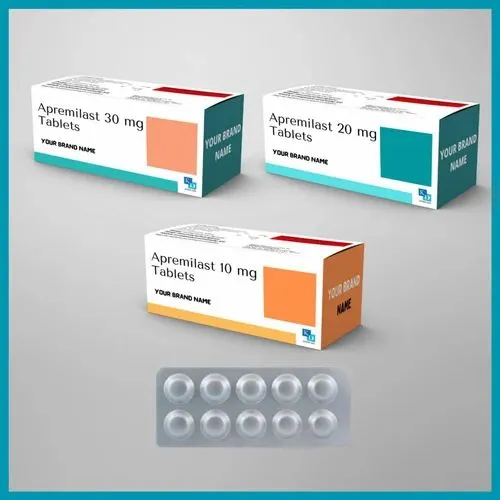
Table of Contents
- Package leaflet: Information for the patient
- 1. What Apremilast Farmaprojects is and what it is used for
- 2. Important information before taking Apremilast Farmaprojects
- 3. How to take Apremilast Farmaprojects
- 4. Possible adverse reactions
- 5. How to store Apremilast Farmaprojects
- 6. Contents of the packaging and other information
Package leaflet: Information for the patient
Apremilast Farmaprojects, 10 mg, film-coated tablets
Apremilast Farmaprojects, 20 mg, film-coated tablets
Apremilast Farmaprojects, 30 mg, film-coated tablets
Apremilastum
Please read this leaflet carefully before taking this medicine, because it contains
important information for you.
- Keep this leaflet. You may need to read it again.
- If you have any further questions, ask your doctor, pharmacist, or nurse.
- This medicine has been prescribed for you personally. Do not give it to anyone else. It may harm other people, even if their symptoms are the same as yours.
- If you experience any side effects, including any not listed in this leaflet, tell your doctor, pharmacist, or nurse. See section 4.
Contents of the leaflet
- What Apremilast Farmaprojects is and what it is used for
- What you need to know before taking Apremilast Farmaprojects
- How to take Apremilast Farmaprojects
- Possible side effects
- How to store Apremilast Farmaprojects
- Contents of the pack and other information
1. What Apremilast Farmaprojects is and what it is used for
What Apremilast Farmaprojects is
Apremilast Farmaprojects contains the active substance apremilast. It belongs to a group of medicines
called phosphodiesterase 4 inhibitors, which help reduce inflammation.
What Apremilast Farmaprojects is used for
Apremilast Farmaprojects is used to treat adult patients with the following conditions:
- Active psoriatic arthritis – if the patient cannot take another type of medicine known as “disease-modifying antirheumatic drugs (DMARDs)” or if the patient has already tried these medicines without improvement.
- Moderate to severe chronic plaque psoriasis – if the patient cannot take one of the treatment options listed below, or if the patient has tried one of these therapies without improvement:
- Phototherapy – a treatment in which areas of skin are exposed to ultraviolet light.
- Systemic therapy – a treatment that affects the whole body, not just a specific part; examples include medicines containing substances such as: cyclosporine, methotrexate, or psoralen.
- Behçet’s disease (BD) – to treat oral ulcers, which are a common symptom in people with this condition.
What is psoriatic arthritis
Psoriatic arthritis is an inflammatory joint disease, which is usually associated with psoriasis,
an inflammatory skin condition.
What is plaque psoriasis
Psoriasis is an inflammatory skin disease that may cause red, scaly, thickened, itchy, and painful skin lesions; it may also affect the scalp and nails.
What is Behçet’s disease
Behçet’s disease is a rare inflammatory disorder affecting multiple parts of the body. The most common symptom is oral ulcers.
How Apremilast Farmaprojects works
Psoriatic arthritis, psoriasis, and Behçet’s disease are generally lifelong conditions, as there is currently no cure. Apremilast Farmaprojects works by reducing the activity of an enzyme called “phosphodiesterase 4”, which plays a key role in the inflammatory process. By reducing the activity of this enzyme, Apremilast Farmaprojects may help control the inflammation associated with psoriatic arthritis, psoriasis, and Behçet’s disease, thereby reducing the signs and symptoms of these conditions.
In psoriatic arthritis, treatment with Apremilast Farmaprojects reduces joint swelling and pain and may improve the patient’s overall physical function.
In psoriasis, treatment with Apremilast Farmaprojects leads to a reduction in psoriatic skin lesions and other signs and symptoms of the disease.
In Behçet’s disease, treatment with Apremilast Farmaprojects reduces the number of oral ulcers and may lead to their complete resolution. It may also reduce associated pain.
Apremilast Farmaprojects has also been shown to improve the quality of life of patients with psoriasis, psoriatic arthritis, or Behçet’s disease. This means that the impact of the disease on daily activities, relationships with others, and other factors should be less than before.
2. Important information before taking Apremilast Farmaprojects
When not to take Apremilast Farmaprojects
- if the patient is allergic to apremilast or any of the other ingredients of this medicine (listed in section 6);
- if the woman is pregnant or suspects she may be pregnant.
Warnings and precautions
Before starting treatment with Apremilast Farmaprojects, discuss this with your doctor or
pharmacist.
Depression and suicidal thoughts
If the patient suffers from worsening depression with suicidal thoughts, this should be discussed with the doctor before starting treatment with Apremilast Farmaprojects.
The patient or their caregiver should also immediately inform the doctor of any changes in behaviour or mood, feelings of depression, or any suicidal thoughts that occur after taking Apremilast Farmaprojects.
Severe kidney disease
If the patient has severe kidney disease, the dose will be different – see section 3.
If the patient is underweight
If the patient experiences unintentional weight loss during treatment with Apremilast Farmaprojects, they should inform their doctor.
Gastrointestinal problems
Inform the doctor if severe diarrhoea, nausea or vomiting occurs.
Children and adolescents
Studies on the use of apremilast in children and adolescents have not been conducted. Therefore, this medicine is not recommended for use in children and adolescents under 18 years of age.
Apremilast Farmaprojects and other medicines
Tell your doctor or pharmacist about all medicines the patient is currently taking, has recently taken, or plans to take. This includes medicines available without a prescription and herbal medicines. This is important because Apremilast Farmaprojects may affect the action of other medicines. Likewise, other medicines may affect the action of Apremilast Farmaprojects.
In particular, inform your doctor or pharmacist before starting Apremilast Farmaprojects if the patient is taking any of the following medicines:
- rifampicin – an antibiotic used to treat tuberculosis;
- phenytoin, phenobarbital and carbamazepine – medicines used to treat seizures or epilepsy;
- St. John’s wort – a herbal medicine used for mild anxiety and depression.
Pregnancy and breastfeeding
If the patient is pregnant or breastfeeding, suspects she may be pregnant, or is planning to have a child, she should consult her doctor or pharmacist before using this medicine.
There is limited data on the use of Apremilast Farmaprojects in pregnant women.
Women should not become pregnant while taking this medicine and should use an effective method of contraception during treatment with Apremilast Farmaprojects. It is unknown whether the medicine passes into human milk. Apremilast Farmaprojects should not be used during breastfeeding.
Driving and operating machinery
Apremilast Farmaprojects has no influence on the ability to drive or operate machinery.
Apremilast Farmaprojects contains sodium
This medicine contains less than 1 mmol (23 mg) of sodium per tablet, i.e. this medicine is considered "sodium-free".
3. How to take Apremilast Farmaprojects
This medicine should always be taken according to the doctor's instructions. If in doubt, consult a doctor or pharmacist.
Recommended dose of the medicine
- If the patient is starting treatment with Apremilast Farmaprojects for the first time, they will receive a "starter pack" containing all the doses listed as described in the table below.
- The "starter pack" is clearly labeled to ensure that the patient takes the correct tablet at the correct time.
- Treatment will begin with the lowest dose, which will be gradually increased over the first 6 days of treatment.
- The "starter pack" also contains tablets at the recommended dose for the following 8 days (days 7 to 14).
- After completing the dose-titration period, the recommended dose of Apremilast Farmaprojects is 30 mg twice daily—one 30 mg dose in the morning and one 30 mg dose in the evening, approximately 12 hours apart, with or without food.
- The total daily dose is 60 mg. The recommended dose will be reached by the end of day 6.
- After reaching the recommended dose, the patient will receive only 30 mg tablets in the prescribed packaging. This dose-titration process needs to be followed only once, even if treatment is restarted later.
| Day | Morning dose | Evening dose | Total daily dose |
| Day 1 | 10 mg | Do not take medication dose | 10 mg |
| Day 2 | 10 mg | 10 mg | 20 mg |
| Day 3 | 10 mg | 20 mg | 30 mg |
| Day 4 | 20 mg | 20 mg | 40 mg |
| Day 5 | 20 mg | 30 mg | 50 mg |
| Day 6 and subsequent days | 30 mg | 30 mg | 60 mg |
Patients with severe kidney disease
If the patient has severe kidney disease, the recommended dose of Apremilast Farmaprojects is
30 mg once daily (morning dose). Your doctor will inform you how to increase the dose
when starting treatment with Apremilast Farmaprojects for the first time.
How and when to take Apremilast Farmaprojects
- Apremilast Farmaprojects is intended for oral administration.
- Tablets should be swallowed whole, preferably with water.
- Tablets may be taken with or without food.
- Apremilast Farmaprojects should be taken at the same time each day, one tablet in the morning and one tablet in the evening.
If the patient's condition has not improved after six months, he or she should contact the doctor.
Taking more Apremilast Farmaprojects than prescribed
If the patient takes more Apremilast Farmaprojects than prescribed, he or she should contact a doctor immediately or go to a hospital. The package and this leaflet should be brought along.
If you miss a dose of Apremilast Farmaprojects
- If the patient forgets to take a dose of Apremilast Farmaprojects, it should be taken as soon as possible. If it is almost time for the next dose, the missed dose should not be taken. The next dose should be taken at the usual time.
- Do not take a double dose to make up for a missed dose.
Stopping treatment with Apremilast Farmaprojects
- The patient should continue taking Apremilast Farmaprojects until the doctor advises stopping treatment.
- Do not stop taking Apremilast Farmaprojects without first consulting your doctor.
If you have any further questions about the use of this medicine, please consult your doctor or pharmacist.
4. Possible adverse reactions
Like all medicines, this medicine can cause adverse reactions, although not everyone will experience them.
Serious adverse reactions – depression and suicidal thoughts
Inform your doctor immediately about any changes in behaviour or mood,
feelings of depression, suicidal thoughts or suicidal behaviour (these occur
not infrequently).
Very common (occur in more than 1 in 10 patients)
- diarrhoea
- nausea
- headache
- upper respiratory tract infections, such as colds, nasal congestion, sinus infection
Common (occur in less than 1 in 10 patients)
- cough
- back pain
- vomiting
- feeling of fatigue
- abdominal pain
- loss of appetite
- frequent bowel movements
- sleep problems (insomnia)
- indigestion or heartburn
- inflammation and swelling of the airways in the lungs (bronchitis)
- cold (nasal and throat infection)
- depression
- migraine
- tension headache
Uncommon (occur in less than 1 in 100 patients)
- rash
- urticaria
- weight loss
- allergic reaction
- bleeding in the intestines or stomach
- suicidal thoughts or behaviour
Frequency not known (frequency cannot be estimated from available data)
- severe allergic reaction (may include swelling of the face, lips, mouth, tongue or throat, which may lead to difficulty breathing and swallowing)
In patients aged 65 years and older, there may be an increased risk of complications
such as severe diarrhoea, nausea and vomiting. If intestinal problems worsen,
you should inform your doctor.
Reporting adverse reactions
If any adverse reactions occur, including any adverse reactions not listed
in this leaflet, inform your doctor, pharmacist or nurse. Adverse reactions
can be reported directly to the Department of Monitoring Adverse Drug Reactions of the Office for Registration of Medicinal Products, Medical Devices and Biocidal Products
Al. Jerozolimskie 181C
02-222 Warsaw
Tel.: + 48 22 49 21 301
Fax: + 48 22 49 21 309
Website: https://smz.ezdrowie.gov.pl
Adverse reactions can also be reported to the marketing authorisation holder.
Reporting adverse reactions helps provide more information on the safety of the medicine.
5. How to store Apremilast Farmaprojects
Keep this medicine out of the sight and reach of children.
Do not use this medicine after the expiry date stated on the blister or starter pack or on the cardboard box after: EXP. The expiry date refers to the last day of the stated month.
The marking on the packaging following the abbreviation EXP indicates the expiry date, and following the abbreviation Lot/LOT indicates the batch number.
Do not store above 30°C.
Do not use this medicine if you notice any damage or signs of tampering with the packaging.
Medicines must not be disposed of via wastewater or household waste. Ask your pharmacist how to dispose of medicines no longer required. This will help protect the environment.
6. Contents of the packaging and other information
What Apremilast Farmaprojects contains
- The active substance is apremilast.
- Apremilast Farmaprojects 10 mg, coated tablets: each coated tablet contains 10 mg of apremilast.
- Apremilast Farmaprojects 20 mg, coated tablets: each coated tablet contains 20 mg of apremilast.
- Apremilast Farmaprojects 30 mg, coated tablets: each coated tablet contains 30 mg of apremilast.
- Other ingredients are:
- tablet core: mannitol, microcrystalline cellulose (type 102), sodium croscarmellose, magnesium stearate.
- tablet coating: hypromellose 2910 (6 mPa·s), titanium dioxide (E 171), polyethylene glycol (8000), iron oxide red (E 172), talc (for 10 mg and 30 mg strengths only), iron oxide yellow (E 172) (for 20 mg and 30 mg strengths only), iron oxide black (E 172) (for 30 mg strength only).
What Apremilast Farmaprojects looks like and contents of the pack
Apremilast Farmaprojects 10 mg, coated tablets
Pink, rhomboid-shaped, biconvex coated tablets, with engraved mark “10” on one side, measuring 8.0–8.6 mm in length and 4.1–4.7 mm in width.
Apremilast Farmaprojects 20 mg, coated tablets
Brown, rhomboid-shaped, biconvex coated tablets with engraved mark “20” on one side, measuring 10.1–10.7 mm in length and 5.3–5.9 mm in width.
Apremilast Farmaprojects 30 mg, coated tablets
Dark pink, rhomboid-shaped, biconvex coated tablets with engraved mark “30” on one side, measuring 11.6–12.2 mm in length and 6.1–6.7 mm in width.
Pack sizes
- The starter pack is a folding carton containing 27 coated tablets in aluminium/PVC blisters (4 x 10 mg tablets, 4 x 20 mg tablets and 19 x 30 mg tablets).
- The standard pack contains 28, 56, 112, 168 or 196 coated tablets of 30 mg in aluminium/PVC blisters.
Not all pack sizes may be marketed.
Marketing Authorisation Holder
Farmaprojects S.A.U.
Calle Provenca 392, 6 Planta
08025 Barcelona
Spain
Manufacturer
Farmaprojects S.A.U.
Parc Cientific de Barcelona
C/ Baldiri Reixac, 4/12 and 15
08028 Barcelona
Spain
This medicinal product is authorised in the European Economic Area countries under the following names:
Poland: Apremilast Farmaprojects
Germany: Apremilast 089Pharm