Andepin
Poland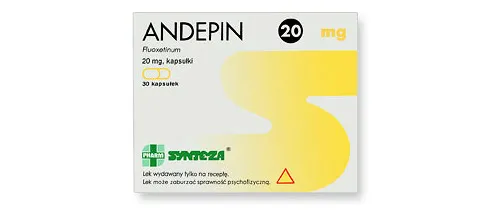
Table of Contents
Package leaflet: Information for the patient
Andepin, 20 mg, hard capsules
Fluoxetinum
Please read the entire leaflet carefully before using the medicine, as it contains
important information for the patient.
- Keep this leaflet, so that you can read it again if necessary.
- Consult your doctor or pharmacist if you have any doubts.
- This medicine has been prescribed for a specific individual. Do not pass it on to others. The medicine may harm another person, even if their symptoms are the same.
- If any adverse reactions occur, including any possible adverse reactions not listed in this leaflet, inform your doctor or pharmacist.
Table of contents
- What Andepin is and what it is used for
- Important information before taking Andepin
- How to take Andepin
- Possible side effects
- How to store Andepin
- Contents of the pack and other information
1. What Andepin is and what it is used for
Andepin contains fluoxetine, which is an antidepressant medicine. The mechanism of action of fluoxetine is based on inhibition of serotonin reuptake by neurons of the central nervous system.
After oral administration, fluoxetine is well absorbed from the gastrointestinal tract. The maximum plasma concentration of fluoxetine is reached within 6 to 8 hours after a single oral dose.
In the body, fluoxetine undergoes metabolism, one of the active metabolites being the demethylated derivative – norfluoxetine.
The effect of fluoxetine usually appears after several weeks of treatment.
The therapeutic concentration of the drug is maintained for several weeks after discontinuation of treatment.
Indications for use of Andepin:
- depressive disorders;
- obsessive-compulsive disorder;
- bulimia (psychogenic polyphagia).
2. Important information before using Andepin
When not to use Andepin:
Do not use this medicine if the patient is allergic to fluoxetine or any of the other ingredients listed in section 6.
1/8
Do not use Andepin together with monoamine oxidase inhibitors (MAO inhibitors), including selective ones (e.g. selegiline) and reversible inhibitors known as RIMA (e.g. moclobemide), as this may cause symptoms similar to serotonin syndrome.
The interaction between fluoxetine and MAO inhibitors may result in symptoms such as: hyperthermia (elevated body temperature), rigidity, autonomic dysfunction, myoclonus (sudden, brief muscle jerks), motor incoordination, and emotional instability, including irritability, confusion (a state of disturbed consciousness with disorientation and anxiety), and extreme agitation, which may sometimes lead to delirium or coma. Therefore, fluoxetine must not be used together with MAO inhibitor drugs, nor within at least 14 days after discontinuing their use. The interval between stopping fluoxetine and starting MAO inhibitors should be at least 5 weeks (in cases of prolonged fluoxetine treatment or high-dose therapy, a longer than 5-week interval should be observed before starting MAO inhibitors).
Warnings and precautions
Before starting treatment with Andepin, consult a doctor or pharmacist.
Exercise particular caution when using Andepin:
- if a rash or other allergic reactions occur (e.g. itching, swelling of lips or face, difficulty breathing), discontinue use immediately and contact a doctor without delay;
- if the patient has epilepsy or a history of seizures; if a seizure (convulsion) occurs or seizure frequency increases, contact a doctor immediately, as discontinuation of fluoxetine may be necessary;
- if the patient has a history of manic episodes; if a manic episode occurs, contact a doctor immediately, as discontinuation of fluoxetine may be necessary;
- if the patient has diabetes; dosage adjustment of insulin or other antidiabetic drugs may be required;
- if the patient has impaired liver function (a dose adjustment may be necessary);
- if the patient has heart disease;
- if the patient is taking diuretics, especially in elderly patients;
- if the patient is undergoing electroconvulsive therapy;
- if the patient has a history of bleeding or develops bruising or unusual bleeding;
- if the patient is taking medications affecting blood coagulation;
- if fever, muscle rigidity, or tremor, or changes in mental status occur, such as disorientation, irritability, or extreme agitation; serotonin syndrome or neuroleptic malignant syndrome may develop. Although rare, these syndromes may require discontinuation of fluoxetine;
- if suicidal thoughts or self-harm ideation occur.
Patients with depression or anxiety disorders may sometimes experience thoughts of self-harm or suicide. This condition may worsen when patients first start taking antidepressant medications and may persist until the medication begins to work fully, which usually occurs after two weeks of treatment, although sometimes later.
2/8
Such thoughts are more common in patients who:
- have previously had suicidal or self-harming thoughts,
- are young adults. The risk of suicidal behavior is higher in individuals under 25 years of age with psychiatric disorders treated with antidepressants. If a patient experiences urges to self-harm or suicidal thoughts, they should immediately contact a doctor or the nearest hospital. It may be helpful to inform family members or friends about the depression or anxiety disorder and ask them to read this leaflet. The patient may ask family or friends for help and request them to report any worsening of depression or anxiety, or any concerning behavior. If disturbing behavioral changes occur, contact a doctor immediately or go to the nearest hospital.
Other medicines and Andepin
Inform your doctor or pharmacist about all medicines currently used, recently used, or planned for use.
Interactions may occur when using MAO inhibitors (used in the treatment of depression) (see "When not to use Andepin").
It has been observed that fluoxetine may increase blood levels of certain centrally acting drugs such as: carbamazepine, haloperidol, clozapine, diazepam, alprazolam, lithium, phenytoin, and tricyclic antidepressants. Enhanced effects of fluoxetine have been reported when administered together with tryptophan.
Concomitant use of drugs such as: flecainide or encainide (used in heart conditions), vinblastine, carbamazepine (antiepileptic drugs), and tricyclic antidepressants (e.g. imipramine, desipramine, amitriptyline) with fluoxetine or within five weeks after discontinuation of fluoxetine may require dose reduction of these drugs.
As with other medications, caution is advised when fluoxetine is used concomitantly with warfarin or other anticoagulant drugs.
There have been rare reports of seizures in patients receiving concurrent treatment with fluoxetine and electroconvulsive therapy. Therefore, caution should be exercised when using both treatments simultaneously.
As with most selective serotonin reuptake inhibitors, fluoxetine should not be used together with herbal preparations containing St. John's wort (Hypericum perforatum), as this may increase the risk of adverse effects.
Andepin with food, drink, and alcohol
Andepin may be taken before, during, or after a meal.
Do not drink alcohol during treatment.
Pregnancy and breastfeeding
During pregnancy, breastfeeding, or if pregnancy is suspected or planned, consult a doctor or pharmacist before using this medicine.
3/8
Driving and operating machinery
Although fluoxetine has not shown effects on psychomotor performance in healthy volunteers, avoid driving or operating machinery until the patient is certain that their behavior and reflexes are not impaired.
Andepin contains lactose
If the patient has previously been diagnosed with intolerance to certain sugars, they should consult a doctor before taking this medicine.
The medicine contains quinoline yellow (E 104)
This may cause allergic reactions.
3. How to use Andepin
Always use this medicine exactly as prescribed by your doctor. If in doubt, consult your doctor or pharmacist.
For depressive disorders, the recommended dose is 1 capsule (20 mg) daily.
For obsessive-compulsive disorder, the recommended dose is 1 to 3 capsules (20 mg to 60 mg) daily. The initial dose should be 1 capsule daily, and after several weeks of treatment, the doctor may increase the dose to up to 3 capsules daily.
For bulimia, the recommended dose is 3 capsules (60 mg) daily.
Do not exceed a dose of 4 capsules (80 mg) daily.
In elderly patients, dose increases should be made with great caution. Generally, the daily dose should not exceed 40 mg. The maximum dose is 60 mg daily.
In patients with hepatic impairment, lower daily doses or longer dosing intervals are recommended.
In patients with renal impairment or those undergoing dialysis, lower daily doses or longer dosing intervals are also recommended (fluoxetine and its metabolite blood concentrations in dialysis patients are similar to those in healthy individuals).
Administration method
The medicine is taken orally.
Swallow the capsules with an adequate amount of liquid, e.g. a glass of water.
Take the medicine at regular intervals.
If the effect of the medicine seems too strong or too weak, contact your doctor.
Use in children
Andepin is not recommended for use in children.
Taking more than the recommended dose of Andepin
If more than the recommended dose is taken, go immediately to the emergency room or outpatient clinic of the nearest hospital or contact a doctor. If possible, bring the Andepin packaging. Symptoms of overdose include: nausea, vomiting, seizures, cardiac disturbances, agitation progressing to coma. In cases of overdose, vital functions should be monitored and symptomatic treatment provided. Administer activated charcoal with sorbitol.
4/8
Missed dose of Andepin
Continue taking the dose prescribed by your doctor. Do not take a double dose to make up for a missed dose.
Stopping treatment with Andepin
Do not stop using Andepin without consulting your doctor, even if you feel your health has improved.
Ensure that you never run out of medicine during ongoing treatment.
After stopping treatment, withdrawal symptoms may occur, such as: dizziness, psychomotor agitation, fatigue or weakness, headache, sleep disturbances (nightmares, insomnia), paresthesia (tingling, prickling sensations), nausea or vomiting. Most of these symptoms are mild and resolve spontaneously within a few weeks. If any symptoms occur after stopping the medicine, contact your doctor.
When discontinuing Andepin, your doctor will recommend gradually reducing the dose over a period of 1 to 2 weeks, which reduces the risk of withdrawal symptoms.
If you have any further questions about the use of this medicine, consult your doctor or pharmacist.
4. Possible adverse reactions
Like all medicines, this medicine may cause adverse reactions, although they do not occur in everyone.
If any of the following symptoms occur, you should immediately inform your
doctor:
- if a rash appears or allergic reactions occur, such as itching, swelling of the lips or tongue, wheezing or shortness of breath, you should stop taking the medicine immediately and contact your doctor without delay;
- if psychomotor agitation or an inability to sit still or remain in one place occurs (these may be symptoms of akathisia), increasing the dose of Andepin may worsen your health condition. In such a case, contact your doctor;
- if redness of the skin appears, followed by blisters and skin peeling, you should immediately inform your doctor. This phenomenon occurs very rarely.
In some patients, the following have occurred:
- several symptoms simultaneously (so-called serotonin syndrome), including unexplained fever with increased breathing or heart rate, excessive sweating, muscle stiffness or tremor, disorientation, extreme agitation or drowsiness (rare);
- feeling of weakness, drowsiness or disorientation – mainly in elderly patients and in elderly patients taking diuretics;
- prolonged and painful erection;
- irritability and extreme agitation.
You should inform your doctor or pharmacist if any of the following symptoms occur,
especially if they persist for a long time or are particularly bothersome.
5/8
The frequency of possible adverse reactions listed below is defined as follows:
- very common: (occurs in more than 1 in 10 people);
- common: (occurs in 1 to 10 in 100 people);
- uncommon: (occurs in 1 to 10 in 1,000 people);
- rare: (occurs in 1 to 10 in 10,000 people);
- very rare: (occurs in less than 1 in 10,000 people);
- not known: (frequency cannot be determined from available data).
Very common: (occurs in more than 1 in 10 people)
insomnia; headache; diarrhoea; nausea; fatigue
Common: (occurs in 1 to 10 in 100 people)
loss of appetite, weight loss; nervousness, anxiety; restlessness, difficulty concentrating; tension; reduced sexual desire or sexual problems (including difficulty maintaining erection); sleep disturbances, unusual dreams, fatigue or drowsiness; dizziness; altered taste; uncontrolled movements, tremor; blurred vision; sensation of rapid or irregular heartbeat; sudden flushing of the face; yawning; indigestion, vomiting; dry mouth; rash, urticaria, itching; excessive sweating; joint pain; increased frequency of urination; unexplained vaginal bleeding; sensation of trembling or chills
Uncommon: (occurs in 1 to 10 in 1,000 people)
feeling detached from oneself; odd thinking; abnormally elevated mood; orgasm disorders; teeth grinding; involuntary muscle movements or disturbances in balance and coordination; pupil dilation (mydriasis); low blood pressure; shortness of breath; difficulty swallowing; hair loss; increased tendency to bruising; cold sweat; difficulty urinating; sensation of heat or cold
Rare: (occurs in 1 to 10 in 10,000 people)
low sodium levels in blood; unusual, strange behaviour; hallucinations; agitation; panic attacks; seizures; vasculitis; sudden swelling of tissues around the neck, face, mouth and (or) throat; pain in the oesophagus when eating or drinking; light sensitivity; galactorrhoea
Very rare: (occurs in less than 1 in 10,000 people)
decreased platelet count, which increases the risk of bleeding or bruising
Not known: (frequency cannot be determined from available data)
suicidal thoughts or self-harm; memory disturbances; lung diseases; hepatitis, abnormal liver function tests; muscle pain; difficulty urinating; confusion, disorientation; stuttering; nosebleeds; ringing in the ears; unexplained bruising or bleeding
Bone fractures – an increased risk of bone fractures has been observed in patients taking this type of medicine.
Most of the adverse reactions listed usually diminish during treatment.
Reporting of adverse reactions
6/8
If any adverse reactions occur, including any adverse reactions not listed in this leaflet, inform your doctor or pharmacist. Adverse reactions can be reported directly to the Department of Monitoring Adverse Drug Reactions of the Office for Registration of Medicinal Products, Medical Devices and Biocidal Products
{current address, telephone and fax number of the above Department}
e-mail: [email protected].
Reporting adverse reactions helps to provide more information on the safety of the medicine.
5. How to store Andepin
Keep this medicine out of sight and reach of children.
Do not use this medicine after the expiry date stated on the carton after "Expiry date".
The expiry date refers to the last day of the stated month.
Store below 25°C.
Store in the original packaging to protect from light.
Medicines should not be disposed of via wastewater or household waste. Ask your pharmacist how to dispose of medicines no longer required. Such measures help protect the environment.
6. Contents of the pack and other information
What Andepin contains
- The active substance is fluoxetine ( Fluoxetinum ).
- The other ingredients are:
- anhydrous lactose, corn starch, talc, magnesium stearate.
- Capsule coating composition: gelatin, quinoline yellow (E 104), indigo carmine (E 132), titanium dioxide (E 171).
What Andepin looks like and contents of the pack
Andepin is a hard, green-and-white capsule.
Packaging:
Aluminum/PVC blisters in a cardboard box.
30 capsules (3 blisters of 10 capsules each)
PP container in a cardboard box.
30 capsules (1 container of 30 capsules)
7/8
Marketing Authorisation Holder and Manufacturer
Pharmaceutical and Chemical Company "Synteza" Sp. z o.o.
ul. Św. Michała 67/71
61-005 Poznań
tel. 61 879-20-81
For more detailed information, please contact the local representative of the Marketing Authorisation Holder:
Poland
Pharmaceutical and Chemical Company "Synteza" Sp. z o.o.
ul. Św. Michała 67/71
61-005 Poznań
tel. 61 879-20-81
8/8