Ampicillin sulbactam tzf
Poland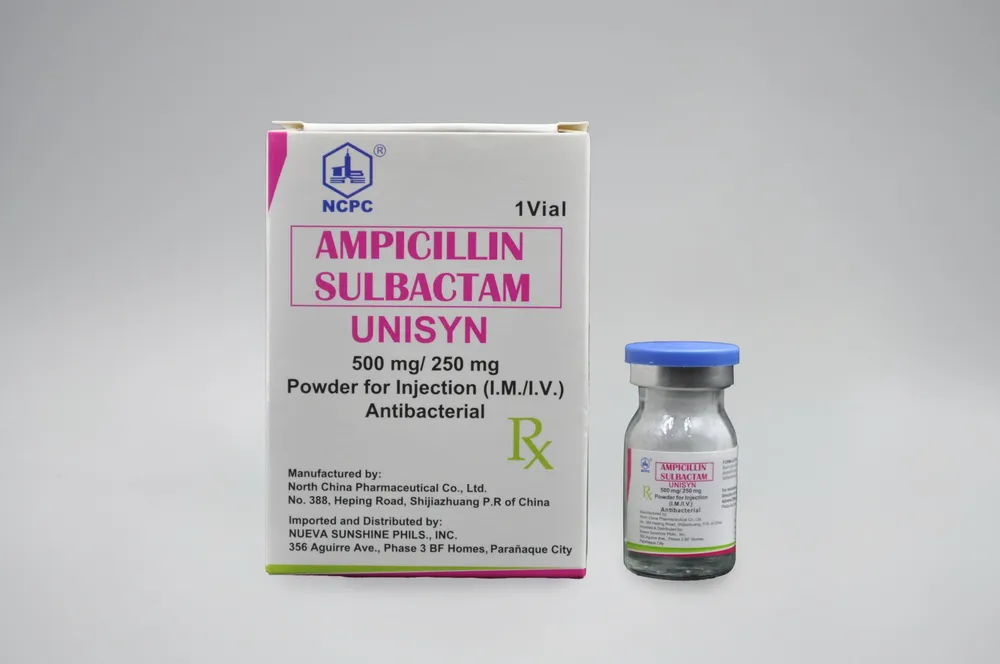
Table of Contents
- Package leaflet: Information for the patient
- 1. What Ampicillin Sulbactam TZF is and what it is used for
- 2. Important information before using Ampicillin Sulbactam TZF
- 3. How to use Ampicillin Sulbactam TZF
- 4. Possible adverse reactions
- 5. How to store Ampicillin Sulbactam TZF
- 6. Contents of the pack and other information
- Information intended exclusively for medical professionals
Package leaflet: Information for the patient
Ampicillin Sulbactam TZF, 500 mg + 250 mg, powder for solution for injection and infusion
Ampicillin Sulbactam TZF, 1 g + 500 mg, powder for solution for injection and infusion
Ampicillin Sulbactam TZF, 2 g + 1 g, powder for solution for injection and infusion
Ampicillinum + Sulbactamum
Please read this leaflet carefully before using the medicine, as it contains important information for the patient.
- Keep this leaflet, as you may need to read it again.
- If you have any questions, please consult your doctor.
- This medicine has been prescribed for a specific individual. Do not give it to others. The medicine may harm another person, even if their symptoms are the same.
- If the patient experiences any adverse reactions, including any not listed in this leaflet, they should inform their doctor. See section 4.
Table of contents
- What Ampicillin Sulbactam TZF is and what it is used for
- Important information before using Ampicillin Sulbactam TZF
- How to use Ampicillin Sulbactam TZF
- Possible side effects
- How to store Ampicillin Sulbactam TZF
- Contents of the package and other information
1. What Ampicillin Sulbactam TZF is and what it is used for
Ampicillin Sulbactam TZF is an antibiotic that exerts a bactericidal effect against bacteria causing infections. It contains two different active substances: ampicillin and sulbactam. Ampicillin belongs to a group of medicines known as "penicillins," whose activity may sometimes be inhibited (inactivated). The second active component (sulbactam) counteracts this inactivation.
Ampicillin Sulbactam TZF is indicated for the treatment of the following infections caused by microorganisms susceptible to ampicillin with sulbactam:
- upper respiratory tract infections, including sinusitis, otitis media, and tonsillitis;
- lower respiratory tract infections, including bacterial pneumonia and bronchitis;
- urinary tract infections and pyelonephritis;
- skin and soft tissue infections;
- gonococcal infections.
Ampicillin Sulbactam TZF may also be administered in the perioperative period to reduce the incidence of postoperative wound infections in patients undergoing abdominal or pelvic surgery where peritonitis may occur.
Ampicillin Sulbactam TZF is recommended for the treatment of ventilator-associated pneumonia and bacteremia (presence of bacteria in the blood) caused by Acinetobacter baumannii.
Ampicillin Sulbactam TZF may be used prophylactically after childbirth or caesarean section to reduce the risk of postoperative sepsis.
2. Important information before using Ampicillin Sulbactam TZF
When not to use Ampicillin Sulbactam TZF
If the patient is allergic (hypersensitive) to ampicillin or sulbactam.
If the patient has previously experienced hypersensitivity to penicillins.
Warnings and precautions
- If the patient has previously experienced an allergic reaction to penicillins or other beta-lactam antibiotics, it is essential to inform the doctor before starting treatment with this medicine.
- If an allergic reaction occurs, characterized by sudden wheezing, difficulty breathing, swelling of the eyelids, face or lips, rash or itching, administration of the medicine must be stopped immediately and medical advice sought without delay.
- If diarrhoea occurs after taking the antibiotic, the patient should consult the doctor.
- If any of the following adverse effects occur: abdominal pain, itching, dark urine, yellowing of the skin or eyes, nausea (feeling sick), or general malaise, the patient should inform the doctor immediately. These symptoms may indicate liver damage caused by treatment with ampicillin and sulbactam.
The patient should also inform the doctor if:
- the patient suffers from infectious mononucleosis (a viral disease); skin rash may occur in patients with mononucleosis after taking ampicillin;
- the patient has kidney disease and/or needs to monitor sodium intake;
- a new infection (e.g. fungal infection) develops during treatment with Ampicillin Sulbactam TZF; the doctor may then decide to discontinue treatment;
- severe skin reactions (redness, rash) occur. The doctor will decide on further treatment (see section 4).
During prolonged therapy, periodic monitoring of kidney, liver, and haematopoietic system function is recommended. This is particularly important in neonates (especially premature infants) and infants.
Ampicillin Sulbactam TZF and other medicines
Tell the doctor about all medicines currently taken or recently taken, as well as any medicines the patient plans to take.
In particular, inform the doctor if the patient is taking:
- allopurinol (used in the treatment of gout – a disease characterized by recurrent joint inflammation): the frequency of skin rash may increase;
- aminoglycoside antibiotics (e.g. streptomycin, tobramycin, gentamicin);
- anticoagulant medicines (medicines preventing blood clots), such as warfarin: the tendency to bleed may increase;
- probenecid (used in the treatment of gout, in cases of elevated uric acid levels in blood): when administered concomitantly with amoxicillin, it may increase antibiotic concentration in blood serum;
- chloramphenicol, erythromycin, sulfonamides (antibiotics): concomitant administration of Ampicillin Sulbactam TZF with any of these medicines may reduce its effectiveness;
- oral contraceptives containing estrogens: there is a risk that the contraceptive effectiveness may decrease; to avoid unintended pregnancy, an additional non-hormonal method of contraception should be used;
- methotrexate (a medicine used, for example, in rheumatoid arthritis and cancer diseases): ampicillin may increase its toxicity;
- salicylic acid, indomethacin, phenylbutazone: may prolong the elimination of penicillins from the body.
Effect on laboratory test results
In patients treated with ampicillin, urine glucose tests may yield false positive results; therefore, if such testing is required, enzymatic tests are recommended.
Pregnancy and breastfeeding
If the patient is pregnant or breastfeeding, suspects she may be pregnant, or is planning to have a child, she should consult her doctor before using this medicine.
Ampicillin Sulbactam TZF should be avoided during pregnancy unless the doctor considers treatment with this medicine necessary.
Breastfeeding is not recommended during treatment with Ampicillin Sulbactam TZF.
Driving and using machines
The effect of the medicine on the ability to drive and operate machinery is unknown.
Ampicillin Sulbactam TZF contains sodium
Ampicillin Sulbactam TZF 500 mg + 250 mg contains 59.15 mg of sodium (a main component of table salt) per vial. This corresponds to 2.957% of the maximum recommended daily intake of sodium in the adult diet.
Ampicillin Sulbactam TZF 1 g + 500 mg contains 112.435 mg of sodium (a main component of table salt) per vial. This corresponds to 5.622% of the maximum recommended daily intake of sodium in the adult diet.
Ampicillin Sulbactam TZF 2 g + 1 g contains 223.75 mg of sodium (a main component of table salt) per vial. This corresponds to 11.187% of the maximum recommended daily intake of sodium in the adult diet.
The sodium content from the solvent should be taken into account when calculating the total sodium content in the prepared dilution of the product (see section "Instructions for preparation and method of administration").
This should be considered in patients with impaired kidney function and in patients monitoring sodium intake in their diet.
3. How to use Ampicillin Sulbactam TZF
The patient does not administer this medicine himself.
The medicine will be given by a suitably trained person, i.e. a doctor or nurse.
Ampicillin Sulbactam TZF may be administered by intramuscular or intravenous injection or by intravenous infusion.
Recommended dose
Adults
The usual dose is 1.5 g to 12 g per day given in divided doses every 6–8 hours.
The daily dose of Ampicillin Sulbactam TZF (4 g of sulbactam) must not exceed 12 g.
Milder infections may be treated by administering the drug every 12 hours.
| Severity of infection | Daily dose of Ampicillin Sulbactam TZF (ampicillin + sulbactam) |
| Mild | 1.5 g to 3 g (1 g + 0.5 g to 2 g + 1 g) |
| Moderate | up to 6 g (4 g + 2 g) |
| Severe | up to 12 g (8 g + 4 g) |
Dosage for the treatment of respiratory tract infections and bacteremia due to Acinetobacter baumannii
The recommended daily dose is 18 g (12 g + 6 g) administered in 6 divided doses.
Higher daily doses have been described in the medical literature for this indication.
For surgical infection prophylaxis, administer 1.5 g to 3 g of Ampicillin Sulbactam TZF during anesthesia to ensure adequate therapeutic drug concentrations in blood serum and tissues during the procedure. This dose may be repeated every 6–8 hours; administration of the drug ends 24 hours after completion of most surgical procedures, unless another treatment cycle with Ampicillin Sulbactam TZF is indicated.
For treatment of uncomplicated gonorrhea, Ampicillin Sulbactam TZF may be administered as a single 1.5 g dose. To increase plasma concentrations and prolong the action of ampicillin and sulbactam, administer 1.0 g of probenecid orally.
Children, infants, and newborns
The dose of Ampicillin Sulbactam TZF for the treatment of most infections in children, infants, and newborns is 150 mg/kg body weight per day (equivalent to 100 mg/kg body weight of ampicillin per day and 50 mg/kg body weight of sulbactam per day).
Ampicillin Sulbactam TZF should be administered to children, infants, and newborns every 6–8 hours, in accordance with standard ampicillin dosing regimens.
In newborns during the first week of life (especially premature infants), the recommended dose is 75 mg/kg body weight per day (equivalent to 50 mg/kg body weight of ampicillin per day and 25 mg/kg body weight of sulbactam per day), given in divided doses every 12 hours.
In children with body weight < 40 kg, the recommended dose is 300 mg (200 mg ampicillin + 100 mg sulbactam)/kg body weight per day, given in divided doses every 6 hours.
If the patient feels during treatment that the effect of the drug is too strong or too weak,
they should consult their physician.
Duration of treatment
The duration of treatment will be determined by the physician depending on the severity and type of infection. The physician’s instructions must be followed.
Method of administration and preparation of solutions
Detailed information is provided at the end of this leaflet in the section intended for healthcare personnel – “Information intended exclusively for healthcare professionals”.
Administration of a higher than recommended dose of Ampicillin Sulbactam TZF
Administration of a dose higher than recommended is unlikely. If the patient suspects that an excessive dose has been administered, they should contact their physician, pharmacist, or nurse as soon as possible. Overdose may intensify adverse effects, including central nervous system irritation and seizures.
In case of any doubts regarding the method of administration, consult a physician, pharmacist, or nurse.
Missed dose of Ampicillin Sulbactam TZF
If a dose is missed at the scheduled time, the drug should be administered as soon as possible, provided there is sufficient time before the next dose, or continue with the regular dosing schedule. Do not administer a double dose to make up for the missed dose.
Discontinuation of Ampicillin Sulbactam TZF
It is important to take the drug according to the recommended treatment schedule. Do not discontinue treatment just because the patient feels better. Premature discontinuation of treatment may result in recurrence of infection.
4. Possible adverse reactions
Like all medicines, this medicine can cause the following adverse reactions, although they do not occur in everyone.
Serious adverse reactions
Rare (occur in 1 to 10 out of 10,000 patients):
- Red, non-itchy, target-shaped or round spots on the trunk, often with central blisters, skin peeling, ulcers in the mouth, throat, nose, genital organs and eyes. These severe skin rashes may be preceded by fever and flu-like symptoms (Stevens-Johnson syndrome or toxic epidermal necrolysis);
- Widespread rash, high fever and swollen lymph nodes (DRESS syndrome or drug hypersensitivity syndrome);
- Severe diarrhoea, persisting for a prolonged period or containing blood, accompanied by abdominal pain and fever; this may be a sign of severe intestinal inflammation (called pseudomembranous colitis), which may occur after antibiotic use.
- Severe skin reactions with blisters, skin peeling and necrotic lesions (erythema multiforme, exfoliative dermatitis)
Frequency unknown (frequency cannot be estimated from available data):
- Sudden wheezing, swelling of lips, face or body, rash, fainting or difficulty swallowing, anaphylactic shock, angioedema (severe allergic reaction);
- Swelling of the face, lips, tongue and (or) throat with difficulty swallowing or breathing, skin rash (erythema), blisters, redness or bluish discoloration of the skin (urticaria);
- Red, scaly, widespread rash with subcutaneous nodules and blisters, accompanied by fever. Symptoms usually appear at the beginning of treatment (acute generalized exanthematous pustulosis);
- Chest pain, which may be a sign of a potentially serious allergic reaction called Kounis syndrome.
➢ If any of these symptoms occur, the medicine must be discontinued immediately
and a doctor must be contacted immediately or the nearest hospital emergency department visited.
Other adverse reactions that should be reported to a doctor if they occur
Very common (occur in more than 1 out of 10 patients):
- Diarrhoea
Common (occur in 1 to 10 out of 100 patients):
- Nausea, abdominal pain
Uncommon (occur in 1 to 10 out of 1,000 patients):
- Thrombocytopenia (low platelet count, affecting blood clotting)
- Headache, drowsiness
- Feeling of fatigue
- Vomiting, glossitis (inflammation of the tongue)
- Hyperbilirubinemia (increased bilirubin levels)
Rare (occur in 1 to 10 out of 10,000 patients):
- Seizures, dizziness
- Colitis (inflammation of the colon)
- Tubulointerstitial nephritis
Frequency unknown (frequency cannot be estimated from available data):
- Candidiasis (yeast infection), reduced susceptibility of pathogenic bacteria to the antibiotic used
- Changes in the number of various types of blood cells: pancytopenia (reduction in all normal blood cell elements: red blood cells, white blood cells and platelets), prolonged blood clotting time, marked reduction in granulocyte count, leukopenia, neutropenia, anaemia including haemolytic anaemia (reduction in red blood cells, including due to red blood cell breakdown), eosinophilia, thrombocytopenic purpura
- Loss of appetite
- Symptoms of nervous system damage (including mood changes, agitation, insomnia, depression, psychosis, seizures, visual disturbances, tinnitus)
- Allergic vasculitis
- Shortness of breath
- Vomiting blood, bleeding from the small intestine and (or) colon, inflammation of the oral mucosa, dry mouth, epigastric pain, taste disturbances, bloating, black hairy tongue
- Bile stasis (cholestasis), liver function disorders, jaundice, increased liver enzyme activity
- Joint pain
- Mucositis (inflammation of mucous membranes)
- Rash, itching, skin reactions, urticaria
- Impaired platelet aggregation
Reporting of adverse reactions
If any adverse reactions occur, including any not listed in this leaflet, inform your doctor, pharmacist or nurse. Adverse reactions can be reported directly to the Department of Monitoring Adverse Reactions of Medicinal Products at the Office for Registration of Medicinal Products, Medical Devices and Biocidal Products
Al. Jerozolimskie 181C, 02-222 Warsaw
Tel.: +48 22 49 21 301
Fax: +48 22 49 21 309
Website: https://smz.ezdrowie.gov.pl
Adverse reactions can also be reported to the marketing authorization holder.
Reporting adverse reactions helps provide more information on the safety of the medicine.
5. How to store Ampicillin Sulbactam TZF
Keep this medicine out of sight and reach of children.
Store below 25 °C. Do not use this medicine after the expiry date (EXP) stated on the packaging.
The expiry date refers to the last day of the stated month.
Medicines must not be disposed of via wastewater or household waste. Ask your pharmacist
what to do with medicines no longer required. Such measures will help protect the environment.
6. Contents of the pack and other information
What Ampicillin Sulbactam TZF contains
The active substances in the medicine are ampicillin (in the form of sodium ampicillin) and sulbactam (in the form of sodium sulbactam).
Ampicillin Sulbactam TZF, 500 mg + 250 mg: 1 vial contains 500 mg ampicillin and 250 mg sulbactam.
Ampicillin Sulbactam TZF, 1 g + 500 mg: 1 vial contains 1 g ampicillin and 500 mg sulbactam.
Ampicillin Sulbactam TZF, 2 g + 1 g: 1 vial contains 2 g ampicillin and 1 g sulbactam.
The medicine does not contain any other ingredients.
What Ampicillin Sulbactam TZF looks like and contents of the pack
White or almost white powder.
Pack: one vial in a cardboard box.
Marketing Authorisation Holder and Manufacturer
Tarchomin Pharmaceutical Works "Polfa" Joint Stock Company
A. Fleminga 2 Street
03-176 Warsaw
Tel.: 22-811-18-14
For more detailed information about this medicine, please contact the Marketing Authorisation Holder.
Information intended exclusively for medical professionals
For additional information, see the Summary of Product Characteristics.
Detailed information on this medicinal product is available on the website of the Office for Registration of Medicinal Products, Medical Devices and Biocidal Products http://www.urpl.gov.pl/en.
Instructions for preparation of the medicinal product for use and method of administration
Any unused product or waste material should be disposed of in accordance with local regulations.
Pharmaceutical incompatibilities
Ampicillin Sulbactam TZF and aminoglycosides must be prepared and administered separately due to in vitro inactivation of aminoglycosides by all aminopenicillins.
Preparation of solutions
Intramuscular injection
Dissolve Ampicillin Sulbactam TZF in 3.2 mL of sterile water for injections or another compatible diluent (e.g. isotonic sodium chloride solution, 5% aqueous glucose solution). To reduce injection pain, 0.5% sterile solution of lidocaine hydrochloride without water may be used for solution preparation.
Intravenous injection
Dissolve Ampicillin Sulbactam TZF in at least 3.2 mL of sterile water for injections or another compatible diluent (e.g. isotonic sodium chloride solution, 5% aqueous glucose solution) and administer slowly (over at least 3 minutes).
Intravenous infusion
Dissolve Ampicillin Sulbactam TZF in at least 3.2 mL of sterile water for injections or another compatible diluent (e.g. isotonic sodium chloride solution, 5% aqueous glucose solution). The final volume for infusion should be achieved by adding an appropriate diluent (do not use water for injections). Administer intravenously as an infusion over 15–30 minutes.
To ensure complete dissolution of the drug, wait several minutes until the active substances are fully dissolved and the foam has disappeared.
Sodium sulbactam is compatible with most intravenous diluents; however, sodium ampicillin, and thus the medicinal product Ampicillin Sulbactam TZF, is less stable in solutions containing glucose or other carbohydrates. Therefore, it should not be mixed with blood products or protein hydrolysates.
Ampicillin, and thus the medicinal product Ampicillin Sulbactam TZF, is incompatible with aminoglycosides and must not be mixed in the same container.
The concentrated solution for intramuscular injection must be used within 1 hour after preparation.
Solutions intended for intravenous injection and infusion retain stability depending on the diluent used and storage temperature.
| Solvent | Concentration ampicillin + sulbactam | Period of validity for use [h] | |
| 25°C | 4°C | ||
| Water for injections | up to 45 mg/mL | 8 | |
| 45 mg/mL | 48 | ||
| up to 30 mg/mL | 72 | ||
| 0.9% sodium chloride solution for injections | up to 45 mg/mL | 8 | |
| 45 mg/mL | 48 | ||
| up to 30 mg/mL | 72 | ||
| M/6 Sodium lactate solution | up to 45 mg/mL | 8 | |
| up to 45 mg/mL | 8 | ||
| 5% aqueous glucose solution | 15 to 30 mg/mL | 2 | |
| up to 3 mg/mL | 4 | ||
| up to 30 mg/mL | 4 | ||
| 5% glucose in 0.45% NaCl solution | up to 3 mg/mL | 4 | |
| up to 15 mg/mL | 4 | ||
| 10% aqueous invert sugar solution | up to 3 mg/mL | 4 | |
| up to 30 mg/mL | 3 | ||
| Ringer's lactate solution | up to 45 mg/mL | 8 | |
| up to 45 mg/mL | 24 | ||