Amisulpride holsten
Poland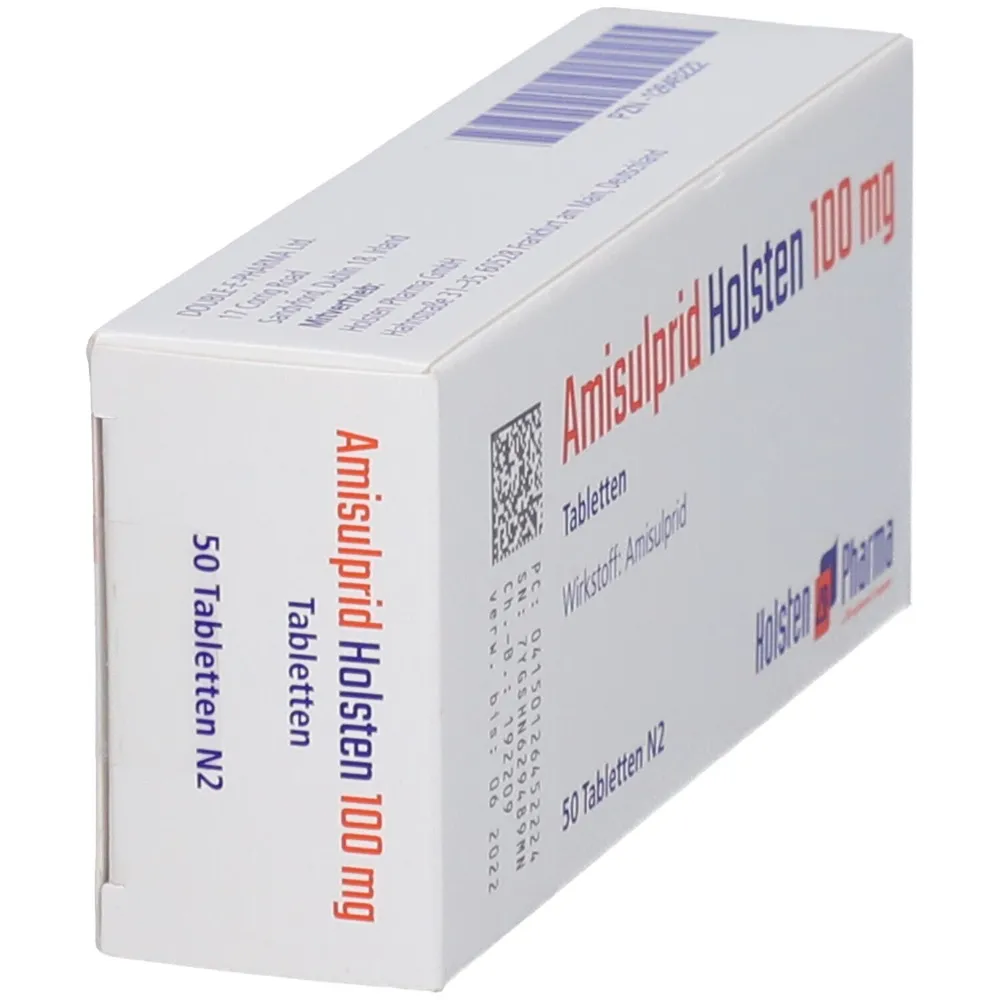
Table of Contents
Package leaflet: Information for the patient
Amisulpryd Holsten, 400 mg, film-coated tablets
Amisulpride
Please read the entire leaflet carefully before using the medicine, as it contains
important information for the patient.
- Keep this leaflet, so that you can read it again if necessary.
- If you have any doubts, please consult your doctor or pharmacist.
- This medicine has been prescribed for a specific individual. Do not pass it on to others. The medicine may harm another person, even if their symptoms are the same.
- If you experience any adverse reactions, including any not listed in this leaflet, inform your doctor or pharmacist. See section 4.
Table of contents:
- What Amisulpryd Holsten is and what it is used for
- Important information before taking Amisulpryd Holsten
- How to take Amisulpryd Holsten
- Possible side effects
- How to store Amisulpryd Holsten
- Contents of the pack and other information
1. What Amisulpryd Holsten is and what it is used for
The active substance in this medicine is amisulpride. Amisulpride belongs to a group of medicines called neuroleptics. Amisulpryd Holsten is indicated for the treatment of schizophrenia.
Schizophrenia may cause patients to feel, see or hear things that are not real, experience strange and disturbing thoughts, changes in behaviour and social withdrawal. Patients may also experience tension, anxiety or depression. Amisulpride improves disturbances in thinking, feeling or behaviour. Amisulpryd Holsten is used in the treatment of both newly developed and chronic schizophrenia.
2. Important information before using Amisulpryd Holsten
When not to use Amisulpryd Holsten:
- if the patient is allergic to amisulpride or any of the other ingredients of this medicine (listed in section 6). Symptoms of allergy include: rash, difficulty swallowing or breathing, swelling of the lips, face, throat or tongue.
- if the patient is breastfeeding (see section "Pregnancy and breastfeeding").
- if the patient has breast cancer or tumours whose growth is dependent on prolactin levels.
- if the patient has a phaeochromocytoma (a tumour of the adrenal gland).
- if the patient is taking other medicines that may affect heart function, such as antiarrhythmics (see section "Other medicines and Amisulpryd Holsten").
- if the patient is taking levodopa, a medicine used to treat Parkinson's disease (see section "Other medicines and Amisulpryd Holsten").
- in children under 18 years of age.
If any of the situations described above apply to the patient, this medicine should not be taken.
If in doubt, consult a doctor or pharmacist before using Amisulpryd Holsten.
Warnings and precautions
Before starting Amisulpryd Holsten, discuss with your doctor or pharmacist if:
- the patient has kidney disease
- the patient has Parkinson's disease
- the patient has ever had seizures (epileptic fits)
- the patient has heart problems (heart rhythm)
- there is a family history of heart disease or heart disorders
- the patient has been informed by a doctor about an increased risk of stroke
- the patient has diabetes or has been told they are at increased risk of developing diabetes
- the patient is elderly. Elderly patients are more likely to experience low blood pressure or drowsiness. A slightly increased risk of death in elderly patients with dementia who are treated with antipsychotic medicines has been reported (compared to patients not treated with these medicines)
- the patient has a slow heart rate (less than 55 beats per minute)
- the patient has low blood potassium levels
- the patient or someone in their family has had blood clots, as medicines such as amisulpride may increase the risk of blood clots
- the patient has a low number of white blood cells (agranulocytosis). This may lead to more frequent infections than usual.
- the patient frequently experiences infections with fever, severe chills, sore throat or mouth ulcers. These may be symptoms of a blood disorder called leukopenia.
If in doubt whether any of the above situations apply to the patient, consult a doctor or pharmacist before using Amisulpryd Holsten.
Amisulpryd Holsten and other medicines
Tell your doctor or pharmacist about all medicines the patient is currently taking or has recently taken, as well as any medicines they plan to take. This includes medicines available without a prescription, including herbal medicines. Amisulpride may affect the action of certain medicines, and certain medicines may affect the action of amisulpride.
In particular, do not take amisulpride and inform your doctor if the patient is taking the following medicines:
- levodopa, a medicine used to treat Parkinson's disease.
- medicines called "dopamine agonists", such as ropinirole and bromocriptine.
Tell your doctor if the patient is taking any of the following medicines:
- medicines used to control heart function, such as quinidine, disopyramide, amiodarone and sotalol
- other antipsychotic medicines used to treat mental illnesses
- medicines used for severe pain, called opioids, such as morphine, pethidine or methadone
- medicines used for high blood pressure and heart conditions, such as diltiazem and verapamil, guanfacine and cardiac glycosides
- clonidine, used to treat migraines, facial flushing or high blood pressure
- mefloquine, used to treat malaria
- sleeping medicines, such as barbiturates and benzodiazepines
- painkillers, such as tramadol and indometacin
- anaesthetics
- antihistamines, such as promethazine, which cause drowsiness.
If in doubt whether any of the above situations apply to the patient, consult a doctor or pharmacist before using Amisulpryd Holsten.
Amisulpryd Holsten with food, drink and alcohol
- Amisulpryd Holsten tablets should be taken before meals, with a large amount of water.
- Do not drink alcohol while taking Amisulpryd Holsten, as alcohol may affect the action of the medicine.
Pregnancy and breastfeeding
If the patient is pregnant, breastfeeding, suspects she may be pregnant or is planning to have a baby, she should consult a doctor or pharmacist before using this medicine.
Do not use Amisulpryd Holsten if the patient is breastfeeding or plans to breastfeed.
Use of this medicine during pregnancy is not recommended unless the benefit to the mother clearly outweighs the potential risk.
Women of childbearing potential should discuss effective contraceptive methods with their doctor before starting treatment.
Newborns whose mothers have taken amisulpride during the third trimester (last three months of pregnancy) may experience the following symptoms: tremors, muscle stiffness and/or weakness, drowsiness, agitation, breathing difficulties and feeding problems. If any of these symptoms occur in the baby, contact a doctor immediately.
Driving and using machines
Amisulpryd Holsten may cause reduced alertness, dizziness or drowsiness. If any of these symptoms occur, the patient should not drive or operate any machinery or equipment.
Amisulpryd Holsten tablets contain lactose monohydrate.
If the patient has been previously diagnosed by a doctor as having an intolerance to certain sugars, the patient should consult their doctor before taking this medicine.
Amisulpryd Holsten tablets contain sodium.
The medicine contains less than 1 mmol (23 mg) of sodium per coated tablet, which means the medicine is considered "sodium-free".
3. How to use Amisulpryd Holsten
This medicine should always be taken exactly as directed by the physician. In case of doubt, consult the doctor or pharmacist.
Administration of the medicine
- The medicine should be taken orally.
- Tablets should be swallowed whole or divided, with water. Tablets must not be chewed.
- The medicine should be taken before meals.
- If the patient feels that the effect of the medicine is too strong or too weak, medical advice should be sought. Do not alter the dosage without consulting the physician.
- If the physician has informed the patient about intolerance to certain sugars, the patient should consult the physician before taking this medicine.
Recommended dose
The dose depends on the severity of the disease. Always follow the physician's instructions precisely.
Adults
The usual dose ranges from 50 mg to 800 mg per day.
The physician may start treatment with a lower dose if necessary.
If required, the physician may prescribe a dose up to 1200 mg per day.
Doses below 300 mg per day may be taken once daily as single doses. The medicine should be taken every day at the same time.
Doses exceeding 300 mg per day should be taken in two divided doses—half in the morning and half in the evening.
Other pharmaceutical companies offer medicines containing amisulpride in lower strengths (e.g. 50 mg tablets).
Elderly patients
Safety in this patient group has been studied in a limited number of individuals. The physician will closely monitor the patient due to an increased risk of low blood pressure or drowsiness caused by the medicine.
Patients with renal impairment
The physician may reduce the dose.
Use in children and adolescents
The efficacy and safety of amisulpride have not been established in the age group from puberty up to 18 years. There is limited data on the use of amisulpride in adolescents with schizophrenia. Therefore, this medicine is not recommended for use in children and adolescents, as safety has not yet been established in this age group.
Overdose of Amisulpryd Holsten
In case of overdose, seek immediate medical advice or go to the nearest hospital emergency department. Take the medicine packaging along so that the doctor knows what has been taken. Symptoms may include: restlessness, tremor, muscle stiffness, low blood pressure, dizziness, or drowsiness which may lead to loss of consciousness.
Missed dose of Amisulpryd Holsten
If a dose is missed, take it as soon as possible. However, if it is almost time for the next dose, skip the missed dose.
Do not take a double dose to make up for a missed dose.
Discontinuation of Amisulpryd Holsten
Continue taking Amisulpryd Holsten for as long as the physician advises. Even if the patient feels better, do not stop taking the medicine. Stopping treatment prematurely may lead to worsening or relapse of the illness. Amisulpryd Holsten must not be discontinued abruptly unless otherwise directed by the physician. Sudden discontinuation may cause withdrawal symptoms such as:
- nausea, vomiting
- excessive sweating
- difficulty falling asleep or intense restlessness
- muscle stiffness or uncontrolled body movements
- return of the initial illness symptoms.
If you have any further questions about the use of this medicine, consult your doctor or pharmacist.
Blood tests
Treatment with Amisulpryd Holsten may affect the results of certain blood tests. This includes tests measuring the level of a hormone called prolactin and tests assessing liver function parameters. If blood tests are to be performed, inform the physician that you are taking Amisulpryd Holsten.
If you have any further questions regarding the use of this medicine, consult your doctor or pharmacist.
4. Possible adverse reactions
Like any medicine, Amisulpryd Holsten may cause adverse reactions, although not everyone
experiences them.
You must stop taking Amisulpryd Holsten and contact your doctor immediately or go to the
nearest hospital emergency department if:
- the patient has high fever, excessive sweating, muscle stiffness, rapid heartbeat, fast breathing, and confusion, dizziness, or agitation. These may be symptoms of a severe but rare condition called neuroleptic malignant syndrome;
- the patient has irregular heartbeat, rapid heart rate, or chest pain, which may indicate a heart attack or life-threatening heart problems;
- the patient develops blood clots in the veins, especially in the legs (symptoms include itching, pain, and redness in the leg). These clots may travel through blood vessels to the lungs, causing chest pain and breathing difficulties. If such symptoms occur, contact your doctor immediately;
- the patient experiences infections more frequently than usual. This may be due to blood disorders (agranulocytosis) or reduced number of white blood cells (neutropenia).
Uncommon: may affect up to 1 in 100 people
- Hypersensitivity reactions. Symptoms may include: rash, difficulty swallowing or breathing, swelling of the lips, face, throat, or tongue.
- Seizures (epileptic fits).
Contact your doctor immediately if any of the following adverse reactions occur:
Very common: may affect more than 1 in 10 people
- Tremor, increased muscle tension or spasms, slow body movements, increased salivation, excessive restlessness.
Common: may affect up to 1 in 10 people
- Uncontrolled body movements, mainly in hands and feet. Drowsiness.
(These symptoms may be reduced if your doctor lowers the dose of amisulpride or prescribes an additional medicine.)
Uncommon: may affect up to 1 in 100 people
- Uncontrolled body movements, particularly of the face or tongue.
Other adverse reactions:
Common: may affect up to 1 in 10 people
- Difficulty falling asleep (insomnia), restlessness, agitation.
- Dizziness, drowsiness.
- Constipation, nausea, or vomiting, dryness of the oral mucosa.
- Weight gain.
- Galactorrhea (milk secretion) in women and men, breast pain.
- Amenorrhea (cessation of menstruation).
- Breast enlargement in men.
- Difficulty achieving or maintaining erection, ejaculation disorders.
- Dizziness (may be caused by low blood pressure).
Uncommon: may affect up to 1 in 100 people
- Slowing of heart rate.
- High blood sugar levels (hyperglycaemia).
- Changes (increase) in liver enzyme activity.
Reporting of adverse reactions
If any adverse reactions occur, including any not listed in this leaflet, inform your doctor or pharmacist. Adverse reactions can be reported directly to the Department for Monitoring Adverse Drug Reactions at the Office for Registration of Medicinal Products, Medical Devices and Biocidal Products:
Al. Jerozolimskie 181C, 02-222 Warsaw, phone: +48 22 49-21-301, fax: +48 22 49-21-309, website: https://smz.ezdrowie.gov.pl .
Adverse reactions can also be reported to the marketing authorization holder.
Reporting adverse reactions helps provide more information on the safety of this medicine.
5. How to store Amisulpryd Holsten
Keep this medicine out of sight and reach of children.
There are no special requirements for storage of this medicine.
Do not use Amisulpryd Holsten after the expiry date stated on the carton and
blister. Do not use Amisulpryd Holsten after the expiry date stated on the
carton and blister after Expiry date (EXP). The batch number follows the abbreviation "Lot". The expiry date refers to the last day of the stated month.
Do not use this medicine if you notice signs of discoloration of the tablets.
Medicines must not be disposed of via wastewater or household waste. Ask your pharmacist how to dispose of medicines no longer required. Such measures help protect the environment.
6. Contents of the pack and other information
What Amisulpryd Holsten contains
- The active substance is amisulpride. Each coated tablet contains 400 mg of amisulpride.
- The other ingredients are: lactose monohydrate, methylcellulose, sodium carboxymethyl starch type A, microcrystalline cellulose, magnesium stearate, basic butyl methacrylate copolymer, titanium dioxide (E171), talc, magnesium stearate, macrogol 6000.
What Amisulpryd Holsten looks like and contents of the pack
White or almost white, oblong, coated tablet with a break line on one side.
The medicine is available in packs containing 30, 60 and 90 coated tablets.
Not all pack sizes may be marketed.
Marketing Authorisation Holder and Manufacturer
Holsten Pharma GmbH
Hahnstraße 31-35
60528 Frankfurt am Main
Germany
The leaflet does not contain all the information about this medicine. If you have any further questions or
doubts, please consult your doctor or pharmacist.
This medicinal product is authorised in the European Economic Area countries under the following names:
Poland: Amisulpryd Holsten