Alprox
Poland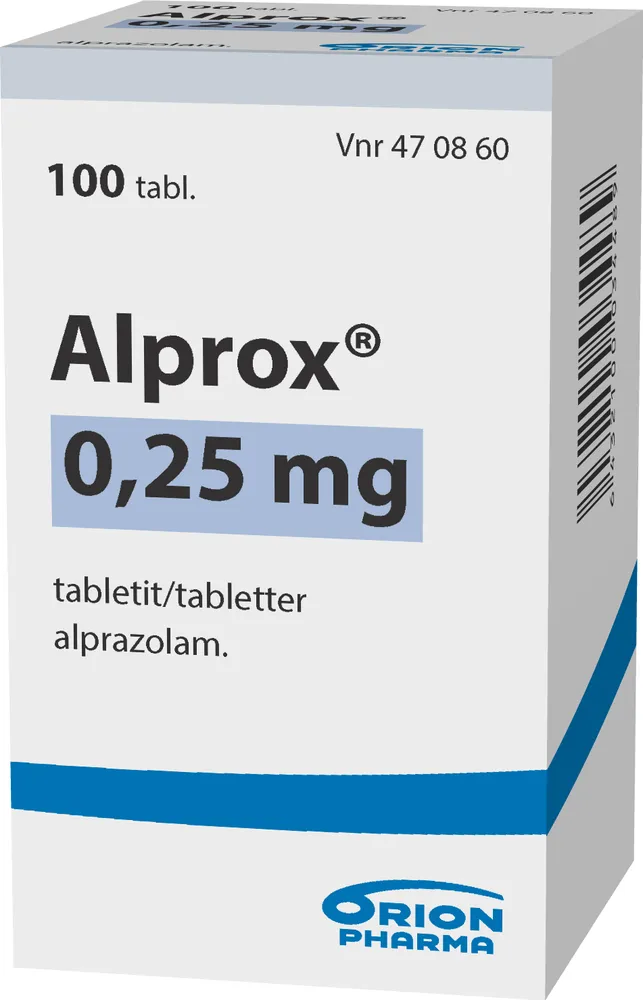
Table of Contents
Package leaflet: Information for the user
Alprox, 0.25 mg, tablets
Alprox, 0.5 mg, tablets
Alprox, 1 mg, tablets
Alprazolamum
Please read all of this leaflet carefully before taking this medicine, because it contains
important information for you.
- Keep this leaflet, as you may need to read it again.
- If you have any further questions, please ask your doctor or pharmacist.
- This medicine has been prescribed for you personally. Do not pass it on to others. It may harm others, even if their symptoms are the same as yours.
- If you experience any adverse reactions, including any not listed in this leaflet, tell your doctor or pharmacist. See section 4.
Contents of the leaflet
- What Alprox is and what it is used for
- Important information before taking Alprox
- How to take Alprox
- Possible side effects
- How to store Alprox
- Contents of the pack and other information
1. What Alprox is and what it is used for
The active substance in Alprox is alprazolam. It belongs to a group of medicines called benzodiazepines.
Alprazolam acts on the central nervous system, reducing anxiety and depression. It also has calming, sedative, and muscle-relaxant effects.
Alprox is used in the treatment of symptoms of anxiety disorders in adults, in situations where symptoms are severe, impair normal functioning, or cause significant distress to the patient. This medicine is intended for short-term use only.
2. Important information before using Alprox
When not to use Alprox
- if the patient is allergic to alprazolam, other benzodiazepines, or any of the other ingredients of this medicine (listed in section 6)
- if the patient has been diagnosed with muscle weakness ( myasthenia gravis)
- if the patient has severe respiratory insufficiency
- if the patient suffers from repeated prolonged breathing pauses during sleep (sleep apnoea)
- if the patient has severe liver insufficiency.
Warnings and precautions
Before starting treatment with this medicine, discuss with your doctor or pharmacist if:
- the patient notices that the effect of the tablets has weakened after using them for several weeks (development of tolerance to the medicine)
- the patient experiences unexpected reactions: e.g. motor restlessness, agitation, irritability, aggressive outbursts, nightmares, sudden insomnia, hallucinations, psychoses, inappropriate behaviour, sudden disorientation (confusion) or other behavioural disturbances. These unexpected reactions occur more frequently in children and elderly patients.
- the patient suffers from chronic lung disease
- the patient drinks alcohol and uses sedative medicines simultaneously
- the patient suffers from severe depression (suicide risk)
- the patient has been diagnosed with kidney or liver dysfunction
- the patient has a certain type of glaucoma.
Dependence
Using Alprox may lead to physical and psychological dependence on the medicine.
If the patient finds it difficult to stop taking this medicine, this may indicate psychological dependence. If physical dependence has developed, abruptly stopping treatment may cause withdrawal symptoms (see section 3 "Discontinuing Alprox"). The risk of dependence increases with higher doses and longer duration of treatment. To reduce this risk, the lowest possible dose should be used, and the treatment duration should be as short as possible. Follow your doctor's instructions (see section 3). The risk of dependence is also higher in patients who abuse or have previously abused alcohol or prescription medicines.
Abuse
A known risk associated with using this medicine is abuse (see section 4).
Abusing this medicine may lead to overdose and death. Always follow your doctor's dosing instructions. This medicine may be sought after by individuals who abuse prescription medicines and should be stored in a secure place inaccessible to others.
Effect on memory
During treatment with Alprox, memory may be impaired. This usually occurs several hours after taking the medicine. If such symptoms occur, contact your doctor.
Effect on mood
Using Alprox may increase the risk of hypomanic (a milder form of mania) or manic episodes (a state of mental overexcitement, excessive excitement and increased energy) in patients with depression. If hypomania or mania occurs, contact your doctor immediately.
In patients with depression, treatment with Alprox may increase the risk of self-harm or suicidal thoughts.
Before starting treatment with Alprox, consult your doctor.
If treatment with Alprox is necessary and the patient has depression or has previously had suicidal or self-harm thoughts, the doctor may closely monitor the treatment. Contact your doctor immediately or go to hospital if any thoughts of self-harm or suicide occur.
If the patient is scheduled for surgery
The patient should inform the doctor that they are taking Alprox if surgery is planned.
Children and adolescents
Consult a doctor if the patient is under 18 years of age. The safety of this medicine has not been confirmed in patients under 18 years of age.
Elderly patients
Benzodiazepines and similar medicines should be used with caution in elderly patients due to the risk of excessive sedation and/or muscle weakness. This may lead to falls, which often have serious health consequences in this patient group.
Alprox with other medicines
Tell your doctor or pharmacist about all medicines the patient is currently taking or has recently taken, as well as any medicines the patient plans to take. This includes both prescription and non-prescription medicines, herbal remedies, or natural products. Remember to mention all other medicines recently taken.
Some medicines may cause adverse effects when taken together with alprazolam.
The effectiveness of treatment may change if the patient takes certain other medicines simultaneously. In such cases, the doctor may adjust the treatment or dosing regimen.
These include, for example:
Medicines that enhance the sedative effect of alprazolam:
- sleeping tablets, sedatives
- antipsychotic medicines, antidepressants
- antiepileptic medicines
- anaesthetics
- strong centrally acting opioid painkillers
- sedating antihistamines.
Medicines that enhance the effect of alprazolam by delaying its breakdown in the liver:
- nefazodone, fluvoxamine, fluoxetine, sertraline (used to treat severe depression)
- cimetidine and omeprazole (used to treat stomach disorders)
- HIV medicines
- dextropropoxyphene
- oral contraceptives
- diltiazem (used to treat high blood pressure and heart disorders)
- certain antibiotics (e.g. erythromycin and troleandomycin) and certain antifungal medicines (e.g. itraconazole, ketoconazole).
Medicines that reduce the effect of alprazolam by increasing its breakdown in the liver:
- carbamazepine and phenytoin (used to treat epilepsy and other disorders)
- St John's wort ( Hypericum perforatum – herbal preparation)
- rifampicin (used to treat tuberculosis)
- theophylline.
Alprazolam may enhance the effect of medicines such as:
- digoxin (used to treat heart disorders)
- muscle relaxants
- imipramine and desipramine (used to treat severe depression)
- clozapine (used to treat psychoses). The risk of respiratory arrest and/or cardiac arrest increases.
Alcohol enhances the sedative effect of alprazolam.
Concomitant use of Alprox with opioids (strong painkillers, medicines used in substitution treatment, and certain antitussive medicines) increases the risk of drowsiness, breathing difficulties (respiratory depression), coma, and may be life-threatening. Therefore, concomitant use should only be considered if other treatment options are not possible. If your doctor prescribes Alprox together with opioids, use the lowest effective dose, and the treatment duration should be as short as possible.
Inform your doctor about all opioid medicines the patient is taking and strictly follow the doctor's instructions. It may be helpful to inform family members or friends about the possibility of the above-mentioned symptoms occurring. If such symptoms occur, contact your doctor.
During your next visit, inform your doctor about taking Alprox.
Alprox with food, drink and alcohol
Take tablets with a glass of water or another liquid.
Alcohol
Do not drink alcohol during treatment with Alprox. Alcohol enhances the sedative effect of alprazolam.
Pregnancy and breastfeeding
Do not use Alprox during pregnancy unless your doctor considers it absolutely necessary for the mother's treatment.
Experience with the use of alprazolam in pregnant women is insufficient. Alprox should not be used during pregnancy, suspected pregnancy, or when planning pregnancy, unless your doctor considers it absolutely necessary. Observations in humans suggest that using alprazolam may be harmful to the unborn child. If the patient is pregnant or planning pregnancy, she should discuss the possibility of discontinuing treatment with her doctor. However, if the patient continues using Alprox until delivery, she should inform her doctor, as newborns may experience certain withdrawal symptoms.
Do not use this medicine during breastfeeding. This medicine may have harmful effects on the breastfed infant.
If the patient is pregnant or breastfeeding, suspects she may be pregnant, or is planning to have a child, she should consult her doctor or pharmacist before using this medicine.
Driving and operating machinery
Since alprazolam causes relaxation, muscle weakness, and sedation, it may impair the ability to drive and perform tasks requiring alertness, especially at the beginning of treatment and if sleep is inadequate. Therefore, avoid driving and operating machinery while taking Alprox.
Alprox contains lactose
One Alprox tablet contains lactose (monohydrate form): 85.7 mg (0.25 mg tablets), 85.5 mg (0.5 mg tablets), or 171 mg (1 mg tablets). If the patient has previously been diagnosed with intolerance to certain sugars, they should contact their doctor before taking this medicine.
3. How to use Alprox
This medicine should always be taken exactly as prescribed by your doctor. If in doubt, consult
your doctor or pharmacist.
Treatment usually starts with a low dose, which may be gradually increased if necessary, according
to your doctor's instructions. Do not change the dosage or stop treatment with Alprox without first
consulting your doctor. It is recommended that the same doctor initiates, supervises, and concludes
the treatment. Using medicines such as Alprox may lead to the development of physical and
psychological dependence. This risk increases with higher doses and longer duration of treatment,
and is greater in patients who abuse alcohol, drugs, or medications. Do not give this medicine to
other people.
Anxiety:
The usual starting dose is 0.25 to 0.5 mg three times daily. The maintenance dose is typically 0.5
to 3 mg daily, divided into three doses. Lower starting and maintenance doses are recommended
for elderly patients, patients sensitive to the sedative effects of the medicine, and patients with
liver or kidney impairment, compared to the usual recommended doses.
The maximum duration of treatment should not exceed 2 to 4 weeks. Long-term treatment is not
recommended.
Alprox should not be used as monotherapy (as the sole treatment) for depression or for anxiety
with accompanying depression.
The safety and efficacy of alprazolam have not been established in patients under 18 years of age.
Alprox should not be used in this patient group.
Taking more Alprox than prescribed
If you or anyone else, for example a child, has taken too much of this medicine by mistake, seek
medical advice immediately by contacting a doctor or going to a hospital. If the person is conscious,
activated charcoal should be administered promptly.
When going to the doctor or hospital, take the medicine packaging with you.
Taking an excessive dose of alprazolam may cause severe drowsiness, muscle weakness (impaired
coordination), and reduced level of consciousness. A drop in blood pressure, loss of consciousness,
and respiratory depression may also occur. Alcohol and other central nervous system depressants
can intensify the adverse effects of alprazolam.
Missing a dose of Alprox
Take the missed dose as soon as possible. However, if it is almost time for the next dose, skip the
missed dose. Do not take a double dose to make up for a missed one. Ensure you have an adequate
supply of Alprox before going on holiday or travelling.
Stopping Alprox treatment
Alprazolam may cause physical and psychological dependence. The risk of dependence is
greatest with high doses and prolonged treatment. The risk is higher in patients who abuse alcohol,
drugs, or medications.
Suddenly stopping treatment may lead to withdrawal symptoms (e.g. headache, muscle pain,
severe anxiety and tension, sleep disturbances, restlessness, confusion, and irritability), and in
severe cases – depersonalization (feeling detached from oneself and one's identity), derealization
(feeling detached from reality), increased auditory sensitivity, loss of sensation, tingling in the
limbs, hypersensitivity to light, sound, and touch, hallucinations, and seizures. Withdrawal
symptoms may occur several days after stopping treatment. Therefore, do not stop treatment with
Alprox suddenly. The dose should be gradually reduced according to your doctor's instructions.
If you have any further questions about the use of this medicine, consult your doctor or pharmacist.
4. Possible adverse reactions
Like all medicines, this medicine can cause adverse reactions, although not everyone will experience them.
Adverse reactions, if they occur, are usually observed at the beginning of treatment and typically subside
as treatment continues or when the dose is reduced.
You should stop taking Alprox and contact your doctor immediately if symptoms of angioedema occur, such as:
- facial swelling, swelling of the tongue or throat
- difficulty swallowing
- urticaria and breathing difficulties. Angioedema has been reported with unknown frequency (frequency cannot be estimated from the available data).
Very common ( may affect more than 1 in 10 people ):
- sedation
- drowsiness
- depression
- memory impairment
- poor motor coordination and inability to stand (ataxia)
- speech disorders
- dizziness
- headache
- constipation
- dry mouth
- fatigue
- irritability.
Common ( may affect up to 1 in 10 people ):
- decreased appetite
- increased appetite
- loss of appetite (anorexia)
- confusion
- disorientation
- decreased libido or increased libido (sex drive)
- anxiety
- insomnia (difficulty falling asleep)
- nervousness
- tremor
- balance disorders
- coordination disorders
- difficulty concentrating
- excessive drowsiness
- extreme fatigue
- blurred vision
- nausea
- vomiting
- skin inflammation
- sexual dysfunction
- weight gain or weight loss.
Uncommon ( may affect up to 1 in 100 people ):
- mania
- hallucinations
- anger
- agitation
- drug dependence
- partial or complete memory loss (amnesia)
- feeling of intoxication
- decreased muscle strength
- urinary incontinence
- irregular menstruation
- withdrawal symptoms.
Frequency unknown (frequency cannot be estimated from the available data):
- increased blood prolactin levels (a peptide hormone secreted by the anterior pituitary gland)
- hypomania (mild mania)
- aggressive behaviour
- hostile behaviour
- disorganized thinking
- increased psychomotor activity
- drug abuse
- autonomic nervous system dysfunction
- muscle tone disorders
- shortened reaction time
- speech disorders
- low blood pressure
- gastrointestinal disorders
- difficulty swallowing
- hepatitis
- hepatic function abnormalities
- jaundice
- photosensitivity reactions
- inability to empty the bladder (urinary retention)
- swelling of the limbs
- increased intraocular pressure.
During treatment with benzodiazepines such as Alprox, pre-existing depression may become apparent.
Alprazolam may cause physical and psychological dependence. See section 2 “Warnings and precautions”.
Abrupt discontinuation of Alprox may lead to withdrawal symptoms such as anxiety,
insomnia, and seizures (see section 3 “Stopping Alprox”).
Memory disturbances may occur, leading to inappropriate behaviour (see section 2
“Warnings and precautions”).
Reporting of adverse reactions
If any adverse reactions occur, including any not listed in this leaflet, inform your doctor or pharmacist. Adverse reactions can be reported directly to the Department of Monitoring Adverse Drug Reactions at the Office for Registration of Medicinal Products, Medical Devices and Biocidal Products:
Al. Jerozolimskie 181C, 02-222 Warsaw,
tel.: 22 49-21-301, fax: 22 49-21-309. Website: https://smz.ezdrowie.gov.pl
Adverse reactions can also be reported to the marketing authorization holder.
Reporting adverse reactions helps to provide more information on the safety of the medicine.
5. How to store Alprox
Store below 25°C.
The container contains a moisture-absorbing agent that protects the tablet from moisture. Do not
remove the capsule containing the moisture-absorbing agent from the container. Do not swallow the capsule containing
the moisture-absorbing agent.
Keep this medicine out of sight and reach of children.
Do not use this medicine after the expiry date stated on the carton. The expiry date refers to the last day of the stated month.
Medicines must not be disposed of via wastewater or household waste. Ask your pharmacist how to dispose of medicines no longer required. Such measures help protect the environment.
6. Contents of the pack and other information
What Alprox contains
- The active substance is alprazolam. One tablet contains 0.25 mg, 0.5 mg, or 1 mg of alprazolam.
- The other ingredients are: maize starch, gelatin, lactose monohydrate, magnesium stearate.
What Alprox looks like and contents of the pack
0.25 mg tablets: white or almost white, uncoated, oval tablets with a score line and marked "ORN 51", size 9 x 6 mm.
0.5 mg tablets: white or almost white, uncoated, oval tablets with a score line and marked "ORN 52", size 9 x 6 mm.
1 mg tablets: white or almost white, uncoated, round, flat tablets with bevelled edges, a score line and marked "ORN 50", diameter 9 mm.
The tablet can be divided into equal doses.
Pack sizes:
20, 30, 50 and 100 tablets.
Not all pack sizes may be marketed.
Marketing Authorisation Holder
Orion Corporation
Orionintie 1
FI-02200 Espoo
Finland
Manufacturer
Orion Corporation, Orion Pharma
Orionintie 1
FI-02200 Espoo
Finland
Orion Corporation Orion Pharma
Joensuunkatu 7
FI-24100 Salo
Finland
For further information about this medicine, please contact the local representative of the Marketing Authorisation Holder:
Orion Pharma Poland Sp. z o.o.
[email protected]