Akineton
Poland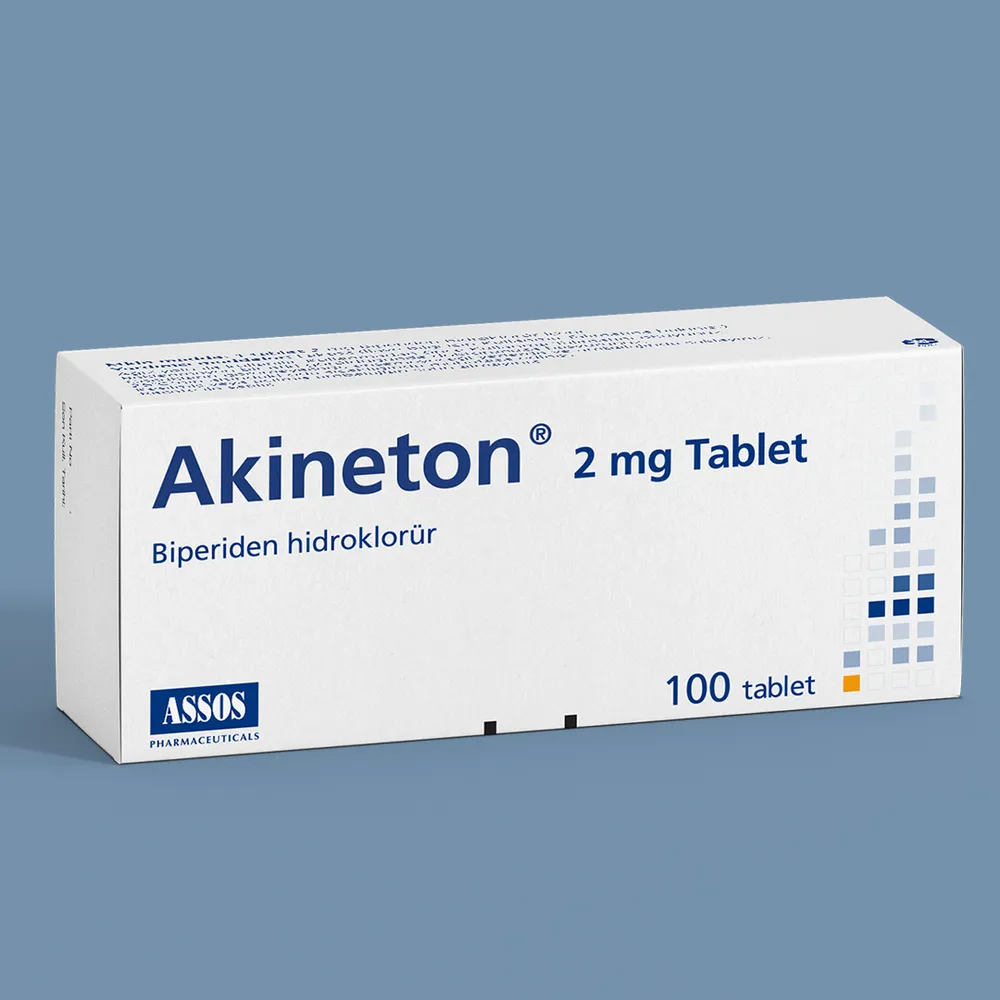
Table of Contents
Package leaflet: Information for the patient
Warning! Keep this leaflet! Information on the immediate packaging in a foreign language.
Akineton (Акинетон), 2 mg, tablets
Biperideni hydrochloridum
Akineton and Акинетон are the same brand names of the same medicinal product written in Polish and Bulgarian.
Please read the leaflet carefully before using the medicine, as it contains
important information for the patient.
- Keep this leaflet for future reference.
- If you have any questions, consult your doctor or pharmacist.
- This medicine has been prescribed for a specific individual. Do not pass it on to others. It may harm someone else, even if their symptoms are similar.
- If you experience any adverse reactions, including any not listed in this leaflet, inform your doctor or pharmacist. See section 4.
Table of contents:
- What Akineton is and what it is used for
- Important information before taking Akineton
- How to take Akineton
- Possible side effects
- How to store Akineton
- Contents of the pack and other information
1. What Akineton is and what it is used for
Akineton is an anticholinergic agent with strong effects on the central nervous system, used in the treatment of Parkinson's disease and extrapyramidal disorders characterized by involuntary, abnormal movements.
By binding to certain receptors in the brain (muscarinic receptors), the drug reduces symptoms such as muscle rigidity, involuntary muscle tremors, bradykinesia, and other involuntary movements.
Biperiden is recommended as an adjunctive treatment during therapy with levodopa or similar drugs, which have stronger effects on motor disturbances in Parkinson's disease.
Akineton is used:
- in the treatment of muscle rigidity, tremor, and bradykinesia in Parkinson's disease;
- in the treatment of movement disorders (extrapyramidal symptoms) caused by certain neuroleptic drugs or other agents with similar effects, such as tongue spasms, throat and swallowing muscle spasms, and episodes of forced upward eye deviation (early dyskinesias); motor restlessness and the urge to remain constantly in motion (akathisia), as well as Parkinson-like symptoms (parkinsonism);
- in the treatment of other extrapyramidal movement disorders, such as involuntary movements causing twisting and posturing of various body parts, often resulting in unnatural postures, which may affect the entire body (generalized dystonia) or individual body parts (focal dystonia), particularly movement disorders affecting the head (Meige's syndrome), blepharospasm (Blepharospasmus), or spasmodic torticollis (Torticollis spasmodicus).
2. Important information before using Akineton
When not to use Akineton:
- if the patient is allergic to the active substance or to any of the other ingredients of this medicine (listed in section 6);
- if the patient has narrow-angle glaucoma;
- if the patient has mechanical obstruction of the gastrointestinal tract;
- if the patient has megacolon (dilation of the colon);
- if the patient has intestinal obstruction.
Warnings and precautions
Before starting treatment with Akineton, discuss this with your doctor or pharmacist. Exercise particular caution:
- in patients with benign prostatic hyperplasia (enlarged prostate) with residual urine in the bladder;
- in patients with urinary retention (inability to naturally empty the bladder through the urethra); in patients with existing urinary voiding disorders, the bladder should be emptied before each administration of the medicine;
- in patients with myasthenia gravis (a chronic disease characterized by rapid fatigue and muscle weakness);
- in patients with conditions that may lead to severe tachycardia (accelerated heart rate);
- when administering to elderly patients, especially those with organic brain disorders (specific brain function disorders, e.g. vascular or degenerative in origin), due to their frequent excessive sensitivity even to normal doses of the medicine and increased risk of adverse effects;
- in patients with an increased tendency to seizures;
- in pregnant women (see section "Pregnancy, breastfeeding and fertility").
Intraocular pressure should be monitored regularly (see section 4. "Possible side effects").
Isolated cases of misuse and dependence on Akineton have been reported. This may be due to the occasionally observed improvement in mood and unnatural excitement (euphoria) associated with the use of the medicine.
Except in life-threatening situations, abrupt discontinuation of the medicine should be avoided due to the risk of disease recurrence.
Children and adolescents
Experience with the use of biperiden in children is limited and mainly concerns short-term treatment of drug-induced dystonia (e.g. caused by neuroleptics or metoclopramide and similar medicines).
Akineton with other medicines
Tell your doctor about all medicines the patient is currently taking or has recently taken, as well as any medicines the patient plans to take.
Concomitant use of Akineton with other anticholinergic medicines, such as psychotropic drugs, first-generation antihistamines (antiallergic agents), medicines used in Parkinson's disease, and antispasmodic drugs, may intensify adverse effects on the central and peripheral nervous system.
When quinidine (a medicine used to treat heart rhythm disorders) is used concomitantly, adverse effects on the coronary circulation (particularly atrioventricular conduction) may be intensified.
Concomitant use of levodopa (a medicine used in the treatment of Parkinson's disease) and Akineton may exacerbate involuntary movements (dyskinesias). When biperiden was administered concomitantly with levodopa or carbidopa in patients with Parkinson's disease, general movement disorders resembling restlessness or chorea (choreiform movements) have been observed.
Involuntary movements (tardive dyskinesias) caused by neuroleptics (medicines used in the treatment of psychiatric disorders) may be intensified by Akineton. Occasionally, Parkinsonian symptoms in the presence of existing tardive dyskinesias are so severe that anticholinergic treatment becomes necessary.
The effectiveness of metoclopramide (a medicine used to treat nausea and other gastrointestinal disorders) and of medicines with similar gastrointestinal effects may be reduced by anticholinergic medicines such as Akineton.
Anticholinergic medicines may intensify the adverse effects of pethidine (a strong painkiller) on the central nervous system.
Taking Akineton with food, drink and alcohol
Akineton tablets may be divided. They should preferably be taken during or after a meal, with a large amount of liquid (e.g. a glass of water). Taking the medicine immediately after a meal helps reduce undesirable effects on the gastrointestinal tract.
During treatment with Akineton, the effects of alcohol may be enhanced, and the consequences of concomitant use may be unpredictable. Therefore, alcohol should not be consumed during treatment with Akineton.
Biperiden may intensify the effects of alcohol.
Pregnancy, breastfeeding and fertility
If the patient is pregnant or breastfeeding, suspects she may be pregnant, or is planning to have a child, she should consult her doctor or pharmacist before using this medicine.
Pregnancy
There are no data indicating that the use of biperiden may be associated with teratogenic effects. However, due to the lack of experience with the use of biperiden during pregnancy, particular caution should be exercised, especially during the first trimester. There are no data on placental transfer. The medicine may be used during pregnancy only if, in the opinion of the doctor, the benefit to the mother outweighs the potential risk to the fetus.
Breastfeeding
Anticholinergic medicines may inhibit lactation.
Biperiden passes into breast milk, reaching concentrations similar to those in plasma. Breastfeeding should be discontinued during treatment with biperiden.
Driving and operating machinery
Akineton has a negative effect on the ability to drive and operate machinery. Adverse effects of Akineton on the central and peripheral nervous system, such as fatigue, dizziness and lethargy, may impair concentration and reaction speed to such an extent—even when the medicine is used correctly and regardless of limitations caused by the underlying condition requiring treatment—that performing activities requiring special caution, such as driving vehicles, operating machinery or working at heights, may be dangerous. These abilities may be further impaired if biperiden is used concomitantly with other medicines affecting the central nervous system, anticholinergic agents, and especially with alcohol.
Akineton contains monohydrate lactose
If the patient has previously been diagnosed with intolerance to certain sugars, the patient should consult a doctor before taking this medicine.
3. How to use Akineton
This medicine should always be used as directed by the physician. If in doubt, consult
your doctor or pharmacist.
The dosage of the medicine should be individually determined.
The duration of treatment depends on the type and course of the disease: from short-term therapy, e.g.
in cases of drug-induced extrapyramidal symptoms (especially in children), to long-term treatment (e.g. in Parkinson's disease).
Treatment should be initiated at the lowest effective dose, which should then be gradually increased
until the optimal dose for the patient is reached, depending on the therapeutic effect and adverse reactions.
Recommended doses of Akineton:
Parkinson's disease
The recommended initial dose in the treatment of Parkinson's disease is half a tablet twice daily (2 mg
of bipiperidene hydrochloride per day). The dose may be increased by 2 mg per day. The maintenance dose is half to 2 tablets, administered 3 or 4 times daily (corresponding to 3 to 16 mg
of bipiperidene hydrochloride per day). The maximum daily dose is 16 mg of bipiperidene
hydrochloride (equivalent to 8 tablets per day).
Extrapyramidal symptoms caused by other medicines
In the treatment of extrapyramidal symptoms caused by other drugs, used concomitantly with
neuroleptics, half to 2 tablets are administered 1 to 4 times daily (corresponding to 1 to 16 mg
of bipiperidene hydrochloride per day), depending on the severity of symptoms.
Other extrapyramidal movement disorders
Dosage should be adjusted slowly, by gradual weekly increments of the initial 2 mg dose, until the maximum tolerated daily dose is reached, which may be several times higher than the maximum daily doses used for other indications.
Use in children and adolescents (aged 3 to 15 years)
In the treatment of drug-induced extrapyramidal symptoms, used concomitantly with
neuroleptics, half to one tablet is administered 1 to 3 times daily (corresponding to 1 to 6 mg of bipiperidene hydrochloride per day).
Warning:
If rapid action is required, the injectable form of the medicine should be used.
Overdose of Akineton
Symptoms of overdose include: dilated, "lazy" pupils, dry mucous membranes, facial flushing,
increased heart rate, intestinal and bladder atony, elevated body temperature (especially in children),
excitation, delirium, disorientation, disturbances of consciousness and/or hallucinations. In severe
poisoning, there is a risk of circulatory collapse and respiratory arrest.
Management in case of overdose
Antidotes include acetylcholinesterase inhibitors; in exceptional cases physostigmine, which penetrates the cerebrospinal fluid and reduces central symptoms (e.g. physostigmine salicylate in case of a positive physostigmine test). Depending on the severity of symptoms, circulatory and respiratory support (oxygen therapy), body temperature reduction in case of fever, and urinary catheterization may be necessary.
If an overdose of Akineton has been taken, contact a doctor or pharmacist immediately or go to the nearest hospital. Bring the package leaflet and the medicine container with you.
Missed dose of Akineton
The medicine should always be taken daily at the same time(s) as directed by the physician, which helps ensure regular use. If a dose is missed, take the next dose at the usual time. Do not take a double dose to make up for a missed dose.
Stopping Akineton treatment
Always follow the physician's instructions regarding how long to take the medicine.
Abrupt discontinuation of bipiperiden may lead to a recurrence of previous symptoms that occurred before starting treatment. Therefore, treatment should not be stopped abruptly. The dose should be gradually reduced under medical supervision.
If you have any further questions about the use of this medicine, consult your doctor or pharmacist.
4. Possible adverse effects
Like all medicines, this medicine can cause adverse effects, although they do not occur in everyone.
Adverse effects may occur primarily at the beginning of treatment and when doses are increased too rapidly.
The following classification has been used to assess the frequency of adverse effects:
Rare (may occur in fewer than 1 in 1,000 people):
- at higher doses, excitation, nervousness, anxiety, disorientation, mental hallucinations (delirious syndromes and hallucinations), insomnia. Central nervous system stimulation is common in patients with impaired brain function and may require dose reduction;
- influence on sleep phases;
- feeling of fatigue, dizziness and memory disturbances;
- rapid heartbeat (palpitations);
- dryness of the mouth (if this symptom is severe, drink small amounts of fluids frequently or chew sugar-free gum), nausea, gastrointestinal disturbances;
- muscle tremors;
- drowsiness.
Very rare (may occur in fewer than 1 in 10,000 people):
- hypersensitivity;
- restlessness, unnaturally elevated mood (euphoria);
- headache, involuntary movements, disturbances in motor coordination and speech disorders, increased tendency to seizures and epileptic fits;
- visual disturbances, pupil dilation with increased sensitivity to light. Glaucoma (with closed-angle filtration) may occur. Therefore, intraocular pressure should be monitored regularly;
- slowing of heart rate;
- constipation;
- reduced sweating, allergic skin rash;
- difficulty in emptying the urinary bladder, particularly in patients with enlarged prostate (prostatic adenoma). In case of complete urinary retention, inform the doctor immediately, as it may be necessary to reduce the dose or administer an antidote (carbachol) to the patient.
Frequency not known (cannot be estimated from available data):
- swelling or inflammation of the parotid glands.
Reporting of adverse effects
If any adverse effects occur, including any adverse effects not listed in this leaflet, inform your doctor or pharmacist. Adverse effects can be reported directly to the Department of Monitoring of Adverse Drug Reactions of the Office for Registration of Medicinal Products, Medical Devices and Biocidal Products, Al. Jerozolimskie 181C, 02-222 Warsaw, Tel.: +48 22 49 21 301, Fax: +48 22 49 21 309, website: https://smz.ezdrowie.gov.pl.
Reporting adverse effects allows additional information on the safety of the medicine to be collected.
5. How to store Akineton
Keep this medicine out of sight and reach of children.
No special storage conditions apply.
Do not use this medicine after the expiry date stated on the packaging.
The expiry date refers to the last day of the stated month.
Medicines should not be disposed of via wastewater or household waste. Ask your pharmacist how to dispose of medicines no longer required. Such measures help protect the environment.
6. Contents of the package and other information
What Akineton contains
The active substance is biperiden hydrochloride.
Each tablet contains 2 mg of biperiden hydrochloride, equivalent to 1.8 mg of biperiden.
The other ingredients are: maize starch, potato starch, lactose monohydrate, calcium hydrogen phosphate dihydrate, microcrystalline cellulose, copovidone K 28, talc, magnesium stearate.
What Akineton looks like and contents of the pack
The package (cardboard box) contains 50 tablets (5 blisters).
For more detailed information, please contact the responsible party or the parallel importer.
Marketing Authorisation Holder in Bulgaria, the country of export:
Desma GmbH, Peter-Sander-Str. 41B, D-55252 Mainz-Kastel, Germany
Manufacturer:
Laboratorio Farmaceutico SIT Srl, Via Cavour, 70, 27035 Mede (PV), Italy
Parallel importer:
InPharm Sp. z o.o.
ul. Strumykowa 28/11
03-138 Warsaw, Poland
Repackaged in:
InPharm Sp. z o.o. Services sp. k.
ul. Chełmżyńska 249
04-458 Warsaw, Poland
Marketing Authorisation Number in Bulgaria, the country of export: 20020915
Parallel Import Licence Number: 91/22