Velariq
Italy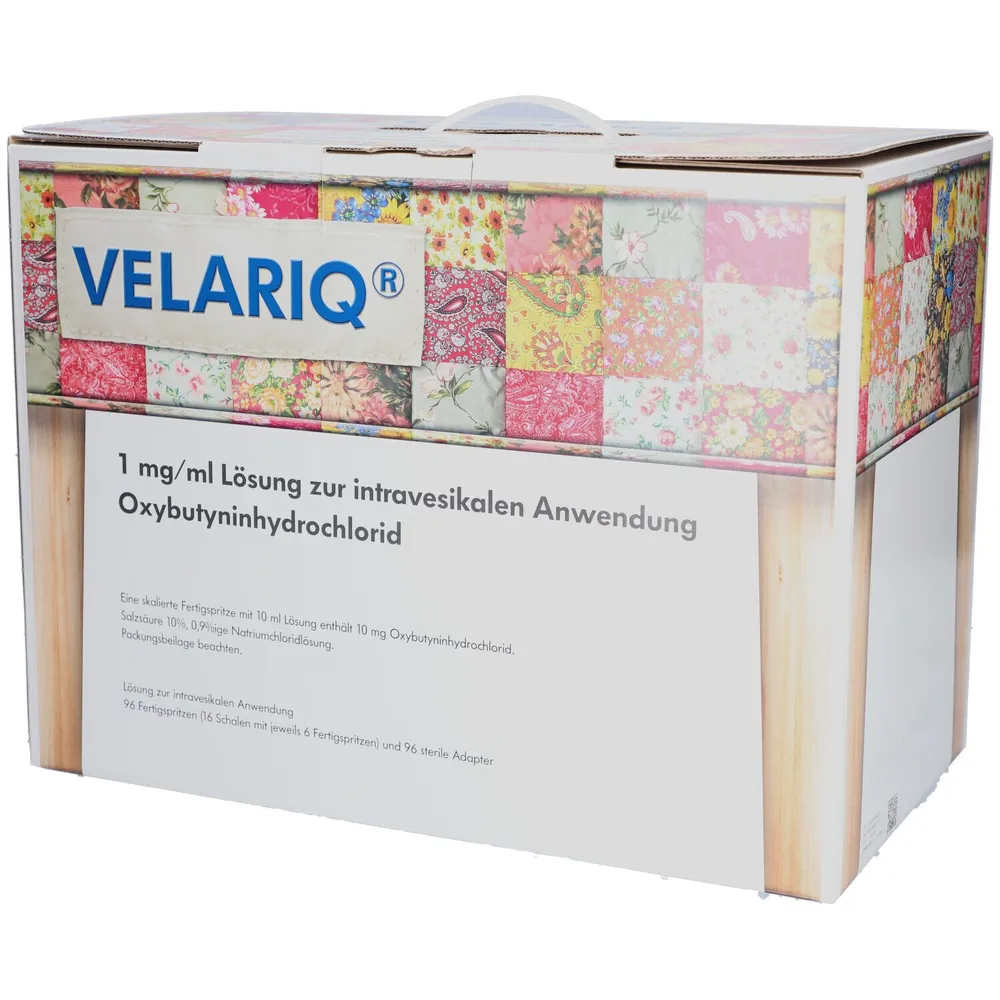
Package leaflet: Information for the user
Velariq 1 mg/mL, intravesical solution
oxybutynin chloride
Please read this leaflet carefully before using this medicine because it contains important information for you.
- Keep this leaflet. You may need to read it again.
- If you have any questions, ask your doctor or pharmacist.
- This medicine has been prescribed for you only. Do not give it to other people, even if their symptoms are the same as yours, as it could be harmful.
- If you experience any side effect, including those not listed in this leaflet, contact your doctor or pharmacist. See section 4.
Contents of this leaflet:
- What Velariq is and what it is used for
- What you need to know before using Velariq
- How to use Velariq
- Possible side effects
- How to store Velariq
- Contents of the pack and other information
1. What Velariq is and what it is used for
What Velariq is
Velariq is a solution containing a medicine called oxybutynin chloride. It works by relaxing the bladder muscles and stopping sudden muscle contractions (spasms). This helps control the release of urine.
Velariq solution must be instilled directly into the bladder (intravesical use) through a small tube called a catheter.
What Velariq is used for
- Velariq is used in children from 6 years of age and in adults for the treatment of neurogenic detrusor overactivity (overactive bladder due to neurological disease), such as:
- spinal cord injury;
- spina bifida (a birth defect of the spinal cord).
- Velariq should only be used if your bladder is not well controlled with oral administration of this type of medicine and if you currently empty your bladder using a catheter. Treatment with Velariq must be initiated and supervised by a physician specialized in the management of neurogenic overactive bladder.
2. What you need to know before using Velariq
The following section contains information that is important to know before using this
medicinal product.
Do not use Velariq
- if you are allergic to oxybutynin chloride or to any of the other ingredients of this medicine (listed in section 6);
- if you have a rare autoimmune disease called myasthenia gravis, which weakens the muscles and makes them easily fatigued;
- if you have a severe stomach or intestinal condition such as severe ulcerative colitis or toxic megacolon (an acute dilation of the intestine);
- if you have glaucoma (increased pressure in the eyes, sometimes sudden and painful, with blurred vision or loss of vision). If there is a family history of glaucoma, inform your doctor;
- if you are receiving oxygen therapy.
Warnings and precautions
Talk to your doctor before using Velariq if:
- you have a urinary tract infection. Your doctor may need to prescribe antibiotics;
- you are over 65 years old and may be more sensitive to Velariq;
- you are taking sublingual nitrates (a medicine placed under the tongue to treat chest pain);
- you have a blockage in the digestive system, as Velariq may slow down stomach and intestinal movements;
- you have a stomach hernia (hiatal hernia) or heartburn;
- you have a nerve disorder called autonomic neuropathy affecting involuntary body functions such as heart rate, blood pressure, sweating, and digestion;
- you have problems with memory, language, or reasoning ability;
- you have an overactive thyroid gland, which may cause increased appetite, weight loss, or sweating;
- you have narrowing of the blood vessels supplying blood and oxygen to the heart;
- you have heart problems that may cause shortness of breath or swelling of the ankles;
- you have an irregular and/or rapid heartbeat;
- you have high blood pressure;
- you have an enlarged prostate. Velariq may reduce saliva production, leading to tooth decay, gum disease, or fungal infection of the mouth (thrush). Special care should be taken when using Velariq in hot weather or during fever. For example, avoid sun exposure and strenuous physical activity during the hottest hours. This is because Velariq reduces sweating. This may lead to heat exhaustion or heat stroke. Children This medicine is not recommended for use in children under 6 years of age, as safety and efficacy have not been established in this age group.
Other medicines and Velariq
Inform your doctor if you are taking, have recently taken, or might take any other
medicines.
Using Velariq together with other medicines that have similar side effects, such as dry mouth, constipation, and drowsiness, may increase the frequency and severity of these side effects.
The active ingredient in Velariq is oxybutynin chloride, which may slow down the gastrointestinal tract and thus affect the absorption of other oral medicines. In addition, using this medicine together with others may increase the effect of oxybutynin chloride.
In particular, inform your doctor if you are taking any of the following medicines:
- Bisphosphonates (used to treat osteoporosis) and other medicines that may cause or worsen oesophageal inflammation.
- Ketoconazole, itraconazole, or fluconazole (used to treat fungal infections).
- Erythromycin, a macrolide antibiotic (used to treat bacterial infections).
- Biperiden, levodopa, or amantadine (used to treat Parkinson's disease).
- Antihistamines (used to treat allergies, such as hay fever).
- Phenothiazines, butyrophenones, or clozapine (used to treat mental illness).
- Tricyclic antidepressants (used to treat depression).
- Dipyridamole (used to treat blood clotting disorders).
- Quinidine (used to treat heart rhythm abnormalities).
- Atropine and other anticholinergic medicines (used to treat gastrointestinal disorders such as irritable bowel syndrome).
Velariq and alcohol
Velariq may cause drowsiness or blurred vision. Drowsiness may be worsened by alcohol consumption.
Pregnancy and breastfeeding
If you are pregnant, think you may be pregnant, planning to become pregnant, or breastfeeding, consult your doctor before using this medicine.
Pregnancy
Do not use Velariq during pregnancy unless prescribed by your doctor.
Breastfeeding
The use of Velariq during breastfeeding is not recommended.
Driving and using machines
Velariq may cause drowsiness or blurred vision. Exercise caution when driving or operating machinery.
Velariq contains sodium
This medicine contains 3.5 mg of sodium (the main component of table salt) per mL. This corresponds to 0.18% of the maximum daily dietary intake recommended for an adult.
3. How to use Velariq
Use this medicine exactly as directed by your doctor. If you have any doubts, consult your doctor.
Dosage
Your doctor will determine the correct amount of Velariq needed to treat your overactive bladder. Do not change the dose on your own initiative.
During the initial phase of treatment, your doctor will periodically monitor your bladder function and, if necessary, adjust the dose.
Adolescents (from 12 years of age), adults and elderly (aged 65 and over)
The recommended starting dose is usually 10 mL of Velariq per day.
Children (6–12 years)
The recommended starting dose is usually 2 mL of Velariq per day.
If you have liver or kidney problems
If you have liver or kidney problems, inform your doctor.
Method of administration
Your doctor will prescribe Velariq only if you or your family members or caregiver are familiar with the procedure known as intermittent catheterisation (CIC). This is a technique performed at least six times a day to help empty the bladder using a catheter.
CIC stands for Clean Intermittent Catheterisation:
- Clean: as free from germs as possible.
- Intermittent: performed at regular intervals, several times a day.
- Catheterisation: using a catheter—a thin tube—to drain urine from the bladder.
Your doctor will teach you and/or your family members or caregiver the CIC procedure and how to administer Velariq. The procedure is as follows:
- Prepare a germ-free environment.
- Insert a single-use sterile catheter into the bladder as instructed by your doctor.
- Completely empty the bladder through the catheter.
- Remove the syringe from the pouch.
- Remove the cap from the syringe.
- Screw the conical step luer-lock adapter onto the end of the syringe.
- Using this adapter, connect the catheter to the syringe.
- Inject the specified amount of solution into the bladder by applying steady pressure to the syringe plunger.
- If the dose is less than one full syringe (10 mL), any unused solution remaining in the syringe must be returned to the pharmacy for proper disposal.
- Remove the catheter. The injected solution remains in the bladder until the next catheterisation. Each syringe is for single use only. The urethral catheter, the conical step luer-lock adapter, and any unused medicine must be discarded.
If you use more Velariq than you should
If you accidentally administer a higher dose than prescribed, immediately empty your bladder using a catheter.
Excessive dosing may cause symptoms such as restlessness, dizziness, speech and vision disturbances, muscle weakness, or rapid heartbeat.
If you experience one or more of these symptoms, contact your doctor or the nearest hospital immediately.
If you forget to use Velariq
If you forget to take a dose at the usual time, take the usual dose at the next scheduled catheterisation. However, if it is almost time for the next dose, skip the missed dose.
Do not use a double dose to make up for a forgotten dose.
If you have any doubts, always consult your doctor.
If you stop using Velariq
If you stop treatment with Velariq, symptoms and problems related to overactive bladder may return or worsen. If you are considering stopping treatment, always consult your doctor.
If you have any doubts about using this medicine, consult your doctor.
4. Possible side effects
Like all medicines, this medicine can cause side effects, although not everybody gets them.
The side effects that occur most frequently are typical of this type of medicine and include dry mouth, drowsiness and constipation.
With the use of oxybutynin chloride, the following side effects have been reported, although not all have been reported with intravesical use. The frequency of these side effects is unknown (the frequency cannot be estimated from the available data):
Stop taking Velariq and/or contact a doctor immediately if:
- you have a severe allergic reaction causing swelling of the face or throat (angioedema)*;
- you experience reduced sweating, leading to overheating in hot environments (heat stroke)*;
- you suddenly feel eye pain with blurred vision or loss of vision (glaucoma)*. Inform your doctor or pharmacist if any of the following side effects become severe or last for more than a few days: Kidney
- urinary tract infection
- presence of bacteria in the urine without symptoms
- sudden urge to urinate (urinary urgency)
- protein in the urine
- blood in the urine
- pain during injection (instillation) of the solution into the bladder
- difficulty in urination or trouble starting to urinate Mental disorders
- seeing or hearing things that are not there (hallucinations)
- cognitive disturbances
- restlessness and excessive movements (hyperactivity)
- agitation*
- mental clouding or confusion
- difficulty sleeping
- agoraphobia (e.g. fear of leaving home, entering shops, being in crowds or public spaces)
- inability to concentrate
- anxiety*
- nightmares*
- feeling of excessive suspicion and distrust towards others (paranoia)*
- symptoms of depression*
- becoming dependent on oxybutynin (in patients with a previous history of drug or substance abuse)* Consciousness
- disorientation
- loss of consciousness
- lethargy
- feeling of tiredness
- drowsiness
- feeling dizzy or lightheaded Eyes
- dry eyes
- abnormal sensation in the eyes
- inability of the eye to automatically adjust focus between near and distant objects, possibly resulting in blurred or double vision and tired eyes
- blurred vision*
- increased pressure in the eyes* Heart and blood vessel disorders
- regular but abnormally fast heartbeat (supraventricular tachycardia)
- irregular heartbeat (arrhythmia)*
- low blood pressure Skin
- facial flushing
- skin rash
- decreased sweating
- night sweats
- itchy rash with raised bumps (urticaria)*
- dry skin*
- increased sensitivity of the skin to sunlight (photosensitivity)* Digestive problems
- constipation
- dry mouth
- abdominal discomfort
- pain in the lower or upper abdomen
- feeling unwell
- indigestion
- diarrhoea
- vomiting*
- loss of appetite (anorexia)*
- reduced appetite*
- difficulty swallowing (dysphagia)*
- heartburn*
- abnormal swelling accompanied by pain and nausea or vomiting (pseudo-obstruction)*
- altered sense of taste
- thirst General disorders
- chest discomfort
- feeling cold
- headache
- nervous system disorder (anticholinergic syndrome)
- seizures
- increased level of a hormone called prolactin in the blood. In women, changes in the normal menstrual cycle or spontaneous milk discharge from the breast may occur. Men may experience disturbances in libido or erection, as well as breast tissue enlargement. * These side effects have also been reported with this type of medicine. However, it is not known whether these side effects will also occur with the medicine Velariq prescribed to you. One patient experienced oxygen deficiency during home oxygen therapy (see section 2, “Do not use Velariq”).
Additional side effects in children and adolescents
Children may be more sensitive to the effects of this product, especially side effects affecting the central nervous system and psychiatric side effects.
Reporting of side effects
If you experience any side effects, including those not listed in this leaflet, talk to your doctor or pharmacist. You can also report side effects directly via the national reporting system at https://www.aifa.gov.it/content/segnalazioni-reazioni-avverse.
By reporting side effects, you can help provide more information on the safety of this medicine.
5. How to store Velariq
Keep this medicine out of the sight and reach of children.
Do not use this medicine after the expiry date stated on the syringe label and on the box following "Exp". The expiry date refers to the last day of that month.
This medicine does not require any special storage conditions.
For single-dose use only.
Any unused solution must be immediately discarded.
Do not dispose of medicines via wastewater or household waste. Ask your pharmacist how to dispose of medicines you no longer use. This will help protect the environment.
6. Package contents and other information
What Velariq contains
- The active substance is oxybutynin chloride. 1 mL of solution contains 1 mg of oxybutynin chloride. A pre-filled graduated syringe containing 10 mL of sterile solution contains 10 mg of oxybutynin chloride.
- The other excipients are: hydrochloric acid, sodium chloride solution (0.9%).
Description of the appearance of Velariq and contents of the pack
Velariq is a clear, colourless solution. It is supplied as a ready-to-use solution in a 10 mL pre-filled syringe made of cycloolefin copolymer, with a plunger and a cap made of synthetic bromobutyl rubber.
Blister packs containing 12, 96 and 96 (hospital pack) pre-filled syringes, including sterile adapters, respectively 12 and 96, as application aids.
Not all pack sizes may be marketed.
Marketing Authorisation Holder and Manufacturer
MEDICE Arzneimittel Pütter GmbH & Co. KG
Kuhloweg 37
58638 Iserlohn
Germany
This medicinal product is authorised in the European Economic Area countries under the following names:
AT: Velariq 1 mg/ml Lösung zur intravesikalen Anwendung
BE: Velariq 1 mg/ml oplossing voor intravesicaal gebruik / solution intravésicale / Lösung zur intravesikalen Anwendung
CZ: Tarraconiq 1 mg/ml intravezikální roztok
DE: Velariq 1 mg/ml Lösung zur intravesikalen Anwendung
LU: Velariq 1 mg/ml Lösung zur intravesikalen Anwendung
NL: Velariq 1 mg/ml oplossing voor intravesicaal gebruik
PL: Oxybutynin Medice 1 mg/ml roztwór do pęcherza moczowego
PT: Velariq 1 mg/ml solução intravesical
SE: Velarmediq 1 mg/ml intravesikal lösning
SK: Velariq 1 mg/ml intravezikálny roztok