Surmontil
Italy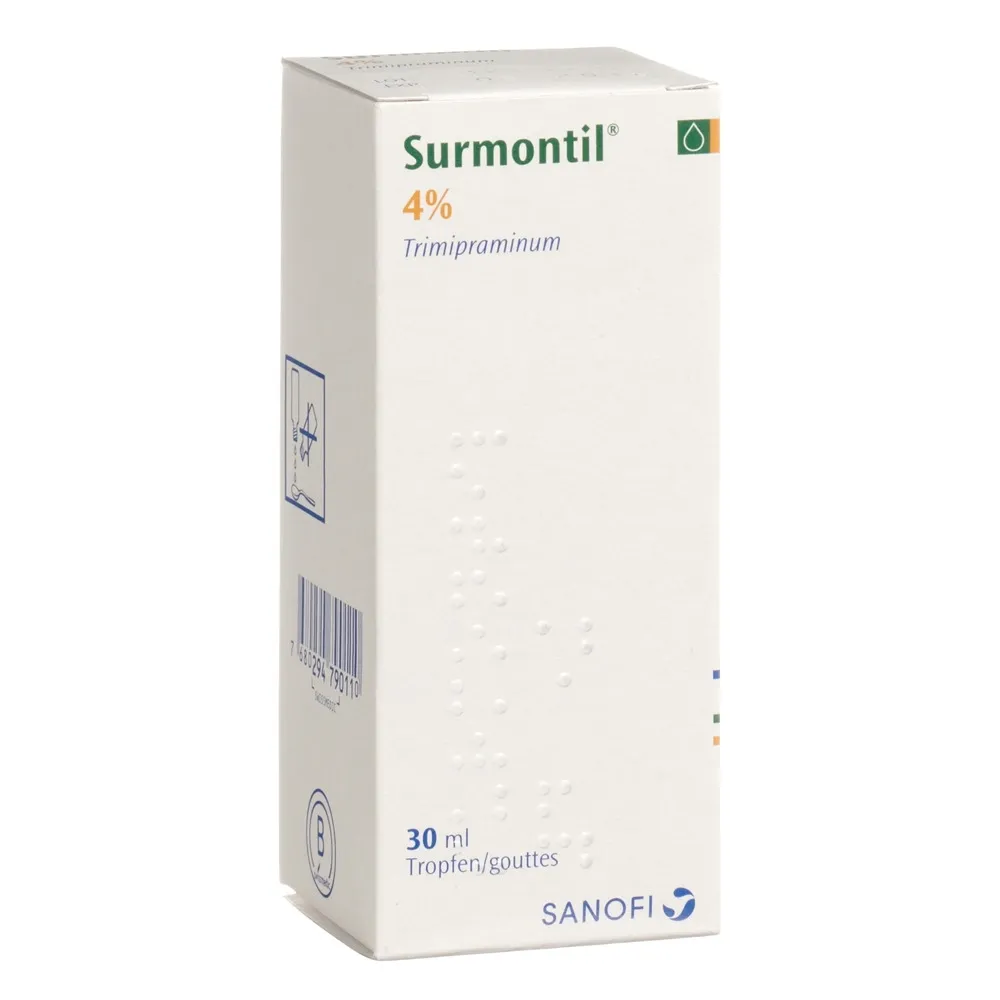
Table of Contents
Package leaflet: Information for the patient
Surmontil 40 mg/ml oral drops, solution
trimipramine
Please read this leaflet carefully before taking this medicine because it contains
important information for you.
- Keep this leaflet. You may need to read it again.
- If you have any questions, ask your doctor or pharmacist.
- This medicine has been prescribed for you only. Do not give it to others, even if their symptoms are the same as yours, as it may be harmful.
- If you experience any adverse reactions, including those not listed in this leaflet, contact your doctor or pharmacist. See section 4.
Contents of this leaflet:
- What Surmontil is and what it is used for
- What you need to know before taking Surmontil
- How to take Surmontil
- Possible side effects
- How to store Surmontil
- Contents of the pack and other information
1. What Surmontil is and what it is used for
Surmontil contains trimipramine, which belongs to a class of medicines called tricyclic antidepressants.
Surmontil is indicated for the treatment of:
- depression, mainly when associated with sleep disturbances, anxiety, and agitation
- neuroses (anxiety neurosis, phobic neurosis, hysterical neurosis, obsessive neurosis).
2. What you should know before taking Surmontil
Do not take Surmontil
- if you are allergic to trimipramine, to other tricyclic antidepressants, or to any of the other ingredients of this medicine (listed in section 6);
- if you suffer from a condition of the eye called "glaucoma";
- in case of urinary disorders, such as urinary retention or enlargement of the prostate gland (prostatic hyperplasia) with residual urine formation;
- if you suffer from severe muscle weakness (myasthenia gravis);
- if you have recently had a heart attack;
- if you suffer from severe liver diseases (hepatopathies);
- if you are taking concomitantly so-called irreversible monoamine oxidase inhibitors.
To avoid potentially serious adverse effects (up to seizures, coma, and death), your doctor will not prescribe Surmontil together with other medicines used for depression known as "monoamine oxidase inhibitors" or until at least two weeks have passed since stopping treatment with these medicines (see "Other medicines and Surmontil").
If you are to undergo surgery, your doctor will stop your Surmontil treatment at least 5 days before the procedure.
Warnings and precautions
Use Surmontil under direct medical supervision.
It is important to read this entire section carefully if you are to take this medicine.
Talk to your doctor or pharmacist before taking Surmontil.
Your doctor will exercise particular caution if:
- you have a history of epilepsy or seizures;
- you have heart problems, especially if you are elderly;
- you have cerebral blood vessel obstruction (cerebral arteriosclerosis);
- you have had problems with urinary retention, intestinal obstruction, or narrowing of part of the stomach (pyloric stenosis);
- you have severe kidney or liver problems;
- your thyroid gland is overactive (hyperthyroidism);
- you are taking thyroid hormones.
Surmontil, like all "tricyclic antidepressant" medicines, is associated with a risk of adverse effects on the heart and circulation at any age.
In case of sudden manic episodes, treatment with Surmontil must be discontinued and appropriate treatment initiated.
Since Surmontil may lower the seizure threshold, EEG monitoring (EEG = electroencephalogram, measurement of brain activity) is recommended in patients with epilepsy or suspected epilepsy (see "Other medicines and Surmontil"). If seizures occur, treatment must be discontinued.
Avoid abrupt discontinuation of long-term, high-dose treatment with Surmontil, as it may cause withdrawal symptoms such as headache, malaise, anxiety, agitation, sweating, nausea, vomiting, and sleep disturbances (see "If you stop taking Surmontil").
Cardiac function should be monitored regularly in patients with heart disease and in elderly patients, as this class of substances increases the risk of increased heart rate, lowered blood pressure, and effects similar to those caused by quinidine.
Surmontil and suicidal thoughts/suicide
During treatment with Surmontil, particular attention must be paid if you:
- have previously had, or before starting treatment with Surmontil, attempted suicide or had suicidal thoughts;
- are at the beginning of treatment with Surmontil or have had your dose changed.
In these cases, you have a higher risk of developing suicidal thoughts or attempting suicide, especially if you are a young patient (under 25 years of age).
You, or the person caring for you, should immediately inform your doctor if your symptoms worsen, if you experience suicidal thoughts, or if you notice changes in your behaviour.
Surmontil and increased blood sugar levels or in patients with diabetes
If you have been diagnosed with diabetes or have risk factors for diabetes, your doctor will prescribe blood tests to monitor your blood sugar levels (glycaemia), as the use of tricyclic antidepressants increases the risk of diabetes (see "Possible side effects").
Surmontil and serotonin syndrome
If you take Surmontil (a tricyclic antidepressant) together with other medicines that act on a substance in the body called "serotonin" (such as buprenorphine or other serotonergic agents), which helps regulate your mood, you may experience a series of symptoms known as "serotonin syndrome," a condition that can be fatal (see "Other medicines and Surmontil"). The "serotonin syndrome," caused by excess serotonin in the blood, includes the following symptoms:
- increased reflexes (hyperreflexia), increased muscle contraction, involuntary and rhythmic muscle contractions, including muscles controlling eye movement (clonus and myoclonus), rigidity;
- increased body temperature (hyperthermia), fever above 38°C, increased heart rate (tachycardia), changes in blood pressure, increased sweating (diaphoresis), tremor, hot flushes, dilated pupils, diarrhoea;
- altered mental state: anxiety, agitation, confusion, hallucinations, coma. Contact your doctor if you experience these symptoms; your doctor will monitor you closely and assess whether to reduce the dose or discontinue treatment with Surmontil.
Surmontil and changes in heart rhythm (prolonged QT interval on electrocardiogram)
Like other tricyclic antidepressants, Surmontil may cause a disturbance in heart function known as "prolonged QT interval on electrocardiogram" (see "Possible side effects").
Particular caution should be exercised when taking Surmontil if you are at risk of prolonged QT interval if:
- you were born with long QT syndrome, or have a slow heart rate (bradycardia);
- you are taking medicines known to prolong the QT interval, cause slow heart rate (bradycardia), or low blood potassium levels (hypokalaemia) (see "Other medicines and Surmontil");
- you have uncorrected imbalances in blood electrolytes (e.g. low potassium, low magnesium).
Children and adolescents
Surmontil, like other tricyclic antidepressants, must not be used in children and adolescents under 18 years of age because:
- efficacy has not been demonstrated for this class of medicines;
- the use of other antidepressants has been associated with an increased risk of suicide, self-harm, and hostility, and this risk may also apply to Surmontil;
- there are no safety data available regarding growth, maturation, and development of mental and behavioural abilities for long-term treatment with Surmontil in children and adolescents.
Other medicines and Surmontil
Inform your doctor or pharmacist if you are taking, have recently taken, or might take any other medicine.
The effects of alcohol and the concomitant use of other central nervous system (CNS) depressants, such as:
- morphine derivatives (painkillers, cough suppressants, and replacement therapy),
- hypnotics and sedatives (such as barbiturates, benzodiazepines),
- sedating antihistamines (antiallergic agents that may cause fatigue),
- neuroleptics (medicines for the treatment of schizophrenia and psychosis),
- central antihypertensives (some medicines used to treat high blood pressure, e.g. alpha-methyldopa, clonidine),
- baclofen (a medicine to relax skeletal muscles in spinal cord injuries or multiple sclerosis),
- thalidomide (a medicine for the treatment of multiple myeloma), may cause increased CNS depression. Avoid consumption of alcoholic beverages and other medicines containing alcohol.
Concomitant administration with other substances that also suppress the effect of acetylcholine (anticholinergic effect) may intensify central effects (especially delirium).
Surmontil may increase peripheral adverse effects such as urinary retention, acute reactivation of glaucoma, constipation, and dry mouth caused by anticholinergic-like medicines (e.g. ipratropium bromide, tiotropium bromide, trospium chloride, butylscopolamine).
The effectiveness of substances that directly or indirectly stimulate the sympathetic nervous system (sympathomimetic amines such as adrenaline, noradrenaline, dopamine) may be enhanced by concomitant administration of Surmontil. This may lead to a hypertensive crisis and cardiac arrhythmia.
Surmontil may reduce the effectiveness of antihypertensive agents such as guanethidine or clonidine, with a risk of excessive hypertension (rebound hypertension) in patients treated with clonidine.
If antihypertensive medicines (except clonidine and related substances) are taken concomitantly, their antihypertensive effect may be enhanced. There is a possibility of an increased risk of sudden drop in blood pressure when moving from lying down to standing (orthostatic hypotension).
The dosage of antiepileptic agents (medicines used for epileptic seizures) may need to be adjusted, as Surmontil may lower the seizure threshold and increase the predisposition to seizures. These patients should be monitored clinically.
Combination therapy with antipsychotics (medicines for mental disorders where consciousness is impaired) may increase the plasma concentration of the tricyclic antidepressant.
When valproic acid is administered, patients should be monitored clinically and, if necessary, the dosage of Surmontil should be adjusted.
Combination of Surmontil with the following medicines requires particular caution and medical supervision, as it may cause you adverse effects:
- Other medicines used for mental illnesses (psychotropic drugs).
- Medicines that block a substance in the body called acetylcholine (anticholinergics).
- Medicines used for allergies (antihistamines).
- Medicines that act on a part of the nervous system called the "sympathetic nervous system" (sympathomimetics).
- Medicines that act on a substance in the body that helps regulate mood called "serotonin," such as selective serotonin reuptake inhibitors, monoamine oxidase inhibitors, lithium, triptans, tramadol, linezolid, L-tryptophan, and herbal preparations containing St. John's wort: Hypericum perforatum, or buprenorphine, because they may lead to very serious reactions related to "serotonin syndrome" (see "Warnings and precautions").
- Medicines that cause a disturbance in heart rhythm called "prolonged QT interval on electrocardiogram" (such as Class IA and III antiarrhythmics acting on heart rhythm, some antibiotics such as macrolides and fluoroquinolones, some antifungal agents, some medicines acting on mental disorders such as antipsychotics).
- Medicines that cause low potassium levels in the blood (such as hypokalaemic diuretics used for high blood pressure, stimulant laxatives, glucocorticoids and tetracosactide, products used in the diagnosis of certain diseases).
- Medicines that cause slowing of the heart rate called bradycardia (such as beta-blockers, diltiazem, verapamil, clonidine and digitalis, used to treat high blood pressure or certain heart conditions, see "Warnings and precautions").
- Baclofen (a medicine to relax skeletal muscles in spinal cord injuries or multiple sclerosis). Surmontil may block the blood pressure-lowering effect of certain medicines (such as guanethidine and similar agents, methyldopa and reserpine).
Surmontil with food, drinks and alcohol
During treatment with Surmontil, avoid consuming alcoholic beverages because Surmontil may enhance the effects of alcohol.
Pregnancy and breastfeeding
If you are pregnant, think you might be pregnant, are planning to become pregnant, or are breastfeeding, consult your doctor or pharmacist before taking this medicine.
Pregnancy
The use of Surmontil during pregnancy is not recommended unless strictly necessary and only after careful risk/benefit assessment.
If you have taken this medicine during the last part of pregnancy, your baby may experience adaptation difficulties and withdrawal symptoms such as irritability, poor muscle tone, tremors, seizures, irregular breathing, feeding difficulties, and constipation.
Breastfeeding
Do not use Surmontil if you are breastfeeding, as the medicine passes into breast milk.
Your doctor will advise you whether to start, continue, or stop breastfeeding, or to discontinue use of this medicine, taking into account the benefit of breastfeeding for your child and the benefit of the therapy for you.
Driving and using machines
Exercise particular caution in activities requiring sustained alertness and quick reflexes, such as driving vehicles or operating machinery, especially during the first days of treatment with Surmontil.
There is a potential risk when driving or using machines due to reduced alertness.
Surmontil may cause blurred vision and sedation. Even when used as directed, your reaction ability may be impaired to an extent that could compromise, for example, your ability to actively participate in road traffic or operate machinery. You may no longer be able to react quickly enough to unexpected and sudden events.
Surmontil oral drops, solution contains sucrose and ethanol.
If your doctor has diagnosed you with an intolerance to certain sugars, contact them before taking this medicine. Sucrose may be harmful to teeth. This medicine contains 11.5% v/v ethanol (alcohol), for example up to 727.5 mg per 300 mg dose of trimipramine, equivalent to 17.2 ml of beer or 8.6 ml of wine. It may be harmful to alcoholics, pregnant women, breastfeeding women, children, and people with liver disease or epilepsy.
3. How to take Surmontil
Take this medicine exactly as directed by your doctor or pharmacist. If you have any doubts, consult your doctor or pharmacist.
Mild to moderate depression in non-hospitalized patients.
The recommended dose is:
- 50 mg in the evening, two hours before bedtime.
- Your doctor may decide to increase the dose up to 75–100 mg if you have severe sleep disturbances. Your doctor will continue treatment for at least 3 weeks.
Moderate to severe depression in hospitalized patients.
The recommended dose is:
- At the beginning of treatment: 75 mg once daily in the evening, or 25 mg at midday and 50 mg in the evening. Your doctor will gradually increase the dose, usually up to 150–300 mg daily, and treatment will continue for 4–6 weeks.
After the desired effect has been achieved, your doctor will reduce your dose down to a maintenance dose of 75–150 mg daily for 2–3 months.
Administering the majority of the total daily dose in the evening reduces the need for sleep medications (hypnotics) and daytime drowsiness.
If you suffer from mood swings (cyclothymia) with periodically recurring depressive episodes, your doctor may decide to continue maintenance therapy for one year or longer.
Use in the elderly
If you are elderly, your doctor will determine the appropriate dose and may consider reducing the normally recommended dose.
Instructions for the use of Surmontil drops
Surmontil oral drops, solution:
- remove the cap;
- hold the bottle upside down;
- if necessary, initially tap the bottle gently with your finger.
WARNING: The bottle has a child-resistant closure.
| To open, press (1) and simultaneously unscrew (2) | 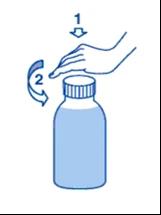 |
If you take more Surmontil than you should
In case of accidental ingestion/overdose of Surmontil, contact your doctor immediately or go to the nearest hospital.
If you have any doubts about the use of Surmontil, consult your doctor or pharmacist.
Taking excessive doses may result in:
- decreased blood pressure (hypotension) and/or collapse;
- seizures;
- coma;
- disturbances in heart rhythm (prolonged QT interval on electrocardiogram, torsades de pointes).
Excessive intake of this medicine (overdose) may be fatal.
Note for the prescribing physician
Treatment should include symptomatic and supportive measures with monitoring of vital functions, particularly cardiac and respiratory function, for at least three to five days.
As an antidote, use physostigmine salicylate slowly administered intravenously: 2 mg in adults, 0.5–1 mg in children. In case of severe hypotension or shock, adequately replace fluid volume. Do not use adrenaline!
If you forget to take Surmontil
Do not take a double dose to make up for the missed dose.
If you stop taking Surmontil
If you have any doubts about using this medicine, consult your doctor or pharmacist.
If you stop treatment with Surmontil abruptly, you may experience symptoms mainly characterized by a relapse of the illness, including malaise, nausea, headache, and muscle pain.
4. Possible adverse effects
Like all medicines, this medicine can cause adverse effects, although not everyone experiences them.
Frequency not known (frequency cannot be determined from the available data)
- nutritional disorders: increased blood sugar levels (hyperglycaemia), increased risk of diabetes (see "Warnings and precautions"),
- changes in the number of certain blood cells (leucopenia, agranulocytosis, thrombocytopenia, eosinophilia),
- heart diseases such as changes in heart rhythm (prolonged QT interval on electrocardiogram, torsades de pointes; see "Warnings and precautions"),
- difficulty seeing clearly (accommodation disorders),
- dry mouth (xerostomia),
- constipation (stipsis),
- cytolytic or cholestatic hepatitis (liver inflammation, including biliary stasis),
- ,
- especially at the beginning of treatment: tremor, drowsiness, sedation, seizures, speech disorders (dysarthria), brief loss of consciousness (syncope),
- confusion,
- difficulty urinating, urinary retention,
- breast enlargement, milk production outside of breastfeeding (galactorrhoea) in women, sexual dysfunction,
- sweating, allergic reactions with skin disturbances,
- orthostatic hypotension (circulatory regulation disorder with drop in blood pressure), hot flushes,
- changes in body weight,
- an increased risk of bone fractures has been observed in patients taking this type of medicine.
The most commonly observed adverse effects reported with medicines belonging to the same class as Surmontil are:
- pupil dilation (mydriasis),
- fatigue (asthenia),
- changes in heart rate (tachycardia, palpitations),
- dizziness,
- ringing in the ears (tinnitus),
- headache (cephalalgia).
Following the use of high doses, you may experience:
- mild to severe and persistent tremors,
- movement disorders (ataxia, motor incoordination),
- changes in sensation (paraesthesiae),
- nerve disturbances (peripheral neuropathies),
- increased sensitivity to light (photosensitivity),
- swelling (oedema) of the face and tongue. Exceptionally, you may experience:
- breast enlargement (gynaecomastia) in men. You may also experience: changes from depression to excitement, especially if you suffer from certain mental disorders (paranoia or sub-delirious states), particularly if you are elderly, with confusional states, hallucinations, anxiety and insomnia. If you experience these symptoms, consult your doctor, who will determine the appropriate treatment. In rare cases, changes in the electroencephalogram (EEG), a test that records brain activity, have been observed.
With some medicines in the same class as Surmontil (“tricyclic antidepressants”), the following symptoms have occasionally been reported, mostly in cases of excessive dosage:
- gastrointestinal disorders such as nausea, vomiting, diarrhoea, mouth inflammation (stomatitis), inflammation of the salivary glands (sublingual or parotid adenitis), abdominal pain, yellowing of the skin and eyes (jaundice),
- red skin spots (thrombocytopenic purpura),
- intestinal obstruction (paralytic ileus),
- hair loss (alopecia),
- changes in sexual desire,
- changes in blood sugar levels (glycaemia),
- heart and circulatory disorders, especially in the elderly: changes in electrocardiogram and other heart problems, including myocardial infarction, stroke,
- rare cases of suicidal thoughts or suicide attempts (see "Warnings and precautions").
Reporting of adverse effects
If you experience any adverse effect, including those not listed in this leaflet, talk to your doctor or pharmacist. You can also report adverse effects directly via the national reporting system at the following website: https://www.aifa.gov.it/content/segnalazioni-reazioni-avverse
By reporting adverse effects, you can help provide more information on the safety of this medicine.
5. How to store Surmontil
This medicine does not require any special storage conditions.
Keep this medicine out of the sight and reach of children.
Do not use this medicine after the expiry date stated on the pack after "Exp".
The expiry date refers to the last day of that month.
Do not dispose of any medicine via wastewater or household waste. Ask your pharmacist how to
dispose of medicines you no longer use. This will help protect the environment.
6. Package contents and other information
What Surmontil contains
- The active substance is: trimipramine mesilate. 100 ml of solution contain 5,305 g of trimipramine mesilate, equivalent to 4,0 g of trimipramine.
- The other components are: sucrose, glycerol, citric acid, ascorbic acid, E 150, cream flavour, alcohol, purified water.
Description of the appearance of Surmontil and contents of the pack
Surmontil is supplied in a carton containing a 20 ml bottle of 4% solution (1 mg/drop).
Marketing Authorization Holder
Neuraxpharm Italy S.p.A.
Via Piceno Aprutina, 47,
63100 - Ascoli Piceno (AP),
Italy
Manufacturer
A. NATTERMANN & Cie. GmbH
Nattermannallee 1, 50829 Cologne - Germany