Spravato
Italy
Table of Contents
Patient Information Leaflet
Spravato 28 mg nasal spray, solution
esketamine
Please read this entire leaflet carefully before using this medicine, as it contains important information for you.
- Keep this leaflet. You may need to read it again.
- If you have any questions, consult your doctor or pharmacist.
- If you experience any side effects, including those not listed in this leaflet, consult your doctor or pharmacist. See section 4.
Contents of this leaflet:
- What Spravato is and what it is used for
- What you need to know before using Spravato
- How to use Spravato
- Possible side effects
- How to store Spravato
- Contents of the pack and other information
1. What Spravato is and what it is used for
What Spravato is
Spravato contains the active substance esketamine, which belongs to a group of medicines called
antidepressants, and has been administered to you to treat your depression.
What Spravato is used for
Spravato is used in adults to reduce symptoms of depression, such as feelings of sadness,
anxiety or worthlessness, sleep disturbances, changes in appetite, loss of interest in usual activities,
and feelings of sluggishness. It is given together with another antidepressant when at least two other antidepressants have already been taken without sufficient effect.
Spravato is also used in adults to rapidly reduce symptoms of depression in a situation requiring immediate treatment (also known as a psychiatric emergency).
2. What you should know before using Spravato
Do not use Spravato
- if you are allergic to esketamine, to a similar medicine called ketamine used for anaesthesia, or to any of the other ingredients of this medicine (listed in section 6);
- if you have ever had certain medical conditions, such as:
- an aneurysm (a weak spot in the wall of a blood vessel that bulges outward);
- bleeding in the brain;
- if you have recently had a heart attack (within the last 6 weeks). This is because Spravato can cause a temporary increase in blood pressure, which could lead to serious complications in these conditions.
Do not use Spravato if any of the above conditions apply to you. If you have any doubts, consult your doctor before using Spravato; your doctor will decide whether or not you can use this medicine.
Warnings and precautions
Talk to your doctor before using Spravato if:
- you have a heart condition that is not well controlled, such as: reduced blood flow in the heart's blood vessels often accompanied by chest pain (e.g. angina), high blood pressure, heart valve disease, or heart failure;
- you have ever had problems with blood supply to the brain (such as a stroke);
- you have ever had problems with substance abuse (prescription medicines or illegal substances);
- you have ever suffered from a condition called psychosis, in which you believe in things that are not true (delusions) or see, feel or hear things that do not exist (hallucinations);
- you have ever suffered from a condition called bipolar disorder or manic symptoms (in which you become overactive or particularly euphoric);
- you have ever had untreated or inadequately treated overactive thyroid (hyperthyroidism);
- you have ever had lung problems causing breathing difficulties (respiratory failure), including chronic obstructive pulmonary disease (COPD);
- you suffer from sleep apnoea and are extremely overweight;
- you have ever had slow or fast heartbeats, resulting in shortness of breath, palpitations or chest discomfort, dizziness or fainting;
- you have suffered a severe head injury or have had serious brain problems, especially involving increased pressure inside the skull;
- you have severe liver problems. If any of the above conditions apply to you (or if you have any doubts), talk to your doctor before using Spravato. Your doctor will decide whether you should use this medicine.
Worsening of depression
Inform your doctor or go immediately to the nearest hospital if at any time you think about harming yourself or committing suicide.
If you feel depressed, it may help to talk to a family member or close friend and ask them whether they think your depression is getting worse or whether they are concerned about your behaviour. You may ask them to read this leaflet.
Blood pressure
Spravato may increase blood pressure for about 1–2 hours after use, so your blood pressure will be measured before starting and after taking Spravato.
If your blood pressure is high before using this medicine, your doctor will decide whether to start treatment or wait until your blood pressure decreases. If your blood pressure increases after using this medicine and remains high for more than a few hours, you may need further tests.
This medicine may cause a temporary increase in blood pressure after each dose. Your blood pressure will be checked before and after taking this medicine.
Inform medical staff immediately if you experience chest pain, shortness of breath, sudden severe headache, changes in vision, or seizures after using this medicine.
Tell your doctor if you experience any of the following symptoms while using Spravato:
- difficulties with attention, judgment, and thinking ability (see also “Driving and using machines” and “Possible side effects”). Your doctor will monitor your condition during and after each use of this medicine and decide how long you should be observed.
- drowsiness (sedation), fainting, dizziness, spinning sensation, anxiety, or feeling detached from yourself, your thoughts, feelings, surroundings, space, and time (dissociation), or difficulty breathing (respiratory depression). Inform medical staff immediately if you feel unable to stay awake or feel like fainting.
- pain when passing urine or blood in the urine: these could be signs of bladder problems. These symptoms may occur with high doses of a similar medicine (called ketamine) when used over a long period. Inform your doctor if you experience any of these symptoms while taking Spravato.
Elderly patients (> 65 years)
If you are elderly (> 65 years), you will be closely monitored, as you may have a higher risk of falls when moving around after treatment.
Children and adolescents
Do not give this medicine to children and adolescents under 18 years of age. This is because Spravato has not been studied for treatment-resistant depression in this age group.
Other medicines and Spravato
Tell your doctor if you are taking, have recently taken, or might take any other medicines.
Using Spravato together with certain medicines may cause side effects. Tell your doctor especially if you are taking:
- medicines used to treat nervous disorders or severe pain (e.g. benzodiazepines, opioids);
- stimulants such as those used for conditions like narcolepsy or medicines for attention deficit hyperactivity disorder (ADHD) (e.g. amphetamine, methylphenidate, modafinil, armodafinil);
- medicines that may increase blood pressure, such as thyroid hormones, asthma medicines like xanthine derivatives, medicines for postpartum bleeding (ergometrine), and heart medicines such as vasopressin;
- medicines for depression or Parkinson’s disease known as monoamine oxidase inhibitors (MAOIs) (e.g. tranylcypromine, selegiline, phenelzine).
Spravato with food, drinks and alcohol
Some patients using Spravato may experience nausea or vomiting. You should avoid eating for 2 hours before treatment and avoid drinking liquids for 30 minutes before using this medicine. Inform your doctor if you are taking medicines or drinking beverages containing alcohol.
Pregnancy and breastfeeding
If you are pregnant, think you may be pregnant, are planning to become pregnant, or are breastfeeding, consult your doctor before taking this medicine.
Contraception
If you are able to become pregnant, you must use an effective method of contraception during treatment. Talk to your doctor about suitable contraceptive methods.
Pregnancy
Do not use Spravato if you are pregnant.
If you become pregnant while being treated with Spravato, contact your doctor immediately to discuss whether treatment should be stopped and to receive information about other treatment options available to you.
Breastfeeding
Do not use Spravato if you are breastfeeding. Talk to your doctor before using Spravato if you are breastfeeding. Your doctor will decide whether to stop breastfeeding or to stop treatment with this medicine, taking into account the benefits of breastfeeding for you and your baby, and the benefits of treatment for you.
Driving and using machines
Spravato may cause drowsiness, dizziness, and other side effects that may temporarily affect your ability to drive or operate machinery and perform activities requiring full mental alertness. After treatment with this medicine, do not engage in these activities until the following day after a restful sleep.
3. How to use Spravato
Use this medicine exactly as instructed by your doctor. If you have any doubts, consult your
doctor.
You will need to use the Spravato nasal spray by yourself under the supervision of your doctor or another
healthcare professional in a healthcare setting, such as a doctor's office or clinic.
Your doctor or another healthcare professional will show you how to use the nasal spray device (see also
Instructions for Use).
Dosage
Your doctor will decide whether you need 1, 2, or 3 nasal spray devices and how frequently you should
attend the doctor's office or clinic to receive the medicine.
- One nasal spray device delivers two sprays (one spray into each nostril).
- Spravato is used twice a week for the first 4 weeks. If treatment continues:
- Spravato is usually used once a week for the following 4 weeks.
- Afterwards, Spravato is usually used once a week or once every 2 weeks.
During and after each use of this medicine, your doctor will monitor you and decide how long you should remain under observation.
Nasal spray(s)
If you need to use steroids or decongestants as nasal sprays, avoid using them during the hour
before treatment with Spravato.
If you use more Spravato than you should
You will use this medicine under the supervision of your doctor in a doctor's office or clinic.
Therefore, it is unlikely that you will take an excessive amount.
If you use too much Spravato, you may be more likely to experience side effects (see “Possible side effects”).
If you stop treatment with Spravato
It is important that you make sure to attend your scheduled appointments so that this medicine
can be effective for you.
If you have any questions about how to use this medicine, ask your doctor.
4. Possible side effects
Like all medicines, this medicine can cause side effects, although not everyone gets them.
Inform your doctor if you notice any of the following side effects.
Very common (may affect more than 1 in 10 people)
- feeling detached from oneself, one's thoughts, feelings, and surroundings
- dizziness
- headache
- drowsiness
- changes in taste sensation
- reduced sensitivity, including around the mouth
- loss of balance ("dizziness")
- vomiting
- nausea
- increased blood pressure
Common (may affect up to 1 in 10 people)
- feeling anxious
- feeling extremely happy ("euphoria")
- confusion
- feeling detached from reality
- irritability
- seeing, feeling, hearing, or tasting things that are not real (hallucinations)
- restlessness
- altered or distorted perception of sight, hearing, or touch (something that is not what it seems to be)
- panic attacks
- altered perception of time
- unusual sensation in the mouth (such as tingling or crawling sensation)
- muscle tremors
- problems with thinking
- extreme drowsiness associated with low energy
- difficulty speaking
- difficulty concentrating
- blurred vision
- persistent ringing in the ears (tinnitus)
- increased sensitivity to noise or sounds
- rapid heartbeat
- high blood pressure
- nasal discomfort
- sore throat
- throat irritation
- dry nose, including dry nasal crusts
- nasal itching
- reduced sensitivity in the mouth
- dry mouth
- excessive sweating
- frequent need to urinate
- pain when urinating
- urgent need to urinate
- feeling of abnormality
- feeling of drunkenness
- feeling of weakness
- crying
- sensation of altered body temperature
Uncommon (may affect up to 1 in 100 people)
- slowed thoughts, speech, and movements
- emotional distress
- feeling of discomfort or tension
- rapid eye movements that cannot be controlled
- hyperactivity
- increased salivation
- cold sweats
- difficulty walking
- low blood pressure
- slow heart rate
Rare (may affect up to 1 in 1,000 people)
- breathing difficulties (respiratory depression)
- epileptic seizure
Reporting of side effects
If you experience any side effect, talk to your doctor or pharmacist. This includes any possible side effects not listed in this leaflet. You can also report side effects directly through the national reporting system listed in Annex V. By reporting side effects, you can help provide more information on the safety of this medicine.
5. How to store Spravato
Keep this medicine out of the sight and reach of children.
Do not use this medicine after the expiry date stated on the carton and label. The expiry date refers to the last day of that month.
This medicine does not require any special storage conditions.
Do not dispose of medicines via wastewater or household waste. Ask your pharmacist how to dispose of medicines you no longer use. This will help protect the environment.
6. Package contents and other information
What Spravato contains
The active substance is esketamine.
Each nasal spray device contains esketamine hydrochloride equivalent to 28 mg of esketamine.
The other components are:
Monohydrate citric acid
Disodium edetate
Sodium hydroxide (for pH adjustment)
Water for injections
Description of the appearance of Spravato and contents of the pack
Spravato is a nasal spray solution. This medicinal product is a clear, colourless solution supplied in a single-use nasal spray device.
Spravato is available in packs containing 1, 2, 3 or 6 nasal spray devices, and as a multipack containing 12 (4 packs of 3) or 24 (8 packs of 3) nasal spray devices.
Each nasal spray device is individually packaged in a sealed blister.
Not all pack sizes may be marketed.
Marketing Authorization Holder
Janssen-Cilag International NV
Turnhoutseweg 30
B-2340 Beerse
Belgium
Manufacturer
Janssen Pharmaceutica NV
Turnhoutseweg 30
B-2340 Beerse
Belgium
For further information about this medicinal product, please contact the local representative of the Marketing Authorization Holder:
België/Belgique/Belgien Lietuva
Janssen-Cilag NV UAB "JOHNSON & JOHNSON"
Tel/Tél: +32 14 64 94 11 Tel: +370 5 278 68 88
[email protected] [email protected]
България Luxembourg/Luxemburg
„Джонсън & Джонсън България” ЕООД Janssen-Cilag NV
Тел.: +359 2 489 94 00 Tél/Tel: +32 14 64 94 11
[email protected] [email protected]
Česká republika Magyarország
Janssen-Cilag s.r.o. Janssen-Cilag Kft.
Tel: +420 227 012 227 Tel.: +36 1 884 2858
[email protected]
Danmark Malta
Janssen-Cilag A/S AM MANGION LTD
Tlf.: +45 4594 8282 Tel: +356 2397 6000
[email protected]
Deutschland Nederland
Janssen-Cilag GmbH Janssen-Cilag B.V.
Tel: 0800 086 9247 / +49 2137 955 6955 Tel: +31 76 711 1111
[email protected] [email protected]
Eesti Norge
UAB "JOHNSON & JOHNSON" Eesti filiaal Janssen-Cilag AS
Tel: +372 617 7410 Tlf: +47 24 12 65 00
[email protected] [email protected]
Ελλάδα Österreich
Janssen-Cilag Φαρμακευτική Μονοπρόσωπη Janssen-Cilag Pharma GmbH
Α.Ε.Β.Ε. Tel: +43 1 610 300
Tηλ: +30 210 80 90 000
España Polska
Janssen-Cilag, S.A. Janssen-Cilag Polska Sp. z o.o.
Tel: +34 91 722 81 00 Tel.: +48 22 237 60 00
[email protected]
France Portugal
Janssen-Cilag Janssen-Cilag Farmacêutica, Lda.
Tél: 0 800 25 50 75 / +33 1 55 00 40 03 Tel: +351 214 368 600
[email protected]
Hrvatska România
Johnson & Johnson S.E. d.o.o. Johnson & Johnson România SRL
Tel: +385 1 6610 700 Tel: +40 21 207 1800
[email protected]
Ireland Slovenija
Janssen Sciences Ireland UC Johnson & Johnson d.o.o.
Tel: 1 800 709 122 Tel: +386 1 401 18 00
[email protected] [email protected]
Ísland Slovenská republika
Janssen-Cilag AB Johnson & Johnson, s.r.o.
c/o Vistor hf. Tel: +421 232 408 400
Sími: +354 535 7000
[email protected]
Italia Suomi/Finland
Janssen-Cilag SpA Janssen-Cilag Oy
Tel: 800.688.777 / +39 02 2510 1 Puh/Tel: +358 207 531 300
[email protected] [email protected]
Κύπρος Sverige
Βαρνάβας Χατζηπαναγής Λτδ Janssen-Cilag AB
Τηλ: +357 22 207 700 Tfn: +46 8 626 50 00
[email protected]
Latvija United Kingdom (Northern Ireland)
UAB "JOHNSON & JOHNSON" filiāle Latvijā Janssen Sciences Ireland UC
Tel: +371 678 93561 Tel: +44 1 494 567 444
[email protected] [email protected]
More detailed information on this medicinal product is available on the European Medicines Agency website: http://www.ema.europa.eu/.
The following information is intended for exclusive use by healthcare professionals:
Instructions for use
SPRAVATO
(esketamine)
Nasal Spray Device
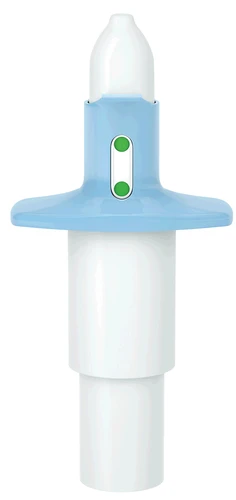
28 mg per device
Each nasal spray device delivers
28 mg of esketamine in two sprays.
Important
This device is intended for patient administration under the supervision of a
healthcare professional. Read these Instructions for Use in full before training and
supervising the patient.

Need help?
For further assistance or to share feedback, refer to the Package Leaflet for contact details of the local representative of the Marketing Authorization Holder.
Nasal Spray Device
Indicator
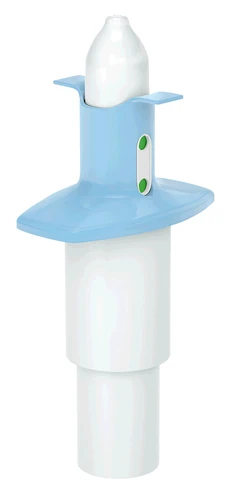
Tip
One device contains 2 sprays
(1 spray per each nostril)
Nozzle ____________________
Indicator 2 green dots (0 mg delivered)
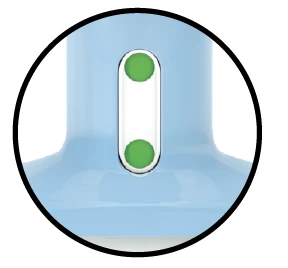
Device
Finger rest
full
____________________
1 green dot
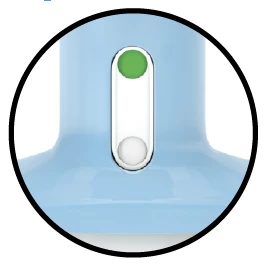
One spray
Plunger
delivered
____________________
Each nasal spray device delivers 28 mg of
esketamine as 2 sprays. No green dots
Two sprays (28 mg) delivered
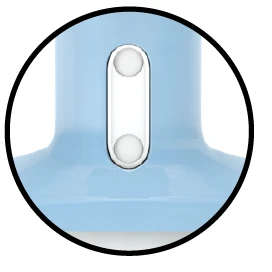
Device
empty
Step 1 Preparation
Only before first device:
Ask the patient to blow their nose only before the first device.
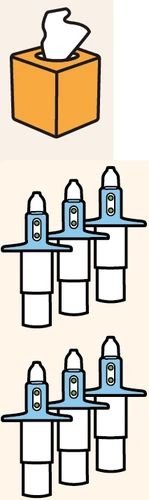
Confirm the number of required devices.
28 mg = 1 device
56 mg = 2 devices
84 mg = 3 devices
Step 2 Prepare the device
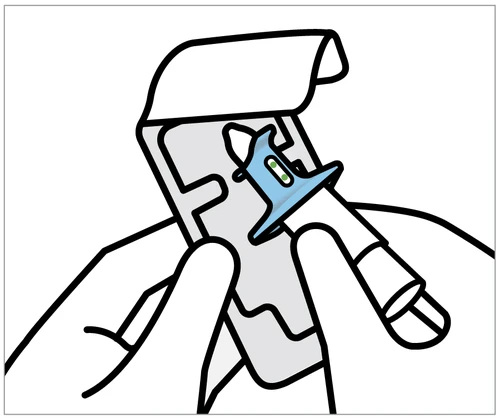
- Check the expiration date (“Exp.”). If expired, obtain a new device.
- Peel off the blister and remove the device.
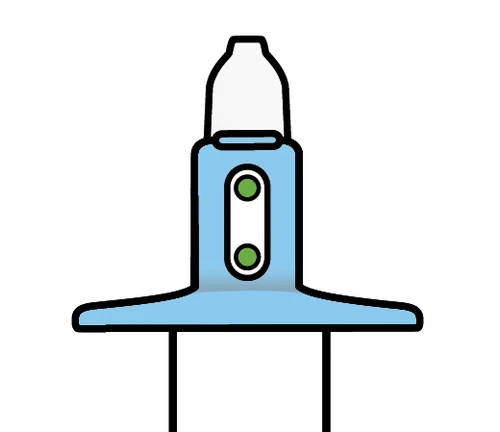
- Do not prime the device. This will result in loss of medication.
- Check that the indicator shows 2 green dots. If not, discard the device and obtain a new one.
- Hand the device to the patient.
Step 3 Prepare the patient
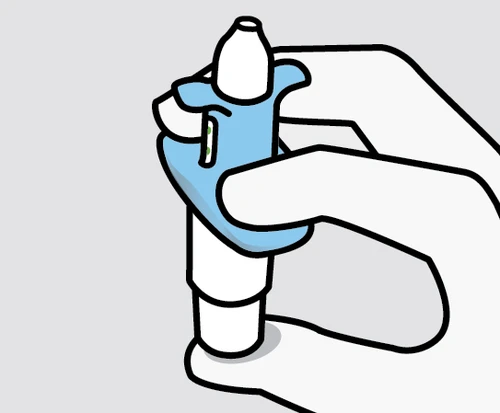
Ask the patient to:
- Hold the device as shown, with the thumb gently supporting the plunger.
- Do not press the plunger.
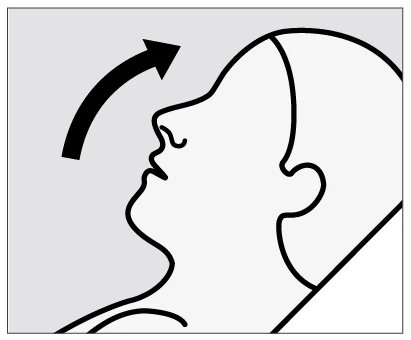
Approximately
45°
Ask the patient to:
- Tilt the head back by approximately 45 degrees during administration to keep the medication inside the nose.
Step 4 The patient administers one spray into each nostril
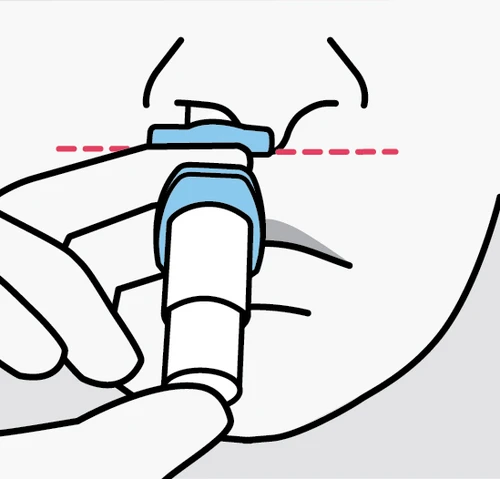
Ask the patient to:
- Insert the tip straight into the first nostril.
- The nozzle should touch the skin between the nostrils.
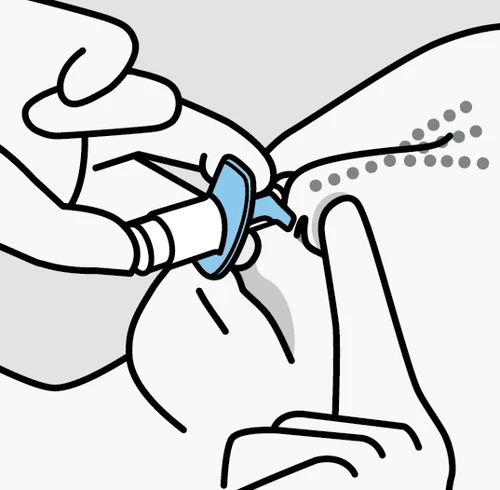
Ask the patient to:
- Close the other nostril.
- Inhale through the nose while simultaneously pressing the plunger all the way down until it stops.
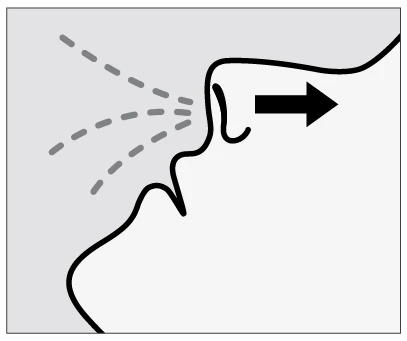
Ask the patient to:
- Gently sniff upwards after spraying the medication to keep it inside the nose.
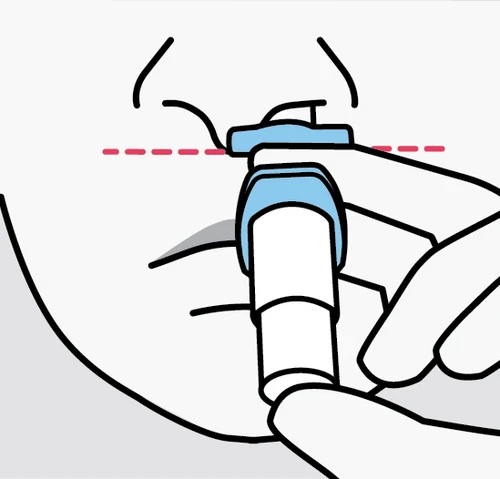
Ask the patient to:
- Change hands and insert the tip into the second nostril.
- Repeat Step 4 to deliver the second spray.
Step 5 Confirm delivery and rest
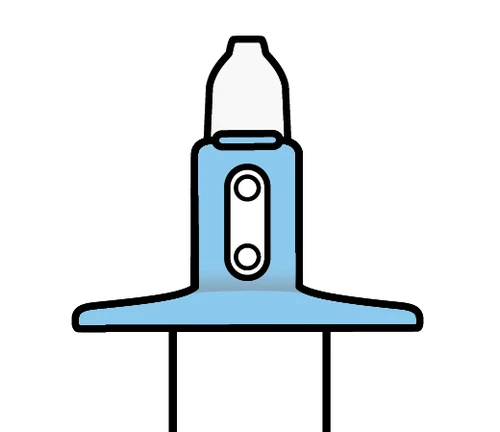
- Take the device from the patient.
- Check that the indicator shows no green dots. If a green dot is visible, ask the patient to administer another spray into the second nostril.
- Recheck the indicator to confirm the device is empty.
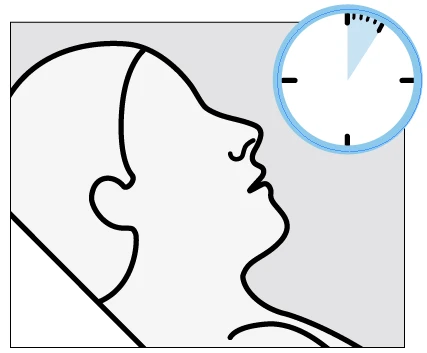
Ask the patient to:
- Remain in a comfortable position (preferably semi-reclined) for 5 minutes after each device.
- If liquid leaks out, dab the nose with a tissue. Do not blow the nose.

Next device (if required)
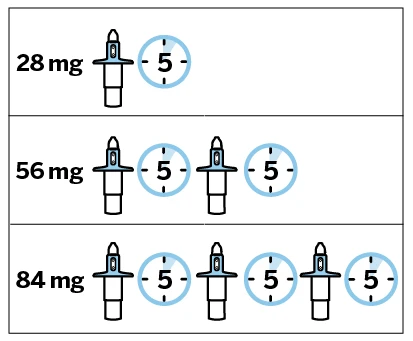
28 mg
56 mg
84 mg
- Repeat steps 2–5 if more than one device is required.
IMPORTANT: Ensure the patient waits 5 minutes after each device to allow for medication absorption.
Disposal
Dispose of used device(s) according to local requirements.
Date of revision: {month YYYY}
ANNEX IV
SCIENTIFIC CONCLUSIONS AND REASONS FOR THE VARIATION OF THE TERMS OF THE MARKETING AUTHORISATION
Scientific conclusions
Taking into account the assessment by the Pharmacovigilance Risk Assessment Committee (PRAC) of the Periodic Safety Update Report (PSUR) for esketamine, the PRAC's scientific conclusions are as follows:
Based on available data on bradycardia and epileptic seizures from clinical studies and spontaneous reports, including cases with a close temporal relationship, positive de-challenge and re-challenge, and in light of a plausible mechanism of action, the PRAC considers that a causal relationship between esketamine (nasal) and bradycardia and epileptic seizures is at least a reasonable possibility. The PRAC concluded that the product information for medicinal products containing esketamine (nasal) should be updated accordingly.
Having reviewed the PRAC recommendation, the Committee for Medicinal Products for Human Use (CHMP) agrees with the general conclusions and supporting rationale of the PRAC recommendation.
Reasons for the variation of the terms of the marketing authorisation
Based on the scientific conclusions for esketamine, the CHMP considers that the benefit-risk balance of the medicinal product containing esketamine remains favourable, subject to the proposed updates to the product information.
The CHMP recommends a variation to the terms of the marketing authorisation.