Rubraca
Italy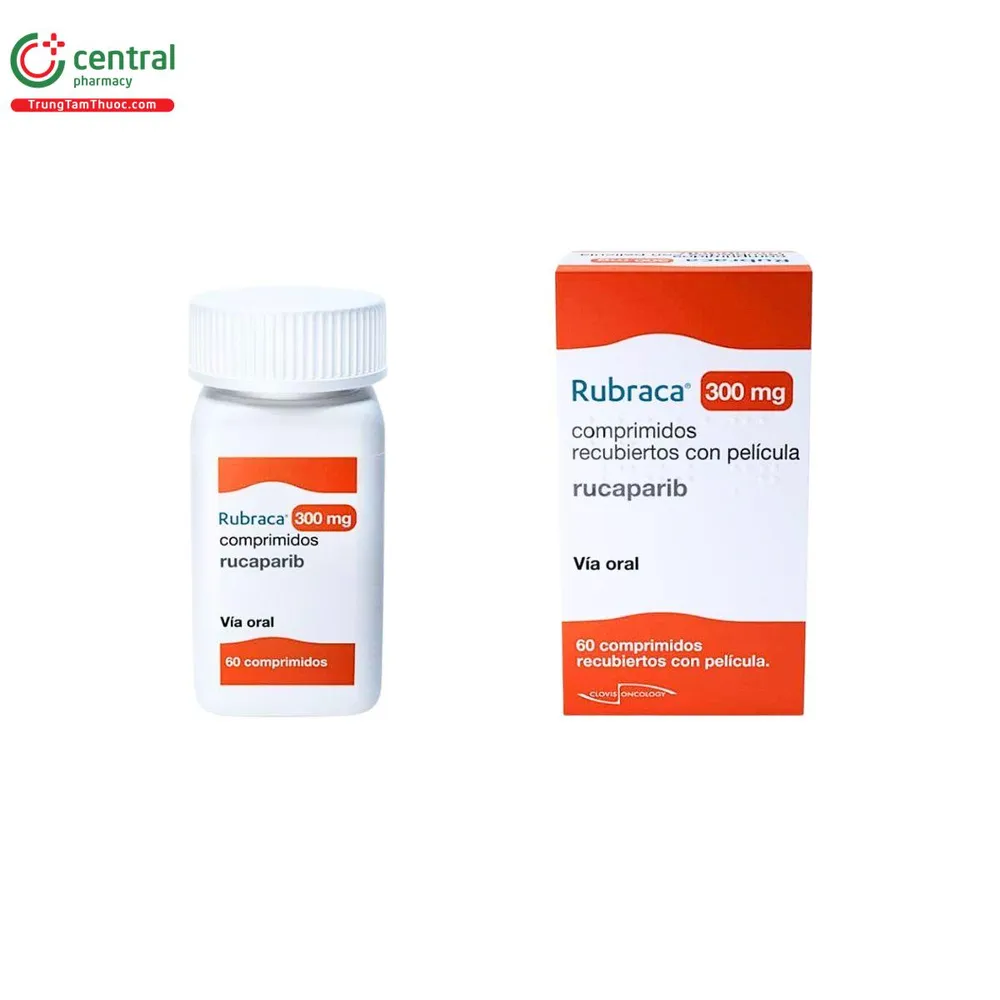
Table of Contents
Patient Information Leaflet
Rubraca 200 mg film-coated tablets, Rubraca 200 mg film-coated tablets, Rubraca 300 mg film-coated tablets
rucaparib
Please read this leaflet carefully before taking this medicine because it contains
important information for you.
- Keep this leaflet. You may need to read it again.
- If you have any questions, ask your doctor, pharmacist, or nurse.
- This medicine has been prescribed for you only. Do not pass it on to others, even if they have the same symptoms as yours, as it may be harmful.
- If you experience any side effects, including those not listed in this leaflet, tell your doctor, pharmacist, or nurse. See section 4.
What is in this leaflet
- What Rubraca is and what it is used for
- What you need to know before taking Rubraca
- How to take Rubraca
- Possible side effects
- How to store Rubraca
- Contents of the pack and other information
1. What Rubraca is and what it is used for
What Rubraca is and how it works
Rubraca contains the active substance rucaparib. Rubraca is an anticancer medicine, also known as a "PARP (Poly Adenosine diphosphate-Ribose Polymerase [poly adenosine diphosphate-ribose polymerase]) inhibitor".
Patients with alterations (mutations) in genes called BRCA are at risk of developing several types of cancer. Rubraca blocks an enzyme involved in repairing damaged DNA in cancer cells, leading to their death.
What Rubraca is used for
Rubraca is used to treat a type of ovarian cancer. It is used as maintenance therapy, immediately following a course of chemotherapy that has reduced the tumour size.
2. What you need to know before taking Rubraca
Do not take Rubraca
- if you are allergic to rucaparib or to any of the other ingredients of this medicine (listed in section 6)
- if you are breastfeeding
If you are unsure, talk to your doctor, pharmacist, or nurse before taking Rubraca.
Warnings and precautions
Talk to your doctor, pharmacist, or nurse before or during treatment with Rubraca.
Blood tests
Your doctor or nurse will carry out blood tests to monitor your blood cell counts:
- before starting treatment with Rubraca
- every month during treatment with Rubraca
This is because Rubraca may cause low blood cell counts of:
- red blood cells, white blood cells, or platelets. For more information, see section 4. Signs and symptoms of low blood cell counts include fever, infection, bruising, or bleeding.
- Low blood cell counts may be a sign of a serious bone marrow problem, such as “myelodysplastic syndrome” (MDS) or “acute myeloid leukaemia” (AML). Your doctor may examine your bone marrow to check for any problems.
If you have low blood cell counts for a prolonged period, your doctor may carry out weekly blood tests.
Treatment with Rubraca may be stopped until your blood cell counts improve.
Be careful with direct sunlight
While being treated with Rubraca, you may become more sensitive to sunlight. This means you should:
- avoid direct sunlight and do not use sunbeds while taking Rubraca
- wear clothing that covers your head, arms, and legs
- use sunscreen and lip balm with a sun protection factor (SPF) of 50 or higher.
Symptoms you should be aware of
If you feel unwell (nausea), are sick (vomiting), or have diarrhoea or abdominal pain, talk to your doctor. These may be signs and symptoms indicating that Rubraca is affecting your stomach or intestines.
Children and adolescents
Children and adolescents under 18 years of age should not take Rubraca. The effect of the medicine in this age group has not been studied.
Other medicines and Rubraca
Tell your doctor, pharmacist, or nurse if you are taking, have recently taken, or might take any other medicines. This is because Rubraca may affect how some other medicines work. Also, some other medicines may affect how Rubraca works.
Tell your doctor, pharmacist, or nurse if you are taking any of the following medicines:
- anticoagulant medicines, which help blood to flow freely, such as warfarin
- anticonvulsant medicines, used to treat seizures (fits) and epilepsy, such as phenytoin
- medicines to reduce cholesterol levels in the blood, such as rosuvastatin
- medicines for stomach problems, such as cisapride, omeprazole
- medicines that suppress the immune system, such as cyclosporine, sirolimus, or tacrolimus
- medicines for migraine and headache, such as dihydroergotamine or ergotamine
- medicines for severe pain, such as alfentanil or fentanyl
- medicines used to treat uncontrolled movements or mental disorders, such as pimozide
- medicines to reduce blood sugar levels and treat diabetes, such as metformin
- medicines for irregular heartbeat, such as digoxin or quinidine
- medicines for allergic reactions, such as astemizole or terfenadine
- medicines used to cause drowsiness, such as midazolam
- medicines used to relax muscles, such as tizanidine
- medicines used to treat asthma, such as theophylline
Pregnancy, breastfeeding, and contraception
If you are pregnant, think you may be pregnant, are planning to become pregnant, or are breastfeeding, consult your doctor or pharmacist before taking this medicine.
Pregnancy
- Rubraca is not recommended during pregnancy. This is because it could harm the unborn baby.
- A pregnancy test is recommended before starting treatment with Rubraca in women of childbearing potential.
Breastfeeding
- Do not breastfeed during treatment with Rubraca and for two weeks after taking the last dose. This is because it is not known whether rucaparib passes into breast milk.
Contraception
- Women who can become pregnant must use an effective method of contraception (birth control):
- during treatment with Rubraca and
- for 6 months after taking the last dose of Rubraca. This is because rucaparib could harm an unborn baby.
- Talk to your doctor or pharmacist about the most effective methods of contraception.
Driving and using machines
Rubraca may affect your ability to drive or use tools or machines. Be cautious if you feel tired or have a feeling of being unwell (nausea).
Rubraca contains sodium
This medicine contains less than 1 mmol of sodium (23 mg) per tablet, i.e. essentially “sodium-free”.
3. How to take Rubraca
Take this medicine exactly as instructed by your doctor, pharmacist, or nurse. If you have any doubts, consult your doctor, pharmacist, or nurse.
How much to take
- The recommended usual dose is 600 mg twice daily. This means you will take a total of 1,200 mg every day. If you experience certain side effects, your doctor may recommend reducing the dose or temporarily interrupting treatment.
- Rubraca is available in 200 mg, 250 mg, or 300 mg tablets.
How to take the medicine
- Take the tablets once in the morning and once in the evening, approximately 12 hours apart.
- You may take the tablets with or without food.
- If you feel unwell (vomit) after taking Rubraca, do not take an extra dose. Take your next dose at the usual time.
If you take more Rubraca than you should
If you take more tablets than you should, inform your doctor, pharmacist, or nurse immediately. You may require medical attention.
If you forget to take Rubraca
- If you forget to take a dose, skip the missed dose. Then take your next dose at the regular time.
- Do not take a double dose to make up for the forgotten dose.
If you stop taking Rubraca
- It is important to continue taking Rubraca every day for as long as your doctor prescribes it.
- Do not stop taking this medicine without first talking to your doctor.
If you have any questions about how to use this medicine, ask your doctor, pharmacist, or nurse.
4. Possible side effects
Like all medicines, this medicine can cause side effects, although not everyone gets them.
Immediately tell your doctor if you notice any of the following potentially serious side effects
as they may require urgent medical treatment:
Very common (may affect more than 1 in 10 people):
- shortness of breath, feeling of tiredness, pale skin or rapid heartbeat: these may be signs of low red blood cell count (anaemia)
- bleeding or bruising for longer than usual when injured: these may be signs of low platelet count (thrombocytopenia)
- fever or infection: these may be signs of low white blood cell count (neutropenia)
Other side effects include:
Very common (may affect more than 1 in 10 people):
- feeling unwell (nausea)
- feeling of tiredness
- feeling unwell (vomiting)
- stomach pain
- altered sense of taste
- abnormal blood tests: increased levels of liver enzymes
- loss of appetite
- diarrhoea
- abnormal blood tests: increased levels of creatinine in the blood
- difficulty breathing
- feeling dizzy
- sunburn
- heartburn
- high cholesterol levels
- skin rash
Common (may affect up to 1 in 10 people):
- dehydration
- itching
- allergic reaction (e.g. swelling of the face and eyes)
- redness, swelling and pain on the palms of the hands and/or soles of the feet
- red spots on the skin
- intestinal blockage
- serious bone marrow problem, such as “myelodysplastic syndrome” (MDS) or “acute myeloid leukaemia” (AML) (see section 2)
- mouth ulcers
Reporting of side effects
If you get any side effect, including those not listed in this leaflet, talk to your doctor, pharmacist or nurse.
Alternatively, you may report side effects directly via the national reporting system referred to in Annex V.
Reporting side effects may help provide more information on the safety of this medicine.
5. How to store Rubraca
Keep this medicine out of the sight and reach of children.
Do not use this medicine after the expiry date stated on the carton and vial after "Exp.".
The expiry date refers to the last day of that month.
This medicine does not require any special storage conditions.
Do not dispose of medicines via wastewater or household waste. Ask your pharmacist how to
dispose of medicines you no longer use. This will help protect the environment.
6. Package contents and other information
What Rubraca contains
- The active substance is rucaparib.
Rubraca 200 mg film-coated tablets: each tablet contains rucaparib camsylate equivalent to 200 mg of rucaparib.
Rubraca 250 mg film-coated tablets: each tablet contains rucaparib camsylate equivalent to 250 mg of rucaparib.
Rubraca 300 mg film-coated tablets: each tablet contains rucaparib camsylate equivalent to 300 mg of rucaparib.
- The other ingredients are:
- Tablet core: Microcrystalline cellulose, sodium glycolate starch (type A), anhydrous colloidal silica, and magnesium stearate.
- Film coating:
Rubraca 200 mg film-coated tablets: Polyvinyl alcohol (E1203), titanium dioxide (E171), macrogol 4000 (E1521), talc (E553b), brilliant blue FCF aluminium lake (E133), and indigo carmine aluminium lake (E132).
Rubraca 250 mg film-coated tablets: Polyvinyl alcohol (E1203), titanium dioxide (E171), macrogol 4000 (E1521), and talc (E553b).
Rubraca 300 mg film-coated tablets: Polyvinyl alcohol (E1203), titanium dioxide (E171), macrogol 4000 (E1521), talc (E553b), and yellow iron oxide (E172).
Description of the appearance of Rubraca and contents of the pack
- The 200 mg film-coated tablets of Rubraca are blue, round, and have the inscription “C2” on one side.
- The 250 mg film-coated tablets of Rubraca are white, diamond-shaped, and have the inscription “C25” on one side.
- The 300 mg film-coated tablets of Rubraca are yellow, oval, and have the inscription “C3” on one side.
Rubraca is supplied in plastic bottles. Each bottle contains 60 film-coated tablets.
Marketing Authorisation Holder
pharmaand GmbH
Taborstrasse 1
1020 Vienna
Austria
Manufacturer
Almac Pharma Services Limited
Seagoe Industrial Estate,
Portadown,
Craigavon,
BT63 5UA
United Kingdom
or
Almac Pharma Services (Ireland) Ltd
Finnabair Industrial Estate
Dundalk
County Louth
A91 P9KD
Ireland
For further information on this medicinal product, please contact the local representative of the Marketing Authorisation Holder:
België/Belgique/Belgien Italia
Tel: +32 (0)80070484 Tel: +39 800194716
Deutschland Nederland
Tel: +49 (0)8005892665 Tel: +31 (0)8000227859
España Österreich
Tel: +34 913756230 Tel: +43 (0)800005924
France United Kingdom (Northern Ireland)
Tél: +33 (0)149116680 Tel: +44 (0)800 0093361
Ireland
Tel: +353 1800800704
България, Česká republika, Danmark, Eesti, Ελλάδα, Hrvatska, Ísland, Κύπρος, Latvija,
Lietuva, Luxembourg/Luxemburg, Magyarország, Malta, Norge, Polska, Portugal, România,
Slovenija, Slovenská republika, Suomi/Finland, Sverige:
Tel: +353 16950030
Further sources of information
More detailed information on this medicinal product is available on the website of the European Medicines Agency: http://www.ema.europa.eu