Roctavian
Italy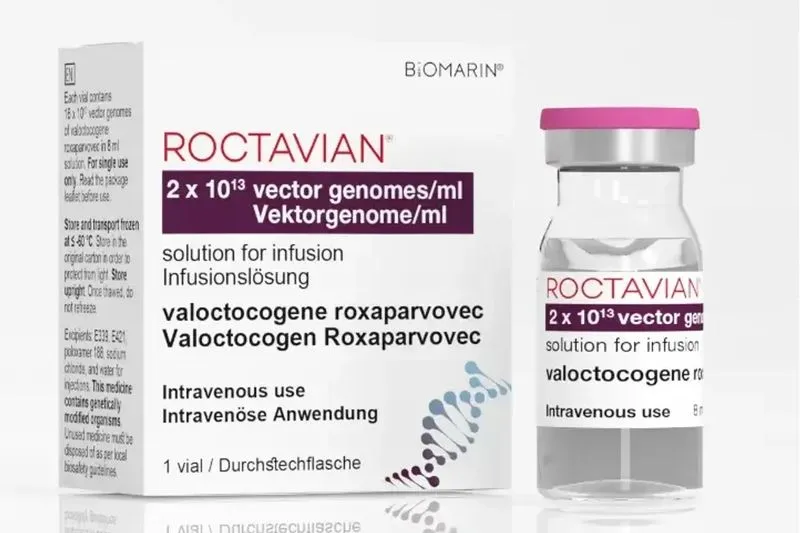
Table of Contents
Package leaflet: Information for the patient
ROCTAVIAN 2 × 10 vector genomes/mL solution for infusion
valoctocogene roxaparvovec
This medicinal product is subject to additional monitoring. This will allow for rapid identification of new safety information. You can help by reporting any side effects you experience while taking this medicine. See the end of section 4 for information on how to report side effects.
Please read this leaflet carefully before using this medicine because it contains important information for you.
- Keep this leaflet. You may need to read it again.
- If you have any questions, consult your doctor.
- If you experience any side effects, including those not listed in this leaflet, consult your doctor. See section 4.
- Your doctor will provide you with a Patient Card. Read it carefully and follow the instructions provided.
Contents of this leaflet
- What ROCTAVIAN is and what it is used for
- What you need to know before being administered ROCTAVIAN
- How ROCTAVIAN is administered
- Possible side effects
- How ROCTAVIAN is stored
- Contents of the pack and other information
1. What ROCTAVIAN is and what it is used for
What ROCTAVIAN is
ROCTAVIAN is a gene therapy product containing the active substance valoctocogene roxaparvovec. A gene therapy product works by introducing a gene into the body to correct a genetic deficiency.
What ROCTAVIAN is used for
This medicinal product is used for the treatment of severe haemophilia A in adults who currently do not have, or have never previously had, factor VIII inhibitors, and who are negative for antibodies against the AAV5 vector virus.
Haemophilia A is a condition in which people inherit an altered form of a gene required to produce factor VIII, an essential protein necessary for blood to clot and stop bleeding. People with haemophilia A are unable to produce factor VIII and are therefore prone to episodes of internal or external bleeding.
How ROCTAVIAN works
The active substance in ROCTAVIAN is based on a virus that does not cause disease in humans. This virus has been modified so that it cannot spread within the body, but can deliver a functional copy of the factor VIII gene into liver cells. This enables the liver cells to produce the factor VIII protein and increase levels of functional factor VIII in the blood. In turn, this helps blood to clot more normally, preventing bleeding or reducing the frequency of bleeding episodes.
2. What you should know before being given ROCTAVIAN
You will not be given ROCTAVIAN
- if you are allergic to valoctocogene roxaparvovec or to any of the other ingredients of this medicine (listed in section 6).
- if you have an active infection or if you have an uncontrolled chronic (long-term) infection, or if you have liver scarring (significant hepatic fibrosis or cirrhosis), as this may affect your body's initial response to ROCTAVIAN.
- if you have antibodies against the type of virus used to produce this medicine. Your doctor will test you in advance to determine whether this is the case.
If any of the above conditions apply to you or if you are unsure about any of them, consult your doctor before receiving ROCTAVIAN.
Warnings and precautions
Importance of liver health
- The liver is the organ that produces factor VIII after treatment with ROCTAVIAN. You must take care of your liver health so that it functions as optimally as possible, allowing you to produce factor VIII and continue producing it consistently.
- Ask your doctor what you can do to improve and maintain your liver health (see also You will not be given ROCTAVIAN above and Other medicines and ROCTAVIAN and ROCTAVIAN with alcohol below).
- Your doctor may advise against treatment with ROCTAVIAN if you have a liver disease that could prevent ROCTAVIAN from working properly.
You may need to take an additional medicine
- You may need to take an additional medicine (corticosteroids) for an extended period (2 months or longer) after receiving ROCTAVIAN to manage liver issues detected in blood tests. Corticosteroids may cause side effects while they are being administered. Your doctor may advise against or delay treatment with ROCTAVIAN if you cannot safely receive corticosteroids, and may recommend certain measures for safe use or may administer an alternative medicine. See also section 3.
Side effects during or shortly after ROCTAVIAN infusion
- Infusion-related side effects may occur during or shortly after your ROCTAVIAN infusion (intravenous drip). Symptoms of these side effects are listed in section 4. Possible side effects. Inform your doctor or nurse immediately if you experience these or any other symptoms during or shortly after the infusion. Depending on the symptoms, the infusion may be slowed down or temporarily stopped, or you may be given medicines to manage them. Before discharge, your doctor will provide you with information on what to do if new side effects occur or if side effects reappear after leaving the medical facility.
Risk of unwanted blood clots as factor VIII levels improve
- After treatment with ROCTAVIAN, the level of factor VIII protein may increase. In some patients, it may temporarily rise above the normal range.
Factor VIII is the protein required to form stable blood clots. Depending on your individual risk factors, improved factor VIII levels may increase the risk of developing unwanted blood clots (so-called "thrombosis" in veins or arteries). Discuss general risk factors for unwanted clots and cardiovascular disease with your doctor and seek advice on how to manage them. Also ask how to recognize symptoms of unwanted clots and what to do if you suspect you may have one.
Avoidance of blood and organ donations
- Do not donate blood, organs, tissues, or cells for transplantation.
Immunocompromised patients or patients receiving immunosuppressive treatment
- If you are immunocompromised (when your immune system's ability to fight infections is reduced) or are receiving immunosuppressive treatment, consult your doctor before starting treatment with ROCTAVIAN. If your immune system is not functioning properly, you may require closer monitoring to ensure you can receive the treatment and other medicines such as corticosteroids, or to determine whether adjustments to your current medications are needed.
Future re-administration of gene therapy
- After receiving ROCTAVIAN, your immune system will produce antibodies against the AAV vector shell. It is currently unknown whether and under what conditions ROCTAVIAN therapy could be repeated. It is also unknown whether and under what conditions another gene therapy could be used subsequently.
Use of other treatments for haemophilia
- After using ROCTAVIAN, ask your doctor whether and when you should stop other treatments for haemophilia and request a treatment plan outlining what to do in case of surgical procedures, trauma, bleeding episodes, or any procedure that may potentially increase the risk of bleeding. It is very important that you continue regular monitoring and medical visits to determine whether you need additional treatments to manage haemophilia.
Monitoring tests
Before treatment with ROCTAVIAN, your doctor will perform tests to assess your liver health.
After treatment with ROCTAVIAN, blood tests will be performed to monitor:
- when the liver starts producing factor VIII, so that it can be determined when it is safe to stop regular factor VIII replacement therapy,
- how much factor VIII the liver consistently produces,
- how liver cells respond to ROCTAVIAN treatment, and
- whether you develop inhibitors (neutralizing antibodies) to factor VIII.
The frequency of blood tests depends on your response to ROCTAVIAN. Generally, during the first 26 weeks after treatment, blood tests will be performed weekly, then every 2–4 weeks until the end of the first year. After the first year, blood tests will be performed less frequently, as directed by your doctor. It is important that you discuss the scheduling of these blood tests with your doctor to ensure they can be carried out when needed.
Since not all patients will respond to ROCTAVIAN and the reasons for this are not fully understood, your doctor will not be able to predict whether you will respond fully to the treatment. There is a possibility that you may not benefit from ROCTAVIAN while still being exposed to long-term risks.
If you do respond to treatment, it is not known how long this response will last. A positive treatment effect has been reported in some patients for up to five years.
There are no plans to administer the medicine a second time to patients who do not respond or who lose response.
Long-term follow-up tests may be necessary to confirm an ongoing safe and effective response to ROCTAVIAN.
Risk of malignancy potentially associated with ROCTAVIAN
- ROCTAVIAN may integrate into the DNA of liver cells and could potentially integrate into the DNA of other body cells. As a result, ROCTAVIAN may contribute to a risk of cancer. Although there is currently no evidence of this from clinical studies, it remains a possibility due to the nature of the medicine. You should therefore discuss this with your doctor. After treatment with ROCTAVIAN, you will be advised to enroll in a registry to monitor the long-term safety of the treatment for 15 years, how well it continues to work, and any potential side effects that may be related to the treatment. In case of cancer, your doctor may take a tissue sample for further evaluation.
Children and adolescents
ROCTAVIAN is intended for use in adults only. ROCTAVIAN has not yet been evaluated for use in children or adolescents.
Other medicines and ROCTAVIAN
Before and after treatment with ROCTAVIAN, inform your doctor if you are using, have recently used, or might use any other medicines, including herbal products or dietary supplements. This is to ensure you avoid, as much as possible, taking substances that could damage the liver or affect your response to corticosteroids or ROCTAVIAN (e.g., isotretinoin, a medicine used to treat acne) or certain medicines for HIV treatment (see the section above on immunocompromised patients or patients receiving immunosuppressive treatment). This is particularly important during the first year after ROCTAVIAN treatment (see also Warnings and precautions).
Since corticosteroids may affect the body's immune (defence) system, your doctor may reschedule your vaccination schedule and advise you not to receive certain vaccinations during corticosteroid treatment. If you have any questions, consult your doctor.
ROCTAVIAN with alcohol
Alcohol consumption may impair the liver's ability to produce factor VIII after treatment with ROCTAVIAN. You must avoid alcohol for at least one year after treatment. Ask your doctor how much alcohol, if any, may be acceptable for you after the first year (see also Warnings and precautions).
Pregnancy, breastfeeding and fertility
ROCTAVIAN is not recommended for women of childbearing potential. It is not yet known whether ROCTAVIAN can be safely used in these patients, as its effects on pregnancy and the fetus are unknown. It is also not known whether ROCTAVIAN passes into breast milk.
There is no available information on the effect of ROCTAVIAN on male or female fertility.
Use of contraception and avoidance of partner pregnancy for a period of time
- After being treated with ROCTAVIAN, male patients and their female partners must avoid pregnancy for 6 months. You must use effective contraceptive measures (e.g., double-barrier contraception such as condom and diaphragm). This is to prevent the theoretical risk that the factor VIII gene produced following treatment of the father could be transmitted to the child, with unknown consequences. For the same reason, male patients must not donate sperm for 6 months. Ask your doctor which contraceptive methods are suitable.
Driving and using machines
After ROCTAVIAN infusion, temporary cases of mental confusion (near-fainting), dizziness, fatigue, and headache have been reported. If affected, exercise caution until you are certain that ROCTAVIAN does not negatively affect your ability to drive or operate machinery. Discuss this with your doctor.
ROCTAVIAN contains sodium
This medicine contains 29 mg of sodium (a main component of table salt) per vial. This corresponds to 1.5% of the maximum daily recommended dietary intake for an adult. The amount of sodium administered depends on the number of ROCTAVIAN vials used for the infusion.
3. How ROCTAVIAN is administered
ROCTAVIAN will be administered by a doctor specialized in managing your condition.
Your doctor will determine the correct dose for you based on your body weight.
Treatment with ROCTAVIAN consists of a single intravenous infusion (drip).
The infusion may take several hours to complete.
The infusion will be given to you at a medical facility. During and after the infusion, you will be monitored for possible adverse effects.
You will be allowed to go home (usually later the same day) once it has been decided that no further observation is necessary.
Additional medication you may need
You may need to take an additional medication (corticosteroids) for an extended period (e.g., 2 months or longer) after treatment with ROCTAVIAN to improve your response to therapy. It is important that you take this additional medication exactly as instructed. You should read the package leaflet of any additional medication prescribed to you and discuss possible adverse effects and any required monitoring with your doctor.
If you are given more ROCTAVIAN than you should
Since this medicine is administered in a hospital setting and the dose is determined and controlled by your medical team, it is unlikely that you will receive an excessive amount. If an excessive amount of ROCTAVIAN is administered, you could theoretically have higher factor VIII levels than needed, which may increase the risk of unwanted blood clots. In such a case, your doctor will treat you as necessary.
If you have any questions about the use of this medicine, consult your doctor.
4. Possible side effects
Like all medicines, this medicine can cause side effects, although not everybody gets them.
Side effects related to the infusion may occur during or shortly after the infusion (common; may affect up to 1 in 10 people). Inform your doctor or nurse immediately if you experience any of the following symptoms, or other symptoms, during or shortly after the infusion:
- Hives or other skin rashes, itching
- Difficulty breathing, sneezing, coughing, runny nose, excessive tearing, tingling in the throat
- Nausea (feeling unwell), diarrhoea
- High or low blood pressure, fast heartbeat, mental confusion (near-fainting)
- Muscle pain, back pain
- Fever, chills, tremor
These symptoms may occur alone or together. Depending on the symptoms, the infusion may be slowed down or temporarily stopped, or you may be given medicines to treat them. Before discharge, your doctor will provide you with information on what to do if you develop a new side effect or if a side effect reappears after you have left the medical facility.
After ROCTAVIAN infusion, increases in liver protein levels have been observed. In some cases, these increases occurred together with a decrease in factor VIII levels. Elevated liver protein levels detected in blood tests may require starting treatment with a corticosteroid.
The following side effects may occur with ROCTAVIAN. Some of these side effects may occur during or shortly after the infusion.
Very common (may affect more than 1 in 10 people)
- Increased liver protein levels detected in blood tests
- Nausea (feeling unwell)
- Headache
- Factor VIII levels above normal
- Fatigue
- Diarrhoea
- Abdominal pain (stomach ache)
- Vomiting
- Increased levels of creatine phosphokinase (CPK) protein (an enzyme released into the blood when muscle is damaged), detected in blood tests
Common (may affect up to 1 in 10 people)
- Skin rash (including hives or other types of skin rash)
- Heartburn (dyspepsia)
- Muscle pain
- Influenza-like symptoms
- Dizziness
- Itching
- Increased blood pressure
- Allergic reaction
Uncommon (may affect up to 1 in 100 people)
- Mental confusion (near-fainting)
- Difficulty breathing
Reporting of side effects
If you get any side effects, including those not listed in this leaflet, talk to your doctor or nurse. You can also report side effects directly via the national reporting system listed in Annex V. By reporting side effects, you can help provide more information on the safety of this medicine.
5. How ROCTAVIAN is stored
Keep this medicine out of the sight and reach of children.
This medicine must not be used after the expiry date stated on the carton and vial after “Exp.” or EXP. The expiry date refers to the last day of that month.
ROCTAVIAN will be stored by healthcare professionals at the medical facility managing your care. It must be stored upright and in the original carton (to protect the medicine from light).
It must be stored and transported in a freezer at a temperature less than or equal to -60 °C. After thawing, it must be used within 10 hours at 25 °C (this includes storage time in the vial and syringe, as well as infusion time), otherwise it must be discarded. If necessary, an intact vial (with the stopper not yet pierced) that has been thawed may be stored refrigerated (2–8 °C) for up to 3 days, upright and protected from light (e.g., in the original carton).
Thawed ROCTAVIAN must not be used if the solution is not clear and colourless to slightly yellow.
6. Package contents and other information
What ROCTAVIAN contains
- The active substance is valoctocogene roxaparvovec.
- The other components are disodium phosphate dodecahydrate (E339), mannitol (E421), poloxamer 188, sodium chloride, sodium dihydrogen phosphate dihydrate (E339), and water for injections. See the end of section 2 ROCTAVIAN contains sodium for information on the total sodium content.
This medicinal product contains genetically modified organisms (GMOs).
Description of the appearance of ROCTAVIAN and pack contents
When thawed, ROCTAVIAN is a clear, colourless to pale yellow infusion solution.
It is supplied in a vial.
Pack: 1 vial of 8 mL
Marketing Authorisation Holder and Manufacturer
BioMarin International Ltd.
Shanbally, Ringaskiddy
County Cork
P43 R298
Ireland
This medicinal product has been granted a marketing authorisation “under exceptional circumstances”. This means that
further data on this medicinal product are required. The European Medicines Agency
will review new information on this medicinal product annually and this package leaflet
will be updated as necessary.
Other sources of information
More detailed information on this medicinal product is available on the website of the European Medicines Agency, https://www.ema.europa.eu. In addition, links to other websites on rare diseases and related therapeutic treatments are provided.
The following information is intended exclusively for healthcare professionals:
Important: Before using ROCTAVIAN, consult the Summary of Product Characteristics (SmPC).
Precautions to be taken before handling or administering the medicinal product
Each vial is for single use only.
This medicinal product contains genetically modified organisms (GMOs).
Personal protective equipment (including gown, protective eyewear, mask, and gloves) must be worn during preparation, administration, and disposal of the valoctocogene roxaparvovec solution and of materials that have come into contact with the solution (solid and liquid waste).
ROCTAVIAN must not be exposed to ultraviolet germicidal irradiation lamps.
ROCTAVIAN must be prepared using an aseptic technique.
When assembling the infusion system, ensure that the surfaces of components in contact with the ROCTAVIAN solution consist of the compatible materials listed in the SmPC.
Compatible materials for infusion system components
| Component | Compatible materials |
| Infusion pump syringes | Body in polypropylene with plunger tip in synthetic rubber |
| Syringe cap | Polypropylene |
| Infusion tubinga | Polyethylene |
| In-line filter | Polyvinylidene fluoride filter with a body in polyvinyl chloride |
| Infusion catheter | Polyurethane-based polymer |
| Stopcocks | Polycarbonate |
| Needles for vial extraction | Stainless steel |
Tubing extensions must not exceed a length of approximately 100 cm.
ROCTAVIAN must be administered using a syringe pump with controlled flow rate.
The following syringes must be prepared:
- Syringes containing ROCTAVIAN (the number of syringes will depend on the patient's dose volume).
- One syringe containing an injectable solution of sodium chloride 9 mg/mL (0.9%) for flushing the infusion line at the end of ROCTAVIAN infusion.
For infusion, high-volume, in-line, low-protein-binding infusion filters with a pore size of 0.22 microns and a maximum operating pressure compatible with the syringe pump or pump settings are required. A sufficient number of replacement filters must be available, based on the filter specifications for maximum filtered fluid volume.
Thawing and inspection
- ROCTAVIAN must be thawed at room temperature. Do not thaw or heat vials in any other way. Thawing time is approximately 2 hours.
- Keep each vial in its box until ready to thaw. ROCTAVIAN is light-sensitive.
- Remove the required number of vials from their respective boxes.
- Inspect vials for any damage to the vials or closure caps. Do not use if damaged.
- Place vials upright. To achieve optimal thawing, space them apart or place them in racks that have been kept at room temperature.
- Visually confirm that all vials have been completely thawed. No ice should be visible. Gently invert each vial 5 times to mix the contents. It is important to minimize foam formation. Allow the solution to settle for approximately 5 minutes before proceeding.
- Then visually inspect the fully thawed vials. Do not use a vial if the solution is not clear, not colorless to pale yellow, or contains visible particles.
For microbiological safety, store the thawed solution in the vials until it is ready to be drawn into infusion syringes.
Time window for further preparation and administration
After thawing, the infusion of the solution must be completed within 10 hours, which is the in-use stability limit at 25 °C. Infusion time depends on volume and infusion rate, as well as patient response, and may, for example, be 2–5 hours or longer for a patient weighing 100 kg.
Drawing up into syringes
Using sharp needles of gauge 18–21, slowly withdraw the entire calculated dose volume of ROCTAVIAN from the vials into syringes.
Attaching the in-line filter and priming the infusion system
- Insert the in-line filter close to the infusion site.
- Prime the tubing and filter with ROCTAVIAN.
- When replacing filters during infusion, use an injectable solution of sodium chloride 9 mg/mL (0.9%) for priming and flushing.
Administration
-
Do not administer this medicinal product before the solution has reached room temperature.
-
Infuse the solution into a suitable peripheral vein using an infusion catheter and a programmable syringe pump.
-
Begin infusion at a rate of 1 mL/min. If tolerated, the rate may be increased every 30 minutes by 1 mL/min, up to a maximum rate of 4 mL/min. If clinically indicated due to an infusion-related reaction, reduce or interrupt the infusion and, if necessary, administer additional medications, such as corticosteroids, systemic antihistamines, and/or intravenous fluids to manage the infusion reaction or prior to resuming the infusion. When resuming the infusion, restart at a rate of 1 mL/min and consider maintaining a previously tolerated rate for the remainder of the infusion.
-
To ensure the patient receives the complete dose, after infusing the volume from the last syringe containing ROCTAVIAN, infuse a sufficient volume of sodium chloride 9 mg/mL (0.9%) injectable solution through the same line and same filter at the same infusion rate.
-
Maintain venous access during the subsequent observation period.
Measures to be taken in case of accidental exposure
All spills of valoctocogene roxaparvovec must be cleaned with an absorbent gauze pad, and the spill area must be disinfected using a bleach solution, followed by alcohol wipes.
Precautions for disposal of the medicinal product
Unused medicinal product and waste materials that have come into contact with ROCTAVIAN (solid and liquid waste) must be disposed of in accordance with local regulations for pharmaceutical waste.