Recotuss cough sedative
Italy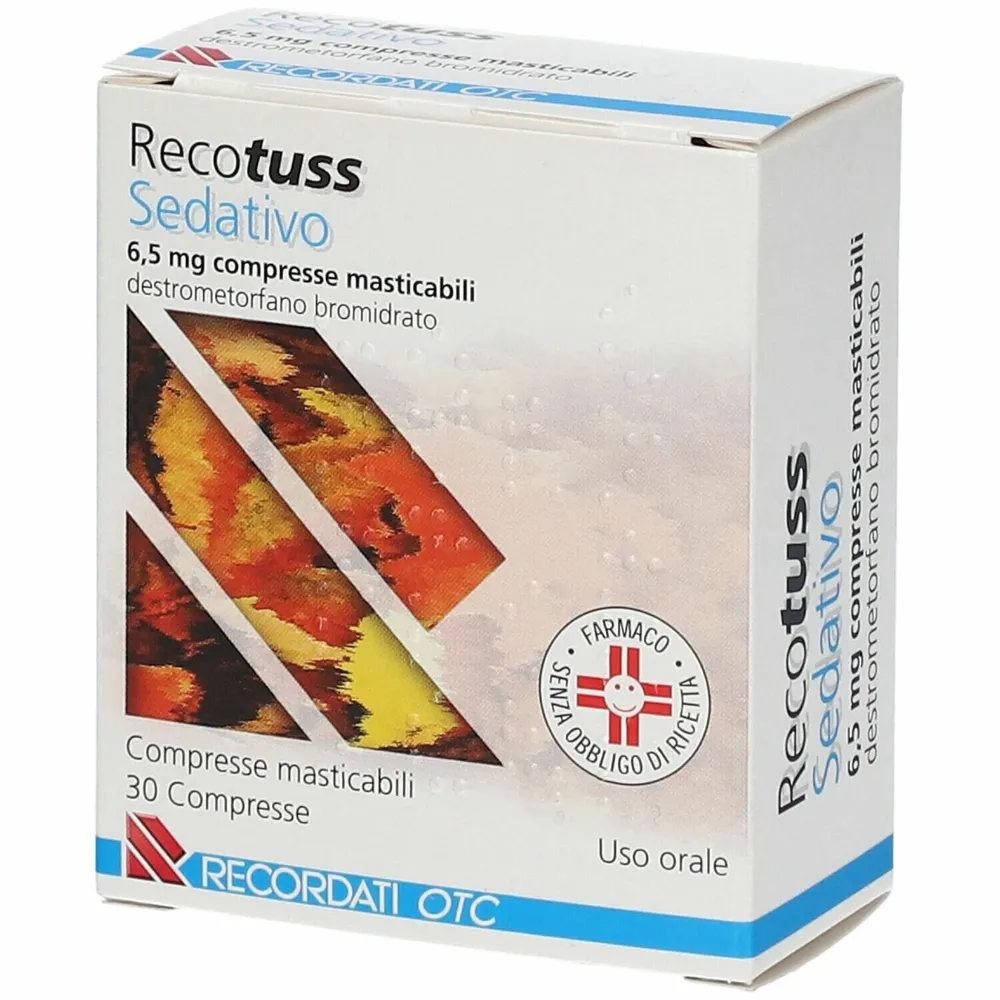
Table of Contents
Package leaflet: Information for the patient
Recotuss Sedative 6.5 mg Chewable Tablets
dextromethorphan hydrobromide
Please read this leaflet carefully before taking this medicine because it contains
important information for you.
Always take this medicine exactly as described in this leaflet or as your doctor or
pharmacist has instructed you.
- Keep this leaflet. You may need to read it again.
- If you need more information or advice, consult your pharmacist.
- If you experience any side effects, including those not listed in this leaflet, contact your doctor or pharmacist. See section 4.
- Consult your doctor if you do not notice any improvement or if you notice worsening of symptoms after 5–7 days of treatment.
Contents of this leaflet:
- What Recotuss Sedative is and what it is used for
- What you need to know before taking Recotuss Sedative
- How to take Recotuss Sedative
- Possible side effects
- How to store Recotuss Sedative
- Contents of the pack and other information
1. What Recotuss Sedative is and what it is used for
Recotuss Sedative contains the active substance dextromethorphan hydrobromide.
It belongs to a class of medicines called cough suppressants (antitussives).
Recotuss Sedative is used for the symptomatic treatment of cough.
Consult your doctor if you do not feel better or if you feel worse after 5–7 days.
2. What you need to know before taking Recotuss Sedative
Do not take Recotuss Sedative
- if you are allergic to dextromethorphan hydrobromide or to any of the other ingredients of this medicine (listed in section 6);
- if you are allergic to other substances belonging to the same family as dextromethorphan hydrobromide (which is the active ingredient in Recotuss Sedative); in particular, to other cough medicines such as dimemorphan, codeine, and dihydrocodeine;
- if you are taking, or have taken within the previous two weeks, medicines used to treat depression (antidepressants) (see “Other medicines and Recotuss Sedative”).
Warnings and precautions
Talk to your doctor or pharmacist before taking Recotuss Sedative.
Use Recotuss Sedative only after consulting your doctor if:
- you have breathing difficulties (asthma);
- it is for a child under two years of age (see “Children”);
- you are pregnant or breastfeeding (see “Pregnancy and breastfeeding”);
- you are very weak (debilitated).
Children
In the case of children under two years of age, use Recotuss Sedative only after consulting your doctor.
Other medicines and Recotuss Sedative
Tell your doctor or pharmacist if you are taking, have recently taken, or might take any other medicines.
In particular, inform your doctor if you are taking or have recently taken:
- medicines for treating depression such as fluoxetine, paroxetine, sertraline, and bupropion (see section “Do not take Recotuss Sedative”);
- medicines for treating severe pain or for reducing withdrawal symptoms in cases of dependence (methadone);
- medicines for treating psychiatric disorders (haloperidol, thioridazine, perphenazine);
- medicines for treating heart rhythm disorders (amiodarone, quinidine, propafenone);
- medicines for treating cardiac rhythm abnormalities (flecainide);
- medicines to reduce calcium levels in the blood and to treat dysfunction due to reduced secretion of the hormone regulating these levels (hyperparathyroidism), such as cinacalcet;
- medicines used to prevent fungal growth (terbinafine).
- concomitant use of Recotuss Sedative with sedative medicines such as benzodiazepines or related drugs increases the risk of drowsiness, breathing difficulties (respiratory depression), coma, and may be life-threatening. For this reason, concomitant use should only be considered when no other treatment options are available. However, if your doctor prescribes Recotuss Sedative together with sedative medicines, the dose and duration of concomitant treatment must be limited by the doctor. Inform your doctor about all sedative medicines you are taking and follow carefully the doctor’s recommendations regarding dosage. It may be helpful to inform friends or family members to watch for the above-mentioned signs and symptoms. Contact your doctor if these symptoms occur.
Recotuss Sedative and alcohol
Do not consume excessive amounts of alcohol while taking Recotuss Sedative.
Pregnancy and breastfeeding
If you are pregnant, suspect you may be pregnant, planning to become pregnant, or breastfeeding, consult your doctor or pharmacist before taking this medicine.
During pregnancy and breastfeeding, Recotuss Sedative should be used only after consulting your doctor and evaluating together the risks and benefits of treatment.
Driving and using machines
Recotuss Sedative may cause drowsiness, thus your ability to concentrate and stay alert may be reduced while driving or operating machinery.
Recotuss Sedative contains sucrose
Recotuss Sedative contains sucrose. If your doctor has diagnosed you with an intolerance to certain sugars, contact him or her before taking this medicine.
3. How to take Recotuss Sedative
Take this medicine exactly as stated in this leaflet or as directed by your doctor or pharmacist. If you have any doubts, consult your doctor or pharmacist.
Adults: The recommended dose is 2 chewable tablets taken three or four times a day.
The chewable tablets should be dissolved in the mouth.
Do not use Recotuss Sedative for longer than 5–7 days.
Consult your doctor if symptoms recur repeatedly or if you have noticed any recent changes in their characteristics. Do not exceed the recommended doses without medical advice.
Use in children
Children over 2 years: The recommended dose is 1 chewable tablet three or four times a day.
For children under 2 years of age, consult your doctor before starting treatment.
If you take more Recotuss Sedative than you should
Symptoms of overdose may include mental confusion and marked excitement.
High doses may cause breathing difficulties (respiratory depression).
In case of accidental ingestion or overdose of Recotuss Sedative, contact your doctor immediately or go to the nearest hospital.
If you forget to take Recotuss Sedative
Do not take a double dose to make up for the missed dose.
If you stop taking Recotuss Sedative
If you have any questions about using this medicine, consult your doctor or pharmacist.
4. Possible side effects
Like all medicines, this medicine can cause side effects, although not everybody gets them.
During treatment the following may occur:
- drowsiness
- stomach and intestinal disturbances (nausea, vomiting)
- dizziness.
Following the instructions contained in this leaflet reduces the risk of side effects. These side effects are usually temporary. However, if they occur, it is advisable to consult your doctor or pharmacist.
Reporting of side effects
If you experience any side effect, including those not listed in this leaflet, talk to your doctor or pharmacist. You may also report side effects directly through the national reporting system at the following website:
www.agenziafarmaco.gov.it/content/come-segnalare-una-sospetta-reazione-avversa.
By reporting side effects, you can help provide more information on the safety of this medicine.
5. How to store Recotuss Sedative
Keep this medicine out of the sight and reach of children.
This medicine does not require any special storage conditions.
Do not use this medicine after the expiry date stated on the packaging after the word "Expiry". The expiry date refers to the last day of that month.
Do not dispose of any medicine via wastewater or household waste. Ask your pharmacist how to dispose of medicines you no longer use. This will help protect the environment.
It is important to always keep the medicine information available; therefore, retain both the packaging and the leaflet.
6. Package contents and other information
What Recotuss Sedative contains
- The active substance is: dextromethorphan hydrobromide. Each chewable tablet contains 6.5 mg of dextromethorphan hydrobromide (equivalent to 5.007 mg of dextromethorphan).
- The other components are: sucrose, precipitated silica, sodium stearate, gum arabic, balsamic flavouring (see "Recotuss Sedative contains sucrose").
Description of the appearance of Recotuss Sedative and contents of the pack
Recotuss Sedative is available as chewable tablets for oral administration.
Pack contents: 30 chewable tablets containing 6.5 mg of dextromethorphan hydrobromide.
Marketing Authorization Holder and Manufacturer
RECORDATI Industria Chimica e Farmaceutica S.p.A. - Via Matteo Civitali, 1 – Milan.
Patient Information Leaflet
Recotuss Sedative 2 mg/ml Syrup
dextromethorphan hydrobromide
Please read this leaflet carefully before taking this medicine because it contains
important information for you.
Always take this medicine exactly as described in this leaflet or as your doctor or
pharmacist has instructed you.
- Keep this leaflet. You may need to read it again.
- If you need more information or advice, consult your pharmacist.
- If you experience any of the side effects, including those not listed in this leaflet, contact your doctor or pharmacist. See section 4.
- Contact your doctor if you do not notice improvement or if your symptoms worsen after 5–7 days of treatment.
Contents of this leaflet:
- What Recotuss Sedative is and what it is used for
- What you need to know before taking Recotuss Sedative
- How to take Recotuss Sedative
- Possible side effects
- How to store Recotuss Sedative
- Contents of the pack and other information
1. What Recotuss Sedative is and what it is used for
Recotuss Sedative contains the active substance dextromethorphan hydrobromide.
It belongs to a class of medicines called antitussives (cough suppressants).
Recotuss Sedative is used for the symptomatic treatment of cough.
If you do not feel better or feel worse after 5–7 days, consult your doctor.
2. What you need to know before taking Recotuss Sedative
Do not take Recotuss Sedative
- if you are allergic to dextromethorphan hydrobromide or to any of the other ingredients of this medicine (listed in section 6);
- if you are allergic to other substances belonging to the same family as dextromethorphan hydrobromide (which is the active substance in Recotuss Sedative); in particular, to other cough medicines such as dimemorphan, codeine, and dihydrocodeine;
- if you are taking, or have taken within the previous two weeks, medicines used to treat depression (antidepressants) (see "Other medicines and Recotuss Sedative").
Warnings and precautions
Talk to your doctor or pharmacist before taking Recotuss Sedative.
Use Recotuss Sedative only after consulting your doctor if:
- you have breathing difficulties (asthma);
- you are treating a child under two years of age (see "Children");
- you are pregnant or breastfeeding (see "Pregnancy and breastfeeding");
- you are very weak (debilitated).
For individuals engaged in sports, the use of medicines containing ethyl alcohol, such as Recotuss Sedative, may result in a positive anti-doping test, depending on the blood alcohol concentration thresholds set by certain sports federations.
Children
For children under two years of age, use Recotuss Sedative only after consulting a doctor.
Other medicines and Recotuss Sedative
Tell your doctor or pharmacist if you are taking, have recently taken, or might take any other medicines.
In particular, inform your doctor if you are taking or have recently taken:
-
medicines to treat depression such as fluoxetine, paroxetine, sertraline, and bupropion (see section 2 “Do not take Recotuss Sedative”);
-
medicines to treat severe pain or to reduce withdrawal symptoms in cases of dependence (methadone);
-
medicines to treat psychiatric disorders (haloperidol, thioridazine, perphenazine);
-
medicines to treat heart rhythm disorders (amiodarone, quinidine, propafenone);
-
medicines to treat cardiac arrhythmias (flecainide);
-
medicines to reduce calcium levels in the blood and treat dysfunction due to reduced secretion of the hormone regulating these levels (hyperparathyroidism), such as cinacalcet;
-
medicines used to prevent fungal (mycete) growth (terbinafine).
-
Concomitant use of Recotuss Sedative with sedative medicines such as benzodiazepines or related drugs increases the risk of drowsiness, breathing difficulties (respiratory depression), coma, and may be life-threatening. For this reason, concomitant use should only be considered when no other treatment options are available. However, if your doctor prescribes Recotuss Sedative together with sedative medicines, the dose and duration of concomitant treatment must be limited by the doctor. Inform your doctor about all sedative medicines you are taking and follow carefully the doctor’s dosage recommendations. It may be helpful to inform friends or relatives to watch for the above-mentioned signs and symptoms. Contact your doctor if these symptoms occur.
Recotuss Sedative and alcohol
Do not consume excessive amounts of alcohol while taking Recotuss Sedative.
Pregnancy and breastfeeding
If you are pregnant, suspect you may be pregnant, planning to become pregnant, or breastfeeding, consult your doctor or pharmacist before taking this medicine.
During pregnancy and breastfeeding, Recotuss Sedative should be used only after consulting your doctor and evaluating with him or her the risks and benefits of treatment.
Driving and using machines
Recotuss Sedative may cause drowsiness, thereby reducing your attention and vigilance. This may impair your ability to drive vehicles or operate machinery.
Recotuss Sedative contains sucrose, ethanol, and methyl p-hydroxybenzoate
- Sucrose: if your doctor has diagnosed you with an intolerance to certain sugars, contact him or her before taking this medicine.
- Ethanol: Recotuss Sedative contains 8.7 vol% ethanol (alcohol), e.g. up to 350 mg per measuring spoon, equivalent to 9 ml of beer or 4 ml of wine per measuring spoon. It may be harmful for alcoholics. This should be taken into account in pregnant or breastfeeding women, children, and high-risk groups such as patients with liver disease or epilepsy.
- Methyl p-hydroxybenzoate: may cause allergic reactions (including delayed reactions).
3. How to take Recotuss Sedative
Take this medicine exactly as stated in this leaflet or as instructed by your doctor or pharmacist. If you have any doubts, consult your doctor or pharmacist.
Adults: The recommended dose is one measuring spoonful at a time (mark "5 ml" on the dosing spoon provided in the package), to be taken three or four times a day.
Do not use Recotuss Sedative for longer than 5–7 days.
Consult your doctor if symptoms recur or if you have noticed any recent changes in their characteristics.
Do not exceed the recommended doses without medical advice.
Use in children
Children over two years of age: The recommended dose is half a measuring spoonful at a time (mark "2.5 ml" on the dosing spoon provided in the package), to be taken three or four times a day.
For children under two years of age, consult your doctor before starting treatment.
If you take more Recotuss Sedative than you should
Symptoms of overdose may include mental confusion and severe agitation.
High doses may cause breathing difficulties (respiratory depression).
In case of accidental ingestion or overdose of Recotuss Sedative, contact your doctor immediately or go to the nearest hospital.
If you forget to take Recotuss Sedative
Do not take a double dose to make up for a forgotten dose.
If you stop taking Recotuss Sedative
If you have any questions about the use of this medicine, consult your doctor or pharmacist.
4. Possible side effects
Like all medicines, this medicine can cause side effects, although not everybody gets them.
During treatment the following may occur:
- drowsiness
- stomach and intestinal disorders (nausea, vomiting)
- dizziness.
Following the instructions provided in this leaflet reduces the risk of side effects. These side effects are usually temporary. However, if they occur, it is advisable to consult your doctor or pharmacist.
Reporting of side effects
If you experience any side effect, including those not listed in this leaflet, please inform your doctor or pharmacist. You may also report side effects directly through the national reporting system at the following website:
www.agenziafarmaco.gov.it/content/come-segnalare-una-sospetta-reazione-avversa.
By reporting side effects, you can help provide more information on the safety of this medicine.
5. How to store Recotuss Sedative
Keep this medicine out of the sight and reach of children.
Do not store above 30°C.
Do not use this medicine after the expiry date stated on the packaging after the word "Expiry". The expiry date refers to the last day of that month.
Do not dispose of any medicine via wastewater or household waste. Ask your pharmacist how to dispose of medicines no longer required. This will help protect the environment.
It is important to always keep the medicine information available; therefore, retain both the packaging and the leaflet.
6. Package contents and other information
What Recotuss Sedative contains
- The active substance is dextromethorphan hydrobromide. One ml of syrup contains 2.0 mg of dextromethorphan hydrobromide (equivalent to 1.541 mg of dextromethorphan).
- The other components are: ethanol, sorbitol solution, sucrose, glycerol, methyl p-hydroxybenzoate, lemon flavour, mint flavour, purified water (see "Recotuss Sedative contains sucrose, ethanol and methyl p-hydroxybenzoate").
Description of the appearance of Recotuss Sedative and contents of the package
Recotuss Sedative is available as a glass bottle containing an oral syrup. The package contains 100 ml.
Marketing Authorization Holder and Manufacturer
RECORDATI Industria Chimica e Farmaceutica S.p.A. - Via Matteo Civitali, 1 – Milan.