Prinivil
Italy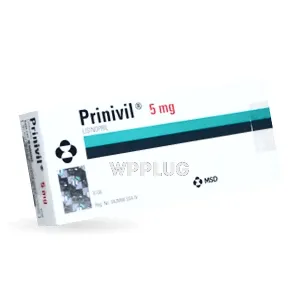
Table of Contents
Patient Information Leaflet: Information for the patient
Prinivil 5 mg tablets, 20 mg tablets
Lisinopril
Please read this leaflet carefully before taking this medicine because it contains important information for you.
- Keep this leaflet. You may need to read it again.
- If you have any questions, ask your doctor or pharmacist.
- This medicine has been prescribed for you only. Do not give it to others, even if their symptoms are the same as yours, as it could be harmful.
- If you experience any side effect, including those not listed in this leaflet, talk to your doctor or pharmacist. See section 4.
Contents of this leaflet:
- What Prinivil is and what it is used for
- What you need to know before taking Prinivil
- How to take Prinivil
- Possible side effects
- How to store Prinivil
- Contents of the pack and other information
1. What Prinivil is and what it is used for
Prinivil contains the active substance lisinopril. This belongs to a group of medicines called Angiotensin Converting Enzyme (ACE) inhibitors. These medicines work by dilating blood vessels. This allows blood to flow more easily and reduces the effort required by the heart to pump blood throughout the body.
Prinivil is indicated:
- for the treatment of high blood pressure (hypertension);
- for the treatment of heart failure, a condition in which the heart does not adequately pump blood around the body;
- in combination with other therapeutic measures, for the preventive treatment of left ventricular dysfunction or heart failure and to improve survival, in patients with stable blood flow who have suffered a heart attack (acute myocardial infarction), within the first 24 hours.
2. What you should know before taking Prinivil
Do not take Prinivil if:
- you are allergic to the active substance or to any of the other ingredients of this medicine (listed in section 6);
- you have previously experienced, after taking ACE inhibitors, a hypersensitivity reaction (allergic reaction) causing skin rash similar to hives, accompanied by swelling of the hands, feet, ankles, or even the face, lips, tongue and/or throat, leading to difficulty swallowing or breathing (angioedema);
- you suffer from hereditary angioedema (due to familial predisposition), a very rare but serious genetic disorder that may cause sudden swelling of the face, arms, legs, hands, feet, genitals, gastrointestinal tract, or airways;
- you suffer from idiopathic angioedema, i.e. angioedema of unknown cause;
- you are in the second or third trimester of pregnancy (see section “Pregnancy and breastfeeding”);
- you have diabetes or impaired kidney function and are being treated with a blood pressure-lowering medicine containing aliskiren;
- you are taking or have taken sacubitril/valsartan, a medicine used to treat chronic heart failure in adults, as this increases the risk of angioedema (rapid swelling under the skin, for example in the throat).
If you are taking any of the following medicines, your risk of angioedema may be increased:
- Racecadotril, a medicine used to treat diarrhoea;
- Medicines used to prevent rejection of transplanted organs and to treat cancer (such as temsirolimus, sirolimus, everolimus);
- Vildagliptin, a medicine used to treat diabetes.
Warnings and precautions
Talk to your doctor or pharmacist before taking Prinivil if:
- you are at risk of excessive drop in blood pressure due to excessive fluid loss, for example if you are taking medicines that increase urine production (diuretics), are on a low-salt diet, or have experienced vomiting or diarrhoea. A drop in blood pressure may also occur if you have renin-dependent high blood pressure;
- you are undergoing dialysis (blood purification therapy);
- you have low blood pressure (hypotension), which may cause weakness or dizziness. A significant drop in blood pressure can be dangerous, especially for patients with impaired blood flow to the heart (ischaemic heart disease) or brain (ischaemic cerebrovascular disease);
- you have heart failure and your blood pressure is normal or low. Treatment with Prinivil may cause further hypotension. This is more likely if you have severe heart failure;
- you suffer from heart valve disease, narrowing (stenosis) of the heart valve (mitral valve), narrowing (stenosis) of the aortic artery, or thickening of the heart walls (hypertrophic cardiomyopathy);
- you have kidney disease (renal failure) or narrowing (stenosis) of one or both renal arteries;
- you have high blood sugar levels (diabetes);
- you require blood separation treatment (apheresis), e.g. for high cholesterol levels. Your doctor may temporarily stop Prinivil treatment to prevent a potentially severe allergic reaction;
- you are undergoing dialysis;
- you are receiving or are scheduled to receive treatment to reduce the effects of an allergy, such as insect sting (desensitisation treatment). If you are taking Prinivil during such treatment, you may experience a severe allergic reaction;
- any member of your family has ever had (for any reason) a hypersensitivity reaction (allergic reaction) causing swelling of the hands, feet, ankles, face, lips, tongue and/or throat;
- you experience changes in blood cell counts (white blood cells, red blood cells, platelets) or a significant drop in a certain type of infection-sensitive white blood cells (agranulocytosis), especially if you have connective tissue disease (collagenosis) affecting blood vessels or are taking medicines that suppress the immune system (immunosuppressants);
- you are scheduled for surgery requiring anaesthesia;
- you are of Black ethnicity, as Prinivil may be less effective and you may be at increased risk of angioedema;
- you have developed a persistent dry cough over a long period after starting treatment with an ACE inhibitor. Discuss this with your doctor;
- you have high potassium levels in the blood (hyperkalaemia – see section “Prinivil and other medicines”);
- you are in the first trimester of pregnancy or during breastfeeding (see section “Pregnancy and breastfeeding”);
- you are taking any of the following medicines used to treat high blood pressure:
- an "angiotensin II receptor antagonist" (AIIRA), also known as sartans (e.g. valsartan, telmisartan, irbesartan), particularly if you have kidney problems related to diabetes;
- aliskiren;
- you are taking lithium (see section “Prinivil and other medicines”).
Your doctor may check your kidney function, blood pressure, and blood electrolyte levels (e.g. potassium) at regular intervals. See also the information in the section “Do not take Prinivil”.
Stop taking Prinivil and contact your doctor immediately if you experience:
- difficulty breathing, possibly accompanied by swelling of the face, lips, tongue and/or throat;
- swelling of the face, lips, tongue and/or throat, which may also cause difficulty swallowing;
- swelling of the hands, feet or ankles;
- severe itching of the skin, accompanied by localised swelling;
- yellowing of the skin or whites of the eyes (jaundice), indicating possible liver problems;
- increased levels of transaminases (liver enzymes) in the blood.
Children and adolescents
The use of Prinivil is not recommended in children due to lack of data on safety and efficacy.
Other medicines and Prinivil
Inform your doctor or pharmacist if you are taking, have recently taken, or might take any other medicines.
In particular, talk to your doctor or pharmacist if you are taking, have recently taken, or might take any of the following medicines:
-
potassium supplements (including salt substitutes), diuretics (including potassium-sparing diuretics), and other medicines that may increase blood potassium levels (such as trimethoprim and cotrimoxazole used to treat bacterial infections; ciclosporin, an immunosuppressive medicine used to prevent rejection of transplanted organs; and heparin, a medicine used to thin the blood and prevent clotting);
-
other medicines for treating high blood pressure;
-
non-steroidal anti-inflammatory drugs (NSAIDs), used to treat joint inflammation (arthritis) or muscle pain;
-
lithium, used to treat bipolar disorder; concomitant use is not recommended, but if combination is necessary, your doctor may monitor your blood lithium levels;
-
medicines usually used to prevent rejection of transplanted organs (sirolimus, everolimus, and other drugs belonging to the class of mTOR inhibitors, such as temsirolimus), used to treat certain types of cancer;
-
alteplase, for the treatment of acute myocardial infarction and acute ischaemic stroke;
-
insulin or other oral antidiabetic medicines, such as vildagliptin. Blood glucose levels should be closely monitored during the first weeks of treatment with Prinivil, especially in patients with kidney problems;
-
antipsychotics and tricyclic antidepressants, used to treat mental disorders;
-
medicines containing gold, such as sodium aurothiomalate, which may be administered by injection and used to treat arthritis;
-
an angiotensin II receptor antagonist (AIIRA) or aliskiren (see also the sections “Do not take Prinivil” and “Warnings and precautions”). Your doctor may consider it necessary to adjust your dose and/or take additional precautions;
-
anaesthetics;
-
medicines acting on the autonomic nervous system (sympathomimetics), such as ephedrine, pseudoephedrine, salbutamol, found in some nasal decongestants, cough and cold remedies, and asthma medicines;
-
high doses of acetylsalicylic acid (aspirin);
-
nitrates (such as nitroglycerin) or other vasodilators, used to treat heart conditions;
-
medicines used to suppress the immune system response (immunosuppressants);
-
allopurinol, used to treat gout;
-
procainamide, used to treat heart rhythm disorders.
Prinivil with food and drinks
Food and drinks do not affect the absorption of Prinivil. You may take Prinivil before, during, or after meals.
Pregnancy and breastfeeding
If you are pregnant, think you may be pregnant, planning to become pregnant, or breastfeeding, consult your doctor or pharmacist before taking this medicine.
Pregnancy
Prinivil is not recommended during the first three months of pregnancy. Do not take Prinivil if you are more than three months pregnant, as it may cause serious harm to the unborn baby if used after the third month of pregnancy. If you think you may be pregnant or are planning a pregnancy, inform your doctor, who may advise stopping Prinivil and prescribe an alternative treatment.
Breastfeeding
Prinivil is not recommended during breastfeeding. Inform your doctor if you are breastfeeding or intend to breastfeed. Your doctor may prescribe an alternative treatment during breastfeeding, especially if your baby is a newborn or premature.
Driving and using machines
Prinivil may cause dizziness or unusual tiredness. Therefore, exercise particular caution before driving or operating machinery.
3. How to take Prinivil
Take this medicine exactly as your doctor has told you. If you are unsure, consult your doctor or pharmacist.
Instructions for use
Swallow the tablet with a small amount of water.
Take the tablets at the same time each day. You may choose to take them before, during, or after meals.
Pay particular attention when taking your first dose of Prinivil, as you may experience a greater drop in blood pressure than occurs later during treatment, especially if you suffer from high blood pressure. This may cause dizziness or lightheadedness. If this happens, lying down may help.
This is more likely if you are taking another medicine that increases urine production (a diuretic). In this case, your doctor may instruct you to stop taking the diuretic 2 or 3 days before starting treatment with Prinivil.
Use in adults
For the treatment of high blood pressure (arterial hypertension)
The recommended starting dose is 10 mg once daily. Your doctor will gradually increase the dose until the best possible control of your blood pressure is achieved. The recommended maintenance dose is 20 mg once daily. The maximum dose studied in humans for long-term treatment is 80 mg once daily.
For the treatment of heart failure
The recommended starting dose is 2.5 mg once daily. Your doctor will gradually increase the dose, usually every 2 to 4 weeks, or more rapidly if necessary.
The maintenance dose ranges from 5 to 20 mg once daily.
For the treatment of patients who have had a heart attack (myocardial infarction)
The recommended dose is 5 mg within 24 hours of the heart attack, followed by 5 mg the next day.
The maintenance dose is 10 mg once daily. Your doctor may adjust the dose depending on your blood pressure values.
You must take the medicine for at least 6 weeks.
Use in children and adolescents
Prinivil is not recommended for use in children due to lack of data on safety and efficacy.
Use in elderly patients and patients with kidney problems
If you are elderly, have kidney problems, or are taking diuretics, your doctor may prescribe a lower dose than the recommended one. Your doctor may adjust the dose based on your blood pressure response to treatment.
If you take more Prinivil than you should
If you accidentally take too much Prinivil, contact your doctor immediately or go to the nearest hospital.
Overdose may cause one or more of the following symptoms: low blood pressure (hypotension), reduced blood and oxygen supply to tissues (circulatory shock), disturbances in the concentration of electrolytes in blood and body fluids, kidney problems (renal failure), increased breathing rate (hyperventilation), rapid heartbeat (tachycardia), palpitations, dizziness, anxiety, and cough.
If you forget to take Prinivil
Do not take a double dose to make up for a forgotten dose. Continue taking Prinivil as prescribed.
If you stop taking Prinivil
Do not stop taking the tablets, even if you feel well, unless your doctor tells you otherwise.
If you have any questions about how to use this medicine, ask your doctor or pharmacist.
4. Possible side effects
Like all medicines, this medicine can cause side effects, although not everybody gets them.
Stop taking Prinivil and contact your doctor immediately if you experience:
- difficulty breathing, even accompanied by swelling of the face, lips, tongue and/or throat;
- swelling of the face, lips, tongue and/or throat, which may also cause difficulty swallowing;
- swelling of the hands, feet or ankles;
- severe itching of the skin, accompanied by localised swelling;
- yellowing of the skin and whites of the eyes (jaundice);
- increased levels of liver enzymes.
If any of the side effects listed below worsen, or if you notice any side effect not listed in this leaflet, inform your doctor or pharmacist.
Common side effects (may affect up to 1 in 10 people)
- dizziness;
- headache (cephalalgia);
- posture-related (orthostatic) effects, including low blood pressure (hypotension);
- cough;
- diarrhoea, vomiting;
- kidney problems (renal dysfunction).
Uncommon side effects (may affect up to 1 in 100 people)
- mood changes; numbness or tingling of limbs, arms and legs (paraesthesia); loss of balance (vertigo); altered taste; drowsiness, insomnia and unusual dreams, hallucinations;
- myocardial infarction or diseases affecting the nervous and circulatory systems (cerebrovascular events), following hypotension in individuals at higher risk; sensation of pounding heartbeat (palpitations); increased heart rate (tachycardia); skin colour changes (bluish followed by redness) and/or numbness or tingling in fingers of hands and feet (Raynaud's disease);
- inflammation of the nasal mucosa (rhinitis);
- feeling unwell (nausea); stomach pain or indigestion;
- skin rash; itching; hypersensitivity reactions with sudden swelling of hands, feet, ankles, face, lips, tongue and/or throat, leading to difficulty in swallowing and breathing (angioedema);
- inability to achieve an erection (erectile dysfunction);
- feeling of fatigue; loss of strength (asthenia);
- increased blood levels of nitrogen, creatinine, liver enzymes, and potassium.
Rare side effects (may affect up to 1 in 1,000 people)
- decrease in the substance contained in red blood cells responsible for oxygen transport in the body (haemoglobin) and in the corresponding number of red blood cells in the blood (haematocrit);
- mental confusion, olfactory disturbances;
- dry mouth;
- nodular skin rash (urticaria); hair loss (alopecia); chronic, i.e. persistent and long-lasting, skin inflammation (psoriasis);
- increased levels of urea in the blood (uraemia); severe kidney problems (renal failure);
- breast development in men (gynaecomastia);
- syndrome of inappropriate antidiuretic hormone secretion (SIADH);
- increased levels of bilirubin in the blood;
- reduced levels of sodium in the blood (hyponatraemia).
Very rare side effects (may affect up to 1 in 10,000 people)
- reduced bone marrow function; deficiency of red blood cells (anaemia); reduced platelet count (thrombocytopenia); decreased white blood cell count (neutropenia, leucopenia); reduction in white blood cells (agranulocytosis); destruction of red blood cells (haemolytic anaemia) – increasing the likelihood of infections; enlarged lymph nodes (lymphadenopathy); diseases causing the body to mount an immune response against itself (autoimmune diseases);
- low blood sugar levels (hypoglycaemia);
- narrowing of the bronchi (bronchospasm); sinusitis; allergic inflammation of lung alveoli (alveolitis), pneumonia caused by accumulation of white blood cells in the lung;
- inflammation of the pancreas (pancreatitis); intestinal angioedema; liver inflammation (hepatitis), affecting either liver cells or bile ducts (hepatocellular and cholestatic hepatitis); yellowing of the skin and whites of the eyes (jaundice); liver problems (hepatic failure);
- sweating; autoimmune disease affecting the skin and/or mucous membranes (pemphigus); severe skin disease characterised by destruction of the skin epithelium and mucous membranes (Stevens-Johnson syndrome, toxic epidermal necrolysis); inflammation causing erythematous skin lesions, associated with inflammation of blood vessels (erythema multiforme); transient enlargement of cutaneous lymph nodes (cutaneous pseudolymphoma);
- reduced (oliguria) or absent (anuria) urine output.
Side effects with unknown frequency (frequency cannot be estimated from the available data)
- depressive symptoms; transient loss of consciousness (fainting);
- fluid accumulation in the extremities (peripheral oedema);
- chest pain;
- joint pain;
- fever.
Other side effects
A complex disorder including one or more of the following symptoms has been reported:
- fever;
- inflammation of blood vessels (vasculitis);
- muscle pain (myalgia);
- joint inflammation (arthralgia/arthritis);
- positive test for antinuclear antibodies;
- elevated erythrocyte sedimentation rate;
- elevated levels of eosinophils and leucocytes in the blood;
- skin rash;
- light sensitivity (photosensitivity);
- other dermatological manifestations.
Reporting of side effects
If you experience any side effect, including those not listed in this leaflet, please inform your doctor or pharmacist. You can also report side effects directly via the national reporting system at the following website:
https://www.aifa.gov.it/content/segnalazioni-reazioni-avverse.
By reporting side effects, you can help provide more information on the safety of this medicine.
5. How to store Prinivil
Keep this medicine out of the sight and reach of children.
Do not use this medicine after the expiry date stated on the packaging after the word "Exp". The expiry date refers to the last day of that month.
The expiry date stated applies to the medicine kept in its original, unopened packaging and stored correctly.
This medicine does not require any special storage conditions.
Do not dispose of any medicine via wastewater or household waste. Ask your pharmacist how to dispose of medicines you no longer use. This will help protect the environment.
6. Package contents and other information
What Prinivil contains
The active substance is lisinopril dihydrate.
5 mg tablets
Each 5 mg tablet of Prinivil contains 5.445 mg of lisinopril dihydrate (equivalent to 5 mg of anhydrous lisinopril).
The other components are: mannitol, dibasic calcium phosphate, corn starch, pregelatinized starch, magnesium stearate.
20 mg tablets
Each 20 mg tablet of Prinivil contains 21.78 mg of lisinopril dihydrate (equivalent to 20 mg of anhydrous lisinopril).
The other components are: mannitol, dibasic calcium phosphate, corn starch, pregelatinized starch, magnesium stearate, red iron oxide, yellow iron oxide.
Description of the appearance of Prinivil and pack contents
Prinivil is presented as tablets contained in PVC/aluminum blisters.
Prinivil 5 mg tablets are available in packs of 14 tablets.
Prinivil 20 mg tablets are available in packs of 14 tablets.
It is possible that not all pack sizes are marketed.
Marketing Authorization Holder and Manufacturer
Marketing Authorization Holder
NEOPHARMED GENTILI S.p.A.
Via San Giuseppe Cottolengo, 15
20143 Milan, Italy
Manufacturers
Doppel Farmaceutici S.r.l.
Via Volturno, 48
20089 Quinto de' Stampi
Rozzano (MI), Italy
Vamfarma S.r.l.
Via Kennedy, 5
26833 Comazzo (LO), Italy