Nucala
Italy
Table of Contents
- Package leaflet: Information for the user
- Nucala 100 mg solution for injection in pre-filled pen
- Package leaflet: information for the user
- Nucala 100 mg solution for injection in pre-filled syringe
- Package leaflet: Information for the user
- Nucala 40 mg solution for injection in pre-filled syringe
- Package leaflet: Information for the user
- Nucala 100 mg powder for injectable solution
Package leaflet: Information for the user
Nucala 100 mg solution for injection in pre-filled pen
mepolizumab
Please read all of this leaflet carefully before you start using this medicine because it contains important information for you.
- Keep this leaflet. You may need to read it again.
- If you have any questions, ask your doctor, pharmacist or nurse.
- If you get any side effects, talk to your doctor, pharmacist or nurse. This includes any possible side effects not listed in this leaflet. See section 4.
Contents of this leaflet:
- What Nucala is and what it is used for
- What you need to know before using Nucala
- How to use Nucala
- Possible side effects
- How to store Nucala
- Contents of the pack and other information
- Step-by-step instructions for using the pen
1. What Nucala is and what it is used for
Nucala contains the active substance mepolizumab, a monoclonal antibody, a type of protein designed to
recognize a specific target in the body. It is used to treat severe asthma and
Eosinophilic Granulomatosis with Polyangiitis ( EGPA ) in adults, adolescents, and children aged 6 years and older. It is also used to treat chronic rhinosinusitis with nasal polyposis (CRSwNP),
chronic obstructive pulmonary disease ( COPD ), and Hypereosinophilic Syndrome ( HES ) in adults.
Mepolizumab, the active substance in Nucala, blocks a protein called interleukin-5.
By blocking the action of this protein, it limits the production of eosinophils by the bone marrow and
reduces the number of eosinophils in the blood and lungs.
Severe eosinophilic asthma
Some people with severe asthma have too many eosinophils (a type of white blood cells) in the blood and lungs.
This condition is called eosinophilic asthma – the type of asthma that Nucala can treat.
If you or your child are already using medications such as high-dose inhalers, but asthma is not well
controlled by these medications, Nucala can reduce the number of asthma attacks.
If you are taking medications called oral corticosteroids, Nucala may also help reduce the daily dose
of oral corticosteroids needed to control asthma.
Chronic rhinosinusitis with nasal polyposis (CRSwNP)
Chronic rhinosinusitis with nasal polyposis (CRSwNP) is a condition in which people may have high
levels of eosinophils (a type of white blood cells) in the blood and excess tissue lining the nose and
sinuses. This can cause symptoms such as nasal congestion, loss of smell, and the formation of soft, gelatinous growths inside the nose (called nasal polyps). Nucala reduces the number of eosinophils in the blood and
can reduce the size of nasal polyps, relieve nasal congestion, and help prevent surgery to remove nasal polyps. Nucala may also help reduce the need for oral corticosteroids to control symptoms.
Chronic obstructive pulmonary disease (COPD)
Some people with COPD have an excessive number of eosinophils (a type of white blood cells) in the blood and
lungs, which cause inflammation and thickening of the airways. This is a long-term condition that slowly worsens. Symptoms include shortness of breath, cough, chest tightness, and cough with sputum. Nucala reduces the number of eosinophils in the blood and may reduce exacerbations of COPD symptoms.
Eosinophilic Granulomatosis with Polyangiitis (EGPA)
EGPA is a condition in which people have too many eosinophils (a type of white blood cells) in the blood and
tissues and also have a form of vasculitis. This means there is inflammation of the blood vessels. This condition most commonly affects the lungs and sinuses, but often involves other organs such as the skin, heart, and kidneys.
Nucala can control and delay a relapse of these EGPA symptoms. This medicine may also help reduce the daily dose of oral corticosteroids needed to control symptoms.
Hypereosinophilic Syndrome (HES)
Hypereosinophilic Syndrome (HES) is a condition in which there is a high number of eosinophils (a type of white blood cells) in the blood. These cells can damage organs of the body, particularly the heart, lungs, nerves, and skin. Nucala helps reduce symptoms and prevent relapses. If you are taking medications often referred to as oral corticosteroids, Nucala may also help reduce the daily dose required to control HES symptoms/relapses.
2. What you need to know before using Nucala
Do not use Nucala
- if you are allergic to mepolizumab or to any of the other ingredients of this medicine (listed in section 6). → Check with your doctor if this applies to you.
Warnings and precautions
Talk to your doctor before using Nucala.
Worsening of asthma or COPD
Some people may develop asthma- or COPD-related side effects, or may experience worsening of asthma during treatment with Nucala.
→ Tell your doctor or nurse if your asthma or COPD remains uncontrolled or worsens after starting treatment with Nucala.
Allergic reactions and injection site reactions
Medicines of this type (monoclonal antibodies) can cause serious allergic reactions when injected into the body (see section 4, “Possible side effects”).
If you have had such a reaction to injections or medicines before,
→ Tell your doctor before being given Nucala.
Parasitic (helminth) infections
Nucala may reduce your body’s ability to fight infections caused by parasites. If you already have a parasitic infection, it must be treated before starting treatment with Nucala. If you live in or travel to areas where such infections are common:
→ Check with your doctor if you think this may apply to you.
Children and adolescents
Severe eosinophilic asthma
The pre-filled pen is not intended for use in children under 12 years of age for the treatment of severe eosinophilic asthma.
For children aged 6 to 11 years, contact your doctor, who will prescribe the recommended dose of Nucala, to be administered by a nurse or doctor.
CRSwNP, COPD and HES
This medicine is not intended for use in children and adolescents under 18 years of age for the treatment of CRSwNP, COPD or HES.
EGPA
This medicine is not intended for use in children under 6 years of age for the treatment of EGPA.
Other medicines and Nucala
Tell your doctor if you are taking, have recently taken, or might take any other medicines.
Other medicines for asthma, CRSwNP, COPD, EGPA or HES
Do not suddenly stop taking your current medicines for asthma, CRSwNP, COPD, EGPA or HES once you start treatment with Nucala. These medicines (especially those called oral corticosteroids) should be tapered gradually under the direct supervision of your doctor, depending on your response to Nucala.
Pregnancy and breastfeeding
If you are pregnant, think you might be pregnant, planning to become pregnant, or are breastfeeding, ask your doctor for advice before using this medicine.
It is not known whether the components of Nucala can pass into breast milk. If you are breastfeeding, you must consult your doctor before using Nucala.
Driving and using machines
The possible side effects of Nucala are unlikely to affect your ability to drive or operate machinery.
Nucala contains polysorbate
This medicine contains 0.2 mg of polysorbate per 100 mg dose. Polysorbates may cause allergic reactions. Inform your doctor if you have known allergies.
Nucala contains sodium
This medicine contains less than 1 mmol of sodium (23 mg) per 100 mg dose, i.e. essentially “sodium-free”.
3. How to use Nucala
Nucala is administered by subcutaneous injection (subcutaneous injection).
Your doctor or nurse will decide whether you or a caregiver may inject Nucala. If appropriate, they will provide training to show you or your caregiver the correct way to use Nucala.
Nucala must be administered to children aged 6 to 11 years by a doctor, nurse, or qualified healthcare provider.
Severe eosinophilic asthma
The recommended dose for adults and adolescents aged 12 years and older is 100 mg. You will receive 1 injection every four weeks.
CRSwNP
The recommended dose in adults is 100 mg. You will receive 1 injection every four weeks.
COPD
The recommended dose in adults is 100 mg. You will receive 1 injection every four weeks.
EGPA
The recommended dose for adults and adolescents aged 12 years and older is 300 mg. You will receive 3 injections every four weeks.
Children aged 6 to 11 years
Children weighing 40 kg or more:
The recommended dose is 200 mg. You will receive 2 injections every four weeks.
Children weighing less than 40 kg:
The recommended dose is 100 mg. You will receive 1 injection every four weeks.
Injection sites must be at least 5 cm apart.
HES
The recommended dose for adults is 300 mg. You will receive 3 injections every 4 weeks.
Injection sites must be at least 5 cm apart.
Instructions for use of the pre-filled pen are provided on the reverse side of this patient information leaflet.
If you use more Nucala than you should
If you think you have injected too much Nucala, contact your doctor for advice.
If you forget to use Nucala
You or your caregiver may administer the next dose of Nucala as soon as you remember. If you do not realize a dose has been missed until it is already time for the next scheduled dose, simply administer the next dose as planned. If you are unsure what to do, ask your doctor, pharmacist, or nurse.
If you stop using Nucala
Do not stop the course of Nucala injections unless instructed by your doctor. Stopping or interrupting treatment with Nucala may cause symptoms and exacerbations to return.
If your symptoms worsen during treatment with Nucala injections
→ Contact your doctor.
If you have any questions about the use of this medicine, consult your doctor, pharmacist, or nurse.
4. Possible side effects
Like all medicines, this medicine can cause side effects, although not everyone gets them.
The side effects caused by Nucala are generally mild to moderate, but occasionally they can be severe.
Allergic reactions
Some people may experience allergic or allergy-like reactions. These reactions can be common (may affect up to 1 in 10 people). They usually occur within minutes or hours after the injection, but sometimes symptoms may start several days later.
Symptoms may include:
- chest tightness, cough, difficulty breathing
- fainting, dizziness, feeling lightheaded (due to low blood pressure)
- swelling of the eyelids, face, lips, tongue or mouth
- hives
- skin rash
→ If you think that you (or your child) may be having such a reaction, seek immediate medical help.
If you (or your child) have previously had such a reaction to injections or medicines,
→ Tell your doctor before Nucala is administered.
Other side effects include:
Very common:
may affect more than 1 in 10 people
- headache
Common:
may affect up to 1 in 10 people
- chest infections – symptoms may include cough and fever (raised body temperature)
- urinary tract infections (blood in urine, pain and frequent urination, fever, pain in lower back)
- herpes zoster (shingles)
- pain in the upper abdomen (stomach ache or discomfort in the upper part of the stomach)
- fever (raised body temperature)
- eczema (itchy red patches on the skin)
- injection site reaction (pain, redness, swelling, itching, burning sensation of the skin near the area where the injection was given)
- back pain
- arthralgia (joint pain)
- pharyngitis (sore throat)
- nasal congestion (blocked nose)
Rare:
may affect up to 1 in 1,000 people
- severe allergic reactions (anaphylaxis)
→ Tell your doctor or nurse immediately if you experience any of these symptoms.
Reporting of side effects
If you get any side effects, including those not listed in this leaflet, talk to your doctor, pharmacist, or nurse. You can also report side effects directly through the national reporting system listed in Annex V.
By reporting side effects, you can help provide more information on the safety of this medicine.
5. How to store Nucala
Keep this medicine out of the sight and reach of children.
Do not use this medicine after the expiry date stated on the label and carton following "Exp".
The expiry date refers to the last day of that month.
Store in a refrigerator (2°C - 8°C).
Do not freeze.
Keep in the original packaging to protect the medicine from light.
The Nucala pre-filled pen may be removed from the refrigerator and stored in its unopened packaging
for up to 7 days at room temperature (up to 30°C), provided it is protected from light. Discard if left
outside the refrigerator for more than 7 days.
6. Package contents and other information
What Nucala contains
The active substance is mepolizumab.
Each 1 mL pre-filled pen contains 100 mg of mepolizumab.
The other components are sucrose, disodium phosphate heptahydrate, citric acid monohydrate, polysorbate
80 (E 433), disodium edetate, water for injections.
Description of the appearance of Nucala and contents of the pack
Nucala is supplied as a 1 mL solution, from clear to opalescent, colourless to pale yellow or pale brown, in a single-use pre-filled pen.
Nucala is available in a pack containing 1 pre-filled pen, or in multiple packs containing 3 x 1 pre-filled pens or 9 x 1 pre-filled pens.
Marketing Authorisation Holder
GlaxoSmithKline Trading Services Limited
12 Riverwalk
Citywest Business Campus
Dublin 24
D24 YK11
Ireland
Manufacturer
GlaxoSmithKline Manufacturing S.p.A.
Strada Provinciale Asolana, n. 90
43056 San Polo di Torrile, Parma
Italy
For further information on this medicinal product, please contact the local representative of the Marketing Authorisation Holder:
België/Belgique/Belgien Lietuva
GlaxoSmithKline Pharmaceuticals s.a./n.v. UAB “BERLIN-CHEMIE MENARINI BALTIC”
Tél/Tel: + 32 (0) 10 85 52 00 Tel: + 370 52 691 947
[email protected]
България Luxembourg/Luxemburg
“Берлин-Хеми/А. Менарини GlaxoSmithKline Pharmaceuticals s.a./n.v.
България” EООД Belgique/Belgien
Teл.: + 359 2 454 0950 Tél/Tel: + 32 (0) 10 85 52 00
[email protected]
Česká republika Magyarország
GlaxoSmithKline, s.r.o. Berlin-Chemie/A. Menarini Kft.
Tel: + 420 222 001 111 Tel.: + 36 23501301
[email protected] [email protected]
Danmark Malta
GlaxoSmithKline Pharma A/S GlaxoSmithKline Trading Services Ltd.
Tlf: + 45 36 35 91 00 Tel: + 356 80065004
[email protected]
Deutschland Nederland
GlaxoSmithKline GmbH & Co. KG GlaxoSmithKline BV
Tel.: + 49 (0)89 36044 8701 Tel: + 31 (0)33 2081100
[email protected]
Eesti Norge
OÜ Berlin-Chemie Menarini Eesti GlaxoSmithKline AS
Tel: + 372 667 5001 Tlf: + 47 22 70 20 00
[email protected]
Ελλάδα Österreich
GlaxoSmithKline Μονοπρόσωπη A.E.B.E. GlaxoSmithKline Pharma GmbH
Τηλ: + 30 210 68 82 100 Tel: + 43 (0)1 97075 0
[email protected]
España Polska
GlaxoSmithKline, S.A. GSK Services Sp. z o.o.
Tel: + 34 900 202 700 Tel.: + 48 (0)22 576 9000
[email protected]
France Portugal
Laboratoire GlaxoSmithKline GlaxoSmithKline – Produtos Farmacêuticos, Lda.
Tél: + 33 (0)1 39 17 84 44 Tel: + 351 21 412 95 00
[email protected] [email protected]
Hrvatska România
Berlin-Chemie Menarini Hrvatska d.o.o. GlaxoSmithKline Trading Services Ltd.
Tel: +385 1 4821 361 Tel: + 40 800672524
[email protected]
Ireland Slovenija
GlaxoSmithKline (Ireland) Limited Berlin-Chemie / A. Menarini Distribution
Tel: + 353 (0)1 4955000 Ljubljana d.o.o.
Tel: + 386 (0)1 300 2160
[email protected]
Ísland Slovenská republika
Vistor ehf. Berlin-Chemie / A. Menarini Distribution
Sími: + 354 535 7000 Slovakia s.r.o.
Tel: + 421 2 544 30 730
[email protected]
Italia Suomi/Finland
GlaxoSmithKline S.p.A. GlaxoSmithKline Oy
Tel: + 39 (0)45 7741111 Puh/Tel: + 358 (0)10 30 30 30
Κύπρος Sverige
GlaxoSmithKline Trading Services Ltd. GlaxoSmithKline AB
Τηλ: + 357 80070017 Tel: + 46 (0)8 638 93 00
[email protected]
Latvija
SIA Berlin-Chemie/Menarini Baltic
Tel: + 371 67103210
[email protected]
Other sources of information
More detailed information on this medicinal product is available on the website of the European Medicines Agency: https://www.ema.europa.eu .
Step-by-step instructions for using the pre-filled pen
Administer once every four weeks.
Follow these instructions on how to use the pre-filled pen. Failure to follow these instructions may affect the proper functioning of the pre-filled pen. You must also receive training on how to use the pre-filled pen. The Nucala pre-filled pen is for subcutaneous use only (under the skin).
How to store Nucala
- Store in the refrigerator before use.
- Do not freeze.
- Keep the pre-filled pen in the original packaging to protect from light.
- Keep out of the sight and reach of children.
- If necessary, the pre-filled pen may be stored at room temperature, up to 30°C, for no more than 7 days, provided it is kept in the original packaging. For safety, discard the pre-filled pen if it has been stored outside the refrigerator for more than 7 days.
- Do not store above 30°C.
Before using Nucala
The pre-filled pen must be used only once and then discarded.
- Do not share the Nucala pre-filled pen with another person.
- Do not shake the pen.
- Do not use the pen if it falls on a hard surface.
- Do not use the pen if it appears damaged.
- Do not remove the needle cap until just before injection.
Getting to know the pre-filled pen
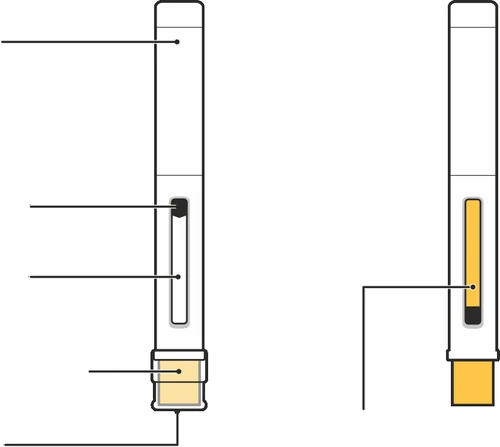
Label
Lock
Yellow indicator (becomes visible when injection is complete)
Prepare
1. Prepare the necessary items
Find a comfortable, well-lit, and clean surface.
Make sure you have the following items within reach:
- Nucala pre-filled pen
- Alcohol wipe (not included)
- Gauze pad or cotton ball (not included)
2. Remove the pre-filled pen
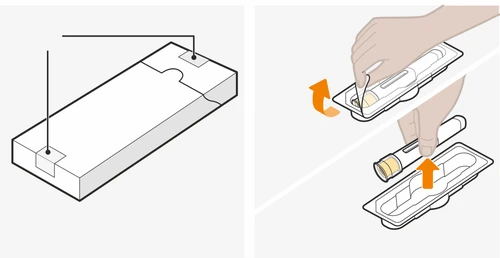
Safety seals
Make sure the safety seals are intact
Remove the pen from the tray
- Remove the package from the refrigerator. Check that the safety seals are not broken.
- Remove the tray from the box.
- Peel off the covering film from the tray.
- Holding the pen by the middle, carefully remove it from the tray.
- Place the pen on a clean, flat surface at room temperature, away from direct sunlight and out of the reach of children. Do not use the pen if the safety seal on the box is broken. Do not remove the needle cap at this stage.
3. Inspect and wait 30 minutes before use
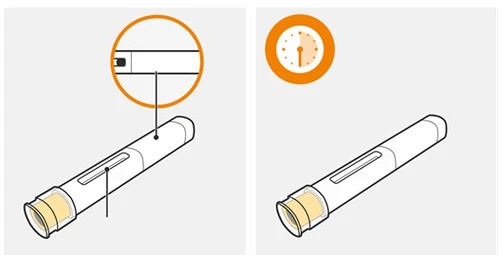
Wait 30
minutes
- Check the expiration date on the pen label.
- Look through the inspection window to ensure the liquid is clear (free from cloudiness or particles) and colorless to pale yellow or pale brown.
- It is normal to see one or more air bubbles.
- Wait 30 minutes (but no longer than 8 hours) before use. Do not use if the expiration date has passed. Do not heat the pen in a microwave, hot water, or direct sunlight. Do not inject if the solution appears cloudy, discolored, or contains particles. Do not use the pen if it has been left outside the cardboard case for more than 8 hours. Do not remove the needle cap during this step.
4. Choose the injection site
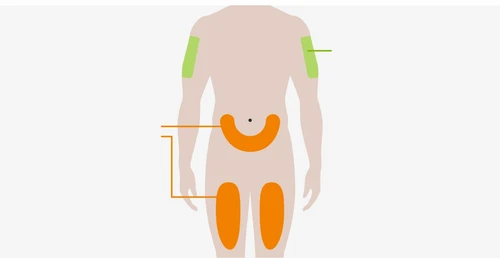
Inject it
yourself in the
thighs or abdomen
- You may inject Nucala in the thighs or abdomen.
- If someone else administers the injection, the upper arm may also be used.
- If more than one injection is needed to complete the dose, leave at least 5 cm between each injection site. Do not inject where the skin is bruised, soft, red, or hard. Do not inject within 5 cm of the navel.
5. Clean the injection site
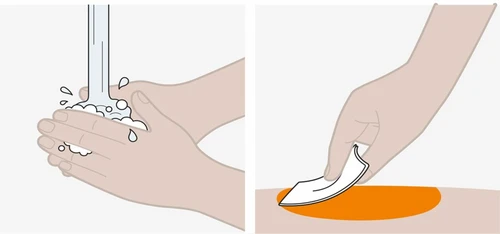
- Wash hands with soap and water.
- Clean the injection site by wiping the skin with an alcohol wipe and allowing the skin to air dry. Do not touch the injection site again until the injection has been completed.
Injecting
6. Remove the transparent needle cap
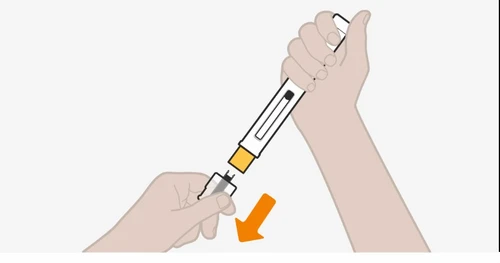
- Remove the transparent needle cap from the pen by pulling it off firmly.
- Do not be concerned if a drop of liquid appears at the tip of the needle. This is normal.
- Inject immediately after removing the needle cap and always within 5 minutes. Do not touch the yellow needle guard with your fingers. This could activate the pen too early and cause a needle stick injury. After removal, do not reattach the needle cap to the pen, as this could accidentally start the injection.
7. Start the injection
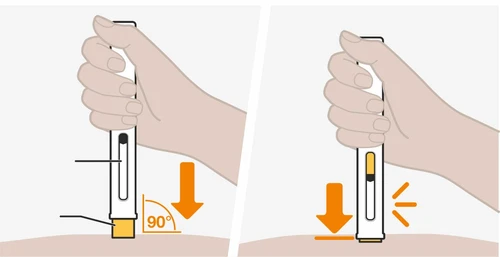

Inspection
window
First
Needle guard
“Click”
of the needle
- Hold the pen with the inspection window facing towards you so you can see it, and with the yellow needle guard pointing downward.
- Place the pen directly onto the injection site with the yellow needle guard perpendicular to the skin surface, as shown.
- To start the injection, push the pen downward fully and keep it pressed against the skin. The yellow needle guard will retract into the pen.
- You should hear the first "click," indicating that the injection has started.
- The yellow indicator will move downward across the inspection window as your dose is delivered. Do not lift the pen away from the skin at this stage, as this could result in not receiving the full dose of medicine. The injection may take up to 15 seconds to complete. Do not use the pen if the yellow needle guard does not retract as described. Dispose of it (see step 9) and start again with a new pen.
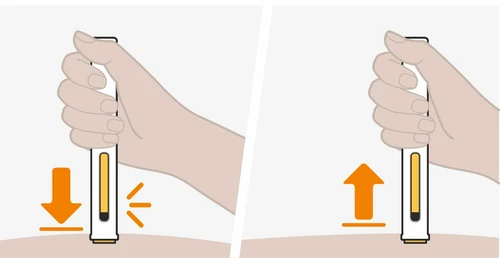
8. Keep the pen in place to complete the injection
Continue
pushing down
while counting
to 5, then lift
Second
“Click”
2nd “Click”
- Keep holding the pen down until you hear the 2nd “click” and until the cap and yellow indicator have stopped moving and completely filled the inspection window.
- Keep holding the pen in place and count to 5. Then remove the pen from the skin.
- If you do not hear the 2nd “click”:
- Check that the inspection window is completely filled by the yellow indicator.
- If you are unsure, hold the pen down for an additional 15 seconds to ensure the injection is complete. Do not lift the pen until you are certain the injection has been completed.
- You may notice a small drop of blood at the injection site. This is normal. Press a cotton ball or gauze pad on the area for a few seconds if needed. Do not rub the injection site.
Disposal
9. Disposal of the used pen
- Dispose of the used pen and needle cap according to local regulations. Ask your doctor or pharmacist for advice, if necessary.
- Keep used pens and needle caps out of sight and reach of children.
Package leaflet: information for the user
Nucala 100 mg solution for injection in pre-filled syringe
mepolizumab
Please read this entire leaflet carefully before using this medicine as it contains important information for you.
- Keep this leaflet. You may need to read it again.
- If you have any questions, ask your doctor, pharmacist, or nurse.
- If you experience any side effects, including those not listed in this leaflet, tell your doctor, pharmacist, or nurse. See section 4.
Contents of this leaflet:
- What Nucala is and what it is used for
- What you need to know before using Nucala
- How to use Nucala
- Possible side effects
- How to store Nucala
- Contents of the pack and other information
- Step-by-step instructions for use
1. What Nucala is and what it is used for
Nucala contains the active substance mepolizumab, a monoclonal antibody, a type of protein designed to
recognize a specific target in the body. It is used for the treatment of severe asthma and
Eosinophilic Granulomatosis with Polyangiitis ( EGPA ) in adults, adolescents, and children aged 6 years and older. It is also used to treat chronic rhinosinusitis with nasal polyposis (CRSwNP),
chronic obstructive pulmonary disease (COPD), and hypereosinophilic syndrome ( HES ) in adults.
Mepolizumab, the active substance in Nucala, blocks a protein called interleukin-5.
By blocking the action of this protein, it limits the overproduction of eosinophils by the bone marrow and reduces the number of eosinophils in the blood and lungs.
Severe eosinophilic asthma
Some people with severe asthma have too many eosinophils (a type of white blood cell) in the blood and lungs.
This condition is known as eosinophilic asthma – the type of asthma that Nucala can treat.
If you or your child are already using medications such as high-dose inhalers, but asthma is not well
controlled by these medications, Nucala can reduce the number of asthma attacks.
If you are taking medications called oral corticosteroids, Nucala may also help reduce the daily dose of oral corticosteroids needed to control asthma.
Chronic rhinosinusitis with nasal polyposis (CRSwNP)
Chronic rhinosinusitis with nasal polyposis (CRSwNP) is a condition in which people may have high levels of eosinophils (a type of white blood cell) in the blood and excess tissue lining the nose and sinuses. This can cause symptoms such as nasal blockage, loss of smell, and the formation of gelatinous growths inside the nose (called nasal polyps). Nucala reduces the number of eosinophils in the blood and can reduce the size of nasal polyps, relieve nasal congestion, and help prevent surgical removal of nasal polyps. Nucala may also help reduce the need for oral corticosteroids to control symptoms.
Chronic obstructive pulmonary disease (COPD)
Some people with COPD have an excessive number of eosinophils (a type of white blood cell) in the blood and lungs, causing inflammation and thickening of the airways. This is a long-term condition that worsens slowly. Symptoms include breathlessness, cough, chest tightness, and cough with sputum production. Nucala reduces the number of eosinophils in the blood and may reduce the frequency of COPD symptom exacerbations.
Eosinophilic Granulomatosis with Polyangiitis (EGPA)
EGPA is a condition in which people have too many eosinophils (a type of white blood cell) in the blood and tissues and also have a form of vasculitis. This means there is inflammation of the blood vessels. This condition most commonly affects the lungs and sinuses, but often involves other organs such as the skin, heart, and kidneys.
Nucala can control and delay a recurrence of these EGPA symptoms. This medicine may also help reduce the daily dose of oral corticosteroids needed to control symptoms.
Hypereosinophilic syndrome (HES)
Hypereosinophilic syndrome (HES) is a condition in which there is a high number of eosinophils (a type of white blood cell) in the blood. These cells can damage organs in the body, particularly the heart, lungs, nerves, and skin. Nucala helps reduce symptoms and prevents relapses. If you are taking medications commonly referred to as oral corticosteroids, Nucala may also help reduce the daily dose required to control HES symptoms and relapses.
2. What you need to know before using Nucala
Do not use Nucala
- if you are allergic to mepolizumab or to any of the other ingredients of this medicine (listed in section 6). → Check with your doctor if this applies to you.
Warnings and precautions
Talk to your doctor before using Nucala.
Worsening of asthma or COPD
Some people may develop side effects related to asthma or COPD, or may experience worsening of asthma during treatment with Nucala.
→ Inform your doctor or nurse if your asthma or COPD remains uncontrolled or worsens after starting treatment with Nucala.
Allergic reactions and injection site reactions
Medicines of this type ( monoclonal antibodies ) may cause severe allergic reactions when injected into the body (see section 4, “Possible side effects”).
If you have previously had such a reaction to injections or medicines,
→ Inform your doctor before being given Nucala.
Parasitic (helminth) infections
Nucala may reduce resistance to infections caused by parasites. If you already have a parasitic infection, it must be treated before starting treatment with Nucala. If you live in or travel to areas where such infections are common:
→ Check with your doctor if you think this applies to you.
Children and adolescents
Severe eosinophilic asthma
The pre-filled syringe is not intended for use in children under 12 years of age for the treatment of severe eosinophilic asthma. For children aged 6 to 11 years, contact your doctor who will prescribe the recommended dose of Nucala, which will be administered by a nurse or doctor.
CRSwNP, COPD and HES
This medicine is not intended for use in children and adolescents under 18 years of age for the treatment of CRSwNP, COPD and HES.
EGPA
This medicine is not intended for use in children under 6 years of age for the treatment of EGPA.
Other medicines and Nucala
Tell your doctor if you are taking, have recently taken, or might take any other medicines.
Other medicines for asthma, CRSwNP, COPD, EGPA or HES
Do not stop suddenly taking your current medicines for asthma, CRSwNP, COPD, EGPA or HES once you have started treatment with Nucala. These medicines (especially those called oral corticosteroids ) must be tapered gradually under the direct supervision of your doctor, depending on your response to Nucala.
Pregnancy and breastfeeding
If you are pregnant, think you may be pregnant, are planning to become pregnant, or are breastfeeding, consult your doctor before using this medicine.
It is not known whether the components of Nucala pass into breast milk. If you are breastfeeding, you must consult your doctor before using Nucala.
Driving and using machines
The possible side effects of Nucala are unlikely to affect your ability to drive or use machines.
Nucala contains polysorbate
This medicine contains 0.2 mg of polysorbate per 100 mg dose. Polysorbates may cause allergic reactions. Inform your doctor if you have known allergies.
Nucala contains sodium
This medicine contains less than 1 mmol of sodium (23 mg) in a 100 mg dose, i.e. essentially “sodium-free”.
3. How to use Nucala
Nucala is administered by subcutaneous injection (subcutaneous injection).
Your doctor or nurse will decide whether you or a caregiver may inject Nucala. If appropriate, they will provide training to show you or your caregiver the correct way to use Nucala.
Nucala must be administered to children aged 6 to 11 years by a doctor, nurse, or qualified healthcare provider.
Severe eosinophilic asthma
The recommended dose for adults and adolescents aged 12 years and older is 100 mg. You will receive 1 injection every four weeks.
CRSwNP
The recommended dose in adults is 100 mg. You will receive 1 injection every four weeks.
COPD
The recommended dose in adults is 100 mg. You will receive 1 injection every four weeks.
EGPA
The recommended dose for adults and adolescents aged 12 years and older is 300 mg. You will receive 3 injections every four weeks.
Children aged 6 to 11 years
Children weighing 40 kg or more:
The recommended dose is 200 mg. You will receive 2 injections every four weeks.
Children weighing less than 40 kg:
The recommended dose is 100 mg. You will receive 1 injection every four weeks.
Injection sites must be at least 5 cm apart.
HES
The recommended dose for adults is 300 mg. You will receive 3 injections every 4 weeks.
Injection sites must be at least 5 cm apart.
Instructions for using the pre-filled syringe are printed on the reverse side of this patient information leaflet.
If you use more Nucala than you should
If you think you have injected too much Nucala, contact your doctor for advice.
If you forget to use Nucala
You or your caregiver may administer the next dose of Nucala as soon as you remember. If you do not realize a dose has been missed until it is time for the next scheduled dose, simply administer the next dose as planned. If you are unsure what to do, ask your doctor, pharmacist, or nurse.
If you stop treatment with Nucala
Do not stop the course of Nucala injections unless instructed by your doctor. Stopping or interrupting treatment with Nucala may cause symptoms and attacks to return.
If your symptoms worsen during treatment with Nucala injections
→ Call your doctor.
If you have any doubts about how to use this medicine, consult your doctor, pharmacist, or nurse.
4. Possible side effects
Like all medicines, this medicine can cause side effects, although not everyone gets them.
The side effects caused by Nucala are generally mild to moderate, but occasionally they can be severe.
Allergic reactions
Some people may experience allergic or allergy-like reactions. These reactions can be common (may affect up to 1 in 10 people). They usually occur within minutes or hours after the injection, although sometimes symptoms may begin a few days later.
Symptoms may include:
- chest tightness, cough, difficulty breathing
- fainting, dizziness, feeling lightheaded (due to low blood pressure)
- swelling of the eyelids, face, lips, tongue or mouth
- hives
- skin rash
→ If you think that you (or your child) may be having such a reaction, seek immediate medical help.
If you (or your child) have ever had a similar reaction to injections or medicines,
→ Inform your doctor before Nucala is administered.
Other side effects include:
Very common:
may affect more than 1 in 10 people
- headache
Common:
may affect up to 1 in 10 people
- chest infections – symptoms may include cough and fever (raised body temperature)
- urinary tract infections (blood in urine, pain and frequent urination, fever, pain in the lower back)
- herpes zoster (shingles)
- pain in the upper abdomen (stomach ache or discomfort in the upper stomach)
- fever (raised body temperature)
- eczema (itchy red patches on the skin)
- injection site reaction (pain, redness, swelling, itching, burning sensation of the skin near the injection site)
- back pain
- arthralgia (joint pain)
- pharyngitis (sore throat)
- nasal congestion (blocked nose)
Rare:
may affect up to 1 in 1,000 people
- Severe allergic reactions (anaphylaxis)
→ Inform your doctor or nurse immediately if you experience any of these symptoms.
Reporting of side effects
If you experience any side effects, including those not listed in this leaflet, talk to your doctor, pharmacist, or nurse. You can also report side effects directly through the national reporting system listed in Annex V.
By reporting side effects, you can help provide more information on the safety of this medicine.
5. How to store Nucala
Keep this medicine out of the sight and reach of children.
Do not use this medicine after the expiry date which is stated on the label and on the carton after Exp.
The expiry date refers to the last day of that month.
Store in a refrigerator (2°C - 8°C).
Do not freeze.
Keep in the original packaging to protect from light.
The Nucala pre-filled syringe may be removed from the refrigerator and stored in the unopened packaging
for up to 7 days at room temperature (up to 30°C), protected from light. Discard if left out of the refrigerator for more than 7 days.
6. Package contents and other information
What Nucala contains
The active substance is mepolizumab.
Each 1 mL pre-filled syringe contains 100 mg of mepolizumab.
The other components are sucrose, disodium phosphate heptahydrate, citric acid monohydrate, polysorbate
80 (E 433), disodium edetate, water for injections.
Description of the appearance of Nucala and contents of the pack
Nucala is supplied as a 1 mL solution ranging from clear to opalescent, colourless to pale yellow or light brown, in a single-use pre-filled syringe.
Nucala is available in packs containing 1 pre-filled syringe, or in multiple packs containing 3 x 1 or 9 x 1 pre-filled syringes.
Marketing Authorization Holder
GlaxoSmithKline Trading Services Limited
12 Riverwalk
Citywest Business Campus
Dublin 24
D24 YK11
Ireland
Manufacturer
GlaxoSmithKline Manufacturing S.p.A.
Strada Provinciale Asolana, n. 90
43056 San Polo di Torrile, Parma
Italy
For further information about this medicine, please contact the local representative of the Marketing Authorization Holder:
België/Belgique/Belgien Lietuva
GlaxoSmithKline Pharmaceuticals s.a./n.v. UAB “BERLIN-CHEMIE MENARINI
Tél/Tel: + 32 (0) 10 85 52 00 BALTIC”
Tel: + 370 52 691 947
[email protected]
България Luxembourg/Luxemburg
“Берлин-Хеми/А. Менарини GlaxoSmithKline Pharmaceuticals s.a./n.v.
България” EООД Belgique/Belgien
Tel.: + 359 2 454 0950 Tél/Tel: + 32 (0) 10 85 52 00
[email protected]
Česká republika Magyarország
GlaxoSmithKline, s.r.o. Berlin-Chemie/A. Menarini Kft.
Tel: + 420 222 001 111 Tel.: + 36 23501301
[email protected] [email protected]
Danmark Malta
GlaxoSmithKline Pharma A/S GlaxoSmithKline Trading Services Ltd.
Tlf: + 45 36 35 91 00 Tel: + 356 80065004
[email protected]
Deutschland Nederland
GlaxoSmithKline GmbH & Co. KG GlaxoSmithKline BV
Tel.: + 49 (0)89 36044 8701 Tel: + 31 (0)33 2081100
[email protected]
Eesti Norge
OÜ Berlin-Chemie Menarini Eesti GlaxoSmithKline AS
Tel: + 372 667 5001 Tlf: + 47 22 70 20 00
[email protected]
Ελλάδα Österreich
GlaxoSmithKline Μονοπρόσωπη A.E.B.E. GlaxoSmithKline Pharma GmbH
Tel: + 30 210 68 82 100 Tel: + 43 (0)1 97075 0
[email protected]
España Polska
GlaxoSmithKline, S.A. GSK Services Sp. z o.o.
Tel: + 34 900 202 700 Tel.: + 48 (0)22 576 9000
[email protected]
France Portugal
Laboratoire GlaxoSmithKline GlaxoSmithKline – Produtos Farmacêuticos,
Tél: + 33 (0)1 39 17 84 44 Lda.
[email protected] Tel: + 351 21 412 95 00
[email protected]
Hrvatska România
Berlin-Chemie Menarini Hrvatska d.o.o. GlaxoSmithKline Trading Services Ltd.
Tel: +385 1 4821 361 Tel: + 40 800672524
[email protected]
Ireland Slovenija
GlaxoSmithKline (Ireland) Limited Berlin-Chemie / A. Menarini Distribution
Tel: + 353 (0)1 4955000 Ljubljana d.o.o.
Tel: + 386 (0)1 300 2160
[email protected]
Ísland Slovenská republika
Vistor ehf. Berlin-Chemie / A. Menarini Distribution
Sími: + 354 535 7000 Slovakia s.r.o.
Tel: + 421 2 544 30 730
[email protected]
Italia Suomi/Finland
GlaxoSmithKline S.p.A. GlaxoSmithKline Oy
Tel: + 39 (0)45 7741111 Puh/Tel: + 358 (0)10 30 30 30
Κύπρος Sverige
GlaxoSmithKline Trading Services Ltd. GlaxoSmithKline AB
Tel: + 357 80070017 Tel: + 46 (0)8 638 93 00
[email protected]
Latvija
SIA Berlin-Chemie/Menarini Baltic
Tel: + 371 67103210
[email protected]
Other sources of information
More detailed information on this medicine is available on the website of the European Medicines Agency: https://www.ema.europa.eu .
Step-by-step instructions for using the 100 mg pre-filled syringe
Administer once every four weeks.
Follow these instructions on how to use the pre-filled syringe. Failure to follow these instructions may affect the proper functioning of the pre-filled syringe. You must also receive training on how to use the pre-filled syringe. The Nucala pre-filled syringe is for subcutaneous use only (under the skin).
How to store Nucala
- Store in a refrigerator before use.
- Do not freeze.
- Keep the pre-filled syringe in the original packaging to protect it from light.
- Keep out of the sight and reach of children.
- If necessary, the pre-filled syringe may be stored at room temperature, up to 30°C, for no more than 7 days, provided it is kept in the original packaging. For safety, discard the pre-filled syringe if it has been stored outside the refrigerator for more than 7 days.
- Do not store above 30°C.
Before using Nucala
The pre-filled syringe must be used only once and then discarded.
- Do not share the Nucala pre-filled syringe with another person.
- Do not shake the syringe.
- Do not use the syringe if it falls on a hard surface.
- Do not use the syringe if it appears damaged.
- Do not remove the needle cap until just before injection.
Getting to know the pre-filled syringe
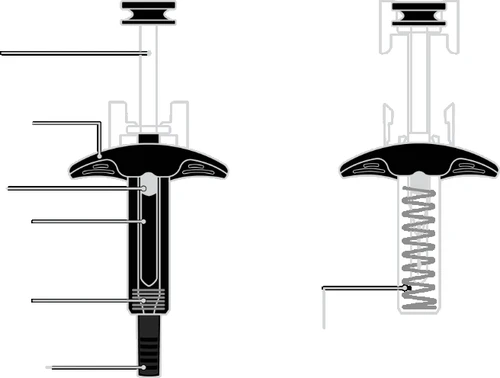
Preparation
1. Prepare the necessary items
Find a comfortable, well-lit and clean surface.
Make sure you have the following items within reach:
- Pre-filled syringe of Nucala
- Alcohol wipe (not included)
- Gauze pad or cotton wool swab (not included)
2. Remove the pre-filled syringe
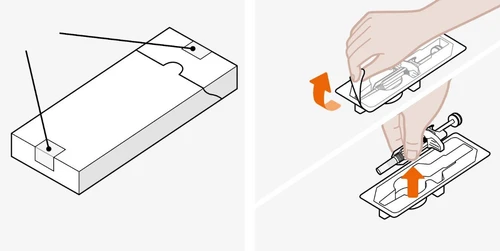
- Remove the package from the refrigerator. Check that the safety seals are intact.
- Remove the tray from the box.
- Peel off the tray cover film.
- Holding the syringe by its center, carefully remove it from the tray.
- Place the syringe on a clean, flat surface at room temperature, away from direct sunlight and out of the reach of children. Do not use the syringe if the safety seal on the box is broken. Do not remove the needle cap at this stage.
3. Inspect and wait 30 minutes before use
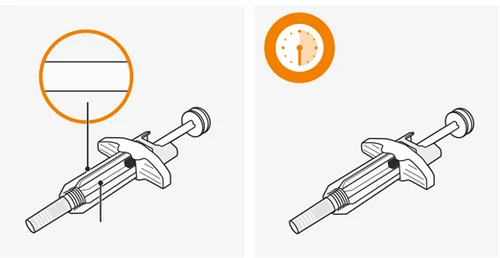
- Check the expiration date on the syringe label.
- Look through the inspection window to ensure the liquid is clear (free from cloudiness or particles) and colorless to pale yellow or light brown.
- It is normal to see one or more air bubbles.
- Wait 30 minutes (and no longer than 8 hours) before use. Do not use if the expiration date has been exceeded. Do not heat the syringe in a microwave, hot water, or direct sunlight.
Do not inject if the solution appears cloudy, discolored, or contains particles.
Do not use the syringe if it has been left outside the cardboard carton for more than 8 hours.
Do not remove the needle cap during this step.
4. Choose the injection site
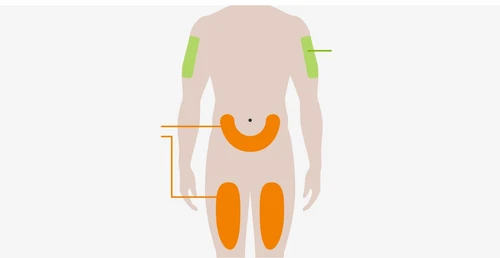
- You may inject Nucala into your thighs or abdomen.
- If someone else is administering the injection, the upper arm may also be used.
- If more than one injection is needed to complete the dose, leave at least 5 cm between each injection site.
Do not inject where the skin is bruised, soft, red, or hard.
Do not inject within 5 cm of the navel.
5. Clean the injection site
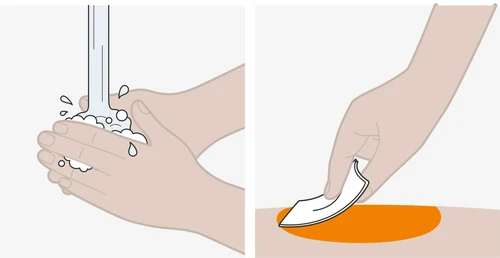
- Wash your hands with soap and water.
- Clean the injection site by wiping the skin with an alcohol wipe and allowing the skin to air dry.
Do not touch the injection site again until you have completed the injection.
Inject
6. Remove the needle cap
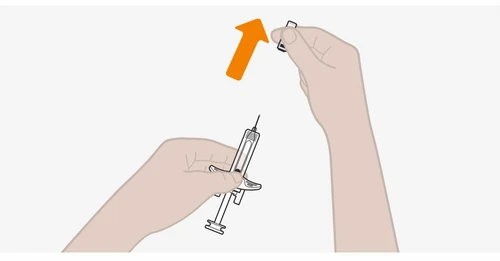
- Remove the needle cap from the syringe by firmly pulling it straight off, keeping your hand away from the needle tip (as shown). You may need to pull the needle cap fairly firmly to remove it.
- Do not be concerned if you see a drop of liquid at the tip of the needle. This is normal.
- Inject immediately after removing the needle cap and always within 5 minutes. Do not let the needle touch any surface. Do not touch the needle. Do not touch the plunger at this stage, as this may accidentally push liquid out and result in not receiving the full dose. Do not expel air bubbles from the syringe. Do not re-cap the syringe. This could cause a needle-stick injury.
7. Begin the injection
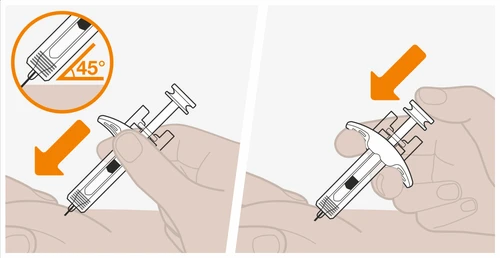
- Use your free hand to pinch the skin around the injection site. Keep the skin pinched during the injection.
- Insert the entire needle into the pinched skin at a 45° angle, as shown.
- Place your thumb on the plunger and position your fingers on the white finger grip, as shown.
- Slowly push down the plunger to inject the full dose.
8. Completing the injection
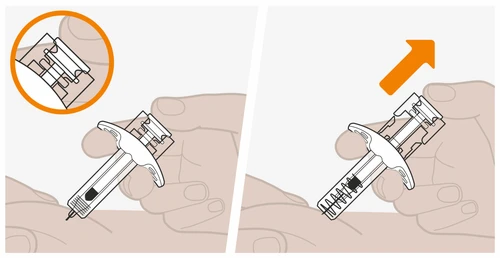
- Make sure the plunger is fully pushed down until the plunger stop reaches the bottom of the syringe and all the solution has been injected.
- Slowly lift your thumb. This will allow the plunger to rise and the needle to retract (move up) into the body of the syringe.
- Once finished, release the pinched skin.
- You may notice a small drop of blood at the injection site. This is normal. If needed, apply a cotton wool ball or gauze pad to the area for a few seconds.
- Do not replace the needle cap onto the syringe.
- Do not rub the injection site.
Disposal
9. Disposal of the used syringe
- Dispose of the used syringe and needle cap according to local regulations. Ask your doctor or pharmacist for advice, if necessary.
- Keep used syringes and needle caps out of sight and reach of children.
Package leaflet: Information for the user
Nucala 40 mg solution for injection in pre-filled syringe
mepolizumab
Please read this leaflet carefully before using this medicine as it contains important information for you.
- Keep this leaflet. You may need to read it again.
- If you have any questions, ask your doctor, pharmacist, or nurse.
- If you experience any side effects, including those not listed in this leaflet, tell your doctor, pharmacist, or nurse. See section 4.
Contents of this leaflet:
- What Nucala is and what it is used for
- What you need to know before using Nucala
- How to use Nucala
- Possible side effects
- How to store Nucala
- Contents of the pack and other information
- Step-by-step instructions for use
1. What Nucala is and what it is used for
Nucala contains the active substance mepolizumab, a monoclonal antibody, a type of protein designed to
recognize a specific target in the body. It is used for the treatment of severe asthma in adults,
adolescents, and children aged 6 years and older.
Some people with severe asthma have too many eosinophils (a type of white blood cells) in the blood and lungs.
This condition is known as eosinophilic asthma – the type of asthma that Nucala can treat.
If the child is already using medicines such as high-dose inhalers, but asthma is not well controlled by
these medicines, Nucala can reduce the number of asthma attacks.
If the child is taking medicines called oral corticosteroids, Nucala may also help reduce the daily dose of oral corticosteroids needed to control asthma.
Mepolizumab, the active substance in Nucala, blocks a protein called interleukin-5.
By blocking the action of this protein, it limits the overproduction of eosinophils by the bone marrow and reduces the number of eosinophils in the blood and lungs.
2. What you should know before using Nucala
Do not use Nucala
- If the child is allergic to mepolizumab or to any of the other ingredients of this medicine (listed in section 6). → Check with the doctor whether this applies to the child.
Warnings and precautions
Talk to your doctor before using Nucala.
Worsening of asthma
Some people may experience asthma-related side effects or may develop worsening asthma during treatment with Nucala.
→ Inform the doctor or nurse if the child's asthma remains uncontrolled or worsens after starting treatment with Nucala.
Allergic and injection site reactions
Medicines of this type ( monoclonal antibodies ) may cause severe allergic reactions when injected into the body (see section 4, “Possible side effects”).
If the child has previously had such a reaction to injections or medicines:
→ Inform the doctor before Nucala is administered.
Parasitic infections
Nucala may reduce the child’s resistance to infections caused by parasites. If the child already has a parasitic infection, it must be treated before starting treatment with Nucala. If you live in an area where such infections are common or if you are travelling to such an area:
→ Check with the doctor if you think this may apply to the child.
Children and adolescents
This medicine is not intended for use in children under 6 years of age.
Other medicines and Nucala
Inform the doctor if the child is taking, has recently taken, or might take any other medicines.
Other asthma medicines
Do not stop abruptly giving the child's current asthma medicines once treatment with Nucala has started. These medicines (especially those known as oral corticosteroids ) must be tapered gradually under the direct supervision of the doctor, depending on the child's response to Nucala.
Pregnancy and breastfeeding
If you are pregnant, think you might be pregnant, planning to become pregnant, or are breastfeeding, ask your doctor for advice before using this medicine.
It is not known whether the components of Nucala pass into breast milk. If you are breastfeeding, you must consult your doctor before using Nucala.
Driving and using machines
The possible side effects of Nucala are unlikely to affect the ability to drive or operate machinery.
Nucala contains polysorbate
This medicine contains 0.2 mg of polysorbate per 100 mg dose. Polysorbates may cause allergic reactions. Inform the doctor if you have known allergies.
Nucala contains sodium
This medicine contains less than 1 mmol of sodium (23 mg) per 100 mg dose, i.e. essentially “sodium-free”.
3. How to use Nucala
Nucala is administered by injection under the skin ( subcutaneous injection ).
Your doctor or nurse will decide whether you may inject Nucala for the child in your care. If appropriate,
they will provide you with training to show you the correct way to use Nucala.
The recommended dose for children aged 6 to 11 years is 40 mg. You will administer 1 injection every four weeks.
Instructions for using the pre-filled syringe are provided on the reverse side of this patient information leaflet.
If you use more Nucala than you should
If you think you have injected too much Nucala, contact your doctor for advice.
If you forget to use Nucala
You may administer the next dose of Nucala as soon as you remember. If you do not realize a dose has been missed until it is almost time for the next scheduled dose, simply administer the next dose as planned. If you are unsure what to do, ask your doctor, pharmacist, or nurse.
If you stop using Nucala
Do not stop the cycle of Nucala injections unless instructed to do so by your doctor. Stopping or interrupting treatment with Nucala may cause the child's symptoms and asthma attacks to return.
If the child's asthma symptoms worsen during treatment with Nucala injections
→ Call your doctor.
If you have any doubts about how to use this medicine, consult your doctor, pharmacist, or nurse.
4. Possible side effects
Like all medicines, this medicine can cause side effects, although not everyone experiences them.
The side effects caused by Nucala are generally mild to moderate, but occasionally they can be severe.
Allergic reactions
Some people may experience allergic or allergy-like reactions. These reactions may be common (affecting up to 1 in 10 people). They usually occur within minutes or hours after the injection, but sometimes symptoms may begin several days later.
Symptoms may include:
- chest tightness, cough, breathing difficulties
- fainting, dizziness, feeling lightheaded (due to a drop in blood pressure)
- swelling of the eyelids, face, lips, tongue or mouth
- hives
- skin rash
→ If you think your child may be having such a reaction, seek immediate medical help.
If your child has previously had such a reaction to injections or medicines,
→ Inform the doctor before Nucala is administered to your child.
Other side effects include:
Very common:
may affect more than 1 in 10 people
- headache
Common:
may affect up to 1 in 10 people
- chest infections – symptoms may include cough and fever (raised body temperature)
- urinary tract infections (blood in urine, painful and frequent urination, fever, pain in the lower back)
- pain in the upper abdomen (stomach ache or discomfort in the upper stomach)
- fever (raised body temperature)
- eczema (itchy red patches on the skin)
- injection site reaction (pain, redness, swelling, itching, burning sensation of the skin near the injection site)
- back pain
- arthralgia (joint pain)
- pharyngitis (sore throat)
- nasal congestion (blocked nose)
Uncommon:
may affect up to 1 in 100 people
- herpes zoster (shingles)
Rare:
may affect up to 1 in 1,000 people
- severe allergic reactions ( anaphylaxis )
→ Inform the doctor or nurse immediately if your child experiences any of these symptoms.
Reporting of side effects
If you or your child experience any side effects, including those not listed in this leaflet, talk to your doctor, pharmacist, or nurse. You can also report side effects directly through the national reporting system listed in Annex V.
By reporting side effects, you can help provide more information on the safety of this medicine.
5. How to store Nucala
Keep this medicine out of the sight and reach of children.
Do not use this medicine after the expiry date stated on the label and carton after "Exp".
The expiry date refers to the last day of that month.
Store in a refrigerator (2°C - 8°C).
Do not freeze.
Keep in the original packaging to protect the medicine from light.
The Nucala pre-filled syringe may be removed from the refrigerator and stored in its unopened packaging
for up to 7 days at room temperature (up to 30°C), provided it is protected from light. Discard if left out of the refrigerator for more than 7 days.
6. Package contents and other information
What Nucala contains
The active substance is mepolizumab.
Each 0.4 mL pre-filled syringe contains 40 mg of mepolizumab.
The other components are sucrose, dibasic sodium phosphate heptahydrate, monohydrate citric acid, polysorbate
80 (E 433), disodium edetate, water for injections.
Description of the appearance of Nucala and contents of the pack
Nucala is supplied as a 0.4 mL solution, from clear to opalescent, colourless to pale yellow or pale brown, in a single-use pre-filled syringe.
Nucala is available in a pack containing 1 pre-filled syringe, or in a multiple pack containing 3 x 1 pre-filled syringes.
Marketing Authorisation Holder
GlaxoSmithKline Trading Services Limited
12 Riverwalk
Citywest Business Campus
Dublin 24
D24 YK11
Ireland
Manufacturer
GlaxoSmithKline Manufacturing S.p.A.
Strada Provinciale Asolana, n. 90
43056 San Polo di Torrile, Parma
Italy
For further information on this medicinal product, please contact the local representative of the Marketing Authorisation Holder:
België/Belgique/Belgien Lietuva
GlaxoSmithKline Pharmaceuticals s.a./n.v.
Tél/Tel: + 32 (0) 10 85 52 00 UAB “BERLIN-CHEMIE MENARINI
BALTIC”
Tel: + 370 52 691 947
[email protected]
България Luxembourg/Luxemburg
“Берлин-Хеми/А. Менарини GlaxoSmithKline Pharmaceuticals s.a./n.v.
България” EООД Belgique/Belgien
Teл.: + 359 2 454 0950 Tél/Tel: + 32 (0) 10 85 52 00
[email protected]
Česká republika Magyarország
GlaxoSmithKline, s.r.o. Berlin-Chemie/A. Menarini Kft.
Tel: + 420 222 001 111 Tel.: + 36 23501301
[email protected] [email protected]
Danmark Malta
GlaxoSmithKline Pharma A/S GlaxoSmithKline Trading Services Ltd.
Tlf: + 45 36 35 91 00 Tel: + 356 80065004
[email protected]
Deutschland Nederland
GlaxoSmithKline GmbH & Co. KG GlaxoSmithKline BV
Tel.: + 49 (0)89 36044 8701 Tel: + 31 (0)33 2081100
[email protected]
Eesti Norge
OÜ Berlin-Chemie Menarini Eesti GlaxoSmithKline AS
Tel: + 372 667 5001 Tlf: + 47 22 70 20 00
[email protected]
Ελλάδα Österreich
GlaxoSmithKline Μονοπρόσωπη A.E.B.E. GlaxoSmithKline Pharma GmbH
Τηλ: + 30 210 68 82 100 Tel: + 43 (0)1 97075 0
[email protected]
España Polska
GlaxoSmithKline, S.A. GSK Services Sp. z o.o.
Tel: + 34 900 202 700 Tel.: + 48 (0)22 576 9000
[email protected]
France Portugal
Laboratoire GlaxoSmithKline GlaxoSmithKline – Produtos Farmacêuticos,
Tél: + 33 (0)1 39 17 84 44 Lda.
[email protected] Tel: + 351 21 412 95 00
[email protected]
Hrvatska România
Berlin-Chemie Menarini Hrvatska d.o.o. GlaxoSmithKline Trading Services Ltd.
Tel: +385 1 4821 361 Tel: + 40 800672524
[email protected]
Ireland Slovenija
GlaxoSmithKline (Ireland) Limited Berlin-Chemie / A. Menarini Distribution
Tel: + 353 (0)1 4955000 Ljubljana d.o.o.
Tel: + 386 (0)1 300 2160
[email protected]
Ísland Slovenská republika
Vistor ehf. Berlin-Chemie / A. Menarini Distribution
Sími: + 354 535 7000 Slovakia s.r.o.
Tel: + 421 2 544 30 730
[email protected]
Italia Suomi/Finland
GlaxoSmithKline S.p.A. GlaxoSmithKline Oy
Tel: + 39 (0)45 7741111 Puh/Tel: + 358 (0)10 30 30 30
Κύπρος Sverige
GlaxoSmithKline Trading Services Ltd. GlaxoSmithKline AB
Τηλ: + 357 80070017 Tel: + 46 (0)8 638 93 00
[email protected]
Latvija
SIA Berlin-Chemie/Menarini Baltic
Tel: + 371 67103210
[email protected]
Other sources of information
More detailed information on this medicinal product is available on the website of the European Medicines Agency: https://www.ema.europa.eu .
Step-by-step instructions for using the 40 mg pre-filled syringe
Administer once every four weeks.
Follow these instructions on how to use the pre-filled syringe. Failure to follow these instructions may affect the proper functioning of the pre-filled syringe. You must also receive training on how to use the pre-filled syringe. The Nucala pre-filled syringe is for subcutaneous use only (under the skin).
How to store Nucala
- Store in a refrigerator before use.
- Do not freeze.
- Keep the pre-filled syringe in the original packaging to protect from light.
- Keep out of the sight and reach of children.
- If necessary, the pre-filled syringe can be stored at room temperature, up to 30°C, for no more than 7 days, provided it is kept in the original packaging. For safety, discard the pre-filled syringe if it has been stored outside the refrigerator for more than 7 days.
- Do not store above 30°C.
Before using Nucala
The pre-filled syringe must be used only once and then discarded.
- Do not share the Nucala pre-filled syringe with another person.
- Do not shake the syringe.
- Do not use the syringe if it falls on a hard surface.
- Do not use the syringe if it appears damaged.
- Do not remove the needle cap until just before injection.
Getting to know the pre-filled syringe
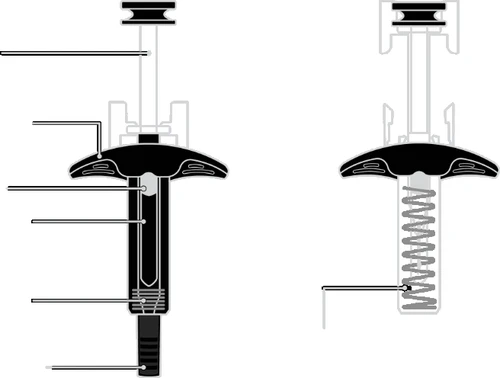
Preparation
2. Prepare the necessary items
Find a comfortable, well-lit, and clean surface.
Ensure you have the following items within reach:
- Pre-filled syringe of Nucala
- Alcohol wipe (not included)
- Gauze pad or cotton ball (not included)
2. Remove the pre-filled syringe
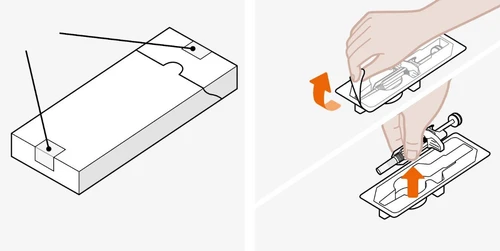
- Remove the package from the refrigerator. Check that the security seals are intact.
- Remove the tray from the box.
- Peel off the tray cover film.
- Holding the syringe by its center, carefully remove it from the tray.
- Place the syringe on a clean, flat surface at room temperature, away from direct sunlight and out of the reach of children. Do not use the syringe if the security seal on the box is broken. Do not remove the needle cap at this stage.
3. Inspect and wait 30 minutes before use
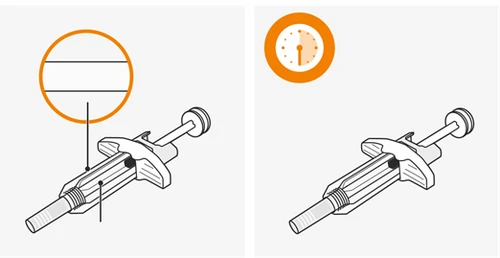
- Check the expiration date on the syringe label.
- Look through the inspection window to ensure the liquid is clear (free from cloudiness or particles) and colorless to pale yellow or light brown.
- It is normal to see one or more air bubbles.
- Wait 30 minutes (and no longer than 8 hours) before use. Do not use if the expiration date has passed. Do not heat the syringe in a microwave, hot water, or direct sunlight.
Do not inject if the solution appears cloudy, discolored, or contains particles.
Do not use the syringe if it has been left outside the cardboard carton for more than 8 hours.
Do not remove the needle cap during this step.
4. Choose the injection site
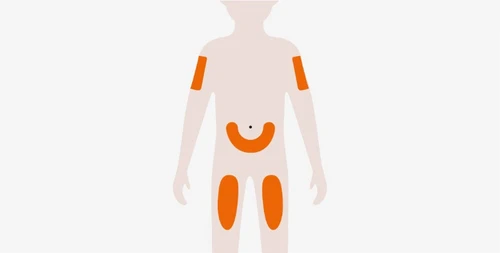
Inject in the
upper arm,
abdomen, or thigh
of the child
- You may inject Nucala in the upper arm, thigh, or abdomen of the child you are caring for.
Do not inject where the skin is bruised, tender, red, or hard.
Do not inject within 5 cm of the navel.
5. Clean the injection site
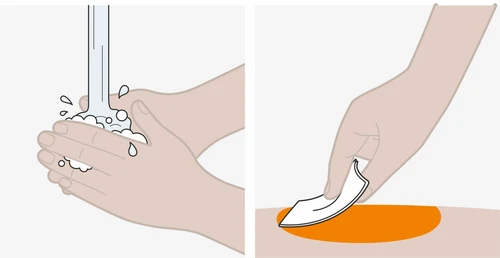
- Wash hands with soap and water.
- Clean the injection site by wiping the skin with an alcohol wipe and allowing the skin to dry thoroughly. Do not touch the injection site again until the injection has been administered.
Injecting
6. Remove the needle cap
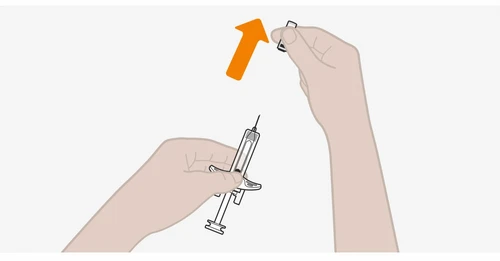
- Remove the needle cap from the syringe by pulling it firmly, keeping your hand away from the needle tip (as shown). You may need to pull the needle cap quite firmly to remove it.
- Do not be concerned if you see a drop of liquid at the tip of the needle. This is normal.
- Inject immediately after removing the needle cap and always within 5 minutes. Do not let the needle touch any surface. Do not touch the needle. Do not touch the plunger at this stage, as this could accidentally push liquid out and result in not receiving the full dose. Do not expel air bubbles from the syringe. Do not re-cap the needle. This could cause a needle-stick injury.
7. Start the injection
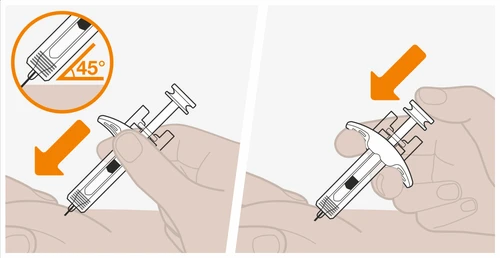
- Use your free hand to pinch the skin around the injection site. Keep the skin pinched during the injection.
- Insert the entire needle into the pinched skin at a 45° angle, as shown.
- Place your thumb on the plunger and position your fingers on the white finger grip, as shown.
- Slowly push down the plunger to inject the full dose.
8. Completing the injection
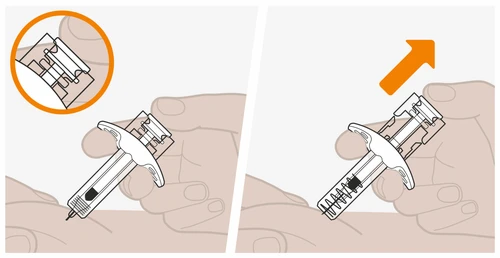
- Make sure the plunger is fully pushed down until the stopper reaches the end of the syringe and all the solution has been injected.
- Slowly lift your thumb. This will allow the plunger to rise and the needle to retract (move up) into the syringe barrel.
- Once finished, release the pinched skin.
- You may notice a small drop of blood at the injection site. This is normal. Press a cotton wool ball or gauze pad over the area for a few seconds, if needed.
- Do not replace the needle cap onto the syringe.
- Do not rub the injection site.
Disposal
9. Disposal of the used syringe
- Dispose of the used syringe and needle cap according to local regulations. Ask your doctor or pharmacist for advice, if necessary.
- Keep used syringes and needle caps out of sight and reach of children.
Package leaflet: Information for the user
Nucala 100 mg powder for injectable solution
mepolizumab
Please read this leaflet carefully before using this medicine because it contains important information for you.
- Keep this leaflet. You may need to read it again.
- If you have any questions, ask your doctor, pharmacist, or nurse.
- If you experience any side effect, including those not listed in this leaflet, contact your doctor, pharmacist, or nurse. See section 4.
Contents of this leaflet:
- What Nucala is and what it is used for
- What you need to know before using Nucala
- How to use Nucala
- Possible side effects
- How to store Nucala
- Package contents and other information
- Step-by-step instructions for use
1. What is Nucala and what is it used for?
Nucala contains the active substance mepolizumab, a monoclonal antibody, a type of protein designed to
recognise a specific target in the body. It is used for the treatment of severe asthma and
Eosinophilic Granulomatosis with Polyangiitis ( EGPA ) in adults, adolescents and children aged 6 years and older. It is also used to treat chronic rhinosinusitis with nasal polyposis (CRSwNP),
Chronic Obstructive Pulmonary Disease ( COPD ) and Hypereosinophilic Syndrome ( HES ) in adults.
Mepolizumab, the active substance in Nucala, blocks a protein called interleukin-5.
By blocking the action of this protein, it limits the overproduction of eosinophils by the bone
marrow and reduces the number of eosinophils in the blood and lungs.
Severe eosinophilic asthma
Some people with severe asthma have too many eosinophils (a type of white blood cell) in the blood and lungs.
This condition is known as eosinophilic asthma – the type of asthma that Nucala can treat.
If you or your child are already using medications such as high-dose inhalers, but asthma is not well
controlled by these medications, Nucala can reduce the number of asthma attacks.
If you are taking medications called oral corticosteroids, Nucala may also help reduce the daily dose
of oral corticosteroids needed to control asthma.
Chronic rhinosinusitis with nasal polyposis (CRSwNP)
Chronic rhinosinusitis with nasal polyposis (CRSwNP) is a condition in which people may have high levels of
eosinophils (a type of white blood cell) in the blood and excess tissue lining the nose and paranasal sinuses. This can cause symptoms such as nasal blockage, loss of smell and the formation of gelatinous growths inside the nose (called nasal polyps). Nucala reduces the number of eosinophils in the blood and
can reduce the size of nasal polyps, relieve nasal congestion and help prevent surgical removal of nasal polyps. Nucala may also help reduce the need for oral corticosteroids to control symptoms.
Chronic Obstructive Pulmonary Disease (COPD)
Some people with COPD have an excessive number of eosinophils (a type of white blood cell) in the blood and
lungs, causing inflammation and thickening of the airways. This is a long-term condition that worsens slowly. Symptoms include breathlessness, cough, chest tightness and cough with sputum. Nucala reduces the number of eosinophils in the blood and may reduce the frequency of COPD symptom exacerbations.
Eosinophilic Granulomatosis with Polyangiitis (EGPA)
EGPA is a condition in which people have too many eosinophils (a type of white blood cell) in the blood and
tissues and also have a form of vasculitis. This means there is inflammation of the blood vessels. This condition most commonly affects the lungs and paranasal sinuses, but often affects other organs such as the skin, heart and kidneys.
Nucala can control and delay a relapse of these EGPA symptoms. This medicine may also help reduce the daily dose of oral corticosteroids needed to control symptoms.
Hypereosinophilic Syndrome (HES)
Hypereosinophilic Syndrome (HES) is a condition in which there is a high number of eosinophils (a type of white blood cell) in the blood. These cells can damage organs in the body, particularly the heart, lungs, nerves and skin. Nucala helps reduce symptoms and prevent relapses. If you are taking medications commonly referred to as oral corticosteroids, Nucala may also help reduce the daily dose required to control HES symptoms/relapses.
2. What you need to know before using Nucala
Do not use Nucala
- if you are allergic to mepolizumab or to any of the other ingredients of this medicine (listed in section 6). → Check with your doctor if this applies to you.
Warnings and precautions
Talk to your doctor before using Nucala.
Worsening of asthma or COPD
Some people may develop side effects related to asthma or COPD, or may experience a worsening of asthma, during treatment with Nucala.
→ Inform your doctor or nurse if asthma or COPD remains uncontrolled, or worsens, after starting treatment with Nucala.
Allergic reactions and injection site reactions
Medicines of this type ( monoclonal antibodies ) can cause severe allergic reactions when injected into the body (see section 4, “Possible side effects”).
If you have had such a reaction to injections or medicines,
→ Inform your doctor before receiving Nucala.
Parasitic infections
Nucala may reduce resistance to infections caused by parasites. If you already have a parasitic infection, it should be treated before starting treatment with Nucala. If you live in an area where such infections are common or if you are travelling to such an area:
→ Check with your doctor if you think this applies to you.
Children
Severe eosinophilic asthma and EGPA
This medicine is not suitable for use in children under 6 years of age for the treatment of severe eosinophilic asthma or EGPA.
CRSwNP, COPD and HES
This medicine is not intended for use in children or adolescents under 18 years of age for the treatment of CRSwNP, COPD or HES.
Other medicines and Nucala
Tell your doctor if you are taking, have recently taken, or might take any other medicines.
Other medicines for asthma, CRSwNP, COPD, EGPA or HES
Do not stop suddenly taking your current medicines for asthma, CRSwNP, COPD, EGPA or HES once you have started treatment with Nucala. These medicines (especially those called oral corticosteroids ) must be tapered off gradually, under the direct supervision of your doctor and depending on your response to Nucala.
Pregnancy and breastfeeding
If you are pregnant, think you might be pregnant, planning a pregnancy, or are breastfeeding, ask your doctor for advice before using this medicine.
It is not known whether the components of Nucala can pass into breast milk. If you are breastfeeding, you must consult your doctor before using Nucala.
Driving and using machines
The possible side effects of Nucala are unlikely to affect your ability to drive or operate machinery.
Nucala contains polysorbate
This medicine contains 0.74 mg of polysorbate per 100 mg dose. Polysorbates may cause allergic reactions. Inform your doctor if you have known allergies.
Nucala contains sodium
This medicine contains less than 1 mmol of sodium (23 mg) in a 100 mg dose, i.e. it is essentially “sodium-free”.
3. How to use Nucala
Nucala is administered to you by a doctor, nurse, or healthcare professional as an injection under the skin (subcutaneously).
Severe eosinophilic asthma
Adults and adolescents aged 12 years and older
The recommended dose for adults and adolescents is 100 mg. You will receive one injection every four weeks.
Children aged 6 to 11 years
The recommended dose is 40 mg. You will receive one injection every four weeks.
CRSwNP
The recommended dose for adults is 100 mg. You will receive one injection every four weeks.
COPD
The recommended dose for adults is 100 mg. You will receive one injection every four weeks.
EGPA
Adults and adolescents aged 12 years and older
The recommended dose for adults and adolescents is 300 mg. You will receive 3 injections every four weeks.
Children aged 6 to 11 years
Children weighing 40 kg or more:
The recommended dose is 200 mg. You will receive 2 injections every four weeks.
Children weighing less than 40 kg:
The recommended dose is 100 mg. You will receive 1 injection every four weeks.
Injection sites must be at least 5 cm apart.
HES
The recommended dose for adults is 300 mg. You will receive 3 injections every 4 weeks.
Injection sites must be at least 5 cm apart.
If a dose of Nucala is missed
Contact your doctor or hospital as soon as possible to reschedule your appointment.
If you stop treatment with Nucala
Do not stop the cycle of Nucala injections unless instructed by your doctor. Stopping or interrupting treatment with Nucala may cause symptoms and attacks to return.
If your symptoms worsen during treatment with Nucala injections
→ Call your doctor.
If you have any questions about the use of this medicine, consult your doctor, pharmacist, or nurse.
4. Possible side effects
Like all medicines, this medicine can cause side effects, although not everybody gets them.
The side effects caused by Nucala are generally mild to moderate, but occasionally they can be severe.
Allergic reactions
Some people may experience allergic or allergy-like reactions. These reactions can be common (may affect up to 1 in 10 people). They usually occur within minutes or hours after the injection, but sometimes symptoms may begin several days later.
Symptoms may include:
- chest tightness, cough, difficulty breathing
- fainting, dizziness, feeling lightheaded (due to low blood pressure)
- swelling of the eyelids, face, lips, tongue, or mouth
- hives
- skin rash
If you think that you (or your child) may be having such a reaction, seek immediate medical help.
If you (or your child) have previously had such a reaction to injections or medicines, tell your doctor before Nucala is administered.
Other side effects include:
Very common:
may affect more than 1 in 10 people:
- headache
Common:
may affect up to 1 in 10 people:
- chest infections – symptoms may include cough and fever
- urinary tract infections (blood in urine, pain and frequent urination, fever, pain in lower back)
- herpes zoster (shingles)
- upper abdominal pain (stomach ache or discomfort in the upper stomach)
- eczema (itchy red patches on the skin)
- injection site reaction (pain, redness, swelling, itching, burning sensation of the skin near the injection site)
- back pain
- arthralgia (joint pain)
- pharyngitis (sore throat)
- nasal congestion (blocked nose)
Rare:
may affect up to 1 in 1,000 people:
- Severe allergic reactions ( anaphylaxis )
→ Tell your doctor or nurse immediately if you experience any of these symptoms.
Reporting of side effects
If you get any side effects, including those not listed in this leaflet, talk to your doctor, pharmacist, or nurse. You can also report side effects directly through the national reporting system listed in Annex V.
By reporting side effects, you can help provide more information on the safety of this medicine.
5. How to store Nucala
Keep this medicine out of the sight and reach of children.
Do not use this medicine after the expiry date stated on the label and carton after Exp.
The expiry date refers to the last day of that month.
Store below 25°C.
Do not freeze.
Keep in the original packaging to protect the medicine from light.
6. Package contents and other information
What Nucala contains
The active substance is mepolizumab. Each vial contains 100 mg of mepolizumab.
After reconstitution, each mL of solution contains 100 mg of mepolizumab.
The other excipients are sucrose, sodium phosphate dibasic heptahydrate and polysorbate 80 (E 433).
Description of the appearance of Nucala and contents of the pack
Nucala is a white, lyophilised powder supplied in a clear, colourless glass vial with a rubber stopper.
Nucala is available in a pack containing 1 vial, or in a multiple pack containing 3 separate vials.
Marketing Authorisation Holder
GlaxoSmithKline Trading Services Limited
12 Riverwalk
Citywest Business Campus
Dublin 24
D24 YK11
Ireland
Manufacturer
GlaxoSmithKline Manufacturing S.p.A.
Strada Provinciale Asolana, n. 90
43056 San Polo di Torrile,
Parma
Italy
For further information about this medicinal product, contact the local representative of the Marketing Authorisation Holder:
België/Belgique/Belgien Lietuva
GlaxoSmithKline Pharmaceuticals s.a./n.v. UAB “BERLIN-CHEMIE MENARINI BALTIC”
Tél/Tel: + 32 (0) 10 85 52 00 Tel: + 370 52 691 947
[email protected]
България Luxembourg/Luxemburg
“Берлин-Хеми/А. Менарини България” EООД GlaxoSmithKline Pharmaceuticals s.a./n.v. Belgique/Belgien
Teл.: + 359 2 454 0950 Tél/Tel: + 32 (0) 10 85 52 00
[email protected]
Česká republika Magyarország
GlaxoSmithKline, s.r.o. Berlin-Chemie/A. Menarini Kft.
Tel: + 420 222 001 111 Tel.: + 36 23501301
[email protected] [email protected]
Danmark Malta
GlaxoSmithKline Pharma A/S GlaxoSmithKline Trading Services Ltd.
Tlf: + 45 36 35 91 00 Tel: + 356 80065004
[email protected]
Deutschland Nederland
GlaxoSmithKline GmbH & Co. KG GlaxoSmithKline BV
Tel.: + 49 (0)89 36044 8701 Tel: + 31 (0)33 2081100
[email protected]
Eesti Norge
OÜ Berlin-Chemie Menarini Eesti GlaxoSmithKline AS
Tel: + 372 667 5001 Tlf: + 47 22 70 20 00
[email protected]
Ελλάδα Österreich
GlaxoSmithKline Μονοπρόσωπη A.E.B.E. GlaxoSmithKline Pharma GmbH
Τηλ: + 30 210 68 82 100 Tel: + 43 (0)1 97075 0
[email protected]
España Polska
GlaxoSmithKline, S.A. GSK Services Sp. z o.o.
Tel: + 34 900 202 700 Tel.: + 48 (0)22 576 9000
[email protected]
France Portugal
Laboratoire GlaxoSmithKline GlaxoSmithKline – Produtos Farmacêuticos, Lda.
Tél: + 33 (0)1 39 17 84 44 Tel: + 351 21 412 95 00
[email protected] [email protected]
Hrvatska România
Berlin-Chemie Menarini Hrvatska d.o.o. GlaxoSmithKline Trading Services Ltd.
Tel: +385 1 4821 361 Tel: + 40 800672524
[email protected]
Ireland Slovenija
GlaxoSmithKline (Ireland) Limited Berlin-Chemie / A. Menarini Distribution Ljubljana d.o.o.
Tel: + 353 (0)1 4955000 Tel: + 386 (0)1 300 2160
[email protected]
Ísland Slovenská republika
Vistor ehf. Berlin-Chemie / A. Menarini Distribution Slovakia s.r.o.
Sími: + 354 535 7000 Tel: + 421 2 544 30 730
[email protected]
Italia Suomi/Finland
GlaxoSmithKline S.p.A. GlaxoSmithKline Oy
Tel: + 39 (0)45 7741111 Puh/Tel: + 358 (0)10 30 30 30
Κύπρος Sverige
GlaxoSmithKline Trading Services Ltd. GlaxoSmithKline AB
Τηλ: + 357 80070017 Tel: + 46 (0)8 638 93 00
[email protected]
Latvija
SIA Berlin-Chemie/Menarini Baltic
Tel: + 371 67103210
[email protected]
Other sources of information
More detailed information on this medicinal product is available on the European Medicines Agency website: https://www.ema.europa.eu .
7. The following information is intended exclusively for healthcare professionals:
Step-by-step instructions for use, handling, reconstitution, and administration.
Nucala is supplied as a white lyophilized powder in a single-use vial for subcutaneous administration only.
Reconstitution must be performed under aseptic conditions.
After reconstitution, Nucala will have a concentration of 100 mg/mL of mepolizumab. The injectable solution
may be stored between 2°C and 30°C for up to 8 hours. Any unused concentrate or solution remaining after
8 hours must be discarded.
Traceability
To improve the traceability of biological medicinal products, the name and batch number of the administered
product must be clearly recorded.
Instructions for reconstitution per vial
- Reconstitute the vial contents with 1.2 mL of Water for Injections, preferably using a 2 to 3 mL syringe and a 21-gauge needle. Direct the stream of sterile water vertically onto the center of the lyophilized powder. Allow the vial to stand at room temperature during reconstitution. Gently swirl the vial for 10 seconds using a circular motion at 15-second intervals until the powder is completely dissolved.
Note: the reconstituted solution must not be shaken during the procedure, as this may cause foaming or precipitation. Reconstitution is generally complete within 5 minutes after adding sterile water, but may take longer.
-
If a mechanical reconstitution device (swirler) is used to reconstitute Nucala, reconstitution can be achieved by swirling at 450 rpm for no more than 10 minutes. Alternatively, a rotation speed of 1000 rpm for no more than 5 minutes is acceptable.
-
After reconstitution, Nucala must be inspected visually prior to use for the presence of particles and clarity. The solution should be clear to opalescent, colorless to pale yellow or pale brown, and free of visible particles. However, small air bubbles are expected and acceptable. If particles remain in the solution or if the solution appears cloudy or milky, the solution must not be used.
-
The reconstituted solution, if not used immediately, must be:
- Protected from direct sunlight
- Stored below 30°C, not frozen
- Discarded if not used within 8 hours after reconstitution
Instructions for administration of the 100 mg dose
- For subcutaneous administration, preferably use a 1 mL polypropylene syringe equipped with a single-use needle of 21 to 27 gauge x 0.5 inches (13 mm).
- Immediately before administration, withdraw 1 mL of the reconstituted Nucala. Do not shake the reconstituted solution during this procedure, as this may cause foaming or precipitation.
- Administer 1 mL (equivalent to 100 mg of mepolizumab) by subcutaneous injection into the upper arm, thigh, or abdomen.
If more than one vial is required to administer the prescribed dose, repeat steps 1 to 3.
It is recommended that individual injection sites be separated by at least 5 cm.
Instructions for administration of the 40 mg dose
- For subcutaneous administration, preferably use a 1 mL polypropylene syringe equipped with a single-use needle of 21 to 27 gauge x 0.5 inches (13 mm).
- Immediately before administration, withdraw 0.4 mL of the reconstituted Nucala. Do not shake the reconstituted solution during this procedure, as this may cause foaming or precipitation. Discard any remaining solution.
- Administer 0.4 mL (equivalent to 40 mg of mepolizumab) by subcutaneous injection into the upper arm, thigh, or abdomen.
Disposal
Any unused medicinal product and waste materials derived from such medicinal product must be disposed of in accordance with local regulations.