Mylicongas
Italy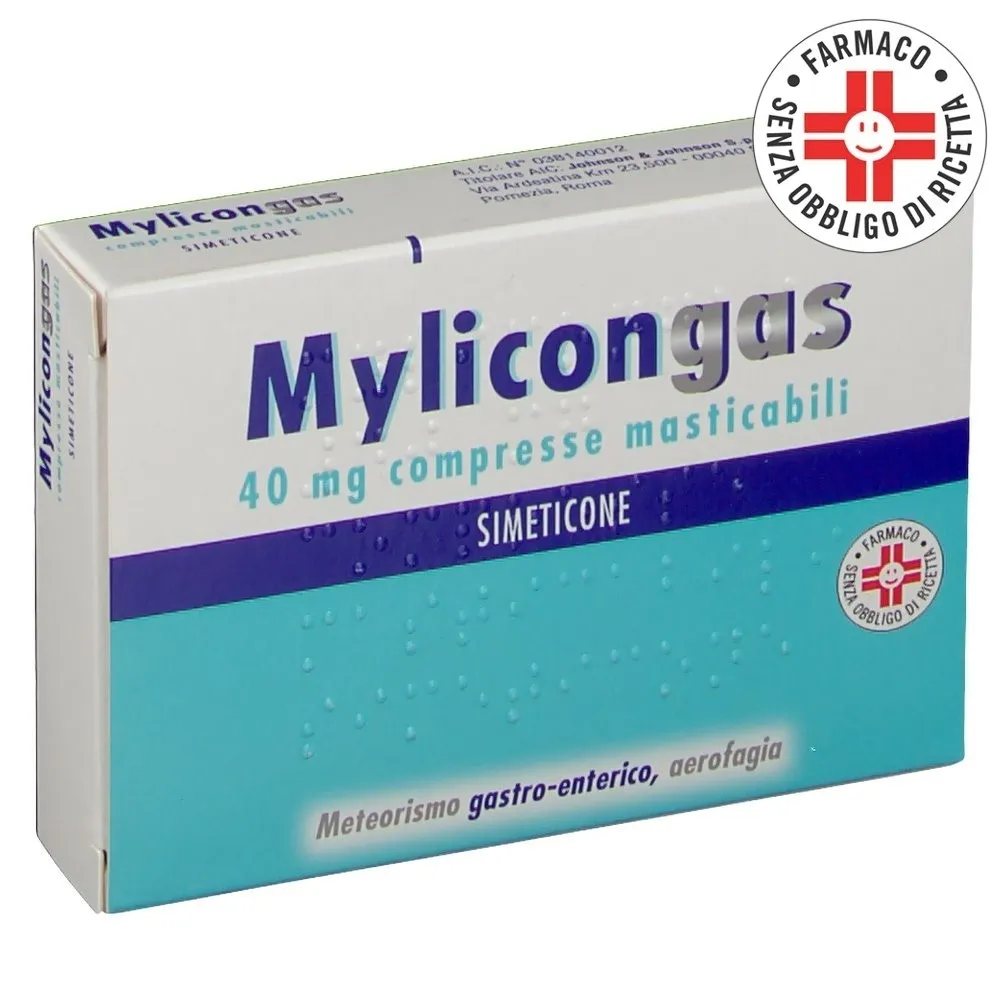
Table of Contents
Package leaflet: Information for the patient
Mylicongas 40 mg chewable tablets
Simeticone
Please read this leaflet carefully before taking this medicine because it contains important information for you.
Always take this medicine exactly as described in this leaflet or as your doctor or pharmacist has instructed you.
- Keep this leaflet. You may need to read it again.
- If you need more information or advice, consult your pharmacist.
- If you experience any of the side effects, including those not listed in this leaflet, contact your doctor or pharmacist. See section 4.
- Contact your doctor if you do not notice any improvement or if your symptoms worsen.
Contents of this leaflet:
- What MYLICONGAS is and what it is used for
- What you need to know before taking MYLICONGAS
- How to take MYLICONGAS
- Possible side effects
- How to store MYLICONGAS
- Contents of the pack and other information
1. What MYLICONGAS is and what it is used for
This medicinal product contains simethicone, an active ingredient that works by eliminating gas formed in the
stomach or intestine (flatulence).
Mylicongas is used in adults who, due to flatulence caused, for example, by the tendency to swallow air (aerophagia), experience bloating, abdominal pain, cramps, belching, and flatulence.
Consult your doctor if you do not feel better or if you feel worse after a short period of treatment with Mylicongas.
2. What you need to know before taking MYLICONGAS
Do not take MYLICONGAS
- if you are allergic to the active substance or to any of the other ingredients of this medicine (listed in section 6);
Children
Mylicongas is not suitable for pediatric use.
Warnings and precautions
Consult your doctor if you do not feel better or if you feel worse after treatment.
If symptoms persist or worsen, or in case of prolonged constipation, consult a doctor.
Do not use in case of suspected intestinal perforation or ileus.
Other medicines and MYLICONGAS
Concomitant intake of SIMETHICONE and laxatives based on mineral oils (paraffin) is not recommended, as the combination of these two products reduces their effectiveness.
Always inform your doctor or pharmacist if you are taking, have recently taken, or might take any other medicines.
Pregnancy and breastfeeding
If you are pregnant, suspect you may be pregnant, planning a pregnancy, or are breastfeeding, ask your doctor or pharmacist for advice before taking this medicine.
Driving and using machines
Mylicongas does not affect the ability to drive vehicles or operate machinery.
MYLICONGAS contains lactose
If your doctor has diagnosed you with an intolerance to certain sugars, contact him before taking this medicine.
MYLICONGAS contains less than 1 mmol (23 mg) of sodium per dose, i.e. it is essentially “sodium-free”.
3. How to take MYLICONGAS
Take this medicine exactly as described in this leaflet or as directed by your doctor or pharmacist. If you are in doubt, consult your doctor or pharmacist.
The recommended dose is 4 tablets per day. Do not exceed the recommended dose.
Paediatric population
MYLICONGAS is not suitable for paediatric use.
Method of administration
Take 2 tablets at the end of each main meal.
The tablets must be chewed.
Contact your doctor if you do not feel better or if you feel worse after a short period of treatment.
If you take more MYLICONGAS than you should
"In case of accidental ingestion/overdose of Mylicongas, inform your doctor immediately or go to the nearest hospital."
If you forget to take MYLICONGAS
Do not take a double dose to make up for the forgotten dose. Take the next dose as usual.
4. Possible adverse reactions
Like all medicines, this medicine can cause adverse reactions, although not everybody will experience them.
Inform your doctor if you notice any of the following adverse reactions while using MYLICONGAS:
- vomiting, diarrhoea, abdominal pain, ileus, nausea;
- skin rashes;
- swelling of the face, eyes, lips, tongue, or throat with breathing difficulty (angioedema).
These reactions occur very rarely.
Reporting of adverse reactions
If you experience any adverse reaction, including those not listed in this leaflet, consult your doctor or pharmacist.
You may also report adverse reactions directly through the national reporting system at the following website: "https://www.aifa.gov.it/content/segnalazioni-reazioni-avverse". By reporting adverse reactions, you can help provide further information on the safety of this medicine.
5. How to store MYLICONGAS
Store the medicine in the original packaging to protect the product from light and moisture.
Keep this medicine out of the sight and reach of children.
Do not use this medicine after the expiry date stated on the packaging. The expiry date refers to the last day of that month.
Do not dispose of any medicine via wastewater or household waste. Ask your pharmacist how to dispose of medicines you no longer use. This will help protect the environment.
It is important to always keep the medicine information available; therefore, retain both the carton and the package leaflet.
6. Package contents and other information
What MYLICONGAS contains
The active substance is: simethicone.
Each tablet contains 40 mg of simethicone.
The other components are: saccharin; alginic acid; lactose; sodium bicarbonate; povidone; hydrated calcium silicate; magnesium stearate.
Description of the appearance of MYLICONGAS and package contents
Mylicongas is a medicinal product in chewable tablets, available in a pack containing 50 tablets in blisters.
Marketing Authorization Holder
Johnson & Johnson SpA
Via Ardeatina km 23,500 - 00071 Santa Palomba - Pomezia ROMA.
Manufacturer
COSMO S.p.A. - Via Cristoforo Colombo n° 1, Lainate – Milano - Italy
Health Education Advice
What to do in case of digestive problems?
Indigestion:
You may experience digestive problems if:
- you eat too much;
- you eat a fatty meal;
- you eat too quickly, without chewing properly.
Try to avoid these triggering factors.
Gas (flatulence):
Gas buildup is more likely after certain meals because:
- they already contain air (e.g., carbonated drinks, fresh bread);
- they contain high levels of carbohydrates that are not absorbed (e.g., dried legumes, cabbage, raw vegetables, onions).
Try to avoid these foods. Consult your doctor or pharmacist if you need further information.