Levair
Italy
Table of Contents
Package leaflet: Information for the patient
Levair 25 mg/ml oral drops, solution
Levosulpiride
Generic medicine
Please read this leaflet carefully before taking this medicine because it contains important information for you.
- Keep this leaflet. You may need to read it again.
- If you have any questions, ask your doctor or pharmacist.
- This medicine has been prescribed for you only. Do not pass it on to other people, even if their symptoms are the same as yours, as it may be harmful.
- If you experience any adverse reaction, including those not listed in this leaflet, contact your doctor or pharmacist. See section 4.
Contents of this leaflet:
-
What Levair is and what it is used for
-
What you need to know before taking Levair
-
How to take Levair
-
Possible side effects
-
How to store Levair
-
Contents of the pack and other information
1. What Levair is and what it is used for
Levair contains the active substance levosulpiride, which belongs to a group of medicines called "psychotropic agents, antipsychotics, benzamides". It acts as a prokinetic agent by stimulating gastric and intestinal motility, and as an antiemetic by reducing nausea and vomiting.
Levair is used in adults for short-term treatment of:
- Disorders related to slow and difficult digestion (dyspeptic syndrome), such as loss of appetite, excessive intestinal gas (meteorism), feeling of fullness in the upper abdomen, headache after meals, heartburn, belching, diarrhoea, constipation due to concomitant diseases (diabetic gastroparesis, tumours, etc.) and/or functional factors (digestive disorders of psychosomatic origin in anxious-depressive subjects) in patients who have not responded to other therapies;
- Nausea and vomiting induced by antineoplastic drugs following failure of first-line medications;
- Vertigo, tinnitus, hearing loss, and nausea associated with Ménière's syndrome, a rare disease affecting the inner ear.
2. What you should know before taking Levair
Do not take Levair
- if you are allergic to levosulpiride or to any of the other ingredients of this medicine (listed in section 6);
- if you have a tumor of the adrenal gland called phaeochromocytoma;
- if you suffer from seizures (epilepsy);
- if you have psychiatric disorders (manic states, manic phases of manic-depressive psychosis);
- if you have malignant mastopathy (breast cancer);
- if you are pregnant or suspect you may be pregnant, or if you are breastfeeding (see “Pregnancy and breastfeeding”).
Warnings and precautions
Talk to your doctor or pharmacist before taking Levair.
Avoid taking LEVAIR if you have bleeding due to stomach or intestinal lesions (gastrointestinal hemorrhage), mechanical obstruction, or perforation.
Avoid taking LEVAIR concomitantly with other psychotropic medicines (neuroleptics).
If you are being treated with medicines used for psychiatric disorders (neuroleptics), you may develop Neuroleptic Malignant Syndrome (see “Other medicines and Levair”), a condition that can be life-threatening. Symptoms of this syndrome include: high fever, muscle rigidity, movement difficulties, irregular pulse and blood pressure, sweating, increased heart rate, changes in heart rhythm, and alterations in consciousness which may progress to confusion and coma. If you experience any of these symptoms, stop treatment immediately and contact your doctor, who will initiate symptomatic therapy and keep you under close monitoring.
Levair is not indicated for the treatment of dementia. It has been observed that in some elderly patients with dementia, the use of certain antipsychotics increases the risk of cerebrovascular events and death.
Exercise particular caution with Levair:
- If you have risk factors for stroke.
- If you suffer from heart and/or circulatory disorders (cardiovascular diseases) or have a family history of abnormal heart rhythm (QT prolongation).
- If you are taking anticholinergic medicines (drugs that block the action of acetylcholine, a substance involved in nerve impulse transmission), narcotics, and analgesics (painkillers), as they may reduce the effects of Levair.
- If you or someone in your family has or has had a history of blood clots (thrombi), as Levair may cause blood clot formation.
Other medicines and Levair
Inform your doctor or pharmacist if you are taking, have recently taken, or might take any other medicine.
Exercise particular caution and inform your doctor if you are taking the following medicines:
- medicines acting on the central nervous system used to treat psychiatric disorders, particularly neuroleptics, because concomitant use with levosulpiride requires caution.
- medicines that affect heart rhythm (prolong QT interval), as the risk of developing abnormal heart rhythms (cardiac arrhythmias) increases.
- medicines that cause imbalances in substances in the body called "electrolytes".
Levair and alcohol
Do not consume alcohol during treatment with LEVAIR.
Fertility, pregnancy and breastfeeding
If you are pregnant, suspect you may be pregnant, plan to become pregnant, or are breastfeeding, consult your doctor or pharmacist before taking this medicine.
Pregnancy
Do not use LEVAIR if you are pregnant or think you might be pregnant.
If you take conventional or atypical antipsychotics, including LEVAIR, during the last three months of pregnancy, your baby may develop the following symptoms after birth: tremors, muscle stiffness and/or weakness, drowsiness, agitation, breathing difficulties, and feeding problems.
Contact your doctor if your baby shows any of these symptoms.
Breastfeeding
Do not use LEVAIR while breastfeeding.
Driving and using machines
The use of Levair may affect your ability to drive or operate machinery.
Indeed, with high doses of levosulpiride, drowsiness, lethargy, and involuntary movements (dyskinesias) may occur. Therefore, if you experience these symptoms, do not drive or operate machinery.
Levair contains parahydroxybenzoates and sodium:
This medicine contains methyl p-hydroxybenzoate and propyl p-hydroxybenzoate, which may cause allergic reactions (including delayed reactions).
This medicine contains less than 1 mmol (23 mg) of sodium per dose, i.e., essentially sodium-free.
3. How to take Levair
Take this medicine exactly as directed by your doctor or pharmacist. If you have
any doubts, consult your doctor or pharmacist.
You must always follow the exact dose prescribed by your doctor. The recommended doses are:
Adults
The recommended dose is 15 drops three times daily before meals (one drop contains 1.6 mg of
levosulpiride).
Use in the elderly
If you are elderly, your doctor will carefully determine the dosage and may consider reducing the doses
indicated above.
Use in children and adolescents
This medicine must not be used in children and adolescents because relevant data are not available.
Instructions for use:
- To open the bottle: press down on the cap and unscrew it simultaneously (Fig. 1).
- Let the drops fall into a glass, holding the bottle in an upright position with the opening facing downward (Fig. 2).
- To close the bottle: screw the cap back on until it is tightly closed.
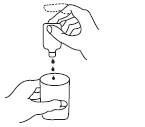
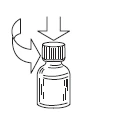
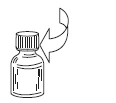
Fig. 1 Fig. 2 Fig. 3
If you take more Levair than you should
In case of accidental ingestion or overdose of Levair, contact your doctor immediately or go to the nearest hospital.
An overdose may cause movement disorders and sleep disturbances, which resolve upon discontinuation of therapy or reduction of the dose.
If you forget to take Levair
Do not take a double dose to make up for the missed dose.
If you stop taking Levair
If you have any doubts about using this medicine, consult your doctor or pharmacist.
4. Possible side effects
Like all medicines, this medicine can cause side effects, although not everyone gets them.
During prolonged treatment with this medicine, certain side effects may occur, typical of medicines that act similarly to levosulpiride, such as increased prolactin levels in the blood (hyperprolactinaemia).
The following side effects have also been observed with the use of other medicines in the same class and/or with prolonged administration:
Rare (may affect up to 1 in 1,000 people):
- Changes in heart rhythm (prolongation of the QT interval, ventricular arrhythmias such as torsades de pointes, ventricular tachycardia, ventricular fibrillation), cardiac arrest.
Very rare (may affect up to 1 in 10,000 people):
- Drowsiness, parkinsonism (symptoms similar to those seen in Parkinson's disease, e.g., tremor, difficulty and slowness of movement, rigidity, postural instability), movement disorders (dyskinesias), tremor, movement disturbances (dystonia), neuroleptic malignant syndrome (see section “Warnings and precautions”).
- Cases of sudden death.
Frequency not known (cannot be estimated from the available data):
- Absence of menstruation in women of reproductive age (amenorrhoea), breast development in men (gynaecomastia), spontaneous milk discharge from the breasts not related to childbirth or breastfeeding (galactorrhoea), changes in sexual desire (libido).
- Formation of blood clots (venous thrombosis), particularly in the legs (symptoms include swelling, pain, redness of the leg), which may travel to the lungs and cause chest pain and breathing difficulties.
- Neonatal withdrawal symptoms (see section 2, “Pregnancy and breastfeeding”), movement disorders (extrapyramidal symptoms).
Reporting of side effects
If you experience any side effect, including those not listed in this leaflet, talk to your doctor or pharmacist. You can also report side effects directly via the national reporting system at https://www.aifa.gov.it/content/segnalazioni-reazioni-avverse. Reporting side effects can help provide more information on the safety of this medicine.
5. How to store Levair
Keep this medicine out of the sight and reach of children.
Do not use this medicine after the expiry date which is stated on the packaging after "Exp". The expiry date refers to the last day of that month.
This medicine does not require any special storage conditions.
Use the medicine within 4 weeks after first opening the bottle. After this period, discard any remaining product.
Do not dispose of medicines via wastewater or household waste. Ask your pharmacist how to dispose of medicines you no longer use. This will help protect the environment.
6. Package contents and other information
What Levair contains
- The active substance is levosulpiride. 2.5 g of levosulpiride are contained in 100 ml of solution.
- The other components are: anhydrous citric acid, sodium saccharin, methyl p-hydroxybenzoate, propyl p-hydroxybenzoate, lemon flavour, purified water.
Description of the appearance of Levair and contents of the pack
Levair 25 mg/ml oral drops, solution is supplied in a pack containing a glass bottle with dropper, closed with a child-resistant cap (child-proof), containing 20 ml of a clear, colourless solution with a characteristic lemon odour.
Marketing Authorisation Holder and Manufacturer
Marketing Authorisation Holder
Epifarma S.r.l.
Via San Rocco, 6
85033 Episcopia (PZ)
Manufacturers
Doppel Farmaceutici S.r.l.
Via Volturno, 48
20089 Quinto De’ Stampi – Rozzano (MI)
Doppel Farmaceutici S.r.l.
Via Martiri delle Foibe, 1
29016 Cortemaggiore (PC)
Patient Information Leaflet
Levair 25 mg tablets
Levosulpiride
Generic Medicine
Please read this leaflet carefully before taking this medicine because it contains important information for you.
- Keep this leaflet. You may need to read it again.
- If you have any questions, consult your doctor or pharmacist.
- This medicine has been prescribed for you only. Do not give it to others, even if their symptoms are the same as yours, as it may be harmful.
- If you experience any adverse reactions, including those not listed in this leaflet, contact your doctor or pharmacist. See section 4.
Contents of this leaflet:
- What Levair is and what it is used for
- What you need to know before taking Levair
- How to take Levair
- Possible side effects
- How to store Levair
- Contents of the pack and other information
1. What Levair is and what it is used for
Levair contains the active substance levosulpiride, which belongs to a group of medicines called "neuroleptics, antipsychotics, benzamides". It acts as a prokinetic agent, stimulating gastric and intestinal motility, and as an antiemetic, reducing nausea and vomiting.
Levair is used in adults for the short-term treatment of:
- disorders related to slow and difficult digestion (dyspeptic syndrome), such as loss of appetite, excessive intestinal gas (meteorism), feeling of fullness in the upper abdomen, headache after meals, heartburn, belching, diarrhoea, constipation, due to concomitant diseases (diabetic gastroparesis, tumours, etc.) and/or functional factors (digestive disorders of psychosomatic origin in anxious-depressive subjects) in patients who have not responded to other therapies;
- vomiting and nausea induced by antineoplastic drugs following failure of first-line medications;
- vertigo, tinnitus, hearing loss and nausea associated with Ménière's syndrome, a rare disease affecting the inner ear.
2. What you need to know before taking Levair
Do not take Levair
- if you are allergic to levosulpiride or to any of the other ingredients of this medicine (listed in section 6);
- if you have a tumor of the adrenal gland called phaeochromocytoma;
- if you suffer from seizures (epilepsy);
- if you have psychiatric disorders (manic states, manic phases of manic-depressive psychosis);
- if you have malignant mastopathy (breast cancer);
- if you are pregnant or suspect you may be pregnant, or if you are breastfeeding (see "Pregnancy and breastfeeding").
Warnings and precautions
Talk to your doctor or pharmacist before taking Levair.
Avoid taking LEVAIR if you have bleeding due to stomach or intestinal lesions (gastrointestinal hemorrhage), mechanical obstructions, or perforations.
Avoid taking LEVAIR concurrently with other psychotropic medicines (neuroleptics).
If you are being treated with medicines used for psychiatric disorders (neuroleptics), Neuroleptic Malignant Syndrome may occur (see "Other medicines and Levair"), a condition that can be life-threatening. Symptoms of this syndrome include: high fever, muscle rigidity, movement difficulties, irregular pulse and blood pressure, sweating, increased heart rate, changes in heart rhythm, and alterations in consciousness that may progress to confusion and coma. If you experience any of these symptoms, stop treatment immediately and contact your doctor, who will initiate symptomatic treatment and keep you under close monitoring.
Levair is not indicated for the treatment of dementia. It has been observed that in some elderly patients with dementia, the use of certain antipsychotics increases the risk of cerebrovascular disorders and death.
Be especially careful with Levair:
- If you have risk factors for stroke.
- If you suffer from heart and/or circulatory disorders (cardiovascular diseases) or have a family history of heart rhythm abnormalities (QT prolongation).
- If you are taking anticholinergic medicines (drugs that block the action of acetylcholine, a substance involved in nerve impulse transmission), narcotics, and analgesics (painkillers), as they may reduce the effects of Levair.
- If you or someone in your family has or has had a history of blood clots (thrombi), as Levair may cause blood clot formation.
Other medicines and Levair
Inform your doctor or pharmacist if you are taking, have recently taken, or might take any other medicines.
Be especially cautious and inform your doctor if you are taking the following medicines:
- medicines acting on the central nervous system used to treat psychiatric disorders, particularly neuroleptics, as concomitant use with levosulpiride requires caution.
- medicines that affect heart rhythm (prolong QT interval), as the risk of developing heart rhythm abnormalities (cardiac arrhythmias) increases.
- medicines that cause changes in substances in the body called "electrolytes".
Levair and alcohol
Do not consume alcohol during treatment with LEVAIR.
Fertility, pregnancy and breastfeeding
If you are pregnant, suspect you may be pregnant, are planning a pregnancy, or are breastfeeding with breast milk, consult your doctor or pharmacist before taking this medicine.
Pregnancy
Do not use LEVAIR if you are pregnant or think you may be pregnant.
If you take conventional or atypical antipsychotics, including LEVAIR, during the last 3 months of pregnancy, your baby may develop the following symptoms after birth: tremors, muscle stiffness and/or weakness, drowsiness, agitation, breathing problems, and difficulty sucking.
Contact your doctor if your baby shows any of these symptoms.
Breastfeeding
Do not use LEVAIR during breastfeeding.
Driving and using machines
The use of Levair may affect your ability to drive vehicles and operate machinery.
Indeed, with high doses of levosulpiride, drowsiness, lethargy, and involuntary movements (dyskinesias) may occur. Therefore, if you experience these symptoms, do not drive vehicles or operate machinery.
Levair contains lactose and sodium:
This medicine contains lactose: If your doctor has diagnosed you with an intolerance to certain sugars, contact them before taking this medicine.
This medicine contains less than 1 mmol (23 mg) of sodium per dose, i.e., essentially sodium-free.
3. How to take Levair
Take this medicine exactly as your doctor or pharmacist has told you. If you are unsure, consult your doctor or pharmacist.
You must always follow the exact dose prescribed by your doctor. The recommended doses are:
Adults
The recommended dose is 1 tablet three times daily before meals.
Use in the elderly
If you are elderly, your doctor will carefully determine the dosage and may consider reducing the doses indicated above.
Use in children and adolescents
This medicine must not be used in children and adolescents because relevant data are not available.
If you take more Levair than you should
If you accidentally ingest/overdose on Levair, inform your doctor immediately or go to the nearest hospital.
An overdose may cause movement disorders and sleep disturbances, which resolve upon discontinuation of treatment or reduction of the dose.
If you forget to take Levair
Do not take a double dose to make up for the missed dose.
If you stop taking Levair
If you have any doubts about using this medicine, consult your doctor or pharmacist.
4. Possible side effects
Like all medicines, this medicine can cause side effects, although not everybody gets them.
During prolonged treatment with this medicine, certain side effects may occur that are typical of medicines acting similarly to levosulpiride, such as increased prolactin levels in the blood (hyperprolactinaemia).
The following side effects have also been observed with other medicines of the same class and/or with prolonged administration:
Rare (may affect up to 1 in 1,000 people):
- changes in heart rhythm (prolongation of the QT interval, ventricular arrhythmias such as torsades de pointes, ventricular tachycardia, ventricular fibrillation), cardiac arrest.
Very rare (may affect up to 1 in 10,000 people):
- somnolence, parkinsonism (symptoms resembling those of Parkinson's disease, such as tremor, difficulty and slowness of movement, rigidity, and postural instability), movement disorders (dyskinesias), tremor, movement disturbances (dystonia), neuroleptic malignant syndrome (see section “Warnings and precautions”).
- cases of sudden death.
Not known (frequency cannot be estimated from the available data):
- absence of menstruation in women of childbearing age (amenorrhoea), breast development in men (gynaecomastia), spontaneous milk discharge from the breasts not related to childbirth or breastfeeding (galactorrhoea), changes in sexual desire (libido).
- formation of blood clots (venous thrombosis), especially in the legs (symptoms include swelling, pain, redness of the leg), which may travel to the lungs and cause chest pain and breathing difficulties.
- neonatal withdrawal symptoms (see section 2, “Pregnancy and breastfeeding”), movement disorders (extrapyramidal symptoms).
Reporting of side effects
If you experience any side effect, including those not listed in this leaflet, talk to your doctor or pharmacist. You can also report side effects directly via the national reporting system at https://www.aifa.gov.it/content/segnalazioni-reazioni-avverse. By reporting side effects, you can help provide more information on the safety of this medicine.
5. How to store Levair
Keep this medicine out of the sight and reach of children.
Do not use this medicine after the expiry date stated on the packaging after "Exp". The expiry date refers to the last day of that month.
This medicine does not require any special storage conditions.
Do not dispose of any medicine via wastewater or household waste. Ask your pharmacist how to dispose of medicines you no longer use. This will help protect the environment.
6. Package contents and other information
What Levair contains
- The active substance is levosulpiride. One tablet contains 25 mg of levosulpiride.
- The other components are: microcrystalline cellulose, monohydrate lactose, magnesium stearate, sodium starch glycolate.
Description of the appearance of Levair and pack sizes
Levair 25 mg is available as white or almost white, round tablets, packed in blisters containing 20 tablets.
Marketing Authorization Holder and Manufacturer
Marketing Authorization Holder
Epifarma S.r.l.
Via San Rocco, 6
85033 Episcopia (PZ)
Manufacturers
Doppel Farmaceutici S.r.l.
Via Volturno, 48
20089 Quinto De’ Stampi – Rozzano (MI)
Doppel Farmaceutici S.r.l.
Via Martiri delle Foibe, 1
29016 Cortemaggiore (PC)