Lercaprel
Italy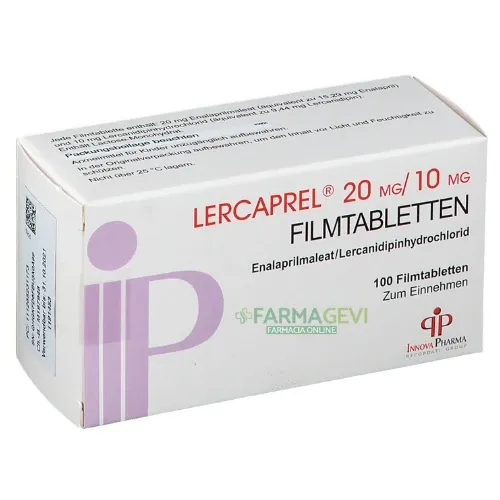
Table of Contents
Package leaflet: Information for the user
Lercaprel 10 mg/10 mg film-coated tablets
enalapril maleate/lercanidipine hydrochloride
Please read this leaflet carefully before taking this medicine because it contains
important information for you.
- Keep this leaflet. You may need to read it again.
- If you have any questions, ask your doctor or pharmacist.
- This medicine has been prescribed for you only. Do not give it to other people, even if their symptoms are the same as yours, as it may be harmful.
- If you experience any side effect, including those not listed in this leaflet, tell your doctor or pharmacist. See section 4.
Contents of this leaflet:
- What Lercaprel is and what it is used for
- What you need to know before taking Lercaprel
- How to take Lercaprel
- Possible side effects
- How to store Lercaprel
- Contents of the pack and other information
1. What Lercaprel is and what it is used for
Lercaprel is a fixed combination of an ACE inhibitor (enalapril) and a calcium antagonist (lercanidipine), two medicines that reduce blood pressure.
Lercaprel is indicated for the treatment of high blood pressure (hypertension) in adult patients in whom adequate blood pressure control has not been achieved with lercanidipine 10 mg alone.
Lercaprel is not indicated for the initial treatment of hypertension.
2. What you need to know before taking Lercaprel
Do not take Lercaprel:
- if you are allergic (hypersensitive) to enalapril maleate or lercanidipine hydrochloride or to any of the other ingredients of this medicine (listed in section 6).
- if you have previously had an allergic reaction to a medicine similar to those contained in Lercaprel, e.g. drugs called ACE inhibitors or calcium antagonists.
- if you have previously experienced swelling of the face, lips, mouth, tongue or larynx causing difficulty in swallowing or breathing (angioedema) after taking a medicine called an ACE inhibitor, or if you have had such swelling without a known cause or due to hereditary factors.
- if you have taken or are currently taking sacubitril/valsartan, a medicine used to treat a type of long-term (chronic) heart failure in adults, due to an increased risk of angioedema (rapid swelling under the skin, for example in the throat).
- if you have diabetes or kidney problems and are taking medicines containing aliskiren to lower blood pressure.
- if you are more than three months pregnant (Lercaprel should also be avoided during the early months of pregnancy – see pregnancy section).
- if you suffer from certain heart conditions such as:
- obstruction of blood flow from the heart
- untreated heart failure
- unstable angina (chest pain occurring at rest or progressively worsening)
- a heart attack that occurred less than one month ago.
- if you have severe liver problems.
- if you have severe kidney problems, or if you are on dialysis.
- if you are taking medicines that inhibit hepatic metabolism such as:
- antifungal agents (e.g. ketoconazole, itraconazole).
- macrolide antibiotics (e.g. erythromycin, troleandomycin, clarithromycin).
- antiviral agents (e.g. ritonavir).
- if you are currently taking another medicine called cyclosporine (used after organ transplants to prevent organ rejection).
- together with grapefruit or grapefruit juice.
Warnings and precautions
Talk to your doctor or pharmacist before taking Lercaprel:
- if you have low blood pressure (you may feel weak or dizzy, especially when standing up)
- if you have been seriously ill (excessive vomiting) or have recently had diarrhoea
- if you are on a low-sodium diet
- if you have heart problems
- if you have a condition affecting the blood vessels in the brain
- if you have kidney problems (including kidney transplant), which could lead to higher potassium levels in the blood, potentially causing serious effects. Your doctor may decide to adjust your enalapril dose or monitor your blood potassium levels
- if you have liver problems
- if you have blood disorders such as reduced or absent white blood cells (leucopenia, agranulocytosis), low platelet count (thrombocytopenia), or reduced number of red blood cells (anaemia)
- if you suffer from vascular collagen diseases (e.g. systemic lupus erythematosus, rheumatoid arthritis or scleroderma), are taking immunosuppressants, allopurinol, procainamide, or any combination of these factors
- if you are of Black ethnicity, you should be aware that Black patients have a higher risk of allergic reactions with swelling of the face, lips, tongue and throat, causing difficulty in swallowing and breathing, while taking ACE inhibitors
- if you have diabetes, you should monitor for possible decreases in blood glucose levels, especially during the first month of treatment. Blood potassium levels may also be higher
- if you are taking potassium supplements, potassium-sparing medicines, or salt substitutes containing potassium
- if you are over 70 years old
- if you are intolerant to certain sugars (lactose)
If you are taking any of the following medicines, your risk of angioedema may be increased:
- racecadotril, a medicine used to treat diarrhoea;
- medicines used to prevent rejection of transplanted organs or for cancer treatment (e.g. temsirolimus, sirolimus, everolimus);
- vildagliptin, a medicine used to treat diabetes.
If you are taking any of the following medicines used to treat high blood pressure:
- an angiotensin II receptor antagonist (AIIRA) (also known as sartans – for example valsartan, telmisartan, irbesartan), particularly if you have kidney problems related to diabetes
- aliskiren. Your doctor may check your kidney function, blood pressure, and levels of electrolytes (e.g. potassium) in your blood at regular intervals. See also the section “Do not take Lercaprel”.
If you are about to undergo treatment
Inform your doctor that you are taking Lercaprel if you are about to:
- undergo surgery or anaesthesia (including dental anaesthesia)
- undergo a treatment to remove cholesterol from the blood called LDL apheresis
- undergo desensitisation therapy to reduce the effects of allergies to bee or wasp stings.
Inform your doctor if you think you are (or might become) pregnant or if you are breastfeeding (see section
“Pregnancy, breastfeeding and fertility”).
Children and adolescents
The safety and efficacy of Lercaprel in children up to 18 years of age have not yet been established.
Other medicines and Lercaprel
Lercaprel must not be taken together with certain medicines.
Inform your doctor or pharmacist if you are taking, have recently taken or might take any other medicine, including those without a prescription. This is because when Lercaprel is taken together with certain medicines, its effect or the effect of the other medicines may change, or certain side effects may occur more frequently.
In particular, inform your doctor or pharmacist if you are taking any of the following medicines:
- other medicines indicated to lower blood pressure,
- potassium supplements (including salt substitutes), potassium-sparing diuretics, and other medicines that may increase potassium levels in the blood (e.g. trimethoprim and cotrimoxazole for bacterial infections; cyclosporine, an immunosuppressant used to prevent rejection of transplanted organs; and heparin, a medicine used to thin the blood and prevent clotting). See “Do not take Lercaprel”
- lithium (a medicine used to treat a certain type of depression)
- antidepressant medicines called tricyclic antidepressants
- medicines for mental disorders called antipsychotics
- non-steroidal anti-inflammatory drugs, including COX-2 inhibitors (medicines that reduce inflammation and may help relieve pain)
- certain medicines for pain or arthritis, including gold therapy
- certain cough and cold medicines and weight-reducing medicines containing a substance called “sympathomimetic agent”
- medicines for diabetes (including oral antidiabetic medicines and insulin)
- astemizole or terfenadine (medicines for allergies)
- amiodarone, quinidine or sotalol (medicines to treat fast heartbeat)
- phenytoin, phenobarbital or carbamazepine (medicines for epilepsy)
- rifampicin (a medicine used to treat tuberculosis)
- digoxin (a medicine used to treat heart problems)
- midazolam (a medicine to help sleep)
- beta-blockers, e.g. metoprolol (a medicine used to treat high blood pressure, heart failure and heart rhythm disorders)
- cimetidine (more than 800 mg, a medicine for ulcers, indigestion or heartburn).
Do not take Lercaprel if you have taken or are currently taking sacubitril/valsartan, a medicine used to treat
a type of long-term (chronic) heart failure in adults, due to an increased risk of angioedema (rapid swelling under the skin, for example in the throat).
If you are taking any of the following medicines, your risk of angioedema may be increased:
- racecadotril, a medicine used to treat diarrhoea;
- medicines used to prevent rejection of transplanted organs and for cancer (e.g. temsirolimus, sirolimus, everolimus);
- vildagliptin, a medicine used to treat diabetes. Your doctor may consider it necessary to adjust the dose and/or take other precautions:
- if you are taking an angiotensin II receptor antagonist (AIIRA) or aliskiren (see also sections “Do not take Lercaprel” and “Warnings and precautions”).
Lercaprel with food, drinks and alcohol
- Take Lercaprel at least 15 minutes before a meal.
- A high-fat meal significantly increases the levels of the medicine in the blood.
- Alcohol consumption may enhance the effects of Lercaprel. Do not drink alcohol during treatment with Lercaprel.
- Lercaprel must not be taken with grapefruit or grapefruit juice, as these increase its hypotensive effect (see “Do not take Lercaprel”).
Pregnancy, breastfeeding and fertility
Pregnancy and fertility
Inform your doctor if you think you are (or might become) pregnant. Your doctor will usually advise you to stop taking Lercaprel before becoming pregnant or as soon as you know you are pregnant, and will recommend an alternative medicine. Lercaprel is not recommended during pregnancy, and must not be taken after the third month of pregnancy, as it may cause serious harm to your unborn child if used after this time.
Breastfeeding
Lercaprel must not be used during breastfeeding.
Driving and using machines
Avoid driving or operating machinery if you experience dizziness, weakness or drowsiness while taking this medicine.
Lercaprel contains lactose.
If your doctor has diagnosed you with an intolerance to certain sugars, contact him before taking this medicine.
3. How to take Lercaprel
Take this medicine exactly as prescribed by your doctor. If you have any doubts, consult your
doctor or pharmacist.
Adults: The recommended dose is one tablet daily, taken at the same time each day, unless otherwise
instructed by your doctor. The tablet should preferably be taken in the morning, at least 15
minutes before breakfast. Swallow the tablet whole with a small amount of water. See
“Lercaprel with food, drinks and alcohol”.
Patients with kidney problems/elderly patients: Your doctor will determine the appropriate dose based on
how well your kidneys are functioning.
If you take more Lercaprel than you should
Do not exceed the recommended doses. If you take more medicine than prescribed, consult your doctor or
go to hospital immediately. Take the packaging with you. Taking more than the correct dose may cause an excessive drop in blood pressure and the onset of irregularities or increased heart rate.
If you forget to take Lercaprel
- If you forget to take a tablet, skip the missed dose.
- Take the next dose at the usual time.
- Do not take a double dose to make up for the missed dose.
If you stop taking Lercaprel
Do not stop taking this medicine unless your doctor has told you to do so.
- If you have any doubts about how to use this medicine, consult your doctor or pharmacist.
4. Possible side effects
Like all medicines, Lercaprel may cause side effects, although not everybody gets them.
The following side effects may occur with this medicine:
Some side effects can be serious.
If you notice any of the following conditions, inform your doctor immediately:
Allergic reaction presenting as swelling of the face, lips, tongue or throat, which may cause
difficulty breathing or swallowing.
At the beginning of treatment with Lercaprel, you may experience weakness or dizziness or blurred vision;
this is caused by a sudden drop in blood pressure and lying down may help. If you are concerned about this, speak to your doctor.
Side effects observed with Lercaprel
Common (may affect up to 1 in 10 people)
- Cough;
- Dizziness, headache.
Uncommon (may affect up to 1 in 100 people)
- Changes in blood test values, such as a lower number of platelets;
- Increased potassium levels in the blood;
- Nervousness (anxiety);
- Feeling of dizziness when standing up, vertigo;
- Tachycardia, fast or irregular heartbeat (palpitations);
- Sudden redness of the face, neck or upper chest (hot flushes), low blood pressure;
- Abdominal pain, constipation, feeling of discomfort (nausea);
- Elevated liver enzyme levels;
- Skin redness;
- Joint pain;
- Increased frequency of urination;
- Feeling of weakness, fatigue, feeling hot, swelling of the ankles.
Rare (may affect up to 1 in 1,000 people)
- Anaemia;
- Allergic reactions;
- Ringing in the ears (tinnitus);
- Fainting;
- Dry throat, sore throat;
- Indigestion, metallic taste in the mouth, diarrhoea, dry mouth, gum swelling;
- Allergic reaction with swelling of the face, lips, tongue or throat and difficulty swallowing or breathing, skin rash, urticaria;
- Need to get up at night to urinate, production of large amounts of urine;
- Impotence.
Additional side effects observed with enalapril or lercanidipine taken separately
Enalapril
Very common (may affect more than 1 in 10 people):
Blurred vision, dizziness, weakness or nausea and cough.
Common (may affect up to 1 in 10 people)
Depression, headache, fainting (syncope), chest pain, feeling of lightheadedness caused by low blood pressure, changes in heart rhythm, increased heart rate, angina, shortness of breath, altered sense of taste, increased creatinine levels in blood (usually detected by a blood test), elevated potassium levels in blood, diarrhoea, abdominal pain, fatigue (tiredness), skin rash, allergic reaction with swelling of the face, lips, tongue or throat and difficulty swallowing or breathing.
Uncommon (may affect up to 1 in 100 people)
Anaemia (including aplastic and haemolytic anaemia), sudden drop in blood pressure, confusion, nervousness, insomnia or drowsiness, tingling or numbness sensation in the skin, heart attack (probably due to very low blood pressure in some high-risk patients, including those with impaired blood flow to the heart or brain), stroke (probably due to very low blood pressure in high-risk patients), runny nose, sore throat and hoarseness, chest tightness associated with asthma, reduced intestinal motility (ileus), pancreatitis, vomiting, indigestion, constipation, irritated stomach (gastric irritation), dry mouth, ulcer, loss of appetite, itching or urticaria, hair loss, reduced kidney function, kidney failure, increased sweating, high protein levels in urine (detected by a test), hot flushes, fast or irregular heartbeat (palpitations), dizziness (feeling of spinning), ringing in the ears (tinnitus), impotence.
Rare (may affect up to 1 in 1,000 people)
Changes in blood test values such as reduced white blood cell count, reduced bone marrow function, autoimmune diseases, abnormal dreams or sleep disorders, “Raynaud's phenomenon” (in which hands and feet may become very cold and white due to reduced blood flow), nasal inflammation, pneumonia, liver problems such as reduced liver function, liver inflammation, jaundice (yellowing of the skin or eyes), increased liver enzymes or bilirubin levels (measured by blood test), erythema multiforme (red spots of various shapes on the skin), Stevens-Johnson syndrome and toxic epidermal necrolysis (a serious skin condition involving redness and peeling of the skin, blisters or sores), exfoliative dermatitis/erythroderma (severe skin rash with skin peeling), pemphigus (small fluid-filled blisters on the skin), reduced urine output, breast enlargement in men (gynaecomastia), swelling of glands in the neck, armpits or groin, accumulation of fluid or other substances in the lungs (seen on X-ray), inflammation of cheeks, gums, tongue, lips or throat.
Very rare (may affect up to 1 in 10,000 people)
Intestinal swelling (intestinal angioedema).
Not known (frequency cannot be estimated from the available data)
Excessive production of antidiuretic hormone, causing fluid retention, leading to weakness, fatigue or confusion.
A symptom complex has been reported which may include some or all of the following symptoms: fever, inflammation of blood vessels (serositis/vasculitis), muscle pain (myalgia/myositis), joint pain (arthralgia/arthritis). Skin rash, photosensitivity or other dermatological manifestations may also occur.
Lercanidipine
Some side effects can be serious.
If you notice any of the following conditions, inform your doctor immediately:
Rare (may affect up to 1 in 1,000 people)
Angina pectoris (chest pain caused by insufficient blood flow to the heart), allergic reactions (symptoms include itching, skin rash, urticaria), fainting.
Patients with pre-existing angina pectoris may experience an increase in frequency, duration or severity of attacks with the group of medicines to which lercanidipine belongs. Isolated cases of heart attack may occur.
Other possible side effects:
Common (may affect up to 1 in 10 people): headache, increased heart rate, sensation of rapid or irregular heartbeat (palpitations), sudden redness of the face, neck or upper chest (hot flushes), swelling of the ankles.
Uncommon (may affect up to 1 in 100 people): dizziness, drop in blood pressure, heartburn, nausea, stomach discomfort, skin rash, itching, muscle pain, production of large amounts of urine, feeling of weakness or fatigue.
Rare (may affect up to 1 in 1,000 people): drowsiness, vomiting, diarrhoea, urticaria, increased frequency of urination, chest pain.
Not known (frequency cannot be estimated from the available data): gum swelling, changes in liver function (detected by blood tests), cloudy dialysis fluid (during peritoneal dialysis), swelling of the face, lips, tongue or throat which may cause difficulty breathing or swallowing.
If any of the side effects worsen, or if you notice any side effect not listed in this leaflet, inform your doctor or pharmacist. Ask your doctor or pharmacist for further information about side effects, as they have a more complete list of possible side effects.
Reporting of side effects
If you get any side effects, including those not listed in this leaflet, talk to your doctor or pharmacist. You can also report side effects directly via the national reporting system at https://www.aifa.gov.it/content/segnalazioni-reazioni-avverse.
By reporting side effects, you can help provide more information on the safety of this medicine.
5. How to store Lercaprel
Keep this medicine out of the sight and reach of children.
Do not use this medicine after the expiry date which is stated on the blister and carton after the word
EXP. The expiry date refers to the last day of that month.
Store in the original packaging to protect the medicine from light and moisture. Do not store above 25°C.
Do not dispose of any medicine via wastewater or household waste. Ask your pharmacist how to dispose of medicines you no longer use. This will help protect the environment.
6. Package contents and other information
What Lercaprel contains
The active substances are enalapril maleate and lercanidipine hydrochloride.
Each film-coated tablet contains: 10 mg of enalapril maleate (equivalent to 7.64 mg of enalapril) and 10 mg of lercanidipine hydrochloride (equivalent to 9.44 mg of lercanidipine).
The other components are:
Core: monohydrate lactose, microcrystalline cellulose, sodium carboxymethylamido type A, povidone K30, sodium hydrogen carbonate, magnesium stearate.
Film coating: hypromellose 5 cP, titanium dioxide (E171), talc, macrogol 6000.
Description of the appearance of Lercaprel and contents of the pack
Lercaprel 10 mg/10 mg are white, circular, biconvex film-coated tablets of 8.5 mm.
Lercaprel 10 mg/10 mg is available in packs containing 7, 14, 28, 30, 35, 42, 50, 56, 90, 98 and 100 tablets.
Not all pack sizes may be marketed.
Marketing Authorization Holder and Manufacturer
Marketing Authorization Holder:
INNOVA PHARMA S.p.A. – Via Matteo Civitali 1 – 20148 Milan, Italy.
Manufacturer:
RECORDATI Industria Chimica e Farmaceutica S.p.A. – Via Matteo Civitali 1 – 20148 Milan, Italy.
Doppel Farmaceutici S.r.l., Via Volturno 48, Quinto de’ Stampi, 20089 Rozzano (MI), Italy.
This medicinal product is authorized in the European Economic Area Member States under the following names:
Austria: Lercaprel 10 mg/10 mg Filmtabletten
Belgium: Lercaprel
Bulgaria: Renovia Ace
Estonia: Lercapin Ace
France: Lercapress
Germany: Zaneril
Greece: Zaneril
Italy: Lercaprel
Latvia: Lercapin Ace
Lithuania: Lercapin Ace 10 mg/10 mg plėvele dengtos tabletės
Poland: Coripren
Portugal: Zanitek
Romania: Coripren 10 mg/10 mg
Slovenia: Lercapressecomb 10 mg/10 mg
Hungary: Lercaprel
Package leaflet: information for the user
Lercaprel 20 mg/10 mg film-coated tablets
enalapril maleate/lercanidipine hydrochloride
Read this leaflet carefully before taking this medicine because it contains
important information for you.
- Keep this leaflet. You may need to read it again.
- If you have any questions, ask your doctor or pharmacist.
- This medicine has been prescribed for you only. Never give it to other people, even if their symptoms are the same as yours, because it could be dangerous.
- If you experience any side effect, including those not listed in this leaflet, talk to your doctor or pharmacist. See section 4.
Contents of this leaflet:
- What Lercaprel is and what it is used for
- What you need to know before taking Lercaprel
- How to take Lercaprel
- Possible side effects
- How to store Lercaprel
- Contents of the pack and other information
1. What Lercaprel is and what it is used for
Lercaprel is a fixed combination of an ACE inhibitor (enalapril) and a calcium antagonist (lercanidipine), two medicines that reduce blood pressure.
Lercaprel is indicated for the treatment of high blood pressure (hypertension) in adult patients in whom adequate control of blood pressure has not been achieved with enalapril 20 mg alone.
Lercaprel is not indicated for initial treatment of hypertension.
3. What you should know before taking Lercaprel
Do not take Lercaprel:
- if you are allergic (hypersensitive) to enalapril maleate or lercanidipine hydrochloride or to any of the other ingredients of this medicine (listed in section 6).
- if you have previously had an allergic reaction to a medicine similar to those contained in Lercaprel, e.g. drugs called ACE inhibitors or calcium antagonists.
- if you have previously experienced swelling of the face, lips, mouth, tongue or larynx causing difficulty in swallowing or breathing (angioedema) after taking a type of medicine called an ACE inhibitor, or if such swelling occurred without known cause or due to hereditary factors.
- if you have taken or are currently taking sacubitril/valsartan, a medicine used to treat a type of long-term (chronic) heart failure in adults, due to an increased risk of angioedema (rapid swelling under the skin, for example in the throat).
- if you have diabetes or kidney problems and are taking medicines containing aliskiren to reduce blood pressure.
- if you are more than three months pregnant (Lercaprel should also be avoided during the first months of pregnancy – see pregnancy section).
- if you suffer from certain heart conditions such as:
- obstruction of blood flow from the heart
- untreated heart failure
- unstable angina (chest pain occurring at rest or progressively worsening)
- heart attack occurred less than one month ago.
- if you have severe liver problems
- if you have severe kidney problems, or if you are on dialysis.
- if you are taking medicines that inhibit hepatic metabolism such as:
- antifungals (e.g. ketoconazole, itraconazole)
- macrolide antibiotics (e.g. erythromycin, troleandomycin, clarithromycin)
- antivirals (e.g. ritonavir)
- if you are currently taking another medicine called cyclosporine (used after organ transplants to prevent organ rejection)
- together with grapefruit or grapefruit juice.
Warnings and precautions
Talk to your doctor or pharmacist before taking Lercaprel:
- if you have low blood pressure (you may feel weak or dizzy, especially when standing up)
- if you have been seriously ill (excessive vomiting) or have recently had diarrhoea
- if you are on a low-sodium diet
- if you have heart problems
- if you have a condition affecting the blood vessels in the brain
- if you have kidney problems (including kidney transplant), which could lead to higher levels of potassium in the blood, with potentially serious consequences. Your doctor may decide to adjust your enalapril dose or monitor your blood potassium levels
- if you have liver problems
- if you have blood disorders such as reduced or absent white blood cells (leucopenia, agranulocytosis), low platelet count (thrombocytopenia), or reduced number of red blood cells (anaemia)
- if you suffer from vascular collagen diseases (e.g. systemic lupus erythematosus, rheumatoid arthritis or scleroderma), are taking immunosuppressants, allopurinol, procainamide, or any combination of these factors
- if you are of Black origin, you should be aware that Black patients have a higher risk of allergic reactions with swelling of the face, lips, tongue and throat, causing difficulty in swallowing and breathing, while taking ACE inhibitors
- if you have diabetes, you should monitor for possible lowering of blood glucose levels, especially during the first month of treatment. Blood potassium levels may also increase
- if you are taking potassium supplements, potassium-sparing medicines, or salt substitutes containing potassium
- if you are over 70 years old
- if you are intolerant to certain sugars (lactose).
If you are taking any of the following medicines, your risk of angioedema may be increased:
- racecadotril, a medicine used to treat diarrhoea;
- medicines used to prevent rejection of transplanted organs and for cancer (e.g. temsirolimus, sirolimus, everolimus);
- vildagliptin, a medicine used to treat diabetes.
If you are taking any of the following medicines used to treat high blood pressure:
- an angiotensin II receptor antagonist (AIIRA) (also known as sartans – for example valsartan, telmisartan, irbesartan), particularly if you have kidney problems related to diabetes
- aliskiren. Your doctor may check your kidney function, blood pressure, and blood electrolyte levels (e.g. potassium) at regular intervals. See also the section “Do not take Lercaprel”.
If you are about to undergo treatment
Inform your doctor that you are taking Lercaprel if you are about to:
- undergo surgery or anaesthesia (including dental anaesthesia)
- undergo a cholesterol-lowering blood treatment called LDL apheresis
- undergo desensitisation therapy to reduce the effects of allergies to bee or wasp stings.
Inform your doctor if you think you are (or might become) pregnant or if you are breastfeeding (see section
“Pregnancy, breastfeeding and fertility”).
Children and adolescents
The safety and efficacy of Lercaprel in children up to 18 years of age have not yet been established.
Other medicines and Lercaprel
Lercaprel must not be taken together with certain medicines.
Inform your doctor or pharmacist if you are taking, have recently taken, or might take any other medicine, including those without a prescription. This is because when Lercaprel is taken together with certain medicines, its effect or that of the other medicines may change, or certain side effects may occur more frequently.
In particular, inform your doctor or pharmacist if you are taking any of the following medicines:
- other medicines indicated to lower blood pressure
- potassium supplements (including salt substitutes), potassium-sparing diuretics, and other medicines that may increase potassium levels in the blood (e.g. trimethoprim and cotrimoxazole for bacterial infections; cyclosporine, an immunosuppressant used to prevent rejection of transplanted organs; and heparin, a medicine used to thin the blood and prevent clotting). See “Do not take Lercaprel”
- lithium (a medicine used to treat a certain type of depression)
- medicines for depression called tricyclic antidepressants
- medicines for mental disorders called antipsychotics
- non-steroidal anti-inflammatory drugs, including COX-2 inhibitors (medicines that reduce inflammation and may help relieve pain)
- certain medicines for pain or arthritis, including gold therapy
- certain cough and cold medicines and weight-reduction medicines containing a substance called “sympathomimetic agent”
- medicines for diabetes (including oral antidiabetic medicines and insulin)
- astemizole or terfenadine (medicines for allergies)
- amiodarone, quinidine or sotalol (medicines to treat fast heartbeat)
- phenytoin, phenobarbital or carbamazepine (medicines for epilepsy)
- rifampicin (a medicine used to treat tuberculosis)
- digoxin (a medicine used to treat heart problems)
- midazolam (a medicine to help sleep)
- beta-blockers, e.g. metoprolol (a medicine used to treat high blood pressure, heart failure and heart rhythm disorders)
- cimetidine (more than 800 mg, a medicine for ulcers, indigestion or heartburn).
Do not take Lercaprel if you have taken or are currently taking sacubitril/valsartan, a medicine used to treat
a type of long-term (chronic) heart failure in adults, due to an increased risk of angioedema (rapid swelling under the skin, for example in the throat).
If you are taking any of the following medicines, your risk of angioedema may be increased:
- racecadotril, a medicine used to treat diarrhoea;
- medicines used to prevent rejection of transplanted organs and for cancer (e.g. temsirolimus, sirolimus, everolimus);
- vildagliptin, a medicine used to treat diabetes.
Your doctor may consider it necessary to adjust your dose and/or take other precautions:
- if you are taking an angiotensin II receptor antagonist (AIIRA) or aliskiren (see also sections “Do not take Lercaprel” and “Warnings and precautions”).
Lercaprel with food, drinks and alcohol
- Take Lercaprel at least 15 minutes before a meal.
- A high-fat meal significantly increases drug levels in the blood.
- Alcohol consumption may enhance the effects of Lercaprel. Do not drink alcohol during treatment with Lercaprel.
- Lercaprel must not be taken with grapefruit or grapefruit juice, as this increases its hypotensive effect (see “Do not take Lercaprel”).
Pregnancy, breastfeeding and fertility
Pregnancy and fertility
Inform your doctor if you think you are (or might become) pregnant. Your doctor will usually advise you to stop taking Lercaprel before becoming pregnant or as soon as you know you are pregnant, and will recommend an alternative medicine. Lercaprel is not recommended during pregnancy and must not be taken after the third month, as it may cause serious harm to your baby if used beyond the third month of pregnancy.
Breastfeeding
Lercaprel must not be used during breastfeeding.
Driving and using machines
Avoid driving or operating machinery if you experience dizziness, weakness or drowsiness while taking this medicine.
Lercaprel contains lactose.
If your doctor has diagnosed you with an intolerance to certain sugars, contact him before taking this medicine.
3. How to take Lercaprel
Take this medicine exactly as your doctor has told you. If you have any doubts, consult your doctor or pharmacist.
Adults: The recommended dose is one tablet daily, taken at the same time each day, unless otherwise prescribed by your doctor. The tablet should preferably be taken in the morning, at least 15 minutes before breakfast. The tablet must be swallowed whole with a small amount of water. See "Lercaprel with food, drinks and alcohol".
Patients with kidney problems/elderly patients: Your doctor will decide the dose you should take based on how well your kidneys are functioning.
If you take more Lercaprel than you should
Do not exceed the recommended doses. If you take more medicine than prescribed, consult your doctor or go to hospital immediately. Take the pack with you. Taking a higher dose than recommended may cause excessive lowering of blood pressure and may lead to irregularities or acceleration of the heartbeat.
If you forget to take Lercaprel
- If you forget to take the tablet, skip the missed dose.
- Take the next dose at the usual time.
- Do not take a double dose to make up for a forgotten dose.
If you stop taking Lercaprel
Do not stop taking this medicine unless your doctor has told you to do so.
If you have any doubts about how to use this medicine, consult your doctor or pharmacist.
4. Possible side effects
Like all medicines, Lercaprel may cause side effects, although not everyone experiences them.
The following side effects may occur with this medicine:
Some side effects may be serious.
If you notice any of the following conditions, inform your doctor immediately:
Allergic reaction presenting as swelling of the face, lips, tongue or throat, which may cause
difficulty breathing or swallowing.
At the beginning of treatment with Lercaprel, you may experience weakness or dizziness or blurred vision;
this is caused by a sudden drop in blood pressure and lying down may help if this occurs. If you are concerned,
discuss it with your doctor.
Side effects observed with Lercaprel
Common (may affect up to 1 in 10 people)
- Cough;
- Dizziness, headache.
Uncommon (may affect up to 1 in 100 people)
- Changes in blood test values, such as a reduced number of platelets;
- Increased potassium levels in the blood;
- Nervousness (anxiety);
- Feeling of dizziness upon standing, vertigo;
- Tachycardia, fast or irregular heartbeat (palpitations);
- Sudden redness of the face, neck or upper chest (hot flushes), low blood pressure;
- Abdominal pain, constipation, feeling of discomfort (nausea);
- Elevated liver enzyme levels;
- Skin redness;
- Joint pain;
- Increased frequency of urination;
- Feeling of weakness, fatigue, feeling hot, swelling of the ankles.
Rare (may affect up to 1 in 1,000 people)
- Anaemia;
- Allergic reactions;
- Ringing in the ears (tinnitus);
- Fainting;
- Dry throat, sore throat;
- Indigestion, metallic taste in the mouth, diarrhoea, dry mouth, gum swelling;
- Allergic reaction with swelling of the face, lips, tongue or throat and difficulty swallowing or breathing, skin rash, urticaria;
- Need to wake up at night to urinate, production of large amounts of urine;
- Impotence.
Additional side effects observed with enalapril or lercanidipine taken separately
Enalapril
Very common (may affect more than 1 in 10 people):
Blurred vision, dizziness, weakness or nausea, and cough.
Common (may affect up to 1 in 10 people)
Depression, headache, fainting (syncope), chest pain, light-headedness due to low blood pressure, changes in heart rhythm, increased heart rate, angina, shortness of breath, altered sense of taste, increased creatinine levels in blood (usually detected by a blood test), elevated potassium levels in blood, diarrhoea, abdominal pain, fatigue (tiredness), skin rash, allergic reaction with swelling of face, lips, tongue or throat and difficulty swallowing or breathing.
Uncommon (may affect up to 1 in 100 people)
Anaemia (including aplastic and haemolytic anaemia), sudden drop in blood pressure, confusion, nervousness, insomnia or drowsiness, tingling or numbness of the skin, heart attack (likely due to very low blood pressure in some high-risk patients, including those with impaired blood flow to the heart or brain), stroke (likely due to very low blood pressure in high-risk patients), runny nose, sore throat and hoarseness, chest tightness associated with asthma, reduced intestinal motility (ileus), pancreatitis, vomiting, indigestion, constipation, irritated stomach (gastric irritation), dry mouth, ulcer, loss of appetite, itching or urticaria, hair loss, reduced kidney function, kidney failure, increased sweating, high protein levels in urine (detected by urine test), hot flushes, fast or irregular heartbeat (palpitations), dizziness (sensation of spinning), ringing in the ears (tinnitus), impotence.
Rare (may affect up to 1 in 1,000 people)
Changes in blood test values such as reduced white blood cell count, reduced bone marrow function, autoimmune diseases, abnormal dreams or sleep disorders, “Raynaud's phenomenon” (in which hands and feet may become very cold and white due to reduced blood flow), inflammation of the nose, pneumonia, liver problems such as reduced liver function, liver inflammation, jaundice (yellowing of the skin or eyes), increased liver enzymes or bilirubin levels (detected by blood test), erythema multiforme (red spots of various shapes on the skin), Stevens-Johnson syndrome and toxic epidermal necrolysis (a severe skin condition involving redness and peeling of the skin, blisters or sores), exfoliative dermatitis/erythroderma (severe skin rash with skin peeling), pemphigus (small fluid-filled blisters on the skin), reduced urine output, breast enlargement in men (gynecomastia), swelling of glands in the neck, armpits or groin, accumulation of fluid or other substances in the lungs (detected on X-ray), inflammation of cheeks, gums, tongue, lips or throat.
Very rare (may affect up to 1 in 10,000 people)
Intestinal swelling (intestinal angioedema).
Not known (frequency cannot be estimated from available data)
Excessive production of antidiuretic hormone, leading to fluid retention, resulting in weakness, fatigue or confusion.
A symptomatic complex has been reported, which may include some or all of the following symptoms: fever, inflammation of blood vessels (serositis/vasculitis), muscle pain (myalgia/myositis), joint pain (arthralgia/arthritis). Skin rash, photosensitivity or other dermatological manifestations may also occur.
Lercanidipine
Some side effects may be serious.
If you notice any of the following conditions, inform your doctor immediately:
Rare (may affect up to 1 in 1,000 people)
Angina pectoris (chest pain due to insufficient blood flow to the heart), allergic reactions (symptoms include itching, skin rash, urticaria), fainting.
Patients with pre-existing angina pectoris may experience an increase in frequency, duration or severity of attacks with the class of medicines to which lercanidipine belongs. Isolated cases of heart attack may occur.
Other possible side effects:
Common (may affect up to 1 in 10 people): headache, increased heart rate, sensation of rapid or irregular heartbeat (palpitations), sudden redness of the face, neck or upper chest (hot flushes), swelling of the ankles.
Uncommon (may affect up to 1 in 100 people): dizziness, drop in blood pressure, heartburn, nausea, stomach discomfort, skin rash, itching, muscle pain, production of large amounts of urine, feeling of weakness or tiredness.
Rare (may affect up to 1 in 1,000 people): drowsiness, vomiting, diarrhoea, urticaria, increased frequency of urination, chest pain.
Not known (frequency cannot be estimated from available data): gum swelling, changes in liver function (detected by blood tests), cloudy fluid (during peritoneal dialysis), swelling of the face, lips, tongue or throat which may cause difficulty breathing or swallowing.
If any of the side effects worsen, or if you notice any side effect not listed in this leaflet, inform your doctor or pharmacist. Ask your doctor or pharmacist for further information about side effects, as they have access to a more complete list of reported side effects.
Reporting of side effects
If you experience any side effect, including those not listed in this leaflet, contact your doctor or pharmacist. You may also report side effects directly via the national reporting system at https://www.aifa.gov.it/content/segnalazioni-reazioni-avverse.
By reporting side effects, you can help provide more information on the safety of this medicine.
5. How to store Lercaprel
Keep this medicine out of the sight and reach of children.
Do not use this medicine after the expiry date stated on the blister and carton after the word
EXP. The expiry date refers to the last day of that month.
Store in the original packaging to protect the medicine from light and moisture. Do not store above 25°C.
Do not dispose of any medicine via wastewater or household waste. Ask your pharmacist how to dispose of medicines you no longer use. This will help protect the environment.
6. Package contents and other information
What Lercaprel contains
The active substances are enalapril maleate and lercanidipine hydrochloride.
Each film-coated tablet contains: 20 mg enalapril maleate (equivalent to 15.29 mg enalapril) and 10 mg lercanidipine hydrochloride (equivalent to 9.44 mg lercanidipine).
The other components are:
Core: monohydrate lactose, microcrystalline cellulose, sodium carboxymethyl starch type A, povidone K30, sodium hydrogen carbonate, magnesium stearate.
Film coating: hypromellose 5 cP, titanium dioxide (E171), talc, macrogol 6000, quinoline yellow (E104), yellow iron oxide (E172).
Description of the appearance of Lercaprel and the contents of the pack
Lercaprel 20 mg/10 mg are yellow, circular, biconvex film-coated tablets of 8.5 mm.
Lercaprel 20 mg/10 mg is available in packs of 7, 14, 28, 30, 35, 42, 50, 56, 90, 98 and 100 tablets.
Not all pack sizes may be marketed.
Marketing Authorization Holder and Manufacturer
Marketing Authorization Holder:
INNOVA PHARMA S.p.A. – Via Matteo Civitali 1 – 20148 Milan, Italy.
Manufacturers:
RECORDATI Industria Chimica e Farmaceutica S.p.A. – Via Matteo Civitali 1 – 20148 Milan, Italy.
Doppel Farmaceutici S.r.l., Via Volturno 48, Quinto de’ Stampi, 20089 Rozzano (MI), Italy.
This medicinal product is authorized in the European Economic Area Member States under the following names:
Austria: Lercaprel 20 mg/10 mg Filmtabletten
Belgium: Lercaprel
Bulgaria: Renovia Ace
Estonia: Lercapin Ace
France: Lercapress
Germany: Zaneril
Greece: Zaneril
Italy: Lercaprel
Latvia: Lercapin Ace
Lithuania: Lercapin Ace 20 mg/10 mg plėvele dengtos tabletės
Poland: Coripren
Portugal: Zanitek
Romania: Coripren 20 mg/10 mg
Slovenia: Lercapressecomb 20 mg/10 mg
Hungary: Lercaprel
Package leaflet: information for the user
Lercaprel 20 mg/20 mg film-coated tablets
enalapril maleate/lercanidipine hydrochloride
Please read this leaflet carefully before taking this medicine because it contains
important information for you.
- Keep this leaflet. You may need to read it again.
- If you have any questions, ask your doctor or pharmacist.
- This medicine has been prescribed for you only. Do not give it to other people, even if their symptoms are the same as yours, as it could be harmful.
- If you experience any side effect, including those not listed in this leaflet, talk to your doctor or pharmacist. See section 4.
Contents of this leaflet:
- What Lercaprel is and what it is used for
- What you need to know before taking Lercaprel
- How to take Lercaprel
- Possible side effects
- How to store Lercaprel
- Contents of the pack and other information
1. What Lercaprel is and what it is used for
Lercaprel is a fixed combination of an ACE inhibitor (enalapril) and a calcium antagonist (lercanidipine), two medicines that reduce blood pressure.
Lercaprel is indicated for the treatment of high blood pressure (hypertension) in adult patients who are currently taking enalapril and lercanidipine as separate tablets.
4. What you need to know before taking Lercaprel
Do not take Lercaprel:
- if you are allergic (hypersensitive) to enalapril maleate or lercanidipine hydrochloride or to any of the other ingredients of this medicine (listed in section 6).
- if you have previously had an allergic reaction to a medicine similar to those contained in Lercaprel, e.g. drugs known as ACE inhibitors or calcium antagonists.
- if you have previously experienced swelling of the face, lips, mouth, tongue or larynx causing difficulty in swallowing or breathing (angioedema) after taking a medicine known as an ACE inhibitor, or if such swelling occurred without known cause or due to hereditary factors.
- if you have taken or are currently taking sacubitril/valsartan, a medicine used to treat a type of long-term (chronic) heart failure in adults, due to an increased risk of angioedema (rapid swelling under the skin, for example in the throat).
- if you have diabetes or kidney problems and are taking medicines containing aliskiren to lower blood pressure.
- if you are more than three months pregnant (Lercaprel should also be avoided during the first months of pregnancy – see section on pregnancy).
- if you suffer from certain heart conditions such as:
- obstruction of blood flow from the heart
- untreated heart failure
- unstable angina (chest pain occurring at rest or progressively worsening)
- heart attack occurred less than one month ago.
- if you have severe liver problems.
- if you have severe kidney problems, or if you are on dialysis.
- if you are taking medicines that inhibit hepatic metabolism such as:
- antifungal agents (e.g. ketoconazole, itraconazole)
- macrolide antibiotics (e.g. erythromycin, troleandomycin, clarithromycin)
- antiviral agents (e.g. ritonavir)
- if you are currently taking another medicine called cyclosporine (used after organ transplants to prevent organ rejection)
- together with grapefruit or grapefruit juice.
Warnings and precautions
Talk to your doctor or pharmacist before taking Lercaprel:
- if you have low blood pressure (you may feel weak or dizzy, especially when standing up)
- if you have recently been seriously ill (excessive vomiting) or have had diarrhoea
- if you are on a low-sodium diet
- if you have heart problems
- if you have a condition affecting the blood vessels in the brain
- if you have kidney problems (including kidney transplant), which could lead to higher potassium levels in the blood, potentially causing serious effects. Your doctor may decide to adjust your enalapril dose or monitor your blood potassium levels
- if you have liver problems
- if you have blood disorders such as reduced or absent white blood cells (leucopenia, agranulocytosis), low platelet count (thrombocytopenia), or reduced number of red blood cells (anaemia)
- if you suffer from vascular collagen diseases (e.g. systemic lupus erythematosus, rheumatoid arthritis or scleroderma), are taking immunosuppressants, allopurinol, procainamide, or any combination of these factors
- if you are of Black or African origin, you should be aware that patients of Black origin have a higher risk of allergic reactions with swelling of the face, lips, tongue and throat, causing difficulty in swallowing and breathing, while taking ACE inhibitors
- if you have diabetes, you should monitor for possible decreases in blood glucose levels, especially during the first month of treatment. Blood potassium levels may also increase
- if you are taking potassium supplements, potassium-sparing medicines, or salt substitutes containing potassium
- if you are over 70 years old
- if you are intolerant to certain sugars (lactose).
If you are taking any of the following medicines, your risk of angioedema may be increased:
- racecadotril, a medicine used to treat diarrhoea
- medicines used to prevent rejection of transplanted organs or for cancer treatment (e.g. temsirolimus, sirolimus, everolimus)
- vildagliptin, a medicine used to treat diabetes.
If you are taking any of the following medicines used to treat high blood pressure:
- an angiotensin II receptor antagonist (AIIRA) (also known as sartans – for example valsartan, telmisartan, irbesartan), particularly if you have kidney problems related to diabetes
- aliskiren. Your doctor may regularly check your kidney function, blood pressure, and blood electrolyte levels (e.g. potassium). See also the section “Do not take Lercaprel”.
If you are about to undergo treatment
Inform your doctor that you are taking Lercaprel if you are about to:
- undergo surgery or receive anaesthesia (including dental anaesthesia)
- undergo a cholesterol-lowering blood treatment called LDL apheresis
- undergo desensitisation therapy to reduce the effects of allergies to bee or wasp stings.
Inform your doctor if you think you are (or may become) pregnant or if you are breastfeeding (see section “Pregnancy, breastfeeding and fertility”).
Children and adolescents
The safety and efficacy of Lercaprel in children up to 18 years of age have not yet been established.
Other medicines and Lercaprel
Lercaprel must not be taken together with certain medicines.
Tell your doctor or pharmacist if you are taking, have recently taken or might take any other medicines, including those without a prescription. This is because when Lercaprel is taken together with certain medicines, its effect or that of the other medicines may change, or certain side effects may occur more frequently.
In particular, inform your doctor or pharmacist if you are taking any of the following medicines:
- other medicines used to lower blood pressure
- potassium supplements (including salt substitutes), potassium-sparing diuretics, and other medicines that may increase potassium levels in the blood (e.g. trimethoprim and co-trimoxazole for bacterial infections; cyclosporine, an immunosuppressant used to prevent rejection of transplanted organs; and heparin, a medicine used to thin the blood and prevent clotting). See “Do not take Lercaprel”
- lithium (a medicine used to treat a certain type of depression)
- antidepressant medicines known as tricyclic antidepressants
- medicines for mental disorders known as antipsychotics
- non-steroidal anti-inflammatory drugs, including COX-2 inhibitors (medicines that reduce inflammation and may help relieve pain)
- certain medicines for pain or arthritis, including gold therapy
- certain cough and cold medicines and weight-reduction medicines containing a substance called “sympathomimetic agent”
- medicines for diabetes (including oral antidiabetic medicines and insulin)
- astemizole or terfenadine (allergy medicines)
- amiodarone, quinidine or sotalol (medicines used to treat rapid heart rate)
- phenytoin, phenobarbital or carbamazepine (epilepsy medicines)
- rifampicin (a medicine used to treat tuberculosis)
- digoxin (a medicine used to treat heart problems)
- midazolam (a medicine used to help sleep)
- beta-blockers, e.g. metoprolol (a medicine used to treat high blood pressure, heart failure and heart rhythm disorders)
- cimetidine (more than 800 mg, a medicine used for ulcers, indigestion or heartburn)
Do not take Lercaprel if you have taken or are currently taking sacubitril/valsartan, a medicine used to treat a type of long-term (chronic) heart failure in adults, due to an increased risk of angioedema (rapid swelling under the skin, for example in the throat).
If you are taking any of the following medicines, your risk of angioedema may be increased:
- racecadotril, a medicine used to treat diarrhoea
- medicines used to prevent rejection of transplanted organs or for cancer treatment (e.g. temsirolimus, sirolimus, everolimus)
- vildagliptin, a medicine used to treat diabetes.
Your doctor may consider it necessary to adjust your dose and/or take other precautions:
- if you are taking an angiotensin II receptor antagonist (AIIRA) or aliskiren (see also sections “Do not take Lercaprel” and “Warnings and precautions”).
Lercaprel with food, drinks and alcohol
- Take Lercaprel at least 15 minutes before a meal.
- A high-fat meal significantly increases drug levels in the blood.
- Alcohol may enhance the effects of Lercaprel. Do not consume alcohol during treatment with Lercaprel.
- Lercaprel must not be taken with grapefruit or grapefruit juice, as they increase its hypotensive effect (see “Do not take Lercaprel”).
Pregnancy, breastfeeding and fertility
Pregnancy and fertility
Inform your doctor if you think you are (or may become) pregnant. Lercaprel is not recommended for women who may become pregnant and during early pregnancy, and must not be taken after the third month of pregnancy, as it may cause serious harm to your unborn baby if used beyond the third month of pregnancy.
Breastfeeding
Lercaprel must not be used during breastfeeding.
Driving and using machines
Avoid driving or operating machinery if you experience dizziness, weakness or drowsiness while taking this medicine.
Lercaprel contains lactose.
If your doctor has diagnosed you with an intolerance to certain sugars, contact him/her before taking this medicine.
3. How to take Lercaprel
Take this medicine exactly as instructed by your doctor. If you have any doubts, consult your doctor or pharmacist.
Adults: The recommended dose is one tablet daily, taken at the same time each day, unless otherwise prescribed by your doctor. The tablet should preferably be taken in the morning, at least 15 minutes before breakfast. The tablet must be swallowed whole with a small amount of water. See "Lercaprel with food, drinks and alcohol".
Patients with kidney problems/elderly patients: Your doctor will determine the dose of the medicine based on how well your kidneys are functioning.
If you take more Lercaprel than you should
Do not exceed the recommended doses. If you take more medicine than prescribed, consult your doctor or go to hospital immediately. Take the packaging with you. Taking a higher dose than recommended may cause an excessive drop in blood pressure and the onset of irregularities or increased heart rate.
If you forget to take Lercaprel
- If you forget to take the tablet, skip the missed dose.
- Take the next dose as usual.
- Do not take a double dose to make up for the missed dose.
If you stop taking Lercaprel
Do not stop taking this medicine unless your doctor has told you to do so.
If you have any doubts about the use of this medicine, consult your doctor or pharmacist.
4. Possible side effects
Like all medicines, Lercaprel may cause side effects, although not everybody gets them.
The following side effects may occur with this medicine:
Some side effects may be serious.
If you notice any of the following conditions, inform your doctor immediately:
Allergic reaction presenting as swelling of the face, lips, tongue or throat, which may cause
difficulty breathing or swallowing.
At the beginning of treatment with Lercaprel, you may experience weakness or dizziness or blurred vision;
this is caused by a sudden drop in blood pressure and lying down may help if this occurs. If you are concerned,
discuss this with your doctor.
Side effects observed with Lercaprel
Common (may affect up to 1 in 10 people)
- Cough;
- Dizziness, headache.
Uncommon (may affect up to 1 in 100 people)
- Changes in blood test values, such as a lower number of platelets;
- Increased potassium levels in the blood;
- Nervousness (anxiety);
- Feeling of dizziness when standing up, vertigo;
- Tachycardia, fast or irregular heartbeat (palpitations);
- Sudden redness of the face, neck or upper chest (hot flushes), low blood pressure;
- Abdominal pain, constipation, feeling of discomfort (nausea);
- Elevated liver enzyme levels;
- Skin redness;
- Joint pain;
- Increased frequency of urination;
- Feeling of weakness, fatigue, feeling hot, swelling of the ankles.
Rare (may affect up to 1 in 1,000 people)
- Anaemia;
- Allergic reactions;
- Ringing in the ears (tinnitus);
- Fainting;
- Dry throat, sore throat;
- Indigestion, salty taste sensation, diarrhoea, dry mouth, gum swelling;
- Allergic reaction with swelling of the face, lips, tongue or throat and difficulty swallowing or breathing, skin rash, urticaria;
- Need to get up at night to urinate, production of large amounts of urine;
- Impotence.
Additional side effects observed with enalapril or lercanidipine taken separately
Enalapril
Very common (may affect more than 1 in 10 people):
Blurred vision, dizziness, weakness or nausea, and cough.
Common (may affect up to 1 in 10 people)
Depression, headache, fainting (syncope), chest pain, light-headed feeling due to low blood pressure,
changes in heart rhythm, rapid heartbeat, angina, shortness of breath, altered sense of taste, increased
creatinine levels in blood (usually detected by a blood test), high potassium levels in blood, diarrhoea,
abdominal pain, fatigue (tiredness), skin rash, allergic reaction with swelling of the face, lips, tongue or
throat and difficulty swallowing or breathing.
Uncommon (may affect up to 1 in 100 people)
Anaemia (including aplastic and haemolytic anaemia), sudden drop in blood pressure, confusion, nervousness,
insomnia or drowsiness, tingling or numbness sensation in the skin, heart attack (probably due to very low
blood pressure in some high-risk patients, including those with impaired blood flow to the heart or brain),
stroke (probably due to very low blood pressure in high-risk patients), runny nose, sore throat and hoarseness,
chest tightness associated with asthma, reduced intestinal motility (ileus), pancreatitis, vomiting, indigestion,
constipation, irritated stomach (gastric irritation), dry mouth, ulcer, loss of appetite, itching or urticaria, hair
loss, reduced kidney function, kidney failure, increased sweating, high levels of protein in urine (detected by
urine test), hot flushes, rapid or irregular heartbeat (palpitations), dizziness (spinning sensation), ringing in
the ears (tinnitus), impotence.
Rare (may affect up to 1 in 1,000 people)
Changes in blood test values such as reduced number of white blood cells, reduced bone marrow function,
autoimmune diseases, abnormal dreams or sleep disorders, “Raynaud’s phenomenon” (in which hands and feet
may become very cold and white due to reduced blood flow), nasal inflammation, pneumonia, liver problems
such as reduced liver function, liver inflammation, jaundice (yellowing of the skin or eyes), increased levels
of liver enzymes or bilirubin (detected by blood test), erythema multiforme (red spots of various shapes on
the skin), Stevens-Johnson syndrome and toxic epidermal necrolysis (a serious skin condition involving redness
and peeling of the skin, blisters or sores), exfoliative dermatitis/erythroderma (severe skin rash with skin
peeling), pemphigus (small fluid-filled blisters on the skin), reduced urine output, breast enlargement in men
(gynaecomastia), swelling of glands in the neck, armpits or groin, accumulation of fluid or other substances
in the lungs (detected on X-ray), inflammation of cheeks, gums, tongue, lips, throat.
Very rare (may affect up to 1 in 10,000 people)
Intestinal swelling (intestinal angioedema).
Not known (frequency cannot be estimated from the available data)
Excessive production of antidiuretic hormone, causing fluid retention, leading to weakness, fatigue or
confusion.
A complex of symptoms has been reported which may include some or all of the following: fever, inflammation
of blood vessels (serositis/vasculitis), muscle pain (myalgia/myositis), joint pain (arthralgia/arthritis). Skin
rash, photosensitivity or other dermatological manifestations may also occur.
Lercanidipine
Some side effects may be serious.
If you notice any of the following conditions, inform your doctor immediately:
Rare (may affect up to 1 in 1,000 people)
Angina pectoris (chest pain caused by insufficient blood flow to the heart), allergic reactions (symptoms include
itching, skin rash, urticaria), fainting.
Patients with pre-existing angina pectoris may experience an increase in frequency, duration or severity of
attacks with the group of medicines to which lercanidipine belongs. Isolated cases of heart attack may occur.
Other possible side effects:
Common (may affect up to 1 in 10 people): headache, increased heart rate, sensation of rapid or irregular
heartbeat (palpitations), sudden redness of the face, neck or upper chest (hot flushes), swelling of the ankles.
Uncommon (may affect up to 1 in 100 people): dizziness, drop in blood pressure, heartburn, nausea, stomach
ache, skin rash, itching, muscle pain, increased urine output, feeling of weakness or tiredness.
Rare (may affect up to 1 in 1,000 people): drowsiness, vomiting, diarrhoea, urticaria, increased frequency of
urination, chest pain.
Not known (frequency cannot be estimated from the available data): gum swelling, changes in liver function
(detected by blood tests), cloudy fluid (during dialysis through a tube in the abdomen), swelling of the face,
lips, tongue or throat which may cause difficulty breathing or swallowing.
If any of the side effects worsen, or if you notice any side effect not listed in this leaflet, inform your doctor or
pharmacist. Ask your doctor or pharmacist for further information about side effects; they have a more
complete list of possible side effects.
Reporting of side effects
If you get any side effects, including those not listed in this leaflet, talk to your doctor or pharmacist. You can
also report side effects directly via the national reporting system at https://www.aifa.gov.it/content/segnalazioni-reazioni-avverse.
By reporting side effects, you can help provide more information on the safety of this medicine.
5. How to store Lercaprel
Keep this medicine out of the sight and reach of children.
Do not use this medicine after the expiry date which is stated on the blister and the carton after the word
EXP. The expiry date refers to the last day of that month.
Store in the original packaging to protect the medicine from light and moisture. Do not store above 25°C.
Do not dispose of any medicine via wastewater or household waste. Ask your pharmacist how to dispose of medicines you no longer use. This will help protect the environment.
6. Contents of the pack and other information
What Lercaprel contains
The active substances are enalapril maleate and lercanidipine hydrochloride.
Each film-coated tablet contains: 20 mg of enalapril maleate (equivalent to 15.29 mg of enalapril) and
20 mg of lercanidipine hydrochloride (equivalent to 18.88 mg of lercanidipine).
The other components are:
Core: monohydrate lactose, microcrystalline cellulose, sodium carboxymethylamidone, povidone K30, sodium hydrogen carbonate, magnesium stearate.
Film coating: hypromellose, titanium dioxide (E171), macrogol 6000, yellow iron oxide (E172), talc, red iron oxide (E172).
Description of the appearance of Lercaprel and contents of the pack
Lercaprel 20 mg/20 mg are orange-colored, circular, biconvex tablets of 12 mm.
Lercaprel 20 mg/20 mg is available in packs of 7, 14, 28, 30, 35, 42, 50, 56, 90, 98 and 100 tablets.
Not all pack sizes may be marketed.
Marketing Authorisation Holder and Manufacturer
Marketing Authorisation Holder:
INNOVA PHARMA S.p.A. – Via Matteo Civitali 1 – 20148 Milan, Italy.
Manufacturer responsible for batch release:
RECORDATI Industria Chimica e Farmaceutica S.p.A. – Via Matteo Civitali 1 – 20148 Milan, Italy.
This medicinal product is authorised in the European Economic Area countries under the following
names:
Austria: Lercaprel 20 mg/20 mg Filmtabletten
Belgium: Lercaprel
Bulgaria: Renovia Ace
Estonia: Lercapin Ace
France: Lercapress
Germany: Zaneril
Greece: Zaneril
Italy: Lercaprel
Latvia: Lercapin Ace
Lithuania: Lercapin Ace 20 mg/20 mg plėvele dengtos tablėtes
Poland: Coripren
Portugal: Zanitek
Romania: Coripren 20mg/20mg comprimate filmate
Slovenia: Lercapressecomb 20mg/20mg filmisko obložene tablete
Hungary: Lercaprel