Lactulose Teva
Italy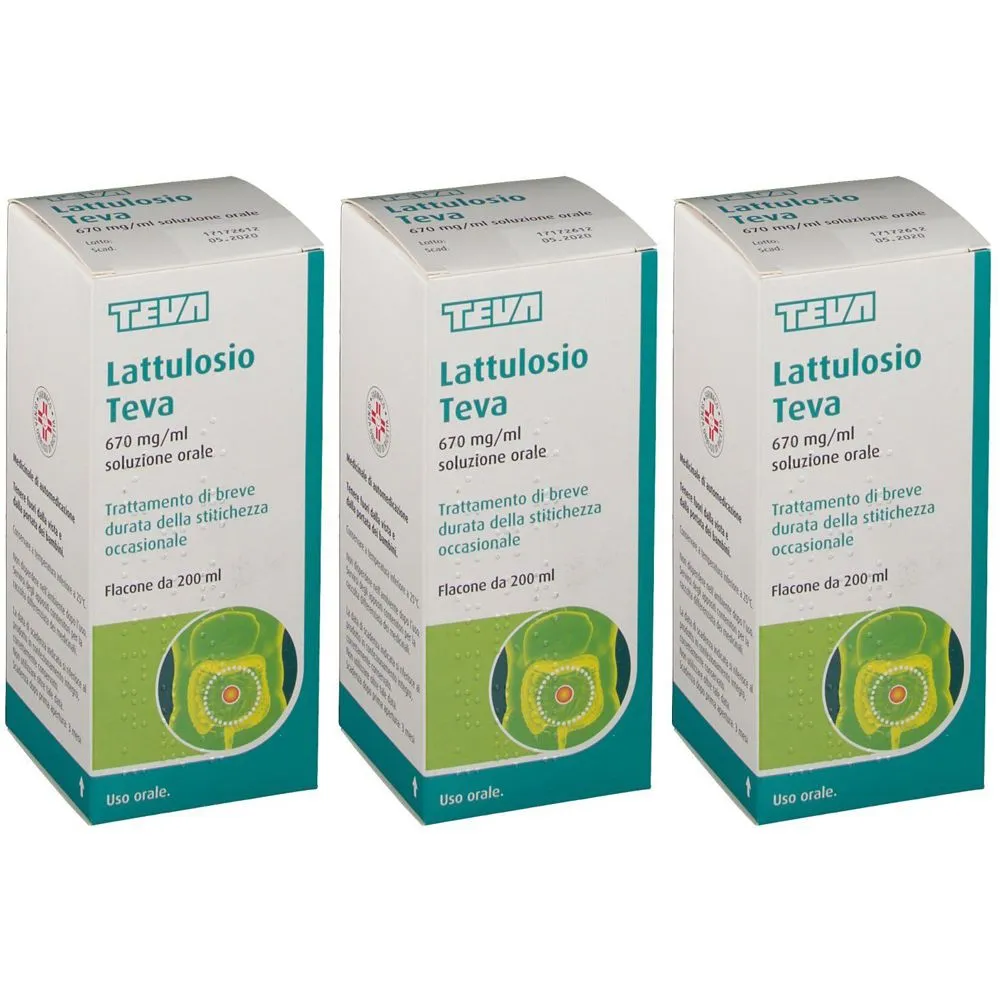
Table of Contents
Patient Information Leaflet
Lactulose Teva 670 mg/ml Oral Solution
Read this leaflet carefully before taking this medicine because it contains important information for you.
Always take this medicine exactly as described in this leaflet or as your doctor or pharmacist has instructed you.
- Keep this leaflet. You may need to read it again.
- If you need more information or advice, consult your pharmacist.
- If you experience any side effects, including those not listed in this leaflet, contact your doctor or pharmacist. See section 4.
- Contact your doctor if you do not notice any improvement or if your symptoms worsen.
Contents of this leaflet:
- What Lactulose Teva is and what it is used for
- What you need to know before taking Lactulose Teva
- How to take Lactulose Teva
- Possible side effects
- How to store Lactulose Teva
- Contents of the pack and other information
1. What Lattulosio Teva is and what it is used for
Lattulosio Teva is an aqueous solution of lactulose, a sugar belonging to the class of medicines known as osmotic laxatives, which help enhance intestinal motility and soften stools, thus facilitating evacuation.
Lattulosio Teva is used for the short-term treatment of occasional constipation, when a diet rich in fiber (bran, vegetables, and fruit), combined with a substantial intake of fluids and adequate physical activity, is not sufficient.
2. What you need to know before taking Lactulose Teva
First of all, it should be noted that, in most cases, a balanced diet rich in water and fibre (bran, vegetables, and fruit) can permanently resolve constipation.
Many people believe they suffer from constipation if they cannot defecate every day. This is a mistaken belief, as this condition is completely normal for many individuals. Instead, consider that constipation occurs when bowel movements are reduced compared to your personal habits and are associated with the passage of hard stools.
If episodes of constipation recur frequently, you should consult your doctor.
Do not take Lactulose Teva
- if you are allergic to lactulose or any of the other ingredients of this medicine (listed in section 6);
- if you have acute abdominal pain or abdominal pain of unknown origin, nausea or vomiting, intestinal obstruction (other than ordinary constipation), narrowing of parts of the intestine (intestinal stenosis), rectal bleeding of unknown origin, or severe dehydration;
- if you suffer from a serious genetic disease that prevents the digestion of galactose (galactosemia);
- if you suffer from acute inflammatory bowel disease (such as Crohn's disease or ulcerative colitis), subocclusive syndromes, perforation or risk of perforation of the digestive tract, or abdominal pain of undetermined cause.
Warnings and precautions
Talk to your doctor or pharmacist before using Lactulose Teva.
During treatment with laxatives, you should drink an adequate amount of fluids (approximately 2 litres per day, equivalent to 6–8 glasses).
Abuse of laxatives (i.e. frequent or prolonged use, or use in excessive doses) may cause persistent diarrhoea, resulting in loss of water, minerals (especially potassium), and other essential nutrients for your body.
In more severe cases, dehydration or decreased potassium levels in the blood (hypokalaemia) may occur, which can lead to cardiac or neuromuscular dysfunction, particularly if you are also taking medicines called cardiac glycosides, diuretics, or corticosteroids (see also section “Other medicines and Lactulose Teva”).
In addition, abuse of laxatives, especially stimulant laxatives (contact laxatives), may lead to dependence (and therefore a possible need to progressively increase the dosage), chronic constipation, and loss of normal intestinal function (intestinal atony).
Pay particular attention and consult your doctor before taking Lactulose Teva if:
- you have suffered from constipation for a prolonged period. Your doctor will examine you before starting treatment with Lactulose Teva. Indeed, recurring difficulty in defecation could be a sign of a more serious illness (such as a severe gastrointestinal inflammatory disease), especially if accompanied by symptoms such as abdominal pain, vomiting, and fever;
- the need to take a laxative arises from a sudden change in your previous bowel habits (frequency and characteristics of bowel movements) lasting for more than two weeks;
- you are an elderly patient or in poor general health;
- you suffer from a condition affecting the gastrointestinal and cardiovascular systems called Roemheld syndrome;
- you suffer from symptoms such as bloating due to excessive gas accumulation (meteorism) in the intestine;
- you are diabetic; in patients with diabetes receiving high doses of lactulose, the dose of antidiabetic medicines may need to be adjusted.
Consult your doctor if the laxative does not produce the desired effect.
Always follow the instructions in this leaflet to determine the appropriate dose and duration of treatment for your condition.
Always keep in mind that prolonged use of this laxative, use of excessive doses, or abuse may cause diarrhoea and disturbances in electrolyte balance (the distribution of mineral salts in your body).
The treatment of chronic or recurrent constipation always requires medical intervention for diagnosis, prescription of medicines, and monitoring during therapy.
If you are an elderly patient or in poor general health, long-term inappropriate use of lactulose may alter the balance of mineral salts.
Lactulose Teva may contain milk sugar (lactose), galactose, or fructose.
If your doctor has diagnosed you with intolerance to certain sugars, contact them before taking this medicine.
Children
In children under 12 years of age, this medicine should only be used after consulting a doctor. Normally, Lactulose Teva should not be administered to newborns and young children, as it may interfere with the normal reflex that stimulates bowel movement.
If in doubt, consult your doctor or pharmacist.
Other medicines and Lactulose Teva
Inform your doctor or pharmacist if you are taking, have recently taken, or might take any other medicines.
Laxatives may reduce the intestinal transit time, and thus the absorption, of other medicines taken simultaneously by mouth. Therefore, avoid taking laxatives and other medicines at the same time: after taking a medicine, wait at least 2 hours before taking the laxative.
The laxative effect of lactulose may lead to a state of dehydration and increased potassium loss caused by other medicines, such as diuretics, corticosteroids, and certain antifungal agents (amphotericin B), which may cause problems with the heart or neuromuscular system.
Concomitant use of certain medicines for heart failure ( cardiac glycosides ) may enhance the effect of glycosides due to potassium deficiency (see section “Warnings and precautions”).
Increasing the dose of lactulose may alter intestinal acidity, possibly inactivating certain medicines (such as salicylates).
Broad-spectrum antibiotics may reduce intestinal bacterial flora, thereby reducing the effectiveness of lactulose.
Lactulose Teva with food and drinks
Lactulose Teva can be diluted in water or other liquids and taken independently of meals.
During treatment with lactulose, avoid excessive consumption of carbonated beverages and foods that may cause flatulence. In some patients, the normalization of intestinal function caused by lactulose may take several days; in such cases, consult your doctor to determine the most appropriate dose and duration of treatment for your condition.
Pregnancy and breastfeeding
If you are pregnant, suspect you may be pregnant, planning to become pregnant, or breastfeeding, consult your doctor or pharmacist before using this medicine.
Lactulose Teva should only be used when necessary and under direct medical supervision.
Driving and using machines
Lactulose Teva does not affect or affects negligibly the ability to drive vehicles and use machinery.
3. How to take Lactulose Teva
Take this medicine exactly as stated in this leaflet or according to your doctor’s or pharmacist’s instructions. If you have any doubts, consult your doctor or pharmacist.
Dosage
The doses indicated below are only guidelines and should be adjusted according to individual needs.
The correct dose is the lowest dose that produces easy passage of soft stools.
It is advisable to initially use the minimum recommended doses. When necessary, the dose may be increased, but must never exceed the maximum recommended dose.
Adults and adolescents over 14 years:
Usual daily dose: 10 - 20 ml per day, divided into two doses. This dose may be doubled or halved depending on individual response.
Children and adolescents from 6 to 14 years (see section “Warnings and precautions”):
Usual daily dose: 5 - 15 ml per day, which may be administered as a single dose depending on age and severity of the condition.
Infants and children up to 6 years (see section “Warnings and precautions”):
Usual daily dose: 2.5 - 5 ml per day (equivalent to ½ teaspoon - 1 teaspoon; one teaspoon corresponds to 5 ml).
Subsequently, the dosage may be reduced, depending on the individual clinical response.
Instructions for use
Lactulose Teva should be taken together with an adequate amount of water (a generous glass) or other liquids, regardless of meals. A diet rich in fluids enhances the effect of the medicine. It is preferable to take it in the evening.
To take Lactulose Teva, pour the exact recommended dose into the measuring cup (the package contains a graduated dosing cup from 5 to 30 ml) and ingest the medicine directly from the cup. The required dose may also be mixed with water or hot beverages, such as coffee or tea, or with yogurt, cereals, and bran. A single dose of lactulose must be taken at once and should not be held in the mouth for a prolonged time.
Duration of treatment
Since lactulose exerts its effect only after reaching the colon, it may take 1–2 days before its effects become apparent. Laxatives should be used as infrequently as possible and for no longer than seven days. Use for longer periods requires a doctor's prescription following appropriate evaluation of the individual case.
If you feel that the effect of Lactulose Teva is too strong or too weak, consult your doctor or pharmacist.
If you take more Lactulose Teva than you should
If you have taken an excessive dose of Lactulose Teva, you should contact your doctor or pharmacist.
Overdose symptoms may include abdominal pain, diarrhoea, nausea, vomiting, dehydration, and loss of mineral salts (primarily potassium and sodium). If such symptoms occur, contact your doctor to determine appropriate treatment and whether the dose should be reduced or treatment with lactulose discontinued.
If you forget to take Lactulose Teva
Do not take a double dose to make up for the forgotten dose.
If you stop taking Lactulose Teva
If you interrupt or stop treatment with Lactulose Teva prematurely, you should be aware that the desired effect will not occur and the condition may progress.
If you have any doubts about the use of this medicine, consult your doctor or pharmacist.
4. Possible side effects
Like all medicines, this medicine can cause side effects, although not everybody gets them.
When a dose higher than prescribed is taken, abdominal pain and diarrhoea may occur. In this case, the dose should be reduced.
If excessive doses are taken for a prolonged period, electrolyte imbalance due to diarrhoea may occur.
Very common (may affect more than 1 in 10 people):
mild abdominal pain, flatulence.
Common (may affect up to 1 in 10 people):
diarrhoea with loss of minerals (electrolyte disturbances), vomiting, nausea.
Rare (may affect up to 1 in 1,000 people):
excessively high sodium levels in the blood (hypernatraemia).
Not known (frequency cannot be estimated from the available data):
isolated cramp-like or colicky abdominal pains, more frequent in cases of severe constipation**;
alteration of blood mineral levels (electrolyte imbalance), caused by diarrhoea.
* mainly following excessive dosing.
** occasionally appear during the first days of treatment and usually disappear after a few days.
Reporting of side effects
If you experience any side effect, including those not listed in this leaflet, talk to your doctor or pharmacist. You may also report side effects directly through the national reporting system at the following website:
https://www.aifa.gov.it/content/segnalazioni-reazioni-avverse. By reporting side effects, you can help provide more information on the safety of this medicine.
5. How to store Lactulose Teva
Keep this medicine out of the sight and reach of children.
Store below 25°C.
Do not use Lactulose Teva after the expiry date stated on the label and carton. The expiry date refers to the last day of the month.
Usable period after first opening: 12 months.
Do not dispose of medicines via wastewater or household waste. Ask your pharmacist how to dispose of medicines you no longer use. This will help protect the environment.
6. Package contents and other information
What Lattulosio Teva contains
- The active substance is lactulose. 100 ml contain 67 g of lactulose.
- The other component is: purified water.
Description of the appearance of Lattulosio Teva and pack contents
Lattulosio Teva is a viscous, clear, almost colourless solution with a slight brownish and yellowish tint, contained in brown PET bottles of 100 ml and 200 ml.
It is possible that not all pack sizes are marketed.
Marketing Authorisation Holder and Manufacturer
Marketing Authorisation Holder
Teva Italia S.r.l. - Piazzale Luigi Cadorna, 4 – 20123 Milan, Italy
Manufacturer
Fresenius Kabi Austria GmbH - Estermannstraße 17 - 4020 Linz, Austria
This medicinal product is authorised in the Member States of the European Economic Area under the following names:
Italy: Lattulosio Teva 670 mg/ml oral solution