Iridina Due
Italy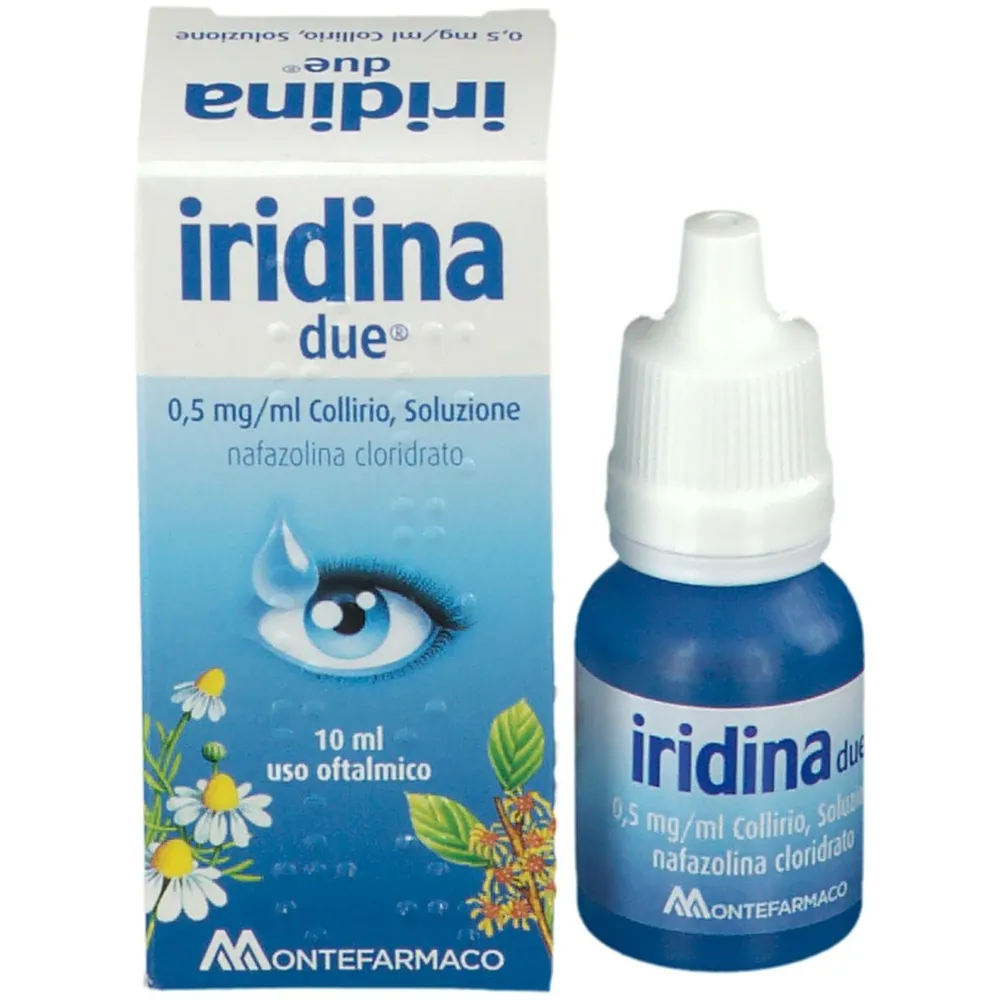
Table of Contents
Package leaflet: Information for the user
Iridina Due 0.5 mg/ml eye drops, solution
Naphazoline hydrochloride
Please read this leaflet carefully before using this medicine because it contains important information for you.
Use this medicine exactly as described in this leaflet or as your doctor or pharmacist has instructed you.
- Keep this leaflet. You may need to read it again.
- If you need more information or advice, consult your pharmacist.
- If you experience any side effects, including those not listed in this leaflet, contact your doctor or pharmacist. See section 4.
- Contact your doctor if you do not notice improvement or if your symptoms worsen after 4 days.
Contents of this leaflet:
- What Iridina Due is and what it is used for
- What you need to know before using Iridina Due
- How to use Iridina Due
- Possible side effects
- How to store Iridina Due
- Contents of the pack and other information
1. What Iridina Due is and what it is used for
Iridina Due contains the active substance naphazoline hydrochloride, which belongs to a group of medicines called decongestants.
Iridina Due eye drops are used to treat irritations, burning, redness of the eye, excessive tearing, and sensitivity to light.
Consult your doctor if you do not feel better or if you feel worse after 4 days of treatment.
2. What you need to know before using Iridina Due
Do not use Iridina Due
- if you are allergic to naphazoline hydrochloride or to any of the other components of this medicine (listed in section 6);
- if you have glaucoma (increased internal eye pressure) or other eye diseases;
- in children under ten years of age (see "Children").
Warnings and precautions
Talk to your doctor or pharmacist before using Iridina Due if you have:
- high blood pressure (hypertension);
- hyperthyroidism (overactive thyroid gland);
- heart diseases;
- diabetes (hyperglycemia).
If symptoms persist or worsen after a short period of treatment, consult your doctor. Do not use this medicine for more than 4 consecutive days.
If you notice the onset of adverse effects within less than 4 days, stop treatment and consult your doctor.
Iridina Due is not suitable for the treatment of infections, pus, foreign bodies in the eye, or mechanical, chemical or heat-related injuries. These conditions require medical attention.
Children
Do not administer this medicine to children under 10 years of age (see "Do not use Iridina Due").
Other medicines and Iridina Due
Inform your doctor or pharmacist if you are currently using, have recently used, or might use any other medicines.
Use Iridina Due with caution if you are being treated with antidepressant medications.
Pregnancy and breastfeeding
If you are pregnant, suspect you may be pregnant, planning to become pregnant, or breastfeeding, consult your doctor or pharmacist before using this medicine.
The use of Iridina Due is not contraindicated during pregnancy and breastfeeding.
Driving and using machines
Iridina Due eye drops do not affect the ability to drive or operate machinery.
3. How to use Iridina Due
Use this medicine exactly as described in this leaflet or as directed by your doctor or pharmacist. If you have any doubts, consult your doctor or pharmacist.
The recommended dose is 1 or 2 drops, each time you feel a burning sensation.
Tilt your head backward and squeeze one or two drops of the eye drops into the inner corner of each eye.
Strictly adhere to the recommended dosage. A higher dose of Iridina Due, even for a short period, may cause serious adverse effects on the body (see "If you use more Iridina Due than you should").
Warning: Use the medicine only for short-term treatment and do not exceed 4 consecutive days.
Consult your doctor if symptoms recur repeatedly or if you notice any recent changes in their characteristics.
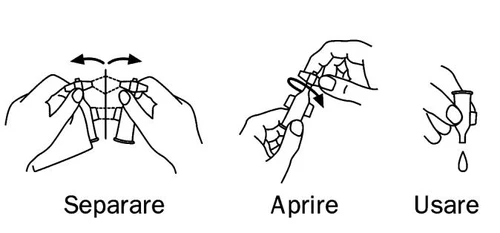
Instructions for using the single-dose container:
- Separate the container from others
- Open the container by twisting and pulling off the cap
- Use immediately after opening: after use, discard the container even if partially used.
Use in children
Iridina Due is contraindicated in children under 10 years of age.
If you use more Iridina Due than you should
No cases of overdose due to administration of Iridina Due have been reported so far.
However, in case of accidental ingestion or prolonged use, symptoms of central nervous system depression may occur, including bradypnea (reduced respiratory rate), cold sensation of the skin, drowsiness, tachycardia (increased heart rate), sweating, and mental confusion.
In case of accidental ingestion/overdose of Iridina Due eye drops, contact your doctor immediately or go to the nearest hospital.
If you forget to use Iridina Due
Do not use a double dose to make up for the missed dose.
If you have any doubts about how to use this medicine, consult your doctor or pharmacist.
4. Possible side effects
Like all medicines, this medicine can cause side effects, although not everybody gets them.
The use of this medicine may sometimes cause dilation of the pupils, systemic effects on the body such as high blood pressure (hypertension), heart disorders, excess sugar in the blood (hyperglycaemia), increased pressure inside the eye, nausea, headache.
Rarely, hypersensitivity reactions (allergy) may occur. In such case, stop treatment and consult your doctor.
Following the instructions contained in this leaflet reduces the risk of side effects.
These side effects are generally temporary. However, if they occur, it is advisable to consult your doctor or pharmacist.
Reporting of side effects
If you experience any side effect, including those not listed in this leaflet, talk to your doctor or pharmacist. You can also report side effects directly via the national reporting system at the website www.agenziafarmaco.gov.it/it/responsabili. By reporting side effects, you can help provide more information on the safety of this medicine.
5. How to store Iridina Due
Keep this medicine out of the sight and reach of children.
Do not use this medicine after the expiry date stated on the packaging. The expiry date refers to the last day of that month.
Store this medicine at a temperature not exceeding 30°C.
The product does not contain preservatives: the single-dose container must be discarded after use, even if only partially used.
Do not dispose of any medicine via wastewater or household waste. Ask your pharmacist how to dispose of medicines no longer required. This will help protect the environment.
6. Package contents and other information
What Iridina Due contains
- The active substance is naphazoline hydrochloride. 0.5 ml of eye drops solution contain 0.25 mg of naphazoline hydrochloride.
- The other components are: sodium chloride, sodium dihydrogen phosphate dihydrate, sodium hydroxide, sodium hyaluronate, distilled witch hazel water, distilled chamomile water, water for injections.
Description of the appearance of Iridina Due and contents of the pack
Iridina Due is an eye drop solution.
Packs of 10, 15 or 20 single-dose containers of 0.5 ml.
Marketing Authorization Holder
MONTEFARMACO OTC S.p.A. - Via IV Novembre, 92 - 20021 Bollate (MI)
Manufacturer
Farmigea S.p.A. Via Giovan Battista Oliva, 8 – 56121 Pisa
Package leaflet: information for the user
Iridina Due 0.5 mg/ml eye drops, solution
Naphazoline hydrochloride
Please read this leaflet carefully before using this medicine because it contains important information for you.
Use this medicine exactly as described in this leaflet or as your doctor or pharmacist has instructed you.
- Keep this leaflet. You may need to read it again.
- If you need more information or advice, consult your pharmacist.
- If you experience any side effects, including those not listed in this leaflet, contact your doctor or pharmacist. See section 4.
- Contact your doctor if you do not notice any improvement or if your symptoms worsen after 4 days.
Contents of this leaflet:
- What Iridina Due is and what it is used for
- What you need to know before using Iridina Due
- How to use Iridina Due
- Possible side effects
- How to store Iridina Due
- Package contents and other information
1. What Iridina Due is and what it is used for
Iridina Due contains the active substance naphazoline hydrochloride, which belongs to a group of medicines called decongestants.
Iridina Due eye drops are used for the treatment of eye irritations, burning, redness, excessive tearing, and sensitivity to light.
Consult your doctor if you do not feel better or if you feel worse after 4 days of treatment.
2. What you need to know before using Iridina Due
Do not use Iridina Due
- if you are allergic to naphazoline hydrochloride or other substances closely related from a chemical point of view (in particular xylometazoline, oxymetazoline, tetrizoline) or to any of the other components of this medicine (listed in section 6);
- if you suffer from glaucoma (increased internal eye pressure) or other eye diseases;
- in children under twelve years of age (see "Children");
- if you are being treated with medicines for depression (called monoamine oxidase inhibitors, MAOIs) (see "Other medicines and Iridina Due").
Warnings and precautions
Talk to your doctor or pharmacist before using Iridina Due if you have:
- high blood pressure (hypertension),
- hyperthyroidism (overactivity of the thyroid gland),
- heart diseases,
- diabetes (hyperglycaemia),
- bronchial asthma. If symptoms persist or worsen after a short period of treatment, consult your doctor. Do not use the medicine for more than 4 consecutive days.
Iridina Due is not suitable for the treatment of infections, pus, foreign bodies in the eye, or mechanical, chemical or heat-related injuries. These conditions require medical attention.
Pay particular attention if you wear contact lenses (see "Iridina Due contains benzalkonium chloride").
Children
Do not administer this medicine to children under 12 years of age (see "Do not use Iridina Due").
Keep this medicine out of the reach and sight of children, as accidental ingestion may cause serious adverse effects. In such cases, immediate medical intervention is always required (see also "If you use more Iridina Due than you should").
Other medicines and Iridina Due
Inform your doctor or pharmacist if you are currently using, have recently used, or might use any other medicines.
Do not use Iridina Due if you are being treated with antidepressant medicines (called MAOIs, monoamine oxidase inhibitors) or within two weeks after such treatment, as severe hypertensive crises (increased blood pressure) may occur (see "Do not use Iridina Due").
Pregnancy and breastfeeding
If you are pregnant, suspect you may be pregnant, planning a pregnancy, or breastfeeding, consult your doctor or pharmacist before using this medicine.
During pregnancy and breastfeeding, use Iridina Due only if strictly necessary and under direct medical supervision.
Driving and using machines
Iridina Due eye drops do not affect the ability to drive or operate machinery.
Iridina Due contains benzalkonium chloride
May cause eye irritation. Avoid contact with soft contact lenses.
Remove contact lenses before application and wait at least 15 minutes before reinserting them.
Benzalkonium chloride is known to cause discoloration of soft contact lenses.
3. How to use Iridina Due
Use this medicine exactly as stated in this leaflet or as directed by your doctor or pharmacist. If you have any doubts, consult your doctor or pharmacist.
The recommended dose is 1 or 2 drops, each time you feel a burning sensation.
Squeeze one or two drops of eye drops into the inner corner of each eye, with your head tilted backward.
Strictly adhere to the recommended dosage. A higher dose of Iridina Due, even for a short period, may cause serious adverse effects on the body (see "If you use more Iridina Due than you should").
Caution: Use the medicine only for short-term treatment and do not exceed 4 consecutive days.
Consult your doctor if the condition recurs or if you notice any recent changes in its characteristics.
Use in children
Iridina Due is contraindicated in children under 12 years of age.
If you use more Iridina Due than you should
There have been no reports so far of overdose symptoms following administration of Iridina Due.
However, in case of accidental ingestion or prolonged use, symptoms of central nervous system depression may occur, including bradypnea (reduced respiratory rate), cold skin sensation, drowsiness, tachycardia (increased heart rate), sweating, confusion, and coma.
If this occurs, gastric lavage, sedation with diazepam, and general supportive measures will be necessary.
In case of accidental ingestion/overdose of Iridina Due eye drops, contact your doctor immediately or go to the nearest hospital.
If you forget to use Iridina Due
Do not use a double dose to make up for the missed dose.
If you have any doubts about how to use this medicine, consult your doctor or pharmacist.
4. Possible side effects
Like all medicines, this medicine may cause side effects, although not everybody gets them.
The use of this medicine may sometimes cause pupil dilation and general systemic effects on the body such as high blood pressure (hypertension), heart disturbances, high blood sugar levels (hyperglycemia), increased pressure inside the eye, nausea, and headache.
Rarely, hypersensitivity reactions (allergic reactions) may occur. If this happens, stop treatment and consult your doctor.
Following the instructions provided in this leaflet helps reduce the risk of side effects.
These side effects are usually temporary. However, if they occur, it is advisable to consult your doctor or pharmacist.
Reporting of side effects
If you experience any side effect, including those not listed in this leaflet, talk to your doctor or pharmacist. You can also report side effects directly via the national reporting system at www.agenziafarmaco.gov.it/it/responsabili. By reporting side effects, you can help provide more information on the safety of this medicine.
5. How to store Iridina Due
Keep this medicine out of the sight and reach of children.
Do not use this medicine after the expiry date stated on the packaging. The expiry date refers to the last day of that month.
The shelf life after first opening the bottle is 28 days.
Keep the bottle in the original packaging to protect the medicine from light.
Do not dispose of any medicine via wastewater or household waste. Ask your pharmacist how to dispose of medicines you no longer use. This will help protect the environment.
6. Package contents and other information
What Iridina Due contains
- The active substance is naphazoline hydrochloride. 10 ml of eye drops contain 5 mg of naphazoline hydrochloride.
- The other components are: sodium chloride, disodium hydrogen phosphate dihydrate, sodium hydroxide, sodium hyaluronate, benzalkonium chloride, witch hazel distillate, chamomile distillate, purified water.
Description of the appearance of Iridina Due and contents of the pack
Iridina Due is an eye drop solution.
The pack contains 1 bottle with 10 ml.
Marketing Authorization Holder
MONTEFARMACO OTC S.p.A. - Via IV Novembre, 92 - 20021 Bollate (MI)
Manufacturer
Farmigea S.p.A., Via Giovan Battista Oliva, 8 – 56121 Pisa
C.O.C. Farmaceutici S.r.l., Via Modena, 15 – 40019 Sant'Agata Bolognese (BO)